
Your Guide to Choosing the Best Patio Paver Driveway Material
A patio paver driveway sits at the intersection of landscape design and heavy-duty performance. For many North Shore homes, the driveway is the largest feature in the front yard, yet it is often treated as an afterthought compared to the backyard patio. Choosing the right paver system is one of the most visible upgrades you can make for long-term durability, curb appeal, and overall property value. When you consider the sheer surface area of a driveway, it becomes clear that the material choice dictates the entire aesthetic of your property’s entrance. A well-designed driveway doesn’t just provide a place to park; it frames the architecture of your home and sets a tone of quality and care.
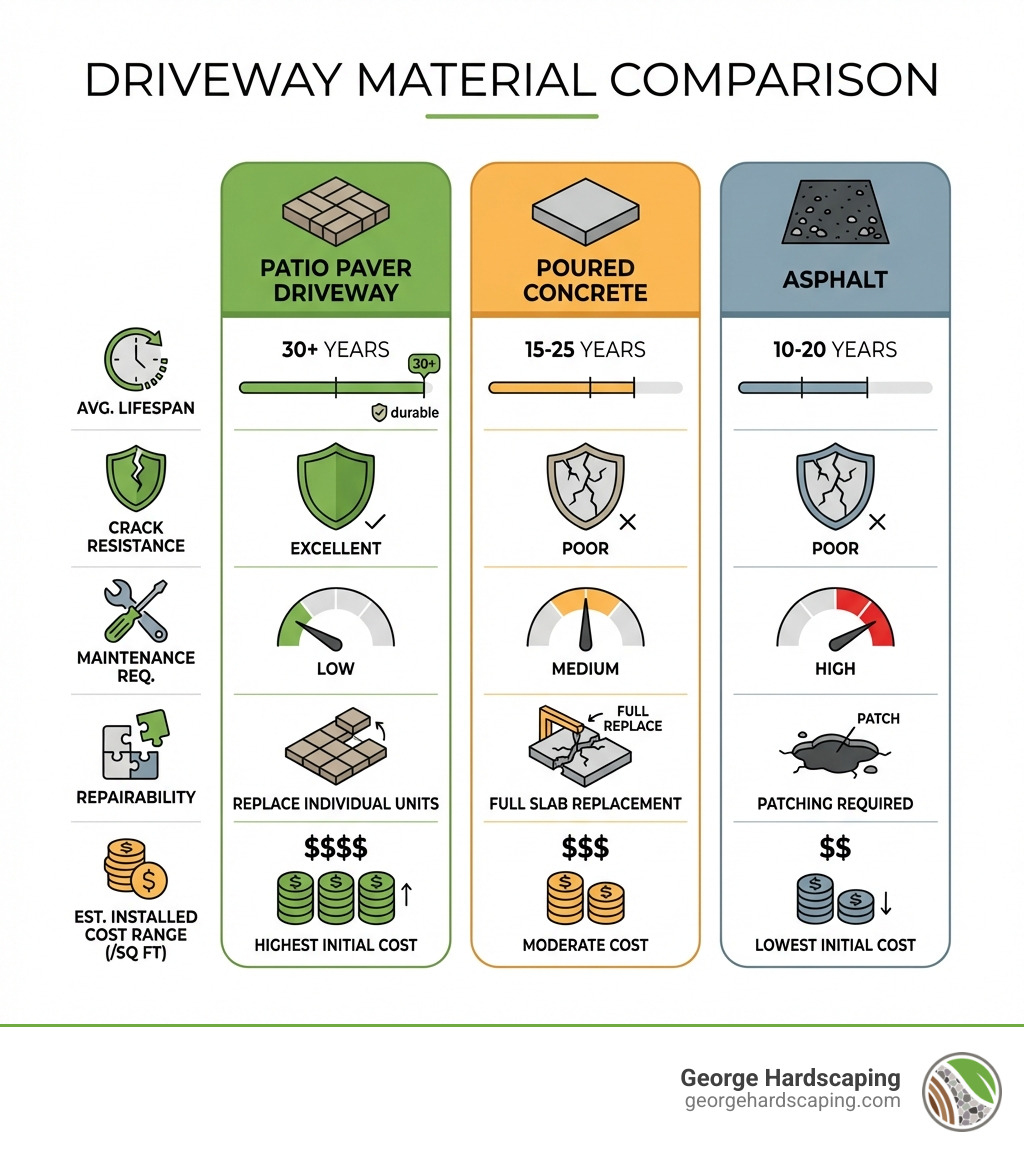
If you’re comparing driveway paving materials, here is how common options typically stack up for lifespan and repairability:
| Material | Avg. Lifespan | Maintenance Level | Crack Resistance | Curb Appeal |
|---|---|---|---|---|
| Concrete Pavers | 30+ years | Low | Excellent | High |
| Natural Stone Pavers | 30+ years | Low-Medium | Excellent | Very High |
| Poured Concrete | 15-25 years | Medium | Poor | Medium |
| Asphalt | 10-20 years | High | Poor | Low |
| Clay Brick Pavers | 25+ years | Low | Very Good | High |
Note: Average costs based on internet data, not actual George Hardscaping pricing.
Pavers consistently outperform both asphalt and poured concrete in lifespan and repairability. Unlike a cracked slab that often requires large-scale replacement, a damaged paver can usually be swapped out individually. This modular design is a big reason segmental pavements are favored in regions with volatile weather. According to the Interlocking Concrete Pavement Institute (ICPI), interlocking systems are designed to distribute heavy loads across the surface, reducing localized stress. This distribution of weight is vital for driveways that must support the weight of multiple vehicles, including heavy SUVs and delivery trucks, without sinking or shifting.
The difference between a paver driveway and a standard poured concrete or asphalt surface is not just cosmetic. Pavers are built to flex with the base beneath them. In New England, freeze-thaw cycles put rigid slabs under constant stress: soil expands when it freezes and can push up on the surface. A concrete slab resists movement until it cracks. A paver system allows micro-movement at the joints and can settle back as conditions change. This inherent flexibility is what allows a professional paver driveway installation to remain pristine while neighboring asphalt driveways begin to spiderweb and crumble.
According to leading paver manufacturers, concrete pavers can offer 2 to 3 times the strength of traditional poured concrete or asphalt, and some advanced products go beyond that. If you want the benefits of a driveway that performs like roadway pavement while still looking like a finished outdoor living feature, investing in custom paver driveway solutions is the best way to protect that investment. By choosing high-quality materials, you are ensuring that your home’s first impression remains a positive one for decades to come.
Patio paver driveway word roundup:
- Creative driveway paver ideas and designs
- Durable driveway edging pavers
- Custom paver driveway solutions
Why a Patio Paver Driveway is the Ultimate Home Investment
When we talk to homeowners in Essex County about upgrades, the conversation often starts with the backyard. But the front of your home is where first impressions are made. A patio paver driveway is more than a place to park; it is a long-term investment in curb appeal and performance. Real estate professionals often note that a clean, attractive entrance can help a home show better and support resale value. In a competitive market like the North Shore, these details can be the deciding factor for a potential buyer.
According to the National Association of Realtors (NAR), curb appeal projects consistently rank among the highest for return on investment (ROI) during a home sale. One of the most practical reasons homeowners choose pavers is structural behavior in a New England climate. Poured concrete is a monolithic slab; when the ground shifts, it tends to crack. In contrast, interlocking driveway pavers for New England homes form a flexible pavement system. Each unit can move slightly, allowing the surface to handle seasonal movement without the same type of slab cracking. This flexibility is achieved through the use of specialized joint sand and a carefully engineered base that allows for drainage and movement.
That flexibility is also why segmental pavement principles have been used for centuries. Interlock relies on vertical, rotational, and horizontal resistance. When pavers are installed correctly with proper joint sand and edge restraints, they act as a unified but flexible surface. If you are analyzing if driveway pavers are a good investment, the key advantages are longevity and repairability. A professionally installed paver driveway can often last 30 years or more, whereas asphalt may need to be replaced twice in that same timeframe. This makes the long-term cost of ownership significantly lower for pavers.
There can also be meaningful environmental benefits when permeable options are used. Resources such as the environmental benefits of hardscapes explain how permeable systems can help manage stormwater runoff. By allowing water to infiltrate, you can reduce standing water and improve site drainage, which is especially helpful for many coastal and North Shore properties that struggle with high water tables or heavy seasonal rains. This eco-friendly approach not only protects your property but also helps maintain the local ecosystem by reducing the amount of polluted runoff entering our waterways.
Choosing the Right Style for Your Patio Paver Driveway
Aesthetic integration is key. Your driveway should feel like an extension of your home, not a separate surface. For homes in Beverly or Manchester-by-the-Sea with clean, modern lines, we often recommend sleek modern driveway pavers with larger formats and smooth textures. Linear patterns can also visually lengthen a shorter driveway, creating a sense of grandeur and space.
For a historic Ipswich farmhouse or a rustic home in Boxford, many homeowners prefer pavers that resemble cobblestone or natural stone. When browsing creative driveway paver ideas and designs, consider colors that tie into existing features such as roof shingles, stone foundations, and trim. Multi-tonal blends also tend to hide tire marks, minor staining, and winter residue better than a single solid color, ensuring your driveway looks clean even between maintenance sessions.
Top Driveway Paver Materials: Comparing Your Options
Choosing the right material is the first step in any custom paver driveway solutions project. While pavers generally outperform asphalt in longevity and repairability, the specific product you choose affects maintenance, budget, and final appearance. Your selection should reflect your home style and how the driveway is used, including whether it needs to handle heavier vehicles or frequent snow removal. The material you choose will also dictate the installation method and the type of base required to ensure long-term stability.
- Concrete driveway pavers: Popular for balancing cost and durability. Many are manufactured to ASTM C936 standards and are available in a wide range of colors, shapes, and textures. These pavers are engineered to withstand high compressive loads and are resistant to the salts and chemicals often used in winter.
- Natural Stone: Granite, bluestone, and limestone offer standout curb appeal and excellent durability, but often cost more due to quarrying and shipping. Granite is also well known for handling cold conditions and de-icing exposure, making it a premier choice for luxury homes in coastal Massachusetts.
- Eco-friendly permeable driveway pavers: Designed with wider joints or special shapes so water can drain through the surface, helping with runoff control and reducing the need for complex drainage systems.
- Clay Brick: A classic New England look. Brick is color-fast and very durable, but it typically needs a stable base to minimize shifting. The rich, earthy tones of clay brick provide a timeless elegance that complements historic architecture.
- Sustainable permeable driveway surface options: Systems and grids that prioritize stormwater management and can be useful where runoff reduction is a primary goal, especially in areas with strict environmental regulations.
Concrete Pavers: Strength and Versatility
If you want strong performance with broad design flexibility, high-strength concrete pavers for driveway use are a common choice. Factory-made units offer consistent sizing, which helps create precise patterns like herringbone that can handle turning and braking forces. Many products also mimic the look of natural stone, providing the aesthetic of granite or slate with the structural benefits of engineered concrete.
Many people ask, understanding why concrete pavers are good for driveways? They are built for load-bearing applications and can handle typical residential vehicle traffic when installed over a properly compacted base. Compared to asphalt, pavers also avoid heat-related softening and rutting, which can be a major issue during the humid Massachusetts summers. Their high density also makes them resistant to oil and fuel spills, which can easily be cleaned if addressed promptly.
Permeable Solutions for Stormwater Management
In many North Shore communities, local rules and site conditions make water management a priority. Sustainable permeable driveway surface options allow rainwater to drain through the joints and into an open-graded stone base. This can reduce puddling and help limit refreeze conditions in winter, making your driveway safer for walking and driving.
Choosing the best solution for a New England permeable driveway surface often involves selecting systems with appropriately sized aggregates and joint materials for reliable infiltration. We also plan functional edging options for permeable driveways so the structure stays locked in place while maintaining drainage performance. This holistic approach to design ensures that your driveway is as functional as it is beautiful.
Designing Your Driveway: Patterns and Custom Features
The pattern you choose for your patio paver driveway isn’t just about looks—it’s about physics. For driveways, we almost always recommend a 45-degree herringbone pattern. This layout provides the maximum interlock between pavers, ensuring that when a car brakes or turns, the pavers don’t shift or “creep” over time. The interlocking nature of the herringbone pattern distributes the weight of the vehicle across a larger surface area, reducing the stress on any single unit. This is a critical consideration for any high-traffic area, as it prevents the formation of ruts and ensures the surface remains level for decades.
If you prefer a simpler look, a running bond pattern is classic and easy to align with the home’s architecture. To make the design pop, we often incorporate creative driveway paver ideas and designs like contrasting borders. Using durable driveway edging pavers in a darker charcoal or deep red can “frame” your driveway, giving it a finished, professional appearance. For a truly custom touch, we can even install compass accents or circular medallions in the center of the parking area, which serve as a focal point and add a layer of sophistication to the design. These custom features can be tailored to match the specific colors and textures of your home’s exterior.
Functional Additions for New England Climates
Living in Massachusetts means we have to design with snow and rain in mind. Many clients ask, determining if pavers are good for a sloped driveway? Yes, pavers actually provide better traction than smooth poured concrete, especially when textured materials are chosen. However, on steep slopes, the base preparation must be even more rigorous to prevent sliding. We often use a thicker base of crushed stone and specialized geogrids to ensure the entire structure remains stable under the force of gravity and heavy traffic. This extra attention to detail is what separates a professional installation from a DIY attempt.
We also consider innovative driveway drivable grass pavers for secondary parking areas or “green” driveways. These allow grass to grow through the paver, creating a beautiful, eco-friendly look that can still support the weight of a vehicle. This is an excellent solution for homeowners who want to maintain a lush, green lawn while still having the functionality of an extra parking spot. For drainage, we often integrate hidden drainage pipes beneath the surface to ensure water is directed away from your home’s foundation, preventing basement dampness and soil erosion. Proper grading is the unsung hero of any successful driveway project, ensuring that water always moves away from the structures you want to protect, even during the heaviest spring thaws.
The Professional Installation Process and Cost Factors
The secret to a 30-year driveway is not only the paver, but the structure underneath it. A professional paver driveway installation services typically requires deeper excavation than a patio. For many driveways, excavation is often in the 10 to 12 inch range to build a strong, compacted base of crushed stone. This helps get below organic soil and reduces the risk of settling and rutting. Without this deep foundation, the weight of a vehicle would quickly cause the pavers to shift and sink, leading to an uneven and unsightly surface.
The process involves several critical steps:
- Excavation: Remove old surface/soil to the required depth and set appropriate pitch for drainage. This step is crucial for ensuring water flows away from the home.
- Sub-base compaction: Compact the exposed subgrade to reduce future settlement. We use heavy-duty plate compactors to ensure the soil is as dense as possible.
- Geotextile fabric: Separate native soil from the stone base while allowing water movement. This prevents the stone base from sinking into the soft soil over time.
- Base layer: Install crushed stone in compacted lifts to achieve density and stability. Each lift is carefully measured and compacted to ensure a rock-solid foundation.
- Bedding layer: Use a thin, screeded leveling layer (commonly concrete sand for traditional systems). This provides a smooth surface for the pavers to sit on.
- Laying pavers: Install in the chosen pattern with consistent lines and joint spacing. Our craftsmen take pride in their precision and attention to detail.
- Joint sand: Sweep polymeric sand into joints, compact, and activate per manufacturer directions. This sand hardens to lock the pavers in place and prevent weed growth.
| Feature | DIY Installation | Professional Installation |
|---|---|---|
| Timeline | 2-4 Weeks (Weekends) | 3-5 Days |
| Equipment Needed | Rental (Plate compactor, Saw) | Owned (Heavy machinery) |
| Excavation Depth | Often insufficient | Guaranteed 10-12″ |
| Warranty | None | 5-10 Year Workmanship |
| Physical Intensity | Very High | Handled by Crew |
Attempting a professional paver driveway installation services as a DIY project is a massive undertaking. The materials can involve several tons of stone and pavers, and most long-term failures trace back to base compaction or drainage errors. A professional crew has the equipment and experience to evaluate soil conditions and build the base to spec, ensuring your investment lasts for decades.
Understanding the Investment: Driveway Pavers Cost
How much does a patio paver driveway cost? Based on general internet data, a professionally installed paver driveway often ranges from $17 to $24 per square foot. Total project cost varies widely based on size, materials, and site conditions. While the upfront cost can be higher than asphalt, pavers can offer better long-term value because repairs are localized and the surface does not require the same type of periodic resurfacing. Over a 30-year period, the cost of maintaining and replacing asphalt can actually exceed the initial cost of a paver driveway.
Several factors influence the comprehensive driveway pavers cost guide:
- Square footage: Larger areas require more materials and labor, though economies of scale can sometimes apply.
- Material selection: Concrete pavers are often a baseline; natural stone and premium options can increase cost. See estimated brick driveway cost factors.
- Site conditions: Demolition of old concrete, access constraints for heavy machinery, and steep slopes can affect the calculating the total cost for driveway pavers.
- Permeability: Permeable systems use different base materials and aggregates, affecting the long-term paver driveways cost analysis.
CALL TO ACTION: Ready to transform your home’s entrance? Request a free hardscaping estimate from our expert team today!
Long-Term Maintenance for Your Patio Paver Driveway
One of the best things about pavers is that they are relatively low maintenance, but they are not no maintenance. To keep your driveway looking its best for decades, focus on keeping the surface clean and the joints properly filled. Unlike asphalt, which often requires periodic sealcoating to prevent it from becoming brittle, pavers usually need simpler upkeep. For more general background on maintaining various surfaces, you can consult The Spruce’s guide to driveway surfaces, which highlights the benefits of segmental paving systems.
The most important task is joint stability. Many installations use polymeric sand, which hardens after activation and helps reduce weed growth and insect activity. Over time, weather and aggressive pressure washing can reduce joint sand; occasional top-offs help keep the system locked. We recommend inspecting your joints every spring to see if any sand has been washed away by winter snowmelt. Keeping the joints full is the best way to prevent pavers from shifting under the weight of your car.
For winter, many homeowners in Salem or Peabody ask about compatibility with professional snow plowing services in Essex County. Pavers are incredibly durable, and plowing is typically fine when a rubber-edged blade is used. This prevents the metal blade from scratching the surface of the stones. Also consider using de-icers responsibly to help limit surface residue. While pavers are resistant to salt, excessive use can lead to a white film known as efflorescence, which may require specialized cleaning to remove.
Essential Maintenance for a Patio Paver Driveway
If a paver gets stained by oil or other chemicals, you often have options. Many stains can be improved with paver-specific cleaners and prompt scrubbing. If a stain is permanent on a single unit, the modular design means that paver can often be replaced without disturbing the rest of the driveway. It is smart to keep a few extra pavers from the original installation for a close match later, as dye lots can vary slightly between manufacturing runs.
Many people ask, explaining how pavers can be used for a driveway in areas with heavy salt use? Yes, but moderation matters. Heavy use of rock salt over many years can contribute to surface wear on some softer materials. Many homeowners use calcium chloride products labeled as concrete-safe, or use sand for traction. This is also why the question can you make a driveway out of pavers successfully? is answered with a resounding yes: they are designed for residential vehicle loads and can be maintained and repaired in a practical, long-term way that other materials simply cannot match.
Frequently Asked Questions
Can pavers be installed over an existing concrete driveway?
Yes, this is known as an “overlay.” However, it is only an option if the existing concrete is in excellent structural shape with no major cracks or heaving. You must also consider height clearance—adding pavers on top of concrete will raise the driveway by about 2-3 inches, which can affect how it meets your garage floor or front walkway. We also have to ensure there are no drainage issues created by the new height. If the concrete is already cracking, those cracks will eventually reflect through to the pavers, so a full excavation is usually the better long-term choice. You can learn more about whether can pavers be installed over an existing concrete driveway? is right for your specific home by consulting with a professional who can assess the slab’s integrity.
How long do paver driveways last compared to asphalt?
Asphalt driveways are a “budget” option, but they come with a hidden cost: they need to be resealed every 2-3 years and typically only last 10-20 years before they become brittle and crack. A custom paver driveway solutions has a 30-year lifespan or longer. Because residential driveways with pavers are made of individual units, they don’t suffer from the large-scale spiderweb cracking that plagues asphalt. If a small area settles due to a localized soil issue, it can be repaired locally without having to resurface the entire driveway, making the total cost of ownership much lower over time. This longevity makes pavers a much smarter financial decision for long-term homeowners.
Are paver driveways difficult to plow in the winter?
Not at all! In fact, because pavers are often slightly darker and more textured than concrete, they can actually help melt snow faster by absorbing more sunlight. When hiring professional snow plowing services in Essex County, just mention that you have a paver driveway. Most professional plowers are used to this and will adjust their blade height or use a protective edge to ensure a clean clear-out without scratching the stones. Additionally, the joints between pavers allow for better drainage of melting snow, reducing the amount of ice that builds up overnight and making your driveway safer for your family.
Do I need a permit for a paver driveway?
In many North Shore communities, a permit is required if you are expanding the footprint of your driveway or changing the material to something impermeable. However, many towns look favorably on permeable paver systems because they reduce the load on the municipal storm sewer system. It is always best to check with your local building department or have your contractor handle the permitting process to ensure everything is up to code. We handle the permitting process for many of our clients to ensure a stress-free experience from start to finish.
Will weeds grow between my driveway pavers?
When installed with high-quality polymeric sand, weed growth is extremely rare. Polymeric sand hardens into a mortar-like consistency that prevents seeds from taking root. If you do see weeds, they are usually growing in surface debris that has collected in the joints, rather than coming up from the soil below. A quick spray with a hose or a light application of vinegar is usually enough to clear them out. Regular sweeping of your driveway will also prevent the buildup of organic matter that weeds need to grow.
Conclusion
Choosing a patio paver driveway is an investment in the beauty, functionality, and value of your home. Whether you are in the historic streets of Gloucester or the quiet neighborhoods of Lynnfield, a custom-designed paver entrance sets your property apart from the standard asphalt and concrete slabs found elsewhere. It is a statement of quality and a commitment to long-term durability that pays dividends in both daily enjoyment and future resale value. A driveway is more than just a utility; it is the welcome mat to your home, and it should reflect the pride you take in your property.
At George Hardscaping, we pride ourselves on being the premier leading paver driveway company in Massachusetts for Essex County. As a dedicated expert paver driveway contractor, we understand the unique challenges of the North Shore climate, from the heavy snow loads to the salt air of the coast. We don’t just lay stones; we build foundations that last. While there are many top-rated driveway paving companies to choose from, our commitment to craftsmanship, high-quality materials, and local expertise ensures that your driveway will be a source of pride for decades to come.
From the initial design to the final sweep of sand, we handle every detail of your professional paver driveway installation services with the care it deserves. Don’t settle for a cracked, gray slab that devalues your home and requires constant repair. Instead, choose a surface that combines the elegance of a patio with the strength of a roadway. Our team is ready to help you design a driveway that perfectly complements your home’s unique style and meets your family’s needs.
CALL TO ACTION: Don’t settle for a cracked concrete driveway. Contact George Hardscaping to schedule your professional paver driveway consultation and elevate your curb appeal today!
