
Best Solution New England Permeable Driveway Surface 2024
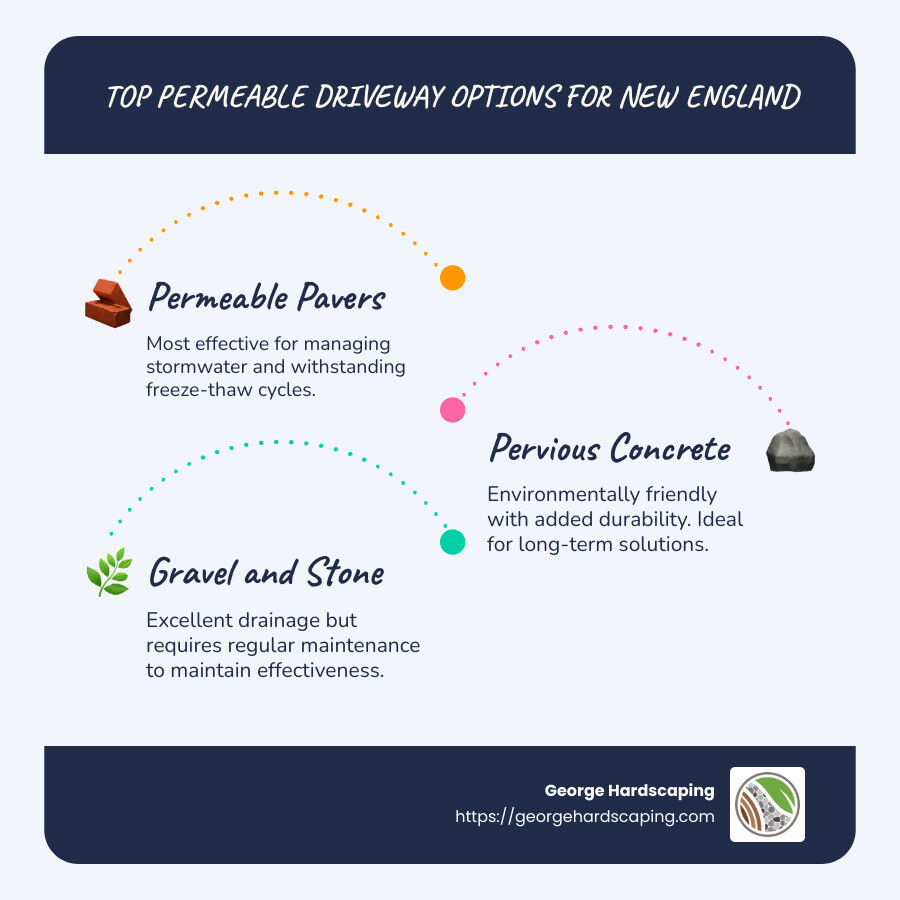
The best solution new england permeable driveway surface instantly addresses the unique challenges posed by New England’s harsh climate while also caring for the environment. If you’re looking for a quick answer, here’s the top choice:
- Permeable Pavers – Best for managing stormwater and freeze-thaw cycles.
- Pervious Concrete – Offers environmental benefits and durability.
- Gravel and Stone – Ensures good drainage but requires upkeep.
New England is renowned for its unpredictable weather, from heavy snowfalls and freezing winters to spring rains and occasional summer heatwaves. This climate demands a driveway material that can withstand dramatic temperature shifts and frequent moisture. The wrong choice leads to costly repairs or replacements due to cracking and erosion.
Considering environmental impact is crucial too. Traditional driveway materials often contribute to water runoff, which picks up pollutants and negatively influences local ecosystems. In contrast, choosing a permeable solution can reduce runoff, improve groundwater recharge, and improve the health of surrounding natural waterways.
Understanding Permeable Driveway Surfaces
When it comes to permeable driveway surfaces, understanding how they work is key to making the right choice for your New England home. These surfaces are designed to let water pass through, reducing runoff and helping manage stormwater effectively.
Permeable Pavers
Permeable pavers are a standout option for New England, especially because they handle freeze-thaw cycles with ease. These cycles can be brutal, causing traditional materials like concrete to crack. But the design of permeable pavers allows them to flex slightly, reducing the risk of damage.
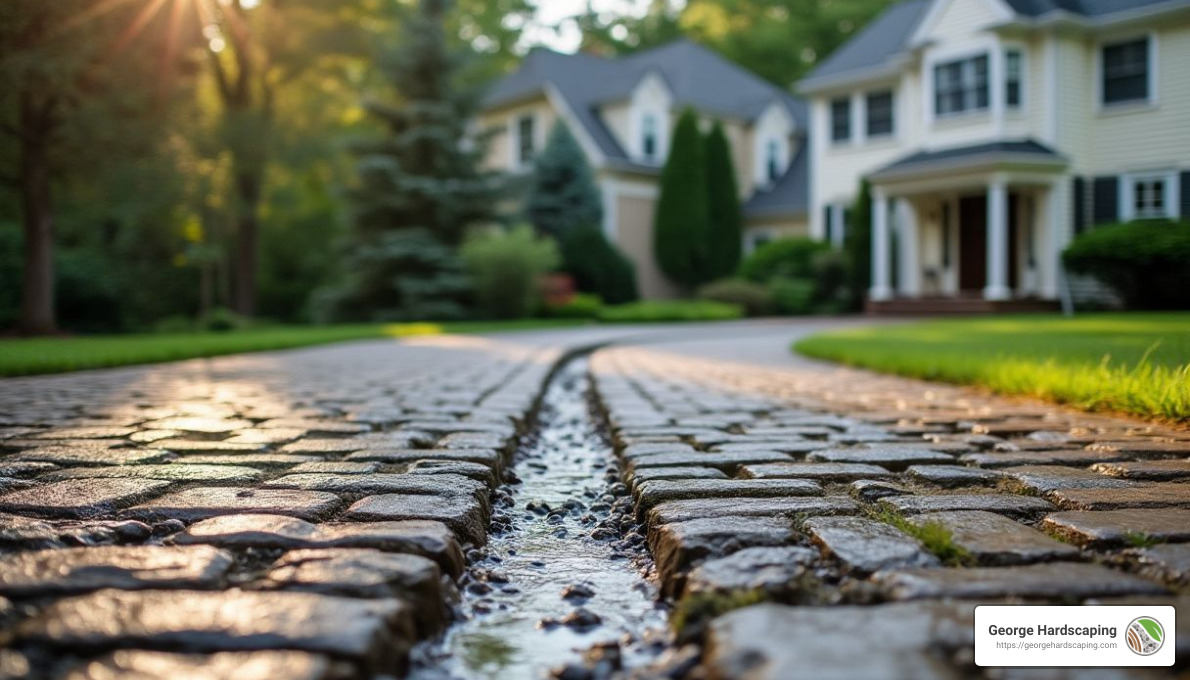
These pavers are not just about durability. They also excel in water drainage. By allowing water to seep through the surface, they help prevent pooling and ice formation, which are common problems in colder months. This makes them a safer choice for both pedestrians and vehicles.
Water Drainage and Environmental Benefits
Proper water drainage is crucial in New England, where heavy rains and snowmelt can lead to significant runoff issues. Permeable surfaces play a key role in mitigating this. They allow water to filter through layers of gravel beneath the surface, which helps recharge groundwater and reduce the burden on local stormwater systems.
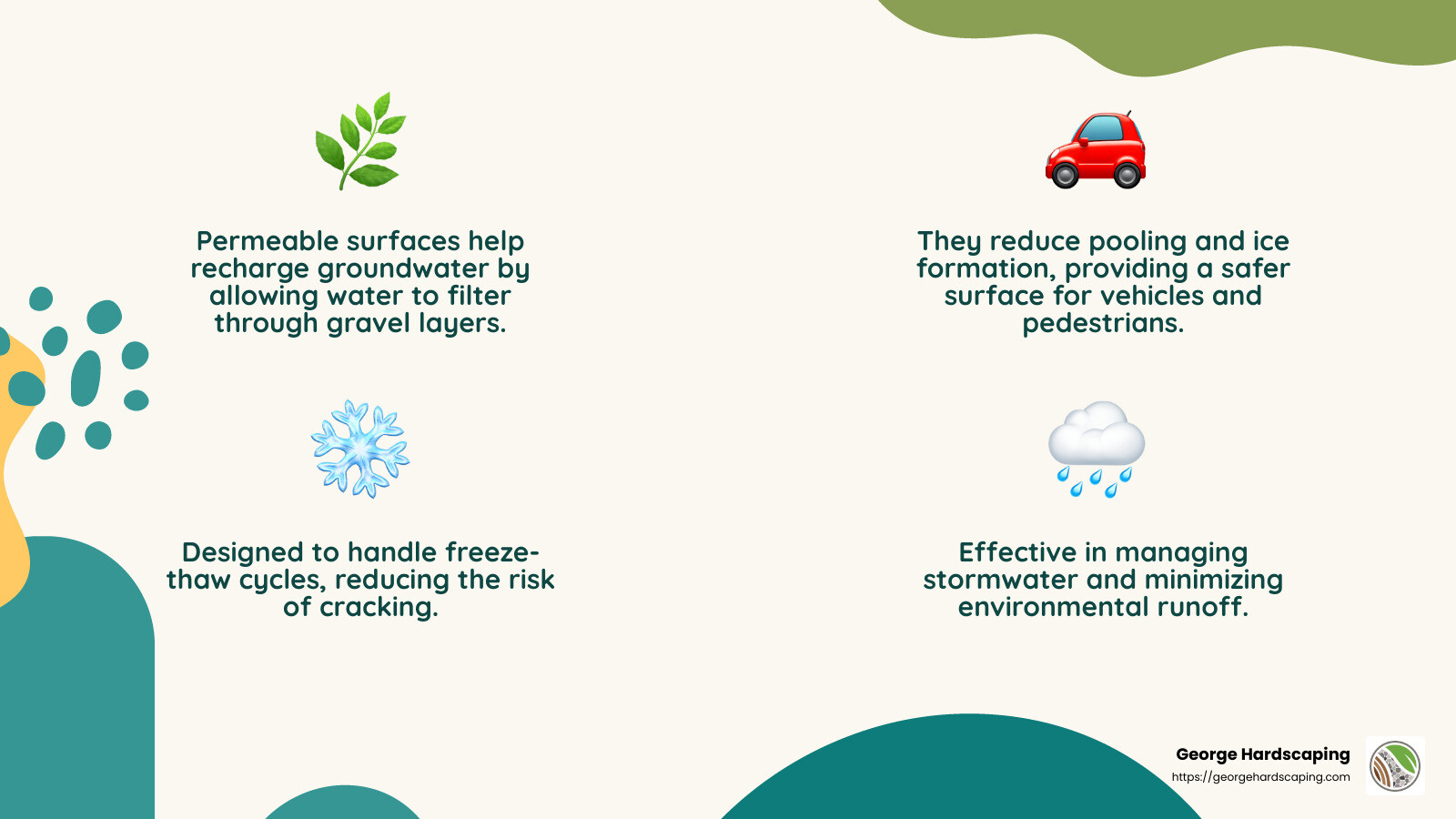
This not only protects your driveway from damage but also contributes to the health of local ecosystems by minimizing runoff, which often carries pollutants into rivers and streams. It’s a win-win for both your property and the environment.
By understanding these key aspects, you can see why permeable driveway surfaces are the best solution for New England’s challenging climate. They combine durability, effective water management, and environmental responsibility into one smart choice.
Best Solution for New England Permeable Driveway Surface
Choosing the best solution for New England permeable driveway surfaces involves balancing durability, maintenance, and cost-effectiveness. Let’s explore why permeable pavers are the top choice in this region.
Durability
The harsh New England climate tests driveway materials with its extreme temperature swings and frequent precipitation. Permeable pavers shine here due to their flexibility and resilience. Unlike concrete, which can crack under freeze-thaw cycles, permeable pavers are designed to move slightly without breaking. This flexibility protects your driveway from the costly repairs often needed with other materials.
Maintenance
Maintenance is a key consideration for any homeowner. With permeable pavers, the upkeep is minimal compared to options like asphalt, which can develop potholes and cracks that require regular attention. The design of permeable pavers ensures they stay in place, reducing the need for frequent repairs or replacements. Regular sweeping and occasional power washing keep them looking great without much effort.
Cost-Effectiveness
When evaluating cost-effectiveness, it’s important to look beyond initial installation costs. While permeable pavers might have a higher upfront price than gravel or basic asphalt, they offer long-term savings. Their durability means fewer repairs, and their ability to manage water effectively can save on drainage system costs. Additionally, by reducing runoff, they help avoid potential fines or fees related to environmental regulations in New England.
In summary, permeable pavers offer a durable, low-maintenance, and cost-effective solution that meets the unique demands of New England’s climate. They are a smart investment for homeowners looking to protect their property while also contributing to environmental sustainability.
Next, we’ll explore some popular permeable driveway options to consider for your home.
Exploring Popular Permeable Driveway Options
When it comes to choosing the right permeable driveway surface, three popular options stand out: permeable pavers, gravel and stone, and pervious concrete. Each of these materials offers unique benefits in terms of durability, water management, and environmental impact. Let’s explore each option.
Permeable Pavers
Durability: Permeable pavers are built to last. They are designed to withstand heavy loads and resist wear and tear from New England’s harsh weather. Their interlocking design allows them to flex slightly, which prevents cracking during freeze-thaw cycles. This makes them a top choice for long-lasting driveways.
Water Management: These pavers excel at managing water. Their porous design allows rainwater to seep through and absorb into the ground, reducing runoff and minimizing flooding risks. This natural drainage helps recharge groundwater supplies, which is crucial for environmental sustainability.
Maintenance: One of the best things about permeable pavers is their low maintenance. Unlike traditional asphalt or concrete, they don’t require frequent resurfacing. If a paver gets damaged, you only need to replace that piece, not the entire driveway. Regular sweeping and rinsing keep them looking fresh.
Gravel and Stone
Drainage: Gravel and stone driveways are excellent for drainage. The loose material allows water to flow through easily, preventing pooling and reducing the risk of ice patches during winter. This makes them a practical choice for areas with heavy rainfall or snow.
Maintenance: While gravel and stone offer great drainage, they do require more upkeep. The loose material can shift over time, needing periodic topping up and leveling. Snow removal can also be a challenge, as plows may displace the gravel.
Environmental Benefits: These materials are natural and do not require energy-intensive production processes. They blend well with the landscape, offering a rustic look that complements many home styles.
Pervious Concrete
Environmental Benefits: Pervious concrete is an environmentally friendly alternative to traditional concrete. It allows water to pass through, reducing runoff and helping to recharge groundwater. This makes it a good choice for eco-conscious homeowners.
Installation: Installing pervious concrete requires careful preparation and expertise. The sub-base must be properly graded and compacted to ensure effective drainage. While installation can be more complex, the benefits in water management and environmental impact are significant.
Durability: Pervious concrete is durable and can handle heavy loads, making it suitable for driveways. However, it may be less flexible than permeable pavers, which could lead to cracking in extreme freeze-thaw conditions.
Each of these permeable driveway options has its own strengths. Whether you prioritize durability, water management, or environmental benefits, there’s a solution that fits your needs. Up next, we’ll dig into the many benefits of choosing permeable driveway surfaces.
Benefits of Permeable Driveway Surfaces
Switching to a permeable driveway surface offers a range of benefits, especially in stormwater management, reducing runoff, and promoting environmental sustainability. Let’s explore these advantages.
Stormwater Management
Permeable surfaces are champions in managing stormwater. Unlike traditional asphalt or concrete, these surfaces allow rainwater to seep through, filtering it naturally into the ground. This process prevents excessive water from overwhelming storm drains, which is crucial in areas prone to heavy rainfall like New England. By letting water absorb into the soil, permeable driveways help maintain local waterways’ health and reduce the risk of urban flooding.
Reduced Runoff
One of the standout features of permeable driveways is their ability to reduce runoff. When rainwater flows over impermeable surfaces, it picks up pollutants like oil, dirt, and chemicals, which then wash into rivers and lakes. Permeable surfaces act as a natural filter, trapping these pollutants before they can enter the water system. This not only protects the environment but also keeps local recreational areas cleaner and safer for activities like swimming and fishing.
Environmental Sustainability
Choosing a permeable driveway is a step towards environmental sustainability. These surfaces help recharge groundwater supplies, which is vital for both human consumption and maintaining healthy ecosystems. They also combat the “heat island effect” common in urban areas. Traditional materials like asphalt absorb and retain heat, raising local temperatures. In contrast, permeable materials reflect less heat, helping to keep your surroundings cooler.
Moreover, permeable driveways are often made from recycled materials, reducing the need for new resources and minimizing environmental impact. By opting for these eco-friendly options, you’re contributing to a sustainable future and preserving the natural beauty of regions like New England.
In the next section, we’ll address common questions about permeable driveways to help you make an informed decision.
Frequently Asked Questions about Permeable Driveways
Choosing the right driveway surface can be tricky, especially with so many options available. Here, we answer some common questions about permeable driveways to help you make the best choice for your New England home.
What is the best permeable driveway surface?
When it comes to the best solution for a New England permeable driveway surface, several options stand out:
- Gravel: Gravel driveways are cost-effective and offer excellent drainage. The loose stones allow water to seep through easily, preventing puddles and ice patches. However, they may require regular maintenance to keep the surface even.
- Wheel Tracks: These are strips of hard materials like concrete or pavers, with grass or gravel in between. Wheel tracks provide a stable driving surface while allowing water to drain through the permeable sections.
- Reinforced Grass: This option involves using a grid system that supports the growth of grass, making it strong enough to handle vehicle traffic. It offers a natural look and excellent drainage but may need more upkeep to maintain healthy grass.
How do permeable pavers work?
Permeable pavers are designed to manage water effectively. Here’s how they work:
- Water Filtration: The pavers have small gaps or are made of porous materials that let water pass through.
- Gravel Layers: Beneath the pavers, several layers of gravel act as a filtration system. These layers help clean the water before it reaches the groundwater, trapping pollutants and debris.
By allowing water to filter through the layers, permeable pavers reduce runoff and help maintain local water quality.
Are permeable driveways environmentally friendly?
Yes, permeable driveways are highly environmentally friendly for several reasons:
- Groundwater Recharge: By letting water seep into the ground, these driveways help replenish groundwater supplies, which is essential for both drinking water and maintaining natural ecosystems.
- Pollution Reduction: As water filters through the driveway, pollutants like oil and dirt are trapped, preventing them from reaching local waterways. This keeps rivers, lakes, and beaches cleaner and safer for everyone.
Overall, opting for a permeable driveway is a smart choice for those looking to reduce their environmental impact while enjoying practical benefits.
Conclusion
At George Hardscaping, we believe that your driveway should not only serve its functional purpose but also improve the beauty and sustainability of your home. Our commitment to quality craftsmanship ensures that we deliver the best solution for a New England permeable driveway surface.
Why Choose George Hardscaping?
- Expertise in New England Solutions: We understand the unique challenges posed by the New England climate, from harsh winters to heavy rainfalls. Our team is skilled in selecting and installing driveway materials that withstand these conditions while maintaining their aesthetic appeal.
- Quality Craftsmanship: Our focus on quality is best. We use top-tier materials and employ experienced professionals to ensure each project meets the highest standards. Whether it’s permeable pavers or other solutions, our installations are built to last.
- Sustainability and Functionality: By choosing permeable driveway surfaces, you’re investing in a solution that not only looks great but also benefits the environment. Our driveways promote natural water drainage, reduce runoff, and help manage stormwater effectively.
When you choose George Hardscaping, you’re choosing a partner dedicated to changing your outdoor spaces into sustainable, functional, and beautiful environments. Let’s work together to create a driveway that you’ll be proud of for years to come.
Find more about our permeable driveway solutions and how they can benefit your home by visiting our Permeable Driveway Pavers page.
Together, we can make your driveway a standout feature of your home while contributing positively to the environment.
