
Edging Options for Permeable Driveways: Top 3 Best 2025
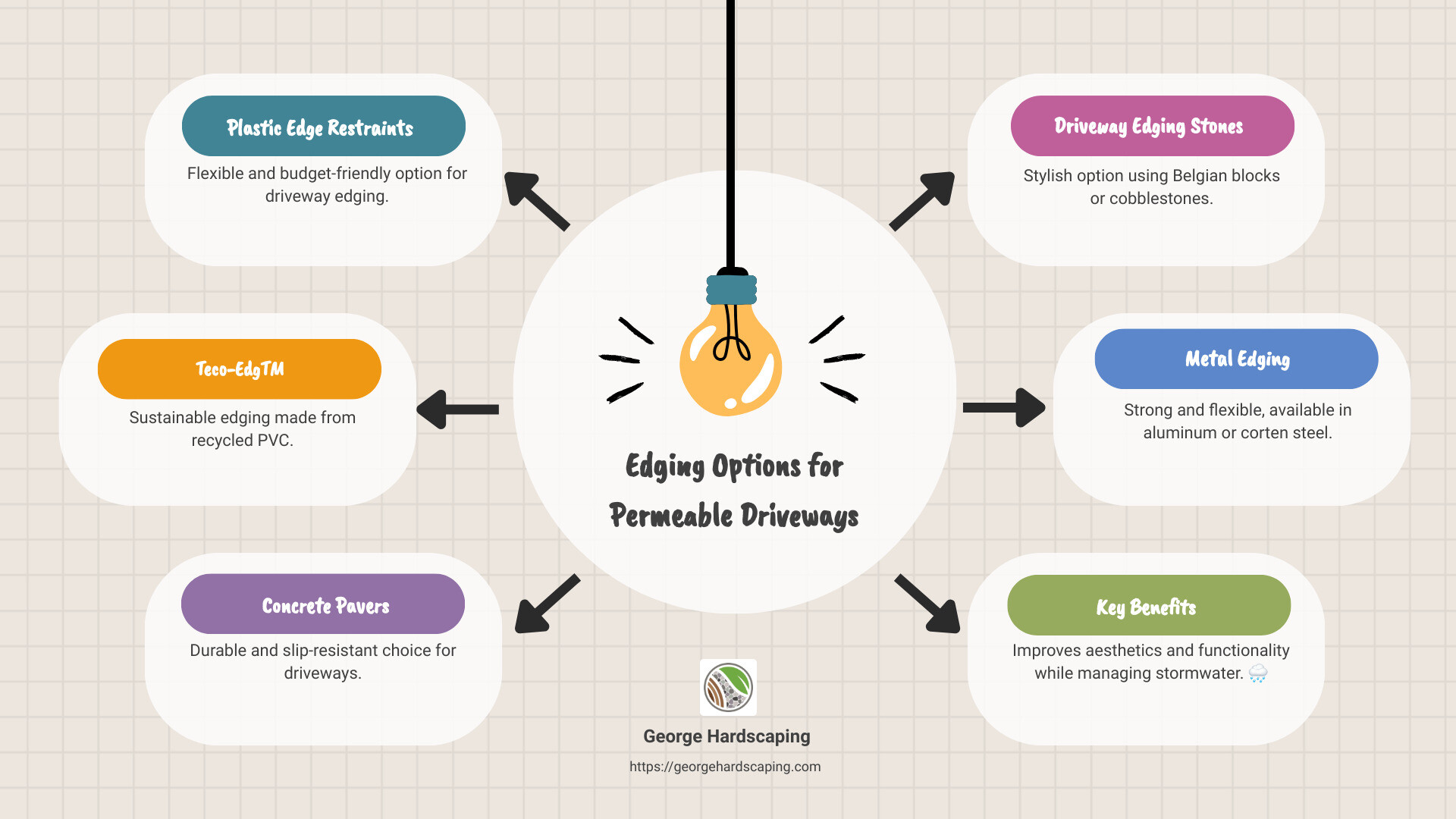
Edging options for permeable driveways are essential for homeowners wishing to improve both the aesthetic and functionality of their outdoor spaces. When considering these driveways, key edging solutions include:
- Plastic Edge Restraints: Flexible and budget-friendly.
- Teco-EdgTM: Made from recycled PVC, ideal for sustainability.
- Concrete Pavers: Durable and slip-resistant.
- Driveway Edging Stones: Offers style with Belgian blocks or cobblestones.
- Metal Edging: Offers strength and flexibility, comes in aluminum or corten steel.
Permeable driveways not only add beauty to your property but also offer significant environmental benefits. These driveways help manage stormwater by allowing rainwater to seep through, reducing runoff that could otherwise lead to flooding. This water management is crucial, especially in urban areas where heavy rainfall can overwhelm drainage systems.
Permeable driveways also assist in mitigating the urban heat island effect. Their cooler surfaces contribute to a more comfortable environment during hot weather. As a cherry on top, these driveways can improve groundwater quality by filtering out pollutants, making them a smart choice for eco-conscious homeowners.
Choosing the right edging for your permeable driveway makes a big difference in maintaining its structure and functionality. Proper edging keeps the pavers in place and ensures stormwater can effectively pass through the surface, maximizing both the vibrant look and environmental perks of your driveway.
Learn more about edging options for permeable driveways:
– driveways with pavers
– permeable driveway surface options
Understanding Permeable Driveways
Permeable driveways are more than just a trendy option for homeowners—they’re a smart choice for anyone looking to be eco-friendly and manage water effectively. At the heart of these driveways are permeable surfaces that allow water to infiltrate through the material and into the ground below. This is different from traditional driveways that send water rushing into storm drains.
Water Infiltration
The magic of permeable driveways lies in their ability to let water seep through. Imagine a heavy rainstorm: instead of water pooling on your driveway or running off into the street, it gently filters through the surface. This process helps manage stormwater, reducing the risk of flooding and easing the burden on city drainage systems. It’s like giving water a natural path back to the earth.
Eco-Friendly Benefits
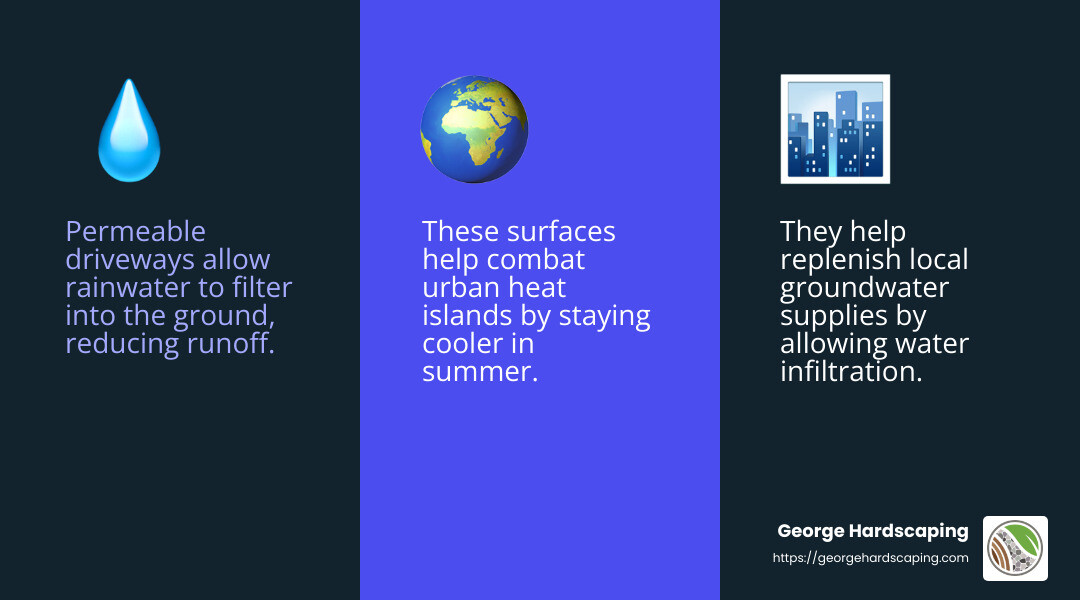
Permeable driveways are champions of the environment. By allowing water to filter through, they help replenish local groundwater supplies. This is crucial in areas where water is a precious resource. They also trap pollutants from stormwater, leading to cleaner groundwater. Plus, these driveways stay cooler in the summer, helping to combat the urban heat island effect—a phenomenon where urban areas become significantly warmer than their rural surroundings.
Choosing a permeable driveway is not just about being kind to the earth; it’s also about enhancing your property. They offer diverse design possibilities, from gravel to permeable pavers, allowing you to match your driveway to your home’s style. And with the right materials and edging, these driveways are less likely to crack from freeze-thaw cycles, making them a durable choice.
In the next section, we’ll dive into the various edging options for permeable driveways. These options are key to maintaining the structure and beauty of your driveway while maximizing its environmental benefits.
Edging Options for Permeable Driveways
Edging is crucial for maintaining the structure and beauty of your permeable driveway. It keeps everything in place and ensures that your driveway performs as it should. Let’s explore the edging options for permeable driveways.
Concrete Pavers
Concrete pavers are a popular choice for edging due to their durability and slip-resistant nature. They can withstand harsh weather and heavy use, making them a reliable option. Installation is straightforward: lay the pavers along the edge of your driveway to create a stable border. They come in various shapes and colors, allowing you to match them with your driveway’s design.
Driveway Edging Stones
If you’re seeking aesthetic appeal, consider using Belgian blocks or cobblestone for your driveway edging. These stones add a classic and timeless look to any driveway. They are not only beautiful but also strong enough to keep your driveway materials in place. The installation process involves setting them into a prepared trench along the driveway’s edge, ensuring they sit snugly against each other.
Metal Edging
For those who prefer a modern touch, metal edging offers sleek lines and a contemporary feel. Materials like aluminium and corten steel are flexible, allowing you to create curves and unique designs. Metal edging is durable and can be a long-lasting solution for defining the boundaries of your driveway. Installation typically involves securing the metal strips with stakes driven into the ground.
Plastic Edge Restraints
Plastic edge restraints are known for their flexibility and cost-effectiveness. They are easy to install and can accommodate various shapes and designs. Plastic edging is lightweight, making it simple to handle during installation. These restraints are a practical choice for those looking to maintain their driveway’s structure without breaking the bank.
Teco-EdgTM
For a sustainable option, consider Teco-EdgTM, made from recycled PVC. This edging comes with drainage slots, which are perfect for permeable driveways as they allow water to pass through easily. Teco-EdgTM is durable and straightforward to install, providing a sturdy edge that supports stormwater management. Its eco-friendly nature makes it an ideal choice for those committed to sustainable living.
Choosing the right edging is essential for the longevity and effectiveness of your permeable driveway. With these options, you can improve both the functionality and appearance of your driveway, ensuring it remains a valuable part of your property.
In the next section, we’ll provide some installation tips for permeable driveway edging to help you get the most out of your chosen materials.
Installation Tips for Permeable Driveway Edging
Proper installation of your driveway edging is key to ensuring the longevity and effectiveness of your permeable driveway. Let’s explore some essential tips for base preparation, edge restraint, and maintenance.
Base Preparation
A strong foundation is crucial. Begin by clearing the area of any debris, weeds, or old materials. This clean slate ensures that your edging sits correctly and functions well.
Grading the site is the next step. This means leveling the ground to promote proper drainage and prevent water pooling, which is essential for permeable driveways. You should aim for a slight slope away from any structures to guide water effectively.
Edge Restraint
Edge restraint is vital for keeping your driveway materials in place. Without it, pavers can shift or move, leading to a messy and unstable surface.
When installing edge restraints, make sure they are anchored securely into the ground. This can be done using landscape stakes or pins. The restraint should sit firmly against the base material, ensuring it stays put even under heavy use.
For curved driveways, flexible materials like metal or plastic are ideal. They can bend to fit the shape of your driveway, providing a neat and custom finish.
Maintenance
Once your driveway edging is installed, regular maintenance will keep it looking great and functioning well.
Inspect the edging periodically for any signs of wear or displacement. Address any issues promptly to prevent them from escalating into bigger problems.
Keep your driveway clean by sweeping away debris and dirt. This not only maintains its appearance but also ensures proper water infiltration. For permeable pavers, occasional rinsing can help keep the gaps clear, promoting effective drainage.
By following these installation tips, you can ensure that your permeable driveway edging remains strong, stable, and attractive for years to come.
In the following section, we’ll address some frequently asked questions about permeable driveway edging to help clarify any lingering doubts you may have.
Frequently Asked Questions about Permeable Driveway Edging
What is the cheapest way to edge a driveway?
If you’re looking for a cost-effective option to edge your driveway, crushed stone is a great choice. It’s inexpensive and simple to install. Just lay a border of crushed stone along the edges of your driveway. This helps keep the permeable pavers or gravel in place and prevents them from spreading.
Crushed stone also offers a rustic and natural look, which can complement many home styles. Plus, it’s easy to adjust or replace if needed.
What do you put between permeable pavers?
To ensure stability and prevent weeds from sprouting between your permeable pavers, use polymeric sand. This special sand contains additives that bind the grains together when activated by water, creating a firm yet flexible joint.
Here’s how to use it:
- Sweep the sand into the joints between your pavers.
- Compact the pavers to help the sand settle deeper into the gaps.
- Rinse the area according to the manufacturer’s instructions. This activates the binding agents in the sand.
Polymeric sand not only keeps the pavers stable but also minimizes weed growth and deters ants from making their homes in the joints.
How do you edge a curved stone drive?
Edging a curved stone driveway requires materials that can flex and contour smoothly along the curves. Metal and plastic edging are ideal for this purpose. They are flexible and can be shaped to match the curve of your driveway.
- Metal Edging: Materials like aluminum offer a sleek, modern look and are durable. They can be bent to fit the curve and are anchored with stakes to keep them in place.
- Plastic Edging: This is a more budget-friendly option. It’s lightweight and easy to install. Simply bend it to fit the curve and secure it with stakes.
For a more robust option, you can also use concrete. While it requires more work to install, concrete edging can be molded to any shape and offers a permanent, sturdy border.
By understanding these edging options, you can choose the best method to improve both the functionality and aesthetics of your permeable driveway.
Conclusion
At George Hardscaping, we pride ourselves on delivering exceptional craftsmanship and quality in every project. Our commitment to enhancing outdoor spaces extends beyond aesthetics to include functionality and sustainability. As a trusted masonry and hardscaping contractor in Essex County, MA, we specialize in creating beautiful, durable, and eco-friendly landscapes that stand the test of time.
Permeable driveways are a crucial part of modern landscaping, offering numerous benefits like stormwater management and reduced environmental impact. By choosing the right edging options for permeable driveways, you not only improve the visual appeal of your property but also contribute to environmental sustainability. Our team at George Hardscaping is equipped with the expertise and materials needed to ensure your driveway is both stylish and functional.
Whether you’re in Beverly, Gloucester, or anywhere else in Essex County, MA, we’re here to help you transform your outdoor space. From permeable driveway pavers to custom firepits, we offer a range of services custom to meet your unique needs. Our focus on quality and craftsmanship ensures that your landscape will be an asset to your home for years to come.
Ready to improve your property with a sustainable and beautiful permeable driveway? Explore our services and see how George Hardscaping can bring your vision to life. Together, we can create outdoor spaces that are not only beautiful but also beneficial for the planet.
