
Are Driveway Pavers a Good Investment? Top 5 Benefits
Are driveway pavers a good investment? Absolutely. For homeowners in Essex County, MA, or the North Shore, investing in driveway pavers can improve your property’s curb appeal and functionality while increasing its market value. Here’s a quick breakdown of why they make a smart choice:
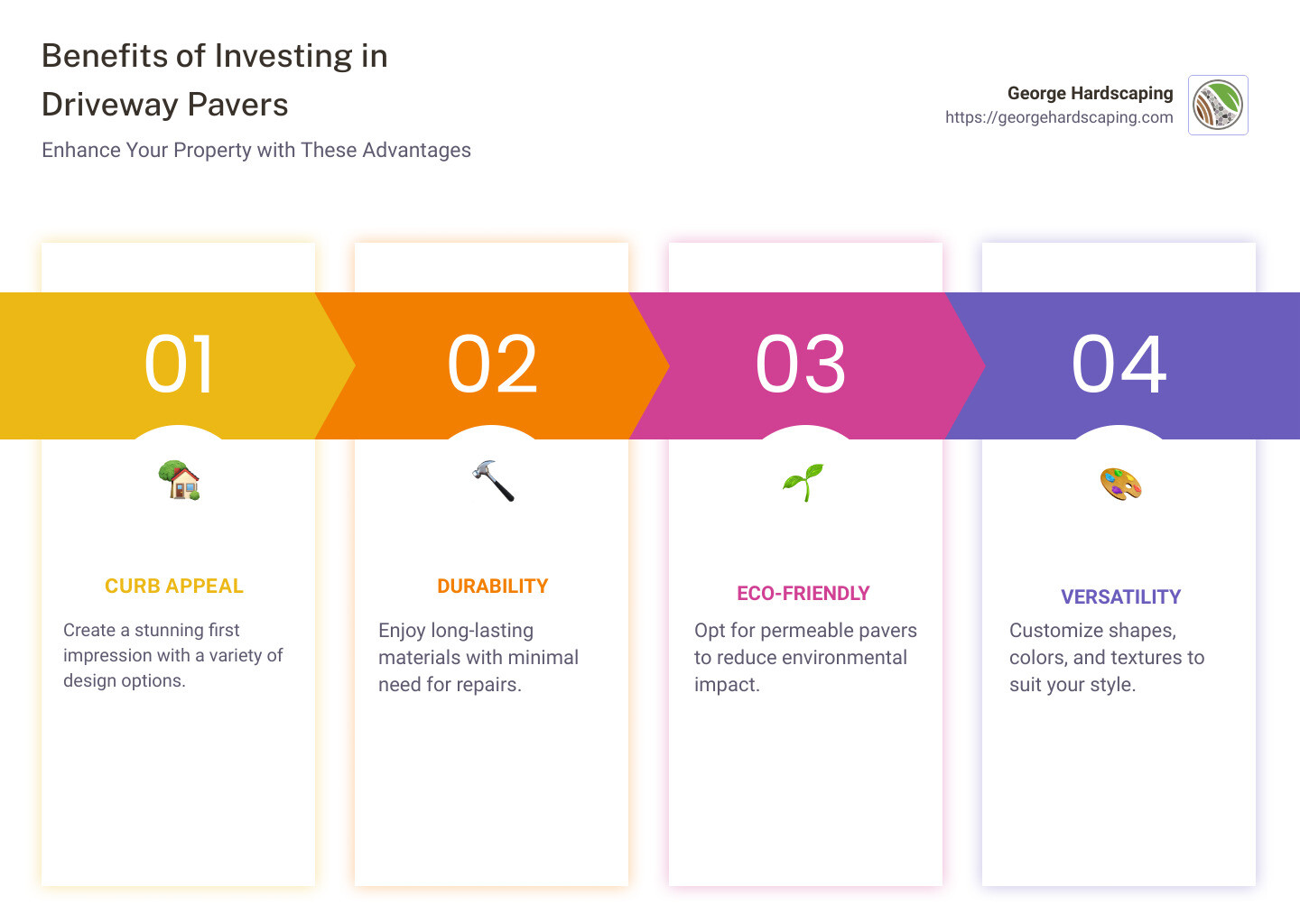
- Curb Appeal: Transform the first impression with diverse design options.
- Durability: Fewer repairs and long-lasting materials.
- Eco-Friendly: Reduce environmental impact with permeable options.
- Versatility: Customize shapes, colors, and textures.
Driveway pavers offer a blend of aesthetic charm and lasting resilience, turning heads and boosting buyer interest. They not only beautify your home but also provide practical benefits like better water drainage and simple maintenance. This combination makes them a wise investment when aiming to improve property value and appeal.
Are driveway pavers a good investment basics:
– are concrete pavers good for driveways
– driveway pavers cost
– modern driveway pavers
Benefits of Driveway Pavers
Driveway pavers are more than just a surface to park your car. They bring a host of benefits that can boost your home’s value and appeal.
Curb Appeal
First impressions matter. A well-designed driveway can set the tone for your entire home. With driveway pavers, the design options are almost endless. You can choose from different shapes, colors, and patterns to create a look that complements your home’s style. This versatility allows homeowners to make a statement and improve their property’s aesthetic appeal.
Durability
One of the standout features of driveway pavers is their durability. Unlike concrete, which can crack and require costly repairs, pavers are built to last. They handle heavy loads and harsh weather without breaking. Plus, if a single paver gets damaged, you can replace it without disturbing the rest of the driveway. This means minimal repairs over the years, making pavers a long-lasting investment.
Eco-Friendly
Being eco-friendly is a big plus. Driveway pavers offer sustainable benefits. Permeable pavers allow water to seep through, reducing runoff and filtering out pollutants. This natural filtration system helps protect local waterways and recharge groundwater. Made from natural materials, pavers also have a smaller carbon footprint compared to traditional options like concrete.
Versatility
The versatility of pavers is another reason they stand out. With a variety of shapes and colors, homeowners can customize their driveways to match their personal style. Whether you prefer a classic look or something more modern, pavers offer the flexibility to create a unique driveway that improves your home’s exterior.
Incorporating driveway pavers is a practical and stylish way to increase your home’s value and appeal. Their blend of durability, eco-friendliness, and customization options make them an excellent choice for homeowners looking to make a lasting impression.
Disadvantages of Driveway Pavers
While driveway pavers offer many benefits, they also come with some downsides that homeowners should consider.
Higher Cost
Upfront Cost: One of the main drawbacks of driveway pavers is their higher initial cost. Compared to concrete, pavers are more expensive due to the cost of materials and the labor-intensive installation process. Concrete driveways are generally cheaper to install, making them a more budget-friendly option for those looking to save on initial expenses.
Long-Term Value: Despite the higher upfront cost, pavers can offer better long-term value. Their durability and ease of repair can result in lower maintenance costs over time. However, the initial investment might be a hurdle for some homeowners.
Installation Time
Individual Placement: Installing driveway pavers is a meticulous process. Each paver needs to be placed individually, which requires precision and expertise. This can make the installation process longer than that of concrete or asphalt driveways.
Project Duration: Due to the detailed nature of placing each paver, the project can take longer to complete. Homeowners should be prepared for a more extended installation period, which might be inconvenient if a quick turnaround is needed.
Contractor Expertise: To ensure a quality installation, it’s crucial to hire experienced contractors. Their expertise can impact the overall look and durability of the driveway. Finding the right contractor might take time and could add to the project’s complexity.
Maintenance
Weeds and Moss: Maintenance is another consideration with paver driveways. The spaces between pavers can allow weeds and moss to grow, which can be unsightly and require regular attention.
Regular Cleaning: Keeping a paver driveway looking its best involves regular cleaning. Dirt and debris can accumulate in the joints, and periodic re-sanding might be necessary to maintain stability and prevent weed growth.
While the upfront cost and installation time for driveway pavers can be higher, and regular maintenance is needed, the long-term benefits and aesthetic appeal often make them a worthwhile investment for many homeowners.
Are Driveway Pavers a Good Investment?
When considering are driveway pavers a good investment, it’s crucial to evaluate not just the initial costs, but the broader financial benefits and market appeal they offer.
Return on Investment
Driveway pavers can provide a strong return on investment (ROI) due to their durability and aesthetic appeal. While the upfront cost is higher compared to materials like asphalt or concrete, the long-term savings on maintenance and repairs can offset this initial expense. Pavers are known for their longevity, often lasting up to 75 years, which means fewer replacements and repairs over time.
Moreover, the ability to replace individual pavers reduces long-term maintenance costs. This feature, combined with their aesthetic appeal, can make paver driveways a financially sound choice for homeowners looking to invest in their property.
Property Value
Installing a paver driveway can significantly improve your home’s curb appeal, which is a key factor in attracting potential buyers. A well-designed driveway creates a strong first impression, potentially increasing your property’s value. Buyers often appreciate the customization options that pavers provide, such as various colors and patterns, which can complement the architectural style of a home.
Additionally, a durable and low-maintenance driveway is a selling point for future homeowners, adding to the resale impact. This means that the investment in pavers can translate into a higher selling price when it comes time to put your home on the market.
Market Trends
Market trends indicate a growing preference for eco-friendly and customizable home features. Permeable pavers, which allow water to filter through and reduce stormwater runoff, align well with these trends and can appeal to environmentally-conscious buyers.
Regional differences also play a role. In areas where paver driveways are common, installing one can help your home meet neighborhood standards, thus maintaining its competitive edge in the real estate market. Conversely, in regions where pavers are less common, they can make your home stand out, attracting buyers looking for unique and high-quality features.
In conclusion, while the initial investment in driveway pavers is higher, the long-term benefits in terms of durability, maintenance savings, and increased property value make them a potentially wise choice for homeowners looking to improve their home’s appeal and marketability.
Comparing Driveway Materials
When choosing materials for your driveway, weigh the pros and cons of each option. Let’s compare asphalt, concrete, gravel, and pavers to help you make an informed decision.
Asphalt Driveways
Cost per Square Foot: Asphalt driveways typically cost between $7 to $13 per square foot. This makes them a more budget-friendly option compared to pavers and certain types of concrete.
Lifespan: Asphalt can last 15 to 30 years with proper maintenance. However, it requires regular sealing every few years to maintain its integrity and appearance.
Climate Considerations: Asphalt performs well in colder climates due to its ability to expand and contract with temperature changes. It handles freeze-thaw cycles better than concrete, reducing the risk of cracking.
Concrete Driveways
Cost per Square Foot: The cost of a concrete driveway varies widely, ranging from $5 to $70 per square foot, depending on customization options like stamping or coloring.
Durability: Concrete is known for its durability, often lasting 50 to 100 years. It’s less prone to heat damage compared to asphalt but can crack in extremely cold conditions.
Cracking Issues: One downside of concrete is its susceptibility to cracking, especially in freeze-thaw climates. However, regular sealing can help mitigate this issue.
Gravel Driveways
Affordability: Gravel is the most affordable driveway option, costing as low as $1 to $3 per square foot. This makes it a great choice for those on a tight budget.
Maintenance: Gravel driveways require regular maintenance, including leveling and adding more gravel to fill in low spots. Weeds can also be an issue, requiring occasional treatment.
Aesthetic Appeal: While not as visually striking as pavers or concrete, gravel can offer a rustic charm. The choice of gravel type can also improve the overall look.
Paver Driveways
Cost per Square Foot: Pavers are on the higher end of the cost spectrum, ranging from $10 to $30 per square foot. Despite the higher upfront cost, they offer significant benefits.
Design Flexibility: Pavers offer best design flexibility with a wide range of colors, shapes, and patterns. This allows homeowners to create a custom look that complements their home’s architecture.
Longevity: Paver driveways are incredibly durable, with a lifespan of up to 75 years. They are resistant to cracking and can be easily repaired by replacing individual pavers.
In summary, the choice of driveway material depends on your budget, climate, and aesthetic preferences. While asphalt and gravel offer lower initial costs, concrete and pavers provide greater durability and aesthetic appeal, potentially enhancing your property’s value over time.
Frequently Asked Questions about Driveway Pavers
What are the disadvantages of a paver driveway?
Paver driveways, while attractive and durable, do come with some downsides.
Higher Cost: Pavers can be more expensive upfront compared to other materials like concrete or asphalt. The cost ranges from $10 to $30 per square foot. This higher price is due to the materials and the labor-intensive installation process, where each paver is placed individually.
Installation Time: The process of laying a paver driveway is time-consuming. Each paver needs to be carefully positioned, which can extend the project’s duration. However, this meticulous installation is what contributes to the driveway’s longevity and aesthetic appeal.
Maintenance: Paver driveways require regular maintenance to keep them looking their best. Weeds and moss can grow between the pavers, necessitating periodic cleaning and treatment. Despite this, repairs are relatively easy since individual pavers can be replaced without disturbing the entire driveway.
Are driveway pavers worth it?
When considering are driveway pavers a good investment, the benefits often outweigh the disadvantages.
Benefits and ROI: Paver driveways offer excellent return on investment. They are durable, lasting up to 75 years, and require minimal repairs. If a paver gets damaged, it can be replaced individually, saving on costs compared to concrete slabs that might need full replacement.
Long-term Value: While the initial cost is higher, the long lifespan and low maintenance requirements can make pavers a cost-effective choice over time. They also provide a unique aesthetic that can improve your home’s curb appeal.
Does a paver driveway add value?
Yes, a paver driveway can significantly add to your property’s value.
Property Value: A well-designed paver driveway acts as a focal point, boosting curb appeal and making your home more attractive to potential buyers. This can lead to a higher resale value.
Buyer Attraction: Homes with paver driveways stand out in the real estate market. The variety of design options allows homeowners to customize their driveways to complement their home’s style, further increasing buyer interest.
Resale Impact: In many cases, the presence of a paver driveway can lead to quicker sales and potentially higher offers, as it signals quality and attention to detail.
In conclusion, while paver driveways might require a higher initial investment, their durability, aesthetic appeal, and potential to increase property value make them a worthwhile consideration for homeowners looking to improve their homes.
Conclusion
In summary, investing in driveway pavers is a strategic decision that can significantly improve your property’s value and curb appeal. While the initial costs may be higher than other materials like concrete or asphalt, the long-term benefits often justify the investment. Paver driveways offer durability, lasting up to 75 years with minimal repairs, and they add a unique aesthetic charm that sets your home apart in the real estate market.
Our exploration of the topic “are driveway pavers a good investment” reveals that the advantages—such as increased property value and buyer attraction—outweigh the drawbacks. The potential for a strong return on investment and the ability to replace individual pavers without major disruption make them a practical choice for homeowners.
At George Hardscaping, we specialize in creating beautiful, functional outdoor spaces that lift your home’s exterior. Our expertise in driveway paver installation ensures that your investment is both aesthetically pleasing and structurally sound. We are committed to using high-quality materials and cutting-edge techniques to deliver results that you’ll be proud of.
If you’re considering upgrading your driveway with pavers, we invite you to learn more about our services and how we can help transform your outdoor space. Visit our driveway paver installation page for more information and to get started on your project.
In conclusion, choosing driveway pavers is not just about aesthetics—it’s about making a wise investment that improves both the beauty and functionality of your home. Let George Hardscaping guide you in making your property stand out for all the right reasons.
