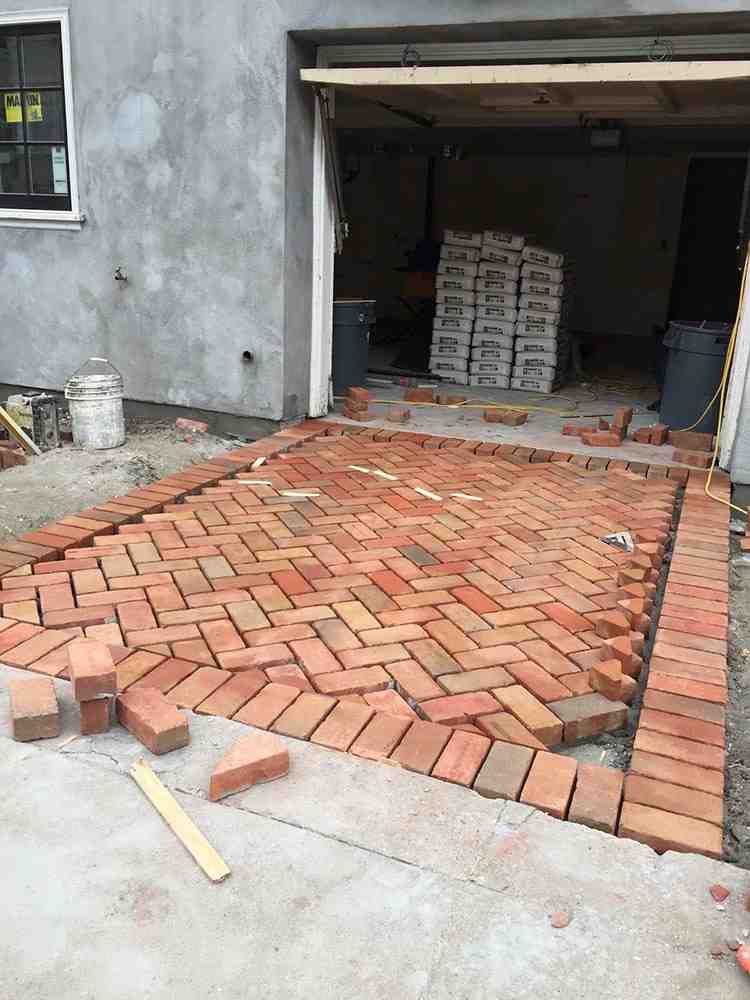
What Is a Permeable Drive — And Why Does It Matter?
In the modern landscape of home design and environmental stewardship, the concept of the permeable drive has transitioned from a niche eco-friendly alternative to a mainstream architectural standard. For decades, residential development relied on “impervious surfaces”—materials like standard poured concrete and hot-mix asphalt that create a waterproof seal over the earth. While these surfaces are durable, they disrupt the natural hydrological cycle, forcing rainwater to travel horizontally across the surface rather than vertically into the soil. This shift has led to increased pressure on municipal storm systems and a rise in localized flooding.
A permeable drive is a sophisticated engineering solution designed to reverse this trend. It is a driveway surface that allows rainwater and snowmelt to pass through it directly into the ground below. Instead of shedding water like a traditional sealed surface, it absorbs it, acting as a functional filter for your property. By integrating porous materials with a specialized sub-base, these systems manage stormwater at the source, preventing the pooling and runoff that plague traditional hardscaping.
Here is a comprehensive summary of the core components and benefits:
- What it is: A high-performance driveway constructed from porous materials—such as interlocking concrete pavers with widened joints, pervious concrete, resin-bound aggregate, or reinforced plastic grids—that facilitates water filtration through to a gravel reservoir and eventually into the native soil.
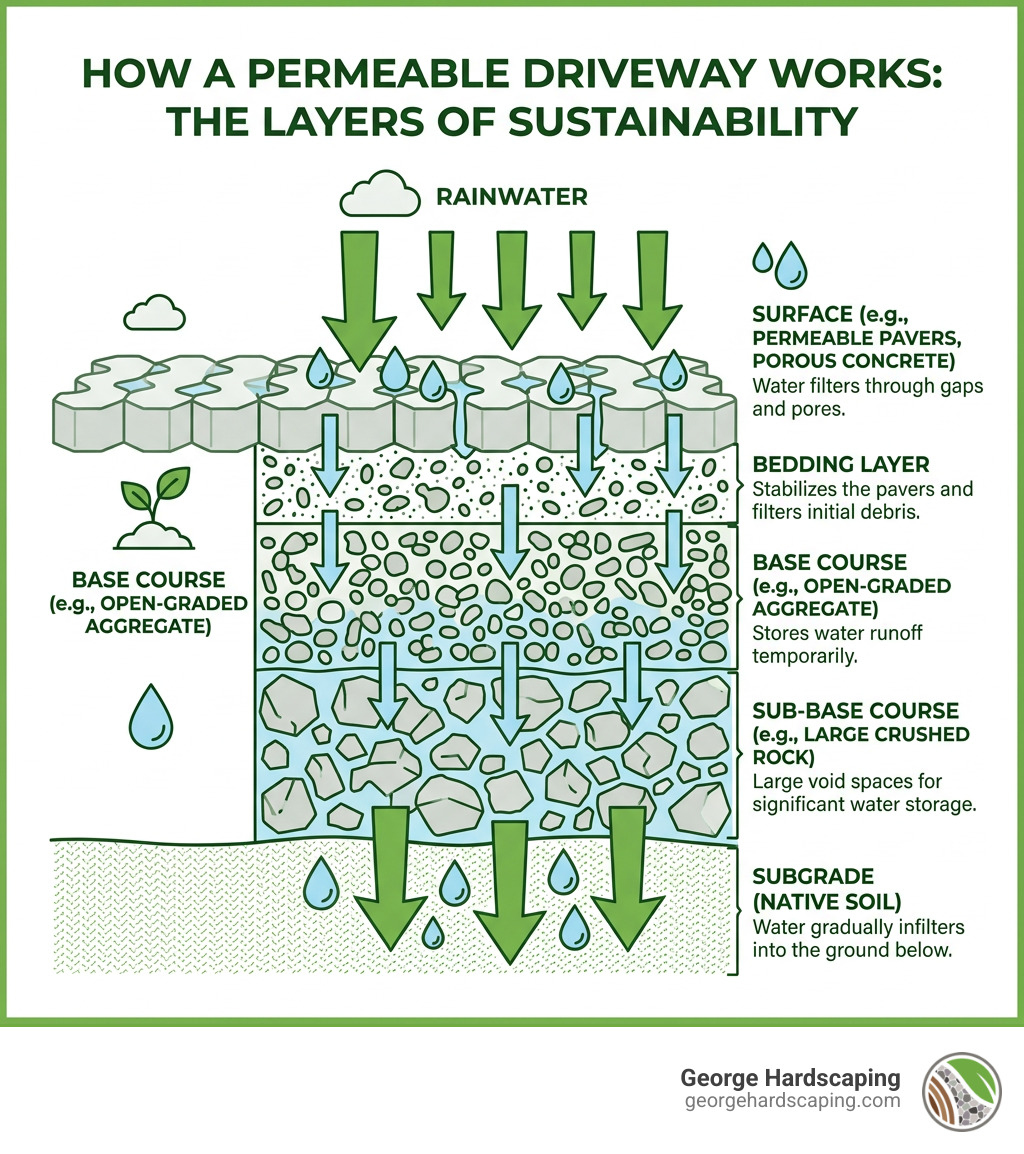
- How it works: Water passes through specific gaps, voids, or pores in the surface layer. It then travels through a multi-layered gravel reservoir (the sub-base), which temporarily stores the water while it slowly infiltrates the subgrade or is safely directed to a designated drainage outlet.
- Why it matters: A professionally installed permeable drive can reduce stormwater runoff by up to 90% and cut peak flow rates by 50–80%. This significantly mitigates the risk of basement flooding, soil erosion, and the transport of pollutants into local waterways.
- Who it’s for: Homeowners in regions like Essex County, MA, who prioritize durability and low maintenance but also want to protect their property value and the local environment from the effects of extreme weather.
- Planning Permission: In many jurisdictions, permeable surfaces are exempt from the strict planning permission requirements that apply to traditional impermeable driveways over a certain size, making them a faster and often more cost-effective choice for major renovations.
If you have ever observed rainwater sheeting off a standard driveway during a New England Nor’easter, you have seen the problem firsthand. In urban and suburban areas, natural ground cover has been replaced by hard surfaces—rooftops, roads, and driveways—that shed water instantly. While a natural forest absorbs nearly 90% of rainfall, a typical suburban block might only absorb 10%. This massive discrepancy leads to stressed infrastructure and polluted rivers. A well-designed permeable drive is one of the most impactful ways a homeowner can restore the natural balance of their land.
Permeable drive terms and resources at a glance:
Understanding the Mechanics of a Permeable Drive
To truly appreciate the engineering behind a permeable drive, we must look beneath the aesthetic surface. While traditional driveways are designed to shed water as quickly as possible—often creating miniature “rivers” in your gutters and street—a permeable system is designed to embrace and manage that volume. The primary goal is to mimic the natural hydration cycle of the earth, allowing the ground to act as a giant sponge.
According to technical documentation from the Federal Highway Administration, these systems are engineered to manage both the volume and the velocity of stormwater. By slowing the water down and providing a temporary storage area, we prevent the “flash flood” effect that occurs when thousands of gallons of rain hit a non-porous street simultaneously. This process, known as attenuation, is critical for protecting the structural integrity of both your home’s foundation and the municipal infrastructure.
The efficiency of these systems is measured by their infiltration rates—essentially, how fast the surface can “drink” the rain. High-quality permeable surfaces can handle incredible amounts of water that far exceed natural rainfall records. For instance, some specialized resin-bound products can drain rainwater at rates exceeding 9,000 mm/hr (approximately 354 inches per hour). Considering a heavy New England downpour might drop only an inch or two in an hour, these systems provide a massive “safety margin” for your property.
The Science of Porosity vs. Permeability
In the hardscaping industry, the terms “porous” and “permeable” are often used interchangeably, but they describe distinct scientific concepts that are both vital to a successful installation.
- Porosity refers to the “void space” within a material. Think of a sponge; it has many tiny holes that can hold water. In permeable pavements, we aim for an in-situ air void content of 15% to 30%. This void space determines how much water the material can hold at any given moment.
- Permeability is the measure of how easily water can move through those spaces. A material can be porous but not permeable if the holes aren’t connected (like a closed-cell foam).
For a permeable drive to function correctly, those voids must form a continuous, interconnected path from the surface down to the soil. Some advanced resin-bound systems offer a flow rate of over 100L/m²/second, which is significantly faster than the infiltration rate of a typical grass lawn, which can become compacted and hydrophobic over time.
How Sub-Base Reservoirs Store Water
The true “magic” of a permeable system isn’t just in the surface material; it’s in the reservoir hidden underneath. When we excavate for a new drive in North Shore towns like Beverly or Danvers, we create a deep “stone box.” This aggregate reservoir is typically filled with open-graded base materials—specifically crushed stone that has been washed to remove all “fines” or dust.
These stone layers usually have a 25–35% void content. This means that about one-third of the total volume of your driveway’s base is actually empty air, ready to act as a temporary detention area for rainwater. While the water sits in this reservoir, it undergoes a process of natural bio-filtration. Microorganisms that live in the stone layers help break down common driveway pollutants like oils, heavy metals, and antifreeze before the water finally reaches the native subgrade. In areas with heavy clay soil, we often install specialized geotextile membranes or underdrains to ensure the water eventually moves along without saturating the ground to the point of structural failure.
| Material Type | Typical Air Void % | Infiltration Rate (Approx) |
|---|---|---|
| Porous Asphalt | 15–30% | 200–500 in/hr |
| Pervious Concrete | 15–25% | 400–800 in/hr |
| Permeable Pavers (PICP) | 8–10% (Joints) | 100+ in/hr |
| Traditional Asphalt | 6–8% | 0 in/hr (Impermeable) |
Comparing Materials: From Pavers to Plastic Grids
When choosing a permeable drive, the material you select will define both the aesthetic character of your home and the long-term maintenance level required. Across the North Shore, we see a wide variety of architectural styles, from the historic coastal charm of Marblehead to the expansive modern estates of Boxford. Each requires a specific approach to permeable design.
Permeable Interlocking Concrete Pavers (PICP)
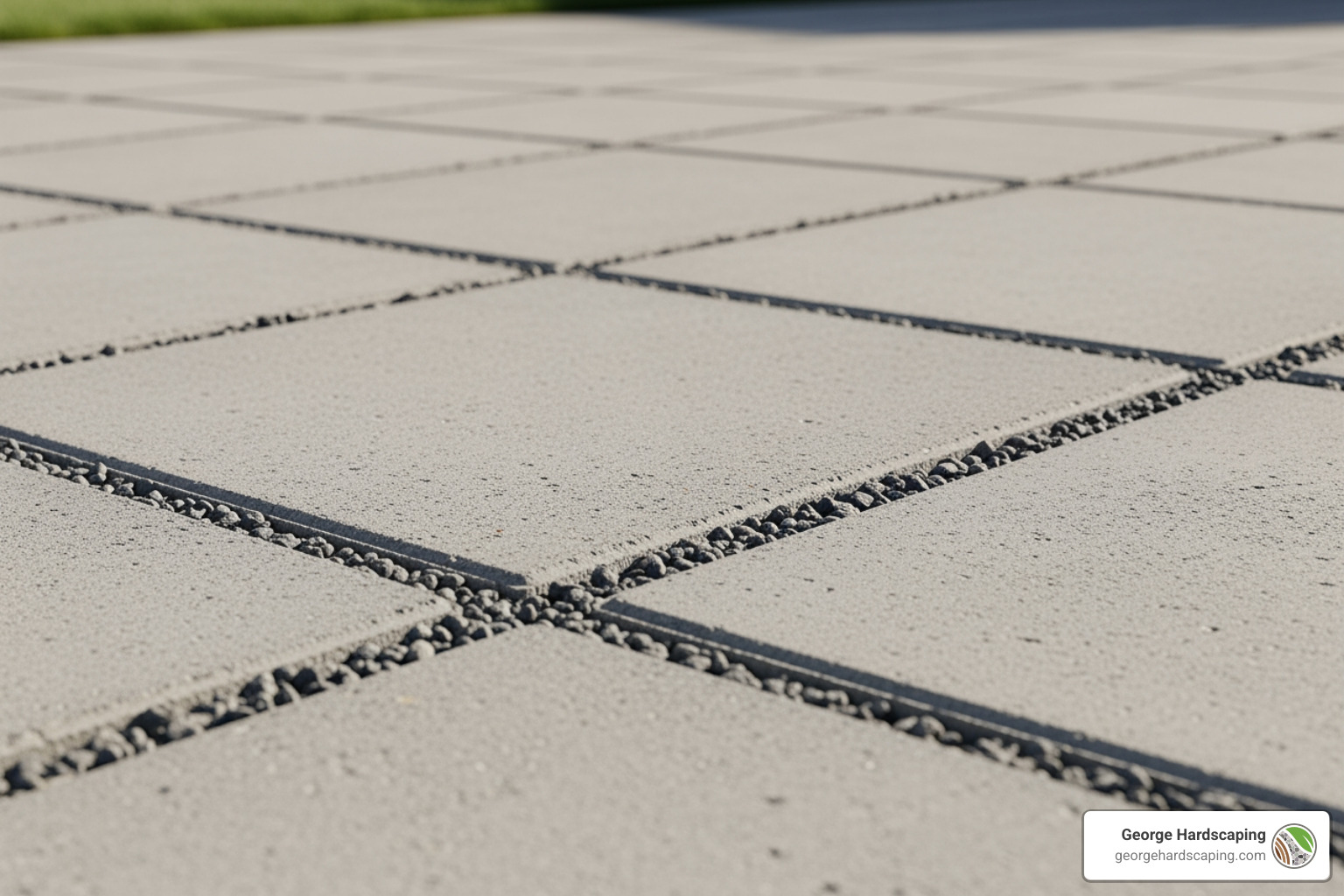
For many homeowners, permeable driveway pavers represent the gold standard of both form and function. Unlike traditional pavers that are “butted” tight against each other with fine sand in the joints, PICPs are engineered with specialized spacers that create larger gaps. These joint openings usually account for 8–10% of the total surface area, providing ample space for water to disappear.
Instead of sand, which would wash away or clog, we fill these joints with small, washed stones (often called grit or chip stone). This allows water to vanish instantly between the stones. These systems are incredibly durable, often boasting a 20–30 year lifespan when installed correctly. They are also among the most aesthetically versatile sustainable driveway solutions, available in hundreds of colors, textures, and patterns. Whether you want a look that mimics weathered European cobblestone or sleek, modern oversized planks, there is a permeable paver that fits the vision.
Pervious Concrete and Porous Asphalt
Often referred to as “thirsty concrete” or “no-fines concrete,” pervious concrete is mixed without the small sand particles found in traditional mixes. This creates a honeycomb-like structure that allows water to pour right through the slab.
While research on permeable concrete performance shows it is excellent for groundwater recharge and provides superior skid resistance, it does have a distinct “popcorn” texture that some homeowners find less attractive than the refined look of pavers. It is also generally better suited for low-traffic areas or overflow parking, as the high void content can make the surface more susceptible to surface raveling if not maintained. Similarly, porous asphalt uses larger aggregate particles to create drainage paths. While it looks very similar to standard asphalt from a distance, it requires specialized equipment and significant expertise to install correctly in a residential setting to ensure it doesn’t “seal up” during the rolling process.
Resin-Bound and Plastic Grid Systems
If you prefer the look of natural loose stone but want a smooth, accessible surface that is safe for wheelchairs and strollers, permeable resin bound paving is a fantastic option. This involves mixing small decorative aggregates—such as marble, quartz, or flint—with a clear, UV-resistant polyurethane resin. The result is a flexible, highly permeable surface that feels like a solid path but drains like a sieve. It is a seamless finish that eliminates the “crunch” of loose gravel while maintaining 100% permeability.
For a more “rugged” or budget-friendly approach, plastic grid systems (such as CORE DRIVE or TRUEGRID) are increasingly popular. These are interlocking honeycomb structures made from high-density recycled plastic. The process involves laying the grids down, locking them together, and filling the cells with angular gravel or even grass. The grid provides the structural strength to prevent the gravel from shifting, “rutting,” or spreading under the weight of heavy vehicles, creating a surface that is both incredibly strong and fully permeable. These are often used for long country driveways or secondary access roads where a natural look is desired.
Why Sustainability Matters: Environmental and Financial ROI
Why should a homeowner in Ipswich, Gloucester, or Newburyport care about a permeable drive? Beyond the immediate “feel-good” aspect of being eco-friendly, there are significant practical and financial benefits that impact your daily life and your property’s long-term value.
Traditional driveways contribute heavily to a phenomenon called “Combined Sewer Overflow” (CSO). During heavy New England rains, the sheer volume of water running off our roofs and driveways can overwhelm municipal sewer systems. This leads to raw sewage being dumped into our local rivers and the Atlantic Ocean to prevent system backups. By installing a permeable surface, you are effectively taking your home “off the grid” when it comes to stormwater management, protecting the local ecosystem and the beaches we all enjoy.
Mitigating the Urban Heat Island Effect
Have you ever noticed how much hotter it feels standing in a dark asphalt parking lot than on a shaded lawn? This is the “urban heat island effect.” Traditional dark asphalt absorbs massive amounts of solar radiation during the day and radiates it back as heat long after the sun goes down. Permeable surfaces, especially those using lighter-colored pervious driveway materials, have much higher solar reflectance.
Furthermore, because these surfaces hold moisture in the stone sub-base, they benefit from “evaporative cooling.” As the sun warms the driveway, the moisture trapped underneath evaporates through the pores, naturally lowering the surface temperature. This not only makes your driveway more comfortable for bare feet and pets’ paws but also improves the health of the surrounding landscaping by keeping the soil hydrated and the air cooler. This can even lead to lower cooling costs for your home if the driveway is located near large windows or entryways.
Long-Term Cost Savings and Regulations
In many parts of the world, regulations like SuDS (Sustainable Drainage Systems) are already mandatory for new builds. While local Massachusetts regulations vary by town, many North Shore communities are tightening rules on “impermeable cover” to prevent flooding in historic districts. If you are planning a large addition, a pool, or a new home, you may be limited by the town on how much concrete or asphalt you can pour. A permeable drive often counts as “green space” or pervious cover in these calculations, which can be the difference between getting your permits approved or having your project rejected.
Financially, while the upfront cost of a permeable system is higher—due to the deeper excavation and specialized clean stone required—the long-term ROI is high. You’ll spend significantly less on secondary drainage infrastructure (like expensive French drains, pipes, and catch basins) and avoid the costly repairs associated with standing water, such as foundation cracks and asphalt potholes. Plus, a high-end paver driveway significantly boosts curb appeal and resale value, as modern buyers increasingly look for sustainable, low-maintenance features.
Professional Installation: Building a Lasting Permeable Drive
We cannot stress this enough: a permeable drive is only as good as the ground it’s built on. This is not a project where you want to cut corners on the “unseen” parts. At George Hardscaping, our hardscaping masonry services focus on precision engineering from the bottom up to ensure your investment lasts for decades.
Step-by-Step Installation Guide for a Permeable Drive
If you’re wondering what a professional installation looks like, here is the general workflow we follow to ensure your driveway stands the test of time and maintains its drainage capacity:
- Site Evaluation and Soil Testing: We start by assessing the native soil. If you have sandy soil (common in coastal areas like Salisbury), drainage is straightforward. If you have heavy clay (common in inland Essex County), we must design for slower infiltration, perhaps adding an overflow pipe.
- Deep Excavation: We typically excavate to a depth of 12 to 24 inches. This is significantly deeper than a standard driveway because we need room for the “stone reservoir” that holds the water.
- Subgrade Preparation: We level the native soil but avoid over-compacting it with heavy rollers. We want the soil to remain “open” so it can eventually absorb the water stored in the stone above.
- Geogrid and Stabilization: We often lay a high-strength geogrid (like DriveGrid) to provide structural stability and a non-woven geotextile fabric to keep the clean stone from sinking into the dirt over time.
- The Reservoir Layer (Base): We bring in 8 to 15 inches of 3/4″ to 1.5″ clear crushed stone (ASTM No. 57). This stone is “clean,” meaning it has no dust or small particles, leaving roughly 30% of the volume as empty air for water storage.
- The Bedding Layer: A 2-inch layer of smaller chip stone (HPB or 1/4″ stone) is spread and precision-leveled. This is the “screeding” layer that the pavers or grid will sit on.
- Setting the Surface: Whether it’s pavers, resin, or a grid, the surface is installed, edged, and swept with the appropriate joint material (usually a 1/8″ washed stone).
If you’re ready to start your project and want a system designed specifically for your property’s topography, you can request a professional estimate to get a customized plan and transparent pricing.
Critical Drainage and Edging Considerations
One common mistake in DIY permeable projects is ignoring the sub-surface slope. While the water goes through the surface, the sub-base still needs to be graded slightly (usually 1-2%) to manage extreme overflow during once-in-a-decade storms. In heavy clay areas, we may build “soak-away pits” or dry wells under adjacent lawns to give the water a secondary destination if the reservoir fills up.
Proper edging is also vital for structural integrity. Because the joints are filled with stone rather than hardening sand, the pavers have a slightly higher tendency to shift if not locked in tightly. We use heavy-duty edging options for permeable driveways, such as reinforced concrete curbs, granite Belgian blocks, or specialized “invisible” heavy-duty edge restraints, to maintain joint integrity and prevent “creeping” over the years.
Maintenance and Climate Resilience
A permeable drive is surprisingly low-maintenance, but it isn’t “no-maintenance.” The biggest enemy of any permeable surface is “clogging.” If dirt, organic mulch, or grass clippings are allowed to sit on the surface, they eventually break down into fine particles that plug the gaps between the pavers or the pores in the concrete.
To keep your drive performing at its peak infiltration rate, we recommend a simple routine:
- Regular Sweeping: Use a stiff broom or a leaf blower to keep organic debris, leaves, and soil off the surface before they can break down.
- Occasional Vacuuming: For larger paver installations, a professional “pavement vacuum” or a high-powered shop vac every few years can pull out deep-seated sediment from the joints.
- Pressure Washing: You can use a pressure washer to clean the surface, but be careful not to blast the stone out of the joints. If you do lose some grit, simply sweep in some fresh 1/8″ or 1/4″ washed stone to refill the gaps.
You can explore more about permeable driveway surface options to see which maintenance schedule fits your lifestyle and the specific tree cover on your property.
Managing Freeze-Thaw Cycles in a Permeable Drive
This is where a permeable drive really shines in the harsh New England climate. Traditional concrete and asphalt often crack during our winters because water gets trapped in the surface pores or underneath the slab, freezes, and expands—a process known as frost heave.
In a permeable system, the water is gone before it has a chance to freeze. Because the base is made of clean, open stone, there is plenty of room for any residual moisture to expand without pushing against the pavers. Furthermore, homeowners often find that snow melts up to 50% faster on permeable surfaces. Why? Because the air in the stone reservoir acts as an insulator, and as snow melts, the water disappears instantly rather than refreezing into a dangerous “black ice” sheet. This is why many experts consider it the best solution for New England permeable surfaces. You’ll also find you use significantly less salt, which is better for your pavers, your vehicles, and your garden!
Preventing Clogging and Structural Failure
If a driveway does stop draining after many years, it’s usually because the joints have been neglected. Even then, it’s rarely a total failure of the system. A “restorative cleaning”—where the top inch of joint stone is vacuumed out and replaced with fresh, clean stone—can usually bring the infiltration rate back to like-new levels. Structurally, these driveways are incredibly tough. When built with a geogrid and proper stone graduation, they can easily handle heavy delivery trucks, SUVs, and even emergency vehicles without the “tire rutting” or “alligator cracking” often seen in poorly built asphalt drives.
Frequently Asked Questions
Are permeable driveways more expensive than asphalt?
Yes, the upfront cost is typically higher than traditional asphalt. While a standard asphalt drive might cost $5–$10 per square foot, a high-quality permeable drive with interlocking pavers can range from $20 to $45+ per square foot. (Note: These are average costs based on general industry data and not actual quotes for George Hardscaping). However, when you factor in the 30-year lifespan, the lack of “sealing” costs every two years, and the reduced need for separate drainage systems and pipes, the long-term ROI is often much better for the homeowner.
Do permeable drives require planning permission?
In many North Shore towns, permeable surfaces are treated much more favorably than impermeable ones. In some areas, choosing a permeable surface can often help you meet “maximum lot coverage” requirements that would otherwise prevent you from building a new driveway or expanding your home. Always check with your local building department in Peabody, Salem, or Lynnfield, but generally, these systems are seen as a benefit to the community’s infrastructure.
Can I use a permeable system on a steep slope?
Yes, but it requires a specific engineering design. On steep slopes, we often use “check dams” or “baffles” within the gravel sub-base to prevent the water from all rushing to the bottom of the hill at once. This forces the water to sit in “cells” and soak in evenly. Plastic grid systems like CORE DRIVE are also excellent for slopes because they mechanically lock the gravel in place, preventing it from washing away during heavy rains. For more details, see our guide on driveway pavers on sloped driveways.
Will weeds grow in the joints of my permeable pavers?
Weeds don’t actually grow “up” from the soil through 12 inches of stone; rather, seeds blow into the joints from the air and germinate in the accumulated dust. Because permeable joints use clean stone rather than soil or sand, there is very little for a weed to grab onto. Regular maintenance, such as blowing off debris and the occasional use of a joint-safe weed preventative, keeps the surface looking pristine.
Can I shovel or plow a permeable driveway?
Absolutely. Permeable pavers are just as durable as standard pavers. If you are using a plow, we recommend using a poly-edge (plastic) blade to avoid scratching the surface, which is a standard recommendation for all high-end paver installs. Because the surface stays drier and resists ice buildup, you’ll find that clearing snow is actually easier than on traditional surfaces.
Conclusion
The permeable drive revolution is about more than just managing rain; it’s about building smarter, more resilient homes that stand the test of time. By choosing a surface that works with nature instead of against it, you protect your property from flooding, help recharge our local groundwater, and create a stunning, high-end entrance to your home that will last for generations.
At George Hardscaping, we take pride in bringing world-class craftsmanship and scientific precision to every project across Essex County. Whether you’re in the historic streets of Newburyport or the quiet woods of Topsfield, we have the expertise to design and install a permeable system that meets your specific needs and aesthetic goals.
Ready to see what’s possible for your home? Explore our gallery of completed projects to see how we’ve transformed North Shore driveways into sustainable works of art. Let’s build something exceptional together! Contact us today to schedule your consultation and take the first step toward a more beautiful, sustainable property.