
Can Pavers Be Used for a Driveway? 5 Best Expert Tips
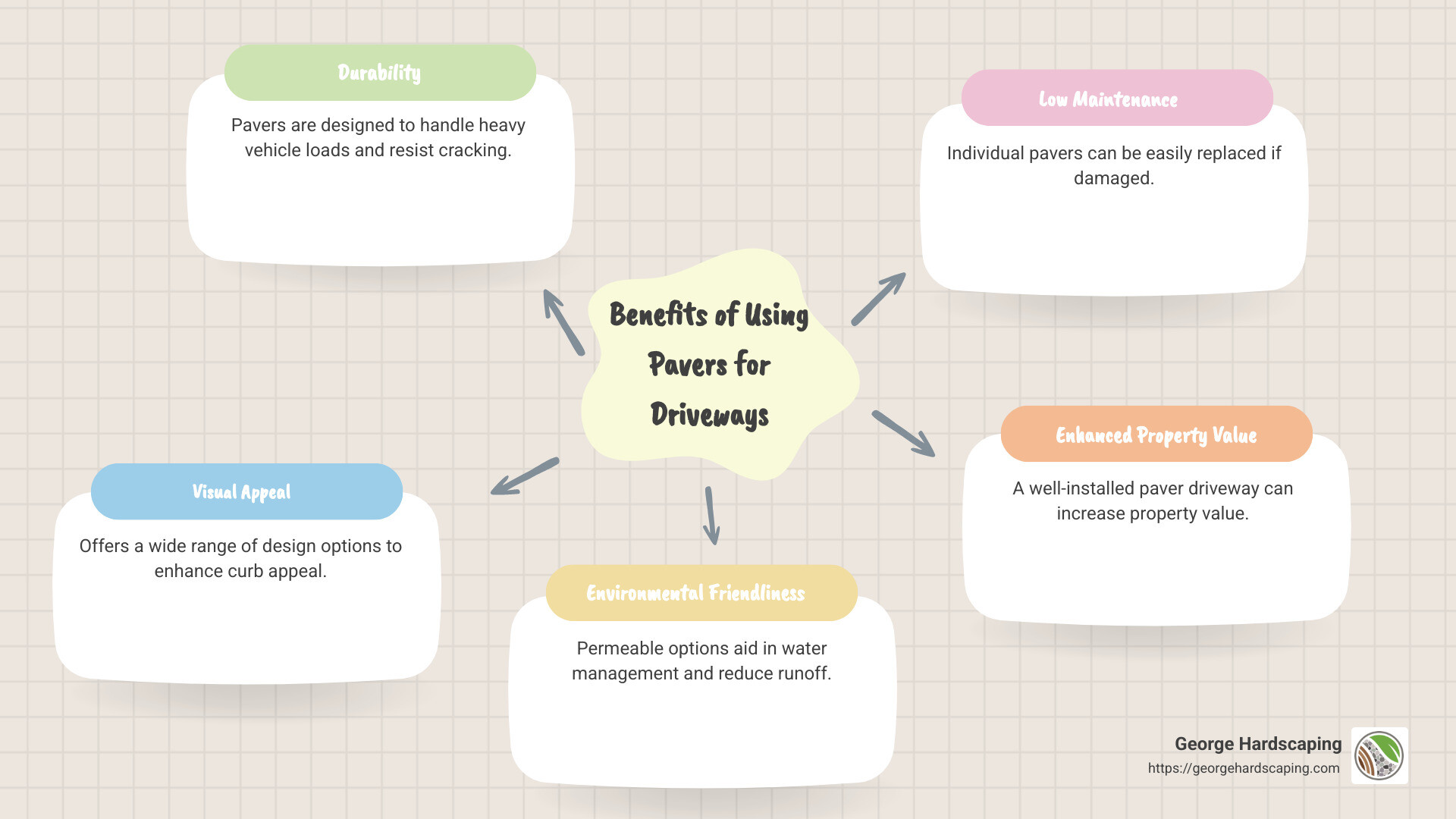
Can pavers be used for a driveway? Yes, pavers are an excellent choice for driveways. They offer numerous advantages over traditional materials like asphalt and concrete. Here’s why:
- Durability: Pavers are engineered to withstand heavy loads and resist cracking, even under intense pressure from vehicles.
- Visual Appeal: With countless design options, pavers can improve your driveway’s aesthetic, adding significant curb appeal to your property.
- Environmental Friendliness: Many paver options are permeable, allowing water to seep through and reduce runoff, thus aiding in water management and reducing erosion.
- Low Maintenance: Unlike concrete, pavers are easy to repair and maintain. If a paver gets damaged, you only need to replace the individual piece instead of the entire driveway.
In Essex County and the North Shore, where property owners seek both aesthetic appeal and functionality, choosing the right driveway material is crucial. Driveway pavers present an neat solution with both style and substance.
Can Pavers Be Used for a Driveway?
Absolutely! Pavers are a fantastic choice for driveways. Their strength and versatility make them ideal for withstanding vehicle traffic while adding a touch of elegance to your home.
Thickness and Durability
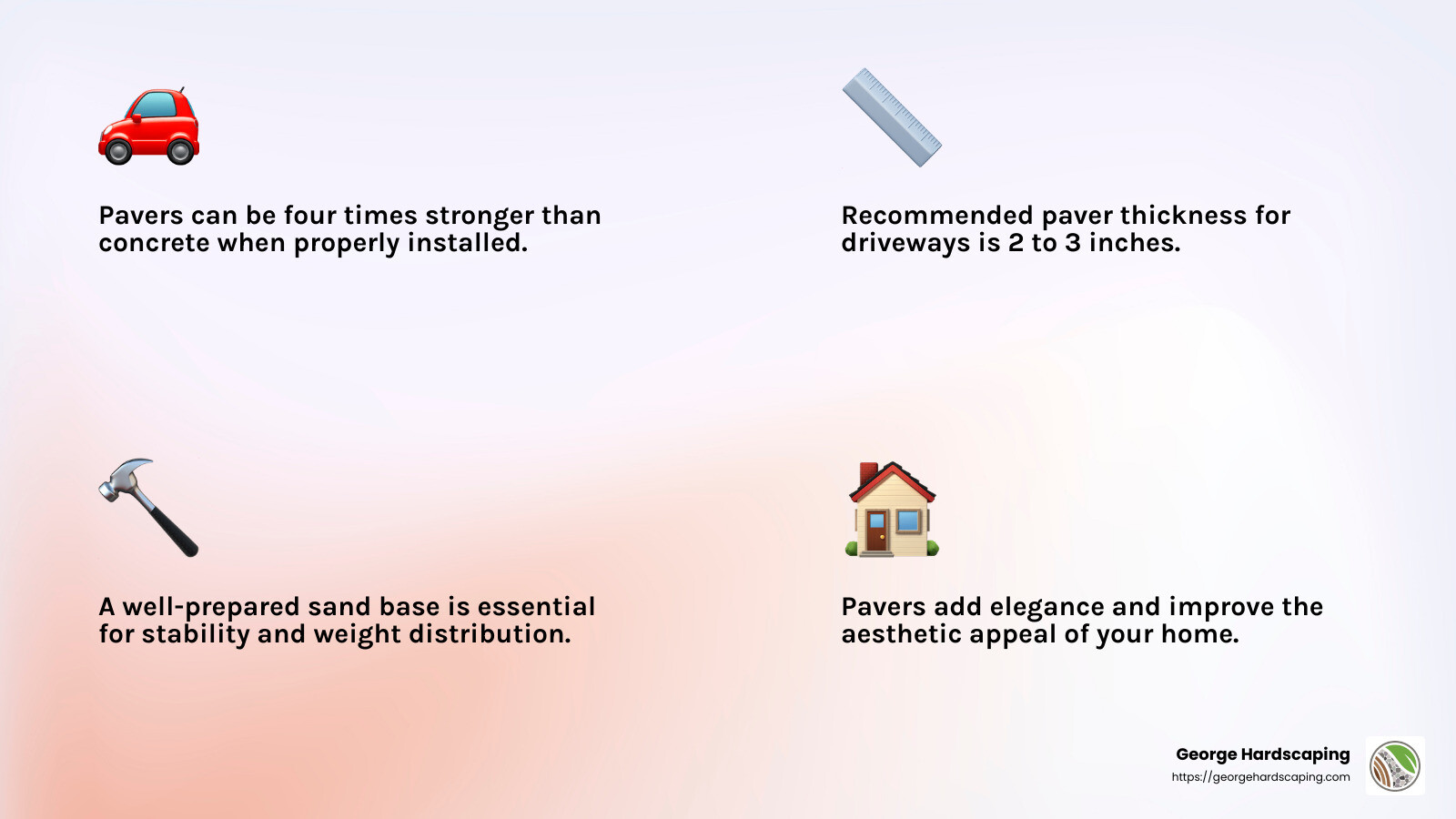
When considering pavers for a driveway, thickness is key. The thicker the paver, the better it can handle the weight of vehicles. For driveways, it’s recommended to use pavers that are at least 2 to 3 inches thick. This thickness ensures they can withstand the pressure from cars, trucks, and even heavier maintenance vehicles.
Did you know? Properly installed pavers can be four times stronger than concrete.
Installation Considerations
Proper installation is crucial to the longevity and performance of your paver driveway. Here’s what you need to know:
- Sand Base: Start with a solid foundation. A well-prepared sand base is essential. It provides stability and helps in distributing the weight evenly, preventing pavers from shifting or sinking.
- Subbase Preparation: The subbase should be well-compacted and free of any debris. This ensures the pavers remain level and secure over time.
- Pattern and Alignment: Laying pavers in a consistent pattern helps distribute weight and pressure. Popular patterns like running bond or herringbone add strength and visual interest.
- Joint Filling: Use polymeric sand to fill the joints between pavers. This not only locks the pavers in place but also prevents weed growth and insect infestation.
- Edge Restraints: Install edge restraints to keep the pavers from spreading under the weight of vehicles.
Handling Vehicle Traffic
Pavers are designed to handle vehicle traffic efficiently. Their interlocking nature allows them to flex slightly under pressure, reducing the likelihood of cracking. This flexibility is a significant advantage over traditional concrete driveways, which can crack under similar conditions.
In summary, pavers are not just suitable for driveways; they excel in this role. With the right thickness and proper installation, they provide a durable, aesthetically pleasing, and environmentally friendly option for homeowners looking to improve their property’s curb appeal.
Next, let’s explore the numerous advantages that paver driveways offer, from design flexibility to property value improvement.
Advantages of Paver Driveways
Paver driveways offer a multitude of benefits that go beyond just functionality. They improve the aesthetic appeal of your home and provide significant environmental advantages. Let’s explore these benefits.
Design and Aesthetic Appeal
One of the standout features of paver driveways is their design flexibility. With an array of patterns, colors, and customization options, pavers allow homeowners to create unique and personalized driveways that complement their property’s style.
- Patterns and Colors: From classic herringbone to modern geometric designs, pavers can be arranged in countless patterns. This flexibility allows you to achieve the exact look you desire. Plus, with a wide range of colors available, you can match your driveway to your home’s exterior or landscape.
- Customization: If you’re looking for something truly unique, pavers can be customized to include intricate designs or even company logos. This level of personalization not only boosts curb appeal but can also increase property value.
- Property Value: A well-designed paver driveway can improve the visual appeal of your home, potentially increasing its market value. Homebuyers often favor properties with attractive and durable driveways, seeing them as a sign of quality and care.
Environmental Benefits
Beyond aesthetics, paver driveways offer significant environmental advantages, making them an eco-friendly choice.
- Permeable Options: One of the most compelling features of pavers is their ability to be installed in a permeable configuration. This means they allow water to seep through and into the ground, reducing runoff and helping prevent flooding.
- Drainage: Proper drainage is crucial for maintaining the integrity of your driveway and surrounding landscape. Permeable pavers naturally facilitate water drainage, reducing the risk of erosion and water damage.
- Eco-Friendly: Many pavers are made from sustainable materials, and their permeability helps recharge groundwater and reduce the heat island effect. This makes them a greener option compared to traditional concrete or asphalt.
- Low Maintenance: Paver driveways require minimal upkeep. Unlike concrete, which may crack and need repairs, individual pavers can be replaced if damaged, making maintenance easy and cost-effective.
Incorporating these features into your driveway not only improves its functionality but also contributes positively to the environment. With paver driveways, you get the perfect blend of style, durability, and sustainability.
Next, we’ll explore some potential disadvantages of paver driveways to consider before making your decision.
Disadvantages of Paver Driveways
While paver driveways offer many benefits, it’s important to be aware of some potential drawbacks. Let’s explore these in terms of cost and maintenance challenges.
Cost Considerations
Paver driveways can be more expensive than other materials like concrete or asphalt. Here’s why:
- Material Costs: The cost of pavers can range from $10 to $30 per square foot, depending on the material and design you choose. This is significantly higher than the $3 to $8 per square foot for concrete or asphalt.
- Labor Costs: Installing a paver driveway is labor-intensive. Each paver must be laid individually, which increases the time and cost of installation. The meticulous process ensures durability and design precision, but it comes at a price.
- Long-Term Value: Despite the higher upfront costs, pavers offer long-term value through durability and easy repair. Damaged pavers can be replaced individually, which is more cost-effective than redoing an entire concrete slab. This can offset the initial investment over time.
Maintenance Challenges
Maintaining a paver driveway involves some unique considerations:
- Sealing: While not always necessary, sealing pavers can improve their appearance and protect them from stains. Sealing also helps prevent weed growth in the joints. However, this adds to the maintenance cost and effort.
- Potential Shifting: Over time, pavers can shift due to ground movement or improper installation. This can create an uneven surface, which may require re-leveling or replacing individual pavers. Proper installation with a solid sand base can minimize this issue.
- Weed Growth: The joints between pavers can become a breeding ground for weeds if not properly maintained. Regular cleaning and sealing can help prevent this, but it requires ongoing attention.
In summary, while pavers can be used for a driveway and offer many advantages, it’s crucial to weigh these against the potential costs and maintenance challenges. Understanding these factors will help you make an informed decision that suits your budget and lifestyle.
Next, we’ll look at the pros and cons of concrete driveways to provide a comprehensive comparison.
Concrete Driveways: Pros and Cons
When considering driveway options, concrete is a popular choice due to its cost-effectiveness and durability. Let’s explore both the advantages and disadvantages of concrete driveways.
Advantages of Concrete
Initial Cost
Concrete driveways are generally more affordable than paver driveways. They typically cost between $3 to $8 per square foot, making them a budget-friendly option for many homeowners. This lower initial investment is one of the main reasons people choose concrete.
Stability
Concrete driveways offer a stable and solid surface, which is ideal for vehicle traffic. Unlike pavers, concrete doesn’t shift or move, providing a smooth and even driving experience. This stability is a significant advantage, especially in areas with heavy vehicle use.
Disadvantages of Concrete
Cracking
One of the main drawbacks of concrete driveways is their tendency to crack. Over time, temperature changes and ground movement can cause the concrete to develop cracks. Unlike pavers, which can flex and move, concrete is rigid and less forgiving. Repairing these cracks can be costly and time-consuming.
Temperature Sensitivity
Concrete is sensitive to extreme temperatures. In hot weather, it can expand and in cold weather, it can contract. This lack of flexibility can lead to further cracking and damage over time. In contrast, pavers have built-in spaces that allow for expansion and contraction, reducing the risk of damage.
Limited Design Options
While concrete can be stamped or colored, it generally offers fewer design options compared to pavers. Pavers come in a wide range of colors, shapes, and patterns, allowing for greater customization and aesthetic appeal. Concrete driveways, on the other hand, tend to have a more uniform and less distinctive appearance.
In conclusion, while concrete driveways are a cost-effective and stable option, they come with potential downsides such as cracking and limited design flexibility. Understanding these pros and cons can help you decide if concrete is the right choice for your driveway needs.
Next, we’ll answer some frequently asked questions about paver driveways to help you further in your decision-making process.
Frequently Asked Questions about Paver Driveways
Are pavers strong enough for driveways?
Absolutely, pavers are strong enough for driveways. When installed correctly, pavers create a surface that is four times stronger than concrete. This strength comes from the way individual pavers interlock and distribute weight across the surface. The key is to use pavers of adequate thickness. For vehicle traffic, thicker pavers are recommended to ensure they can handle the pressure without cracking.
Can pavers hold the weight of a car?
Yes, pavers can hold the weight of a car, and even heavier vehicles. The critical factor is proper installation. A well-prepared subbase and sand layer are essential to support the weight. If the foundation is solid, pavers can easily withstand the weight of most vehicles without shifting or breaking. It’s important to choose the right type of paver material that is designed for vehicular use to ensure durability.
Do pavers need to be sealed?
Sealing pavers is not always necessary, but it can offer several benefits. A good sealant helps protect the surface from stains, improves the color, and can reduce the growth of weeds between the joints. Additionally, sealing can make maintenance easier by preventing dirt and grime from settling into the pavers. However, it’s important to note that sealing is not a one-time task; it requires periodic reapplication to maintain its effectiveness. Regular maintenance, including cleaning and resealing as needed, will help keep your paver driveway looking its best for years to come.
Conclusion
Choosing the right material for your driveway is a significant decision that impacts both the aesthetics and functionality of your home. At George Hardscaping, we understand the importance of making informed choices that improve your property’s curb appeal and value.
Pavers vs. Concrete: Making the Right Choice
When deciding between pavers and concrete for your driveway, consider several key factors:
- Durability and Strength: Pavers are strong enough for driveways and can handle vehicle traffic when installed properly. They offer flexibility, allowing for expansion and contraction, which reduces the risk of cracking—a common issue with concrete driveways.
- Design Flexibility: Pavers offer a wide range of design options, from colors to patterns, allowing you to customize your driveway to match your home’s style. Concrete, while durable, offers limited design choices.
- Environmental Impact: If sustainability is a priority, pavers offer permeable options that improve drainage and reduce runoff, making them an eco-friendly choice.
- Maintenance and Longevity: While pavers may require occasional sealing and maintenance, they are generally low-maintenance compared to concrete, which can crack and require costly repairs over time.
Expert Advice from George Hardscaping
At George Hardscaping, we’re committed to helping you choose the best option for your driveway. Our team of experts is ready to guide you through the decision-making process, ensuring you select a solution that meets your needs and budget.
We pride ourselves on our craftsmanship and attention to detail. Whether you’re in Beverly, Boxford, or any of our other service areas in Essex County, MA, we’re here to transform your driveway into a stunning, durable feature of your home.
For more information on how we can help you with your driveway project, visit our Driveway Paver Installation page. Let us help you make the right investment for your home’s exterior.
