
Brick Driveway Cost: Top 5 Benefits in 2024
When considering a new driveway for your home, understanding the brick driveway cost is crucial. A brick driveway not only boosts your home’s curb appeal but also adds significant value to your property. On average, installing a brick driveway can cost between $10 and $30 per square foot, depending on various factors like materials, labor, and design complexity.
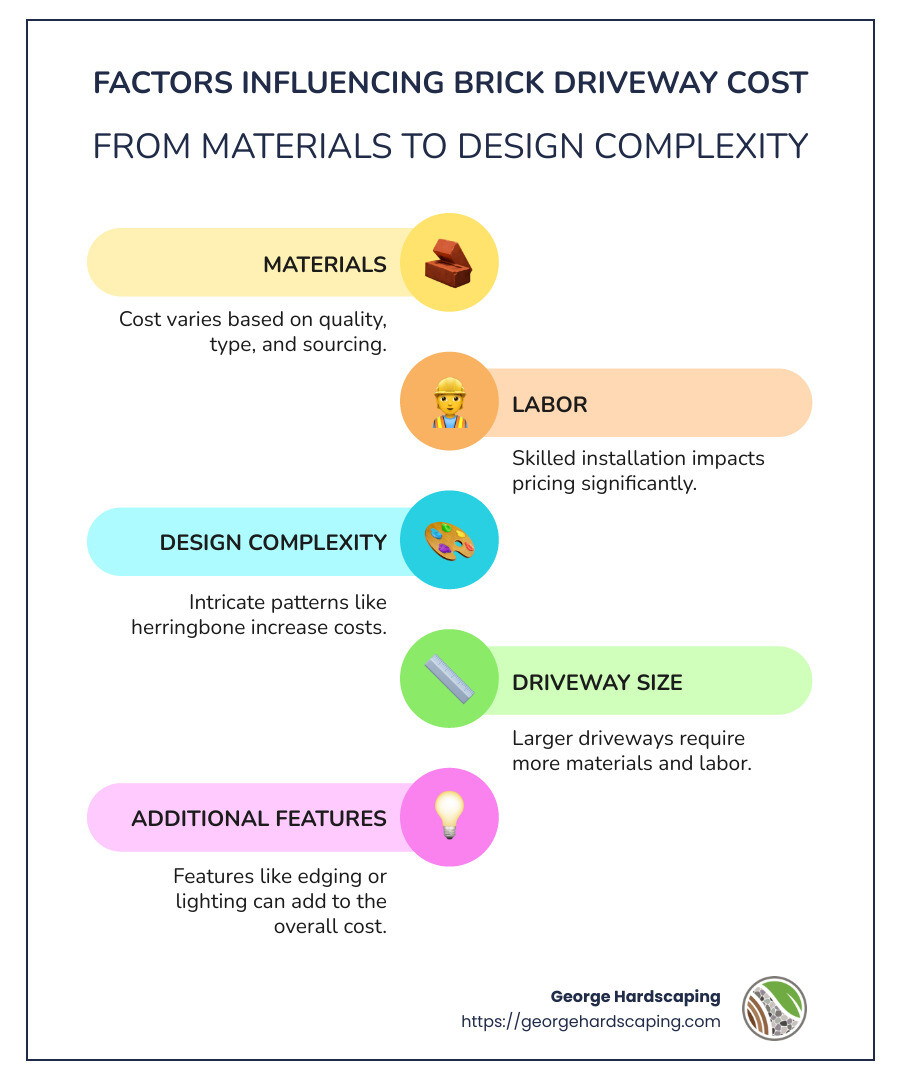
Here’s a quick breakdown of what influences the brick driveway cost:
– Materials: Quality, type, and sourcing.
– Labor: Skilled installation affects pricing.
– Design Complexity: Patterns like herringbone increase costs.
Choosing brick for your driveway has many benefits. They are durable, environmentally friendly, and easy to maintain compared to other materials. Bricks are resistant to stains and cracks, ensuring longevity despite weather changes.
George Hardscaping, a trusted name in Essex County, MA, specializes in creating stunning brick driveways. With a focus on quality craftsmanship and lasting designs, they are the go-to choice for homeowners wanting to combine functionality with beauty. Installing a brick driveway is a valuable investment in your home’s exterior, ensuring durability and a timeless aesthetic.
Key brick driveway cost vocabulary:
– driveway pavers cost
– are driveway pavers cheaper than concrete
– modern driveway pavers
Cost of Brick Driveways
Brick Driveway Cost per Square Foot
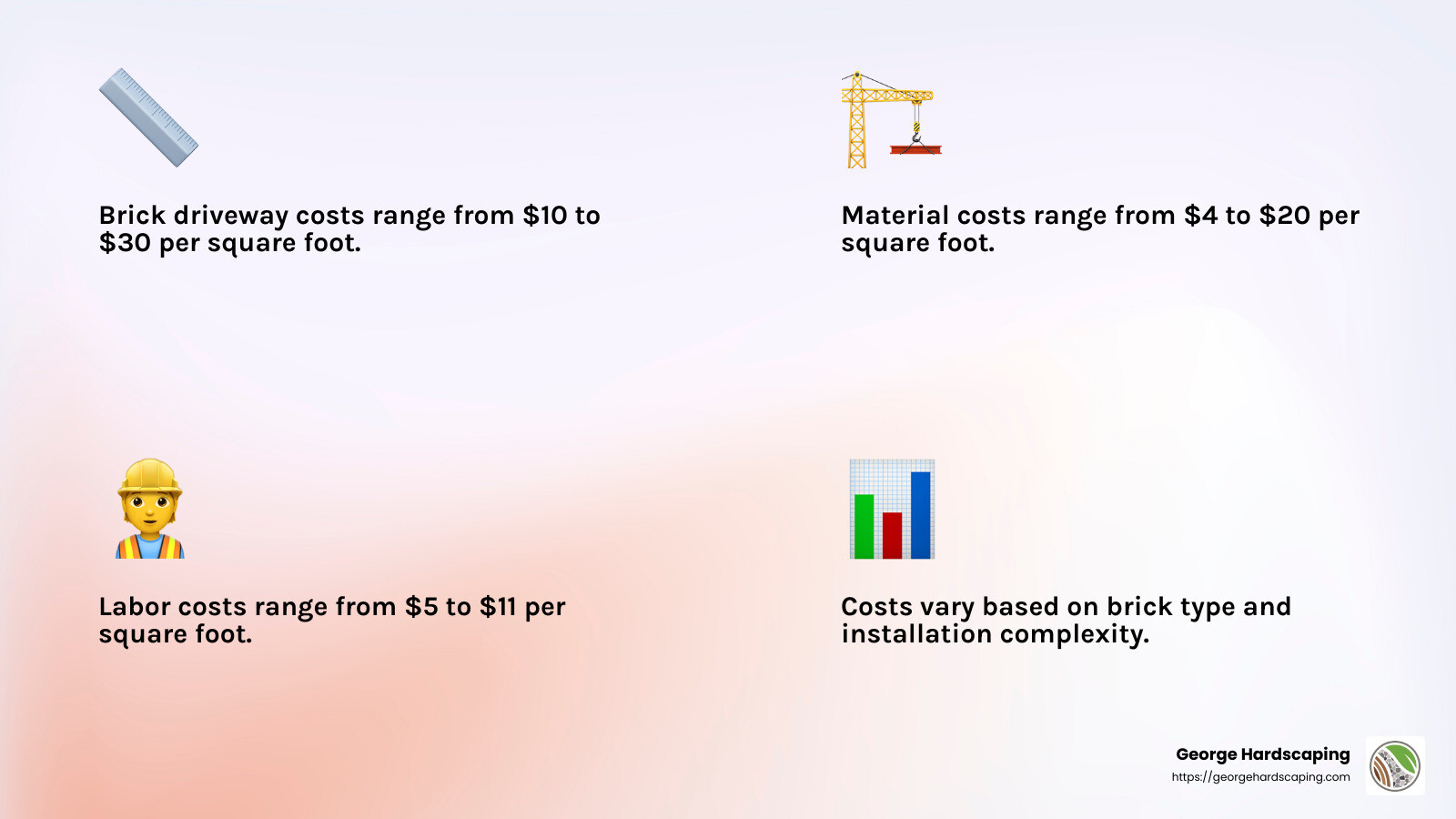
When planning for a brick driveway, knowing the cost per square foot is essential. On average, a brick driveway costs between $10 and $30 per square foot. This range covers both materials and labor, with variations based on the type of brick used and the complexity of the installation.
Materials play a significant role in the cost. Brick pavers, known for their strength and durability, can vary in price depending on their quality, color, and finish. The cost of materials generally falls between $4 and $20 per square foot. Labor costs, which cover site preparation, laying the bricks, and finishing touches, typically range from $5 to $11 per square foot.
Factors Affecting Brick Driveway Cost
Several factors can impact the overall cost of installing a brick driveway. Understanding these can help you budget effectively:
- Driveway Size: Larger driveways require more materials and labor, increasing the total cost. For instance, a small driveway might cost less than $10,000, while a larger one can easily exceed $25,000.
- Excavation: If your driveway area needs significant excavation, expect additional costs. Excavation involves removing soil and preparing a stable base, which is crucial for the longevity of the driveway.
- Patterns and Designs: Opting for intricate patterns like herringbone or basketweave can lift the aesthetic but also increase labor costs due to the complexity of the installation.
- Base Material: The choice of base material affects stability and drainage. Quality base materials like Class II road base and bedding sand can add to the cost but ensure a long-lasting driveway.
- Additional Features: Improvements such as driveway aprons, walkways, or heating systems will add to the overall expense. For example, a heated driveway can add $12 to $21 per square foot to your total cost.
Choosing the right features and understanding these factors can help you manage the brick driveway cost effectively and ensure a beautiful, durable addition to your home.
Comparison with Other Driveway Materials
When choosing a driveway material, it’s important to weigh the pros and cons of each option. Let’s explore how brick driveways stack up against concrete, asphalt, and stone pavers.
Brick Driveway vs Concrete
Durability: Brick driveways are known for their longevity, often lasting 25 to 100 years. Concrete, while durable, can crack more easily, especially in areas with freeze-thaw cycles. Bricks, on the other hand, are more resistant to cracking and can be replaced individually if damaged.
Maintenance: Concrete requires regular sealing to prevent stains and cracks, whereas brick is low-maintenance. Bricks resist staining and don’t require sealers, though occasional cleaning and sand joint replenishment are recommended.
Cost Comparison: Concrete driveways are generally cheaper, ranging from $3,460 to $6,910. In contrast, brick driveways cost between $8,500 and $17,500. Despite the higher initial cost, bricks offer greater long-term value due to their durability and lower maintenance needs.
Brick Driveway vs Asphalt
Installation: Asphalt is quicker and easier to install, making it a popular choice for large driveways. However, it requires more frequent maintenance, such as sealing every few years.
Longevity: Brick driveways outlast asphalt significantly, with bricks lasting up to a century if well-maintained. Asphalt typically lasts 15 to 30 years before needing major repairs or replacement.
Cost Comparison: Asphalt is more affordable initially, costing between $3,000 and $10,000. However, the brick driveway cost is justified by its longevity and reduced maintenance requirements, making it a better investment over time.
Stone Pavers
Stone pavers offer a unique and upscale appearance, with each piece providing distinct colors and textures. While they are extremely durable and can last for decades, they are often more expensive than both brick and concrete, both in terms of material and installation costs.
In conclusion, while brick driveways may have a higher upfront cost compared to asphalt and concrete, their durability, low maintenance, and aesthetic appeal make them a worthwhile investment. Stone pavers, while beautiful, can be cost-prohibitive for some budgets. The choice will depend on your priorities and budget.
Installation Process
Installing a brick driveway is a meticulous process that requires careful planning and skilled execution. Whether you opt for professional installation or decide to tackle it as a DIY project, understanding the steps, labor, and equipment involved is crucial.
Professional Installation
Planning and Preparation
Professional installation begins with thorough planning. Experts assess the site, ensuring proper drainage and stability. They also discuss design preferences with homeowners, including patterns and additional features.
Professionals use specialized equipment such as plate compactors and wet masonry saws to ensure precision and efficiency. They have the expertise to handle complex tasks like leveling the base and setting pavers in mortar.
- Excavation: Removing existing surfaces and excavating to the required depth is the first step. Professionals ensure the base is even and compacted, providing a solid foundation.
- Laying Pavers: Pavers are carefully laid in the chosen pattern. Joint sand is applied to fill gaps and secure the pavers.
- Cleanup: Once the installation is complete, professionals perform a thorough cleanup, leaving the site tidy and the driveway ready for use.
Hiring professionals like those at George Hardscaping ensures that the driveway is built to last, with attention to detail at every stage.
DIY Installation
Time and Skills
DIY installation can be rewarding but requires significant time and skill. It involves manual labor, from excavation to laying pavers. Enthusiasts should be ready to dedicate several days to the project, depending on the driveway’s size.
Equipment and Leveling
DIYers will need to rent or purchase equipment such as a plate compactor and masonry saw. Proper leveling is crucial to avoid future issues like uneven pavers or water pooling.
Steps to Follow
- Excavation: Begin by removing the existing driveway surface and excavating to the desired depth. This ensures a stable base for your pavers.
- Base Preparation: Lay a geotextile fabric, followed by a layer of road base. Compact it thoroughly to create a solid foundation.
- Bedding Sand: Spread a thin layer of bedding sand and level it using a screed. This provides a smooth surface for laying pavers.
- Laying Pavers: Place each paver carefully, following your chosen pattern. Ensure they are snugly fit together.
- Joint Sand and Compaction: Fill gaps with joint sand and compact the pavers to secure them in place.
- Finishing Touches: Install edging to keep the pavers in place and apply a sealer if desired.
While DIY installation can save on labor costs, it demands a significant investment of time and effort. It’s essential to weigh the benefits against the potential challenges before deciding to go the DIY route.
Understanding these processes will help you make an informed decision about whether to hire professionals or start on a DIY project. Next, we’ll explore maintenance and repairs to ensure your brick driveway remains in top condition for years to come.
Maintenance and Repairs
Brick driveways are known for their low-maintenance needs. However, like any outdoor surface, they can benefit from regular care to maintain their appearance and functionality.
Common Repairs
Even though brick driveways are durable, some common issues may arise over time:
- Cracked Bricks: Occasionally, individual bricks may crack due to heavy loads or temperature fluctuations. Fortunately, these can be replaced without disrupting the entire driveway. Simply remove the damaged brick and replace it with a new one.
- Sand Replacement: Over time, joint sand can wash away, especially after heavy rain or pressure washing. Reapplying joint sand helps keep the pavers locked in place and prevents weed growth.
- Root Damage: Tree roots can sometimes push up pavers, creating uneven surfaces. If this occurs, you may need to remove the affected pavers, trim the roots, and reset the pavers.
Maintenance Tips
Regular maintenance can extend the life of your brick driveway and keep it looking its best:
- Pressure Washing: Cleaning your driveway with a pressure washer once or twice a year can remove dirt and grime. Be sure to follow up with joint sand replacement to maintain stability.
- Joint Sand: Regularly check the joints between pavers and add sand as needed. This prevents movement and keeps weeds at bay.
- Weed Prevention: While brick driveways resist weed growth, it’s wise to use a granular weed preventative or pack joints tightly with sand to further deter weeds.
By following these simple maintenance tips, you can ensure your brick driveway continues to improve your home’s curb appeal and withstand the test of time. In the next section, we’ll address frequently asked questions to help you make informed decisions about your brick driveway.
Frequently Asked Questions about Brick Driveways
Is a Brick Driveway Cheaper than Concrete?
When considering brick driveway cost, it’s important to note that brick is generally more expensive than concrete. The average cost of installing a brick driveway can range from $11,500 for a two-car space. In contrast, concrete driveways typically cost between $6 to $12 per square foot. However, bricks offer several long-term benefits that may justify the higher initial investment. They are more durable, require less maintenance, and are easier to repair. This means that, over time, the total cost of ownership for a brick driveway could be more favorable than it initially seems.
How Long Does a Brick Driveway Last?
Brick driveways are renowned for their longevity. When properly installed and maintained, they can last anywhere from 25 to 100 years. This durability is due to the high-temperature firing process used to make clay bricks, which makes them resistant to extreme weather conditions. Regular maintenance, such as replacing cracked bricks and replenishing joint sand, can further extend the lifespan of your driveway. Compared to asphalt, which may only last 10 to 25 years, brick driveways offer a significant advantage in terms of long-term value.
Can You Lay a Brick Driveway Yourself?
While it is possible to lay a brick driveway yourself, it requires a considerable amount of time, effort, and skill. DIY installation involves planning the layout, excavating the site, leveling the base, and carefully setting each brick in place. It’s crucial to have a solid understanding of the process to ensure the driveway is both functional and aesthetically pleasing. Most homeowners find that hiring a professional with experience in brick driveway installation yields better results and can save time and potential frustration. Professional installation also ensures that the driveway is built to last, maximizing its durability and minimizing future maintenance needs.
Conclusion
In summary, while the brick driveway cost might seem higher initially compared to other materials like concrete or asphalt, it offers numerous long-term benefits. Brick driveways are not only aesthetically pleasing but also incredibly durable and low-maintenance. Over their lifespan, they can provide a cost-effective solution due to their resilience and ease of repair.
At George Hardscaping, we understand the importance of making an informed decision when it comes to enhancing your home’s exterior. Our team is dedicated to providing top-notch craftsmanship and quality materials to ensure your brick driveway stands the test of time. Whether you’re looking to boost your home’s curb appeal or increase its value, a well-installed brick driveway is a wise investment.
For more information on how we can transform your driveway, visit our Driveway Paver Installation service page. Our experts are ready to assist you with every step of your project, from initial consultation to final installation.
If you have any questions or would like to discuss your project further, please don’t hesitate to contact us. We’re here to help you create an outdoor space that you’ll be proud of for years to come.
