
What You Need to Know Before Starting a Paver Pool Deck Installation
Paver pool deck installation is one of the most rewarding — and most demanding — hardscape projects a homeowner can take on. The surface around your pool takes a beating every single day: bare feet, pool chemicals, UV rays, water splash, and (in Massachusetts) harsh freeze-thaw winters.
Get it right, and you have a beautiful, safe, durable deck that can last decades. Get it wrong, and you’re dealing with wobbling pavers, standing water, weed-choked joints, and costly repairs within just a few seasons.
Here’s a quick overview of what professional paver pool deck installation involves:
- Plan your layout — map the deck area, set a budget, check local permits
- Choose your material — travertine, concrete pavers, porcelain, brick, or natural stone
- Excavate the site — dig 6–8 inches deep, remove roots and soft soil
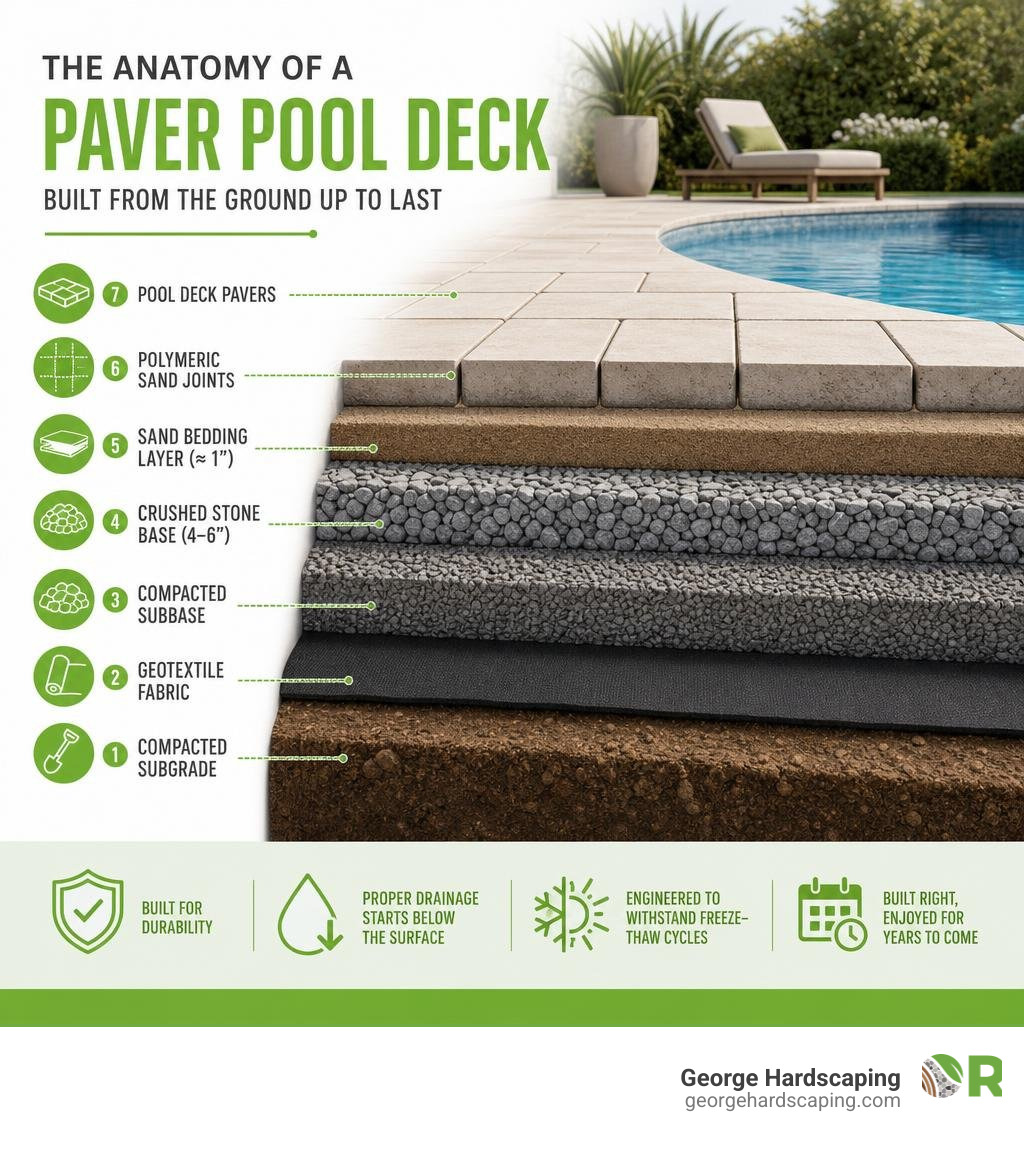
- Compact the base — lay and compact crushed stone in layers (4–6 inches minimum)
- Add a sand bedding layer — approximately 1 inch of screeded sand for leveling
- Lay the pavers — follow your chosen pattern, use spacers to keep alignment true
- Install edge restraints — lock the perimeter to prevent spreading or shifting
- Fill joints with polymeric sand — sweep in, mist with water to activate
- Engineer proper drainage — maintain a 1–2% slope away from the pool
- Seal the surface — wait 2–4 weeks after installation before applying sealer
The difference between a deck that lasts 25+ years and one that fails in under 10 almost always comes down to what happens underneath the pavers — not what’s visible on top.
For homeowners in Beverly, Danvers, Gloucester, and across Essex County, the stakes are even higher. Massachusetts soils shift with frost, and pool backfill is notoriously unstable. That’s exactly why proper base preparation and drainage engineering aren’t optional — they’re everything.
Paver pool deck installation word list:
- Pool Deck Pavers
- how to seal pool deck pavers
- porcelain pavers for pool deck
Why Choose Pavers Over Concrete?
When designing a backyard oasis in Massachusetts, the debate between poured concrete and interlocking pavers is almost as classic as the Red Sox vs. Yankees rivalry. While a simple concrete slab might seem like an easy, budget-friendly shortcut, it often leads to long-term heartbreak in our demanding climate.
From the coastal breezes of Gloucester and Ipswich to the historic suburban yards of Danvers, Beverly, and Woburn, our local soils undergo constant movement. Poured concrete is rigid. When the ground freezes, expands, and thaws, that rigid slab has nowhere to go but up—resulting in unsightly, structural cracks.
Choosing a professional Pool Deck Installation using interlocking Pool Paver Decks offers a completely different structural philosophy. Instead of resisting the earth’s natural movements, an interlocking system distributes weight and flexes. This independent movement prevents structural cracking, keeping your poolside surface beautiful and level for decades.
Durability and Strength of Concrete Pool Pavers
The physical numbers behind interlocking units are hard to argue with. Standard poured concrete typically features a compressive strength of around 4,000 PSI. In contrast, factory-made Concrete Pool Pavers are manufactured under extreme pressure, regularly reaching strengths of up to 8,000 PSI.
This high density means they can support more than twice the weight of standard concrete without crumbling or cracking. In a busy pool environment where heavy lounge furniture, planters, and constant foot traffic are the norm, this extra strength ensures your investment remains structurally sound. Furthermore, if a single paver ever does chip or stain from a dropped grill tool or spilled chemical, you don’t have to jackhammer the entire deck. You simply pop out the damaged unit and replace it with a new one—a seamless, low-cost repair that is impossible with poured concrete.
Slip Resistance and Heat Retention
Safety should always be your top priority when water is involved. Poured concrete can become dangerously slick when wet, especially if finished with a smooth trowel. Pavers naturally provide excellent traction underfoot. The texture of the stone or concrete units, combined with the safety-enhancing grid of joints, creates a naturally slip-resistant surface that reduces the risk of poolside slips and falls.
Additionally, those sand-filled joints serve an unexpected purpose: they absorb and dissipate moisture, which helps cool the surface on blistering hot days. To ensure you can walk comfortably from your lounge chair to the water without burning your feet, check out our guide on Don’t Get Burned: The Best Pool Deck Materials for Summer. Choosing lighter colors and porous materials ensures the deck remains comfortable even during the peak heat of a New England July.
Popular Materials for Your Paver Pool Deck Installation
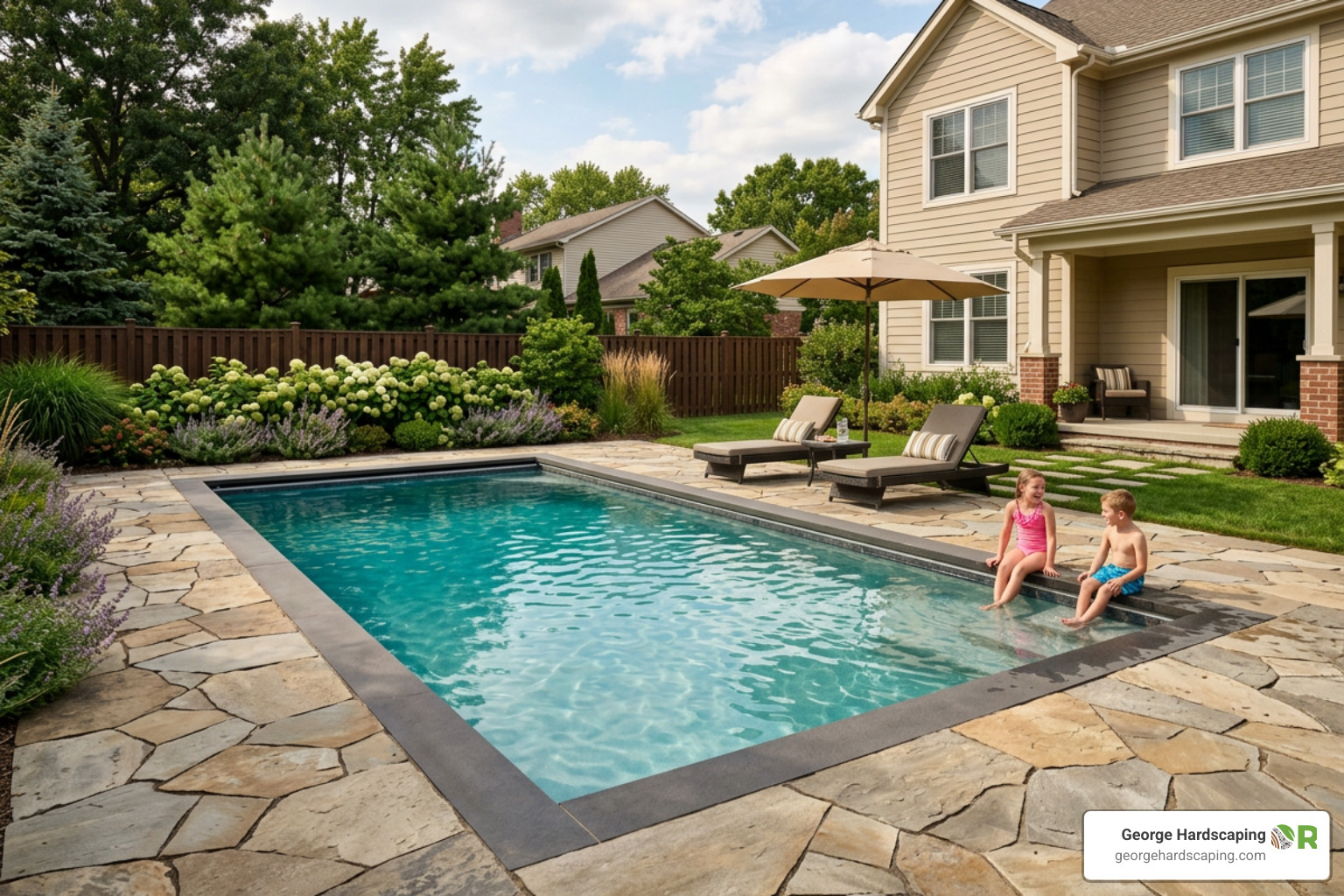
Selecting the right material is a balance of style, comfort, and environmental resilience. The right choice will complement your home’s architecture while standing up to chlorine, salt water, and intense winter weather. Explore the Best Pavers for Pool Area and find the perfect match among various Pool Deck Stone Pavers to elevate your outdoor space.
Natural Stone vs Porcelain for Massachusetts Climates
The debate between natural stone and modern porcelain is a hot topic for homeowners in Danvers, Beverly, and Ipswich. To dive deep into how these materials stack up against each other, read our comprehensive analysis: Natural Stone vs Porcelain: Which Paver Reigns Supreme for Your Poolside Paradise?.
Porcelain has surged in popularity as we head into June 2026. Homeowners love Porcelain Pavers for Pool Deck because they are incredibly dense, completely nonporous, and highly resistant to frost, fading, and chemical staining. They offer a sleek, contemporary aesthetic that mimics natural wood or high-end stone without any of the sealing maintenance. On the other hand, natural stones like granite, travertine, and limestone offer an organic, timeless beauty where no two pieces are exactly alike.
Travertine and Brick Options
If you prefer a classic, resort-style look, travertine is an exceptional choice. When you Install Travertine Pavers Around Pool areas, you benefit from a stone that naturally stays cool to the touch, even in direct sunlight, thanks to its light color and porous structure. It is highly slip-resistant and exudes a luxury Mediterranean vibe.
For a more traditional, historic New England look, using Brick for Pool Deck applications provides unmatched character and warmth. Modern clay bricks are highly durable, slip-resistant, and hold their deep, rich colors for generations without fading under the sun.
Step-by-Step Professional Installation Process
A flawless paver pool deck installation is a highly engineered process. It requires specialized machinery, precise calculations, and experienced craftsmanship. While a simple garden walkway can occasionally be tackled as a DIY project, a pool deck is a completely different beast. The surrounding pool shell, plumbing lines, and shifting backfill leave zero room for error. Working with a professional crew ensures that your Paver Pool Decks Installation is built to last.
Critical Site Preparation and Base Compaction
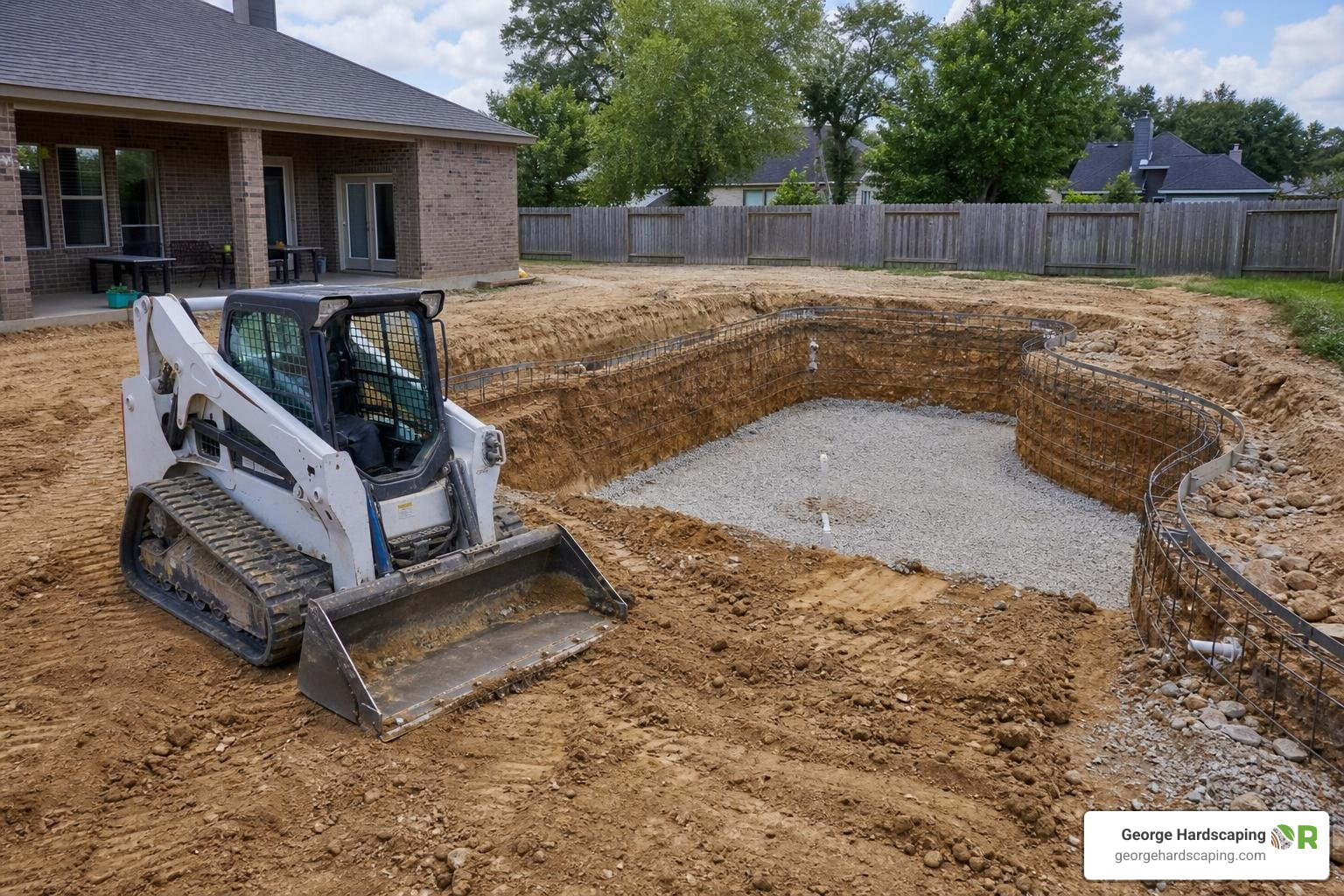
The longevity of your pool deck is determined before the first paver is ever laid. When an in-ground pool is installed, the soil backfilled around the pool shell is highly unstable and prone to settling over several years. If you lay pavers directly over this uncompacted backfill, your deck will inevitably sag and warp.
- Excavation: We excavate the area to a depth of 6 to 8 inches below the finished grade, removing all organic matter, roots, and loose soil. During this phase, we are extremely careful around pool plumbing lines, electrical conduits for lighting, and grounding wires. In Massachusetts, we always coordinate with local utility locators before digging.
- Geotextile Fabric: We lay down a high-quality, non-woven geotextile fabric over the native subgrade soil. This industrial-grade fabric acts as a separation barrier, preventing the heavy stone base from sinking into the soft clay or silt subgrade over time, while still allowing water to drain freely.
- Base Material: We add 4 to 6 inches of crushed gravel (such as dense-graded aggregate or 3/4-inch processed gravel) in thin, 2-inch layers called “lifts.” Using thin lifts is essential because standard compactors cannot achieve full density if the material is laid too thick.
- Compaction: Each lift is thoroughly compacted using a heavy-duty vibratory plate compactor. We run the compactor in multiple directions until the stone base is rock-hard and completely stable. Skipping this step or rushing it is the number one cause of sunken or shifting pavers. For a deeper look at this process, check out The Big Question: Installing Large Pavers Over Your Pool Deck.
Laying the Pavers and Installing Edge Restraints
Once the gravel base is perfectly level and compacted, we screed a 1-inch layer of clean, damp bedding sand. This sand bed acts as a uniform cushion for the pavers, allowing us to set them at an exact height.
Our crew carefully sets the pavers in the agreed-upon design pattern, working outward from the pool edge. We use string lines and levels constantly to maintain perfect alignment. To prevent the pavers from migrating outward over time due to foot traffic and weather, we install heavy-duty edge restraints around the entire perimeter. These restraints are secured deep into the gravel base with steel spikes, locking the entire interlocking system tight. This meticulous process ensures that the Pavers Around Swimming Pool decks remain perfectly aligned for years to come.
Drainage Engineering and Slope Requirements
Water management is the unsung hero of hardscaping. A pool deck must be engineered to shed water away from the pool shell and adjacent home foundations. If water is allowed to pool next to the pool coping, it can seep behind the pool wall, causing structural damage during winter freeze-thaw cycles.
We grade the deck to ensure a minimum slope of 1% to 2% (approximately 1/8 inch to 1/4 inch of drop per foot) away from the pool. This prevents splash water and heavy rainfall from pooling on the surface. In tight spaces or areas where the natural landscape slopes back toward the pool, we integrate professional drainage systems, such as low-profile channel drains or French drains, into the Interlocking Pool Deck design. This keeps water flowing safely away to designated runoff zones.
Common Mistakes to Avoid in Pool Paver Projects
In our years of restoring failed hardscapes across Essex County, we have seen the same mistakes repeated by inexperienced contractors and well-meaning DIYers. Avoiding these pitfalls is the difference between a lifetime investment and a multi-thousand-dollar headache. When executing a Paver Pool Coping Installation, precision is non-negotiable.
Rushing the Ground Prep and Base Compaction
The temptation to cut corners on excavation and compaction is high because it is the most labor-intensive part of the job. However, if the subgrade soil and gravel base are not compacted to maximum density, the weight of the pavers and seasonal freeze-thaw cycles will cause the ground to settle unevenly. This leads to wobbling, tripping hazards, and pooling water. The backfill zone around a newly built pool is particularly vulnerable and must be given extra attention and compaction time.
Neglecting Proper Drainage Around the Pool
Failing to plan for water runoff is a recipe for disaster. If the deck is sloped incorrectly, water will wash back into the pool, carrying dirt, organic debris, and lawn fertilizers with it. Even worse, standing water can seep down into the bedding sand, washing it out and causing the pavers to sink. Proper drainage engineering must be designed into the project layout from day one.
Using the Wrong Joint Sand
Another common mistake is using standard play sand or joint sand without polymeric binders. Regular sand easily washes away during heavy rainstorms or when the pool is splashed. This leaves the joints empty, allowing weeds to grow, ants to nest, and the pavers to shift. Always use high-quality polymeric sand that hardens when activated with water to lock the system together.
Maintenance, Sealing, and Long-Term Cost
One of the greatest benefits of a paver deck is how easy it is to keep looking like new. While the upfront Cost to Install Pavers Around Pool areas is higher than basic brushed concrete, the long-term maintenance costs are significantly lower because you avoid the cycle of patching, resurfacing, and eventual total demolition.
Cleaning and Sealing Your Paver Pool Deck Installation
To keep your pool deck pristine, we recommend a simple maintenance routine:
- Weekly: Sweep off organic debris like leaves and twigs to prevent organic staining. Hose down the surface to remove pool chemicals and salt residue.
- Weed and Moss Control: We use high-quality polymeric sand in the joints during installation. This specialized sand contains chemical binders that activate with water, hardening like mortar to lock the pavers together and block weed seeds and ants from taking root.
- Sealing: Applying a professional-grade sealer protects concrete and natural stone from UV fading, chlorine erosion, and salt damage. However, timing is everything. You must wait 2 to 4 weeks after installation to allow any trapped moisture and efflorescence (natural salt deposits) to evaporate before sealing. If you seal too early, you will trap the white, powdery efflorescence under the sealer, ruining the appearance of your deck. For step-by-step guidance, read How to Seal Pool Deck Pavers and explore specific tips on Should I Seal Travertine Pavers Pool Deck?.
Cost Factors and Industry Pricing Averages
When budgeting for your backyard transformation, it helps to understand the general cost structure of different materials.
Disclaimer: The pricing details listed below represent average industry costs compiled from publicly available online hardscaping databases as of June 2026. These figures are intended for general planning purposes only and do not reflect the actual rates, estimates, or pricing guarantees of George Hardscaping.
To account for the extreme variability in site access, excavation needs, custom curves, and material grades across Massachusetts, industry averages show a wide pricing spectrum. Below is an estimated breakdown of typical fully installed costs per square foot:
| Paver Material | Industry Average Cost (Per Sq. Ft. Installed) | Realistic Local Project Range (Per Sq. Ft. Installed) |
|---|---|---|
| Basic Concrete Pavers | $15.00 | $30.00 – $75.00 |
| Traditional Clay Brick | $18.00 | $36.00 – $90.00 |
| Premium Travertine | $25.00 | $50.00 – $125.00 |
| Modern Porcelain | $30.00 | $60.00 – $150.00 |
For a complete pool deck project (typically ranging from 400 to 600 square feet), national online data lists a broad average of $15,000. However, when accounting for the rigorous site preparation, heavy compaction, and premium materials required to survive the coastal and inland winters of Gloucester and Woburn, realistic custom installations in our region typically range from $30,000 (two times the national average) to $75,000 or more (five times the average) for complex, high-end designs.
Frequently Asked Questions
Planning a major hardscape project naturally brings up plenty of questions. Here is some expert advice to help you navigate your pool deck design, drawing on classic Pool Deck Design Ideas and Paver Perfection principles.
Can you install pool pavers over an existing concrete deck?
Yes, this is known as the overlay method, but it comes with strict conditions. The existing concrete slab must be in excellent structural condition, free of major settling, shifting, or wide cracks. If the concrete is failing underneath, any pavers placed on top will quickly mirror those failures.
When performing an overlay, we typically use thinner “remodeling pavers” (around 30mm thick instead of the standard 60mm) to minimize the height increase. This ensures we don’t accidentally block doorways, pool coping transitions, or surrounding gates.
Why do some homeowners regret choosing paver pool decks?
When homeowners regret choosing pavers, it is almost always due to poor installation quality, not the material itself.
Cheap, low-bid installations or rushed DIY attempts often skip proper base compaction and geotextile installation. Within two to three rainy seasons, this leads to shifting, sinking, wobbly pavers, and joints overrun by weeds and moss. When installed by certified professionals who prioritize deep excavation, heavy compaction, and high-quality polymeric sand, these issues are entirely avoided, leaving homeowners thrilled with their choice for decades.
What is the timeline for a paver pool deck installation?
While a simple walkway might take a couple of days, a comprehensive professional pool deck installation typically takes one to two weeks, depending on the size, design complexity, and site access.
Once the pavers are laid, jointed, and compacted, the deck is structurally ready for immediate foot traffic. However, if you plan to seal the pavers, we recommend waiting 2 to 4 weeks to ensure all moisture has fully escaped the stone and joint sand.
Conclusion
A beautiful, long-lasting pool deck is the foundation of summer memories. Don’t let a rushed installation or cut corners ruin your backyard investment. At George Hardscaping, we bring years of dedicated masonry and hardscaping expertise to every property we touch.
Based in Essex County, MA, we specialize in high-quality patios, walkways, retaining walls, steps, and custom fire pits designed to withstand our demanding New England winters. From the historic coastal properties of Gloucester, Ipswich, and Beverly to the beautiful suburban homes of Danvers and Woburn, our team is committed to unmatched craftsmanship, structural integrity, and transparent communication.
Beyond our premium hardscaping and masonry services, we also keep local properties safe and clear all winter long with our professional snow plowing services.
Ready to turn your backyard pool area into a stunning, worry-free paradise? Request a quote today to schedule your personalized consultation. Let’s build something beautiful together!
