
How to seal pool deck pavers: The #1 Complete Guide
Why Sealing Pool Deck Pavers is Essential for Your Investment
Learning how to seal pool deck pavers protects your outdoor investment from chlorine, UV damage, and stains while enhancing its natural beauty. Here’s a quick overview:
Quick Steps to Seal Pool Deck Pavers:
- Clean thoroughly – Pressure wash and remove all stains, debris, and efflorescence.
- Let dry completely – Wait 24-48 hours for pavers to dry fully.
- Apply polymeric sand – Fill joints and stabilize with proper jointing sand.
- Apply sealer – Use a roller or sprayer for 1-2 thin, even coats.
- Allow to cure – Wait 24 hours before foot traffic and 48 hours for furniture.
Your pool deck is a key feature of your backyard, but constant exposure to chlorine, sun, and foot traffic takes a toll. Unsealed pavers fade, stain, and can harbor weeds and mold. Sealing is the most effective maintenance task to protect your investment, improve its appearance, and ensure it lasts for decades. A properly applied sealer can last 3-5 years, providing crucial protection from water damage, UV fading, stains, and joint sand loss.
This guide covers everything you need to know about sealing pool deck pavers: choosing the right sealer, the step-by-step process, and how to avoid common mistakes. Achieving a lasting finish requires attention to detail and proper preparation.
Whether your deck uses concrete, natural stone like travertine, or porcelain pavers, the right sealer prevents premature wear in our variable New England climate. UV exposure dulls color, and freeze-thaw cycles cause damage. Around pools, chlorine, saltwater, sunscreen, and spills stain unsealed surfaces easily. Sealing creates a protective, water-repellent barrier, simplifying maintenance.
For new builds or upgrades, pairing the right sealer with proper base preparation and joint stabilization extends deck lifespan. Explore our specialized pool deck installation services and patio design services to ensure durability from day one.
This guide offers practical advice, pro tips, and safety pointers. For a guaranteed, professional-grade finish, our team provides cleaning, joint repair, and sealing as part of our hardscaping and masonry services. Request a free estimate to protect your investment and lift your outdoor space.
The Undeniable Benefits of Sealing Your Pool Deck Pavers
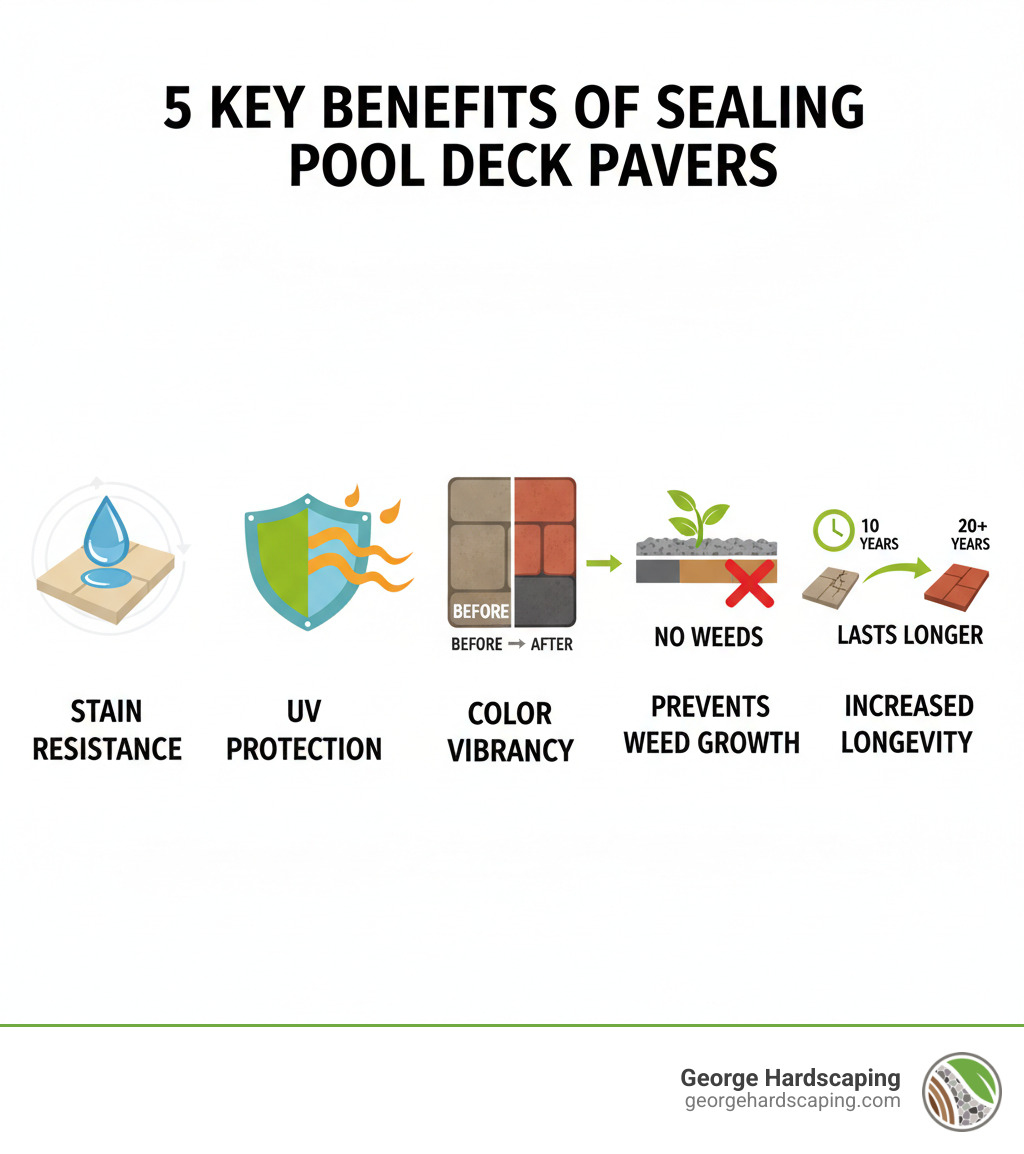
Sealing your pool deck pavers is a smart investment in its longevity, appearance, and safety. Think of unsealed pavers as millions of tiny sponges. They readily absorb damaging elements. UV rays from the sun don’t just fade colors; they break down the binders in concrete pavers, leading to a weak, chalky surface that sheds fine particles. Pool chemicals are another major threat. Chlorine is a powerful oxidizer that can bleach paver pigments, while saltwater from saline pools can penetrate the surface and recrystallize within the pores.
This process, known as subflorescence, creates immense internal pressure that can cause the paver surface to flake and spall. Add in stains from food, drinks, and sunscreen, and you have a recipe for a dull, faded, and permanently marred surface. A quality sealer acts as an invisible, non-porous shield, blocking these threats and preserving the vibrant, rich colors of your investment.
Beyond protection, sealing dramatically improves aesthetics. It improves the natural beauty of your pavers, making their color vibrancy pop. You can choose a sealer for a wet look or a subtle gloss or matte finish. This improved look makes your backyard more inviting. A sealed surface also means easier cleaning, as dirt and spills won’t soak in.
Sealing also provides serious structural integrity by stabilizing the joint sand between pavers. This sand is the flexible grout that locks the paver system together. When unsealed, rain and pool water easily wash it away. This erosion creates voids, allowing pavers to wobble and shift underfoot. This movement not only creates tripping hazards but also causes the edges of the pavers to grind against each other, leading to chipping and spalling.
A good sealer penetrates the sand and hardens it, locking it firmly in place. This prevents sand loss, stops pesky weeds from taking root, and inhibits the growth of mold and mildew in the damp, dark joints. By creating a solid, interconnected surface, you ensure the increased longevity of your entire pool deck. As the National Park Service emphasizes, regular maintenance is crucial for hardscape durability, a principle applicable to your backyard oasis, from beautiful pool decks to pristine driveways.
Finally, safety is paramount. While some high-gloss sealers can reduce traction, many modern options include non-slip additives or maintain natural texture. By creating a water-repellent surface and preventing slippery algae, sealers make your pool area safer. The initial cost and effort are a small price for superior protection, improved aesthetics, stability, and safety.
More reasons homeowners seal pool decks
- Enhanced Stain Defense: A sealed surface is non-porous, meaning spills like sunscreen oils, red wine, and BBQ grease sit on top instead of soaking in. This gives you crucial time to clean them up with a simple wipe, preventing permanent discoloration.
- Superior Color Retention: Many high-quality sealers contain advanced UV inhibitors that act like sunscreen for your pavers. They actively block the solar radiation that causes fading and chalking, maintaining that vibrant, ‘just-installed’ look for years longer.
- Critical Freeze-Thaw Resiliency: In a climate like Massachusetts, this is non-negotiable. Water penetrates unsealed pavers, and when temperatures drop, that water freezes and expands by about 9%. This expansion exerts incredible force from within, cracking and destroying pavers over just a few seasons. Sealing drastically reduces water ingress, preventing this destructive cycle.
- Simplified Seasonal Care: A sealed pool deck is far easier to maintain. Spring cleanup involves a light wash rather than aggressive scrubbing. Winterization is simpler because the surface is already protected from moisture, and come summer, the deck is ready for enjoyment with minimal effort.
Considering a broader outdoor upgrade? Improve your space with walkways and stairs construction or a cozy custom outdoor firepit. These projects pair beautifully with a freshly sealed pool deck, creating a cohesive, low-maintenance outdoor living space.
Many concrete pavers meet the ASTM C936 standard for concrete paving units. Selecting a sealer that supports these performance characteristics extends lifespan and preserves surface texture and traction.
Choosing the Right Sealer: A Pool Deck-Specific Guide
Selecting the right paver sealer for your pool deck is critical. It must withstand chlorine, salt, constant moisture, and the relentless Massachusetts sun. Understanding sealer types helps you make an informed choice.
| Sealer Characteristic | Water-Based | Solvent-Based | Acrylic | Polyurethane |
|---|---|---|---|---|
| VOCs (Volatile Organic Compounds) | Low | High | Varies | Varies |
| Application | Easy cleanup, less odor | Strong odor, requires ventilation | Easy to apply, good for DIY | More durable, professional application often recommended |
| Durability | Good, breathable | Strong, can be less breathable | Good, shorter lifespan | Excellent, high chemical/abrasion resistance |
| Finish | Natural, matte, semi-gloss | High gloss, “wet look” | Wide range | Wide range, durable wet look |
| Cost | Moderate | Moderate to high | Moderate | Higher |
For pool decks, slip resistance, chlorine and salt resistance, and UV stability are paramount to prevent fading.
Water-Based vs. Solvent-Based Sealers
Water-based sealers offer low VOCs, easy cleanup, and less odor. They are breathable, allowing moisture to escape and preventing efflorescence. They penetrate well, stabilizing joint sand.
Solvent-based sealers provide a dramatic high-gloss “wet look” that improves colors. However, they have a strong odor, require solvents for cleanup, and have higher VOCs. Some are less breathable, potentially trapping moisture, and can be slippery if applied too heavily. For fume sensitivity, review OSHA respiratory protection guidance and consider water-based options.
Acrylic vs. Polyurethane Sealers
Acrylic sealers are cost-effective and DIY-friendly, offering solid protection against stains and UV damage, typically lasting 3-5 years. A drawback is moisture sensitivity, which can cause “blushing” if applied to a damp surface.
Polyurethane sealers are a premium option, providing superior durability and resistance to chemicals, abrasion, and UV damage, lasting 5+ years. Though more expensive and sometimes requiring two-part mixing, their tough, long-lasting finish is often worth the investment.
Penetrating vs. Film-Forming Sealers
- Penetrating sealers (silane/siloxane blends) soak into the paver, leaving no surface film. They minimally darken color, maintain original texture, and are usually safest for traction.
- Film-forming sealers (acrylics, polyurethanes) create a protective surface layer, offering satin to high-gloss finishes. They intensify color but may reduce traction unless a non-slip additive is used.
Consider who uses your pool area, sun exposure, and desired appearance. A penetrating sealer with a natural finish is generally the most forgiving and safest around water.
Choosing a Finish and Ensuring a Non-Slip Surface
The finish significantly impacts appearance and safety.
- A natural or matte finish maintains original texture and provides excellent natural slip resistance.
- A semi-gloss or satin finish adds a subtle sheen, improving color without excessive reflection.
- A high-gloss or wet look finish creates a striking appearance but can be slippery when wet.
Safety around a pool is crucial. Penetrating sealers are safest as they don’t alter texture. Film-forming sealers, especially high-gloss, can reduce traction. To counter this, non-slip additives like Grip-Tek 250 slip-resistant additives can be mixed into the final coat. At George Hardscaping, we prioritize safety in all our hardscaping and masonry services, ensuring your pool deck is both beautiful and safe.
If unsure which product suits your deck, we can assess conditions and recommend options as part of our pool deck installation services or comprehensive hardscaping and masonry services.
The Complete Guide on How to Seal Pool Deck Pavers
Sealing your pool deck is a manageable project where preparation is key. This guide breaks down how to seal pool deck pavers into clear, actionable steps for a professional-quality result.
Step 1: Preparation and Gathering Materials
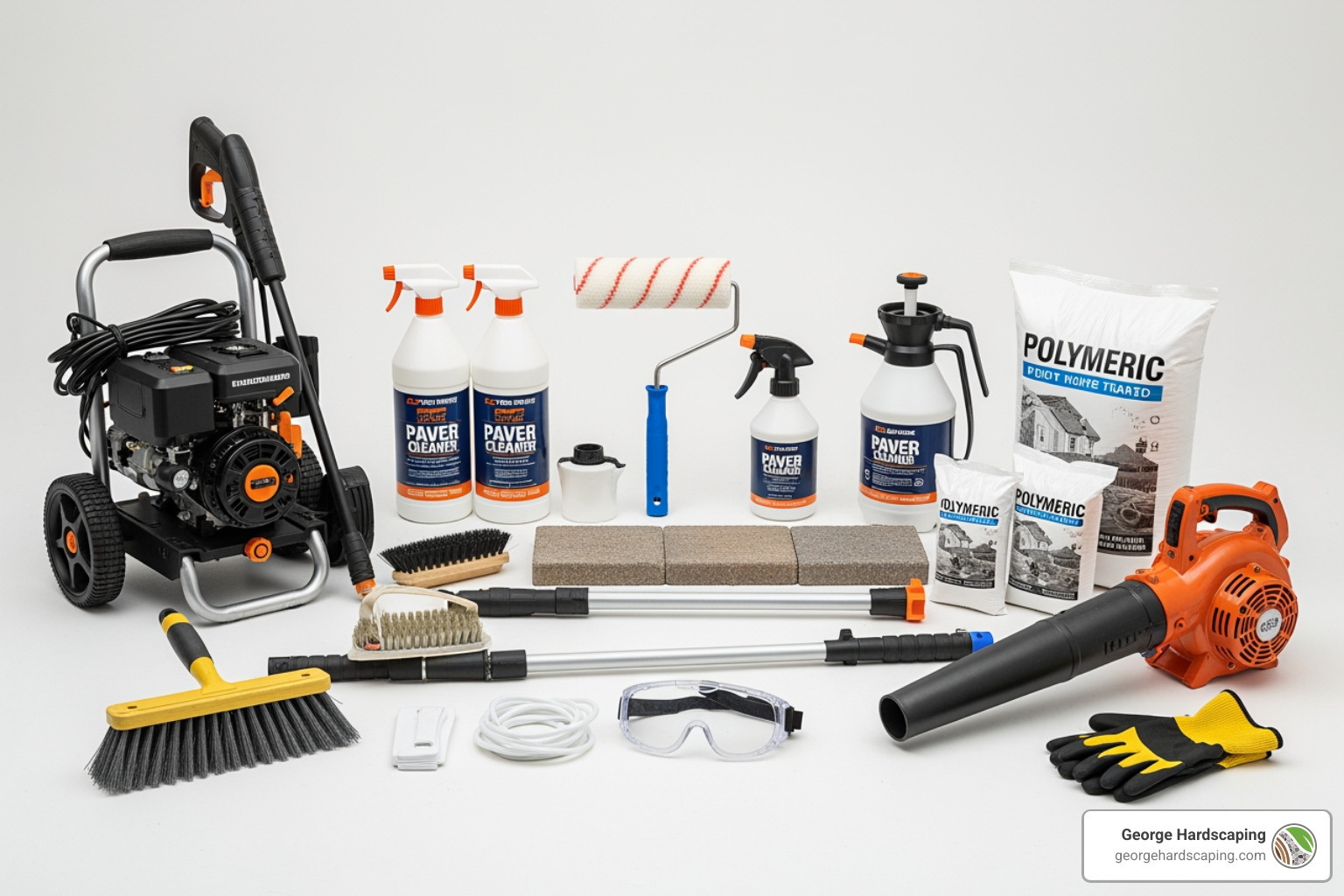
Gather all supplies to avoid interruptions:
- Specialized paver cleaner (and efflorescence remover, if needed)
- Your chosen paver sealer
- Polymeric sand
- Pressure washer, garden sprayer or roller with extension pole
- Stiff bristle brush, broom, leaf blower
- Safety gear: goggles, gloves, protective clothing
Plan for dry weather, 50-90°F, with no rain for 24-48 hours before and after. Avoid direct, intense sunlight to prevent streaking. Check the National Weather Service forecast for optimal conditions. Wear appropriate PPE, including respirators for solvent-based products per OSHA respiratory protection guidance.
Step 2: Thoroughly Clean and Prep the Paver Surface
A clean, dry surface is crucial for sealer adhesion. Remove furniture, sweep debris, then pressure wash the entire surface using a fan tip. Treat stubborn oil, rust, or organic stains with dedicated cleaners. Remove efflorescence (white salt deposits) with a specialized remover. Rinse thoroughly and allow pavers to dry completely (24-48 hours). Do not rush this step; sealing damp pavers causes cloudiness and failure.
Step 3: Repair Joints and Apply Polymeric Sand
Inspect joints, removing old sand, weeds, or moss. Spread polymeric sand and sweep it into joints until full. Use a leaf blower to remove all excess sand from paver surfaces. Lightly mist the sand with water to activate polymers, following manufacturer directions. Allow sand to cure completely (12-24 hours). Proper jointing is fundamental to hardscape longevity, as noted in EPA best management practices for permeable pavements.
Step 4: Masking and Protecting Surroundings
Cover pool coping, skimmers, and the water’s edge with plastic sheeting or painter’s tape. Shield adjacent plantings, stucco, siding, and sensitive railings from overspray.
Step 5: Applying the Paver Sealer
Test the sealer in an inconspicuous area first. Apply with a roller for control on smaller areas, or a sprayer for efficiency on larger decks. Use a short-nap roller for thin, even coats, avoiding pooling. For spraying, use a low-pressure garden sprayer, overlapping passes, and back-roll to ensure even coverage. Apply the first coat in sections, maintaining a wet edge. Protect your pool by covering the coping and water’s edge. Apply a second, thinner coat if recommended, after the first is dry to the touch (2-4 hours). Follow manufacturer recoat windows. Consider mixing a non-slip additive into the final coat for film-forming products around a pool.
Typical cure times:
- Light foot traffic: 2–4 hours
- Heavy traffic and furniture: 24–48 hours
- Full chemical cure: up to 72 hours
Keep the area dry during curing.
Step 6: Cleanup and Safe Disposal
Clean sprayers and rollers immediately. Dispose of solvent-soaked rags safely; they can self-ignite. Refer to U.S. Consumer Product Safety Commission’s guidance on oily rags.
Pro Tips for Specific Materials
- Concrete pavers: Accept both penetrating and film-forming sealers. Monitor for efflorescence.
- Natural stone (e.g., travertine): Best with penetrating, breathable sealers.
- Porcelain pavers: Low-porosity, may not need sealing for stain resistance but benefit from sealed joints. Verify manufacturer guidance.
For a flawless, long-lasting finish without the guesswork, our pros offer deep cleaning, joint repair, and application as part of our hardscaping and masonry services. Request a free estimate for expert paver cleaning and sealing custom to your pool deck.
Long-Term Maintenance and Troubleshooting
Sealing your pool deck isn’t a one-time task. Proper maintenance and knowing what to look for will keep your pavers in top shape for years.
How Long Sealer Lasts and How to Know When to Reseal
Sealer lifespan depends on product type, traffic, and sun exposure, typically three to five years. Perform a water test: if water beads up on the surface, the sealer is working; if it soaks in and darkens the paver, it’s time to reapply. Other visual cues include significant color fading, visible wear patterns in high-traffic areas, or difficulty cleaning new stains.
Annually inspect for clogged joints, settlement, or damaged edge restraints. Routine tune-ups and keeping the surface clean will extend the life of your sealer and the pavers beneath.
Sealing New Pavers and Understanding Efflorescence
New concrete pavers release natural salts as they cure, a process that forms efflorescence (a harmless but unsightly white haze). Sealing over it will trap the white film underneath, making it impossible to remove without stripping. It is critical to wait at least 60-90 days after installation for the efflorescence cycle to complete. Once it has fully emerged, it must be cleaned off with a specialized efflorescence remover before sealing. Some manufacturers offer pre-sealed pavers that can be used immediately, bypassing this waiting period.
Common Mistakes and How to Avoid Them
- Over-application: More is not better. Applying sealer too thickly causes a hazy or plastic-like film, can lead to slipperiness, and may result in premature peeling. Always apply thin, even coats, following the manufacturer’s specified spread rate.
- Sealing a Damp or Dirty Surface: This is the number one cause of sealer failure. Sealer cannot bond to a dirty surface, and sealing over damp pavers traps moisture, leading to cloudiness (blushing) and poor adhesion. Ensure pavers are bone dry and perfectly clean before you begin.
- Ignoring the Weather Forecast: Rain, high humidity, or extreme temperatures can ruin your hard work. Rain can wash away fresh sealer, high humidity prevents proper curing, and direct sun can cause it to dry too fast, creating streaks. Plan for 24-48 hours of dry, moderate weather.
Troubleshooting: Haze, Peeling, Streaks
- White Haze (Blushing): This is the most common issue, often caused by moisture entrapment. If you sealed a slightly damp paver or if high humidity was present, moisture gets trapped under the sealer film, creating a cloudy look. For some solvent-based acrylics, a light spray of xylene can re-emulsify the sealer and allow the moisture to escape. However, if the haze is from over-application (applying coats too thickly), the sealer has not cured properly and will likely need to be chemically stripped and reapplied.
- Peeling, Flaking, or Delamination: This indicates a failure of adhesion. The primary culprits are inadequate surface preparation (dirt, oil, or old sealer left behind) or applying an incompatible sealer over an existing one (e.g., an acrylic over a polyurethane without proper prep). The only reliable fix is to strip the failing sealer from the affected areas (or the entire deck for a uniform finish), clean the surface meticulously, and start the sealing process over.
- Streaks or Lap Lines: These are visible marks showing where you started and stopped with a roller or sprayer. They happen when you fail to maintain a “wet edge,” meaning the edge of the previously applied section dried before you overlapped it with the next. This is common in direct sun or windy conditions. The fix often involves applying a very thin, new coat of sealer, sometimes thinned according to manufacturer directions, to even out the appearance.
How to Strip Old or Failing Sealer
When a sealer is failing or you need to apply an incompatible new coat, stripping is necessary. This is an intensive process that requires caution.
- Choose the Right Stripper: Use a chemical stripper specifically designed for paver sealers. Products vary for acrylics versus polyurethanes, so identify your old sealer if possible.
- Safety First: Wear heavy-duty chemical-resistant gloves, safety goggles, and a respirator. These chemicals are caustic and produce strong fumes. Ensure the area is well-ventilated.
- Application: Apply the stripper generously to a manageable section using a chemical-resistant sprayer or roller.
- Dwell Time: Let the stripper sit and work for the time specified by the manufacturer (typically 15-30 minutes). You should see the old sealer begin to bubble or soften. Do not let the stripper dry out.
- Agitation and Removal: Use a stiff-bristle brush or a floor machine to scrub the softened sealer. Immediately pressure wash the resulting slurry off the surface. This can be a messy job, so protect surrounding vegetation and pool water.
- Neutralize and Rinse: Some strippers require a neutralizing wash afterward. Regardless, a final, thorough rinse of the entire surface is critical to remove all chemical residue. Allow the pavers to dry completely for at least 48 hours before considering any new application.
Seasonal Care, Cleaning, and Winterization
- Regular cleaning: Sweep debris weekly to prevent organic stains. For deeper cleans, use a pH-neutral cleaner and a soft-bristle brush. Avoid harsh acids or abrasive cleaners that can damage the sealer.
- Pressure washing: Use a wide fan tip (40 degrees) and moderate pressure (under 2000 PSI). Keep the nozzle at least 12 inches from the surface and avoid aiming directly at joints to prevent sand washout.
- De-icing products: Certain chlorides can damage concrete and degrade sealers. Use gentler options like calcium magnesium acetate sparingly. See FHWA guidance on deicing chemicals and concrete.
- Mold and algae prevention: A sealed surface is less hospitable to growth, but shaded, damp areas may still need attention. Maintain airflow and sunlight where possible and use specific mold/algae cleaners as needed.
When to Hire a Professional
While DIY sealing is achievable, certain situations strongly favor hiring a professional. Consider calling an expert for a flawless, warrantied finish if you face:
- Stripping Old Sealer: As detailed above, this is a labor-intensive and hazardous process. Professionals have the equipment and expertise to do it safely and effectively. This is especially true for tough-to-remove two-part polyurethane or epoxy sealers.
- Large or Complex Decks: Managing a wet edge, ensuring even coverage, and controlling overspray on a large, multi-level, or intricately shaped deck is challenging.
- Severe Staining or Efflorescence: Stubborn, deep-set oil stains or persistent efflorescence may require specialized, commercial-grade cleaners and techniques that aren’t available to the average homeowner.
- Identifying Existing Sealers: If you don’t know what type of sealer is currently on your pavers, a professional can test it to determine compatibility and the correct course of action, preventing a costly failure.
Experts follow industry best practices from organizations like the Interlocking Concrete Pavement Institute (ICPI), ensuring the job is done right. For expert hardscaping and masonry services in Essex County, MA, trusting a professional saves time and guarantees a superior, lasting result.
Professional sealing costs range from $0.75 to $6.00 per square foot, depending on the level of cleaning, prep, and product choice. Explore our pool deck installation services to evaluate the long-term value of a professionally installed and maintained hardscape.
Frequently Asked Questions about Sealing Pool Deck Pavers
Here are common questions about how to seal pool deck pavers with clear, concise answers.
How long do pavers need to dry after sealing before I can walk on them or use the pool?
Drying times vary by sealer and weather:
- Light foot traffic: 2-4 hours.
- Heavy traffic and furniture: 24-48 hours.
- Full cure: Up to 72 hours for maximum protection.
Always check manufacturer’s instructions.
Can sealing pavers make them completely waterproof?
Sealing makes pavers highly water-repellent, not fully waterproof. It closes pores, causing water to bead and run off, preventing freeze-thaw damage, reducing staining, and inhibiting mold and mildew.
What is the best way to clean a sealed paver pool deck?
For regular maintenance, sweep debris. For deeper cleaning, use a pH-neutral cleaner or mild dish detergent with a soft-bristle brush, then rinse. Avoid harsh chemicals, abrasives, or high-pressure washing.
Can I seal in humid weather or direct sun?
High humidity and direct sun complicate application. Humidity slows curing; hot sun can cause flash-drying and streaking. Aim for mild temperatures, light breeze, and shade. Check the National Weather Service forecast.
Will sealing make the pool deck slippery?
Penetrating sealers preserve natural traction. Film-forming products can be slippery when wet, especially high-gloss. If you prefer a sheen, add a non-slip additive to the final coat.
Can I apply a new sealer over an old one?
Only if compatible. Test adhesion or strip the old sealer if unsure. Professionals can assess and recommend the best approach.
How do saltwater pools affect sealing?
Salt crystals are abrasive and corrosive. Choose a sealer with strong chemical and abrasion resistance, rinse the deck periodically, and plan for more frequent inspections. Polyurethane or high-quality water-based acrylics designed for chemical exposure perform best.
Does sealing change the color of my pavers?
Most penetrating sealers minimally change color, often deepening the tone. Film-forming sealers intensify color and create a high-gloss look. Always test an inconspicuous section first.
Do porcelain pavers need sealing?
Porcelain is dense and less porous, so staining is less common. However, sealing can aid cleanup and joint stabilization. Use products designed for porcelain and verify manufacturer recommendations.
How much does DIY sealing cost?
Budget for cleaners, polymeric sand, sealer, applicators, and PPE. Costs vary by deck size and product. For a guaranteed result, request a quote for our hardscaping and masonry services.
Is there a safety checklist I should follow?
- Wear safety glasses, gloves, and appropriate footwear.
- Use a respirator for solvent-based products per OSHA guidance.
- Avoid open flames; follow safe disposal for oily rags (see CPSC guidance on oily rags).
- Take breaks and hydrate in hot weather; see NIOSH heat stress prevention.
Have more questions? Reach out to discuss materials, finishes, and maintenance plans custom to your deck.
Protect Your Investment with Professional Paver Sealing
We’ve explored every detail, from choosing the perfect sealer to mastering the application process. It’s clear that sealing your pool deck is a vital step to protect your pavers, improve their beauty, and ensure they last for years. For many homeowners, figuring out how to seal pool deck pavers can feel like a significant undertaking.
While tackling it yourself can be rewarding, a professional touch guarantees a perfect, long-lasting finish without the stress or risk of costly mistakes. Here at George Hardscaping, we’re your local experts in Essex County, MA. From Beverly to Newburyport, our team knows exactly what it takes to properly clean, prep, and seal your outdoor surfaces to withstand our local weather.
We are dedicated to quality craftsmanship, whether you need a stunning new patio design and installation, safe and inviting walkways and stairs construction, a durable driveway paver installation, or a cozy custom outdoor firepit.
Strong CTA #1: Protect your pool deck and elevate your backyard with a professional-grade finish. Get started now—request a free estimate for our expert cleaning, joint stabilization, and paver sealing services.
Strong CTA #2: Planning a broader outdoor upgrade? Explore our full range of hardscaping and masonry services and pool deck installation services to build a durable, beautiful space that’s easier to maintain for years to come.
