
Interlocking Pool Deck: Top 6 Must-Have Options 2025
When exploring ways to improve your outdoor oasis, interlocking pool deck options stand out for their blend of aesthetics and functionality. These decks are designed not only to uplift the visual appeal of your backyard but also to provide a practical, durable base around your pool.
Here are some key highlights of choosing an interlocking pool deck:
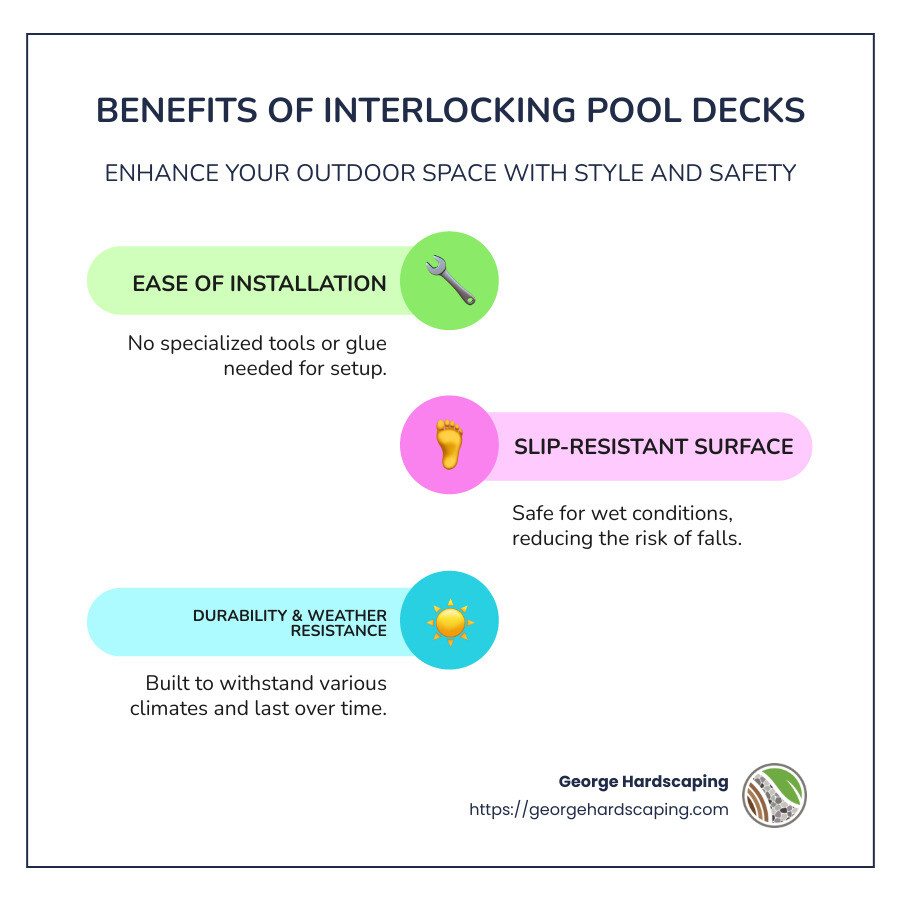
- Ease of installation: No need for specialized tools or glue.
- Slip-resistant surface: Safe for wet conditions.
- Variety of materials: Options include wood, PVC, and rubber.
- Durability and weather resistance: Built to withstand various climates.
- Improved drainage: Allows water to move away efficiently.
For homeowners in Essex County and the North Shore, the right pool deck transforms an outdoor space into a sanctuary ready for summer enjoyment. A range of materials, from classic wood to modern PVC, each offers unique benefits custom to different preferences and needs. Whether prioritizing eco-friendliness, comfort, or aesthetics, an interlocking pool deck seamlessly connects your outdoor spaces, elevating both style and safety.
Understanding Interlocking Pool Decks
Interlocking pool decks are a popular choice for homeowners looking to combine style with functionality. Let’s explore why these decks are a smart investment for your outdoor space.
Installation Made Simple
One of the standout features of interlocking pool decks is their easy installation. Most interlocking tiles come with tab and slot edges, or puzzle-like designs, which means you can set them up without needing glue or special tools. This simplicity not only saves time but also reduces labor costs, making it a cost-effective solution for many homeowners.
Slip-Resistant for Safety
Safety is a top priority around pool areas, and interlocking pool decks excel in this regard. These decks are made from materials like PVC and rubber, which provide a slip-resistant surface. This feature is crucial for preventing accidents, especially when the surface is wet. According to Greatmats, PVC plastic or rubber tiles are non-absorbent and have a grippy surface, ensuring that even when wet, the deck remains safe to walk on.
Built for Durability
Durability is another key advantage. Interlocking pool decks are designed to withstand constant foot traffic, weather changes, and the wear and tear of outdoor use. For example, the Patio Outdoor Tile is known for its durability, resisting damage from furniture legs and heavy use. This makes them a long-lasting investment for your home.
Weather Resistance
Weather resistance is essential for outdoor installations. Interlocking pool decks are crafted to endure various climates without fading or deteriorating. The Ergo Matta Tile is a great example, as it incorporates recycled materials that are both environmentally friendly and tough enough for outdoor use. This ensures your pool deck maintains its look and integrity over time, even in harsh weather conditions.
In summary, interlocking pool decks offer a blend of easy installation, safety, durability, and weather resistance. These features make them an excellent choice for enhancing the functionality and aesthetics of your outdoor space. Whether you’re aiming for a sleek modern look or a more traditional style, these decks provide a reliable and attractive foundation for your pool area.
Wood vs. PVC: Material Comparisons
When it comes to choosing the right material for your interlocking pool deck, understanding the differences between wood and PVC is crucial. Each material offers unique benefits in terms of durability, water resistance, and longevity.
Wood: Natural Beauty and Strength
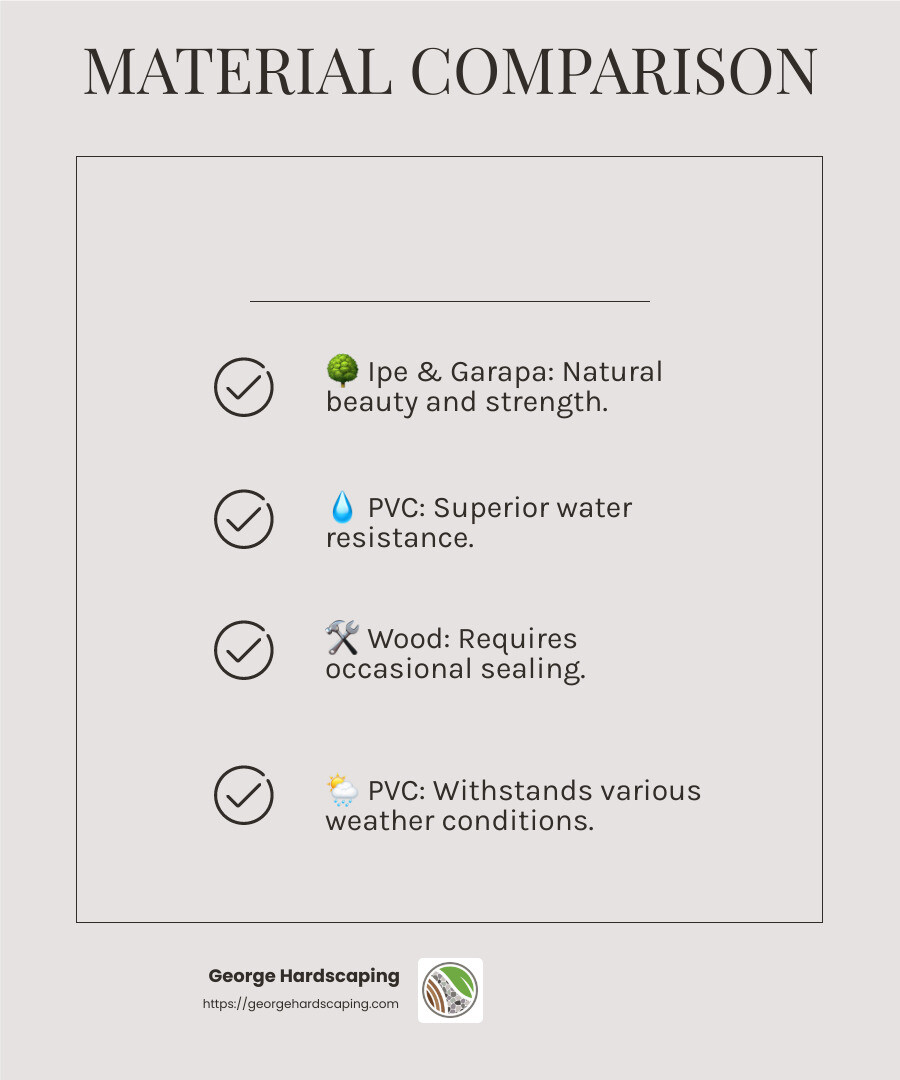
Wooden interlocking tiles, such as those made from Ipe and Garapa, are renowned for their natural beauty and strength. These hardwoods are known for their hardness, which provides resilience and longevity. Unlike cheaper alternatives like Acacia, which may crack or splinter, Ipe and Garapa are built to withstand the elements without compromising safety or aesthetics.
- Wood Type Matters: Ipe and Garapa offer superior durability compared to Acacia, making them ideal for outdoor use.
- Thickness for Stability: At 17mm thick, these wood tiles are as much as twice as thick as some competitors, ensuring a stable, flat surface underfoot.
PVC: Modern Durability and Water Resistance
PVC interlocking tiles, like those used in StayLock and SoftFlex designs, offer a modern solution that focuses on water resistance and long-term durability. These tiles are crafted to handle constant exposure to water without warping or degrading, a critical feature for poolside applications.
- Water Resistance: PVC tiles are non-absorbent, preventing water damage and reducing the risk of mold and mildew.
- Longevity: Designed to withstand various weather conditions, these tiles maintain their appearance and functionality over time.
Comparing Longevity and Maintenance
Both wood and PVC have their strengths, but they also differ in terms of maintenance and lifespan.
- Wood Longevity: While Ipe and Garapa are long-lasting, they may require occasional sealing to maintain their appearance and resistance to weathering.
- PVC Longevity: PVC requires minimal maintenance, with no need for sealing, and retains its look even after years of exposure to the elements.
In conclusion, choosing between wood and PVC for your interlocking pool deck depends on your priorities. If you value the natural elegance and strength of hardwood, Ipe and Garapa are excellent choices. For those seeking low-maintenance durability and superior water resistance, PVC tiles offer an attractive and functional solution.
Top Interlocking Pool Deck Options
When selecting an interlocking pool deck, you have several great options to consider. Each type of tile offers distinct benefits, making it easier to find the perfect fit for your pool area.
Wood Interlocking Tiles
Wood tiles made from Ipe and Garapa are top choices for those who love the look of natural wood. These hardwoods are not only stunning but also incredibly durable. They stand up to the elements and heavy foot traffic without cracking or splintering.
- Ipe and Garapa: Known for their hardness and longevity, these woods provide a safe and stable surface.
- Securelock™ Design: Featuring a robust sub-frame, Securelock™ ensures that the tiles stay in place and maintain their shape over time.
PVC Interlocking Tiles
PVC tiles like Swisstrax, StayLock, and SoftFlex are perfect for those who prioritize water resistance and easy maintenance. These tiles are designed to handle wet conditions, making them ideal for poolside use.
- Swisstrax: Offers vibrant colors and patterns, allowing for creative design options.
- StayLock: Known for its comfort, it provides a cushioned surface that feels great under bare feet.
- SoftFlex: Excellent for wet areas, maintaining traction even when wet, which is crucial around pools.
Rubber Interlocking Tiles
Rubber tiles are another great option, especially for areas that need extra cushioning and slip resistance. Often used in playgrounds, these tiles provide a safe and comfortable surface.
- Playground Tiles: Designed to absorb impact, these tiles are perfect for families with children.
- Cushioning and Slip-Resistance: Rubber tiles offer a soft landing and a grippy surface, reducing the risk of slips and falls.
Each of these interlocking tile options brings unique advantages to your pool deck. Whether you prefer the natural beauty of wood, the low maintenance of PVC, or the safety features of rubber, there’s a solution that fits your needs.
Benefits of Interlocking Pool Decks
Choosing an interlocking pool deck can transform your pool area into a safe and stylish space. Here are some of the standout benefits:
Easy Installation
One of the biggest advantages of interlocking tiles is how simple they are to install. Most tiles feature tab and slot edges or puzzle edges, allowing them to snap together without the need for glue or special tools. This means you can have a beautiful pool deck in no time, even if you’re a DIY enthusiast.
Non-Slip Surface
Safety is a top priority around pools. Interlocking tiles made from PVC or rubber are designed to be non-slip, even when wet. This is a significant improvement over traditional concrete, which can become slippery. Products like SoftFlex maintain traction in constantly wet areas, providing peace of mind for families with kids.
Efficient Drainage
Many interlocking tiles come with built-in perforations that allow water to drain away quickly. This feature prevents water pooling on the surface, reducing the risk of slips and falls. Plus, it helps keep the tiles dry and clean, which is especially useful in areas exposed to frequent splashes.
Comfort Underfoot
Walking barefoot around the pool should be a pleasant experience. Interlocking tiles like StayLock provide a cushioned surface that feels comfortable underfoot. This is perfect for those long summer days spent lounging by the pool. The cushioning also adds a layer of protection against falls, making the deck safer for everyone.
By choosing interlocking tiles, you get a pool deck that’s not only easy to install but also safe, dry, and comfortable. Whether you’re looking for a quick DIY project or a long-lasting solution, interlocking tiles offer numerous benefits that improve your poolside experience.
Frequently Asked Questions about Interlocking Pool Decks
When it comes to creating a pool deck, many questions arise, especially about cost and installation. Here’s what you need to know.
Is it cheaper to deck or pave around a pool?
Cost Comparison
Decking and paving offer different benefits and costs. Generally, paving with materials like concrete or stone can be more expensive due to the material and labor involved. Decking, particularly with interlocking tiles, can be more budget-friendly. These tiles often require less labor to install, which reduces costs. Plus, since they don’t need special tools or adhesives, you save even more on installation expenses.
Can you put interlocking deck tiles on concrete?
Installation Surfaces
Yes, interlocking deck tiles are perfect for concrete surfaces. They provide a cushioned, slip-resistant layer over hard concrete, making it more comfortable and safer for walking. The PVC plastic tiles work well because they are designed to withstand various weather conditions and provide a non-slip surface, even when wet. This makes them an excellent choice for changing that plain concrete into a functional and attractive pool deck.
What is the cheapest way to build a pool deck?
Affordable Options
For those on a tight budget, consider using materials like spraycrete or handcrafted stone. Spraycrete is a cost-effective solution that involves spraying a concrete mixture over a surface, creating a textured, slip-resistant finish. It’s a quick way to cover large areas without breaking the bank.
Handcrafted stone can also be an affordable option if you source materials locally or use recycled stone. This gives your pool deck a unique look without the high price tag typically associated with new stone materials. However, while these methods can be cheaper initially, they might require more maintenance over time compared to interlocking tiles, which offer durability and ease of installation.
Understanding these options can help you make the best choice for your pool area, balancing cost with functionality and aesthetics.
Conclusion
At George Hardscaping, we believe that your outdoor space should be a perfect blend of beauty and functionality. Our commitment to quality and craftsmanship shines through in every project we undertake, especially when it comes to creating stunning interlocking pool decks.
Serving the North Shore of Massachusetts, we take pride in changing backyards into personal paradises. Whether you’re in Beverly, Gloucester, or any of the other charming towns we serve, our team is dedicated to delivering exceptional results that stand the test of time.
Our expertise in masonry and hardscaping ensures that your pool deck not only looks fantastic but also provides a safe and comfortable environment for you and your family. By choosing top-quality materials and innovative designs, we help you enjoy your outdoor spaces to the fullest.
If you’re ready to improve your pool area with an interlocking pool deck that combines durability, style, and ease of maintenance, look no further than George Hardscaping. Contact us today to get started on your project. Let’s create something beautiful together!
