
Pool Paver Decks: 10 Best Stunning Choices for 2025
Creating Your Dream Poolside Oasis
Pool paver decks are modular hardscape surfaces made from interlocking units that surround swimming pools, offering superior durability, safety, and aesthetic appeal compared to traditional pool deck materials.
For homeowners searching for the best pool paver options, here’s a quick answer:
| Top Pool Paver Materials | Best For | Average Cost Range |
|---|---|---|
| Travertine | Heat resistance, luxury look | $10-$30/sq ft |
| Concrete Pavers | Affordability, durability | $5-$15/sq ft |
| Porcelain | Low maintenance, modern aesthetic | $15-$45/sq ft |
| Natural Stone | Unique appearance, longevity | $15-$50/sq ft |
| Brick | Classic look, strength | $8-$20/sq ft |
Nothing transforms a backyard pool into a luxurious retreat quite like a well-designed paver deck. As Kate Shaw, a landscape designer, notes, “Creating a beautiful pool deck is like adding a whole new living room to your home—one that happens to have a swimming pool in the middle.”
Pool paver decks have surged in popularity because they offer practical benefits that other materials can’t match. They’re up to 3 times stronger than poured concrete, with individual units that distribute weight evenly and resist cracking during freeze-thaw cycles. Their modular nature means damaged sections can be replaced individually without tearing up the entire surface.
Beyond functionality, pavers deliver best design flexibility. From classic brick patterns to neat travertine and modern porcelain, the material options allow homeowners to create custom looks that complement their home’s architecture and landscape.
When selecting pool pavers, consider three key factors: safety (slip resistance), comfort (heat absorption), and durability (weather resistance). Light-colored pavers can reduce surface temperatures by up to 30% compared to darker materials—a significant consideration for bare feet on hot summer days.
The investment in quality pool pavers typically accounts for only about 20% of your total project budget, with installation and site preparation making up the majority of costs. However, the long-term value is substantial, with properly installed paver decks lasting 50+ years compared to concrete’s 25-year average lifespan.
Pool Paver Decks word guide:
– herringbone brick pool deck
– old chicago brick pool deck
– pool deck stone pavers
What Are Pool Paver Decks and Why Are They So Popular?
The humble Pool Paver Deck has quite the historical pedigree—tracing back to the ingenious road-building techniques of ancient Rome, where individual stones were placed together to create surfaces that have lasted millennia. Today’s modern versions have certainly evolved, but they still honor that same brilliant principle: creating incredibly strong surfaces through interlocking modular units.
It’s no accident that Pool Paver Decks have become the darling of backyard renovations in recent years. Their popularity stems from practical benefits that homeowners simply can’t ignore.
When you’re padding around a pool with wet feet, safety comes first—and that’s where the naturally textured surface of pavers truly shines. Unlike smooth concrete that can become treacherously slippery when wet, pavers provide reliable traction to help prevent poolside accidents.
“On hot summer days, nothing ruins pool fun faster than scorching deck surfaces,” says Sean Chapman, professional builder. “Many paver materials—especially lighter-colored natural stones like travertine—stay remarkably cool underfoot, even in direct sunlight. Your guests’ feet will thank you!”
The modular nature of pavers creates best design flexibility, allowing you to express your personal style through endless pattern possibilities, color combinations, and material mixing. Whether your taste runs classic or contemporary, there’s a paver solution that will complement your home perfectly.
Perhaps the most practical advantage comes when damage occurs. With a traditional concrete deck, a single crack often means an extensive repair job. With pavers, you simply lift out the damaged pieces and replace them—no jackhammers, no mess, no disruption to your entire poolscape.
And unlike poured concrete that requires days of curing time before you can enjoy your pool, a freshly installed paver deck is ready for immediate use. Your summer fun won’t be delayed by construction timelines.
Pool Paver Decks vs. Poured Concrete & Wood
When comparing Pool Paver Decks to traditional alternatives like poured concrete or wood, the advantages become even more compelling.
Let’s talk strength. Concrete pavers typically boast compression strengths up to 8,000 PSI—that’s approximately three times stronger than typical poured concrete. This superior strength translates directly into fewer cracks and a significantly longer lifespan for your pool deck.
Mother Nature’s freeze-thaw cycles wreak havoc on solid concrete surfaces, which is why poured concrete requires unsightly expansion joints to prevent cracking. Pool Paver Decks handle these temperature fluctuations naturally, with their small joints between units accommodating expansion and contraction without special provisions.
Wood decks might look beautiful initially, but the constant exposure to pool water and chemicals means annual sealing and inevitable battles with rot, warping, and insect damage. Concrete slabs develop cracks and stains over time, often requiring expensive repairs. Pavers, by contrast, need only occasional cleaning and resealing every 3-5 years to maintain their beauty.
“Once you’ve seen one poured concrete pool deck, you’ve seen them all,” notes a pool design expert from the North Shore. “But with pavers, each installation becomes a unique expression of the homeowner’s style and the property’s character.”
| Feature | Pool Pavers | Poured Concrete | Wood Decking |
|---|---|---|---|
| Lifespan | 50+ years | 25 years average | 10-15 years |
| Repair Ease | Individual units replaceable | Entire sections need replacement | Boards individually replaceable |
| Slip Resistance | Excellent (textured surfaces) | Poor unless specially treated | Good when dry, poor when wet |
| Heat Absorption | Low (light colors) | High | Moderate |
| Maintenance | Resealing every 3-5 years | Crack repairs, stain removal | Annual sealing, board replacement |
| Design Options | Unlimited patterns and colors | Limited to stamps and stains | Limited to wood types and stains |
| Installation Time | 3-7 days average | 7-14 days (including curing) | 3-7 days |
| DIY Potential | Moderate | Low | High |
The installation process itself presents another clear advantage. Poured concrete requires heavy equipment access and significant curing time before you can enjoy your pool. In contrast, George Hardscaping can install pavers with minimal equipment disruption to your property, and you can start enjoying your new poolscape immediately after completion.
Comparing Pool Paver Materials: Pros, Cons & Best Uses
Choosing the right material for your Pool Paver Deck can feel a bit like being a kid in a candy store – so many tempting options! Each material brings its own unique blend of beauty, durability, and practicality to your poolside oasis. Let’s wade through the options together so you can find your perfect match.
Concrete & Brick Pavers
When it comes to popularity, concrete pavers wear the crown for Pool Paver Decks – and for good reason. They strike that sweet spot between affordability and performance that many homeowners in Essex County appreciate.
Concrete pavers typically cost between $5-$15 per square foot installed, making them accessible for most budgets. These workhorses of the paver world boast impressive strength (up to 8,000 PSI!) and come in practically endless color and shape options.
“I’ve installed concrete pavers around pools for 15 years, and they’re still my go-to recommendation for families,” says Tom, our senior installer at George Hardscaping. “They handle our harsh Massachusetts winters beautifully, and when a kid inevitably drops something heavy, replacing just one paver is no big deal.”
The main drawbacks? They lack that premium natural stone look, and colors can fade over time (though manufacturers have gotten much better at color retention). You’ll also need to reseal them every 3-5 years to keep them looking their best.
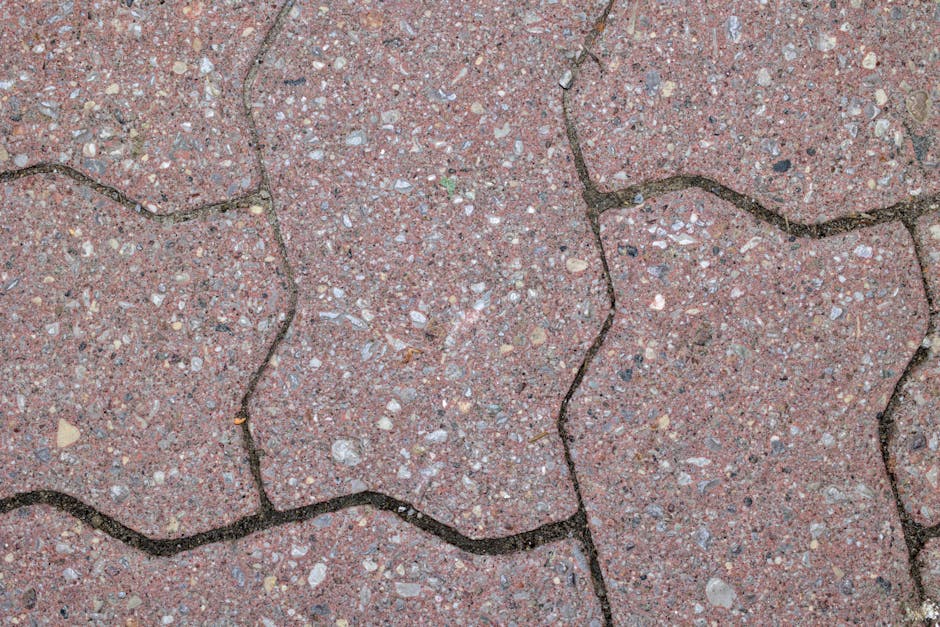
For homes with traditional architecture, brick pavers offer timeless charm that never goes out of style. These clay-based beauties develop character over time that synthetic materials simply can’t match. Their naturally non-slip surface makes them particularly well-suited for pool surrounds, and since the color is baked right in, you won’t experience fading issues.
Brick pavers run a bit higher at $8-$20 per square foot installed, and your color options mostly live in the red and brown family. They can also heat up more than lighter-colored materials in direct sun – something to consider for bare feet on hot summer days!
Travertine & Marble
If you’re dreaming of a luxurious poolside retreat, travertine and marble pavers deserve your attention. These natural stone options lift any Pool Paver Deck to magazine-worthy status.
Travertine has become the darling of high-end pool installations for one standout reason – it stays remarkably cool underfoot, even in direct sunlight. This natural limestone creates a beautiful, earthy palette that complements any landscape design. Its naturally porous surface provides excellent slip resistance when properly finished.
At $10-$30 per square foot installed, travertine represents a step up in investment, but many of our North Shore clients feel the comfort and beauty are well worth it. Just remember that its porous nature means regular sealing is essential, especially around chlorinated pool water.
“The first time I installed travertine around a pool in Gloucester, the homeowners called me the next day just to rave about how comfortable it was to walk on barefoot in the afternoon sun,” recalls George, our founder. “They couldn’t believe the difference compared to their old concrete deck.”
Marble pavers sit at the pinnacle of pool deck luxury. Their distinctive veining patterns and brilliant light-reflecting properties create truly showstopping poolscapes. Available primarily in whites and creams, marble naturally resists heat absorption while adding significant property value.
The luxury comes with a premium price tag of $15-$50 per square foot installed, and marble demands more maintenance than other options, with sealing needed every 1-2 years. It can also be slippery when wet unless finished with a textured surface.
Porcelain & Synthetic Options
The newest stars in the Pool Paver Deck world come from modern manufacturing innovations, with porcelain pavers leading the charge.
Porcelain pavers offer truly remarkable benefits – they’re essentially maintenance-free, completely non-porous (goodbye, stains!), and available in styles that convincingly mimic wood, stone, and concrete. Their consistent thickness and perfectly straight edges (what pros call “rectified”) create clean, precise installation lines.
“Porcelain has been a game-changer for our clients who want the look of wood but the practicality of pavers,” explains our design consultant Sarah. “We installed a gorgeous porcelain deck in Ipswich last summer that looks exactly like weathered boardwalk planks, but it will still look perfect 20 years from now.”
At $15-$45 per square foot installed, porcelain represents a higher initial investment, but many homeowners find the virtually zero maintenance requirements offset this cost over time. The only real downsides? They require specialized cutting tools during installation and don’t retain heat well in cooler weather (though that’s often an advantage around pools).
Synthetic and rubber pavers occupy a specialized niche in the pool world. While rarely used for entire decks due to aesthetic limitations, they excel in specific applications like kids’ splash zones or accessible entries. Their soft, forgiving surface minimizes injury risk from falls, and bright color options add playful elements to family-friendly pools.
Permeable & Eco-Friendly Choices
As environmental awareness grows, permeable paver systems have gained significant traction for Pool Paver Decks, especially in environmentally sensitive areas along Massachusetts’ North Shore.
These innovative systems allow water to pass through the surface and infiltrate the ground below rather than running off into storm drains. This natural water management approach can eliminate the need for additional drainage systems while helping replenish groundwater and preventing puddles around your pool.
“Permeable paver systems can reduce stormwater runoff by allowing up to 100% of rainwater to infiltrate the ground,” notes an environmental engineering expert we often consult with. “This makes them particularly valuable in coastal communities like those we serve on Massachusetts’ North Shore.”
While the specialized base requirements make permeable systems somewhat more expensive initially, they may qualify for LEED points and local incentives that offset costs. At George Hardscaping, we’ve installed numerous permeable paver systems that meet both LEED certification standards and local environmental regulations while maintaining beautiful aesthetics.
The main consideration with permeable pavers is that they require periodic maintenance to maintain their water-filtering capabilities, and they work best with certain soil types. Our team can evaluate your property to determine if a permeable system is right for your pool area.
When selecting materials for your Pool Paver Deck, consider not just the initial appearance but how the material will perform in your specific environment and with your lifestyle. The perfect paver for a family with young children might differ from the ideal choice for empty nesters focused on entertaining. At George Hardscaping, we’ll help you steer these choices to create a pool deck that’s as practical as it is beautiful.
Design & Style Options for Pool Paver Decks
The magic of Pool Paver Decks lies in their incredible design flexibility. Unlike poured concrete, pavers allow you to create a truly personalized outdoor retreat that reflects your unique style while complementing your home’s architecture.
Patterns That Lift Pool Paver Decks
The pattern you choose for your Pool Paver Decks can transform an ordinary pool area into something extraordinary.
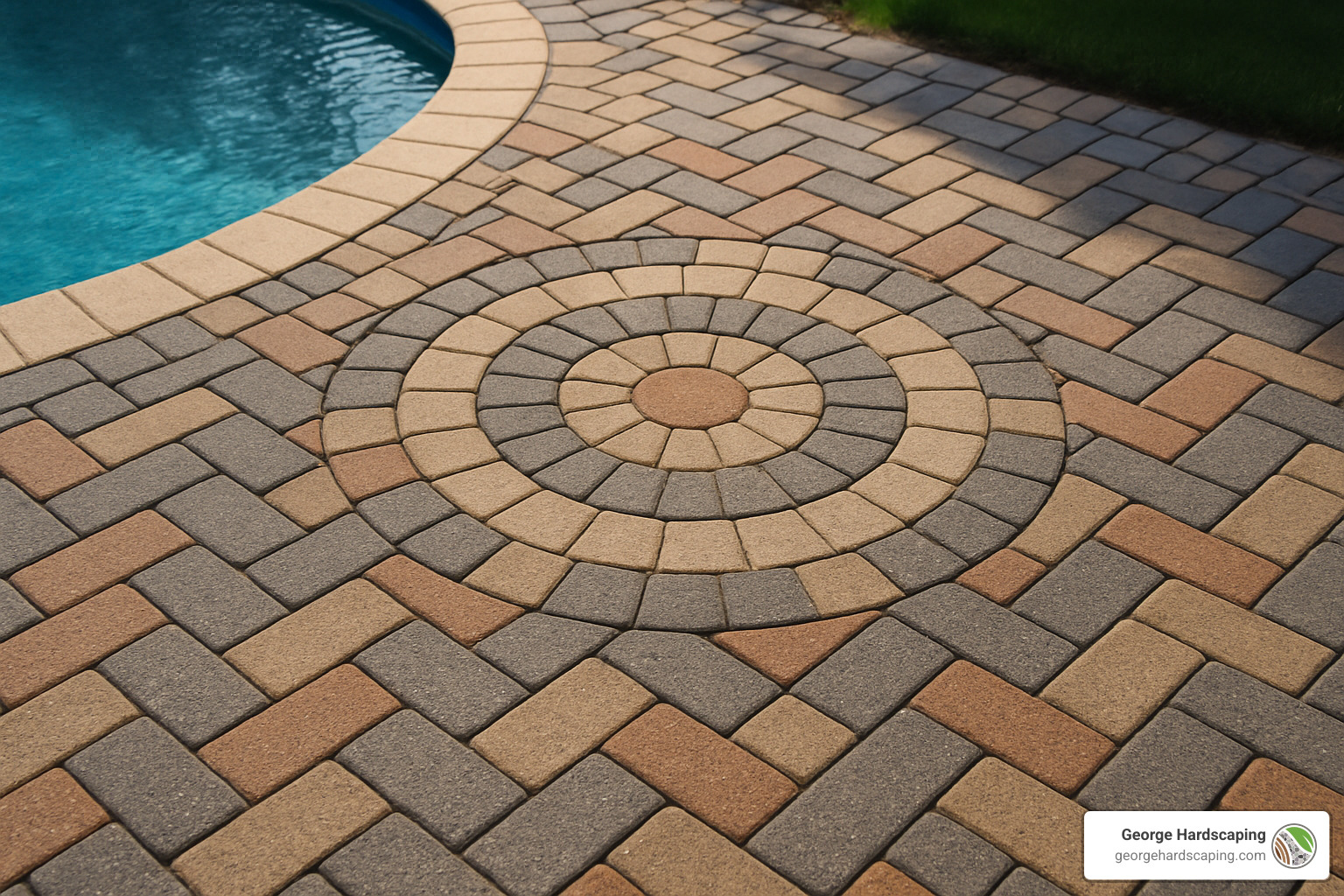
The classic herringbone pattern brings sophisticated visual movement to your space. Available in both 45° and 90° orientations, it’s not just beautiful but also structurally sound for areas that might see heavier traffic. Many of our Essex County clients choose this timeless pattern for its neat European flair.
For a cleaner, more traditional look, the running bond pattern (similar to a classic brick wall) creates a simple yet refined appearance that works beautifully with rectangular pavers. It’s a versatile choice that complements both century-old colonials and contemporary homes throughout the North Shore.
“I often recommend the random ashlar pattern for homeowners who want a more natural, organic feel,” says our lead designer at George Hardscaping. “Using multiple paver sizes in a non-repeating arrangement creates a relaxed, almost Mediterranean vibe that pairs perfectly with travertine and natural stone.”
For those looking to make a bold statement, geometric mosaics incorporate multiple colors and shapes to create artistic focal points. Meanwhile, circular and fan patterns can highlight features like fire pits or soften the edges around curved pool shapes.
Color & Texture Selection
The colors and textures you select impact both the look and functionality of your Pool Paver Decks in significant ways.
Light-colored pavers aren’t just pretty – they’re practical too. They can remain up to 30% cooler than darker options, which makes a huge difference when you’re walking barefoot on a hot July afternoon. This is especially important for Massachusetts homeowners who want to maximize their brief but beautiful summer season.
“Most of our clients are surprised by how much color affects comfort,” notes one of our installation experts. “A simple choice like selecting a sandy beige over a charcoal gray can mean the difference between being able to walk comfortably on your deck at midday or having to hop from towel to towel!”
Texture choices are equally important. Tumbled or antiqued finishes create that coveted weathered, old-world appearance that blends beautifully with historic homes. Smooth finishes offer a more contemporary look, while brushed or sandblasted surfaces provide excellent slip resistance – a crucial safety feature around pools.
Multi-colored blends deserve special consideration too. Beyond their visual interest, they hide dirt and minor stains much better than solid colors, meaning your pool deck will look cleaner with less maintenance – a win-win for busy families.
Integrating Pool Coping & Features
Pool coping – that’s the material that caps the edge where your pool wall meets the deck – isn’t just functional; it’s your opportunity to create a finished, professional look.
Bullnose coping with its rounded edge offers a smooth, comfortable surface for swimmers to grip. Square-edge coping creates a more contemporary, architectural statement. Natural stone coping pairs beautifully with matching pavers for that seamless, high-end resort look we all crave.
“Think of your pool deck as an outdoor room,” suggests our design team. “Just like you wouldn’t furnish your living room with only a sofa, your pool deserves more than just a flat surface around it.”
Consider integrating water features like spillways or fountains framed with pavers. Fire features extend your swimming season well into the cooler months – there’s nothing quite like enjoying your pool area on a crisp September evening with a fire pit providing warmth and ambiance.
Built-in seating walls offer casual perching spots without cluttering your deck with furniture. Planters softened with greenery break up large paver areas and add life to the space. And shade structures like pergolas make your pool area comfortable even during the hottest parts of the day.
At George Hardscaping, we specialize in creating comprehensive outdoor living spaces that seamlessly integrate paver patios with pools and other features. Our aim is to design a cohesive backyard retreat that your family will enjoy for decades to come.
Safety, Drainage & Installation Essentials
Creating a beautiful pool paver deck isn’t just about making your backyard look amazing—it’s also about ensuring everyone stays safe while enjoying your outdoor oasis. Let’s explore the critical elements that go beyond aesthetics to ensure your pool deck performs beautifully for decades.
Drainage & Water Management Basics
Water is a pool’s best friend—until it’s sitting on your deck creating slipping hazards and damaging your investment. Proper drainage is absolutely essential for any pool paver deck.
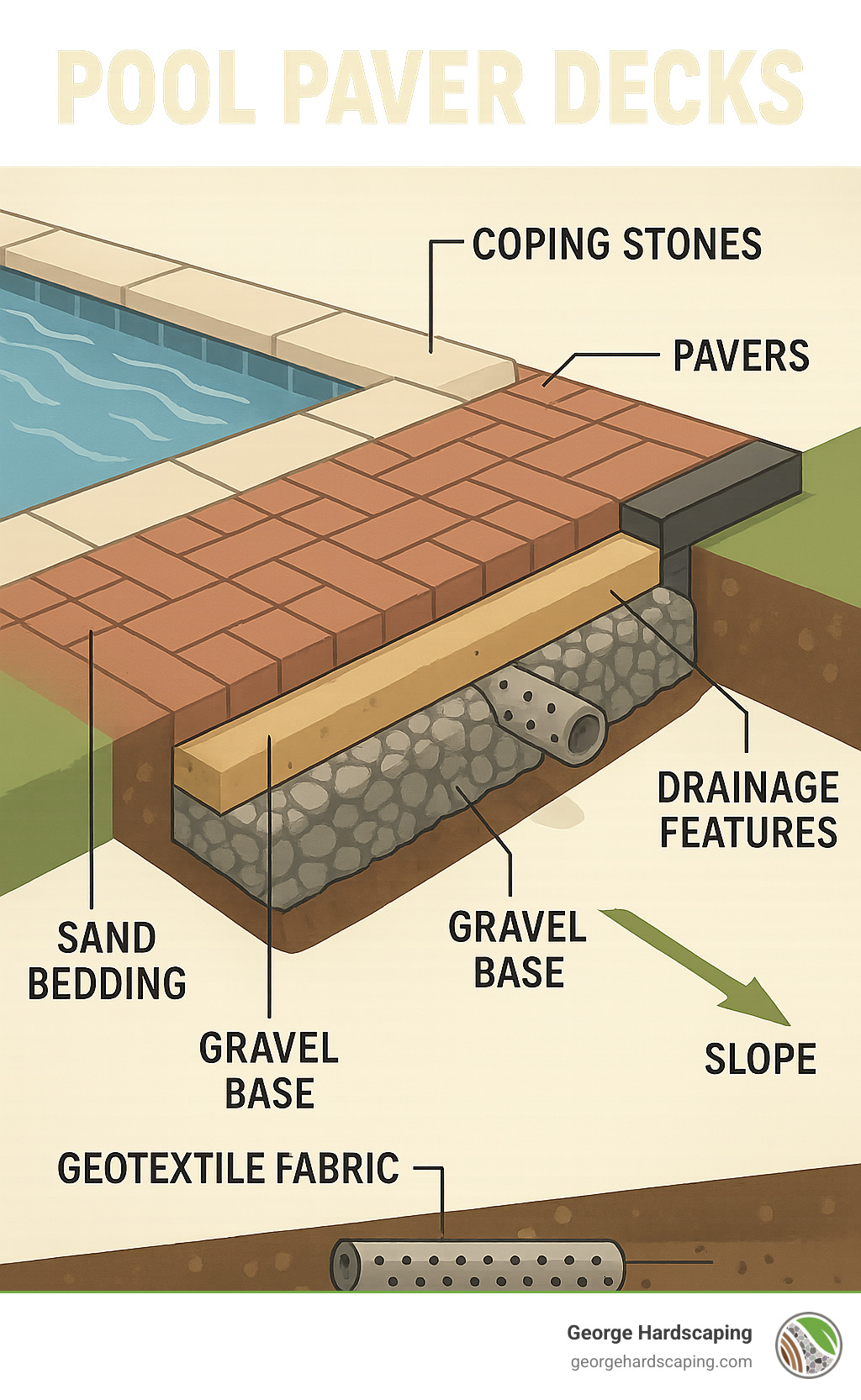
Your deck should always slope away from the pool at a minimum 2% grade (that’s about ¼ inch per foot) to guide water away from both your pool and home foundation. Think of it as creating a gentle water slide that prevents puddles from forming where people walk.
“I always tell homeowners that accounting for size, elevation and proper drainage is the foundation of a successful pool paver deck,” explains one of our hardscaping experts. “Water should always be gently guided away from both your pool and your home’s foundation.”
For larger installations, you might need channel drains, trench drains, or area drains strategically placed to collect and redirect water. These work like little rivers that capture water and move it safely away from your living spaces.
The beauty of pavers is that their joints naturally allow some water infiltration, which can be improved with permeable joint materials. For properties with significant drainage challenges, we can install fully permeable paver systems that handle up to 100% of rainfall—dramatically reducing runoff and those annoying puddles that seem to appear after every rain shower.
Proper edge restraints serve double duty by preventing pavers from shifting while allowing water to exit the deck area. Think of them as the guardrails that keep everything in place while still letting water escape.
Step-by-Step Installation Overview
While most homeowners wisely choose professional installation for their pool paver decks, understanding what goes into the process helps you appreciate the craftsmanship and make more informed decisions about your project.
The foundation of any great paver installation starts with thorough site preparation. We clear away existing materials and vegetation, establish proper grades, mark utilities, and create a defined perimeter with stakes and string lines. This careful planning stage sets the stage for everything that follows.
Next comes what many contractors consider the most critical phase: base construction. “The base preparation is where most DIY installations fall short,” warns Sean Chapman, a professional builder. “A properly prepared base accounts for about 80% of your paver installation’s long-term success.”
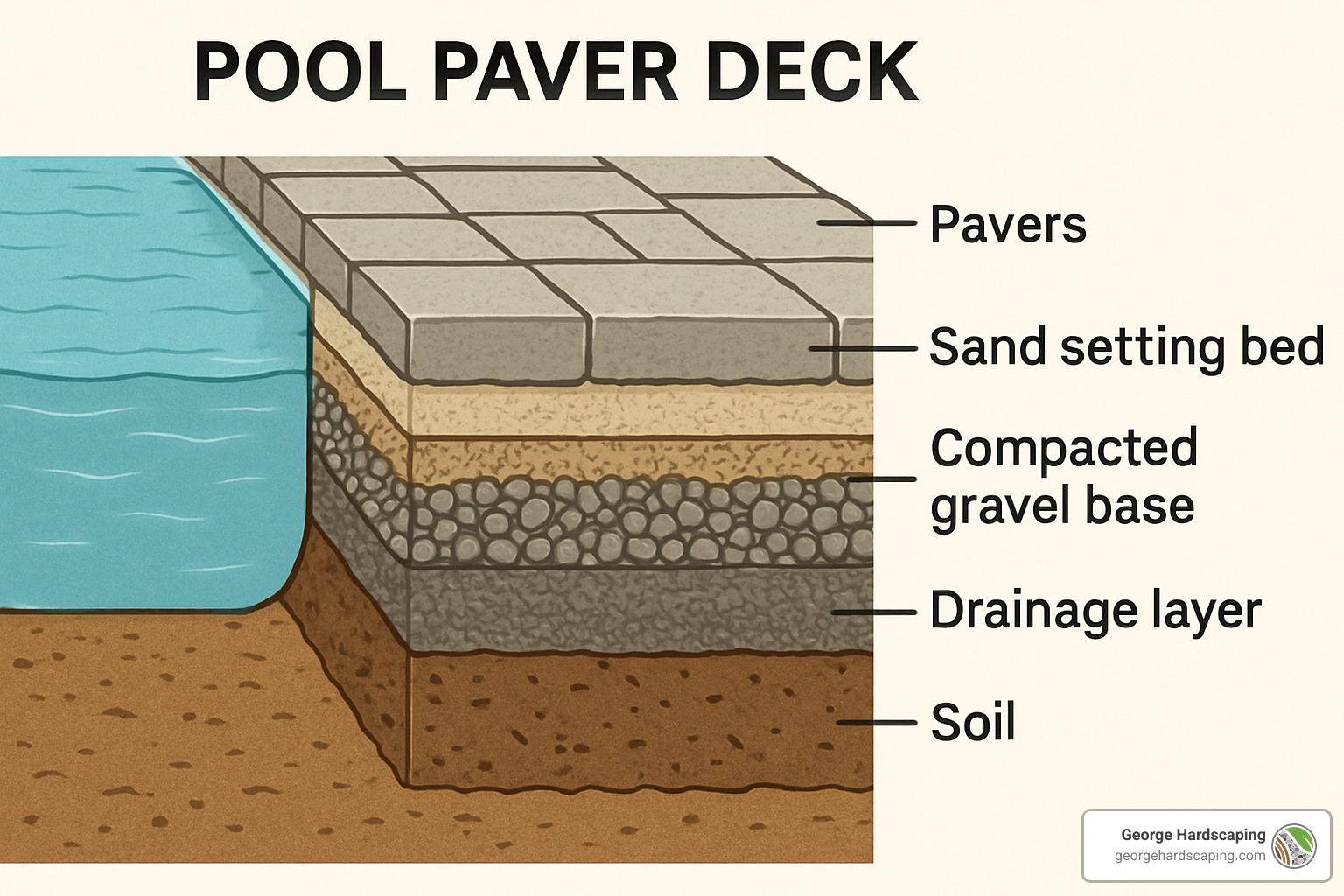
We typically excavate 6-12 inches (depending on your soil conditions and climate), install geotextile fabric to prevent soil migration, and add a gravel base in carefully compacted layers. This solid foundation ensures your pavers won’t shift or settle unevenly over time.
The bedding layer comes next—a 1-inch layer of concrete sand that’s carefully leveled using screeds. Think of this as the comfortable mattress that your pavers will rest upon, creating a smooth, even surface.
When it’s finally time to install the pavers, we begin from a fixed edge or established starting point, carefully following your chosen pattern. We use string lines to ensure straight courses and cut pavers precisely using a masonry saw. The edges get special attention with proper restraints to keep everything in place.
The finishing touches make all the difference: compacting the installed pavers with a plate compactor (with a rubber mat to protect them), sweeping polymeric sand into the joints, carefully misting with water, and applying sealer after the manufacturer’s recommended waiting period.
At George Hardscaping, our expert teams follow installation protocols that exceed industry standards, ensuring your pool paver deck will perform beautifully for decades. Our paver installation services cover everything from initial design consultation to those final finishing touches that make your pool area truly spectacular.
Costs, Maintenance & Longevity
Let’s talk about what it really takes to own a pool paver deck – both for your wallet today and your time tomorrow. After all, this isn’t just a purchase; it’s an investment in your home and outdoor lifestyle.
Budgeting Your Pool Paver Deck
When homeowners ask me about costs, I always say, “It’s like buying a car – there’s the basic model and then there’s the luxury edition with all the bells and whistles.” Based on internet data (not actual costs for George Hardscaping), here’s what you might expect to invest:
For a basic concrete paver installation, you’re typically looking at $15-$45 per square foot installed. If you prefer premium concrete pavers with special finishes or colors, that range shifts to $20-$60 per square foot. Brick pavers, with their classic appeal, generally run $24-$72 per square foot installed.
Moving up the luxury scale, travertine pavers typically cost $30-$90 per square foot installed, while porcelain pavers range from $45-$135 per square foot. For the ultimate in pool deck elegance, marble or high-end natural stone can command $60-$180 per square foot installed.
Interestingly, the pavers themselves usually represent only about 20% of your total project cost. The rest goes toward proper base preparation, skilled labor, and finishing touches – the elements that ensure your deck will perform beautifully for decades.
“Don’t fret over the cost; choose the paver that’ll last a lifetime,” as one pool design expert puts it. “When amortized over decades of use, the difference between good and premium materials becomes minimal on an annual basis.”
Your specific property might have unique factors affecting the budget too. Steep slopes requiring extra grading work, limited access for equipment, or existing structures that need removal can all influence the bottom line. Custom design elements like borders, inlays, and special patterns will add craftsmanship time and material costs.
Many homeowners find that financing options make premium pool paver decks more accessible, allowing you to spread the investment over time while enjoying the benefits immediately.
Cleaning & Seasonal Care
A well-maintained pool paver deck can look almost as good after 20 years as it did on day one. The secret? Consistent, simple care that prevents problems before they start.
For routine cleaning, a soft bristle broom is your best friend – regular sweeping prevents dirt from settling into the joints and surface. For basic washing, a garden hose with a spray nozzle works perfectly. When you need deeper cleaning, stick with mild, pH-neutral soaps mixed with water. Harsh chemicals can damage both the pavers and the joint material between them.
Pool paver decks require a seasonal approach to maintenance:
In spring, take time for a thorough inspection after winter’s freeze-thaw cycles. This is the perfect time to replace any damaged pavers and replenish joint sand if needed. Summer calls for regular rinsing to remove chlorine or salt water splashes that can leave deposits over time. Fall maintenance focuses on keeping fallen leaves from sitting on the surface where they can cause staining. And in winter, use plastic snow shovels rather than metal ones that might chip your pavers.
“Protecting your pool deck pavers with sealed products extends their life and maintains their appearance,” notes a maintenance expert I work with. “Think of sealing as sunscreen for your pavers—it prevents premature aging and color fading.”
Most pool paver decks benefit from resealing every 3-5 years, though this varies based on exposure to sun, pool chemicals, and foot traffic. When power washing becomes necessary, keep the pressure under 1500 PSI and hold the nozzle at least 12 inches from the surface to prevent damage.
Natural stone pavers like travertine require special care – only use pH-neutral, stone-specific cleaners and seal more frequently (every 1-2 years) when used around pools. The more porous the stone, the more important regular sealing becomes.
One of the greatest advantages of pool paver decks remains the ability to replace individual damaged units without disturbing the entire surface – something impossible with poured concrete. This “spot repair” capability means your deck can be refreshed indefinitely without a complete overhaul.
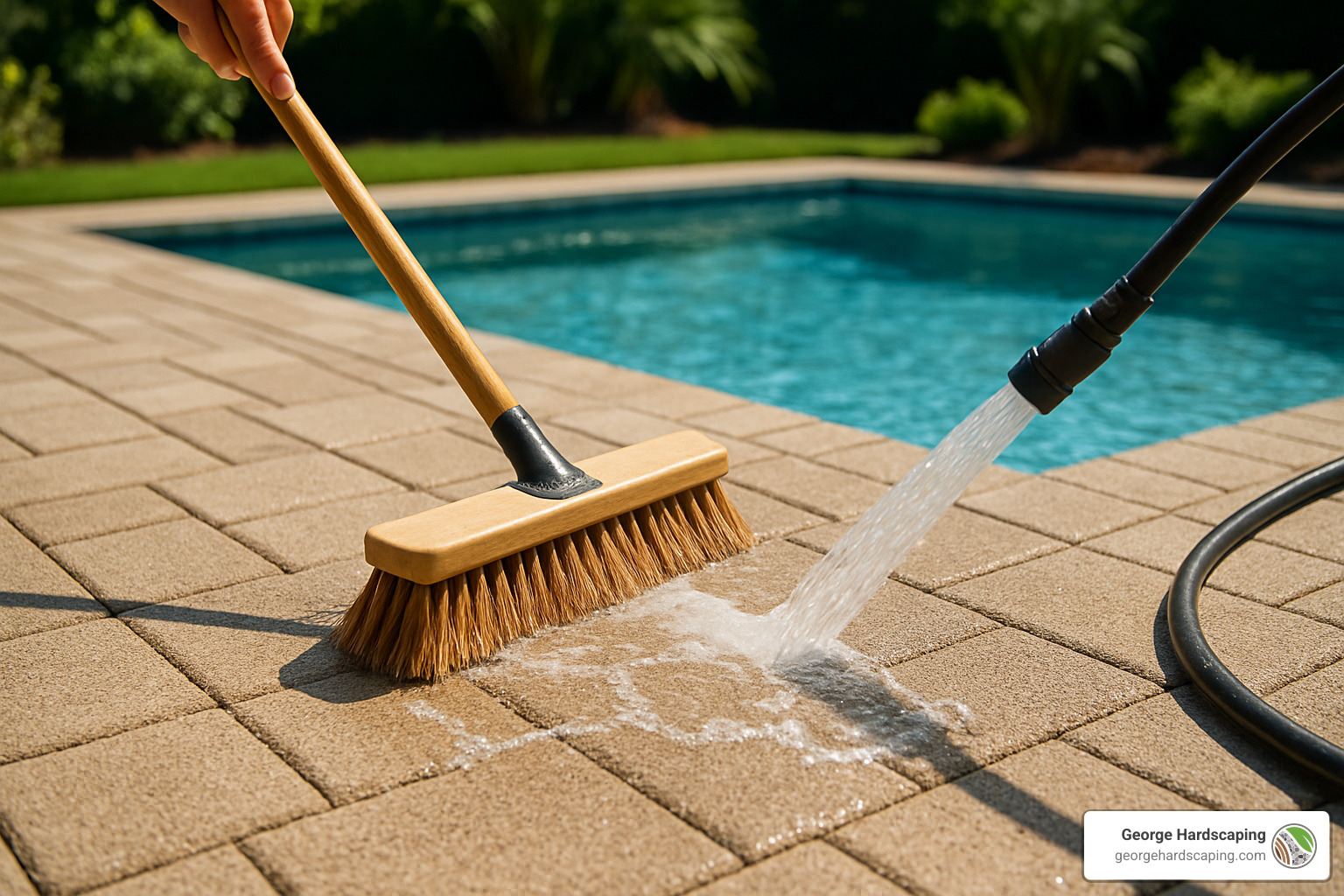
At George Hardscaping, we provide detailed maintenance recommendations custom to your specific materials and installation. We’re also happy to connect you with qualified maintenance professionals when needed, ensuring your investment stays beautiful for generations.
Frequently Asked Questions About Pool Paver Decks
Are pool paver decks slippery when wet?
One of the top concerns homeowners have about pool paver decks is safety—especially when it comes to slippery surfaces. The good news? When properly selected and installed, paver decks actually provide excellent traction, even when splashed with pool water.
Unlike smooth poured concrete that can become treacherously slick when wet, most pavers are designed with texture that creates natural slip resistance. This built-in safety feature makes pavers an ideal choice for pool surroundings where wet feet are inevitable.
“Identifying the safest pool deck paver is crucial for family safety,” explains a pool safety expert. “Look for pavers with a slip-resistance rating appropriate for wet areas.”
For maximum slip resistance around your pool, focus on textured surface pavers, natural stone with cleft or tumbled finishes, concrete pavers with exposed aggregate surfaces, or products specifically rated for pool surrounds. Many manufacturers provide coefficient of friction ratings—look for values of 0.42 or higher, which meets or exceeds requirements for wet areas in most building codes.
Proper installation plays a key role too. A slight slope away from the pool not only helps with drainage but also reduces puddles that could create slipping hazards.
How hot do different paver colors get in full sun?
Anyone who’s danced across a scorching pool deck in bare feet knows that surface temperature matters! This is where pool paver decks offer a significant advantage over materials like dark concrete or composite decking.
Color makes a dramatic difference when it comes to heat absorption. Light-colored pavers can remain up to 20-30% cooler than darker materials under the same sun exposure. Our testing in full summer conditions reveals some striking temperature differences:
Dark gray/black pavers can reach a foot-scorching 150-170°F—hot enough to cause burns with prolonged contact. Medium brown/red pavers typically hit 130-150°F, still uncomfortable but more manageable. Light tan/cream pavers usually stay below 120°F, while white or very light pavers often remain under 100°F—comfortable enough for bare feet even on the hottest days.
Material choice matters too. Natural stone options like travertine and marble stay naturally cooler due to their density and reflective properties. Travertine is particularly renowned for its comfort underfoot, even in direct sunlight.
“Select light-toned, non-abrasive coping to keep surfaces cool and slip-resistant,” recommends a pool design professional. “This is particularly important for the coping stones where swimmers will place their hands when exiting the pool.”
For families with children or those who enjoy lounging poolside, prioritizing cooler materials can make a world of difference in comfort during hot summer months.
Can pavers be installed over an existing concrete pool deck?
If you’re looking to upgrade your pool area without the mess and expense of complete demolition, here’s good news: pavers can often be installed directly over existing concrete pool decks. This process, known as an overlay, can be an excellent solution when your concrete is structurally sound but visually tired or dated.
“Can pool deck pavers be installed over an existing pool deck? Absolutely,” confirms a hardscaping expert. “It’s a great way to refresh your pool area without the mess and expense of complete demolition.”
For an overlay to be successful, your existing concrete needs to meet several requirements. It should be structurally sound (though minor cracks are acceptable), have proper drainage slope (or be correctable), and maintain minimum height clearances for pool coping, doorways, and other transitions.
The overlay process typically begins with thoroughly cleaning the existing concrete and repairing any significant damage. Next comes installing a drainage mat or bedding layer, followed by laying either thin pavers (typically 1″ thick) or standard pavers with modified installation techniques. Edge restraints are crucial where pavers meet pool coping, and finishing touches include filling joints with polymeric sand and applying sealer if desired.
At George Hardscaping, we carefully evaluate each potential overlay project individually. Sometimes what seems like a simple overlay might reveal deeper issues once we inspect your property. We’ll always provide honest recommendations based on what will give you the best long-term results for your pool paver deck, whether that’s an overlay or a complete reconstruction.
The overlay approach not only saves on demolition costs but also reduces project waste—making it both economical and environmentally friendly when conditions are right.
Conclusion
A well-designed pool paver deck transforms your backyard from a simple swimming area into a true outdoor oasis. Unlike other hardscape options, pavers create a foundation that balances beauty with the practical demands of poolside living – something that’s especially important when you’re barefoot and dripping wet on a hot summer day!
The magic of pavers lies in their modular nature. When a single unit gets damaged (perhaps from that heavy grill you dragged across the deck), you can simply replace that one paver rather than jackhammering your entire pool surround. This system gently flexes with ground movement instead of cracking like concrete, while giving you design possibilities that are limited only by your imagination.
“I waited years to upgrade my old concrete pool deck, and honestly, my only regret is not doing it sooner,” shares Maria, a recent George Hardscaping client. “The difference in both looks and comfort is night and day – my kids no longer have to hop across hot concrete, and I finally have an outdoor space that feels like an extension of our home.”
For homeowners in Essex County, pavers make particular sense. Our New England freeze-thaw cycles can wreak havoc on solid concrete slabs, while our summer heat waves make material selection crucial for bare feet. The textured surface of properly selected pavers also provides essential slip resistance when wet – a critical safety feature around any pool.
At George Hardscaping, we’ve spent over two decades perfecting our approach to pool paver decks. Our craftsmen understand the unique challenges that pool environments present, from proper drainage slopes to chemical-resistant materials. We take pride in creating pool surrounds that families will enjoy for generations, not just seasons.
Your swimming pool represents a significant investment in your property and your family’s enjoyment. Why surround it with anything less than the best? Whether you’re installing a new pool or breathing new life into an existing one, pavers deliver the perfect combination of durability, beauty, and practical performance.
Ready to transform your pool area into the backyard retreat you’ve been dreaming of? Contact George Hardscaping today to schedule a consultation and find the perfect pool deck installation solution for your home. Your bare feet (and your home’s value) will thank you for years to come!
