
The Best Pool Deck Materials: A Comprehensive Guide for Smart Homeowners
Choosing the best pool deck materials is one of the most significant decisions a homeowner will make during a backyard renovation. Your pool deck is more than just a walkway; it is the stage upon which your summer memories are built. It must be aesthetically pleasing, but more importantly, it must be functional, safe, and durable enough to withstand the unique environmental pressures of the North Shore of Massachusetts. From the humid, salt-heavy air of Gloucester to the deep-freeze winters of Boxford, your decking material is under constant assault from the elements. A pool deck is a long-term investment that affects not only the visual appeal of your property but also its resale value and the safety of everyone who uses it.
For most homeowners, the search for the perfect surface leads to three primary contenders: travertine pavers, porcelain pavers, and concrete pavers. These materials offer the best balance of safety, longevity, and style. However, the “best” choice is highly subjective and depends on your specific priorities—whether that is minimizing maintenance, maximizing heat resistance, or staying within a strict budget. In our region, we must also account for the heavy snowfall and the use of de-icing salts, which can be corrosive to certain types of stone. Therefore, selecting a material that can handle the freeze-thaw cycle without cracking or spalling is paramount.
Quick Comparison Table
| Material | Heat Resistance | Slip Resistance | Maintenance | Best For |
|---|---|---|---|---|
| Travertine | Excellent | Good | Moderate (seal every 2 yrs) | Luxury, warm climates, bare feet |
| Porcelain Pavers | Very Good | Excellent | Very Low | Modern aesthetics, stain resistance |
| Concrete Pavers | Good | Good (textured) | Low-Moderate | Versatility, budget-friendly projects |
| Natural Limestone | Good | Good | Moderate | Rustic, natural aesthetic |
| Quartzitic Sandstone | Very Good | Excellent | Low-Moderate | Durability, cold climates |
| Stamped Concrete | Moderate | Moderate | Moderate (seal regularly) | Affordability, seamless looks |
| Composite/PVC | Good | Very Good | Very Low | Raised/above-ground decks |
Your pool is only half the picture. The deck around it—the surface your bare feet touch the moment you step out of the water—is what defines the user experience. If the stone is too hot, you’ll be sprinting for the grass. If it’s too slippery, a simple walk to the lounge chair becomes a hazard. These are real-world problems that homeowners across Essex County encounter every season. The texture of the material also plays a role in how much dirt and debris are tracked into the pool water, affecting your filtration system’s workload.
According to safety guidelines from the Pool & Hot Tub Alliance, the choice of surfacing is a critical component of residential pool safety. Choosing the wrong material isn’t just a cosmetic mistake; it can lead to structural failure. In our region, the freeze-thaw cycle is the primary enemy. Water enters the pores of a stone, freezes, expands, and can cause the material to “spall” or crack. This is why understanding the technical specifications of your chosen material is vital. We often see decks that look beautiful in July but are riddled with hairline fractures by the following April because the material wasn’t rated for the local climate.
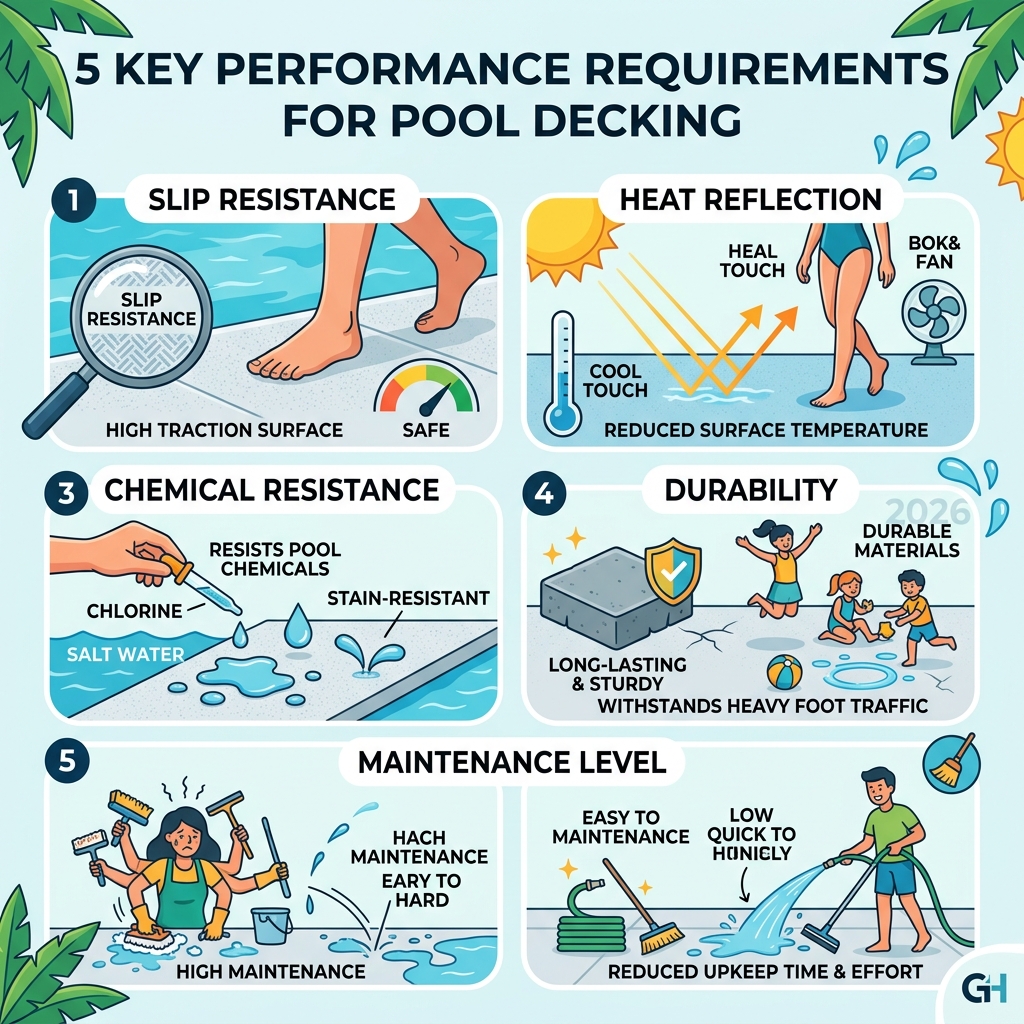
Best pool deck materials terms to remember:
Key Factors in Choosing the Best Pool Deck Materials
When we consult with homeowners in Danvers, Ipswich, or Marblehead, we move beyond simple color palettes. We dive into the engineering of the space. A pool deck is one of the most demanding environments for any building material. It must endure constant moisture, harsh chemicals like chlorine or salt, intense UV radiation, and the brutal temperature swings of a New England winter. According to data from the National Weather Service, Massachusetts can experience dozens of freeze-thaw cycles in a single season, which is catastrophic for low-quality materials. This constant expansion and contraction of the ground require a flexible yet sturdy decking solution that won’t buckle under pressure.
Slip Resistance: The Science of Safety
Safety is the non-negotiable factor. When children are running around a wet pool area, the surface must provide adequate traction. In the industry, we measure this using the Dynamic Coefficient of Friction (DCOF). For pool decks, a DCOF rating of 0.42 or higher is generally recommended for wet surfaces. Materials with a textured finish help feet grip the surface even when it is saturated. This is why we often recommend top-rated pavers for pool areas that feature a “tumbled,” “sandblasted,” or “brushed” texture. Smooth, polished stones or glazed tiles might look sleek in a magazine, but they become incredibly dangerous the moment they get wet. Furthermore, the presence of algae or mold can significantly reduce traction, so choosing a material that resists organic growth is also a safety consideration.
Thermal Comfort: The “Barefoot Test”
Thermal comfort is a major consideration for the Best pool deck materials. We’ve all had that experience of sprinting across a scorching deck because the stone was too hot to stand on. Generally, lighter colors reflect more sunlight and stay cooler. However, material density also plays a role. Porous stones like travertine tend to stay cooler than dense materials like brick because they dissipate heat through internal air pockets and allow for better airflow. If your pool area receives 10+ hours of direct sunlight, choosing a material with high solar reflectance is essential for comfort. Darker materials like bluestone or dark gray concrete can reach temperatures exceeding 150 degrees Fahrenheit on a mid-summer day, which can cause physical burns to sensitive feet.
Chemical and Moisture Resistance
Your deck is going to get splashed with chlorinated or saltwater. Over time, these chemicals can break down certain types of stone. For salt pools, managing the Langelier Saturation Index (LSI) is important for the water, but choosing a naturally resistant material is your first line of defense for the deck. Saltwater pools are increasingly popular due to their softer feel on the skin, but the salt can crystallize inside the pores of soft stones, causing them to crumble from the inside out. Furthermore, a scientific study on concrete compressive strength reminds us that high-pressure ratings (often 8,000+ PSI in modern pavers) are essential for long-term structural integrity against the weight of water and soil shifts. High-density materials are less likely to absorb these chemicals, ensuring the deck remains structurally sound for decades.
Why Porcelain is Among the Best Pool Deck Materials
If you’re looking for the “set it and forget it” option, durable porcelain pavers for pool decks are hard to beat. Unlike the thin tiles used in bathrooms, outdoor porcelain pavers are typically 2 cm (about 0.78 inches) thick and engineered specifically for exterior use. They are fired at extremely high temperatures, resulting in a material that is nearly as hard as diamond. This manufacturing process creates a surface that is incredibly dense and resistant to almost all forms of environmental wear.
Non-Porous Perfection The biggest advantage of porcelain is its water absorption rate of less than 0.05%. This makes it virtually immune to freeze-thaw damage. It also means it won’t absorb spilled sunscreen, wine, or chlorine, making it incredibly stain-resistant. For homeowners who hate the idea of scrubbing algae out of stone “holes,” porcelain is a dream. Modern manufacturing allows porcelain to mimic almost any look—from weathered wood to Italian marble—while maintaining a high friction coefficient. You can find technical data on outdoor porcelain collections that prove these surfaces offer superior grip even when wet. Because they are color-fast, they will not fade under the intense UV rays of the summer sun, maintaining their “day one” look for their entire lifespan.
Comparing the Best Pool Deck Materials for Cold Climates
Living on the North Shore means we have to be smarter about our material choices than homeowners in Florida. Our “best” list is filtered through the lens of durability. We often guide our clients toward interlocking pool deck systems because they allow for slight ground movement without cracking the entire surface. If one paver shifts due to frost heave, it can be reset; if a poured concrete slab cracks, it’s a permanent and expensive eyesore. We look for stones with high silica content or dense engineered products that won’t “sugar” or flake away when exposed to salt spray or heavy ice melt. The ability to perform repairs locally without replacing the entire deck is a massive advantage of paver systems over monolithic slabs.
Natural Stone vs. Engineered Pavers: A Performance Comparison
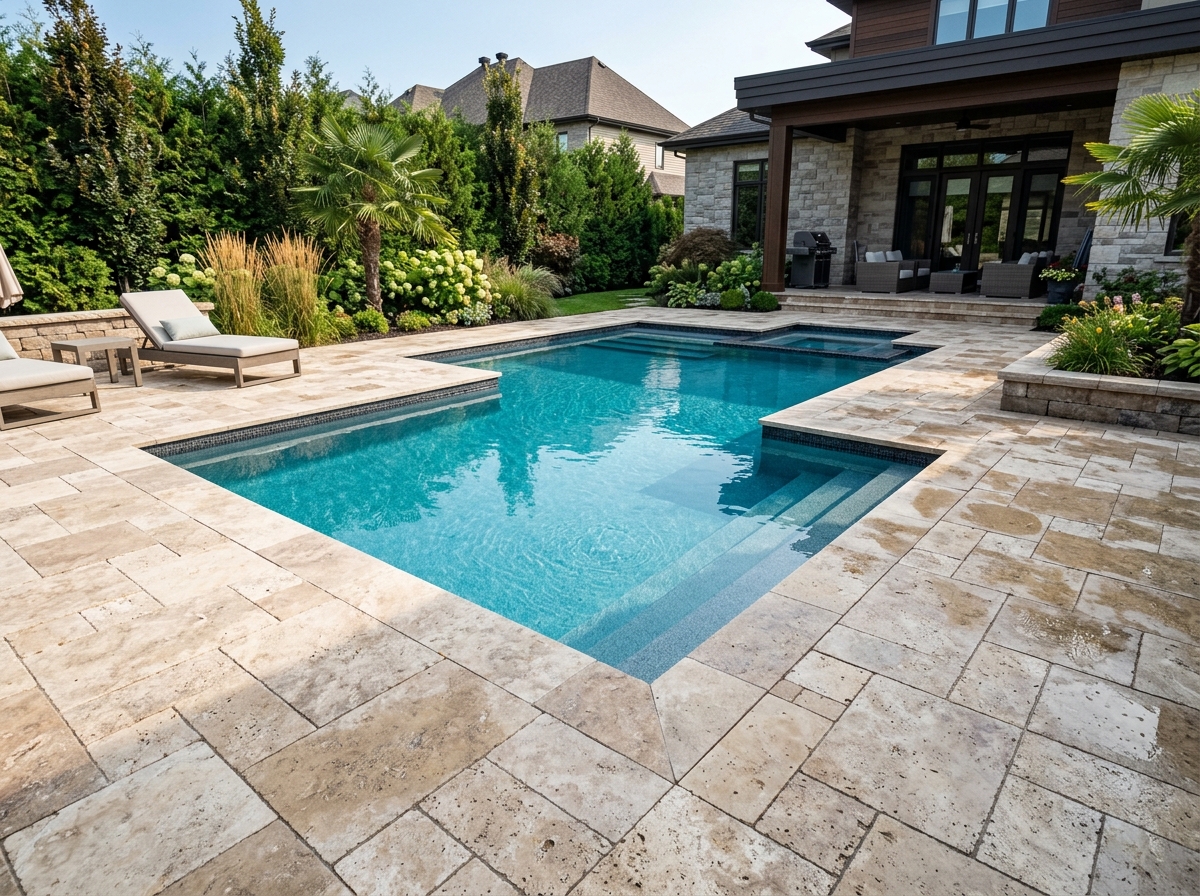
Choosing between natural stone and engineered pavers (like concrete or porcelain) is often the biggest fork in the road for our clients. Both categories have heavy hitters that qualify as the Best pool deck materials, but they offer very different ownership experiences. Natural stone provides an organic, high-end feel that connects the pool area to the surrounding landscape, while engineered pavers offer precision, uniformity, and often superior technical specifications for drainage and load-bearing.
Natural Stone: The Timeless Choice
Natural stone offers a unique beauty that no machine can perfectly replicate. Every piece is a thumbprint of the earth, featuring unique veining, fossils, and color variations. When selecting pool deck stone pavers, we pay close attention to the ASTM International C616 classifications. This standard categorizes quartz-based stones into three types based on their density and strength. For a pool deck, you want a stone that falls into the “Quartzitic Sandstone” or “Quartzite” categories, as these offer the lowest absorption rates and highest durability. These stones are formed under immense geological pressure, making them naturally resistant to the elements. They provide a tactile experience that is both grounding and luxurious, making your backyard feel like a high-end resort.
Travertine: The Gold Standard for Thermal Comfort
There is a reason why travertine has been a favorite since the time of the Romans. For many, it remains the absolute Best pool deck materials for one reason: it stays cool. Even in the middle of a humid July afternoon in Peabody or Salem, you can walk on light-colored travertine without discomfort. This is due to the stone’s unique cellular structure, which allows it to breathe and dissipate heat much faster than other materials.
The French Pattern and Aesthetics Travertine is most famous for the “French Pattern” (also known as the Versailles pattern), which uses four different sizes of stone to create a layout that looks both organized and organic. It adds an immediate “luxury resort” feel to any backyard. However, because travertine is a form of limestone, it is naturally porous. While these pores help with heat dissipation, they can also trap dirt or algae if not properly maintained. This is why a guide to sealing travertine pavers is essential reading. We recommend sealing natural stone every two years to maintain that crisp, clean look and to prevent salt or chlorine from penetrating the surface. Properly sealed travertine is one of the most beautiful and functional surfaces available for any aquatic environment.
Concrete Pavers and Advanced Concrete Paver Solutions
Don’t confuse modern concrete pool pavers with the dull gray blocks of the past. Today’s concrete pavers are high-tech masonry products. Standard poured concrete usually has a compressive strength of about 3,000 PSI. In contrast, advanced concrete pavers are often rated at 8,000 PSI or higher, as per standards set by the Concrete Masonry & Hardscapes Association. This makes them incredibly resistant to chipping and cracking. They are manufactured in controlled environments, ensuring that every piece meets strict quality standards for size, color, and strength.
Versatility and Affordability For many homeowners in Lynnfield or North Reading, pool paver decks provide the best return on investment. They offer the look of natural stone at a more accessible price point and come in an endless variety of shapes, from classic brick to oversized modern planks. They are also manufactured with “integral color,” meaning the pigment goes all the way through the stone. If you drop a heavy chair and chip a corner, you won’t see a different color underneath. This durability makes them ideal for high-traffic family pools where kids and pets are constantly active. Furthermore, the interlocking nature of these pavers allows for easy access to underground utilities or pool plumbing should repairs ever be necessary.
Ready to transform your backyard into a private oasis? Whether you’re in Beverly or Wenham, we’re here to help you choose and install the perfect surface. Our team of experts can guide you through the selection process to ensure your deck is as functional as it is beautiful. Schedule your free pool deck consultation with George Hardscaping today!
Maintenance and Longevity: Protecting Your Investment
You’ve spent the money on the Best pool deck materials; now you need to make sure they last for the next 30 years. Maintenance requirements vary wildly depending on what you choose. A porcelain deck might only require a quick rinse, while a natural flagstone deck requires a more hands-on approach to prevent weathering. Neglecting maintenance can lead to a buildup of calcium deposits, organic staining, and even structural degradation of the joints. A proactive approach to care will save you thousands of dollars in restoration costs down the line.
The Sealing Schedule and the Science of Protection
Natural stones like travertine, limestone, and flagstone are “breathable,” but they need protection from the acidic nature of rain and the corrosive nature of pool chemicals. We recommend a high-quality, penetrating sealer. Unlike “topical” sealers that sit on top and can make the surface slippery, penetrating sealers soak into the stone to block moisture from the inside out. For most pavers around swimming pool areas, a fresh coat every 24 to 36 months is the gold standard. This prevents the stone from absorbing water, which is the primary cause of cracking during the winter months. Sealing also helps to lock in the color of the stone, preventing it from looking “washed out” after years of exposure to the sun.
Cleaning and Algae Prevention
Algae loves moisture and shade. If your pool deck is partially shaded by trees in Gloucester or Rockport, you might see green or black spots forming in the joints. This is not just an aesthetic issue; algae can become incredibly slippery when wet, creating a safety hazard.
- For Porcelain: A simple spray with a garden hose or a mild pH-neutral cleaner is usually enough. Porcelain’s lack of pores means algae has nowhere to take root. For stubborn spots, a soft-bristle brush can be used without fear of scratching the surface.
- For Natural Stone: Avoid acidic cleaners (like vinegar or harsh bathroom sprays), as they can “eat” the calcium in the stone, leading to permanent etching. Use cleaners specifically formulated for natural stone that won’t strip away your sealer.
- For Concrete Pavers: A light pressure wash once a year will keep them looking new. Be careful not to blast out the joint sand, as this can destabilize the pavers. Re-sanding may be necessary after a heavy cleaning.
Expert Tips for Long-Term Performance
A beautiful deck is only as good as what’s underneath it. Here are the “pro secrets” we use at George Hardscaping to ensure your project doesn’t fail after the first winter. We focus on the foundation because we know that the North Shore’s soil is prone to shifting.
The Power of Polymeric Sand When we install pavers, we don’t just use regular sand in the joints. We use polymeric sand—a mix of fine sand and additives that harden when misted with water. This creates a flexible but firm bond that keeps weeds from growing between your pavers and prevents ants from making homes in your deck. It also resists being washed away by heavy rain or pool splashes. This is a critical step that many DIYers skip, leading to a messy deck within a single season. Polymeric sand also helps to distribute the load across the entire deck, reducing the risk of individual pavers sinking or shifting.
Drainage is Non-Negotiable Water is the enemy of masonry. We always ensure a proper “pitch” (usually 1/4 inch per foot) so that water flows away from the pool and the house. In larger projects, we integrate channel drains or French drains to handle heavy Massachusetts downpours. Without proper drainage, puddles can form, leading to slip hazards and accelerated wear on your stones. Proper drainage also protects your pool’s coping and the underlying bond beam from water damage. If water is allowed to sit under the pavers, it can cause the base to wash out, leading to uneven surfaces and potential tripping hazards.
Cost Analysis and Installation Best Practices
We believe in transparency. While every backyard in Essex or Georgetown is different, having a ballpark idea of costs helps you plan your dream space. The Best pool deck materials often come with a higher upfront cost, but they save money over time through reduced repairs and a longer lifespan. When calculating your budget, remember to factor in the cost of demolition of any existing structures, site preparation, and the installation of proper drainage systems, which are essential for a long-lasting deck.
Note: The following are average costs based on regional market data and are not actual quotes for George Hardscaping services. Costs in the North Shore area can vary significantly based on site prep, drainage requirements, and material availability.
| Material | Average Cost (Installed) | Lifespan | Maintenance Level |
|---|---|---|---|
| Concrete Pavers | $18 – $45+ per sq. ft. | 25–50 Years | Low-Moderate |
| Travertine Pavers | $25 – $65+ per sq. ft. | 50+ Years | Moderate |
| Porcelain Pavers | $30 – $75+ per sq. ft. | 50+ Years | Very Low |
| Natural Stone (Flagstone) | $25 – $80+ per sq. ft. | 40+ Years | Moderate |
| Stamped Concrete | $15 – $40+ per sq. ft. | 15–25 Years | Moderate |
When looking at the cost to install pavers around pool areas, the “high end” of the range often reflects complex patterns, premium stone grades, or difficult site access. For example, a multi-level deck with integrated retaining walls will naturally cost more than a flat, rectangular surround. Additionally, the choice of coping (the edge of the pool) can impact the overall price, as custom-cut stone or specialized porcelain edges require more labor and precision.
Installation Methods: The Foundation of Success
There are two primary ways we install the Best pool deck materials:
- Sand/Gravel Base (Flexible): This is the most common method for concrete pavers. It involves excavating the soil, laying a compacted gravel base, a layer of bedding sand, and then the pavers. This system allows for natural ground movement and is generally more affordable and easier to repair. It is particularly effective in areas with high frost heave potential.
- Concrete Base with Mortar/Thin-set (Rigid): This is often required for 2 cm porcelain and some luxury natural stones. It provides a rock-solid, “interior” feel but requires expert masonry to handle drainage and expansion joints. If the concrete base isn’t poured correctly, the pavers on top will eventually crack. This method is more expensive but offers a level of stability and precision that is unmatched.
We also specialize in paver pool coping installation, which is the “edge” of the pool. This needs to be perfectly smooth and securely bonded, as it’s the part of the deck that gets grabbed and stepped on the most. We often use a “bullnose” edge for safety and comfort, ensuring there are no sharp corners for swimmers to catch themselves on.
Professional Installation vs. DIY Risks
We love a good weekend project, but a pool deck is not the place to “learn as you go.” There are three major risks to DIY pool decking:
- Soil Expansion: Our Massachusetts clay and loam soils expand and contract. If your base isn’t excavated to the proper depth (often 8-12 inches) and compacted with the right equipment, your deck will shift and settle unevenly. This can lead to “lippage,” where the edges of pavers stick up, creating trip hazards.
- The “Bathtub Effect”: If you don’t get the pitch exactly right, you can accidentally trap water against your pool beam or your home’s foundation, leading to thousands of dollars in structural damage. Water that pools against the house can lead to basement leaks and mold issues.
- Aesthetic Alignment: Cutting stone around the curves of a freeform pool requires specialized wet saws and a steady hand. One wrong cut on a $20-per-square-foot porcelain paver is an expensive mistake. Professional installers have the tools and experience to create seamless, beautiful curves and intricate patterns.
By choosing expert pool deck installation services, you’re not just paying for labor; you’re paying for the peace of mind that your investment will look just as good in ten years as it does on day one. A professional installation also typically comes with a warranty, protecting you against unforeseen issues.
Frequently Asked Questions about Pool Decking
What is the coolest material for a pool deck in direct sunlight?
Travertine is widely considered the coolest natural material. Its light color and porous structure allow it to stay significantly cooler than concrete or brick. If you prefer an engineered product, look for light-colored porcelain pavers, which reflect a high percentage of solar energy. Some manufacturers also offer “Cool Deck” coatings for concrete, though these require more frequent maintenance than stone or porcelain. It is important to note that even the “coolest” materials will warm up in 90-degree weather, but travertine remains walkable when other stones would be painful.
Which pool deck material offers the best slip resistance for children?
Textured concrete pavers and “R11” rated porcelain pavers offer the best grip. Quartzitic sandstone is also excellent because its natural “gritty” texture provides built-in traction even when completely submerged. Always avoid “honed” or “polished” finishes for wet areas, as these are designed for indoor use and become dangerously slick when wet. When selecting a material, ask for the DCOF (Dynamic Coefficient of Friction) rating to ensure it meets safety standards for wet environments.
How often should I seal my natural stone pool deck?
For homes in our area—like Swampscott, Rowley, or Manchester-by-the-Sea—we recommend sealing every 2 to 3 years. The harsh winters and salt air can strip away sealers faster than in milder climates. A simple “bead test” (dropping water on the stone to see if it beads up or soaks in) will tell you when it’s time for a refresh. If the water soaks in and darkens the stone immediately, your sealer has worn off and your stone is vulnerable to staining and freeze damage.
Can I install pavers over my existing concrete pool deck?
Yes, this is often called a “paver overlay.” It is a great way to modernize an old, cracked concrete deck without the cost of full demolition. However, the existing concrete must be structurally sound and have proper drainage. We use thinner “remodeling pavers” or porcelain for these projects to ensure the new deck doesn’t sit too high against the pool coping or house doors. This process can save significant time and money while completely transforming the look of your backyard.
Is a saltwater pool bad for stone decking?
Saltwater is more corrosive than traditional chlorine, but it won’t destroy your deck if you choose the right materials. Dense stones like travertine, quartzite, and porcelain are highly resistant to salt. The key is to rinse the deck with fresh water occasionally and maintain a high-quality sealer to prevent salt crystals from forming inside the stone’s pores. If left unchecked, salt crystallization (efflorescence) can cause softer stones to flake or “sugar” over time.
How do I choose between a modern or rustic look?
Your choice of material should complement the architecture of your home. For modern, minimalist homes, large-format porcelain pavers with clean lines and neutral colors are often the best choice. For more traditional or rustic homes, natural flagstone or tumbled concrete pavers provide a warmer, more organic feel. We recommend looking at samples in different lighting conditions to see how the colors and textures change throughout the day.
Don’t let another summer go by with a cracked or scorching deck. At George Hardscaping, we’ve spent years perfecting the art of the outdoor living space. From Salem to Topsfield, we bring quality craftsmanship to every square inch of your backyard. Our team is dedicated to providing a seamless experience from the initial design to the final stone placement. Contact us for a free estimate and let’s start building your dream deck!
Conclusion: Making the Right Choice for Your Home
Choosing from the Best pool deck materials is a journey that starts with understanding your lifestyle and the specific demands of your property. Do you want the zero-maintenance ease of porcelain? The timeless, cool-to-the-touch luxury of travertine? Or the rugged, versatile reliability of concrete pavers? Each material has its place, and the right choice will provide a safe, beautiful environment for your family for decades. A well-designed pool deck is more than just a functional necessity; it is an extension of your home’s living space, a place for relaxation, exercise, and social gatherings.
In the North Shore of Massachusetts, our pool decks have to work harder than anywhere else. They have to survive the snows of January and the humidity of August while remaining safe for the people we love. At George Hardscaping, we don’t just lay stones; we build the foundation for your summer memories. We understand the local geology, the climate challenges, and the aesthetic standards of our community. Our expertise in both natural stone and engineered products allows us to provide tailored solutions that meet the unique needs of every client, ensuring that your investment is protected for the long term.
Whether you are in Beverly, Danvers, or Newburyport, our commitment to quality masonry ensures that your pool area will be a source of pride and relaxation. We take the time to ensure the base is perfect, the drainage is flawless, and the finish is beautiful. We believe that every homeowner deserves a backyard that they can enjoy without worry, and we are here to make that a reality. Our process is built on transparency, communication, and an unwavering attention to detail.
Ready to transform your outdoor space from “fine” to “phenomenal”? Let’s take your backyard to the next level with a professional installation that stands the test of time. We are proud to serve the entire North Shore with expert hardscaping and masonry services. Reach out today, and let’s get your project on the calendar before the summer rush! Your dream pool deck is just a consultation away. Let us help you create a space where you can make memories for years to come.
