
cost to install pavers around pool: 5 Powerful 2025 Price Truths
Understanding Pool Paver Installation Costs: What to Budget
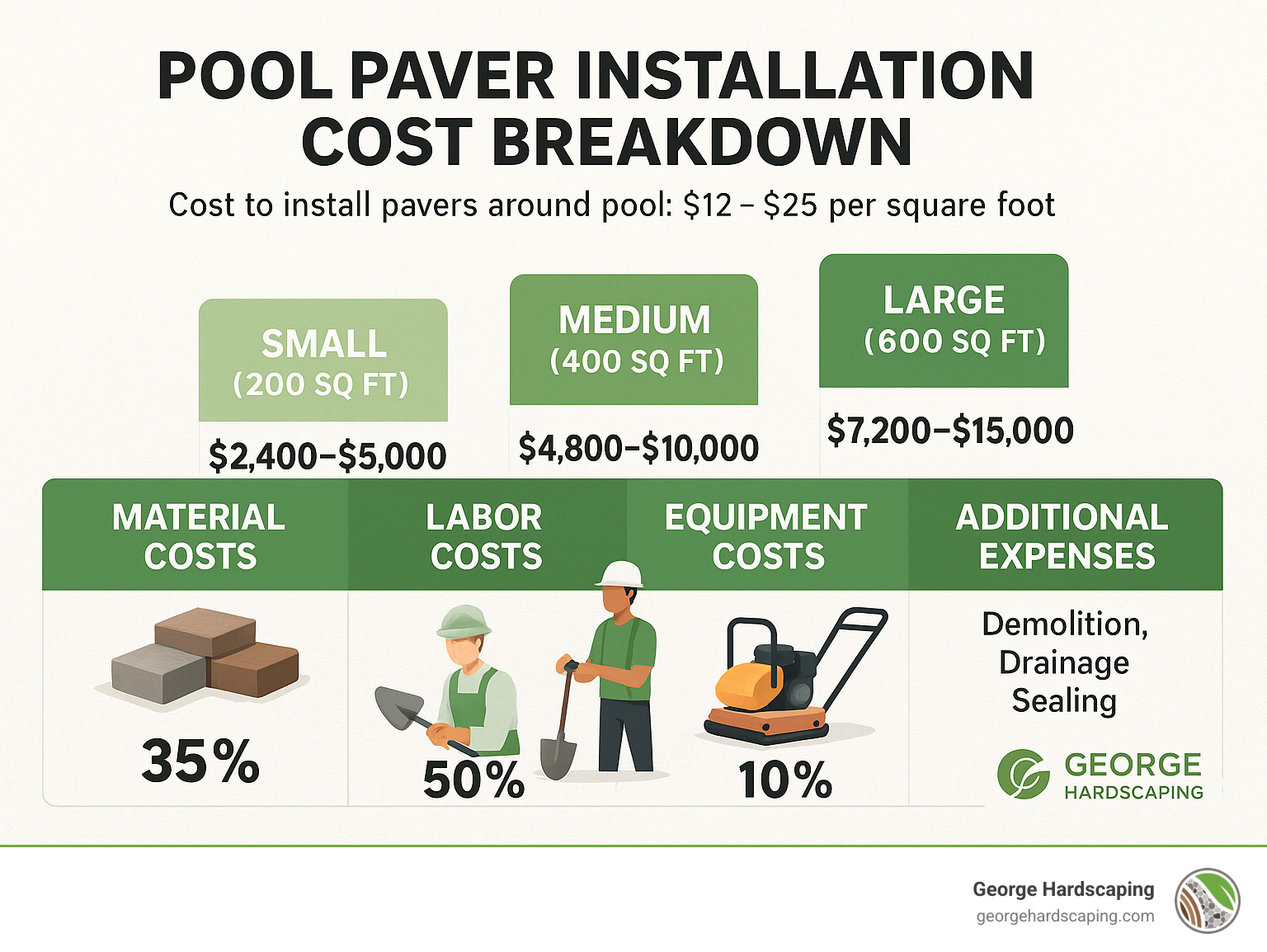
When you’re dreaming of that perfect poolside retreat, knowing what to budget can feel overwhelming. The cost to install pavers around pool areas typically falls between $12 and $25 per square foot. This means your total investment could range anywhere from $5,000 to $20,000 depending on the size of your deck, materials you choose, and how complex your design is.
To help you visualize what this means for your specific project, here’s a quick snapshot:
| Pool Deck Size | Average Cost Range |
|---|---|
| Small (200 sq ft) | $2,400 – $5,000 |
| Medium (400 sq ft) | $4,800 – $10,000 |
| Large (600 sq ft) | $7,200 – $15,000 |
Changing that bare concrete or grass around your pool into a beautiful paver deck isn’t just about looks (though the visual upgrade is stunning). It’s also about creating a safer, slip-resistant surface where your family can relax without worry. It’s one of those rare improvements that combines practical safety with “wow factor” aesthetics.
Your budget will typically break down into three main categories. About 30-40% goes toward materials—the actual pavers you’ll walk on. Labor typically makes up the largest chunk at 40-60% of your total cost. The remaining 10-20% covers overhead expenses like equipment, transportation, and business costs.
Why such a wide price range? Well, several factors come into play. Material choice makes a huge difference—concrete pavers might cost $5-$10 per square foot, while natural stone could run $5-$40 per square foot, with brick falling somewhere in between at $5-$25. Site conditions also matter tremendously. As one contractor told us during our research, “When we can’t get the pavers close to where they’re going, we’re hauling hundreds of pounds by wheelbarrow. That distance can add hours to a job.”
Design complexity is another major factor. Those gorgeous curved edges and intricate patterns you’ve saved on Pinterest? They require more cutting, more waste, and more skilled labor than simple rectangular layouts. And don’t forget regional factors—what you’ll pay in Essex County, MA might differ significantly from national averages due to our unique climate challenges and labor market.
Here’s a money-saving tip: consider scheduling your project during the off-season (late fall or winter). Many contractors offer better rates during these slower periods when they’re eager to keep their crews working. You could also opt for simpler geometric designs, potentially saving 20-40% on labor costs by reducing cutting and waste.
Want to explore more about the cost to install pavers around pool areas? Check out these helpful resources:
– Pool Paver Decks Installation
– Install Travertine Pavers Around Pool
– Paver Pool Coping Installation
Why Read This Guide?
Let’s be honest—installing pavers around your pool is a significant investment. You deserve to know exactly what you’re getting into before you commit your hard-earned money. That’s why we’ve created this comprehensive guide based on current market data, with real costs and expert insights from our decade-plus of experience at George Hardscaping.
Having installed countless paver pool decks throughout Essex County, we’ve seen it all—from simple rectangular pools to complex free-form designs with waterfalls and fire features. We’ve dealt with steep slopes, tight access points, and every other challenge that can affect your bottom line.
Our goal isn’t just to give you a price range and send you on your way. We want to walk you through exactly what goes into your project cost so you can make informed decisions, avoid surprise expenses, and ultimately create that backyard paradise you’ve been dreaming about—without breaking the bank. Whether you’re planning to hire professionals or tackle some aspects yourself, this guide will help you understand the true cost of your vision.
How Much Does It Really Cost to Install Pavers Around a Pool in 2025?
Thinking about changing your pool area with beautiful pavers in 2025? Let’s talk real numbers. The national average cost to install pavers around pool areas this year typically falls between $12 and $25 per square foot for a complete professional installation. This represents a modest 5-8% bump from 2023 prices, primarily due to rising material costs and increased labor rates across the industry.
For our Essex County and North Shore Massachusetts homeowners, you’ll likely see costs trending toward the higher end of this range. Why? Several regional factors come into play:
Our New England location means higher labor rates compared to national averages, stricter local building codes that require additional work, a shorter installation season that concentrates demand, and the simple fact that getting materials to our corner of the country costs more.
Average cost to install pavers around pool (per sq ft)
Breaking down that $12–$25 per square foot professional installation reveals where your money actually goes:
Labor takes the lion’s share at 40-60% ($5-$15 per sq ft). In Massachusetts, skilled paver installers typically earn $50-$100 per hour, with a two-person crew installing about 100 square feet daily. Those beautiful curves around your pool? They’ll add 20-40% to labor costs due to the precision cutting required.
Materials account for 30-40% ($4-$10 per sq ft), covering the pavers themselves ($2-$40 depending on material), base materials like gravel and sand ($3.40-$6.20), plus joint sand and sealants ($0.50-$1.00).
Overhead takes the remaining 10-20% ($1.20-$5 per sq ft), covering equipment, transportation, waste removal, and the contractor’s profit margin.
Total cost to install pavers around pool (common deck sizes)
To give you a clearer picture of what your specific project might cost, here’s a breakdown by common pool deck sizes:
For a small pool deck (200 sq ft), expect to invest between $2,400–$5,000+, with economy installations at the lower end and premium designs at the upper end.
A medium pool deck (400 sq ft) typically runs $4,800–$10,000+, depending on your material choices and design complexity.
Large pool decks (600 sq ft) generally range from $7,200–$15,000+, with premium natural stone installations potentially exceeding this range for truly luxurious finishes.
When comparing economy versus premium installations, the differences are substantial. An economy installation ($12-$17 per square foot) typically features basic concrete pavers in simple patterns with standard drainage. Move up to a premium installation ($18-$25+ per square foot), and you’ll enjoy natural stone or high-end porcelain pavers arranged in complex patterns with custom features like built-in lighting.
As one homeowner wisely noted in our research: “After seeing pavers being installed, I can see that this is back-breaking work. All thoughts of doing it myself had fortunately vanished in time.” While DIY enthusiasts might save on labor costs (material costs alone run $5-$10 per square foot), the equipment rental, expertise required, and sheer physical demand often make professional installation the wiser investment.
These are average costs based on internet data and not actual costs for George Hardscaping. Your specific project may vary based on unique factors we’ll explore next.
Key Factors That Influence Your Pool Paver Budget
When planning your pool paver project, understanding what really drives the cost to install pavers around pool areas helps you make smarter budget decisions. Let’s explore the factors that can significantly impact your final price tag.
Material & Labor Multipliers
The pavers you choose make perhaps the biggest difference in your overall budget. Concrete pavers offer the most budget-friendly option at $5-$10 per square foot, with consistent sizing and plenty of style choices. Moving up the scale, brick pavers ($5-$25 per square foot) provide that classic, timeless look that many homeowners love.
For those seeking luxury, natural stone pavers ($5-$40 per square foot) like travertine, limestone, and bluestone offer unique patterns and colors that manufactured products simply can’t match. A newer option gaining popularity is porcelain pavers ($10-$22 per square foot), which combine natural stone’s beauty with improved durability and easier maintenance.
The experience level of your installation crew matters tremendously too. As one contractor bluntly put it, “Labor is not an area to cut costs—cheaper crews often lead to future issues.” Experienced installers typically work faster, make fewer mistakes, and provide better base preparation—the hidden foundation that determines how long your pavers will last. Expect to pay $7-$10 per square foot for skilled labor versus $4-$6 for less experienced teams.
Don’t forget to factor in waste allowance when ordering materials. Industry standard is ordering 10% extra for straight patterns and 15-20% for diagonal or complex designs. This covers cuts, breakage, and gives you matching pavers for future repairs. Underestimating here can lead to costly delays and color-matching headaches down the road.
Site & Season Variables
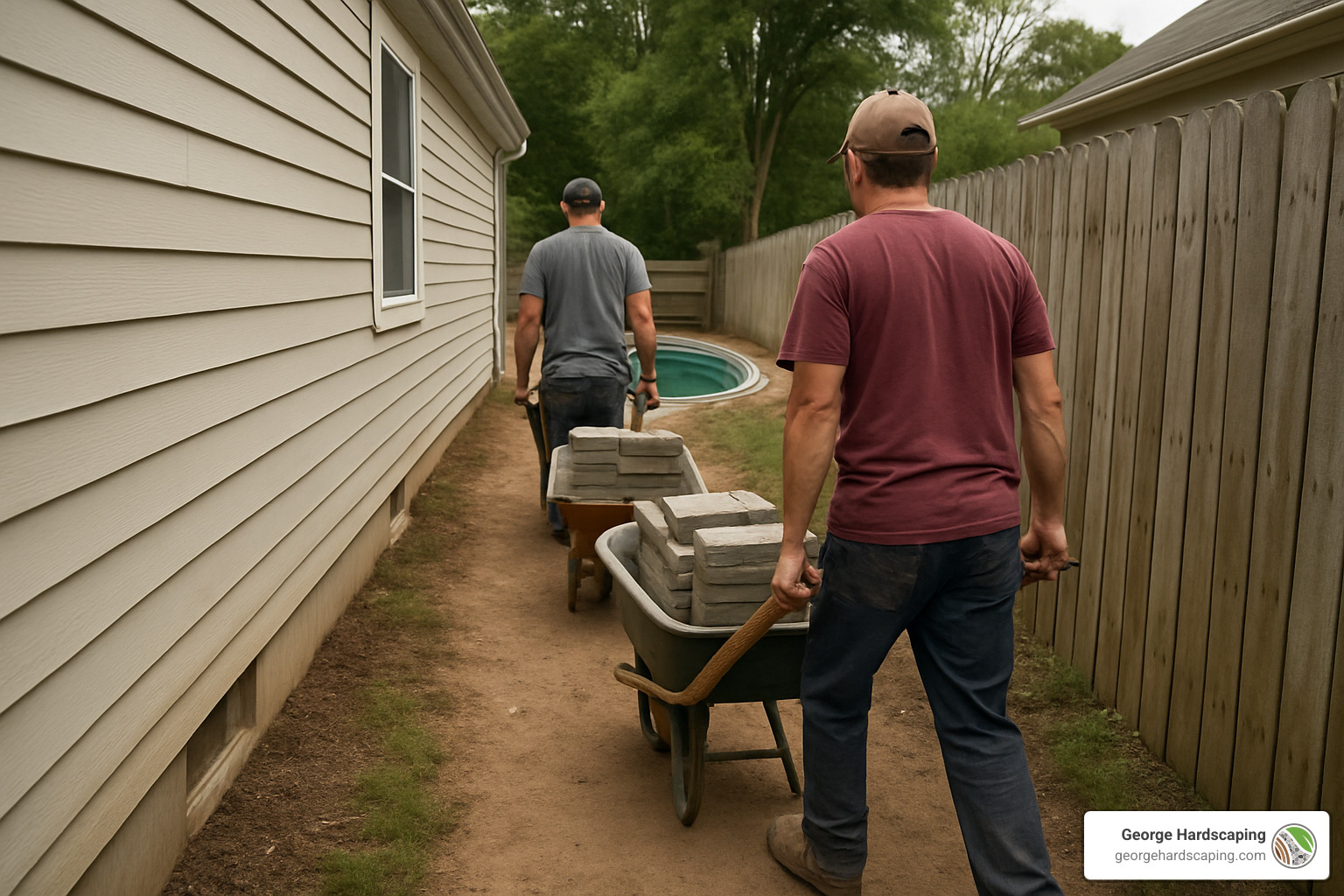
Limited access to your pool area can dramatically increase labor costs. As Devin Brunke from Arcadia Design Group explains, “When we can’t unload the pavers close to the installation site, they must be brought in by hand in wheelbarrows. When that’s a long way, it drives higher costs. That also takes a much longer time and we need more laborers to move product as it’s needed.”
Here in Essex County, many properties have narrow side yards or established landscaping that limits equipment access, potentially adding 15-25% to your labor costs. Those charming New England properties often come with installation challenges!
New England’s deep frost line (typically 48″ in Massachusetts) means proper base preparation is absolutely crucial. This often requires deeper excavation than in warmer climates, more base material, and additional drainage considerations—all of which can add $1-$3 per square foot compared to southern installations.
Smart homeowners also know that timing matters. Scheduling your project during contractors’ slow season (late fall through winter) can yield savings of 10-15%. As one industry source noted: “Getting quotes in late fall and winter (off-season) can yield lower bids from paving contractors.” While your pool might not be open during installation, your wallet will thank you come swimming season.
Hidden Extras You Might Miss
Proper drainage around pools prevents standing water and erosion, but it’s often overlooked in initial budgeting. You might need linear drains ($20-$50 per linear foot), proper grading for water flow ($500-$1,500), or connections to existing drainage systems ($300-$800). In our experience at George Hardscaping, drainage issues are among the most common problems we fix from previous installations.
Sealing your pavers is technically optional for some materials, but highly recommended for pool areas to prevent staining from pool chemicals, reduce water absorption, improve colors, and improve slip resistance. Budget $0.50-$1.00 per square foot for professional sealing, with reapplication needed every 2-5 years depending on exposure and usage.
If you’re thinking about adding landscape lighting around your pool (and you should—it transforms evening swim time!), installing conduit sleeves during the paver installation saves substantial costs later. Budget $10-$20 per linear foot for conduit installation during your paver project rather than tearing up your beautiful new pavers later.
For more information about general paver installation costs beyond pool areas, check out our guide on Cost to Install Pavers.
Concrete vs Brick vs Natural Stone: Which Paver Gives the Best Value?
When evaluating the cost to install pavers around pool areas, your material choice impacts not just your budget today, but your enjoyment and property value for decades to come. Each option brings its own unique blend of beauty, durability, and maintenance needs.
| Material | Cost Range (Installed) | Pros | Cons | Lifespan |
|---|---|---|---|---|
| Concrete | $12-$17 per sq ft | • Affordable • Wide variety of colors/styles • Uniform sizing |
• Less natural appearance • Can fade over time • Requires sealing |
25-30 years |
| Brick | $15-$25 per sq ft | • Classic appearance • Retains color well • Good slip resistance |
• Limited color options • Less size variety • Can chip over time |
35-50 years |
| Natural Stone | $18-$50 per sq ft | • Unique natural beauty • Highest property value increase • Superior longevity |
• Highest initial cost • Color/size variations • Some types require sealing |
50+ years |
Concrete Pavers Cost to Install Pavers Around Pool
Concrete pavers offer the most budget-friendly entry point at $5–$17 per square foot installed. If you’re looking to maximize your pool area while keeping costs manageable, these manufactured pavers deserve serious consideration.
I recently spoke with a Gloucester homeowner who chose concrete pavers for their pool renovation: “We were working with a tight budget but didn’t want to compromise on looks. The concrete pavers we selected have a textured surface that mimics natural stone, but cost about half as much. Three years in, and they still look fantastic.”
What makes concrete pavers appealing beyond their price point is their versatility. They come in virtually endless colors, shapes, and textures – allowing you to create anything from a sleek modern look to something that convincingly mimics more expensive materials.
The tradeoff comes in longevity and maintenance. Concrete pavers are porous by nature, which means they’ll need sealing every 2-3 years to prevent staining from pool chemicals and algae growth. Without this care, they can begin to look tired and faded faster than premium alternatives.
Brick Pavers Cost to Install Pavers Around Pool
Brick pavers hit the sweet spot between affordability and character at $8–$25 per square foot installed. There’s something timeless about brick that resonates particularly well with New England homes.
“Brick pavers were the perfect choice for our 1920s Colonial,” shared a Hamilton homeowner. “They complement the house beautifully, and the warm terracotta tones create this inviting atmosphere around our pool. We paid about $18 per square foot, and five years later, they look even better with a bit of natural weathering.”
What many pool owners appreciate about brick is its excellent slip resistance when wet – a crucial safety feature for pool surrounds. The natural clay material also retains less heat than darker stones, making it more comfortable for bare feet during hot summer days.
While brick requires less maintenance than concrete, you’ll still need to refresh the joint sand occasionally and watch for any shifting pavers, especially after harsh Massachusetts winters. With proper installation and basic care, however, brick pavers can easily last 35-50 years around your pool.
Natural Stone Pavers Cost to Install Pavers Around Pool
Natural stone represents the premium choice at $15–$50 per square foot installed, but many homeowners find the investment worthwhile for the best beauty and longevity.
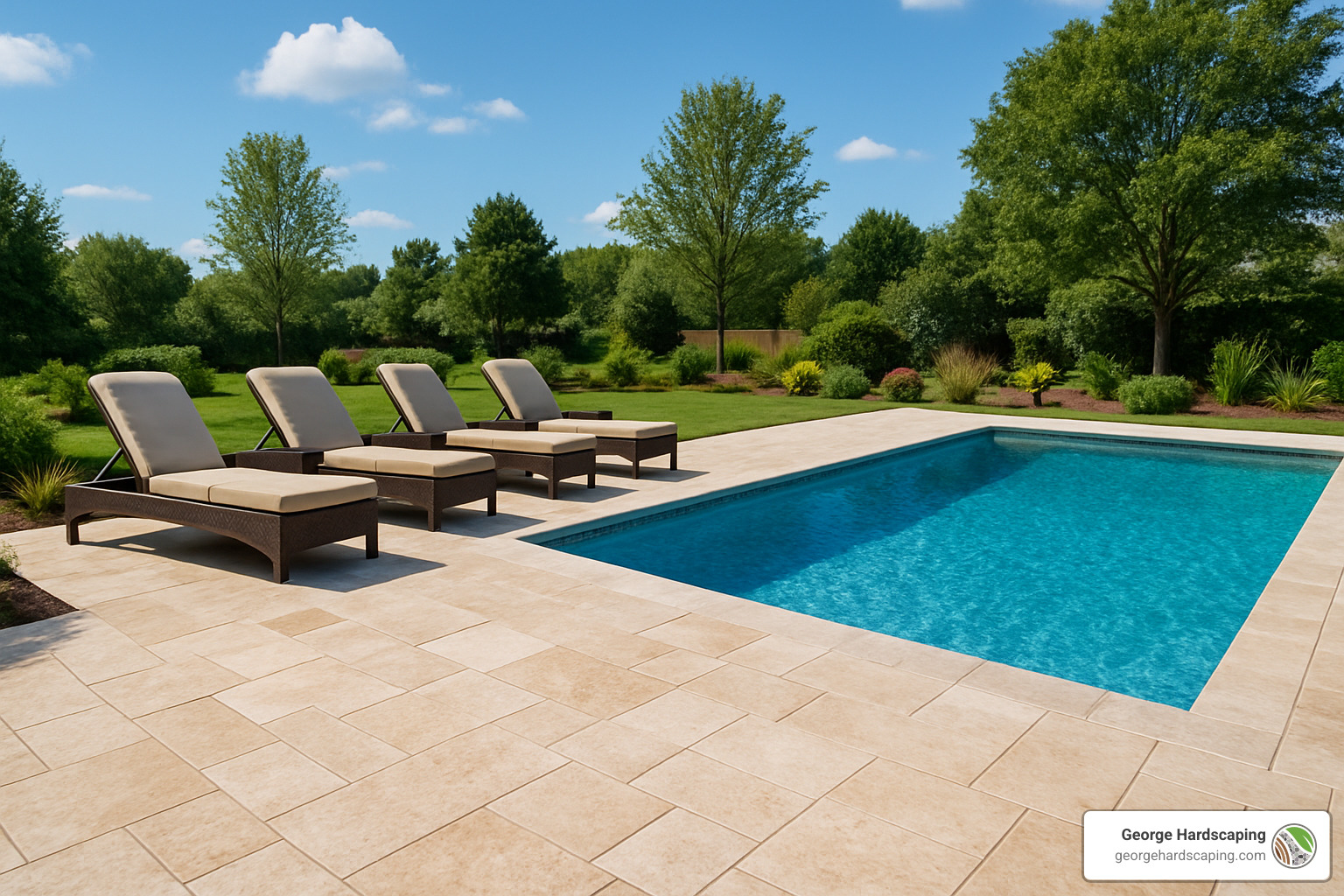
Among natural stone options, travertine has emerged as a particular favorite for pool surrounds in Essex County. Its natural cooling properties make it comfortable even on scorching summer days, and its textured surface provides excellent slip resistance while still feeling smooth underfoot.
“We debated for months between concrete and travertine,” a Manchester-by-the-Sea client told me. “The travertine cost us about $10,000 more for our pool deck, but every time I walk barefoot on those cool stones, even in August heat, I’m reminded why we made that choice. Plus, the natural variations in the stone hide water spots and minor staining beautifully.”
Beyond travertine, other popular natural stone options include limestone, bluestone, and granite – each with unique characteristics. Bluestone, for instance, offers a distinctive blue-gray color that pairs beautifully with New England landscapes, while granite provides best durability against our harsh freeze-thaw cycles.
The investment in natural stone typically yields the highest return when selling your home, with real estate professionals estimating a 70-80% ROI compared to 50-70% for concrete options. For many homeowners, the combination of beauty, comfort, and longevity makes natural stone worth the premium price.
For the most current pricing information, you can check out this Latest research on cost calculator.
Cost Breakdown: From Demolition to the Final Seal
Ever wonder where your money actually goes when you cost to install pavers around pool areas? Let’s pull back the curtain on this investment. Understanding each phase helps you make smarter decisions about where to splurge and where you might save.
Typical Line-Item Percentages
When you look at your quote for pool pavers, you’ll see it breaks down into several key components. Demolition and removal typically accounts for 5-10% of your total budget, costing $3-$7 per square foot plus disposal fees that can run $300-$800 per dumpster. One Massachusetts homeowner told us, “I was shocked at how much it cost just to remove my old concrete deck, but once I saw the crew jackhammering for two days straight, I understood!”
Base preparation is where 15-25% of your budget goes, and it’s money well spent. This includes excavation ($3-$5 per square foot), geotextile fabric to prevent weed growth ($0.30-$0.50 per square foot), and a proper gravel base ($1-$3 per square foot). In Massachusetts, we typically need a 4-6″ base due to our freeze-thaw cycles – skimping here leads to problems down the road.
The bedding sand layer might seem minor at 5-8% of costs, but it’s crucial for proper drainage and preventing future settling. This includes both materials ($0.50-$1 per square foot) and the skilled labor to screed it perfectly level.
Your actual paver materials represent 20-30% of the total budget. Concrete pavers run $2-$8 per square foot, brick pavers $4-$15, and natural stone $8-$30. Remember to factor in a 10-20% waste allowance – curved pools require more cutting and waste than rectangular ones.
The laying and cutting labor makes up 15-25% of costs. Standard patterns run $4-$7 per square foot, while complex designs with borders or different colored patterns add $2-$5 more per square foot. Curved pools require significantly more cutting, which drives up labor costs.
Don’t overlook the importance of edge restraint (3-5% of budget). At $1-$3 per linear foot plus installation, these hidden heroes prevent your beautiful new pavers from spreading and shifting over time.
Joint sand and compaction represents another 3-5% of costs. Polymeric sand ($0.50-$1 per square foot) locks pavers together and prevents weed growth. The final compaction settles everything into place.
The finishing touches of cleanup and sealing account for 5-8% of your budget. Sealer materials run $0.50-$1 per square foot, plus the labor for 2-3 coats. For pool areas, sealing is non-negotiable – it protects against chlorine damage and staining.
Finally, overhead and profit (15-25%) covers the contractor’s business expenses and profit margin. As one local contractor put it, “Any profit margin above 40% is excessive for paver installation, but anything below 10% is unsustainable for quality work.”
For more information about our installation process, visit our Pool Deck Installation page.
Regional Snapshot: Brisbane vs Massachusetts
I found some fascinating differences in the cost to install pavers around pool areas when comparing Brisbane, Australia to our work in Essex County, Massachusetts.
In Brisbane, a full pool paving replacement runs about $22,000–$30,000 AUD, with travertine installation at $150–$200 AUD per square meter. Their primary concerns center around heat reduction and UV resistance, with minimal worry about freeze-thaw cycles.
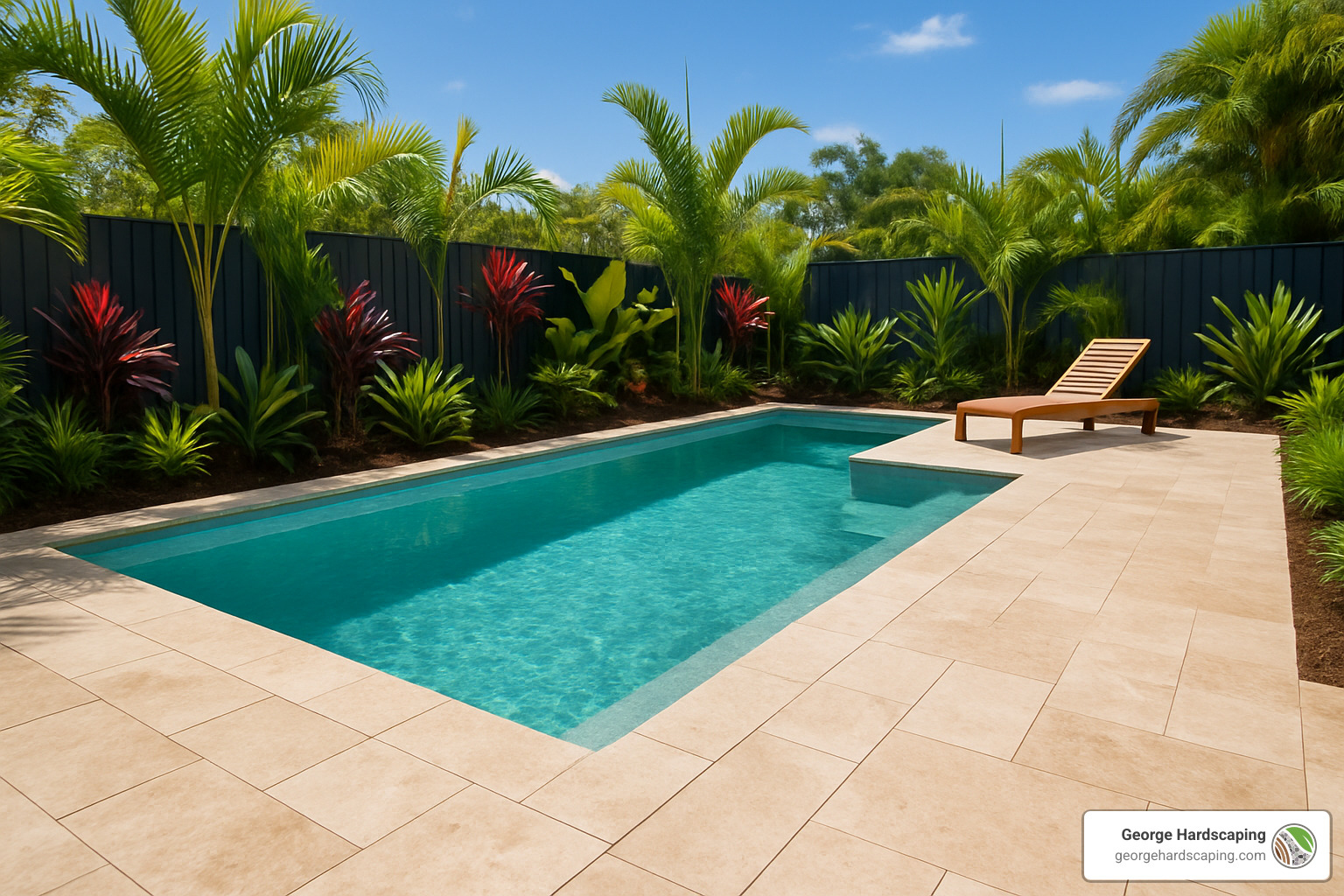
Here in Essex County, we face different challenges. A similar project runs $15,000–$35,000 USD, with travertine installation at $18–$30 USD per square foot. Our installations require deeper bases (typically 6-8″ versus 4″ in warmer climates), more sophisticated drainage systems, and must withstand harsh freeze-thaw cycles.
As one Australian contractor told me: “In Brisbane, we’re primarily concerned with heat reduction and UV resistance. The installation is less complicated because we don’t deal with frost heave.”
Our Massachusetts installations require those additional considerations for proper drainage and frost protection, which typically adds 15-25% to the overall project cost compared to warmer climates. We also contend with a shorter installation season and higher labor rates, but the resulting installations are built to withstand our challenging New England weather for decades.
Ways to Save on Pool Pavers Without Cutting Corners
Looking for ways to trim down the cost to install pavers around pool areas without sacrificing quality? You’re in luck! After years of working with homeowners across Essex County, we’ve finded several strategies that can help you save significantly while still achieving that magazine-worthy pool deck.
Bulk Buying
One of the simplest ways to save is buying materials in bulk. Many suppliers offer discounts of 10-15% when you purchase larger quantities. Consider coordinating with neighbors who might be planning similar projects, or extend your paving to include walkways or a patio area. Not only will your outdoor space look more cohesive, but you’ll also save on materials.
“I ended up extending my pool paver project to include a small patio area,” shared one Ipswich homeowner. “The extra 120 square feet qualified me for bulk pricing, and the connection between spaces made my backyard feel like a complete outdoor living area.”
Simpler Shapes
While curved and organic shapes might look appealing on Pinterest, they come with a hefty price tag. As one of our contractors often tells clients, “People are attracted to amoeba shapes, which are not an efficient use of space. Rectilinear designs always work better with pavers.”
Opting for rectangular or square pool decks can reduce cutting labor by 30-40% and significantly decrease material waste. Similarly, simpler patterns like running bond require less labor than complex options like basketweave or herringbone.
Off-Peak Scheduling
Here in Essex County, timing your project strategically can yield substantial savings:
Late fall (October-November) often comes with 10-15% discounts as contractors look to fill their schedules before winter. Winter planning for spring installation can save you 5-10%, plus you’ll be first in line when the ground thaws. Just be sure to avoid peak summer months when contractor availability is limited and prices climb with demand.
DIY Prep Work
While we strongly recommend professional installation for the pavers themselves, handling certain preparation tasks yourself can significantly reduce labor costs. Many homeowners successfully manage demolition of existing surfaces, removal of debris, and basic excavation—though proper grading should always be left to professionals.
Reuse Sub-Base
If your existing pool deck has a concrete slab in good condition, you might be able to install pavers directly over it using a thin-set mortar method. This approach can save $3-$5 per square foot by eliminating the need for extensive excavation and base preparation. Just make sure to address any drainage issues with proper slope correction.
Multiple Quotes
Always obtain at least three detailed quotes from reputable contractors. Look beyond the bottom-line number for itemized breakdowns of costs, specific material quantities and types, clear scope of work, and warranty information. This approach not only helps you find the best value but also ensures you’re comparing apples to apples.
Financing Options
Many homeowners don’t realize that financing options exist for hardscaping projects. Home equity lines of credit typically offer the lowest interest rates, but contractor financing programs, home improvement loans, and even credit cards with 0% introductory periods can make your dream pool deck more accessible right now.
For more information about related project costs, check out our guide on How Much Does a Paver Walkway Cost?
Smart DIY vs Pro Division of Labor
Finding the right balance between DIY and professional work can maximize savings while ensuring quality. Homeowners can typically handle site clearing, basic demolition, material research, and debris removal. However, precise grading, base compaction, edge restraint installation, and the actual paver laying should be left to professionals.
“I saved about $2,000 by doing the demolition of my old concrete deck myself over a weekend,” shared a North Shore homeowner. “The crew was impressed with my prep work, and it allowed them to start immediately on the technical aspects of the installation.”
Don’t forget to factor in the value of professional warranties, which typically cover material defects for 1-5 years, installation workmanship for 1-3 years, and structural integrity often for 5+ years. This protection alone can justify the cost of professional installation for many homeowners.
Common Budget Mistakes to Avoid
Under-ordering materials is perhaps the most common and costly mistake. Always order at least 10% extra pavers (15-20% for complex patterns) to account for cuts, waste, breakage during installation, and future repairs. Nothing is more frustrating than trying to match discontinued colors years later!
Skipping permits might seem like a money-saving shortcut, but it can lead to expensive consequences. In many Essex County towns, permits (typically $50-$300) are required for hardscaping that changes drainage patterns or increases impervious surface area. Proceeding without proper permits risks stop work orders, fines, and even removal requirements.
Ignoring drainage is perhaps the most expensive mistake in the long run. Proper drainage around pools prevents standing water (a safety and mosquito issue), protects your paver base from erosion, prevents damage to the pool structure, and complies with local codes. The additional $1-$3 per square foot for proper drainage design is insignificant compared to the thousands in potential repairs later.
By avoiding these common pitfalls and implementing these money-saving strategies, you can create a beautiful, durable pool paver deck that fits your budget without cutting corners on quality.
Frequently Asked Questions about the Cost to Install Pavers Around Pool
Do I need a permit for pool-deck pavers?
Navigating permit requirements can be tricky when installing pavers around your pool. Here in Essex County, most towns (including Beverly, Salem, and Danvers) typically require permits when your project:
Changes existing drainage patterns on your property. Water management is a big concern for local building departments, especially around pools.
Increases your property’s impervious surface area. Many towns have limits on how much of your property can be covered with non-permeable surfaces.
Falls within 100 feet of wetlands or conservation areas. These environmentally sensitive zones have special protection requirements.
Includes electrical components like landscape lighting, which requires additional safety inspections.
The permitting process varies by town, but you should budget $50-$300 for application fees. You’ll likely need to submit plans, possibly undergo inspections, and adhere to setback requirements from your property lines.
At George Hardscaping, we’ve worked throughout the North Shore for years and know each town’s specific requirements. We help our clients steer the permitting maze as part of our service—just one less headache for you to worry about!
How many pavers should I order?
One of the most common mistakes we see is homeowners underestimating how many pavers they’ll need. Nothing is more frustrating than getting halfway through your project and running out of materials—especially when the new batch doesn’t quite match the color of the first!
Here’s a simple formula we use to calculate paver quantities:
First, measure your total area (length × width = square footage). For irregular pool decks, break the space into simple shapes and add them together.
Next, determine the square footage of a single paver by multiplying its length by width (in inches) and dividing by 144.
Then divide your total area by the size of one paver to get your base quantity.
Finally—and this is crucial—add a waste factor of at least 10% for straight patterns and 15-20% for complex designs or diagonal layouts.
For example, if you’re covering a 400 square foot pool deck with 6″×12″ pavers (0.5 sq ft each), you’d need about 800 pavers as your base quantity. Adding a 10% waste factor brings you to 880 pavers total.
For natural stone, which has more variation, we recommend at least a 15% waste factor to ensure proper color blending and pattern matching.
What are long-term maintenance costs?
When budgeting for the cost to install pavers around pool areas, smart homeowners also consider ongoing maintenance expenses:
Sealing is your primary regular expense, costing $0.50-$1.00 per square foot every few years. How often depends on your paver material: concrete needs resealing every 2-3 years, brick every 3-4 years, and natural stone every 4-5 years (some types may not require sealing at all).
Joint sand refreshing runs about $0.30-$0.60 per square foot every 2-3 years. This isn’t just cosmetic—it replaces sand lost to weather and pool splash, prevents weeds and ants, and maintains your paver system’s structural integrity.
Annual cleaning costs $0.25-$0.75 per square foot if professionally done. This includes power washing, stain treatment, and algae/moss control—especially important in shaded areas around pools.
Repairs typically run 1-3% of your original installation cost annually. This covers replacing damaged pavers, releveling settled areas, and maintaining edge restraints.
As one of our Marblehead clients shared with us: “We budget about $300-$500 annually for maintenance on our travertine pool deck. It’s minimal compared to the value it adds to our outdoor living space and the cost we’d face if we neglected regular upkeep.”
At George Hardscaping, we offer maintenance programs for our installations because we understand that proper care ensures your investment continues looking beautiful for decades. A little regular attention goes a long way in preserving both the beauty and functionality of your pool paver installation.
Conclusion & Next Steps
Understanding the cost to install pavers around pool areas is just the beginning of your journey toward creating that perfect backyard retreat. Throughout this guide, we’ve explored how pricing can vary widely based on materials, design complexity, site conditions, and regional factors.
For homeowners in Essex County and across the North Shore of Massachusetts, working with a local expert makes all the difference. New England’s unique climate and soil conditions require specialized knowledge that only comes from years of experience in the region. At George Hardscaping, we’ve installed countless premium pool decks throughout Beverly, Danvers, Salem, and neighboring communities, building our reputation one perfectly-laid paver at a time.
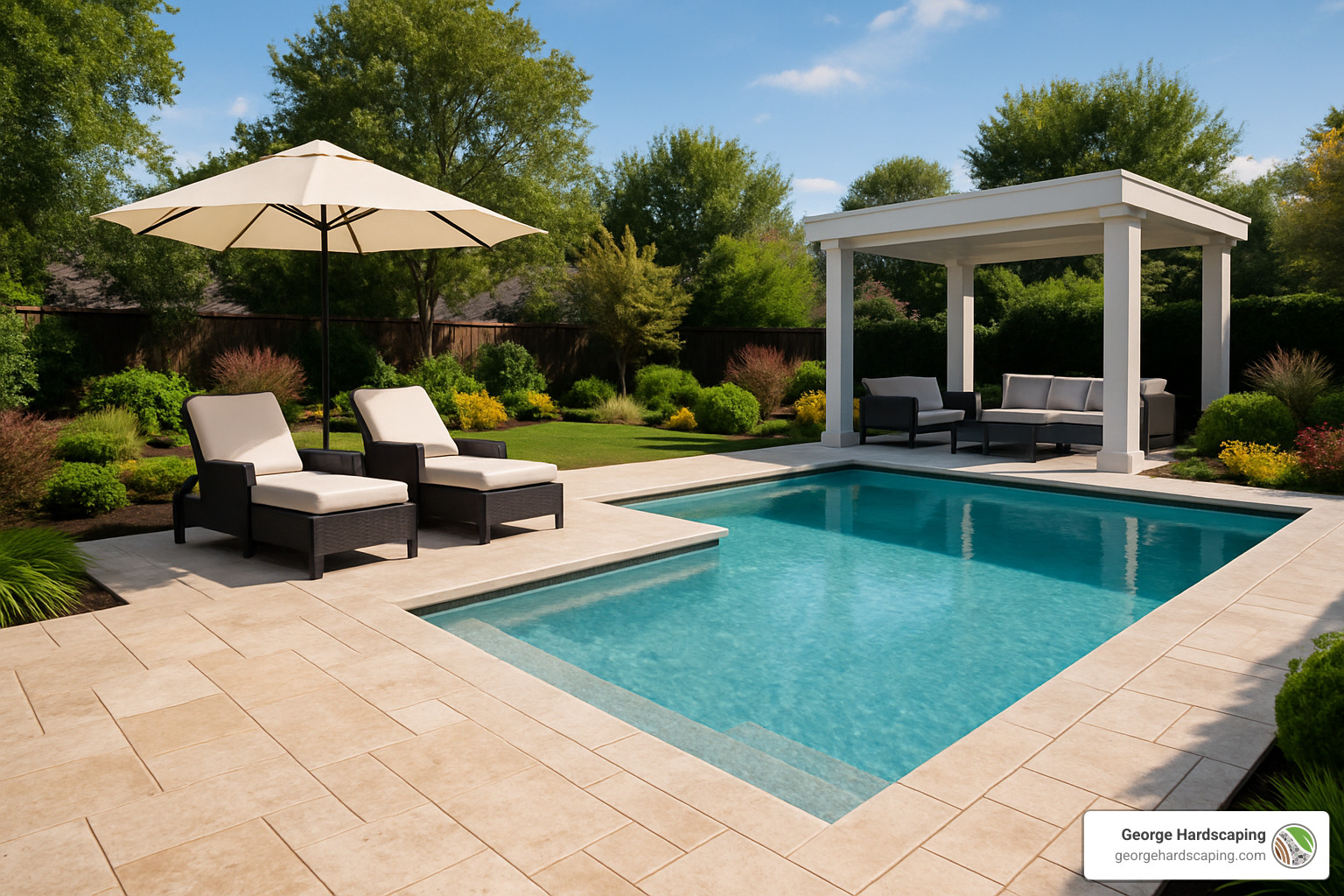
While the upfront investment in quality pavers might give you pause, the long-term value is truly remarkable. Most homeowners see a 50-75% return on investment when selling their property. Beyond the financial benefits, you’ll enjoy improved safety with slip-resistant surfaces that stay cooler underfoot than concrete. Your new paver pool deck will require far less maintenance than wood alternatives, and will withstand our harsh New England winters year after year without cracking or heaving (when properly installed, of course).
Perhaps most importantly, quality pavers create a timeless aesthetic appeal that complements your home’s architecture and lifts your entire outdoor living experience. As one of our clients recently told us, “It’s like adding an entire new room to our house, but one with a swimming pool and sunshine!”
The prices discussed throughout this guide represent average costs based on internet data and not actual costs for George Hardscaping. While we pride ourselves on competitive pricing, our primary focus has always been delivering exceptional quality and value that stands the test of time. After all, the true cost of a pool deck isn’t just what you pay today—it’s what you’ll pay over its lifetime in maintenance, repairs, and potential replacement.
Ready to transform your pool area with beautiful, durable pavers? The next step is simple: schedule a consultation with our design team. We’ll visit your property, listen carefully to your vision, answer all your questions, and provide a detailed, transparent quote custom specifically to your project. No surprises, no hidden fees—just clear communication and expert guidance from start to finish.
For more information about our pool deck installation services, visit our Pool Deck Installation page or reach out today. Let’s create the outdoor oasis you’ve been dreaming about—one that your family will enjoy for generations to come.
