
Why Walkway Installation North Shore Homeowners Are Investing in Professional Hardscaping
Walkway Installation North Shore is one of the most impactful upgrades Essex County homeowners can make to their property. A well-built walkway does more than connect your front door to the street; it sets the tone for your entire home, acting as the red carpet for your personal sanctuary. Whether you live in a historic Federalist-style home in Salem or a modern coastal retreat in Manchester-by-the-Sea, the path leading to your entrance is a critical component of your home’s architectural narrative.
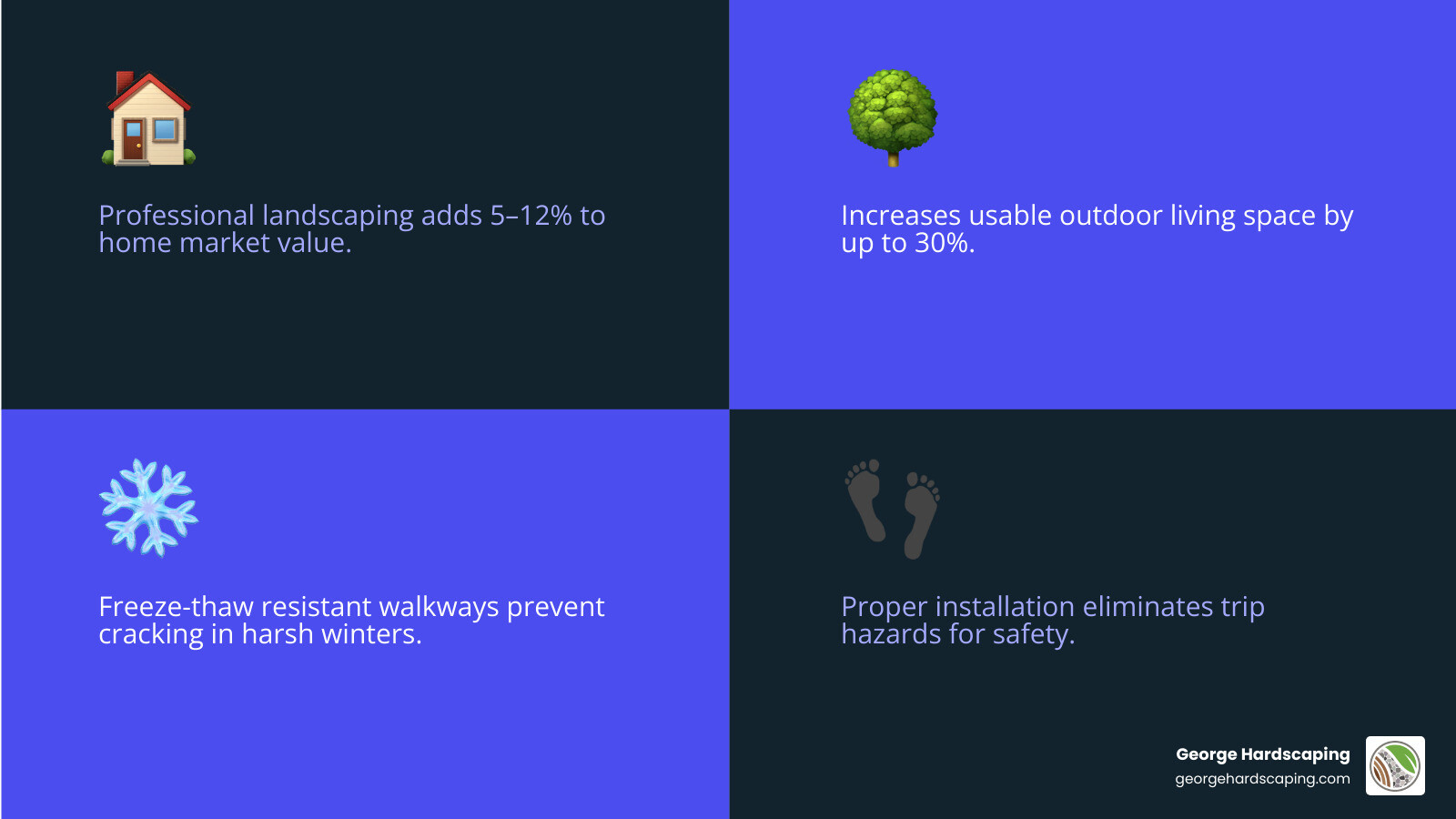
First impressions matter immensely in the competitive Massachusetts real estate market. Your walkway is often the very first thing guests, neighbors, and potential buyers notice. Professionally designed landscapes can add significant value to your property, often ranging from 5 to 12% of your home’s total market value. Beyond just the financial return, well-planned outdoor features can increase your usable outdoor living space by up to 30%, providing a functional area for transition and aesthetic enjoyment.
However, not all walkways are created equal. In the North Shore’s harsh New England climate, characterized by intense freeze-thaw cycles, wet winters, and heavy foot traffic, the wrong materials or a poor installation can lead to disaster. Without professional expertise, homeowners often face cracked surfaces, dangerous trip hazards, and costly repairs within just a few seasons. Choosing a specialist who understands the local soil composition—from the rocky coasts of Gloucester to the clay-heavy earth in Danvers—is essential for a project that lasts decades rather than years.
When planning your project, it is helpful to familiarize yourself with the core concepts of modern hardscaping. You might start by exploring a comprehensive backyard walkway design to see how paths can meander through gardens, or look into the structural benefits of an interlocking paver walkway. Understanding the walkway installation cost early in the process will also help you set a realistic budget for high-quality materials like bluestone, granite, or premium concrete pavers.
To make smart decisions (and avoid expensive re-dos), homeowners also benefit from reviewing objective standards and safety guidance for exterior walking surfaces. The Americans with Disabilities Act (ADA) walking surface guidance is a helpful reference for slope, transitions, and accessibility considerations, and the ICPI paver installation guidelines provide widely respected best practices for interlocking concrete pavement systems in freeze–thaw climates.
This guide will walk you through everything you need to know to ensure your North Shore property stands out for all the right reasons—and how to get a finished walkway that looks beautiful, drains correctly, and stays level through New England winters.
CTA: Ready to upgrade your curb appeal with a walkway that won’t heave or crack? Start by requesting a detailed quote and design plan using our Request an Estimate page.
Benefits of Professional Walkway Installation North Shore
When we discuss Walkway Installation North Shore, we are describing an investment in your home’s structural integrity and long-term aesthetic appeal. In coastal cities like Beverly, Marblehead, and Salem, the environment presents unique challenges. Salt air, shifting temperatures, and high moisture levels require a level of masonry expertise that DIY projects or general laborers often lack. A professional installation ensures that your path remains level and beautiful despite the volatile New England weather.
One of the primary advantages of hiring a professional is the focus on safety and slip resistance. New England winters are notorious for ice, and a walkway that isn’t perfectly level or lacks proper drainage quickly becomes a skating rink. By opting for professional paver walkways in Marblehead, homeowners can benefit from the natural texture of high-quality pavers which provide superior grip compared to smooth, poured concrete. Furthermore, professional installers understand how to grade a surface so that water flows away from the home, preventing the dangerous ice patches that form in low spots.
Professional installation also addresses the critical issue of soil stabilization. Without a properly compacted base, the heavy rains common in Essex County can wash away subsoil, leading to sinking stones and uneven surfaces. In many cases, a walkway project is the perfect time to integrate landscape retaining walls to manage slopes and prevent erosion. Before starting any project, it is always wise to view the current weather in the North Shore area to plan for the best installation window, as moisture levels significantly impact soil compaction and the setting of jointing materials.
In addition to day-to-day usability, a professional crew is thinking about the “invisible engineering” that keeps your walkway performing for years: base thickness, compaction, edge restraint, joint stabilization, and drainage. These details matter even more on the North Shore, where frost heave can shift improperly installed materials by inches. Following guidance from established industry groups—such as the Interlocking Concrete Pavement Institute (ICPI)—helps ensure the walkway is built as a system, not just a surface.
Enhancing Safety and Accessibility with Walkway Installation North Shore
Safety is a non-negotiable factor for Massachusetts homeowners. Old, cracked concrete or uneven stepping stones are more than just eyesores; they are significant trip hazards for family and guests. When designing walkways and stairs, the goal is to create a seamless, level transition from the driveway to the entrance. This is especially important for multi-generational households where accessibility is a priority.
Winter safety is particularly enhanced through strategic material choice. For instance, a bluestone stairs and walkway setup offers a dense, durable surface that stands up to salt and heavy shoveling. Unlike standard concrete, which can flake and “spall” when exposed to de-icing chemicals, high-quality stone and pavers maintain their finish for decades. We also recommend integrating low-voltage lighting into the walkway design to ensure that guests have a clear, well-lit path during the early sunsets of a Massachusetts winter, further reducing the risk of accidents.
If accessibility is a concern, thoughtful design decisions—like consistent riser heights on steps, gentle transitions, and predictable surface texture—make a real difference. The ADA guidance is a useful starting point for understanding how slope, landings, and surface stability affect mobility and safety.
Why Pavers are Ideal for Walkway Installation North Shore
If you are looking for the perfect balance of beauty and brawn, an interlocking paver walkway is difficult to beat. Pavers are specifically engineered to be flexible. In the North Shore, the ground “breaths”—it expands when it freezes and contracts when it thaws. Solid slabs of concrete often crack under this pressure because they have no room to move. Pavers, however, have joints filled with specialized sand that allow for slight movement without structural failure.
The aesthetic flexibility is another major draw for homeowners. Whether you are looking for paver stone walkway ideas that evoke a rustic cobblestone feel or modern front yard paver walkway ideas with clean lines and monochromatic tones, the variety is virtually endless. Additionally, pavers are remarkably easy to repair. If a single stone becomes stained by oil or damaged by a heavy impact, you can simply replace that specific stone rather than having to jackhammer and replace an entire section of your yard, saving thousands in long-term maintenance costs.
To see how this kind of system can be used across a full outdoor layout, many homeowners explore additional hardscape upgrades—like a new patio, seating wall, or entry steps—through our broader hardscaping and masonry services.
Choosing the Best Materials for North Shore Climates
Selecting the right material is the foundation of a successful Walkway Installation North Shore. In our region, we generally categorize materials into natural stone and manufactured products. Natural stone options like laying a bluestone walkway are incredibly popular because they blend seamlessly with the historic architecture found in towns like Ipswich and Gloucester. Bluestone, in particular, offers a classic New England palette of blues, grays, and tans that complements almost any siding material.
For those seeking a timeless, rugged look, laying a cobblestone walkway using granite blocks offers unmatched longevity. Granite is a local favorite, prized for its extreme hardness and resistance to the elements. If your home has a more traditional or colonial aesthetic, you might consider the warm, classic look of a lay a brick walkway project. Modern concrete pavers, meanwhile, offer the most variety in terms of shapes and colors, often designed to mimic the look of natural stone while providing the benefits of how to install a paving stone walkway techniques that ensure a tight, interlocking fit.
Comparing Natural Stone vs. Manufactured Pavers
When deciding between these two categories, it often comes down to a choice between unique character and uniform precision. Natural stone provides a high-end visual appeal that is impossible to replicate exactly. Every piece of bluestone or flagstone has its own unique veining and color profile. However, installing a stone walkway is often more labor-intensive because the installer must manually fit irregular shapes together like a complex puzzle, which can increase the initial labor cost.
On the other hand, manufactured pavers are built for cost-effectiveness and ease of installation. When evaluating the walkway installation cost, homeowners often find that pavers offer a more predictable budget. Maintenance needs also vary; while stone is incredibly durable, it may require more frequent re-leveling if not set on a concrete “wet” base. For those interested in the technical details, our stone walkway installation guide breaks down the differences in sub-base requirements for each material, helping you choose the option that best fits your lifestyle and maintenance preferences.
Beyond the primary materials, consider the “edging” of your walkway. Using granite curbing or plastic edge restraints is vital for keeping the stones in place. Without proper edging, the lateral pressure from foot traffic and soil movement will cause the stones to migrate outward over time, creating gaps where weeds can grow and the structure can fail. A professional installer will always prioritize these hidden structural elements to ensure the longevity of your investment.
The Professional Installation Process: From Design to Completion
A beautiful walkway is only as good as what lies beneath it. The process of Walkway Installation North Shore begins long before the first stone is laid. A professional team starts with a thorough site assessment and soil analysis. In the North Shore, we often deal with “heaving” soils or clay-heavy earth that retains too much water. Understanding the drainage patterns of your specific lot is the first step in preventing future sinking or shifting.
Following the industry standards for landscape contractors for excellence, the installation moves into the excavation phase. We typically dig down 8 to 12 inches to remove organic material, such as roots and topsoil, that would eventually rot and cause the path to sink. Then comes the most critical part: the base. Whether we are building a base for a flagstone walkway or a paver path, we use layers of crushed dense-grade stone, compacted in 2-inch increments using heavy machinery to ensure a rock-solid foundation.
Proper sidewalk construction must also account for drainage. We pitch the walkway slightly (usually 1/8 to 1/4 inch per foot) away from the home’s foundation to prevent water pooling. Once the base is set and edge restraints are installed to keep the stones from “creeping” outward, we lay the material. The final touch involves sweeping jointing sand—often polymeric sand that hardens when wet—into the gaps and vibrating the stones to lock them into place. This process is even more specialized for unique designs, such as learning how to install a stepping stones walkway where individual “islands” of stone must be perfectly stabilized within a lawn or mulch bed to prevent wobbling.
Because the North Shore experiences aggressive freeze–thaw cycles, we also pay special attention to water management: where runoff goes during a nor’easter, how downspouts discharge near the front entry, and whether the walkway should tie into existing grading. If water is allowed to sit under or beside the walkway, it will freeze, expand, and slowly undermine the base. This is exactly why a walkway should be installed as a complete system—subgrade prep, base, bedding, edge restraint, surface, and joints—rather than “just laying stone.” The ICPI paver installation standards are a respected reference in the hardscape industry for system-based performance in climates like ours.
Customizing Your Path: Design Tips and Layouts
Your walkway should be a reflection of your home’s personality and your personal style. For garden areas, meandering paths create a sense of discovery and relaxation, drawing the eye through your landscaping. You can find inspiration for these organic shapes in our backyard walkway design. Conversely, for a front entrance, a straight, wide path emphasizes the front door and provides a formal, welcoming feel that is common in the historic districts of Salem and Newburyport.
When considering various sidewalk ideas, think about how the colors of the stone will interact with your siding, trim, and even your roof color. Use our walkway design tips to choose patterns like herringbone for high-traffic areas, which provides the best interlocking strength, or running bond for a clean, contemporary look. If you want a softer look, you can even achieve a curved paver walkway without cutting by using specific paver shapes designed for radii, which saves time and reduces material waste while providing a graceful, flowing aesthetic.
Design is also the right stage to think about how the walkway interacts with other features. If the entrance needs a better transition in grade, combining your path with integrated steps can improve safety and create a more intentional “arrival” experience. If you’re dealing with a sloped front yard, pairing the project with landscape retaining walls can protect your investment by controlling erosion and keeping the base stable.
Finally, consider maintenance-friendly detailing: durable edging, joints that resist washout, and layouts that allow easy snow removal. Homeowners who plan for winter upkeep early often end up with a walkway that looks better and lasts longer—especially when it’s built to be serviced by seasonal crews offering snow plowing services.
Understanding Costs and Maintenance for Longevity
Budgeting for a new walkway involves looking at both the upfront cost to install a stone walkway and the long-term maintenance requirements. In the North Shore, prices can vary based on the complexity of the terrain and the rarity of the materials chosen. While a simple, short path might be a modest investment, extensive natural stone projects with custom masonry and integrated steps can be more significant. It is important to remember that these costs reflect the specialized labor and heavy equipment required to build a structure that survives New England winters.
Factors that affect the price include:
- Material Choice: Bluestone and granite are generally more expensive than standard concrete pavers due to quarrying and shipping costs.
- Site Preparation: If we have to remove an old, thick concrete sidewalk or deal with significant slopes that require leveling, labor costs will increase.
- Accessibility: If the project area is difficult to reach with machinery, requiring us to move tons of stone and gravel by hand, the timeline and cost will adjust accordingly.
Beyond “what it costs,” it helps to understand what you’re paying for: correct excavation depth, geotextile where needed, base stone quality, compaction practices, drainage pitch, edge restraint, and jointing materials. These elements are the difference between a walkway that looks good for one season and one that performs year after year. For homeowners comparing options, our guide to walkway installation cost can help you set expectations before choosing stone, brick, or pavers.
Once your project is finished, hiring a professional paver walkway installer ensures you have a path that is easy to maintain. We recommend a simple cleaning once a year to remove organic debris like leaves and pine needles, which can stain the stone if left to rot. Periodic sealing can also protect the color of your pavers and prevent oil or grease stains from penetrating the surface.
During the winter, our snow plowing services use plastic-edged shovels and walkway-safe de-icers to ensure your investment isn’t scratched or chemically damaged. Avoid using rock salt (sodium chloride) on new masonry, as it can be too harsh; instead, look for calcium magnesium acetate (CMA) products. For additional winter-safety guidance, the CDC’s slip, trip, and fall prevention resources provide helpful context on why traction, lighting, and surface maintenance matter.
Keeping an eye on your polymeric sand is also key; if it begins to wash away after several years of heavy rain, a quick “top-off” will prevent weeds from taking root between the stones and keep the structure locked tight. And if you ever need to extend, re-grade, or add steps, pavers and modular stone systems make future modifications far less disruptive than replacing a full concrete slab.
Frequently Asked Questions about Walkway Installation North Shore
What is the most durable material for North Shore winters?
For the absolute best performance in freeze-thaw cycles, we often recommend high-quality concrete pavers or a professional bluestone walkway installation. These materials are incredibly dense and have very low water absorption rates, which means they won’t crack when the moisture inside them freezes. Granite is also an excellent choice for its sheer hardness, making it nearly impervious to the elements and the corrosive effects of salt.
How long does a typical walkway installation take?
Most residential walkway projects take between 3 to 7 days to complete, depending on the scope. The building a walkway timeline depends heavily on the size of the path, the amount of excavation required, and the complexity of the cuts. For example, a curved path with intricate borders takes longer than a straight path. Weather delays are the most common factor that can extend a project, as we cannot properly compact the base or sweep jointing sand during heavy rain.
How much value does a new walkway add to my home?
A new walkway offers one of the highest returns on investment (ROI) for outdoor projects. By checking out various front yard walkway ideas, you can see how a professional path transforms a house from “standard” to “stunning.” Real estate experts suggest that high-quality hardscaping can increase your home’s market value by up to 12%. In the North Shore, where curb appeal is a major selling point for historic and coastal homes, a beautiful walkway is a project that often pays for itself when it comes time to sell.
Do I need a permit for a new walkway in Essex County?
Permit requirements vary by town. In many North Shore communities, a simple walkway does not require a permit if it doesn’t change the “impermeable surface” ratio of your lot significantly. However, if the walkway is part of a larger project involving retaining walls over a certain height or if you live in a historic district like those in Salem or Marblehead, specific approvals may be needed. A professional installer can help you navigate these local regulations to ensure your project is fully compliant.
Ready to Transform Your North Shore Home?
At George Hardscaping, we take pride in being the premier choice for Essex County masonry and hardscaping. From the historic streets of Salem to the coastal beauty of Manchester-by-the-Sea, our team is dedicated to providing quality craftsmanship that lasts a lifetime. Whether you need a simple garden path or a grand entrance with custom stairs, we bring decades of expertise to every square inch of your project. We understand the local climate, the local soil, and the local architectural styles better than anyone else.
Don’t let another season go by with a cracked, sinking, or boring walkway. Enhance your safety, boost your curb appeal, and increase your property value today with a structure built to withstand the test of time. Our commitment to using the best materials and the most rigorous installation standards ensures that your new walkway will be a source of pride for years to come.
CTA: Get a clear plan and a firm price—request your on-site consultation now via our Request an Estimate form.
If you’re still comparing providers, you can also review what to look for when evaluating paving companies in North Shore MA—including base prep standards, warranty details, and material sourcing.
Take the first step toward your dream landscape:
- Request an Estimate: Get a personalized, detailed quote for your unique project.
- Explore Our Services: See our full range of hardscaping and masonry services to see how we can transform your entire yard.
- Why Choose Us: Discover why we are one of the top paving companies in North Shore MA.
George Hardscaping serves homeowners throughout the North Shore, including Beverly, Danvers, Marblehead, Peabody, and surrounding Essex County communities. Contact us today to schedule your consultation and begin your home’s transformation.
