
How to install paving stone walkway: 5 Easy, Stunning Steps
Why Paving Stone Walkways Transform Your Home’s Appeal
Learning how to install paving stone walkway correctly can dramatically boost your property’s curb appeal and add significant value. A well-designed paver walkway provides a welcoming entrance, connects outdoor spaces, and offers a durable surface that can withstand New England’s weather for decades.
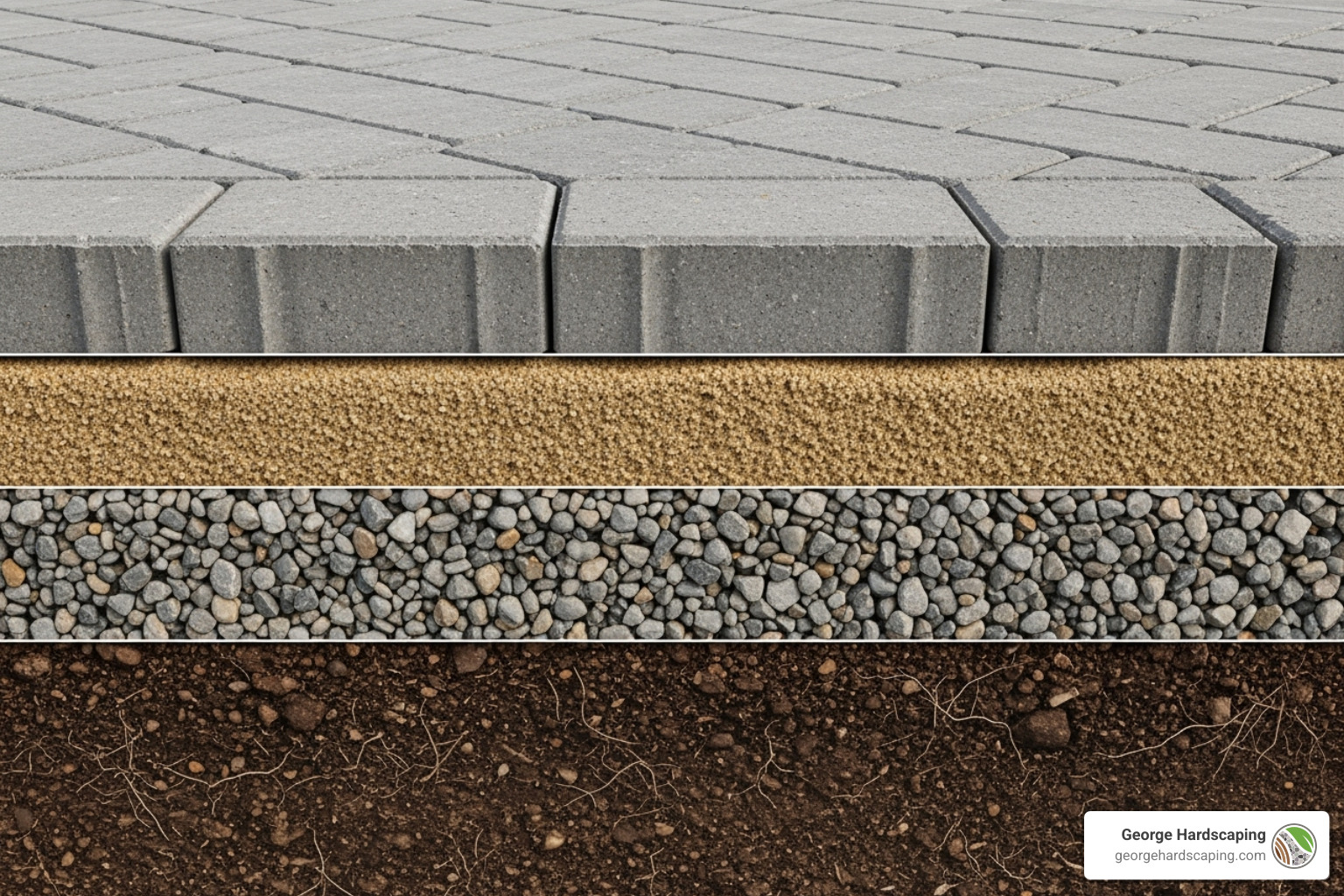
Beyond aesthetics, a paver walkway is a high-performance system. Each layer—from compacted subgrade to jointing material—plays a role in drainage, load distribution, freeze-thaw resilience, and long-term stability. Follow the steps below and you’ll avoid the most common causes of failure: improper base depth, poor compaction, and inadequate drainage.
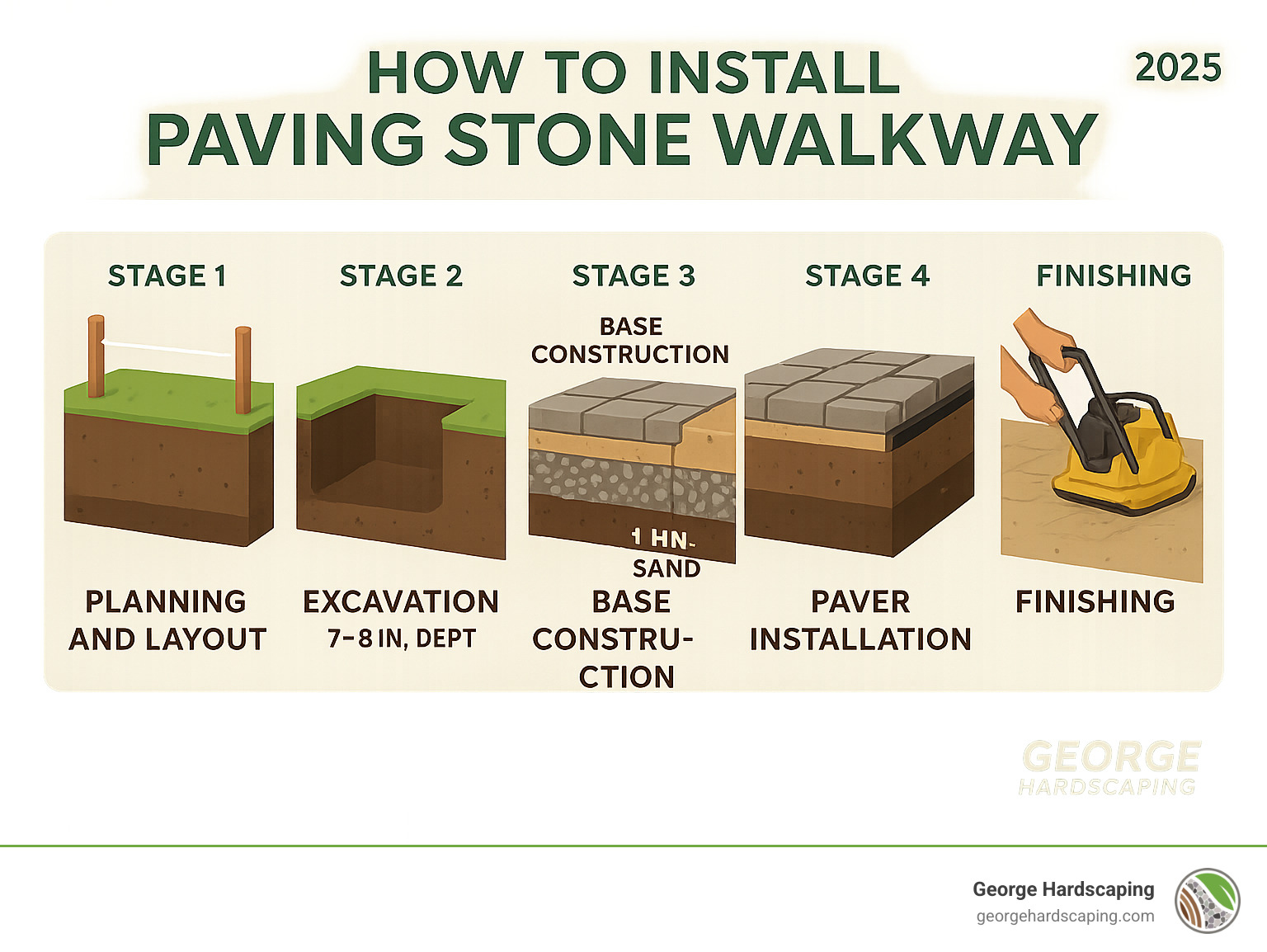
Quick overview: How to install a paving stone walkway
- Plan and design: Confirm utilities, verify drainage, choose materials, and calculate quantities
- Excavate: Remove organics and dig to the correct total depth with an intentional slope for runoff
- Build the base: Install and compact crushed stone in lifts; screed a precise 1-inch bedding layer
- Lay pavers: Set your pattern from a fixed straight edge; check lines, level, and joint spacing
- Lock and finish: Install edge restraints, sweep in polymeric sand, compact again, and activate with water
Key considerations
- Foundation first: The base is the backbone of the system; compact it thoroughly to prevent settlement
- Walkway width: 36 inches is workable for single-file, while 48 inches is more comfortable for side-by-side walking
- Budgeting: Professional installation often ranges widely by scope and site conditions
For technical guidance on paver installation best practices, the Interlocking Concrete Pavement Institute offers comprehensive resources and industry standards.
The key to a long-lasting paver walkway is the foundation. As professional installers know, a paver installation is a complete system where each layer—from the compacted soil to the jointing sand—is critical for stability. When you prefer a guaranteed, turn-key result, explore our service overview at https://georgehardscaping.com/hardscaping-services/.
Strong CTA: Want the beauty and longevity of a pro-built walkway without the heavy lifting? Get a fast, no-pressure quote now: https://georgehardscaping.com/request-estimate/
Helpful definitions and internal resources
- Base for flagstone walkway: https://georgehardscaping.com/base-for-flagstone-walkway/
- Cost to install stone walkway: https://georgehardscaping.com/cost-to-install-stone-walkway/
- Paver walkway ideas: https://georgehardscaping.com/paver-walkways-ideas/
Step 1: Planning and Preparation – The Foundation for Success
Proper planning is the most important phase of your paver walkway project. Success in learning how to install paving stone walkway begins long before you move any dirt. Rushing into digging without considering drainage, soil conditions, utilities, or access is a common pitfall.
Designing your walkway path
- Define purpose and flow: Direct routes favor straight lines; garden paths can curve gently
- Width and accessibility: 36 inches minimum; 48 inches for comfortable side-by-side walking
- Style and pattern: Running Bond offers clean lines. Herringbone delivers exceptional interlock
- Color and texture: Lighter colors reflect heat; textured pavers reduce slipperiness
Choosing materials that last
- Pavers: Concrete pavers are versatile and budget-friendly. Clay brick provides timeless character
- Bedding and base: Use graded crushed stone base and coarse concrete sand bedding layer
- Edging: Plastic, aluminum, or concrete curbing helps lock the field in place
Tools and materials checklist
Tools
- Safety glasses, hearing protection, dust mask, and gloves
- Shovel, wheelbarrow, garden rake, hand tamper
- Plate compactor (rental strongly recommended)
- 4-foot level, tape measure, mason’s line, string-line stakes
- Rubber mallet
- Masonry wet saw or angle grinder with diamond blade
- Push broom, leaf blower
Materials
- Selected pavers
- Crushed gravel aggregate (3/4-inch minus)
- Coarse bedding sand
- Edge restraints and 10-inch steel spikes
- Polymeric sand for joints
- Landscape fabric (optional but recommended in clay soils)
Estimating quantities
- Base gravel: Calculate volume by length × width × base depth, then convert to cubic yards
- Sand: Target a uniform 1-inch layer
- Pavers: Square footage plus 5-10% extra for cuts and repairs
Permits and safety
- Check with your municipality about setback rules and drainage requirements
- Before you dig, call 811 to locate utilities: Call 811 Before You Dig
- Plan material staging and equipment access
Layout and slope planning
- Mark the path with marking paint
- Install stakes and pull taut string lines to define edges
- Establish slope for drainage at about 1/4 inch per foot away from structures
- Use the 3-4-5 method to square corners
Soil assessment
- Dense clays retain water and benefit from thicker bases
- Well-draining sandy soils typically require less total base depth
- Plan supplemental drainage if the walkway sits in a low-lying area
Internal resources to help you plan
- Cost to install pavers: https://georgehardscaping.com/cost-to-install-pavers/
- Cost to install stone walkway: https://georgehardscaping.com/cost-to-install-stone-walkway/
Strong CTA: Prefer a professional site assessment with precise grades and drainage planning? Book a visit today: https://georgehardscaping.com/request-estimate/
Step 2: How to Install Paving Stone Walkway Base Layers
The longevity and stability of your paver walkway depend entirely on the quality of its base. This stage involves the most physically demanding work, but it is the most critical for a lasting result. A properly prepared base is the secret to a walkway that looks great for decades.
Excavating the walkway area
- Depth: For a standard pedestrian path, excavate to a total of 7 to 8 inches
- Climate and soils: In areas with dense clay, increase base thickness toward 6 inches
- Slope: Establish a consistent 1/4 inch per foot slope away from structures
- Subgrade compaction: Compact the exposed subgrade using a plate compactor
When to add geotextile
- If you encounter mixed soils or a soft subgrade, place a separation geotextile over the compacted subgrade before adding base stone
Building a solid foundation
- Base aggregate: Use 3/4-inch minus crushed stone
- Lift thickness: Spread the base in 2-inch lifts, compacting each lift thoroughly
- Compaction equipment: A 3,000-5,000 lb plate compactor is typical for residential work
- Edge preparation: Keep the base edges crisp and to grade
- Bedding layer: Place a 1-inch layer of coarse concrete sand as the final setting bed
- Do not compact the bedding sand before laying pavers
Quality checks before laying pavers
- Grade and slope: Confirm elevation and slope with a long straightedge
- Flatness: Aim for no more than 1/4 inch variation over 10 feet
Drainage improvements
- Where chronic surface water exists, integrate a subsurface drain beside or beneath the walkway
Internal help if conditions are complex
- If your site has unique grading challenges, our team regularly designs bases custom to local conditions. Learn more: https://georgehardscaping.com/hardscaping-services/
For comprehensive industry guidance on base construction, visit the National Concrete Masonry Association for technical resources and specifications.
Step 3: Laying the Pavers and Edging
With a perfectly prepared base, you’ve reached the most rewarding part of the project: laying the pavers and watching your design come to life. Precision and patience during this step deliver the professional fit-and-finish you’re after.
How to lay pavers for a stable, straight surface
- Start from a fixed straight edge: Use a driveway, house foundation, or a taut string line to begin. A solid reference keeps courses straight.
- Place, don’t slide: Set each paver straight down onto the sand to avoid disturbing the screeded surface.
- Maintain joint spacing: Many concrete pavers include spacer nibs to help maintain consistent 1/8-inch joints. If yours don’t, use joint spacers to keep the layout uniform.
- Tap to set: Use a rubber mallet to seat each unit lightly, keeping the top faces aligned.
- Check alignment frequently: Every few courses, run a string line along joints or edges and use a 4-foot level laid on a straight board to confirm flatness and slope.
Patterns that perform
- Herringbone: Excellent for load distribution and resistance to shifting on curves or where turning occurs.
- Running Bond: Clean, modern lines; orient along the direction of travel for an elongated look.
- Basketweave or modular: Adds visual interest and can help with curves by using multiple unit sizes.
- Borders and soldier courses: A contrasting border or soldier course can frame the field and visually straighten long runs. Install borders first or after dry-laying a few field courses to lock in your final width.
Cutting pavers safely and cleanly
- Mark cuts precisely: Scribe with pencil or chalk. Dry-fit before cutting when possible.
- Use the right tools: A masonry wet saw with a diamond blade yields the cleanest, most accurate cuts. Always wear safety glasses, hearing protection, gloves, and a dust mask or respirator when cutting.
- Control dust: Wet cutting reduces airborne silica dust. Follow OSHA guidance for respirable silica and PPE practices at https://www.osha.gov/personal-protective-equipment.
Installing edge restraints
- Purpose: Edging prevents lateral spread from traffic and freeze–thaw cycles, preserving joint integrity and pattern alignment.
- Types: Plastic or aluminum edging spiked into the compacted base is common and unobtrusive. Concrete curbing can be used for a more permanent or decorative look.
- Placement: Set edging tight to the paver field with spikes about every 12 inches or as recommended by the manufacturer. Ensure the edging top sits just below the paver edges so it can be concealed by soil or mulch.
Tolerance targets for a professional look
- Joints: Keep joint widths consistent within about 1/16 inch.
- Flatness: Limit lippage (height difference) between adjacent units to less than 1/16–1/8 inch depending on texture.
- Straightness: Check that your running joints track true with a string line; correct gradually rather than forcing a sharp correction.
Practical tips that save time
- Stage materials near the work front to minimize walking on the prepared bedding sand.
- Work in manageable sections, especially in hot, dry, or windy weather that can dry out the bedding surface quickly.
- Keep a damp towel or bucket nearby to clean paver faces as you go, especially if cutting produces slurry.
If you prefer precision cuts, complex borders, or curves without the learning curve, our crew can handle the layout and masonry details for you. Explore our capabilities: https://georgehardscaping.com/masonry-services/.
Strong CTA: Ready for a flawless, laser-straight walkway with clean cuts and tight lines? Schedule your professional installation: https://georgehardscaping.com/request-estimate/
Step 4: Finishing Touches and Avoiding Common Mistakes
The final steps lock your pavers together, ensuring a durable, stable walkway that will last for years. This is also your opportunity to integrate the new walkway into your landscape so it feels original to your home.
Filling joints and final compaction
- Polymeric sand: Sweep dry polymeric sand across the surface, working it into joints from multiple angles until they are completely full. Polymers help resist erosion, weeds, and ants.
- Clean thoroughly: Use a soft broom and then a leaf blower on low to remove dust and residual sand from paver faces. Any polymeric dust left on the surface can cure into a haze when wet.
- Vibrate to lock: Run a plate compactor over the entire surface with a protective pad if needed to avoid scuffing textured pavers. This seats pavers into the bedding and vibrates sand deeper into joints. Top up joints and re-compact if needed.
- Water activation: Mist with a fine spray as directed by the sand manufacturer—usually in multiple light passes to ensure the top and mid-depth joints hydrate evenly. Avoid flooding, which can dislodge sand.
- Cure time: Restrict traffic per manufacturer recommendations (often 12–24 hours for foot traffic). Keep sprinklers off the area during curing.
Avoid these common mistakes
- Skimping on base depth or compaction: The #1 reason pavers settle and drift.
- Poor drainage: Failing to slope away from structures invites water problems, icing, and frost heave.
- Skipping edging: Without restraints, edges spread over time and joints open up.
- Inconsistent joints: Variable joint widths weaken the interlock and look unprofessional.
- Leaving polymeric sand residue: Always blow the surface clean before wetting to prevent a stubborn haze.
Optional sealing pros and cons
- Benefits: Enhances color, adds stain resistance, can reduce water absorption.
- Considerations: Some sealers alter appearance (gloss or “wet look”); most require re-application every few years. Only seal after the installation fully dries and joints cure per product instructions.
Winter care and deicing
- Use calcium magnesium acetate or calcium chloride rather than rock salt (sodium chloride) to reduce surface scaling risk on concrete pavers.
- Plastic shovels or shovel edges with rubber guards help prevent scratching textured pavers.
Landscaping, lighting, and finishing details
- Backfill edges with topsoil and feather into the lawn; seed or sod to blend. Mulch or decorative stone bands can create crisp transitions.
- Consider low-voltage path lighting for safety and ambiance. If trenching for lighting, plan conduits in advance of final compaction.
Long-term maintenance
- Sweep periodically and rinse as needed.
- Replenish polymeric sand every few years if joints open.
- Inspect edges each spring after freeze–thaw cycles and re-spike edging if necessary.
For design inspiration and curb appeal ideas that pair beautifully with new walkways, explore: https://georgehardscaping.com/front-yard-walkway-ideas/.
If you want a low-maintenance walkway with improved stormwater handling, ask about permeable pavers and base configurations. Learn more about permeable pavement benefits from the EPA at https://www.epa.gov/soakuptherain/permeable-pavements.
Frequently Asked Questions about Paving Stone Walkways
As we help homeowners across Essex County, from Marblehead to Topsfield, we often hear the same questions about how to install paving stone walkway projects.
How deep do I need to dig for a paver walkway?
- For a standard pedestrian walkway, excavate to a total depth of 7 to 8 inches: a 4-6 inch compacted base, a 1-inch bedding layer, and 2 3/8 inch pavers. In areas with poor drainage or heavy clay, increase base thickness.
What is the best base for a paver walkway?
- A dense-graded crushed stone base (3/4-inch minus) compacted in 2-inch lifts provides strength and drainage. Top with a 1-inch layer of coarse concrete sand.
Can I install a paver walkway on a slope?
- Yes. Follow the site’s natural grade while maintaining a cross-slope of about 1/4 inch per foot to shed water. For steeper grades (generally >10%), incorporate steps and landings.
Do I need landscape fabric under the base?
- On stable, well-drained subgrades, it may be optional. Use a separation geotextile on clay or mixed soils to prevent fines from migrating into the base.
Should I use polymeric sand or regular sand?
- Polymeric sand is preferred for most residential walkways. It resists erosion, deters weeds and ants, and helps lock the system together.
Can I lay pavers over an old concrete walkway?
- Often, yes, using a paver overlay system if the concrete is structurally sound and well-drained. You’ll typically add a thin bedding layer and edge restraint.
What patterns are strongest?
- Herringbone offers excellent interlock and resistance to shear forces. Running Bond is fine for straight, lightly loaded paths.
Will deicing salts damage pavers?
- Chloride-based deicers can affect concrete surfaces over time. Choose gentler alternatives like calcium magnesium acetate.
How long will a paver walkway last?
- With proper base depth, compaction, drainage, and edge restraints, decades. Periodic joint sand top-ups are simple maintenance tasks.
How long does installation take?
- A typical 150-250 sq ft walkway might take a DIYer two to four days. A professional crew often completes it in one to two days.
How much does it cost?
- Costs vary by site conditions and materials. Get budgeting guidance here: https://georgehardscaping.com/cost-to-install-stone-walkway/ and https://georgehardscaping.com/cost-to-install-pavers/
What about tree roots?
- Avoid trenching through main structural roots. If the walkway must pass close to mature trees, consider rerouting or installing a root barrier.
Is sealing required?
- Not required, but optional sealing can boost color and stain resistance.
How do I keep the walkway level over time?
- A well-compacted base and proper edging are your best defense. If a small area settles years later, lift the affected pavers, add or re-level base/sand, and relay.
For professional help with design consults and precise grading, explore our services: https://georgehardscaping.com/hardscaping-services/ and https://georgehardscaping.com/masonry-services/
Transform Your Landscape with a Perfect Paver Walkway
Congratulations on learning how to install paving stone walkway from start to finish. This is a challenging but highly rewarding DIY project that can significantly improve your home’s beauty, functionality, and value. By following these steps—from meticulous planning and base preparation to precise paver laying and finishing—you can build a durable, professional-quality walkway that will serve your family for decades.
The satisfaction of crafting a beautiful landscape feature with your own hands is immense. Your new walkway will guide visitors, connect outdoor living areas, and provide a stable, low-maintenance surface that can withstand New England’s seasons. Whether you choose a crisp modern layout or a classic, timeless brick pattern, your walkway will look great and perform well when the foundation and drainage are done right.
However, we recognize that this project’s demands in time, labor, and equipment are substantial. The excavation can be grueling, and achieving the correct slope and compaction requires experience and the right tools. Mistakes in base preparation or finishing can lead to costly repairs down the road. When you want a sure outcome—especially with complex grades, curves, borders, or integration with steps—bringing in a seasoned crew pays dividends.
If you want a stunning paver walkway without the back-breaking work and technical challenges, the team at George Hardscaping is ready to help. We have been creating beautiful and durable walkways, patios, and retaining features for homeowners throughout Essex County, from Beverly to Newburyport, for years. See a snapshot of what we do and our masonry capabilities.
We’re excited to help you bring your vision to life with precision and care.
