
Why Understanding Walkway Installation Cost Matters Before You Start
The walkway installation cost is a primary concern for homeowners looking to improve their property’s entrance. Nationally, a complete installation typically ranges from $2,500 to $8,000, but this can vary from $1,000 for a simple gravel path to over $15,000 for high-end custom stonework. Your final price is determined by these key factors:
Quick Cost Breakdown:
- Materials: $5-$50+ per square foot
- Labor: $75 per hour average, or $3-$10 per square foot
- Site Preparation: $0.30-$2.00 per square foot
- Total Average Project: $2,500-$8,000
Note: These are average costs based on internet data and not actual costs for George Hardscaping.
A new walkway is more than a path; it’s your home’s first impression and a key part of its curb appeal. For homeowners in Essex County and the North Shore, our harsh freeze-thaw cycles and coastal weather demand careful selection of materials and proper installation.
Understanding the costs involved is the first step to creating a beautiful, functional entrance. The price depends on three main factors: materials, design complexity, and site conditions. A straight concrete path will cost significantly less than a curved paver walkway with custom borders and lighting.
This guide breaks down walkway installation costs, comparing materials on price and performance, highlighting hidden site preparation costs, and weighing the pros and cons of professional vs. DIY installation. Whether you’re replacing an old path or creating a grand entrance to connect your patio and walkway spaces, this information will help you plan a project that fits your budget without sacrificing quality.
If you already know you want professional help upgrading your entry, you can skip ahead and request a detailed walkway estimate from George Hardscaping to start planning with real numbers.
Understanding the National Average Walkway Installation Cost
The national average walkway installation cost typically falls between $2,500 and $8,000, with more elaborate projects using premium materials exceeding $15,000. On a per-square-foot basis, expect to pay between $15 and $40, though this varies based on your choices.
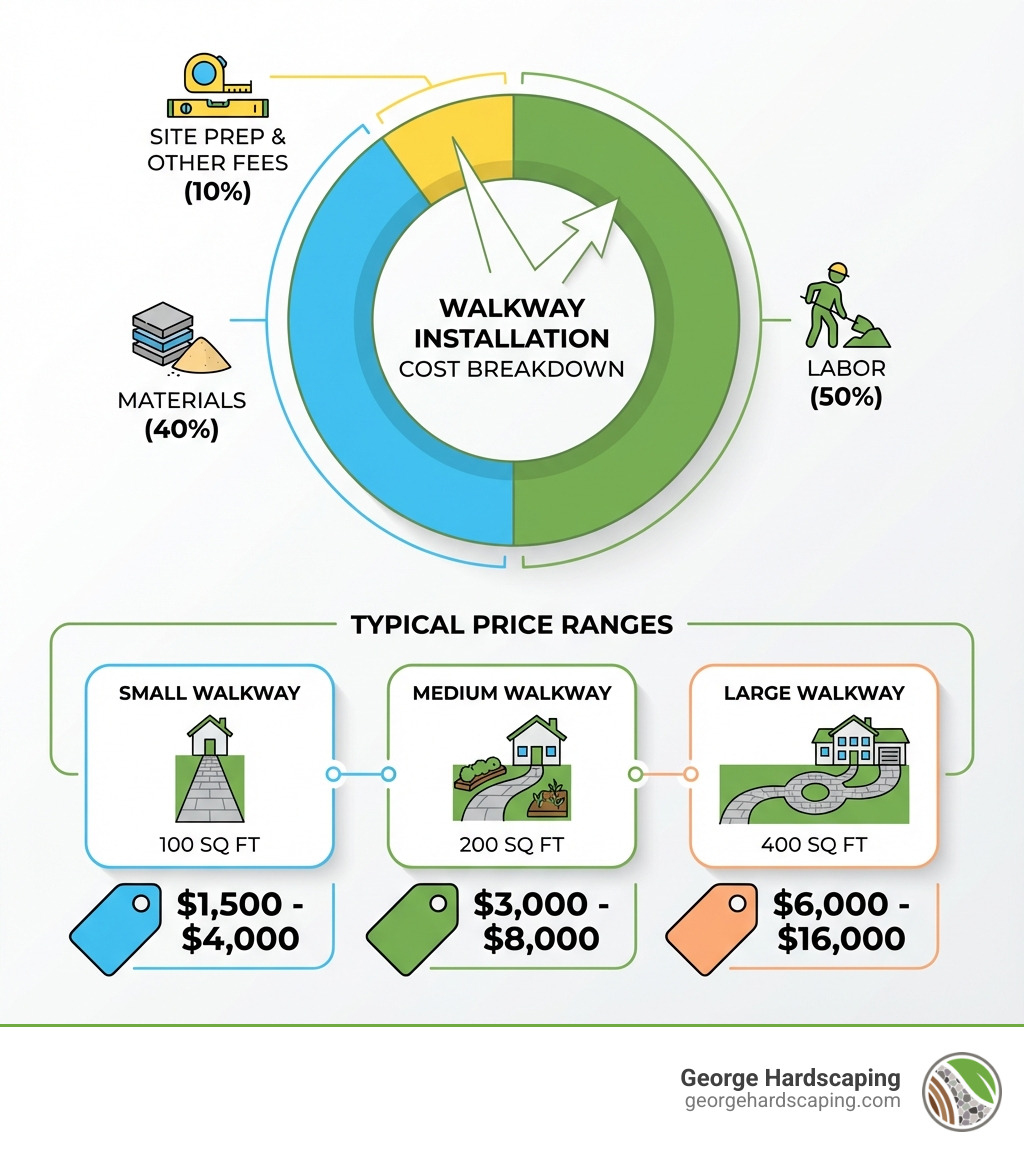
Project size is a key factor. A small walkway might cost $3,000-$4,000, while a standard front path could be $5,000-$7,000. Long, winding walkways connecting outdoor living areas can easily reach $8,000-$12,000 or more.
These are national averages. In our service areas across Essex County and the North Shore, MA, local labor rates and material availability can influence these figures. However, the primary cost driver is almost always your choice of material. For a deeper look at how your layout and surfaces affect price, you can explore our full range of patio and walkway installation services.
If you want to compare your potential project against broader market data, resources like the HomeAdvisor cost guide for walkways and sidewalks and the Angi walkway cost overview provide up-to-date national benchmarks you can reference while planning.
Walkway Materials: A Detailed Cost and Feature Comparison
Choosing the right material is the most significant decision affecting your walkway installation cost, durability, and aesthetic. Homeowners should consider their budget, desired look, and how the material will perform in the New England climate.
Here’s a quick comparison of common walkway materials:
| Material | Average Cost/Sq. Ft. (Installed) | Lifespan | Maintenance Level | Curb Appeal |
|---|---|---|---|---|
| Pavers | $20 – $50 | 50-100 years | Medium | High |
| Poured Concrete | $10 – $28 | 25-50 years | Low to Medium | Medium |
| Natural Stone | $30 – $50+ | 75-100+ years | Low | Very High |
| Gravel | $5 – $10 | 10-20 years (with upkeep) | High | Low to Medium |
Pavers (Brick, Concrete, Stone)
Pavers are a popular choice on the North Shore, offering a superb blend of durability and versatility. The installed walkway installation cost for pavers ranges from $20 to $50 per square foot. This includes budget-friendly concrete pavers ($8-$15/sq. ft.), classic clay brick pavers ($10-$20/sq. ft.), and premium natural stone pavers like bluestone or granite ($12-$50/sq. ft.).
Pros of Pavers:
- High Customization: Create intricate patterns, borders, and unique designs.
- Exceptional Durability: Pavers are incredibly strong and can last 50-100 years, outperforming concrete in our climate.
- Easy Repairs: A cracked or stained paver can be replaced individually, a major advantage over concrete.
- Superior Curb Appeal: Pavers provide a premium look that significantly improves property value.
Cons of Pavers:
- Higher Initial Cost: The upfront investment is generally more than for poured concrete.
- Requires Professional Installation: Proper base preparation is critical for longevity and requires expert handling.
We believe paver walkways are an excellent investment for their longevity and aesthetic value. To see the possibilities, explore our paver walkway and patio designs.
Poured Concrete
Poured concrete is a classic choice known for its affordability. The walkway installation cost typically ranges from $10 to $28 per square foot installed. A basic broom finish is the most economical option ($6-$12/sq. ft.), while stamped concrete, which can mimic stone or brick, costs between $8 and $28 per square foot.
Pros of Concrete:
- Budget-Friendly: Often the most cost-effective permanent walkway material.
- Durable Surface: Provides a sturdy, long-lasting path when installed correctly.
- Versatile Finishes: Can be colored, stained, or stamped for different looks.
Cons of Concrete:
- Prone to Cracking: Susceptible to cracking in freeze-thaw cycles, a common issue in Essex County.
- Difficult Repairs: Patching cracks often leaves visible marks, affecting the walkway’s appearance.
While practical, concrete may not match the long-term performance and charm of pavers in our climate. For a look at other durable solutions, learn about our comprehensive hardscaping and masonry services.
Natural Stone (Flagstone, Slate, Granite)
For unparalleled elegance, natural stone is the premium choice. The walkway installation cost is the highest, ranging from $30 to $50+ per square foot installed. Each piece of flagstone, slate, or granite is unique, creating a rich, organic aesthetic.
Pros of Natural Stone:
- Best Natural Beauty: Offers a unique, high-end look that cannot be replicated.
- Extremely Durable: Can last for centuries, making it an excellent long-term investment.
Cons of Natural Stone:
- Highest Material Cost: The raw material is significantly more expensive.
- Labor-Intensive Installation: Requires skilled craftsmanship, which increases labor costs.
If you’re aiming for a luxurious and timeless appeal, natural stone is an exceptional choice. You can explore some of our exquisite projects by visiting our gallery of custom stone work.
Gravel (Pea Gravel, Crushed Stone)
Gravel walkways are the most budget-friendly option, with an installed walkway installation cost of $5 to $10 per square foot. It’s a simple way to create a path, especially for those considering a DIY project.
Pros of Gravel:
- Lowest Initial Cost: By far the most economical material.
- Excellent Drainage: Naturally allows water to permeate, reducing runoff.
Cons of Gravel:
- High Maintenance: Requires frequent raking, weed control, and replenishment.
- Messy: Stones can scatter and be tracked indoors.
- Informal Look: May not suit more formal architectural styles.
Key Factors That Influence Your Walkway Installation Cost
Beyond material choice, several factors impact the final walkway installation cost, including project size, site conditions, and design complexity.

Project Size and Complexity
While a larger walkway costs more, complexity is also a major driver.
- Dimensions and Shape: A wide, curved path requires more labor and material cutting than a simple, straight one, increasing the walkway installation cost even if the square footage is the same.
- Slopes and Grading: A sloped property requires grading (adding $0.08 to $2.00 per square foot) to create a level base. Significant slopes may even require retaining walls to ensure stability, adding a major expense.
- Steps and Stairs: Integrating steps and stairs to steer elevation changes adds to the cost due to specialized labor and additional materials.
Your specific walkway installation cost and site preparation
Proper site preparation is crucial for a long-lasting walkway, especially with Massachusetts’ frost heave.
- Excavation and Demolition: Removing an old walkway or excavating soil adds to the cost. Demolishing an old concrete path can add $5 to $8 per square foot.
- Base Preparation: A solid base of compacted gravel and sand is non-negotiable. It prevents settling and drainage issues. Skimping here leads to future failures.
- Drainage Solutions: We may need to incorporate specific drainage solutions to prevent water from pooling and causing damage, particularly on the North Shore.
- Permits and Accessibility: Permit fees can range from $200 to $1,000, depending on your town and project scope. Difficult site access for machinery can also increase labor hours and costs. For more context on labor, you can refer to data from the Bureau of Labor Statistics occupational employment statistics to understand how construction wages influence project pricing.
How design choices affect your walkway installation cost
Custom features make your walkway unique but also add to the budget.
- Decorative Elements: Contrasting borders, inlays, or complex paver patterns like herringbone require more skilled labor and material cuts, increasing the price.
- Special Features:
- Integrated Lighting: Low-voltage lighting improves safety and curb appeal but adds to the material and installation costs (typically $2,000-$8,000 for a system). The U.S. Department of Energy’s guide to outdoor lighting is a useful resource if you are comparing fixture types and energy use.
- Heated Walkway Systems: To eliminate shoveling, a heated system can be installed for about an additional $12 per square foot.
- Walkway Covers: A simple canopy or an elaborate pergola can add shade and protection, with costs ranging from $4 to over $30 per square foot depending on the structure.
If you are trying to balance budget and design, a common approach is to keep the main path simple and invest in accents, such as a modest border, a small set of masonry steps, or a short run of lighting near the front entry.
Professional vs. DIY: Which Path Saves You More?
Many homeowners wonder if a DIY approach can save on the walkway installation cost. While it eliminates direct labor fees, it’s crucial to weigh the upfront savings against potential long-term issues and hidden expenses.
The True Cost of a DIY Walkway
A DIY project can quickly become more complex and expensive than anticipated.
- Material and Tool Costs: You are responsible for accurately calculating materials. Miscalculations lead to waste or delays. You’ll also need to rent specialized equipment like a plate compactor and a masonry saw, which can add hundreds of dollars. A DIY 35’x4′ paver walkway can cost nearly $3,000 in materials and rentals alone.
- The Value of Your Time: A project that takes a professional team a few days could take a DIYer weeks of evenings and weekends.
- Common DIY Mistakes: Improper base preparation is the most common and costly mistake, leading to a lumpy, unstable walkway that cracks or shifts. Poor drainage can cause erosion and ice hazards. These errors often require expensive professional repairs down the line.
While a simple gravel path might be a feasible DIY project, the complexity of a paver or concrete installation often makes professional help a wiser choice. If you want to understand typical DIY versus pro cost differences from a neutral source, the Family Handyman guide to building walkways is a helpful reference.
The Value of Hiring a Professional
Hiring a professional hardscaping company is an investment in expertise, efficiency, and guaranteed results.
- Expertise and Efficiency: Our team understands how to build walkways that withstand the North Shore’s challenging climate. We use professional-grade equipment to ensure proper site grading and base compaction, preventing settling and drainage issues.
- Guaranteed Results: We stand by our work with warranties, giving you peace of mind that your walkway is built to last. A professional installation avoids the stress and pitfalls of a DIY attempt.
- Integrated Outdoor Design: Because George Hardscaping also installs patios and walkways, landscape retaining walls, steps and brick stairs, and custom outdoor firepits, we can design your walkway as part of a cohesive outdoor plan rather than a one-off project.
While the initial walkway installation cost is higher, the long-term value from a durable, beautiful, and properly installed walkway often makes it the more economical choice. If you are ready to move beyond rough budgeting and get a clear, site-specific proposal, this is the time to request a professional estimate for your project. A short conversation now can save you from costly rework and surprises later.
Maximizing Your Investment: Maintenance, ROI, and Savings
A new walkway is a significant investment in your home’s safety, function, and curb appeal. Understanding its maintenance needs, return on investment (ROI), and potential savings will help you maximize that investment.
Long-Term Maintenance Costs by Material
The long-term walkway installation cost is affected by ongoing maintenance.
- Pavers: Low maintenance. Requires re-sanding joints every few years and sealing every 3-5 years. Damaged pavers can be replaced individually.
- Concrete: Requires sealing every few years to prevent moisture damage. Cracks are common in our climate and can be difficult to repair without visible patches.
- Natural Stone: Extremely durable and requires little more than routine cleaning.
- Gravel: High maintenance. Needs regular raking, weed control, and replenishment as stones shift and sink.
For a broader perspective on how outdoor projects perform over time, the Remodeling Magazine Cost vs. Value report is often cited in the industry for showing which improvements tend to hold value in different regions.
How a New Walkway Boosts Home Value
A well-designed walkway significantly contributes to your home’s value and marketability.
- Curb Appeal and First Impressions: As the “welcome mat” to your home, a beautiful walkway creates a strong positive first impression that can increase perceived property value.
- Return on Investment (ROI): Hardscaping projects like walkways typically offer a strong ROI by boosting outdoor aesthetics.
- Safety and Functionality: A new walkway provides a safe, level path, reducing trip hazards, especially during icy winters. It can also seamlessly connect different parts of your landscape, like linking a patio to a custom outdoor firepit, improving the flow of your outdoor living space.
If you are interested in buyer preferences, the National Association of Realtors’ Remodeling Impact Report offers insight into how exterior improvements influence perceived home value and enjoyment.
How to Save Money on Your Project
Managing your walkway installation cost is a priority. Here are some smart strategies:
- Choose Cost-Effective Materials: Gravel and concrete are less expensive than pavers or natural stone. Consider using premium materials as accents, like a paver border on a concrete path.
- Simplify the Design: Straight paths with simple patterns are more economical than complex, curved designs.
- Phase the Project: Install the main walkway now and add features like lighting or intricate borders later.
- Hire a Local Expert: A local company like George Hardscaping understands the North Shore’s climate and soil, leading to more accurate estimates and durable installations. We serve many communities, including Beverly, Danvers, and Salem. To see our work in your town, please learn more about our work in your area.
When you are ready to refine your budget and explore design options that fit your home and neighborhood, you can reach out for a no-obligation consultation. The team at George Hardscaping can walk you through choices for patio and walkway design, hardscaping and masonry services, and phased projects that keep costs under control while still moving your outdoor space toward your long-term vision.
Frequently Asked Questions about Walkway Costs
How long do paver walkways last?
A professionally installed paver walkway can last 50 to 100 years. Unlike a concrete slab, individual pavers can be easily replaced if one is damaged, making maintenance simple and cost-effective. This longevity makes the initial walkway installation cost a sound long-term investment.
Do I need a permit to build a walkway in Massachusetts?
Permit requirements vary by town in Essex County. A simple walkway on your property that doesn’t alter grading may not need one. However, if it connects to a public sidewalk, involves significant excavation, or is part of a larger project, a permit is likely required. A professional contractor can advise on requirements for towns like Ipswich or Marblehead and manage the process for you.
What is the cheapest permanent walkway material?
While gravel is the cheapest material overall, it is not a low-maintenance, permanent solution. Poured concrete is generally the most affordable permanent option. It provides a durable surface for a lower initial walkway installation cost than pavers or natural stone, though it lacks their aesthetic versatility and ease of repair.
Conclusion
Navigating the walkway installation cost can seem daunting, but by understanding the key factors involved, you can make informed decisions. Your final price is a sum of your material choices, design complexity, and site conditions. From budget-friendly concrete to neat natural stone, each option has its own balance of cost and benefits.
We believe paver walkways offer exceptional long-term value for their durability, easy repairability, and best aesthetic appeal in our New England climate.
Professional installation is the key to a long-lasting result. A properly prepared base and expert craftsmanship ensure your walkway will stand the test of time. At George Hardscaping, we bring our expertise to every project across Essex County, from Gloucester to Topsfield, whether you need a simple front path or a fully integrated design that ties in patio spaces, retaining walls, and steps.
If you are ready to move from researching numbers to planning a real project, now is the perfect time to take the next step. Contact George Hardscaping today for a personalized walkway estimate and let our team design and build an entrance that fits your home, your budget, and the North Shore climate.
Prefer to see our craftsmanship before you decide? Browse our gallery of custom stone and paver work and imagine how a professionally installed walkway could transform the way you arrive home every day.
