
Stone Walkway Installation: The #1 Guide 2025
Why Stone Walkway Installation Transforms Your Property
Stone walkway installation is one of the most impactful improvements you can make to your property. A well-designed stone walkway adds significant beauty and function, whether it’s creating a welcoming path to your front door or connecting different areas of your landscape.
Quick Answer for Stone Walkway Installation:
- Choose your material – Options include Flagstone ($3–$18 per sq ft), interlocking pavers ($7,500–$30,000 for a complete project), or gravel ($100–$400 per 10 feet). These figures are broad national averages gathered from public internet sources and do not represent George Hardscaping’s pricing.
- Excavate properly – Dig 5–14 inches deep, depending on your walkway type and local climate.
- Build a solid base – Add a 4-inch compacted gravel base plus a 1.5-inch sand layer.
- Install your stones – Level each piece and fill joints with sand, gravel, or polymeric sand.
- Timeline – Expect a few hours for gravel paths, a full day for flagstone, or 2–5 days for interlocking pavers.
The benefits go far beyond aesthetics. A properly installed stone walkway can increase your property value, reduce lawn wear from foot traffic, and provide safe passage during wet conditions. As one landscape professional noted, “There is perhaps no feature more transformative than a walkway when it comes to hardscaping your outdoor areas.”
Stone walkways also offer incredible design versatility. You can choose from natural flagstone for rustic charm, uniform interlocking pavers for a polished look, or simple gravel for an informal garden path. The key to a long-lasting installation lies in proper preparation, especially the base layers of compacted gravel and sand that prevent settling and ensure drainage.
Important Stone Walkway Installation terms:
Planning Your Perfect Stone Walkway
The success of any stone walkway installation begins with careful planning. Making the right decisions on materials and layout from the start will save you time and money, ensuring the final result perfectly matches your vision.
Choosing Your Walkway Style and Material
Selecting the right material defines your walkway’s personality. Each option offers a unique character, maintenance level, and price point suitable for the New England climate.
- Flagstone: Offers timeless, natural charm with irregularly shaped stones that blend seamlessly into informal landscapes. It’s naturally resistant to freeze–thaw cycles. Material costs average $3–$54 per square foot based on internet data (note: these are not George Hardscaping’s actual prices).
- Interlocking Pavers: These manufactured units offer incredible versatility in shape, color, and pattern. Their jointed construction accommodates expansion and contraction, preventing cracks. A properly installed paver walkway can last 25 to 30 years. Complete projects typically range from $7,500 to $90,000 based on internet averages; these figures are not George Hardscaping quotes.
- Stepping Stones: These individual stones create a whimsical, playful path perfect for gardens or less-trafficked areas. Stones generally cost $1–$45 each on average internet listings; actual pricing varies by supplier and is not George Hardscaping’s rate.
- Gravel Paths: Provide understated elegance and a satisfying crunch underfoot. Gravel is excellent for New England weather, as it handles freeze–thaw cycles without heaving or cracking. At approximately $100–$1,200 per 10 feet based on national averages found online, it’s a great weekend project.
When choosing, consider how the material aligns with your home’s style, your budget, and your willingness to perform maintenance. For inspiration, see how these materials can transform an entrance in our Front Yard Paver Walkway Ideas.
Planning Your Stone Walkway Installation: Design and Layout
Designing your path is about creating a feature that is both beautiful and functional. A walkway should feel like a natural extension of your home and landscape.
- Path Design: The path’s purpose dictates its shape. Straight paths convey formality and are ideal for direct routes, like from a driveway to a front door. Curved paths create a sense of journey and work well in naturalistic landscapes, revealing different garden views as you walk.
- Walkway Width: This detail dramatically affects function. A 36-inch width is standard for single-file walking. For a more grand entrance or to allow two people to walk side-by-side, a 48-inch width is more comfortable and practical, especially if you’ll be using a wheelbarrow.
- Landscape Integration: A great walkway connects seamlessly with existing features like patios, steps, or retaining walls. Consider the views from inside your home—will the path create pleasing lines in your landscape? The property’s slope is also a crucial factor, as it impacts drainage and stability.
For more design inspiration, explore our Wonderful Walkway Designs and see how to combine a walkway with Walkways Stairs on sloped properties.
The Complete Stone Walkway Installation Process
With planning complete, it’s time for the hands-on work. A successful stone walkway installation depends on meticulous site preparation and proper technique. This is where a lasting, beautiful path is truly built.
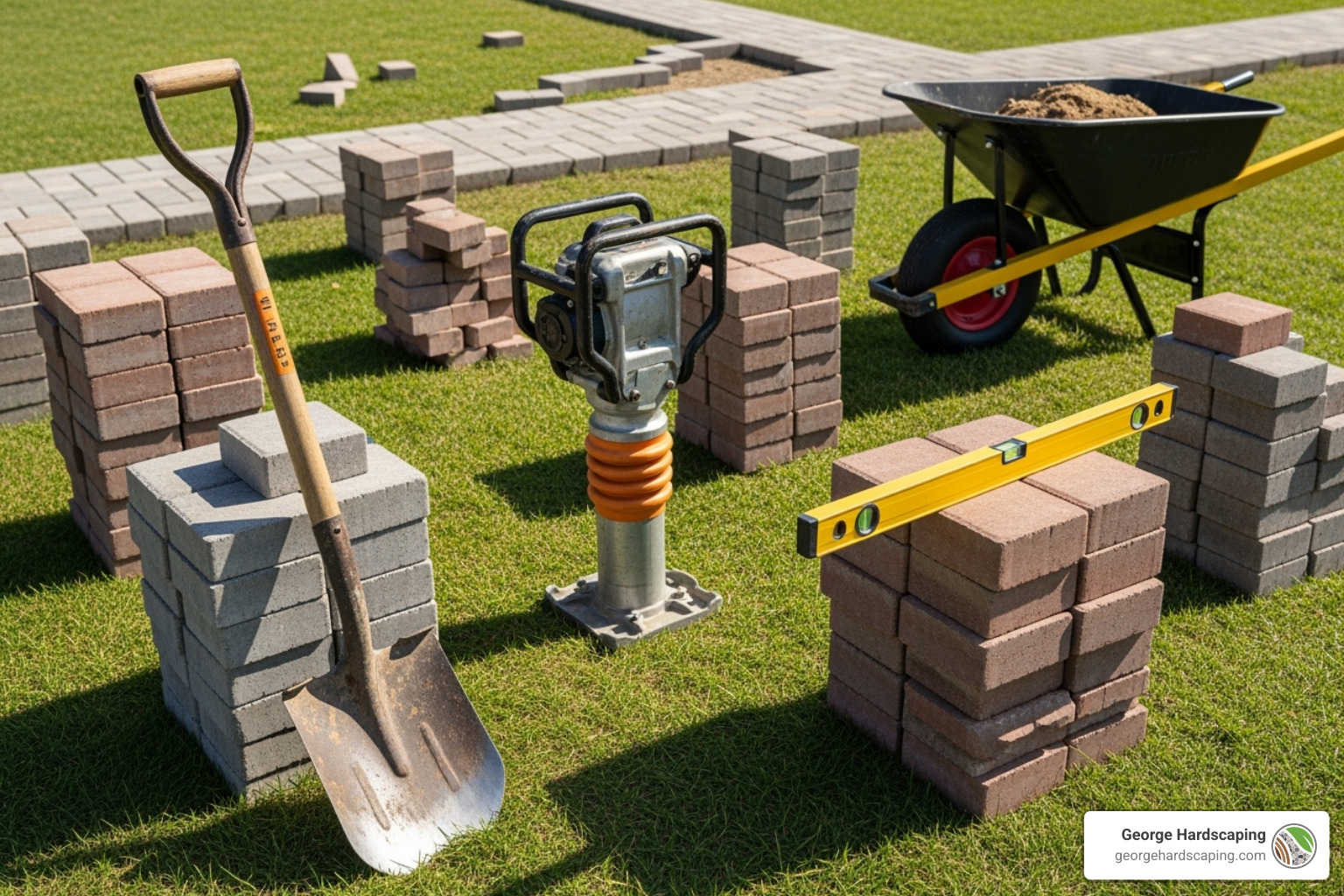
Essential Tools and Materials
Gathering your supplies beforehand makes the process much smoother. You will need:
- Tools: Shovel, wheelbarrow, hand tamper or plate compactor, long and short levels, rubber mallet, measuring tape, stakes and string, and a utility knife.
- Safety Gear: Safety glasses, gloves, and knee pads are essential. A masonry saw or hammer and chisel may be needed for cutting stones.
- Materials: Your chosen stones (buy 10% extra for cuts), permeable landscape fabric, crushed gravel (typically 3/4-inch) for the base, bedding sand, and polymeric sand for paver joints. Paver edging may be required for interlocking designs.
Step-by-Step Site Preparation
This is the most critical phase. A strong base prevents shifting, sinking, and weeds.
- Mark Your Path: Use stakes and string or a garden hose to outline your walkway’s shape and width.
- Check for Utilities: Before digging, call 811 to have underground utility lines marked. This is a crucial, non-negotiable safety step.
- Excavate: The required depth depends on your material and the Massachusetts climate. For a simple flagstone path, dig about 5 inches deep. For interlocking walkways, excavate 12 to 14 inches to accommodate a robust base that can withstand frost heave. Ensure the path slopes away from your house at a rate of 1/8 to 1/4 inch per foot for proper drainage.
- Compact the Soil: After clearing all grass and roots, use a tamper to compact the exposed soil subgrade to prevent future settling.
- Install Landscape Fabric: Roll the fabric over the compacted soil, overlapping seams by at least 12 inches. This separates the base from the soil and suppresses weeds.
- Build the Base: Add a 4-inch layer of gravel, spreading and compacting it in 2-inch increments for maximum stability. Then, add a 1.5-inch layer of bedding sand and level it perfectly with a screed board.
For projects on sloped terrain, refer to our guide on How to Build a Paver Walkway on a Slope.
Laying and Securing the Stones
With the base prepared, you can start laying the stones.
- Install Edging: If using interlocking pavers, install paver edging along the perimeter to contain the stones.
- Lay the Stones: Start at a fixed point, like your house. Place interlocking pavers tightly together, tapping them into place with a rubber mallet. For flagstone, arrange the irregular shapes like a puzzle, leaving about a 1-inch gap between stones. Use your level continuously to check for a consistent surface and proper slope.
- Cut Stones: Use a masonry saw for precise cuts where needed, especially on curved paths. Always wear safety gear.
- Compact the Surface: Once all stones are in place, run a plate compactor over the walkway to settle them into the sand bed for a uniform, stable surface.
- Fill the Joints: For pavers, sweep polymeric sand into the joints, then lightly mist with water to activate the hardening agent. This locks the pavers and inhibits weeds. For flagstone, fill joints with sand, gravel, or low-growing ground covers.
With these steps complete, your stone walkway installation is finished! For more design ideas, explore our Paver Stone Walkway Ideas or get specific tips from our guide on How to Install a Stone Walkway Steps.
Cost, Timeline, and Deciding Between DIY and Professional Help
Understanding the investment in money, time, and effort is key to deciding how to approach your stone walkway installation. The big question for many homeowners in Essex County, MA, is whether to do it themselves or hire a professional.
Note: All costs are national averages based on internet data and do not represent actual pricing for George Hardscaping. Our pricing is determined on a project-by-project basis after a detailed consultation.
Estimating Project Costs and Time Commitment
The investment varies dramatically based on material choice and project complexity.
- Gravel Paths: The most budget-friendly option, costing $100 to $1,200 per 10 feet for materials. Installation is quick, often taking just 2–4 hours.
- Stepping Stones: Another accessible choice, with stones costing $1 to $45 each on average. A typical path takes about one day to complete.
- Flagstone Walkways: Materials range from $3 to $54 per square foot. Plan on about 10 hours for a standard project, which is manageable for a motivated DIYer.
- Interlocking Paver Walkways: These projects are a larger investment, typically ranging from $7,500 to $90,000. The time commitment is 2–5 days, and the work requires intermediate skills.
- Bluestone: A premium material costing $25 to $300 per square foot. Installation usually takes 1–2 days and requires moderate skill.
For a more detailed cost breakdown, see our guide on How Much Does a Paver Walkway Cost.
DIY vs. Hiring a Professional Stone Walkway Installation Expert
There’s no single right answer, so it’s important to weigh the pros and cons.
The DIY Route
- Pros: The primary advantages are significant cost savings on labor and the personal satisfaction of building something yourself. You also have the flexibility to work at your own pace.
- Cons: This is serious physical labor involving digging and heavy lifting. The time commitment can be greater than anticipated, and there’s a risk of errors in base preparation or drainage that can be costly to fix later. You may also need to rent specialized tools.
Hiring a Professional
- Pros: Professionals bring expertise custom to local conditions, like Essex County’s soil and climate. We use specialized equipment for superior efficiency and results. The job is completed much faster, and our work is backed by guarantees, ensuring your walkway lasts 25–30 years or more.
- Cons: The main drawback is the higher upfront cost, as you are paying for labor, expertise, and peace of mind.
For simple gravel or stepping-stone paths, DIY can be a rewarding option. For larger, more complex projects like a front-entrance paver walkway, professional installation often provides better long-term value. Learn more about our approach as a Paver Walkway Installer.
Long-Term Care and Creative Improvements
Your stone walkway installation is a valuable investment. With thoughtful care, it will maintain its stunning appearance and structural integrity for decades. The good news is that stone walkways are remarkably low-maintenance.
Maintaining Your Walkway for Lasting Beauty
Simple, regular habits are all that’s needed to keep your walkway looking its best.
- Weed Prevention: A proper base and filled joints are your first defense. Sweep regularly to remove seeds. For flagstone paths, consider planting “stepable” ground covers like creeping thyme or sedum to outcompete weeds and add charm.
- Addressing Shifting Stones: If a stone becomes uneven, simply lift it, adjust the sand or stone dust base material underneath, and reset it.
- Cleaning: A stiff broom and garden hose are usually sufficient. For stubborn stains, use mild dish soap and water. Avoid using a pressure washer on joints, as it can dislodge the filler material.
- Sealing: While not always necessary, a sealer can protect against stains and improve the stone’s natural color. Reapply every 2 to 3 years.
- Longevity: A properly installed interlocking walkway can last 25 to 30 years or more, while natural stone can last even longer.
For guidance on repairs, our resource on How to Repair Brick Walkway and Stairs offers applicable tips.
Creative Ideas to Lift Your Walkway
Small improvements can transform your walkway from functional to spectacular.
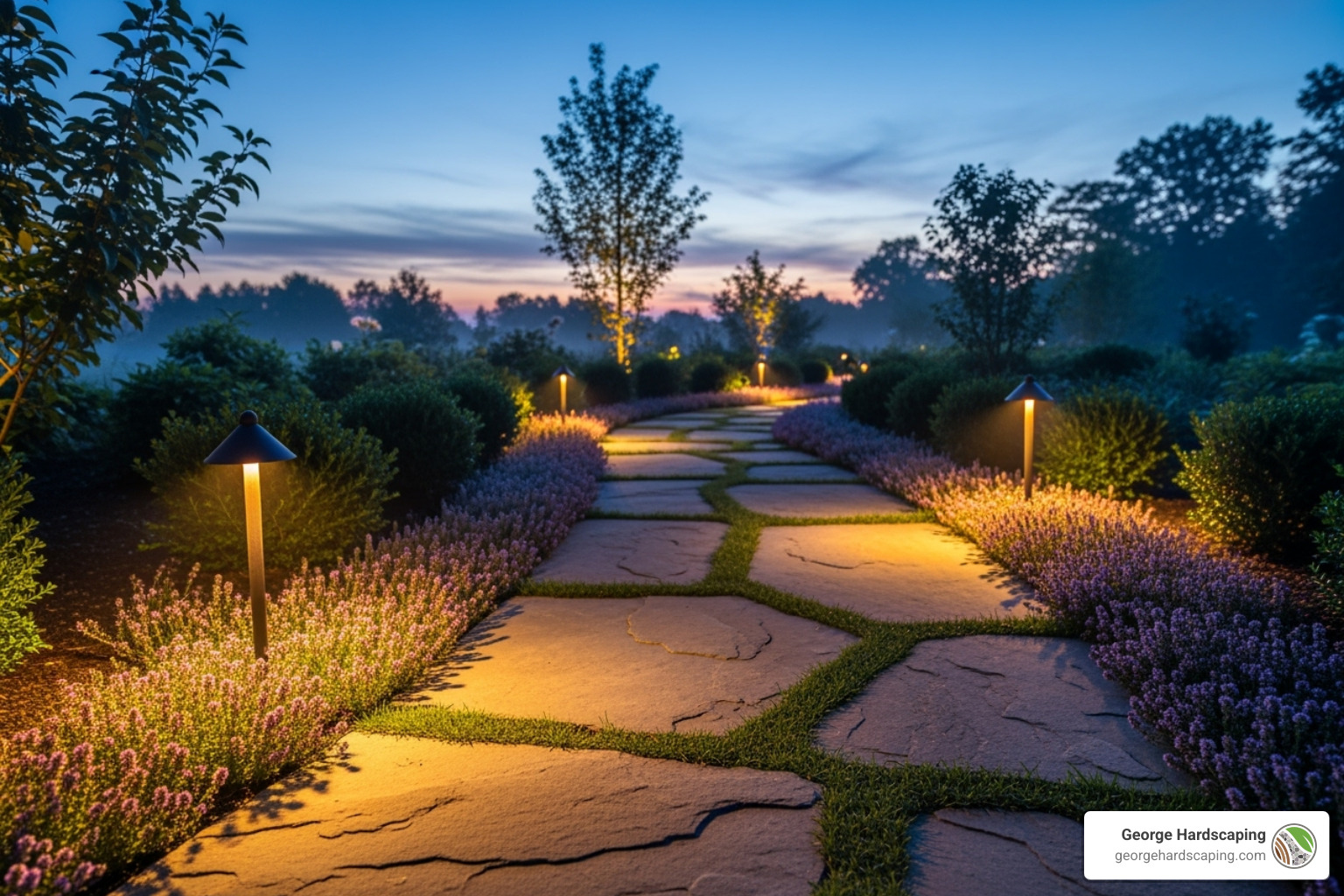
- Landscape Lighting: Low-voltage path lights add magic after sunset, highlighting the stone’s texture and ensuring safe passage.
- Planting Between Stones: Soften the hard edges of your walkway with living color. Moss, thyme, and sedum are excellent, low-maintenance choices.
- Integrating with Other Hardscapes: Create a cohesive outdoor living space by flowing your walkway into a matching patio or connecting it to stone steps. This creates a professionally designed feel.
Our team specializes in these integrated spaces. See how we can extend your walkway with our Patios service or connect elevations with our Natural Stone Steps Ideas.
Frequently Asked Questions about Stone Walkways
When considering a stone walkway installation, homeowners in Essex County often have the same questions. Here are clear, concise answers to the most common concerns.
How deep should I excavate for a stone walkway?
The required excavation depth depends on your walkway type and local climate. For a simple flagstone or stepping stone path, 5 inches is usually sufficient. However, for interlocking paver walkways here in Massachusetts, you must excavate 12 to 14 inches. This depth allows for a thick, compacted base that prevents shifting and damage from our region’s freeze-thaw cycles.
Can I lay stones directly on soil?
No. This is a common shortcut that leads to failure. Laying stones directly on soil will cause them to sink and shift unevenly, creating a tripping hazard. A properly prepared base of compacted gravel and sand is absolutely essential for providing stability, ensuring proper drainage, and preventing weed growth. The base is the foundation of a long-lasting walkway.
How do I prevent weeds from growing between the stones?
The best method is a multi-layered defense. First, install high-quality landscape fabric under the base layers to block weeds from growing up from the soil. Second, for interlocking pavers, use polymeric sand in the joints; it hardens to form a durable, weed-resistant barrier. For flagstone paths, you can fill joints with fine gravel or plant a hardy ground cover like creeping thyme, which will naturally crowd out weeds while adding beauty.
Conclusion
A stone walkway installation is more than just a path; it’s a lasting investment that improves your home’s curb appeal, functionality, and value. It’s the welcoming handshake your home extends to every visitor.
Whether you prefer the rustic charm of flagstone, the uniform elegance of interlocking pavers, or the simple crunch of a gravel path, the key to success lies in the details. Careful planning and meticulous base preparation are what create a walkway that will serve your family for decades.
For homeowners in Essex County, MA, a stone walkway must be built to withstand our unique climate. At George Hardscaping, we specialize in creating beautiful, durable walkways that stand the test of time. We understand the challenges of New England weather, from frost heave to drainage, and we build accordingly.
The investment you make in a professionally installed stone walkway pays dividends in increased property value, improved safety, and a polished appearance that ties your entire landscape together.
Ready to take the next step? Explore your options for building a walkway and let us help you create the perfect, inviting entrance to your home. Every great journey begins with a single step—make sure yours is on a beautifully crafted stone walkway.
