
Why Back Yard Design Matters for Your Home
Back yard design transforms your outdoor space from an underused patch of grass into a functional extension of your home. Whether you’re working with a modest 25×50 ft yard or a larger property, strategic planning turns your backyard into a paradise for relaxation, entertainment, and family activities.
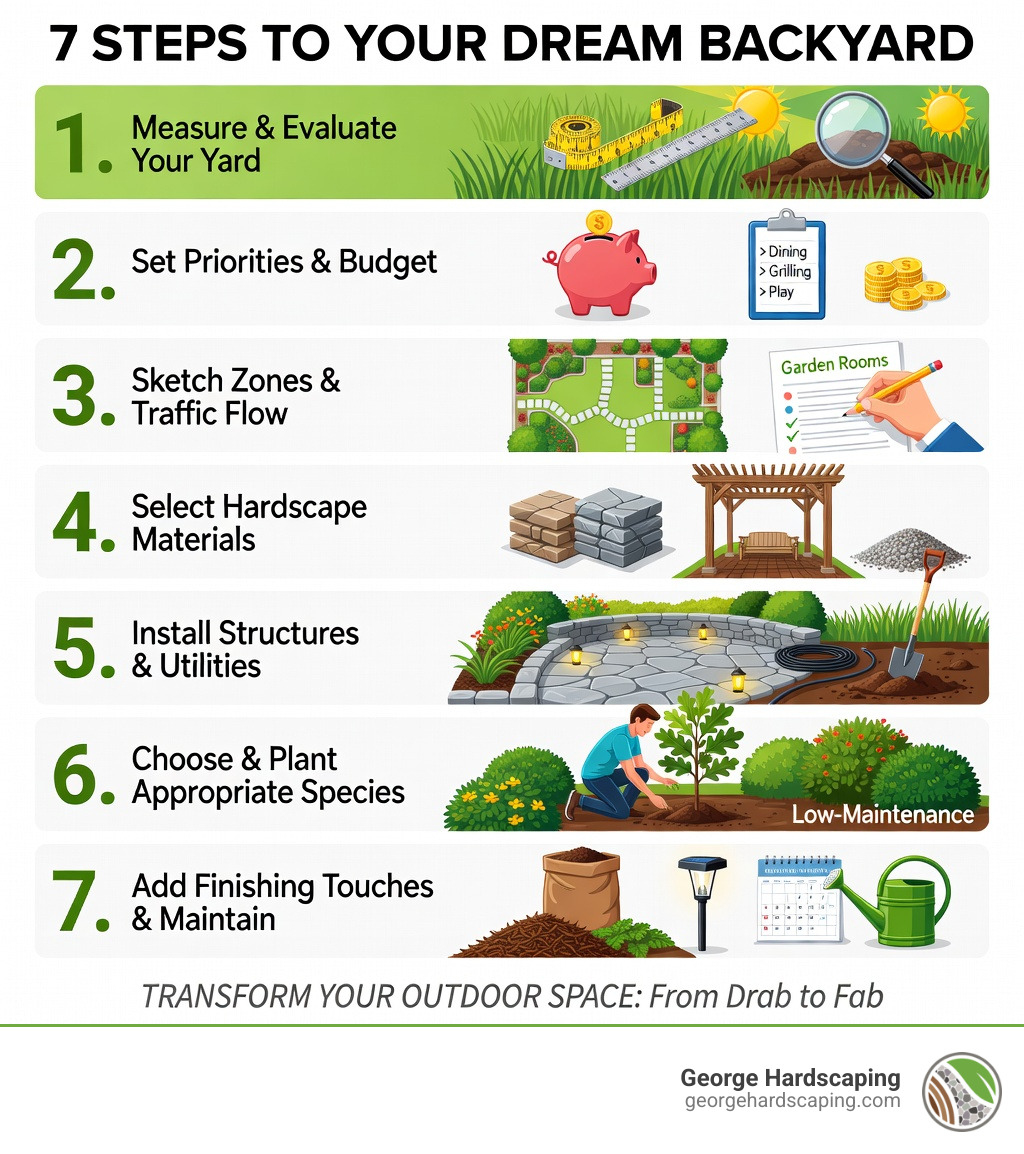
Quick Answer: Essential Steps for Successful Back Yard Design
- Evaluate your space – Measure dimensions, assess sunlight, test soil, and check drainage
- Define your priorities – List must-have features (dining, grilling, play areas) and rank them
- Create zones – Divide your yard into “garden rooms” for different activities
- Choose durable materials – Select pavers, stone, and plants suited to New England weather
- Plan hardscape first – Install patios, walkways, and structures before planting
- Layer plantings – Use varying heights and native species for year-round interest
- Add lighting and finishing touches – Enhance safety, extend usability, and create ambiance
The numbers tell a compelling story. Research shows that landscaping provides returns up to 267% on your investment, making it one of the most valuable home improvements you can make. Yet many homeowners face a common dilemma: professional landscape design plans can start at $3,500, prompting more people to tackle projects themselves using free apps and phased renovations.
Your backyard has evolved beyond the traditional lawn-and-garden approach. Today’s outdoor spaces serve as true extensions of your home—places where families gather around fire pits, where friends enjoy outdoor kitchens, and where kids explore dedicated play zones. Even small urban yards can be transformed through smart design principles like vertical gardening, diagonal sight lines, and multi-use furniture.
The key challenge for most homeowners isn’t lack of vision—it’s knowing where to start. How do you evaluate your soil and sunlight? Which plants thrive in Massachusetts winters? How do you divide a rectangular yard so it doesn’t feel like a hallway? What’s the right width for a walkway, and how deep should you sink pergola posts?
This guide answers those questions and more, drawing on proven design principles, real-world transformations, and practical tips for DIY enthusiasts and those considering professional patio design and installation. Whether you’re planning a complete makeover or phasing improvements over several seasons, you’ll learn how to maximize every square foot of your outdoor space.
For homeowners in Essex County and the North Shore, back yard design must account for New England’s unique climate—freeze-thaw cycles that challenge hardscaping materials, shade patterns that shift dramatically through seasons, and soil conditions that vary widely across properties. The right approach combines durability with aesthetics, creating spaces that look beautiful and perform reliably year after year.
Back yard design terms you need:
Evaluating Your Space: The Foundation of Great Back Yard Design
Before you pick up a shovel or visit a stone yard, you must understand the canvas you are working with. A successful back yard design begins with a thorough site evaluation. We always recommend starting with a scaled drawing of your property. This isn’t just about length and width; it’s about understanding the environmental forces at play.
Start by measuring your yard using a long tape measure or a laser distance tool. Note the location of “immovables” like the house foundation, existing large trees, and utility lines. Before any digging occurs, always call your local utility marking service to locate underground lines—safety is the first rule of any renovation.
Next, observe your sun patterns. Spend a Saturday tracking how the light moves across your yard. A spot that looks sunny at 10:00 AM might be in deep shade by 2:00 PM due to the house or a neighbor’s oak tree. This data is critical for both plant selection and deciding where to place your seating areas. No one wants to host a dinner party on a patio that feels like a frying pan in the late afternoon sun!
Drainage and slope are the next hurdles. In the North Shore, we deal with everything from rocky hills to swampy low spots. If your yard slopes toward your house, you’ll need to plan for landscaping retaining walls or French drains to protect your foundation. Soil testing is also vital. You can find out if your soil is acidic, alkaline, or lacking in nutrients by sending a sample to a local university extension.
Essential Measurement Tools for DIYers:
- 100-foot flexible tape measure
- Graph paper and a pencil (or a digital tablet)
- String level and stakes (to check slope)
- Soil test kit
- Compass (to track sun orientation)
Essential Steps for Planning a Functional Back Yard Design
Once you have your measurements, it’s time to plan the “flow.” Think of your backyard like the ground floor of your house. Where are the hallways? Where are the rooms? You want to ensure that people can move comfortably from the back door to the grill, and from the grill to the dining table.
Traffic flow should be intuitive. Primary paths—the ones you use every day—should be at least 5 feet wide to allow two people to walk side-by-side. Secondary paths can be narrower, perhaps 3 feet wide. As you plan, keep your utility locations in mind. If you want a built-in grill, it’s much cheaper to place it near existing gas or water lines. For more inspiration on how to structure these elements, check out these backyard hardscape ideas.
Analyzing Light and Soil for Plant Success
In Essex County, we are typically in USDA Hardiness Zone 6 or 7. This means our plants need to be tough enough to survive freezing winters but also handle humid summers. When analyzing light, “Full Sun” means at least six hours of direct sunlight. “Partial Shade” means three to six hours.
If your soil is heavy clay, you’ll need to amend it with organic matter like compost to improve drainage. If it’s sandy, you’ll need that same compost to help hold moisture. Matching the right plant to the right light and soil condition is the secret to a low-maintenance yard. A plant struggling in the wrong environment will always require more water, fertilizer, and attention than one that is perfectly sited.
Maximizing Small Spaces: Design Tricks for 25×50 ft Yards
A 25×50 ft backyard—a common size in towns like Salem or Marblehead—can feel like a narrow hallway if not designed correctly. The goal is to break up the “box” and create optical illusions that make the space feel larger.
One of the most effective tricks is using diagonal lines. By laying your pavers or decking at a 45-degree angle to the house, you draw the eye to the farthest corners of the yard, creating a sense of width. Another technique is to create “garden rooms.” By using a small hedge, a trellis, or even just a change in flooring material, you can divide the yard into a dining zone and a lounging zone. When you can’t see the entire yard at once, it feels more expansive and mysterious.
Verticality is your best friend in a small yard. If you don’t have room to plant outward, plant upward! Use trellises, wall-mounted planters, and tall, narrow trees like Arborvitae to provide privacy without eating up floor space. When selecting furniture, look for “scale-appropriate” pieces. A massive outdoor sectional might look great in a showroom but will swallow a 25×50 ft yard whole. Opt for slim-profile chairs and bistro tables instead.
For the floor of your small yard, you’ll likely choose between natural grass and artificial turf. In small, shaded urban yards, natural grass often struggles to thrive and ends up looking like a mud pit.
| Feature | Natural Turf | Artificial Turf |
|---|---|---|
| Durability | Low (can wear down in high traffic) | High (withstands kids and pets) |
| Maintenance | High (mowing, fertilizing, watering) | Low (occasional rinsing) |
| Cost | Low initial / High long-term | High initial / Low long-term |
| Feel | Cool and natural | Can get hot in direct sun |
If you’re looking for more ways to make a small footprint work, explore these small backyard patio designs.
Prioritizing Features in a Compact Back Yard Design
In a small yard, you can’t have everything. You have to be ruthless with your priorities. If you love hosting dinner parties, prioritize a large dining area and a high-quality grill. If you have kids, you might sacrifice the elaborate flower beds for a patch of durable turf.
Multi-use furniture is a game-changer. Look for benches with built-in storage or fire pits that come with a lid to serve as a coffee table during the day. Built-in seating—like a stone seat wall around the edge of a patio—provides plenty of room for guests without the clutter of extra chairs. To add dimension to these compact spaces, consider how backyard stone steps ideas can create distinct levels and transitions.
Creating Visual Depth with Layered Plantings
Layering is the art of placing plants of different heights together to create a lush, full look. Start with your “anchor” plants—tall shrubs or small trees—at the back of the bed. In the middle, place medium-sized perennials or flowering shrubs. At the front, use low-growing groundcovers or annuals.
This creates a sense of depth and hides the fence line, making the boundaries of your yard disappear. Use texture contrast to add interest; pair the large, broad leaves of a Hosta with the fine, feathery foliage of a fern. Stick to a cohesive color palette (like purples, blues, and whites) to keep a small space from feeling chaotic.
Hardscaping Essentials: Patios, Walkways, and Structures

Hardscaping is the “bones” of your back yard design. While plants provide the beauty, hardscaping provides the function. In New England, durability is the name of the game. Our harsh winters cause the ground to heave, which can ruin a poorly installed patio in just one season.
When selecting pavers, look for high-quality concrete or natural stone like bluestone or granite. These materials are non-porous and resistant to the freeze-thaw cycles we experience in the North Shore. A solid foundation is non-negotiable—this usually involves excavating 6-8 inches, laying a compacted gravel base, and adding a layer of sand before the stones are set.
Pergolas are fantastic structures for adding architectural interest and shade. They define an outdoor “room” without making it feel enclosed. When placing a pergola, consider the angle of the sun; the slats should be oriented to provide maximum shade during the hours you’ll use the space most. For more technical details on layouts, refer to this expert patio planning guide or our own backyard patio guide.
Walkways should be more than just a way to get from point A to point B. A winding path adds a sense of journey and can make a yard feel larger. Use materials that complement your patio for a cohesive look. Need some visual inspiration? Check out these backyard paver walkway ideas.
Selecting Durable Materials for New England Climates
Natural stone is a favorite in Essex County for a reason—it’s been here for thousands of years! Granite and bluestone are incredibly durable and gain character as they age. If you prefer a more uniform look, modern concrete pavers are engineered to be incredibly strong and come in a variety of colors and textures.
Whatever material you choose, ensure it has a coarse texture to prevent it from becoming a slip hazard when wet or icy. Proper pitch is also essential; your patio should slope away from your home at a rate of about 1/8 inch per foot to ensure water doesn’t pool against your foundation.
Incorporating Pergolas for Shade and Style
A pergola should be at least 7 feet tall to allow for comfortable head clearance. If you plan on growing climbing vines like wisteria or clematis, add another 18 inches to that height. Anchoring is critical; posts should be sunk at least 30 inches into the ground or bolted to a concrete footing to withstand our coastal winds. For more privacy, you can add wooden slats or outdoor curtains to the sides of the structure.
Creating Outdoor Living Zones: Grills, Fire Pits, and Dining
Zoning is what turns a backyard into a living space. By creating dedicated areas for different activities, you maximize the usability of every square foot.
The dining zone should be closest to the house for easy transport of food and dishes. The “lounge” zone, perhaps centered around a fire pit, can be further away to create a sense of retreat. Fire pits are a staple of New England life, extending the outdoor season into the chilly autumn months. Whether you choose a wood-burning stone pit or a convenient gas-powered feature, it will inevitably become the focal point of your yard.
For those who love to cook, a built-in grill or a full outdoor kitchen is a major upgrade. Not only does it make entertaining easier, but it also adds significant value to your home. When planning your kitchen, think about the “work triangle”—the distance between your grill, your prep area, and your refrigeration. For more tips on fire features, look at these creative backyard fire pit ideas and pergola design and placement tips.
[CTA] Ready to transform your Essex County home? Get more info about professional patio design and installation from our expert team today!
Designing the Ultimate Outdoor Kitchen
An outdoor kitchen can be as simple as a built-in grill with a small stone countertop or as elaborate as a full chef’s station with a pizza oven and sink. We recommend using stainless steel appliances for their weather resistance. For countertops, granite is an excellent choice because it can handle the heat of the grill and the cold of the winter. Ensure you have adequate lighting over the cooking surface so you aren’t flipping burgers in the dark!
Enhancing Ambiance with Strategic Lighting
Lighting is often an afterthought in back yard design, but it’s what makes the space usable after the sun goes down.
- Path lights: Keep them low and spaced about 10-15 feet apart to guide the way safely.
- Uplighting: Place lights at the base of trees or architectural features to create drama.
- String lights: Also known as “cafe lights,” these add a festive, warm glow over dining areas.
- Safety lighting: Ensure steps and level changes are well-illuminated to prevent trips.
Plant Selection and Long-Term Maintenance
In the North Shore, we love our gardens, but we don’t always love the work that goes into them. The key to a beautiful yard that doesn’t eat up your entire weekend is choosing the right plants.
Native species are your best bet. Because they evolved in our local climate, they are naturally resistant to local pests and diseases and require less water once established. They also provide vital habitat for local pollinators like bees and butterflies. Think about adding “multi-season interest” plants—shrubs that bloom in the spring, have lush foliage in the summer, vibrant colors in the fall, and interesting bark or berries in the winter.
[CTA] Warm up your nights with a custom touch! Get more info about custom outdoor firepits to complete your landscape.
Choosing Low-Maintenance and Native Plants
Some of our favorite low-maintenance options for the Beverly and Danvers area include:
- Oakleaf Hydrangea: Beautiful blooms and stunning fall color.
- Switchgrass: A hardy native grass that adds movement and winter interest.
- Purple Coneflower (Echinacea): A pollinator favorite that is very drought-tolerant.
- Inkberry Holly: A great native alternative to Boxwood for low hedges.
To keep maintenance low, use a thick layer of organic mulch (2-3 inches) in your garden beds. This suppresses weeds, retains moisture, and adds nutrients back into the soil as it breaks down.
Vertical Gardening and Privacy Hedges
If your neighbors are a little too close for comfort, a “living wall” is a beautiful solution. Arborvitae ‘Green Giant’ or ‘Emerald Green’ are popular choices for a thick, evergreen screen. If you have a fence, you can use trellises to grow climbing hydrangea or Virginia creeper. These vertical elements provide privacy and soften the hard lines of your hardscaping.
Budgeting and DIY Tools for Your Renovation
A backyard renovation can be a significant investment, but it doesn’t have to happen all at once. Many of our clients in Georgetown and Ipswich choose to “phase” their projects. You might install the patio and basic lawn this year, then add the outdoor kitchen next year, and the elaborate plantings the year after. This spreads out the cost while allowing you to enjoy the space immediately.
When budgeting, hardscaping (stone, pavers, retaining walls) is usually the most expensive part of the project because of the labor and material costs. However, it also offers the highest ROI. According to internet data, a professional paver patio can range from $2,400 to $15,000+, depending on size and materials. (Note: These are average internet costs and not specific quotes for George Hardscaping).
To help you visualize your design, there are several free or low-cost apps available:
- iScape: Allows you to overlay virtual plants and hardscapes onto photos of your actual yard.
- Home Design 3D Outdoor/Garden: Great for creating a layout and seeing it in 3D.
- PlantSnap: A handy tool for identifying plants you like in other people’s yards!
For a deeper dive into walkways, don’t miss our backyard walkway design ultimate guide.
Avoiding Common DIY Landscaping Pitfalls
The biggest mistake DIYers make is failing to plan for drainage. Water is the most destructive force in your yard. If you don’t give it a clear path to move away from your house and hardscapes, it will eventually cause settling, cracking, and even basement flooding.
Another common error is overcrowding. It’s easy to buy a tiny shrub at the nursery and plant it right next to your patio. But five years later, that shrub might be 6 feet wide and blocking your walkway. Always research the “mature size” of a plant before you put it in the ground.
Frequently Asked Questions about Backyard Design
How do I make a small backyard feel larger?
Use diagonal patterns in your hardscaping to draw the eye to the corners. Create “garden rooms” to break up the space and use vertical elements like trellises to draw the eye upward. Keep the center of the yard open to maintain long sight lines.
What is the best material for a low-maintenance patio?
Concrete pavers and natural stone like granite or bluestone are the best for low maintenance. They are incredibly durable, don’t require staining or painting like wood decks, and can be easily cleaned with a power washer.
How much does a professional backyard design cost?
While a simple sketch might be free with a construction contract, elaborate, professional landscape design plans can start at $350 or go up to $3,500+ for complex, multi-acre projects. Doing the initial layout yourself using apps can save you significantly on these upfront fees.
Conclusion
Transforming your backyard from “drab to fab” is a journey that pays dividends in both home value and quality of life. By focusing on smart back yard design principles—evaluating your site, creating functional zones, and choosing durable materials—you can create a space that serves your family for decades.
At George Hardscaping, we are passionate about helping Essex County homeowners bring these visions to life. Whether you are looking for a stunning new patio in Beverly, a durable retaining wall in Peabody, or a custom fire pit in Newburyport, our commitment to quality craftsmanship ensures your outdoor space is built to last. A well-designed backyard isn’t just a luxury; it’s the setting for your family’s best memories.
Ready to take the first step toward your dream yard? Get more info about our hardscaping and masonry services and let’s start planning your transformation together!
