
Installing a stone walkway: 4 Easy Steps for a Flawless Path
Why a Stone Walkway is a Great DIY Project
Installing a stone walkway is a rewarding home improvement project that adds significant value and curb appeal. A well-built path provides a durable, beautiful feature that can last for decades with minimal upkeep. When designed and installed correctly, a stone path handles foot traffic, sheds water, and integrates seamlessly with patios, steps, and garden features.
Project Snapshot:
- Time Required: 1-2 days for small projects; 2-4 days for larger or curved layouts
- Skill Level: Beginner to Intermediate (attention to detail matters more than brute force)
- DIY Cost: $2.50-$3.50 per sq. ft. in materials (stone type and base depth affect totals)
- Key Steps: Plan → Excavate → Build Base → Lay Stones → Fill Joints → Final Checks
The benefits of a stone walkway are clear:
- Improved Curb Appeal: A stone path creates a welcoming and high-end look.
- Increased Property Value: This is an attractive feature for potential home buyers and appraisers.
- Exceptional Durability: Properly installed stones resist cracking and flex with freeze-thaw cycles.
- Low Maintenance: Annual topping of joint sand and an occasional rinse are typically all that’s needed.
- Climate-Ready: Stone walkways tolerate New England’s freeze-thaw conditions when built with the right base.
Success hinges on one critical element: proper base preparation. A walkway is a system of layers—landscape fabric, compacted gravel, a sand bed, and joint filler—working together. Skipping any of these leads to sinking stones, frost heave, and persistent weeds. This guide walks you through each step in plain language, from selecting the right stone to maintenance, with practical tips for sloped sites, clay soils, and accessible pathways. We’ll also point you to high-quality resources so your decisions are grounded in best practices.
Quick installing a stone walkway resources:
Prefer professional help from the start? Our team plans, permits, and installs walkways that last. Request a free on-site estimate and get a firm price and timeline.
Step 1: Planning, Designing, and Budgeting Your Walkway
Thoughtful planning is the foundation of a professional-looking walkway. This phase involves choosing the right materials, designing an attractive layout, anticipating drainage and soil conditions, and creating a realistic budget. Getting these fundamentals right makes installation smoother and eliminates costly redos.
Choosing the Right Stone for Your Path
The stone you choose defines the walkway’s character and performance.
- Flagstone: Irregular pieces of sandstone, limestone, or slate that create a natural, organic look. Durable and timeless, but fitting pieces is a bit like solving a puzzle.
- Pavers: Manufactured from concrete or clay, pavers offer uniformity and precision for geometric patterns. Easy to install, highly durable, and available in permeable options. Explore our paver stone walkway ideas for inspiration.
- Bluestone: A dense sandstone with blue-gray tones and excellent slip resistance—great for New England weather.
- Granite: Premium and incredibly hard; ideal for high-traffic and freeze-thaw climates. Heavier and pricier, but offers best-in-class longevity.
- Gravel: A budget-friendly option for rustic charm. Pea gravel or crushed stone paths are permeable and handle drainage naturally, though they migrate without edging.
Material considerations to weigh:
- Thickness: Thicker stones (2+ inches) are more forgiving over time, especially with irregular flagstone.
- Surface Texture: Flamed or naturally cleft surfaces offer better traction than polished finishes.
- Color and Heat: Darker stones absorb heat in full sun; lighter tones stay cooler underfoot.
- Permeability: Permeable pavers and open-joint flagstone over a free-draining base reduce runoff and can help with local stormwater goals. The EPA’s overview of permeable pavements is a useful primer.
Note: Material prices fluctuate by region and quarry. Ask your supplier about lead times and delivery fees, and plan for a 5–10% overage to account for cuts and breakage.
Designing the Layout and Sizing for Comfort
Path Design: Use a garden hose to lay out gentle curves, or stakes and string for straight lines. Consider how the path connects to a stone patio installation or existing walkways and stairs. A comfortable width for one person is 36 inches; 42–48 inches allows side-by-side walking and easier cart access.
Accessibility: If you’re targeting an accessible route, aim for a 48-inch minimum width where feasible, keep the running slope under 5% (1:20), and cross slope under 2%. See the U.S. Access Board’s ADA Standards for Accessible Design for guidance on slopes and clear widths.
Drainage and Grades: Plan a subtle crown or a consistent cross slope of 1/4 inch per foot to shed water away from structures. For sloped sites or transitions to driveways, see our tips for how to build a paver walkway on a slope.
Soil and Frost: Heavier clay soils and freeze-thaw conditions call for a deeper, better-draining base. If you’re unsure about your soil, the USDA’s Web Soil Survey can help you identify your soil type and drainage characteristics.
Calculating Materials and Budget
1) Square Footage: Multiply length by width. A 30-foot path that’s 4 feet wide is 120 sq. ft.
2) Gravel Base: A 4-inch compacted base is typical; in clay soils or heavier traffic areas use 6 inches. A rule of thumb is roughly 35–40 pounds of compactable base per square foot for 4 inches. For 120 sq. ft., that’s about 4,200–4,800 pounds.
3) Sand Layer: A 1-inch screeded sand layer averages ~10 pounds per sq. ft. Our 120 sq. ft. example needs about 1,200 pounds.
4) Stone: For pavers, calculate by square footage, adding 5–10% for cuts and waste. Flagstone is usually sold by the ton; your supplier can translate your square footage into tonnage based on average coverage per ton.
5) Edging and Geotextile: Include linear feet of edge restraints plus stakes, and buy heavy-duty woven landscape fabric with at least 12-inch overlaps.
6) Delivery and Equipment: Budget for delivery, a rented plate compactor, and possibly a masonry saw or angle grinder with a diamond blade for cuts.
DIY projects typically cost $2.50 to $3.50 per square foot in materials and take one to two days for smaller paths; intricate patterns or slopes can extend timelines. For ideas that tie into a larger outdoor plan, browse our backyard paver walkway ideas and consider a cohesive patio and walkway installation.
Pro Tip: If your walkway will border a retaining structure or raised bed, coordinate grades and drainage early; see our integrated walkway and retaining wall guidance.
Strong CTA: Want a design that fits your budget and property perfectly? Get a fast, no-obligation quote from our experts. Schedule your free estimate and receive a clear plan, price, and timeline.
Step 2: The Critical Step of Base Preparation
Here’s the truth about installing a stone walkway: the beauty you see on the surface is only as good as what’s hidden underneath. A long-lasting walkway depends on a stable, well-drained foundation. Proper excavation, compaction, and drainage prevent sinking, shifting, and weed problems.
Tools and Materials You’ll Need
Gather everything before you begin to ensure a smooth workflow.
- Tools: Shovel, wheelbarrow, hand tamper (or rented plate compactor), level (2- and 4-foot), rubber mallet, tape measure, rake, utility knife, string line, stakes, straight 2×4 for screeding, angle grinder with diamond blade (for cuts), PPE (gloves, safety goggles, hearing protection, dust mask/respirator).
- Materials: Chosen stones, crushed stone/gravel (dense graded aggregate), coarse sand (concrete/paver sand), heavy-duty woven landscape fabric (geotextile), and edge restraints (plastic, steel, or stone), plus spikes.
Safety First – Call Before You Dig:
Before breaking ground, call 811 or visit the Call 811 website. This free, legally required service marks underground utilities to prevent dangerous, costly accidents. Make this call a few days before your planned start date.
Silica Dust Safety:
When cutting stone or pavers, control dust and wear proper respiratory protection. See OSHA’s guidance on respirable crystalline silica for safe cutting practices, including wet-cutting and vacuum attachments.
Excavation: Digging the Path Correctly
Proper excavation sets the stage for everything that follows. You’re creating a precisely engineered foundation, not just a trench.
- Excavation Depth: Use this formula: Stone Thickness + 1″ Sand Layer + 4–6″ Gravel Base. For a 2-inch stone with a standard 4-inch base, dig about 7 inches deep. In clay soils or freeze-prone areas, plan a 6-inch base (total ~9 inches).
- Drainage Slope: Create a gentle slope of 1/4 inch per foot away from your home’s foundation or toward a suitable drainage area. Use a string line and level to maintain consistency. For complex grades, see our guide on how to build a paver walkway on a slope.
- Subgrade Prep: After digging, remove roots and soft spots. Moisten the soil lightly if dusty, then compact the subgrade with a tamper or plate compactor until it’s firm.
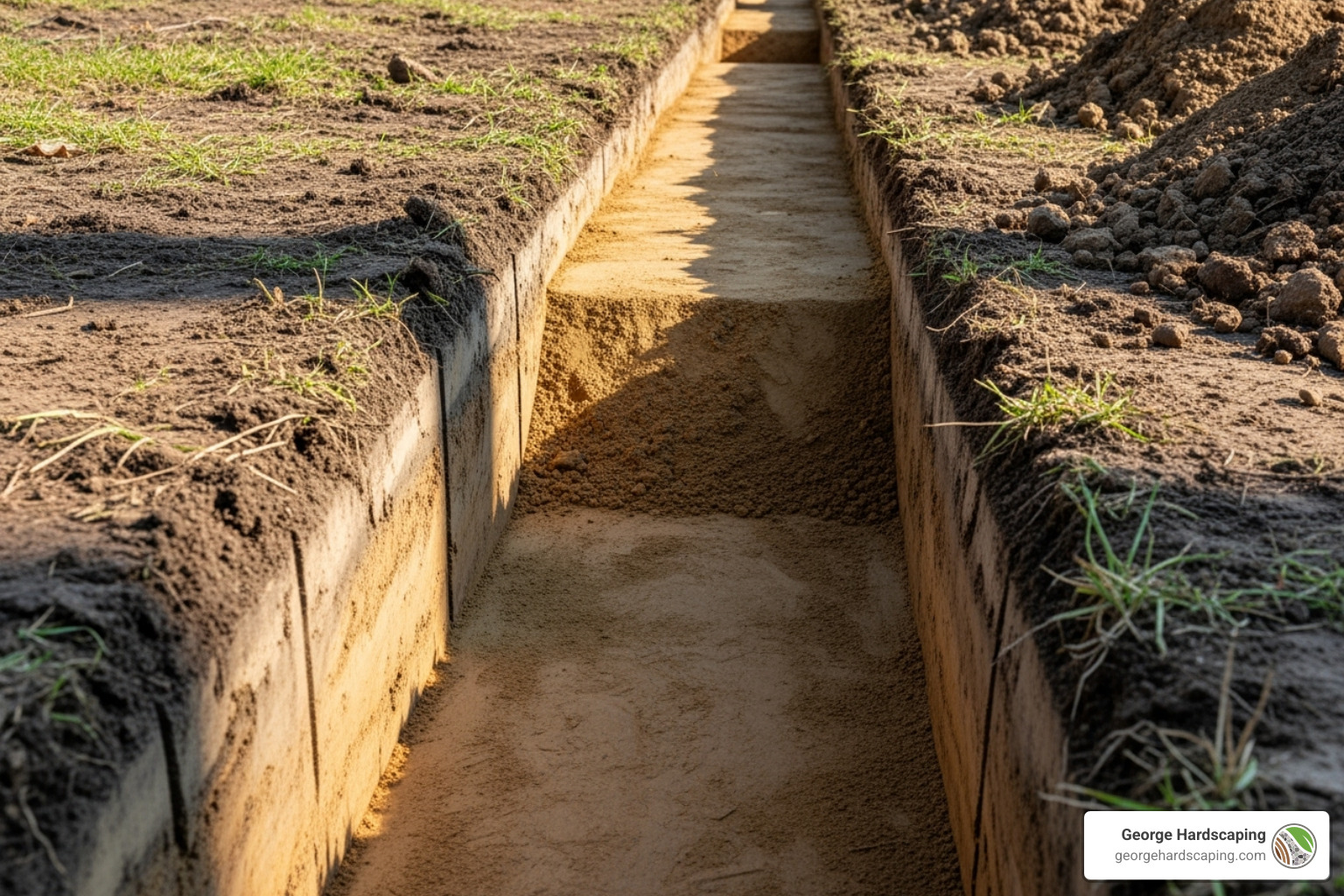
Creating a Solid, Well-Draining Base
This multi-layer system is the key to a walkway that lasts for decades.
1) Install Landscape Fabric: Roll out the fabric over the compacted subgrade, overlapping seams by at least 12 inches. Pin it in place. The fabric prevents soil from pumping into your base and helps block weeds.
2) Build the Gravel Foundation: Add dense graded aggregate in 2-inch lifts. Compact each lift thoroughly—several passes with a plate compactor—before adding the next. The finished base should be hard and unyielding underfoot. Use 4 inches minimum; 6 inches in clay or areas with vehicle loads or severe frost. For more details, see our guide on the proper base for a flagstone walkway. Industry best practices for interlocking concrete pavements are also outlined by the Interlocking Concrete Pavement Institute (ICPI): ICPI construction guidelines.
3) Add the Sand Bed: Spread 1 inch of coarse concrete sand over the compacted base. Set two parallel pipes or straight boards as screed rails, then drag a straight 2×4 across to create a perfectly flat surface. Remove rails and fill their voids with sand.
4) Install Edge Restraints: Secure plastic or steel edging along the sides with spikes driven into the base—not just the sand. Proper edging prevents stones and base materials from spreading over time. This is especially important when integrating a walkway and retaining wall.
Permeable Option: If you want a walkway that reduces runoff, consider permeable pavers or wider joints with an open-graded aggregate base (no sand layer). The EPA’s overview of permeable pavements explains how these systems store and infiltrate stormwater.
Soil Insight: Not sure about your native soil? The USDA’s Web Soil Survey helps you identify soil type and drainage—useful for deciding whether to increase base depth.
Step 3: The Art of Installing a Stone Walkway
With the foundation set, this is where your walkway truly comes to life. We’ll cover laying the stones in an attractive pattern, making precise cuts, and locking everything in place for a professional finish.
Best Practices for Laying and Leveling the Stones
Think of laying stones as solving a beautiful puzzle. Patience and attention to detail produce professional results.
- Dry Fit First: Arrange stones on the sand bed before final placement. With irregular flagstone, mix sizes and shapes to avoid repeating patterns and large voids.
- Work Systematically: Start at a straight, visible edge (like a stoop or driveway), then work out and forward, standing on placed stones to avoid disturbing your screeded sand.
- Set Each Stone: Place the stone gently, then wiggle slightly to seat it. Use a rubber mallet to tap until stable.
- Check Level and Plane: Use a short level to ensure each stone is flat, and a longer level or straightedge to confirm the path follows the intended slope without trip lips between stones. Adjust the sand underneath as needed.
- Maintain Consistent Gaps: For pavers, keep uniform joints per the manufacturer’s spacer tabs. With flagstone, vary gaps for a natural look, but keep a consistent range (e.g., 1/2 to 2 inches) for clean joints.
Cutting and Detailing:
- Planning Cuts: Save cutting for last after the major field is placed. Scribe curves or tight fits with a marker.
- Tools: Use an angle grinder with a segmented diamond blade for small cuts or curves; consider a rented wet saw for straight, clean cuts on pavers and dense stones like granite.
- Dust Control: Wet-cut when possible and use a vacuum attachment if dry-cutting. Follow OSHA’s silica safety guidance.
- Edge Stones: Where the walkway meets steps or patios, align joints for a clean visual transition. For connecting to existing steps, see our walkways and stairs considerations.
Whether you’re aiming for the organic look of flagstone or the clean lines of pavers, taking your time here is key. For professional examples, see our flagstone walkway installation service gallery.
Filling the Joints and Adding Finishing Touches
Filling the joints locks the stones together, creating a stable, unified surface and resisting weeds.
Joint Material Options:
- Polymeric Sand: Our top recommendation for durability and low maintenance. It hardens when misted, locking stones and resisting weeds and ants. Follow manufacturer instructions precisely for activation and curing.
- Regular Sand or Decomposed Granite: A natural-looking, permeable option. Budget-friendly but may require periodic top-ups.
- Soil and Groundcover: For a “living walkway,” fill wider joints with soil and plant stepable groundcovers like creeping thyme or sedum. Beautiful but higher maintenance. The Penn State Extension’s Guide to Groundcover Plants offers selection tips.
Application Process:
1) Dry Surface: Ensure stones and joints are completely dry before sweeping in polymeric sand.
2) Fill Joints: Pour the material and sweep it into every joint until fully packed. Use a broom and then a leaf blower on low to clear dust from the stone surfaces.
3) Compact Lightly: For pavers with narrow joints, run the plate compactor with a protective mat to help settle sand; re-sweep and top off joints as needed.
4) Activate (Polymeric Only): Lightly mist per product directions. Avoid flooding. Allow curing time before foot traffic.
Final Checks:
- Edge Security: Confirm all edging is tight and properly spiked.
- Drainage: Hose down adjacent areas and watch water flow; verify it sheds away from the house.
- Transitions: Ensure smooth transitions to patios, steps, and lawn.
Want the craftsmanship without the heavy lifting? Our crew installs with laser-set grades and professional compactors for flawless results. Get started with a no-obligation visit: Request your free estimate.
Step 4: Maintenance, Improvements, and Common Pitfalls
Your walkway is installed—now keep it looking great and performing flawlessly. A properly built stone walkway requires minimal maintenance, but a few simple habits will preserve its beauty for decades.
Common Mistakes to Avoid When Installing a Stone Walkway
Learning from others’ mistakes saves time and frustration:
- Skipping the Base: No or underbuilt base is the top reason for failure. Expect settlement, rocking stones, and weeds.
- Ignoring Drainage Slope: A flat path pools water, inviting algae and ice hazards. Maintain a 1/4-inch-per-foot slope.
- Overly Deep or Shallow Sand: More than 1 inch of bedding sand can lead to settlement; too little prevents leveling.
- Inconsistent Gaps: Irregular joints look messy and complicate joint filling.
- No Edging: Without edging, bases creep and stones migrate.
- Poor Compaction: Subgrade and each base lift must be compacted thoroughly for stability.
Avoiding these issues is straightforward with careful planning. For more professional tips, explore our hardscape maintenance services.
Routine Care Schedule
- Monthly in Growing Season: Sweep debris and check edges. Pull any weeds early.
- After Major Rains: Inspect for washed-out joints and low spots; top up joint material.
- Annually: Rinse with a garden hose or gentle power wash. Re-sand joints as needed. Check edging spikes and reset if loose.
Winter Care (Cold Climates):
- Snow Removal: Use plastic shovel edges to prevent scratching. Snow blowers are fine on level surfaces.
- De-icers: Avoid rock salt on natural stone and concrete pavers; use calcium magnesium acetate or magnesium chloride as gentler options. See the University of Minnesota Extension’s guide on de-icing salts for pros and cons.
- Freeze-Thaw: If heaving appears, wait for spring to settle naturally; investigate drainage and base thickness if problems persist.
Sealers: Optional for most stones and pavers. Sealers can enhance color and make cleaning easier but may alter traction. Test a small area first and follow manufacturer guidance for breathable, exterior-grade products.
Upgrades and Enhancements:
- Path Lighting: Low-voltage or solar fixtures add safety and ambiance, highlighting stone textures at night.
- Planting Borders: Low-growing perennials and ornamental grasses soften edges and anchor the walkway in the landscape.
- Add-On Features: Integrate your path with a new stone patio installation, complementary retaining walls, or a cozy firepit installation to extend your outdoor living.
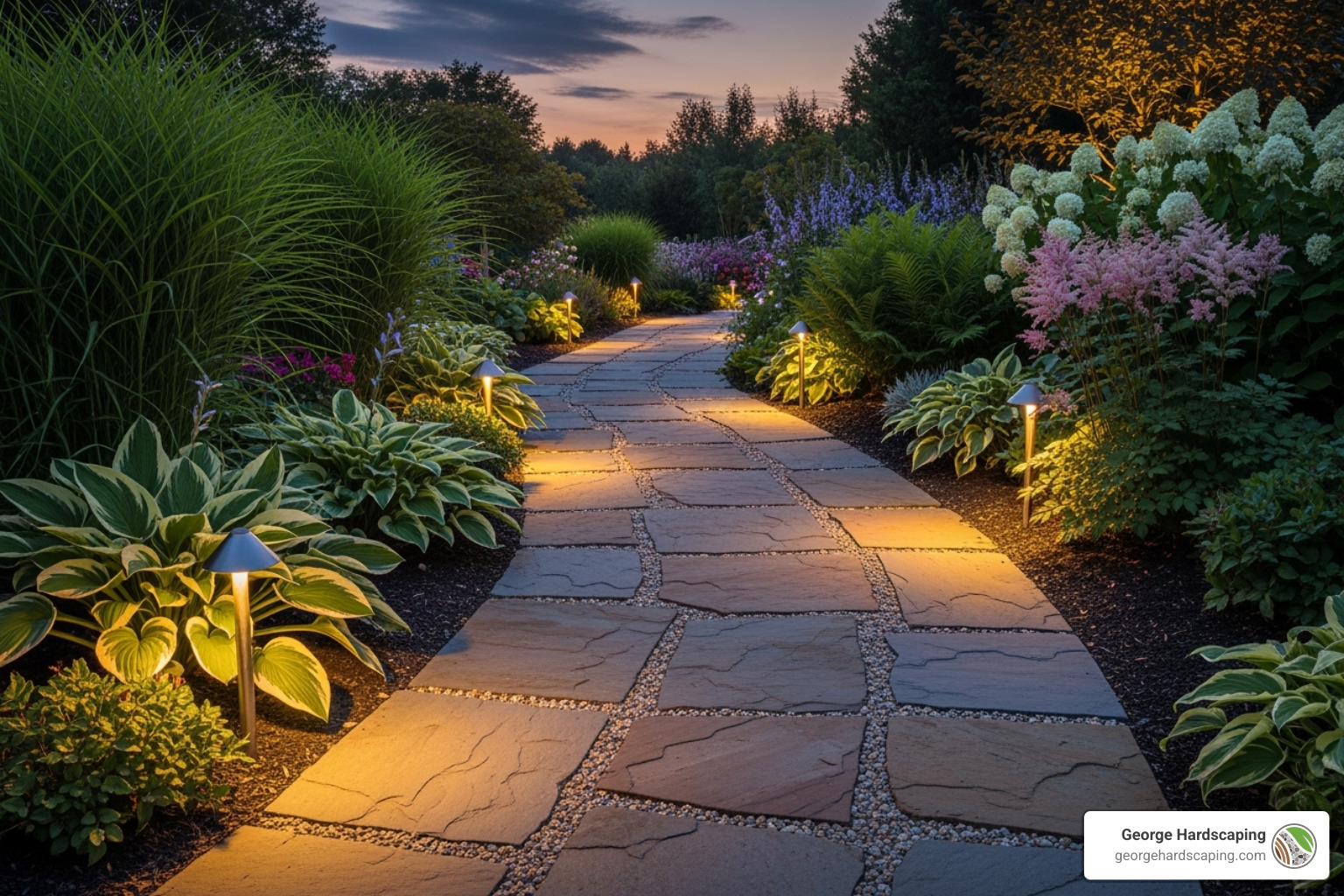
As your landscape evolves, consider how your path connects to other elements. A walkway can be the first step toward a cohesive patio and walkway installation that unifies your outdoor space and improves property value.
Frequently Asked Questions about Stone Walkways
When we talk to homeowners about installing a stone walkway, we hear the same questions over and over. Here are clear, practical answers backed by best practices.
Can you lay stones directly on soil or grass?
No. Laying stones directly on soil or grass is a common shortcut that fails quickly. Without a compacted gravel base and a sand bedding layer, stones sink, shift, and collect water, especially through freeze-thaw cycles. Build the layered system to prevent movement and weeds.
How deep should I dig for a stone walkway?
For most projects, plan a total excavation depth of 6 to 9 inches depending on stone thickness and base depth:
- 4–6 inches for a compacted gravel base (for stability and drainage)
- 1 inch for a sand bedding layer (for leveling)
- 1–3 inches for stone thickness
Clay soils and colder climates benefit from a thicker base (6 inches). For interlocking paver specifics, see ICPI’s industry guidance.
What is the best material to fill the gaps between stones?
- Polymeric Sand: Best overall for stability and weed resistance. Follow activation and curing instructions carefully.
- Fine Gravel or Decomposed Granite: Natural look and permeable, but requires occasional top-ups.
- Soil and Groundcovers: Beautiful and soft underfoot but highest maintenance; choose stepable species. Penn State Extension’s groundcover plant guide is helpful.
How much slope should my walkway have for drainage?
A minimum of 1/4 inch per foot away from buildings and toward suitable drainage. For accessible routes, limit cross slope to 2% and running slope to 5% where possible per the U.S. Access Board’s ADA Standards.
Can I build a walkway on a slope?
Yes. Step the base in small terraces or align the walkway to follow the grade. Keep each step-up minimal for comfort and safety. Our guide on how to build a paver walkway on a slope explains layout, base shaping, and edging details.
Do I need landscape fabric?
A heavy-duty woven geotextile is recommended over the compacted subgrade to separate soil from base and reduce pumping and weeds. It’s inexpensive insurance for long-term performance.
What tools should I rent vs. buy?
- Rent: Plate compactor, wet saw (for larger jobs), and possibly a powered tamper for tight spaces.
- Buy: Quality hand tools, levels, rubber mallet, string line, and a diamond blade for an angle grinder.
How do I handle cutting and dust safely?
Use wet-cutting when you can, or equip your saw with a vacuum attachment. Wear eye, ear, and respiratory protection. Review OSHA’s silica safety guidance before starting.
How do I prevent weeds?
Start with proper base separation (geotextile) and polymeric sand in joints. Sweep debris regularly and spot-pull seedlings early. Avoid using harsh herbicides near desirable plantings.
Should I seal my walkway?
Sealing is optional. Benefits include stain resistance and enhanced color; drawbacks include potential slipperiness and maintenance to re-seal every few years. Always test on a small, inconspicuous area first.
How do winter de-icers affect my walkway?
Rock salt can damage concrete and some natural stones and accelerate freeze-thaw spalling. Consider calcium magnesium acetate or magnesium chloride as gentler alternatives. See UMN Extension’s de-icing salts comparison.
What’s the typical DIY timeline and cost?
A 100–200 sq. ft. walkway usually takes a weekend for an experienced DIYer, longer for complex curves. Material costs often land between $2.50 and $3.50 per sq. ft., excluding tool rentals and delivery. For precise pricing, see our overview of cost to install a stone walkway.
When should I call a professional?
- Complex grades or drainage issues
- Ties into masonry steps and retaining walls
- Limited time or heavy material handling concerns
- High-end stone or intricate patterns
A pro can engineer the base, control grades to the quarter-inch, and deliver clean cuts and tight joints. See our full suite of masonry services or arrange a site visit.
Can a walkway be permeable to reduce runoff?
Absolutely. Permeable pavers and open-joint flagstone over a free-draining, open-graded base infiltrate rainfall and ease stormwater load. The EPA explains the approach and benefits here: permeable pavements.
How do I connect the walkway to other outdoor features?
Plan transitions early to align grades and joints with patios, steps, and driveway edges. We regularly integrate paths with retaining walls, walkways and stairs, and full patio and walkway installation packages for a cohesive look.
Conclusion: Enjoy Your New Walkway or Call the Pros
Installing a stone walkway is a deeply satisfying project that adds lasting beauty and value to your home. By following the steps in this guide—especially building a solid, well-drained base—you can create a professional-quality path with your own hands. You’ll gain a durable surface that sheds water, resists frost heave, and complements your home’s architecture and landscape.
If you want a guaranteed-perfect result, our team at George Hardscaping is ready to help. We’ve created stunning outdoor spaces across Essex County for years, and our premier masonry services cover everything from simple garden paths to complex designs that tie into walkways and stairs, integrated retaining walls, and a new stone patio installation. We serve communities throughout the North Shore—Salem, Ipswich, Manchester-by-the-Sea, and more—with solutions tailored to local soils and climate.
Strong CTA: Ready to transform your outdoor space with a walkway that’s beautiful, safe, and built to last? Contact us today for a free estimate and get a clear plan, firm pricing, and a start date.
Prefer to brainstorm options first? Explore design ideas, budget ranges, and base specs in our in-depth resources, including base for a flagstone walkway, best way to lay a flagstone walkway, and our gallery of flagstone walkway installation service. When you’re ready, our crew will handle the heavy lifting—so you can start enjoying your new path sooner.
