
Lay brick walkway: 3 Steps to Perfection
The Timeless Appeal of a Brick Walkway: A Complete DIY Guide
There is something uniquely satisfying about a well-laid brick walkway. It’s a feature that speaks of permanence, tradition, and craftsmanship. More than just a path to get from one place to another, it’s a statement piece for your landscape, adding instant curb appeal and character that can last for generations. Laying a brick walkway is one of the most rewarding DIY hardscaping projects you can undertake, and with careful planning and the right techniques, it’s entirely within your reach.
Brick has been a trusted building material for centuries, and for good reason. Its rich color, classic texture, and human scale create a sense of warmth and welcome that large slabs of concrete simply can’t replicate. When properly installed, a brick path is incredibly durable, capable of withstanding harsh weather and heavy foot traffic for decades. As one expert notes, “brick walks have been known to last for more than one hundred years.” This isn’t just a weekend project; it’s an investment in your home’s future.
This guide will walk you through every essential step, from initial design to final finishing touches. We’ll cover the non-negotiable fundamentals, like building a bulletproof base, and share the professional tips that separate a long-lasting walkway from one that fails after the first winter. The key to success lies in a solid, well-prepared foundation that prevents the bricks from shifting, sinking, or becoming uneven over time.
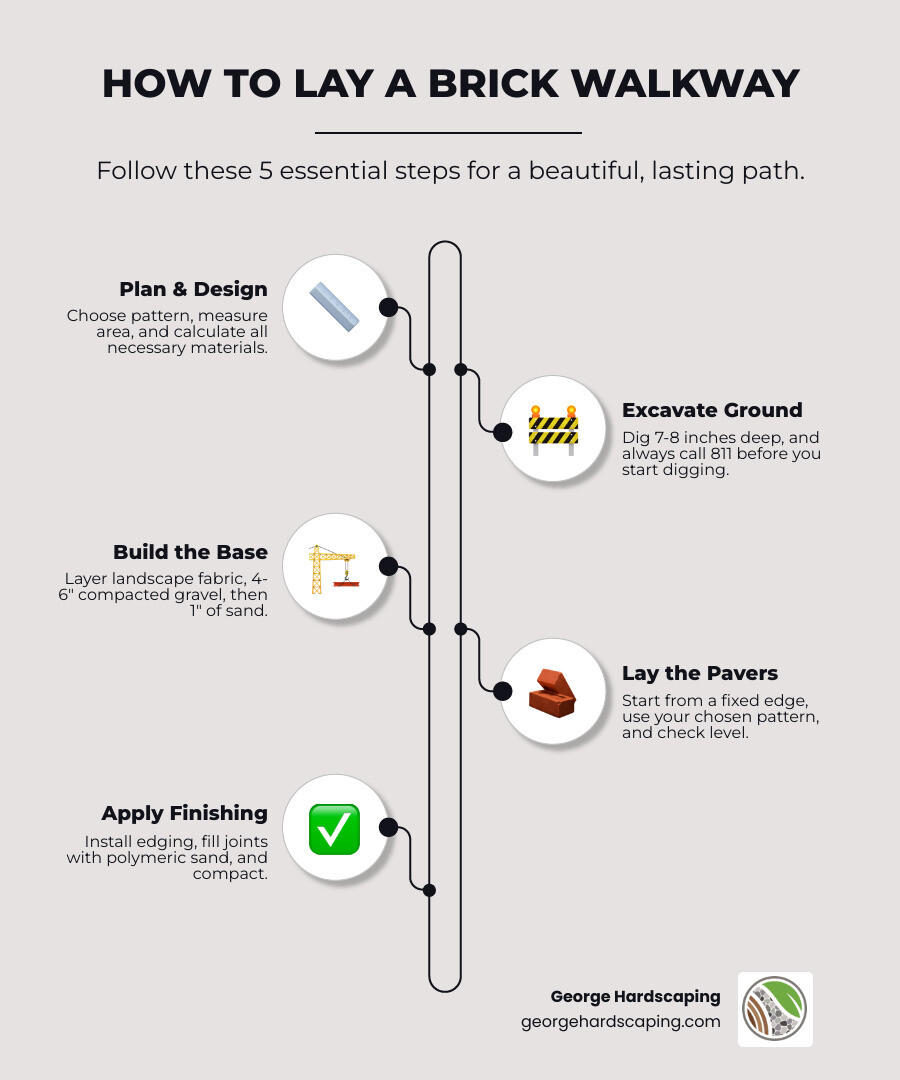
Essential Steps to Lay a Brick Walkway:
- Plan and Design: The crucial first step. Choose your pattern, carefully measure the area, visualize the path’s flow, and calculate the necessary materials with a built-in surplus.
- Excavate: The most labor-intensive phase. This involves digging a trench to the correct depth, ensuring a slight slope for drainage, and calling 811 first to locate any underground utilities.
- Build the Base: The secret to longevity. This multi-layer system includes landscape fabric, 4-6 inches of compacted gravel for drainage and stability, and a 1-inch layer of screeded sand for leveling.
- Lay the Bricks: The satisfying process of setting the pavers into place. Start at a fixed edge, maintain your chosen pattern, and constantly check for level.
- Finish and Secure: The final details that lock everything together. Install durable edging, sweep polymeric sand into the joints, and compact the entire surface.
A brick walkway does more than prevent muddy trails through your lawn; it creates a welcoming entrance, neatly connects outdoor spaces like patios and gardens, and can significantly boost your property’s value. While this is an intermediate-level project that will likely take a full weekend or more, the stunning results are well worth the effort and sweat equity.
Step 1: Planning, Designing, and Gathering Your Materials
This initial planning phase is the blueprint for your entire project. A well-thought-out plan to lay brick walkway is the single most important factor in saving time, reducing waste, and preventing costly mistakes down the road. Remember the old carpenter’s adage: measure twice, cut once. In hardscaping, it’s measure twice, dig once.
Designing Your Path and Choosing a Pattern
Before a single shovel of dirt is moved, you must have a clear vision for your walkway. Brick is an incredibly versatile material, allowing for everything from a formal, arrow-straight path leading to your front door to a gentle, meandering trail that invites exploration through a garden.
Walkway Width and Layout: A key initial decision is the width. For primary walkways, such as from the driveway to the front door, a width of 3-4 feet is standard, allowing two people to walk comfortably side-by-side. More decorative or secondary paths can be narrower, but 36 inches is a good minimum for functional routes. Use a garden hose or spray paint to lay out the shape on the ground. Live with it for a day or two. Walk the proposed path. Does it feel natural? Do the curves flow smoothly? Straight lines create a sense of formality and purpose, perfect for entryways. Curves, on the other hand, create a more relaxed, organic feel that works beautifully in garden settings.
Drainage Slope: This is a critical, non-negotiable design element. Water is the enemy of a stable walkway. You must plan for a slope of ¼ inch for every 4 feet of width (or ⅛ inch per foot) to direct water away from foundations and prevent pooling. This slight, almost imperceptible grade ensures runoff and prevents the freeze-thaw cycles from heaving your pavers.
Brick Patterns: The pattern you choose dramatically affects both the structural integrity and the visual personality of your walkway.
- Running Bond: The most common and straightforward pattern. Each row is offset by half a brick, creating a strong, classic look that is very forgiving for beginners.
- Herringbone: A V-shaped, interlocking pattern that is exceptionally strong and durable, making it an excellent choice for high-traffic areas or driveways. It can be set at a 45- or 90-degree angle to the path’s edge.
- Basketweave: This pattern uses pairs of bricks to form squares, which are then alternated in direction. It creates a charming, cottage-like feel with a wonderful texture, but requires precise layout.
For more creative inspiration, check out our Backyard Paver Walkway Ideas to see a gallery of styles and patterns.
Calculating Materials and Assembling Tools
There’s nothing more frustrating than running out of materials or realizing you’re missing a critical tool mid-project. A comprehensive list and accurate calculations are essential.
Material Calculation: First, calculate the total square footage of your path (Length x Width).
- Bricks: Standard 4×8-inch pavers require about 4.5 bricks per square foot. To be safe, plan on 5 bricks per square foot. Crucially, add 10% extra to your total to account for cuts, breakage, and mistakes.
- Gravel Base: For a 4-inch deep base, a cubic yard of crushed stone covers approximately 80 square feet.
- Sand Bed: For the 1-inch setting bed, a cubic yard of paver sand covers about 325 square feet.
- Other Materials: You will also need landscape fabric, plastic or metal paver edging, 10-inch landscape spikes, and polymeric sand for the joints.
Essential Tools and Materials:
- Digging: Pointed and flat shovels, heavy-duty wheelbarrow, mattock or pickaxe (for rocky soil).
- Measuring & Layout: Tape measure, stakes, string line, 4-foot level, line level.
- Base Preparation: Hand tamper, landscape rake, and a rented plate compactor (this is essential for a professional result).
- Brick Laying & Cutting: Rubber mallet, brick set or chisel, and a rented wet brick saw for clean, precise cuts.
- Safety Gear: Safety glasses, hearing protection (for saws/compactors), heavy-duty gloves, and steel-toed boots.
Understanding Project Costs, Time, and Difficulty
Setting realistic expectations is key to a successful DIY experience. Installing a brick walkway is a physically demanding but achievable task for a homeowner with moderate DIY skills.
Project Timeline: Do not underestimate the time required. For a simple, straight walkway of about 50-75 square feet, plan for a full, dedicated weekend. Longer, more complex, or curved designs could easily stretch into two or three weekends. The excavation and base preparation will consume at least half of your total project time.
Difficulty and Skills: This is an intermediate-level project. You don’t need to be a master mason, but you must be comfortable with physical labor, precise measurements, and methodical work. The most critical skills are patience and an unwavering attention to detail, especially during the foundation-building stage.
Budgeting: Costs can vary significantly based on your location and material choices. National averages from internet sources suggest a range of $8–$40+ per square foot for professional installation. This is not a quote for George Hardscaping, as our pricing depends on specific project details, site access, and local factors. The primary benefit of DIY is eliminating the labor cost, which is often more than the material cost. To help plan your budget, explore our guide on How Much Does a Paver Walkway Cost?.
Step 2: The Complete Guide to Laying a Brick Walkway
With your detailed plan in hand and materials staged, it’s time for the physical work to begin. This is where you’ll lay brick walkway pavers and see your vision come to life. The secret to a walkway that lasts a lifetime is methodical work and an absolute refusal to rush the foundation. Every hour spent on preparation here will save you days of repair work in the future.
Preparing the Ground: Excavation and Leveling
This is the most physically demanding part of the project, but it is the bedrock of your success. A properly excavated and prepared trench is the difference between a professional-grade walkway and one that fails after the first season.
Call 811 Before You Dig! This is a mandatory first step. 811 is the free, nationwide service that arranges for local utility companies to mark the approximate location of their buried lines (gas, electric, water, cable). Make the call at least 3-4 business days before you plan to dig. Damaging a utility line is incredibly dangerous and can lead to costly repairs and fines. Don’t take the risk.
Once the area is marked and clear, use your stakes and string (for straight lines) or spray paint (for curves) to finalize your walkway’s layout. Excavate about 6 inches wider than the finished path on each side. This extra space is crucial for giving you room to work and properly install the edge restraints later.
Now, it’s time to dig. You will need to excavate to a depth of 7 to 8 inches below the final desired height of the walkway. This depth accounts for a 4-6 inch gravel base, a 1-inch sand bed, and the thickness of your brick paver (typically 2 ⅜ inches). If you’re removing grass, skim the sod off first; you can often reuse it to patch areas along the edge of your new path. Use a tape measure frequently to check your depth, ensuring a consistent trench that follows the drainage slope you planned.
Building a Solid Foundation: The Walkway Base
The foundation is everything. It provides drainage, prevents frost heave, and creates the stable, level platform your bricks need. Cutting corners here is a guarantee of future failure.
- Lay Landscape Fabric: After compacting the native soil at the bottom of your trench, lay down a high-quality, permeable landscape fabric. This acts as a separator, preventing the soil below from mixing with your gravel base while still allowing water to pass through. Overlap any seams by at least 6 inches.
- Install the Gravel Base: Spread a 4 to 6-inch layer of crushed stone (often called paver base, dense grade aggregate, or #57 stone) evenly over the fabric. This layer is the structural heart of your walkway, providing drainage and stability.
- Compact, Compact, Compact: Compaction is non-negotiable. For the best results, rent a plate compactor. If your base is 6 inches deep, add the gravel in two separate 3-inch layers (or “lifts”), compacting each one thoroughly before adding the next. Your goal is a rock-solid, unmoving base. A properly compacted base should be so firm you can walk on it without leaving a footprint.
- Screed the Sand Bed: The final base layer is a 1-inch bed of coarse paver sand. This is not a structural layer; it is a leveling bed that allows you to make fine adjustments to each brick. To get it perfectly flat, you’ll use a technique called screeding. Lay two 1-inch outside-diameter PVC pipes parallel across the path. Shovel sand between and over them, then pull a straight 2×4 board across the top of the pipes in a sawing motion. This will screed the sand to a perfectly uniform 1-inch depth. Carefully remove the pipes and gently fill in the resulting voids with sand, smoothing them with a trowel. Do not walk on the screeded sand.
How to Lay Brick Walkway Pavers for a Perfect Finish
With the foundation perfectly prepared, laying the bricks is the most rewarding part of the process. Work methodically and patiently.
Start at a Fixed Edge: Begin laying bricks against a hard, straight edge like your home’s foundation, a driveway, or a patio. This provides a stable reference point. Use string lines stretched taut along the edges of your path to keep your rows perfectly straight.
Place, Don’t Slide: Gently place each brick straight down onto the sand bed. Do not slide them into place, as this will disturb the level sand underneath. Aim for a small gap (about ⅛ inch) between bricks, which will later be filled with sand. Tap each brick gently with a rubber mallet to set it into the sand.
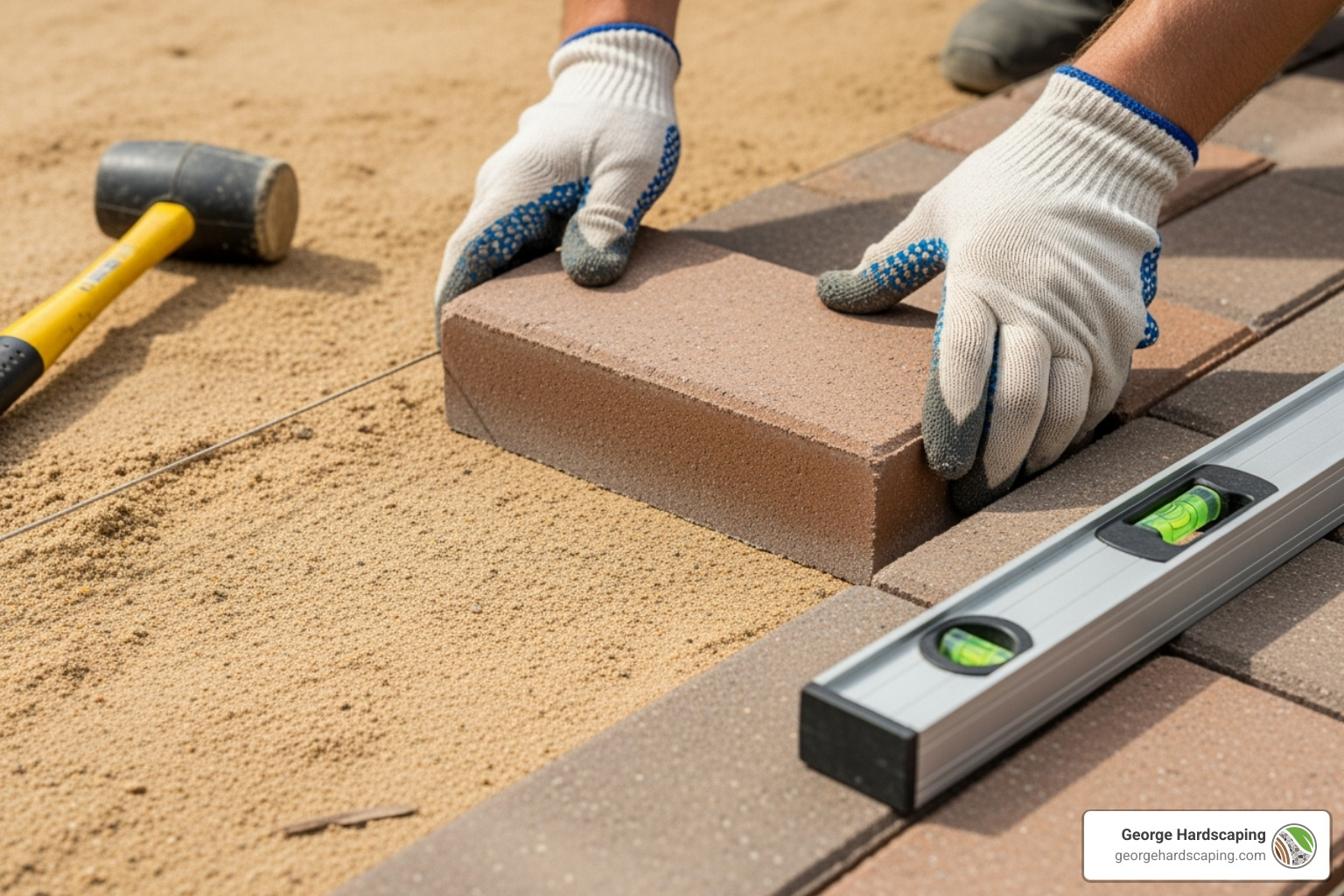
Check for Level Constantly: Use your 4-foot level constantly. Check individual bricks, check along the rows, and check across the width of the path to ensure you are maintaining your drainage slope. It is far easier to make small adjustments as you go than to fix a large uneven section later. To lower a brick, tap it more firmly with the mallet. To raise one, lift it, add a small pinch of sand, and reset it.
Cutting Bricks: You will inevitably need to cut bricks for the edges or to complete your pattern. A rented wet brick saw will provide the cleanest, most professional-looking cuts. Always wear safety glasses and follow the manufacturer’s instructions. For a more rustic look, you can score a line with a brick set and chisel, then break the brick with a sharp hammer blow, but the results will be less precise.
Step 3: Finishing Touches and Advanced Considerations
With all the full bricks in place, your project is starting to look like a real walkway. However, these final steps—installing edging, filling the joints, and compacting the surface—are what transform it from a collection of loose bricks into a durable, unified structure that will last for decades. Do not rush this stage; these finishing details are what lock in all your hard work.
Installing Edging and Filling the Joints
Without a robust system to hold them together, the bricks on the edge of your walkway will inevitably begin to creep outward, causing the joints to widen and the entire path to fail. This is where edging and jointing sand come in.
Install Edge Restraints: Before filling the joints, you must install your edge restraints. Heavy-duty plastic or metal landscape edging designed specifically for pavers is essential. Position the edging firmly against the outside bricks, ensuring the top of the restraint sits just below the paver surface so it will be hidden by soil or mulch. Secure the edging by driving 10-inch landscape spikes through the provided holes every 18-24 inches, hammering them deep into the compacted gravel base. This mechanical lock is what prevents the entire walkway from splaying apart over time.
Fill Joints with Polymeric Sand: Polymeric sand is a game-changer for paver projects. It’s a fine sand mixed with special polymers that, when activated with water, harden to form a firm yet flexible joint. This locks the pavers together, prevents weed growth, and resists erosion from rain and insects.
- Sweep: Pour the dry polymeric sand over the entire walkway. Using a stiff-bristled push broom, sweep the sand across the surface from multiple angles until every joint is completely filled. The sand level should be about ⅛ inch below the top of the pavers.
- Compact: Run your plate compactor over the entire brick surface. This vibrates the bricks, settling them into their final position and helping the sand work its way deep into the joints. After compacting, you may need to sweep more sand into any joints that have settled.
- Clean the Surface: This is a critical step. Use a leaf blower on a low setting, followed by a soft-bristled broom, to remove all residual sand and dust from the surface of the bricks. Any sand left on the surface will harden into a permanent, hazy film when wetted.
- Activate with Water: Set your garden hose nozzle to a gentle “shower” or “mist” setting. Lightly mist a 10×10 foot section of the walkway until the sand darkens. Wait a few minutes, then mist it again. Avoid using a strong jet of water, as this will wash the sand out of the joints. Follow the specific instructions on the sand’s packaging for best results.
Key Considerations to Lay a Brick Walkway on a Slope
Laying a brick walkway on a sloped area presents unique challenges but is entirely achievable with extra planning. The primary concerns are preventing the pavers from sliding downhill over time and managing water runoff effectively.
Improved Boundaries: On a slope, standard plastic edging may not be enough to resist the constant downward pressure. Consider upgrading to heavy-duty steel or aluminum edging, or even setting the boundary bricks in a concrete footing for maximum stability.
Terracing with Steps: For any significant incline, terracing the walkway with steps is the safest and most structurally sound solution. This breaks the slope into a series of level platforms connected by short flights of steps. A good rule of thumb is to incorporate a step for every 6-8 inches of vertical rise. Each step and level section must be built on its own thoroughly compacted base.
Base and Pattern: The base must be exceptionally well-compacted on a slope. Start compacting from the lowest point and work your way up. Using an interlocking pattern like herringbone can also provide additional resistance to movement.
For comprehensive guidance on this specific challenge, review our detailed article on How to Build a Paver Walkway on a Slope.
Long-Term Maintenance and Repairs
One of the greatest advantages of a brick paver walkway is its low-maintenance nature and ease of repair compared to solid concrete or asphalt.
Regular Cleaning: Simply sweeping away leaves and debris will keep your walkway looking great. For dirt and grime, a periodic wash with a garden hose is usually sufficient. If you need to use a pressure washer, use a wide-angle fan tip and a low-pressure setting, and be careful not to spray directly into the joints, which can dislodge the polymeric sand.
Weed and Stain Prevention: The combination of landscape fabric and hardened polymeric sand should prevent most weeds. If any stubborn weeds do appear, pull them by hand before they can establish deep roots. Address any oil or rust stains promptly with a cleaner specifically designed for pavers.
Re-sanding: Every 3-5 years, inspect the joints. If the sand has settled or washed away in areas, you may need to top it off by sweeping in new polymeric sand and misting it to maintain a tight, weed-free surface.
Replacing Broken Bricks: Unlike a cracked concrete slab that requires a major repair, fixing a damaged paver is simple. Use two flathead screwdrivers to carefully pry out the broken brick. Adjust the sand bed underneath to ensure the new brick will be level, set the replacement brick in place, and sweep new polymeric sand into the surrounding joints.
For more detailed repair guidance, see our guide on How to Repair Brick Walkway and Stairs.
Frequently Asked Questions about Laying a Brick Walkway
When you’re planning a project like this, questions are bound to come up. Here are straightforward, detailed answers to some of the most common concerns homeowners have when they decide to lay brick walkway.
What is the best base for a brick walkway?
The best base, and the only one that guarantees a long-lasting result, is a multi-layer system designed for both stability and drainage. It is not a single material, but a sequence of layers, each with a specific job:
- Compacted Native Soil: The very bottom of your excavated trench must be firm and compacted to create a solid starting point.
- Geotextile Landscape Fabric: This permeable fabric is laid on top of the soil. Its crucial role is to act as a separator, preventing the soil from mixing with your gravel base over time, which would compromise drainage and stability.
- A 4- to 6-inch Layer of Compacted Crushed Stone: This is the structural heart of the walkway. This layer (often called paver base or dense grade aggregate) provides a solid platform that distributes weight and, most importantly, allows water to drain away. This drainage prevents the ground from becoming saturated and heaving your pavers during winter freeze-thaw cycles.
- A 1-inch Bed of Paver Sand: This is the final layer before the bricks. Its purpose is not structural; it is a “setting bed.” It provides a smooth, easily manipulated cushion that allows you to set each individual brick to the perfect height, ensuring a flat, even surface.
Skipping any of these layers, or reducing their depth, is the number one cause of DIY walkway failure. The base is truly the secret to a path that will last a lifetime.
Can you lay a brick walkway directly on dirt?
Absolutely not. While it might seem like a tempting shortcut, laying bricks directly on dirt is a recipe for disaster and a complete waste of your time and money. Within a single season, you will face a host of problems:
- Uneven Settling: Soil is not uniformly dense. It will compact and shift unevenly under the weight of the bricks and foot traffic, quickly creating a lumpy, hazardous surface with dangerous trip spots.
- Poor Drainage & Frost Heave: Dirt holds moisture. When that moisture freezes in the winter, it expands with incredible force, pushing your bricks up and out of place. When it thaws, the bricks will settle back down, but never into their original position. This cycle will destroy your walkway.
- Constant Weed Growth: Without a proper base and landscape fabric, weeds will have a direct path from the soil to the sunlight, growing relentlessly through every joint.
The upfront work of building a proper foundation is non-negotiable. It is the only way to ensure a durable, stable, and safe walkway.
How do you keep a brick walkway level?
Achieving a perfectly level (but properly sloped for drainage) walkway is the result of precision at every single stage of the process. It’s a cumulative effect:
- Excavate Precisely: Dig your trench to a consistent depth. Use a string line and a line level to ensure the bottom of the trench has the correct, uniform slope for drainage.
- Build a Level Base: Install your gravel base in even layers (lifts) and compact each one thoroughly. Your final compacted gravel layer should be perfectly smooth and follow the same slope as your trench.
- Screed the Sand Bed Perfectly: This is the most critical step for the final surface. By pulling a straight board across guide rails (like 1-inch pipes), you create a perfectly flat plane of sand for the bricks to rest on. This technique removes all guesswork.
- Check as You Go: As you lay each brick, and after every few rows, place a 4-foot level across the pavers. Make fine adjustments by tapping bricks down with a rubber mallet or adding a tiny pinch of sand underneath to raise one up. Constant checking prevents small errors from becoming large problems.
What is the difference between a clay paver and a concrete paver?
While they can look similar, they are different materials. Clay pavers are made from natural clay and shale fired in a kiln at high temperatures, much like traditional house bricks. They are known for their rich, permanent color that will not fade over time. Concrete pavers are made from a mix of concrete and aggregate pressed into a mold. They come in a wider variety of shapes and colors, but the color is often from dye mixed into the concrete and can fade slightly over many years of sun exposure. For walkways, ensure you buy bricks rated as “pavers” (ASTM C902 for clay, ASTM C936 for concrete), as they are engineered to withstand ground contact, moisture, and freeze-thaw cycles.
How long until I can walk on my new brick walkway?
After you have swept in the polymeric sand and misted it with water, you should allow it to cure. Most manufacturers recommend staying off the walkway completely for at least 24 hours. It can take up to 72 hours for the sand to reach its full hardness, so avoid heavy traffic or placing heavy objects like patio furniture on it for a few days.
Your Beautiful, Durable Walkway Awaits
Congratulations on learning the essential steps and professional techniques required to lay brick walkway. This is a significant undertaking, but it is a project that offers an immense sense of accomplishment. Standing back and looking at a beautiful, functional path that you created with your own two hands is a feeling of pride that is hard to match. You haven’t just improved your landscape; you’ve added a permanent, valuable feature to your home.
The secret, as we’ve emphasized throughout this guide, is not in the brick-laying itself, but in the meticulous preparation of the base. The unseen layers of fabric, compacted gravel, and perfectly screeded sand are the true foundation of a professional-quality result that will not shift, sink, or heave. Patience and a commitment to getting the base right are the keys to building a walkway that stands the test of time.
While this is a labor-intensive DIY project, the reward is a stunning path that transforms your yard, creates a welcoming entrance for family and friends, and adds tangible value to your property. A properly installed brick walkway is an heirloom improvement, one that can last over a hundred years, becoming part of your home’s unique story and character. It’s the kind of project that pays dividends in daily enjoyment for decades to come.
We’ve seen in communities all across Essex County, MA, how a thoughtfully designed and expertly crafted walkway can completely lift the feel of a property. The joy on a homeowner’s face when they see their vision brought to life is precisely why we are so passionate about this work.
Of course, we understand that not every homeowner has the time, physical ability, or specialized tools to tackle a project of this scale. If you’re in the Essex County area and decide that you’d prefer a guaranteed professional result without sacrificing your weekends, the experts at George Hardscaping are ready to bring your vision to life. We specialize in creating stunning, durable outdoor spaces with the same unwavering commitment to quality and attention to detail outlined in this guide. We can ensure your path to perfection is smooth, beautiful, and built to last.
Whether you choose the rewarding path of DIY or partner with our team of professionals, the most important outcome is a beautiful walkway that serves you and your family for years to come. To see how we can create the perfect path for your property, explore our services for building a walkway.
