
Patio Fireplace: Your Best 2025 Backyard Upgrade
Why Patio Fireplaces Are Fundamentally Changing Outdoor Living
A patio fireplace is more than just a source of heat; it’s a transformative feature that creates the ultimate centerpiece for year-round outdoor enjoyment, effectively extending your living space far beyond the walls of your home. The outdoor living trend is no longer a fleeting fashion but a fundamental shift in how we view our properties. Homeowners are increasingly seeking to create functional, beautiful, and restorative outdoor sanctuaries. A fire feature provides a primal, magnetic focal point for entertaining, encouraging connection and creating an inviting ambiance that makes your backyard feel like a true escape from the everyday.
There is an innate, psychological draw to the gentle flicker and warmth of a fire. It calms the mind, encourages conversation, and provides a gathering point that feels both ancient and modern. Whether you envision a rustic, wood-burning stone fireplace for authentic charm or a sleek, modern gas unit for effortless sophistication, the right patio fireplace turns your backyard from a simple yard into a destination. Understanding the primary types is the first step in bringing this vision to life:
- Wood-Burning Fireplaces: The classic choice for those who crave an authentic, multi-sensory experience. They offer a crackling ambiance, the rich aroma of burning wood, and traditional cooking capabilities. However, they require a dedicated space for wood storage, regular ash removal, and annual chimney cleaning to ensure safety and performance.
- Gas Fireplaces: The epitome of convenience and modern luxury. They provide instant on/off control, often via remote, with clean, consistent, and smoke-free heat. Connected directly to your home’s natural gas line, they eliminate the need for refueling, making them a seamless extension of your home’s utilities.
- Propane Fireplaces: Offering much of the convenience of gas but with greater placement flexibility. Since they run on standard propane tanks, they are not tethered to a gas line, allowing for easier installation and the potential for portability. The primary consideration is managing tank refills or exchanges.
- Electric Fireplaces: Representing the safest and simplest option, with no open flames or emissions. They require only a standard electrical connection, making installation costs minimal. While their heat output is generally lower, they are perfect for adding visual ambiance to covered patios or smaller, more intimate spaces.
Why an Outdoor Fireplace is Your Backyard’s Best and Most Lasting Upgrade
There’s an undeniable magic that happens when you introduce fire to an outdoor space. An outdoor fireplace doesn’t just provide warmth on a chilly evening—it fundamentally transforms your entire backyard into a destination that beckons family and friends to gather, relax, and create lasting memories. It’s an investment in a lifestyle, not just a landscape feature.
A patio fireplace quickly and naturally becomes the heart of your home’s outdoor living area. It creates an irresistible gathering spot that draws people together, making conversations flow more easily and helping everyone unwind from the stresses of the day. There’s a primal comfort to fire that other outdoor amenities, like pools or patios alone, simply can’t replicate. It’s a living, breathing element that brings your landscape to life.
Perhaps the most practical and celebrated advantage is dramatically extending your outdoor seasons. Instead of retreating indoors at the first hint of cool weather, you can comfortably enjoy your patio well into the crisp autumn months and start using it again in the early days of spring. A crackling fire turns a brisk New England evening into the perfect setting for stargazing, sharing stories, or simply enjoying a quiet moment of solitude.
Your outdoor fireplace also serves as a powerful centerpiece for entertainment and design. It provides a strong focal point to anchor seating areas, creating intimate conversation zones and giving your patio a clear sense of purpose and flow. In larger backyards, a fireplace can help delineate distinct “outdoor rooms,” such as a cozy lounge area separate from your outdoor kitchen or dining space, making the entire yard feel more organized, expansive, and functional.
From a purely practical standpoint, adding a quality outdoor fireplace is a smart financial investment. Increased property value is a natural result of creating beautiful, functional outdoor living spaces. When potential buyers tour a home, a well-designed fire feature doesn’t just register as a structure; it signals a desirable, elevated lifestyle they can immediately envision themselves enjoying. It creates an emotional connection that can significantly influence a purchasing decision.
Most importantly, your fireplace becomes a dedicated place for making memories with family and friends. These are the moments that stick with us—the laughter shared over gooey s’mores, the deep conversations that happen when digital distractions fade away, and the simple, profound pleasure of being together in a beautiful, comfortable setting. To learn more about how we can help create this special gathering place in your backyard, explore our comprehensive patio and fireplace services.
Choosing Your Perfect Patio Fireplace: A Comprehensive Buyer’s Guide
Selecting the ideal patio fireplace can feel like a monumental task, but breaking it down into key considerations makes the process clear and manageable. The first major decision is often between a permanent, built-in fireplace, which becomes a true architectural feature of your home and landscape, and a portable option that offers flexibility but lacks the same presence and value. From there, a deeper dive into the details will guide you to the perfect choice.
- Size and Scale: The fireplace must be proportional to your space and its intended use. A small fire bowl might be perfect for an intimate seating area for two to four people, but it would be lost in a large, sprawling patio designed for entertaining. Conversely, a grand, towering fireplace can overwhelm a small yard. Consider sightlines from your home and other parts of the yard. The scale also affects the ambiance; a larger fire is dramatic and impressive, while a smaller one fosters intimacy.
- Heating Output (BTUs): Heat is measured in BTUs (British Thermal Units). This number directly translates to how much warmth the unit can provide. A typical portable propane fire pit might offer 40,000 BTUs, enough to comfortably warm a 10-15 foot radius on a cool evening. Custom-built gas fireplaces, however, can easily exceed 100,000 BTUs, creating a powerful bubble of radiant warmth that can make even a cold night enjoyable. Consider your climate and how you plan to use the space when evaluating BTU ratings.
- Architectural Style: Your fireplace should feel like a natural extension of your home’s design. A rustic fieldstone design with a heavy timber mantel perfectly suits a traditional New England home, while sleek, smooth-poured concrete with clean lines complements a modern or contemporary aesthetic. The goal is a cohesive look that enhances your property’s overall character.
| Feature | Wood-Burning Fireplace | Gas Fireplace | Propane Fireplace | Electric Fireplace |
|---|---|---|---|---|
| Cost (Unit) | $100 – $7,000+ (portable to custom built) | $500 – $15,000+ (portable to custom built) | $300 – $8,000+ (portable to custom built) | $100 – $2,000+ (portable to semi-permanent) |
| Installation | High (foundation, masonry, chimney, venting) | Moderate to High (gas line, professional install, venting) | Low to Moderate (assembly, tank hookup) | Very Low (plug-and-play) |
| Maintenance | High (ash removal, chimney sweeping, wood storage) | Low (annual burner cleaning, occasional inspection) | Low (tank refills/exchanges, burner cleaning) | Very Low (wiping down, bulb replacement) |
| Ambiance | Very High (crackling sounds, wood aroma, large flames) | High (realistic flames, no smoke/smell, consistent look) | Medium to High (clean flames, no smoke/smell) | Low to Medium (visual flame effect, no real heat in some models) |
| Convenience | Low (fire starting, tending, cleanup, wood prep) | Very High (instant on/off, remote control, adjustable flame) | High (instant on/off, tank management) | Very High (remote control, instant on/off, timers) |
| Heating Output | Very High (variable, depends on wood type/amount) | High (50k-100k+ BTUs, consistent radiant warmth) | Medium to High (40k-80k BTUs, consistent warmth) | Low (supplemental heat, typically 5,000 BTUs) |
| Environmental | High Emissions (smoke, particulate matter, CO2) | Very Low Emissions (clean burning, e.g., Valor 100x cleaner than wood) | Low Emissions (clean burning) | Zero Emissions (at point of use) |
| Portability | Low (permanent built-ins), Medium (some metal pits) | Very Low (requires fixed gas line) | High (tank allows easy relocation) | High (can be moved easily) |
Fueling the Flames: A Deeper Look at Wood, Gas, Propane, and Electric
Choosing a fuel source is the most critical decision, as it defines the entire experience of using your fireplace.
- Wood-burning fireplaces offer the most authentic, elemental experience. The crackling sounds, the rich aroma of hickory or oak, and the mesmerizing dance of tall, natural flames are irreplaceable for purists. They produce significant radiant heat but demand a commitment. You’ll need a dry, covered space for storing seasoned firewood, and you must perform regular ash removal and annual chimney sweeping to prevent dangerous creosote buildup. For those who cherish tradition, the classic ambiance of a wood burning fire pit is well worth the effort.
- Gas fireplaces provide the ultimate in convenience and control. With the push of a button or a tap on a remote, you get instant, consistent, and controllable flames with no smoke, sparks, or ash. Connected directly to your home’s natural gas line, they offer an endless fuel supply and are an exceptionally clean-burning option. Modern units feature incredibly realistic log sets, fire glass, or stones, allowing for significant design customization. Explore our stunning outdoor gas fireplaces to see the possibilities.
- Propane fireplaces cleverly combine the convenience of gas with the flexibility of placement. Operating on portable 20 lb. tanks (the same used for BBQ grills), they can be located almost anywhere on your patio without the need for costly gas line installation. This makes them a great choice for existing patios or for homeowners who may want to rearrange their outdoor furniture layout. The main consideration is managing the fuel supply, which involves refilling or exchanging tanks.
- Electric fireplaces are the simplest, safest, and most cost-effective choice, requiring only a standard GFCI electrical outlet. They produce no emissions and have no open flame, making them ideal for covered porches, three-season rooms, or households with small children and pets. While their heat output is supplemental at best (typically using infrared heaters), they excel at adding visual ambiance. They are a fantastic example of eco-friendly fire pits due to their zero direct emissions.
Material Matters: From Classic Brick to Modern Concrete in New England
The material you choose for your patio fireplace dictates its appearance, durability, cost, and maintenance needs. In New England, it is absolutely crucial to select materials and construction techniques that can withstand our harsh freeze-thaw cycles.
- Classic Brick: A timeless choice that offers warmth, character, and incredible durability. An outside fireplace brick design complements nearly any home style, from Colonial to Cape Cod. Brick retains heat exceptionally well and, when installed correctly, can last for generations with minimal maintenance beyond occasional inspection.
- Natural Stone: For a truly one-of-a-kind, organic look, nothing compares to natural stone. Whether it’s rustic fieldstone, elegant granite, or smooth river rock, each stone is unique. This option brings a powerful, rustic elegance to any backyard but requires the highest level of masonry skill to execute properly. For a similar aesthetic with more design flexibility and a lower cost, stone veneer is an outstanding alternative. Our stone veneer fireplace installation projects use thin-cut natural stone or high-quality manufactured veneer to create stunning, durable results.
- Modern Concrete: Poured concrete or pre-cast concrete blocks offer clean lines, a minimalist aesthetic, and surprising design versatility. Concrete can be tinted, stamped, or formed into unique, creative shapes, making it a favorite for contemporary designs. High-strength, air-entrained reinforced concrete is specifically engineered to withstand freeze-thaw cycles, making it a durable and sophisticated choice.
- Stucco: A highly versatile and cost-effective finish, stucco can be applied over a concrete block structure to achieve a smooth, seamless look. It can be tinted to any color imaginable, allowing it to perfectly match your home’s exterior. A stucco finish is excellent for Mediterranean or Southwestern styles but can also be used to create a clean, modern facade.
Design & Installation: Bringing Your Patio Fireplace Vision to Life
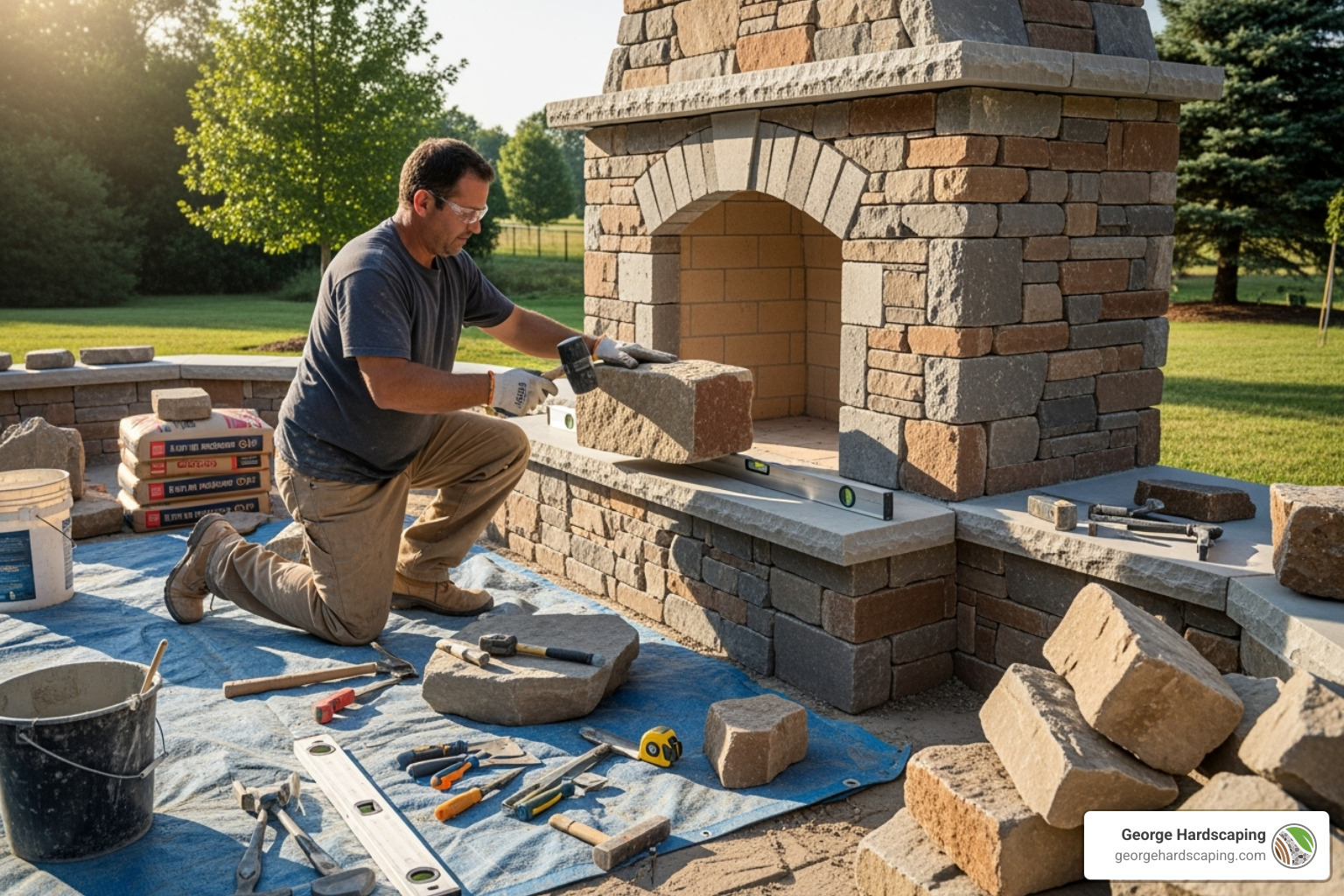
Creating the perfect patio fireplace is a rewarding journey from a simple idea to a stunning, functional reality. The most successful projects are born from a blend of your personal vision, meticulous planning, and expert professional execution. The process begins with a thorough consultation to understand your goals, aesthetic preferences, budget, and the unique characteristics of your backyard.
We assist with critical site selection to ensure the final location is not only beautiful and functional but also fully compliant with all local building codes and safety regulations. While DIY kits are available, the immense complexities of building a proper foundation, performing code-compliant masonry, running gas lines, and ensuring structural safety make professional installation the wisest and safest choice. For a deeper look into the entire process, our outdoor fire pit builders ultimate guide is an invaluable resource.
Key Considerations for Your Patio Fireplace Design
Your fireplace design should not exist in a vacuum; it must integrate seamlessly with your entire outdoor living space, including patios, walkways, and plantings. Consider whether you prefer a modern, rustic, or traditional style that complements your home’s existing architecture. But think beyond aesthetics to function. Many of our clients choose to incorporate features that elevate the fireplace from a simple heat source to a multi-functional hub. Popular additions include:
- Built-in Seating Walls: These provide permanent, durable seating and help define the gathering space.
- Wood Storage Boxes (Woodboxes): Integrated, covered storage keeps firewood dry, seasoned, and conveniently at hand.
- Decorative Mantels: A stone slab or reclaimed wood beam mantel adds a classic finishing touch and a place for decor.
- Hearth Extensions: A raised hearth not only adds a traditional design element but also doubles as extra seating space close to the warmth.
- Integrated Cooking Accessories: Many designs can be equipped with grills, rotisseries, or even full-fledged pizza ovens, turning your fireplace into a culinary centerpiece. Let us inspire you with our gallery of custom fire pits designs that can be tailored to your vision.
Safety First: Professional Installation and Operation Guidelines
Safety is the single most important consideration with any fire feature. A permanent patio fireplace must be installed on a level, non-combustible surface (such as a concrete slab or stone patio) and positioned a safe distance—typically at least 10-15 feet—from your home, fences, sheds, low-hanging branches, or other flammable structures. For wood-burning units, a chimney cap with a spark arrestor is essential to contain embers and prevent sparks from landing on your roof or in your yard.
Gas fireplaces require professional installation by a licensed technician to ensure gas lines are secure, leak-free, and that the unit is properly ventilated according to manufacturer specifications. Always keep a fire extinguisher, garden hose, or bucket of sand nearby during operation. For comprehensive safety guidance, review the official tips from authoritative sources like the National Fire Protection Association (NFPA). Investing in professional fireplace installation is the best way to guarantee that every aspect of your project adheres to the strictest safety standards and local codes.
Beyond Warmth: Creative Uses & Essential Maintenance for Your Fire Feature
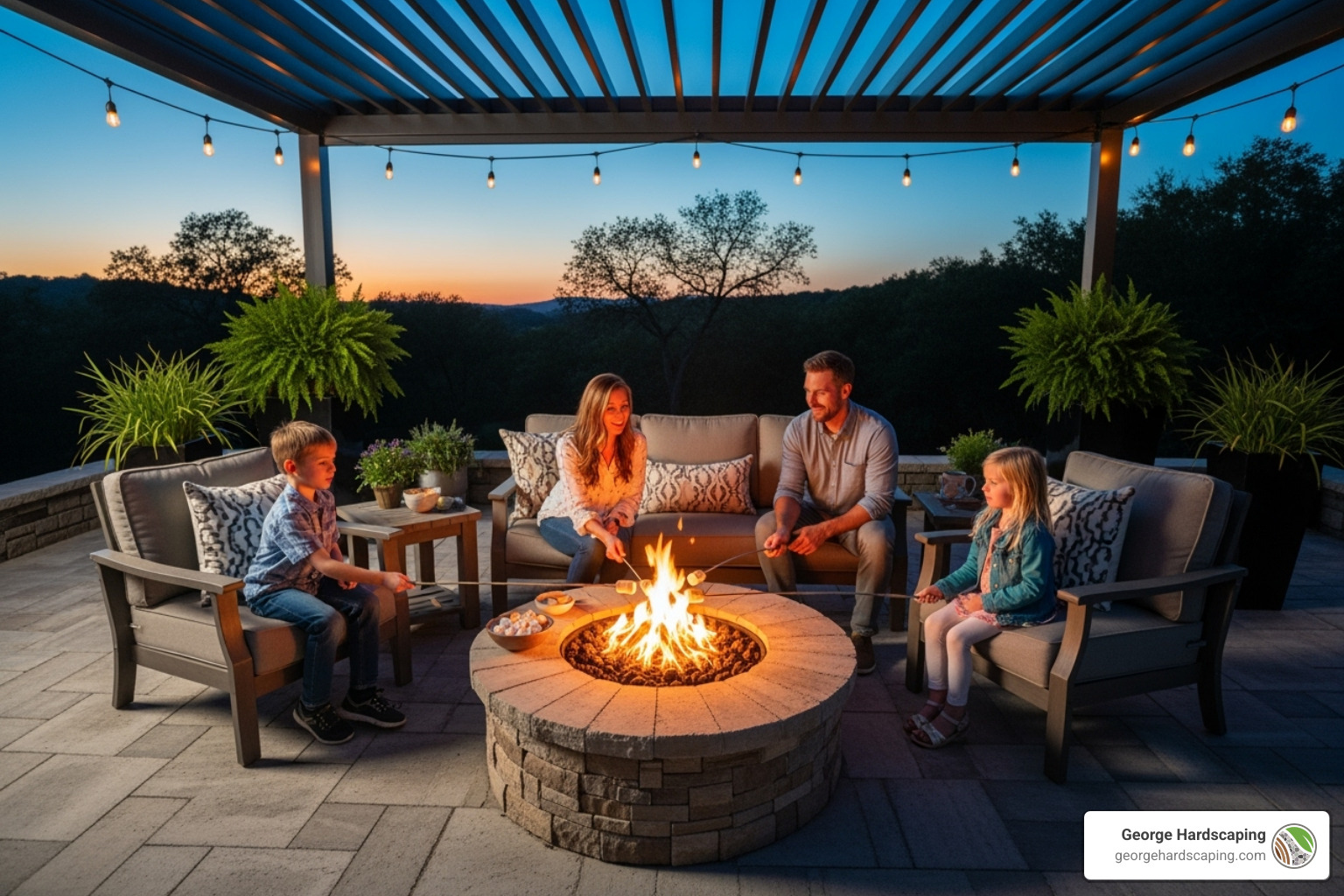
Your patio fireplace is far more than just a heat source; it’s a versatile and dynamic hub for outdoor entertainment, relaxation, and culinary adventure. It naturally becomes the centerpiece for everything from a quiet morning coffee to a lively neighborhood barbecue. The warm, inviting glow and gentle crackle of the fire create an unparalleled atmosphere that encourages connection and storytelling, turning simple, everyday moments into cherished, lifelong memories.
From S’mores to Gourmet: Cooking on Your Fireplace
Open-flame cooking adds a new and exciting dimension to your outdoor experience, infusing food with a rustic, smoky flavor that’s impossible to replicate on an indoor stove. Many custom fireplaces can be designed from the outset with culinary uses in mind, equipped with heavy-duty cooking grates, rotisserie systems, or even full-scale pizza oven additions, transforming them into true culinary powerhouses. The experience of cooking over a fire, championed by chefs like Al Brown, is as much about the communal process of gathering people together as it is about the delicious results.
When cooking, always use long-handled utensils and wear heat-resistant gloves. Never leave food unattended. Heavy-duty cast iron cookware is ideal for its durability and even heat distribution over open flames. For fun and easy meals that everyone will love, try these classics:
- Classic S’mores: The quintessential campfire treat that never disappoints.
- Foil Packet Dinners: Combine chopped veggies, a protein (like chicken or sausage), and seasonings in a foil packet for an easy, no-mess meal.
- Dutch Oven Chili or Stew: A cast-iron Dutch oven nestled in the coals can simmer a hearty meal for hours.
- Skillet Cornbread: A cast-iron skillet can bake up a perfect, crusty cornbread right by the fire.
- Fire-Roasted Hot Dogs and Sausages: A simple classic that’s always a crowd-pleaser.
Maintaining Your Patio Fireplace for Decades of Enjoyment
Proper, consistent maintenance is the key to ensuring your patio fireplace remains a beautiful, safe, and functional centerpiece for years to come. The required care varies significantly by fuel type, but a small investment of time pays huge dividends in longevity and safety.
- Wood-Burning Fireplaces: These require the most hands-on care. Remove ash from the firebox after it has fully cooled (typically 24-48 hours) to ensure proper airflow for your next fire. Most importantly, have the chimney professionally inspected and swept annually to remove flammable creosote buildup—a leading cause of chimney fires. Store your firewood in a dry, covered location away from your home to keep it seasoned and prevent pests.
- Gas and Propane Fireplaces: These low-maintenance units still need annual attention. Before each season, visually inspect the burner for debris like leaves, spider webs, or dirt that can clog the ports and cause an uneven flame. You can gently clean the ports with a soft brush. Check all gas line connections to ensure they are tight and leak-free; a simple test with soapy water will reveal any leaks by producing bubbles. Using a high-quality weatherproof cover during the off-season is highly recommended.
- All Masonry Fireplaces: The structure itself needs care. Periodically inspect the brickwork or stonework for cracks in the mortar joints. This is especially important in New England’s climate. Water can penetrate these cracks, freeze, and expand, causing significant damage known as spalling. Repairing failing mortar joints, a process called tuckpointing, is crucial to prevent this. Our expert masonry services include comprehensive fireplace maintenance, inspection, and repair, ensuring your investment provides enjoyment for generations.
Frequently Asked Questions about Patio Fireplaces
As homeowners in New England dream of adding a patio fireplace to their backyard, several common and important questions arise. Here are clear, concise answers to the most frequent inquiries we receive from our clients.
How much does a custom patio fireplace cost?
The cost of a custom patio fireplace varies widely, as each project is unique. The final price is influenced by three main factors: materials, size/complexity, and fuel type. A simple, modest-sized fireplace built from concrete block with a veneer might start in the $8,000-$12,000 range.
A large, grand fireplace built from natural fieldstone with an arched firebox, built-in wood storage, and a seating wall can range from $20,000 to $40,000 or more. The cost breakdown is typically 40-60% for skilled labor, 30-50% for materials, and the remainder for permits and site preparation. Because of this variability, the only way to get an accurate figure is through a detailed, on-site consultation. Request a detailed estimate for your project to get a clear understanding of the investment required for your specific vision.
Do I need a permit for an outdoor fireplace in Massachusetts?
Almost certainly, yes. In Massachusetts, permit requirements for a patio fireplace vary by town, but permanent, built-in structures almost always require a building permit. This is especially true for any fireplace with a chimney over a certain height or any unit that uses a natural gas connection. Local regulations in communities like Andover or Salem will specify setback requirements (minimum distance from property lines, homes, and other structures) and may have rules regarding fuel types or seasonal burning restrictions. As experienced local contractors, we are deeply familiar with the permitting process across the North Shore and manage it entirely on your behalf, ensuring your project is fully compliant from day one.
Can I convert my wood-burning fireplace to gas?
Yes, in most cases, you can convert an existing outdoor wood-burning fireplace to gas. This is a very popular upgrade for homeowners who love the look of their masonry fireplace but desire more convenience. The process involves installing either a gas insert (a self-contained box) or a specialized gas log set into the existing firebox and running a gas line to the unit. The benefits are significant: instant, smoke-free flames at the flip of a switch, no ash cleanup, and consistent, controllable heat. While you lose the crackle and aroma of a real wood fire, the trade-off for ease of use is compelling for many. This conversion is not a DIY project; professional installation by a licensed gas technician is essential to ensure all work is done safely and up to code.
What is the difference between an outdoor fireplace and a fire pit?
The primary difference lies in structure and function. A fire pit is typically an open, 360-degree vessel or enclosure for a fire, promoting a campfire-like gathering where people can sit all around it. A patio fireplace is a structured, enclosed feature with a firebox and a chimney or venting system. This structure directs smoke up and away, provides more controlled and directional radiant heat, and serves as a much larger, more dominant architectural anchor in a landscape design.
Can I use my outdoor fireplace during a burn ban?
This depends entirely on the specific rules of the burn ban and your fireplace’s fuel source. Most burn bans, which are often issued during dry, windy conditions, apply specifically to open burning of solid fuels like wood. In many cases, gas and propane fireplaces are exempt from these bans because they don’t produce sparks or embers and can be shut off instantly. However, you must always check the specific regulations for your town or county during a declared burn ban before using any fire feature.
Conclusion: The Heart of Your Outdoor Oasis
There’s a unique and powerful magic in gathering around a fire under the stars, sharing stories, and creating memories in the crisp night air. A well-designed and expertly installed patio fireplace delivers this timeless experience, offering an unbeatable combination of radiant warmth, captivating ambiance, and dramatically extended living space that will fundamentally transform your backyard and your lifestyle.
With the right fire feature, your yard ceases to be just a yard; it becomes a personal oasis, a private resort where every evening can feel like a mini-vacation. It creates a natural, magnetic gathering spot that pulls family and friends together, extends your outdoor season by months, and significantly enhances your property’s beauty, usability, and long-term value. Most importantly, it becomes the cherished backdrop for countless moments of connection and joy that will be remembered for a lifetime.
For homeowners throughout Essex County and the North Shore of Massachusetts, George Hardscaping specializes in creating stunning, durable custom outdoor fire pits and fireplaces that are built to last. Our deep mastery of New England masonry and hardscaping ensures your new fire feature is not just beautiful on day one, but is engineered to withstand our harsh weather for generations to come.
Ready to transform your backyard into the captivating outdoor haven you’ve always dreamed of? The perfect patio fireplace is waiting to become the warm, glowing heart of your family’s future memories.
Contact George Hardscaping today to schedule your complimentary design consultation. Visit us at georgehardscaping.com or call us directly to take the first step toward creating an outdoor living space you’ll treasure for years to come.
