
Eco-friendly fire pits: Top 10 Best Choices for 2025
Warming Up Sustainably: The Rise of Eco-Friendly Fire Pits
Eco-friendly fire pits are revolutionizing outdoor living spaces by providing warmth and ambiance without the environmental drawbacks of traditional fire features. If you’re looking for a cleaner, greener way to enjoy outdoor fires, here’s what makes a fire pit eco-friendly:
| Feature | Benefit |
|---|---|
| Low-emission design | Reduces air pollution and particulate matter |
| Clean-burning fuels | Options like bioethanol, propane, or smokeless wood systems |
| Sustainable materials | Made from recycled steel, concrete with natural materials, or reclaimed elements |
| Energy efficiency | Better heat output with less fuel consumption |
| Secondary combustion | Technology that reburns smoke particles for cleaner operation |
The popularity of eco-friendly fire pits has surged since the pandemic transformed our outdoor spaces into extended living areas. According to Fixr.com’s 2021 report, fire pits were the second most popular outdoor heating choice, with 59% of homeowners selecting them for year-round outdoor enjoyment.
“Outdoor living is playing a bigger part in our lives – particularly since the COVID-19 pandemic made our homes sanctuaries and curbed our travel plans,” notes one industry expert. This shift has driven innovation in cleaner burning technologies.
The environmental benefits are significant. Traditional wood-burning fire pits release carbon dioxide, particulate matter, and can contribute to poor air quality. In contrast, modern eco-friendly options can reduce emissions by up to 90% through advanced combustion systems or alternative fuels.
Beyond environmental considerations, these sustainable fire features can add value to your property. Homes with outdoor fire features sell on average 2.8 days faster according to real estate data, making them both an eco-conscious and financially sound investment.
Whether you’re looking for a portable tabletop model, a statement fire table, or a built-in feature, today’s eco-friendly options combine sustainability with style—proving you don’t need to sacrifice aesthetics for environmental responsibility.
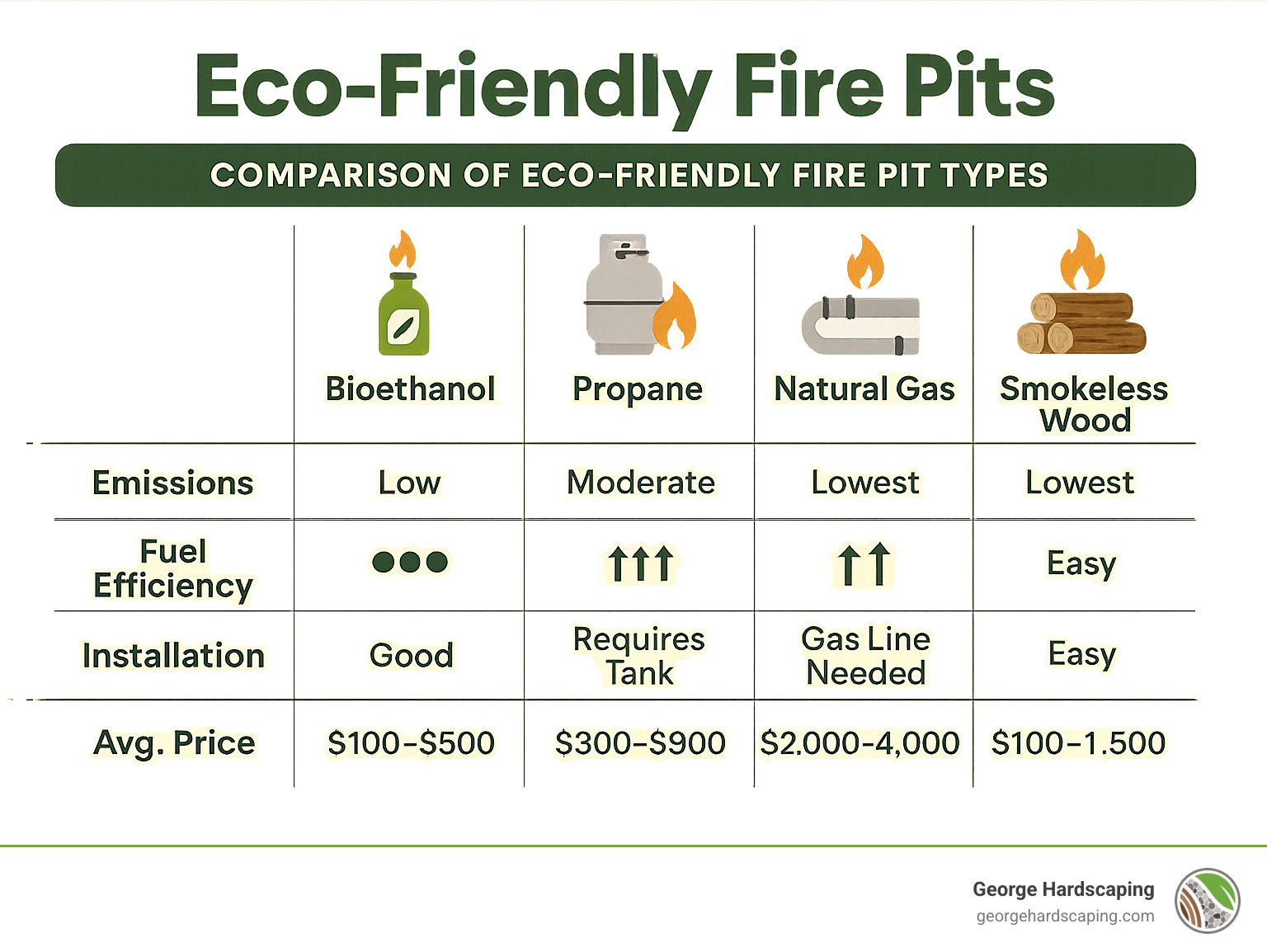
Learn more about Eco-friendly fire pits:
– Backyard fire pit ideas
– Comfortable fire pit seating
– Custom outdoor fire pits
What Makes a Fire Pit Eco-Friendly?
When you’re cozying up to a fire on a cool evening, the last thing you want to think about is harming the environment. That’s where eco-friendly fire pits come in – they’re designed to keep you warm while treading lightly on the planet.
What exactly sets these green options apart? It starts with how they burn. Low-emission combustion systems dramatically cut down on the smoke and pollutants released into the air you breathe. The materials matter too – many eco-conscious manufacturers use sustainable materials like recycled steel or reclaimed wood in their construction.
The best eco-friendly fire pits are champions of fuel efficiency, giving you maximum heat with minimal resources. They often feature clean-burning fuel options that produce fewer greenhouse gases and particulates than traditional wood fires. Perhaps most impressive is the secondary combustion technology that actually reburns smoke particles before they escape, creating a cleaner experience for you and your neighbors.
“The technology behind modern fire pits has come so far,” says one industry expert. “What used to be a smoky, inefficient experience can now be virtually smokeless and much more environmentally responsible.”
Many innovative designs use double-wall construction to create a secondary burn chamber. This clever setup preheats incoming air before it exits through top vents, essentially burning the smoke twice and leaving fewer particles to escape into the atmosphere.
Material innovation plays a big role too. Take EcoSmart Fire’s Fluid Concrete, for example – it’s not only 8 times stronger than traditional Portland concrete but also made from 95% recycled natural materials. That’s sustainability you can literally build on!
When shopping, look for environmental certifications like UL Listed in the USA or EN16647 compliance in Europe. These indicate your fire pit meets strict safety and emissions standards – good for peace of mind and the planet.
Eco-friendly fire pits vs. traditional wood burners
The difference between traditional wood burners and eco-friendly fire pits is like night and day when it comes to environmental impact:
| Feature | Traditional Wood Fire Pit | Eco-Friendly Fire Pit |
|---|---|---|
| Particulate emissions | High (can exceed 20 grams/hour) | Low to none (0-2 grams/hour) |
| Carbon footprint | Variable (depends on wood source) | Lower (especially with renewable fuels) |
| Smoke production | Significant | Minimal to none |
| Fuel efficiency | Low (much heat lost) | High (controlled burn, better heat retention) |
| Maintenance required | High (ash removal, cleaning) | Low to moderate (depends on fuel type) |
| Safety concerns | Higher (sparks, embers) | Lower (controlled flame) |
According to scientific research on carbon from wood stoves, wood actually stores carbon it absorbed during growth. This sounds promising, but the benefit only materializes when the wood comes from sustainable sources and burns efficiently – something traditional fire pits rarely achieve.
Old-school wood burning doesn’t just release CO2. It also produces methane, carbon monoxide, and tiny particulate matter that can irritate lungs and worsen respiratory conditions. Modern eco-friendly fire pits with secondary combustion can slash these particulate emissions by up to 90% – a breath of fresh air, literally!
Your property value benefits too. While any outdoor fire feature adds appeal, eco-friendly fire pits offer distinct advantages: no smoke to annoy neighbors, fewer restrictions in areas with burn bans, and lower maintenance requirements that future buyers will appreciate.
For those chilly New England evenings on the North Shore, an eco-friendly option means you can enjoy the dancing flames without the guilt – or the smoky clothes the next morning!
Eco-Friendly Fire Pit Fuels & Technologies
The fuel you choose for your fire pit significantly impacts its environmental footprint. Here’s a breakdown of the most eco-friendly options available today:
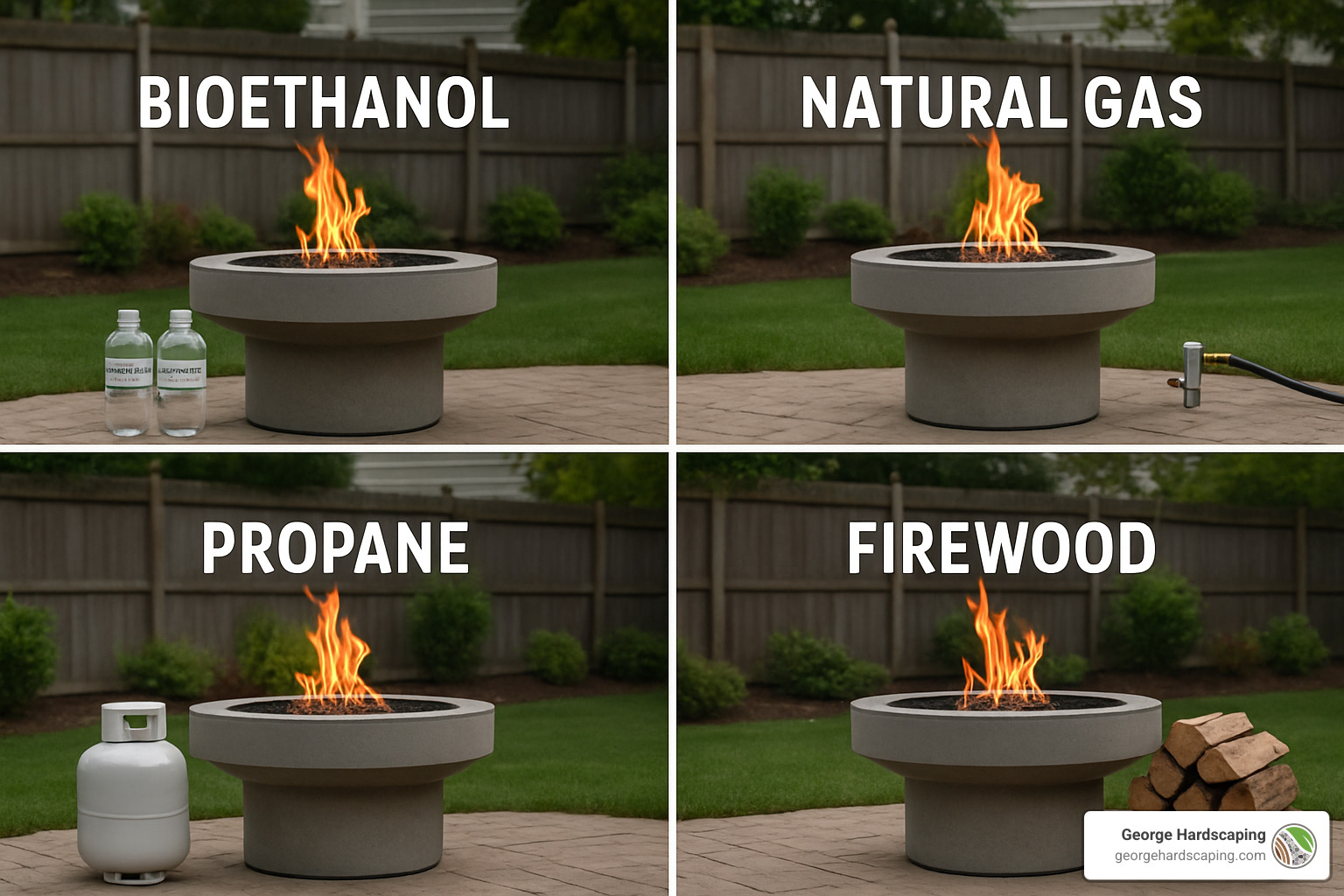
Bioethanol Basics: The Cleanest Flame
When it comes to clean-burning options, bioethanol stands out as the superstar of eco-friendly fire pits. This renewable fuel, made from fermenting plant sugars like corn, sugarcane, or grains, offers remarkable environmental benefits.
You’ll love that bioethanol requires zero-vent installation – no chimney or flue needed! This gives you incredible flexibility in placement. The clean combustion process produces only heat, water vapor, and minimal CO₂, with absolutely no soot, ash, or smoke to dirty your outdoor space or clothes.
“Bioethanol burners open up design freedom limited only by the imagination,” as one manufacturer puts it. I’ve seen stunning minimalist designs that would be impossible with traditional wood-burning structures.
The beauty of bioethanol is its indoor/outdoor versatility. Since it burns so cleanly, many models are safe for both interior and exterior use. Installation is straightforward too – no gas lines or electrical connections required. Simply pour the fuel directly into the burner reservoir and enjoy.
There is a trade-off, though. Bioethanol typically produces less heat than gas or wood options and costs more to operate, with fuel running $20-$40 per gallon. But for clean, flexible burning, it’s tough to beat.
Propane & Natural Gas: Convenient Control
If control and convenience top your priority list, gas-powered eco-friendly fire pits deliver impressive performance with environmental benefits.
The instant on/off operation means no waiting around for flames to catch or die down – perfect for our busy lives. I particularly appreciate the adjustable flame height that lets you dial in just the right amount of heat for the evening. And after the gathering? No messy ash or cleanup required.
Propane systems offer wonderful portability with standard 20lb tanks, making them perfect for patios that might change configuration seasonally. Natural gas installations, while requiring professional installation, provide the luxury of unlimited run time – no more mid-party tank changes!
The environmental impact depends largely on the gas source, but natural gas produces about 50-60% of the carbon emissions of coal for the same energy output, making it significantly cleaner than inefficient wood burning, especially regarding particulate emissions.
Many modern gas fire pits now feature “triple fuel technology,” allowing you to switch between natural gas, propane, and ethanol depending on what’s available or what suits your needs that day.
High-Efficiency Wood & Charcoal Systems
For those who crave the authentic crackling ambiance of real flames, today’s high-efficiency wood systems offer a more eco-conscious alternative to traditional fire pits.
These innovative designs, pioneered by companies like Breeo (who invented the first smokeless fire pit in 2011), use secondary combustion technology that actually reburns smoke particles before they escape. The double-wall construction creates an airflow pattern that dramatically improves combustion efficiency.
The result? Up to 90% less smoke than traditional fire pits and lower wood consumption – you’ll get more heat from less fuel, saving both resources and money.
For truly eco-friendly wood burning, use only dry, seasoned hardwood with moisture content below 20%, avoid treated lumber or painted wood, maintain proper airflow, and choose locally sourced wood to reduce transportation emissions.
These systems combine the primal satisfaction of a wood fire with modern engineering that respects our environment. The X Airflow™ vent feeds oxygen even as ash builds up, maintaining efficient combustion throughout your gathering.
Wax & Briquette Innovation
The newest players in the eco-friendly fire pits game use wax-based fuels and specialized briquettes that offer surprising benefits.
These compact systems, from brands like Eco Fuego and City Bonfires, use specially designed wax candles or soy-based wax with biodegradable briquettes. The extended burn time is impressive – some wax refills provide over 8 hours of flame, equivalent to six bags of kiln-dried logs!
The environmental benefits are substantial: dramatically reduced emissions (up to 90% less CO₂ than wood fires), zero ash production (no cleanup needed), and completely consumable fuel with nothing left to dispose of. Even better, the steel tins are recyclable after use.
I’ve found these portable options perfect for camping, beach trips, or small patios where traditional fire pits aren’t practical. Their clean-burning nature means they’re often allowed during burn bans when wood fires are prohibited – a huge advantage during dry seasons.
For more information on custom fire pit options that can accommodate various fuel types, check out our Custom Fire Rings for Fire Pits.
Product Roundup: Top Eco-Friendly Fire Pits for 2025
I’ve spent countless hours researching and comparing the latest options, and I’m excited to share the cream of the crop when it comes to eco-friendly fire pits. These selections balance environmental impact with stunning design and practical features that will transform your outdoor space.
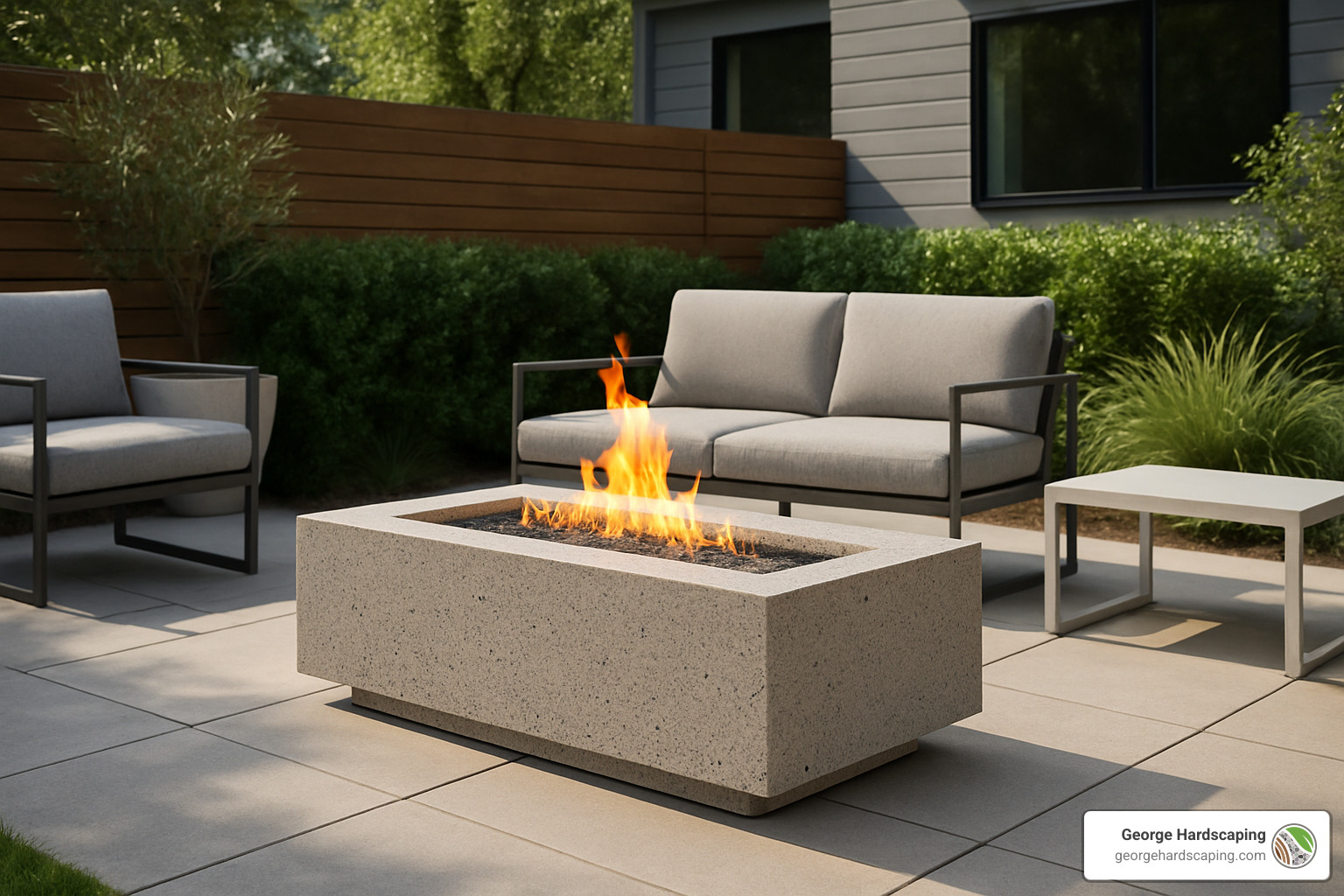
Best Overall Eco-friendly Fire Pits
The EcoSmart Fire Wharf 65 Fire Table stands out as a true masterpiece of sustainable design. Running on clean-burning bioethanol and crafted from their innovative Fluid Concrete (made from 95% recycled materials), it’s a statement piece that leaves virtually no environmental footprint. Priced between $3,000-$9,000, it’s an investment in both style and sustainability that can be used indoors or out.
For those who crave the authentic crackle of wood, the Solo Stove Yukon 2.0 delivers that traditional experience with a modern eco-twist. Its clever 304 stainless steel construction creates a nearly smokeless burn that reduces harmful emissions by up to 90%. At $450-$1,350, it’s the perfect middle ground for purists looking to minimize their environmental impact.
The Kante 25-inch Propane Fire Table combines the convenience of gas with eco-conscious materials. Its fiber-reinforced concrete construction offers durability while its 50,000 BTU output ensures ample warmth. With electronic ignition and adjustable flame control, it’s a versatile addition to any outdoor space in the $500-$1,500 range.
Best Portable Eco-Friendly Fire Pits
Nothing says freedom like a fire pit you can take anywhere! The BioLite FirePit+ revolutionizes portable fire with its tech-forward approach. The integrated battery powers 51 air jets that create hyper-efficient combustion, dramatically reducing smoke while extending battery life up to 30 hours. Its X-ray mesh body lets you enjoy the full view of flames whether you’re using wood or charcoal. At $250-$750, it’s perfect for the eco-conscious tripr.
For ultimate simplicity, the City Bonfires Mini Fire Pit is a game-changer. This tiny but mighty fire source uses soy wax and biodegradable briquettes in a recyclable steel tin to create flames up to 18 inches high for 3-5 hours. At just $20-$60, it’s the definition of affordable sustainability.
The Eco Fuego Portable Fire Pit takes efficiency to new heights with its wax-based fuel system. One refill provides over 8 hours of virtually smokeless flames – equivalent to six bags of kiln-dried logs! Its sleek steel design has earned it the SOLEX award, and at $150-$450, it’s a worthy investment for frequent outdoor entertainers.
Best Smokeless & Low-Emission Models
The Breeo X Series 24 holds the distinction of being the original smokeless fire pit. Made in the USA from either Corten or stainless steel, its patented X Airflow technology creates a remarkably clean burn. With optional cooking accessories, it transforms from fire pit to outdoor kitchen in seconds. Priced between $600-$1,800, it’s built to last generations.
Not all eco-friendly options come with premium price tags. The Black + Decker 15-inch Smokeless Wood Burning Steel Fire Pit proves that clean-burning technology can be accessible, with prices ranging from $94-$280. Its double-wall construction creates efficient combustion that minimizes smoke without sacrificing heat output.
For those who trust established brands, the Cuisinart COH-800 Cleanburn delivers reliability along with impressive performance. Its heavy-gauge steel construction houses effective secondary combustion technology, while the thoughtful ash collection system makes cleanup a breeze. Complete with a carrying case for $200-$600, it’s convenience and sustainability rolled into one.
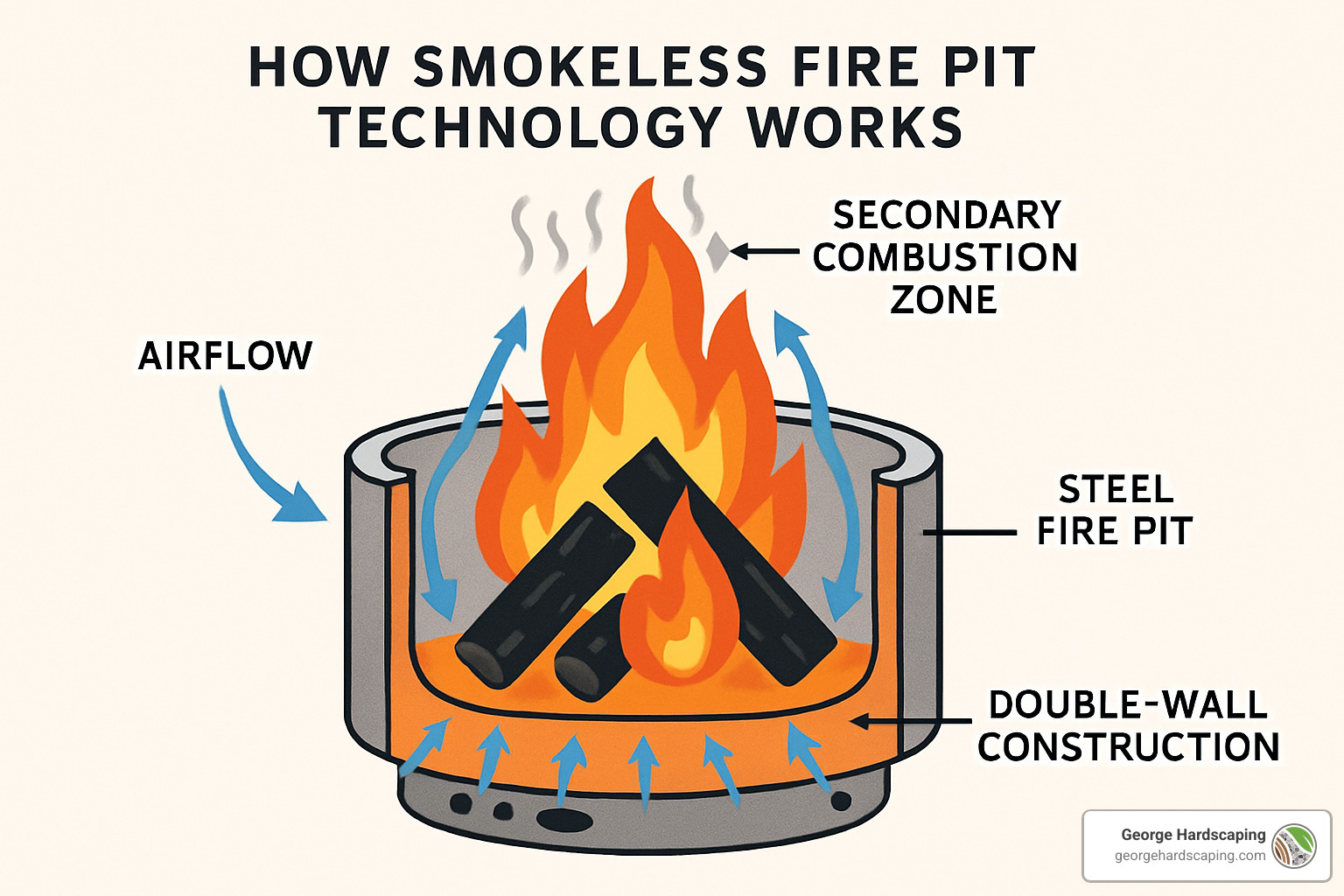
The magic behind smokeless technology isn’t fuel substitution but clever engineering. These fire pits use double-wall construction to create a chamber where air gets preheated before being released through top vents. This superheated oxygen ignites smoke particles in a secondary combustion process – essentially burning the smoke before it can escape. The result? Dramatically reduced emissions and more efficient heat output from the same amount of fuel.
Best Indoor/Outdoor Convertible Options
Why choose between indoor coziness and outdoor enjoyment when you can have both? The EcoSmart Fire Ghost Designer Fireplace is a breathtaking fusion of form and function. Its tempered glass and stainless steel construction creates the illusion of floating flames, while UL Listed certification ensures safety whether it’s in your living room or on your covered patio. This conversation starter ranges from $2,000-$6,000.
The Ark 40 Fire Table combines smart design with versatility. Its cylindrical shape ensures everyone feels included in fireside gatherings, while its weather-resistant Fluid Concrete construction stands up to the elements. Running on clean bioethanol, it transitions effortlessly between indoor and outdoor spaces for $3,395-$10,000.
For a more organic aesthetic, the EcoSmart Fire Mix 600 Bowl offers 360° flame viewing in a weatherproof package that moves easily from patio to living room as seasons change. Its clean lines and minimalist design complement any décor style, making it a versatile choice at $1,500-$4,500.
If you’re looking for something truly unique that reflects your personal style while maintaining eco-friendly principles, consider exploring Custom Fire Pit Table options that can be custom to your specific needs and aesthetic preferences.
Buying, Safety & Maintenance Guide
Bringing an eco-friendly fire pit into your outdoor space is an exciting step toward sustainable living, but there are several practical considerations to keep in mind before making your purchase. Let’s walk through what you need to know to make the best choice for your home and lifestyle.
Budget Considerations
Your budget will naturally influence your options, and eco-friendly fire pits come at various price points to suit different financial plans:
Entry-level portable options typically range from $20-$250, making eco-conscious choices accessible even on modest budgets. Mid-range smokeless wood or propane models generally fall between $300-$1,500, offering a good balance of features and sustainability. If you’re looking for a statement piece, high-end designer bioethanol tables can range from $1,500 to $10,000+, depending on materials and design complexity.
While you might initially spend more than on a traditional fire pit, the long-term value often makes up for it. Many homeowners find they save money over time through reduced fuel consumption and lower maintenance needs. The quality materials used in better eco-friendly fire pits typically extend the product’s lifespan, and many options can actually increase your property value too.
These figures represent average costs based on internet data and not actual costs for George Hardscaping custom installations, which would be determined based on your specific requirements and design preferences.
Local Regulations and Safety
Before getting your heart set on a particular model, take time to research your local rules. Many neighborhoods have specific regulations about outdoor fires that might affect your choice. Some areas restrict wood burning during certain seasons or air quality alerts. You might need permits for permanent installations, especially if they connect to gas lines. If you live in an HOA community, check their rules about size or fuel types before purchasing.
When evaluating safety features, look for spark guards on wood-burning models to prevent flyaway embers, and wind screens for bioethanol options to maintain flame control. Gas systems should include automatic shutoff features for peace of mind. Always ensure your fire pit has a stable base to prevent tipping, and check for UL or CE certification on any electrical components.
The right clearance from structures matters too – most municipalities require fire features to be placed at least 10-25 feet from buildings, fences, and overhanging trees. These requirements aren’t just red tape; they’re designed to keep your family and property safe.
Fuel Storage and Disposal
Each type of eco-friendly fuel requires specific handling to maintain its environmental benefits:
Bioethanol should be stored in original containers in cool, dry places away from heat sources and children. When containers are empty, allow any residual fuel to fully evaporate before recycling the container according to local guidelines.
For propane models, always store tanks upright outdoors, away from direct sunlight and extreme temperatures. When empty, exchange or refill tanks only at authorized locations to ensure proper handling.
If you choose a wood-burning model, ash disposal matters. Small amounts can be composted (wood ash is great for garden soil), but always ensure ashes are completely cool before disposal – this typically means waiting at least 72 hours to guarantee no hot embers remain.
Wax-based fuels should be stored in cool, dry places away from heat sources. Many containers are recyclable after the fuel is fully consumed, making them a truly zero-waste option.
Lifespan Extension
A little regular care goes a long way toward extending your eco-friendly fire pit’s lifespan and maintaining its environmental benefits:
Cover your fire pit when not in use to protect it from rain, snow, and UV damage. This simple step can add years to its life. Clean burners regularly according to the manufacturer’s instructions to maintain optimal performance and efficiency. For metal components, address any rust spots promptly with appropriate treatments to prevent spreading.
If you have a portable unit, store it indoors during off-seasons to protect it from harsh weather. For gas models, inspect connections annually for leaks or wear – this is both a safety and efficiency measure.
For those interested in traditional wood-burning options with eco-friendly improvements, our Wood Burning Fire Pit designs incorporate efficient airflow systems to reduce smoke and emissions while maintaining that authentic campfire experience.
Key Features Checklist
When shopping for an eco-friendly fire pit, certain features deserve special attention:
Look for models with UL Listing or equivalent safety certification to ensure they meet rigorous safety standards. Choose weather-resistant materials appropriate for your climate – what works in Arizona might not hold up in Maine. Adjustable flame control allows for efficient fuel use and comfortable heat levels. A good warranty (at least 1-3 years) indicates manufacturer confidence in their product.
Also consider the availability of replacement parts for long-term use – even the best products eventually need maintenance. Proper ventilation design maximizes efficiency and reduces emissions, while appropriate heat output rating ensures the fire pit is sized correctly for your space. Finally, evaluate the ease of maintenance – complicated cleaning procedures often get neglected over time.
Sustainable Care Routine
Establishing a regular maintenance schedule keeps your eco-friendly fire pit performing at its best:
Weekly, take a few minutes to wipe down visible surfaces and remove any debris from burners or air intakes. This prevents buildup that can affect efficiency. Monthly, perform a deeper clean according to manufacturer instructions and check for any signs of wear or damage. Tighten any loose components to prevent further issues.
Seasonally, conduct a thorough inspection before periods of heavy use, like early summer or fall. When winter approaches in colder climates, clean and store portable units properly. Make sure protective covers are in good condition, replacing them if they’re showing wear.
Once a year, consider having gas models professionally inspected, replace any worn parts, and refinish surfaces as needed to protect the materials. This annual maintenance prevents small issues from becoming costly problems.
A well-maintained eco-friendly fire pit not only looks better but also maintains its efficiency and low-emission operation throughout its lifespan – keeping it truly eco-friendly for years to come.
Frequently Asked Questions About Eco-Friendly Fire Pits
Can eco-friendly fire pits be used indoors and outdoors?
When clients ask me about using eco-friendly fire pits both inside and out, I always explain that it depends entirely on the fuel type.
Bioethanol models are the stars of indoor-outdoor versatility. Because they burn so cleanly—producing no smoke, soot, or ash—many are specifically designed for both environments. Just look for that important UL Listing that confirms indoor safety. I’ve seen these neat units moved from living room to patio as seasons change, offering year-round enjoyment.
Gas-powered options, on the other hand, generally need to stay outdoors where proper ventilation exists. While you might find specialized models for covered patios or indoor-outdoor rooms with excellent airflow, they’re primarily outdoor features for good reason—safety first!
Those beautiful smokeless wood-burning models? Despite their impressive technology, they’re strictly outdoor companions. They may produce significantly less smoke than traditional fire pits, but “less smoke” doesn’t mean “no smoke”—your indoor air quality (and smoke detectors) will thank you for keeping these outside.
For truly worry-free indoor use, electric models offer flame effects without actual combustion, and weatherproof versions can transition to covered outdoor spaces.
The golden rule? Never bring any fire feature indoors unless the manufacturer explicitly states it’s safe for interior use. Your family’s safety depends on proper ventilation for any combustion appliance.
How do smokeless fire pits actually eliminate smoke?
The “smokeless” technology behind modern eco-friendly fire pits is a fascinating bit of engineering that works almost like magic—though it’s really just clever science.
These fire pits don’t completely eliminate smoke (despite the name), but they dramatically reduce it through an ingenious double-wall design. Picture this: cold air enters through holes at the bottom of the fire pit and travels upward through the space between the two walls. As it rises, this air heats up significantly. When it reaches the top, it exits through small vent holes positioned just above the flames.
Here’s where the magic happens: this superheated oxygen mixes with the smoke particles rising from the fire and—poof!—burns them before they can escape as visible smoke. Engineers call this “secondary combustion,” and it can eliminate up to 90% of the smoke you’d see from a traditional fire pit.
This technology creates a beautiful virtuous cycle: less smoke means more complete combustion, which means more heat output and fewer wasted resources. You’ll notice the difference most when using dry, seasoned hardwood and allowing the fire pit walls to fully heat up before expecting maximum smoke reduction.
I’ve watched people’s amazement when they first experience a truly high-quality smokeless fire pit—it’s like all the joy of a campfire with almost none of the eye-watering smoke chase or clothes that smell for days afterward.
What fuel choice offers the lowest carbon footprint?
When it comes to minimizing your carbon footprint with eco-friendly fire pits, the answer isn’t quite as simple as pointing to a single fuel type. Several factors come into play, including the fuel source, how it’s produced, and the efficiency of your particular fire pit.
Bioethanol typically claims the crown for lowest overall carbon impact when it comes from sustainable agricultural sources. There’s a beautiful cycle at work: the plants grown to produce the ethanol actually absorb CO2 during their growth, which helps offset the emissions released during burning. It’s not perfectly carbon-neutral, but it’s close when done right.
For the tech-minded homeowner, electric fire pits powered by renewable electricity (think solar panels on your roof) can be incredibly low-impact. No combustion means no direct emissions, though manufacturing impacts still exist.
Wood burning, surprisingly, can be nearly carbon-neutral in high-efficiency smokeless systems—but only when using sustainably harvested, local wood. New tree growth absorbs the carbon released during burning, creating a balanced cycle over time.
Natural gas produces about half the CO2 of coal for the same heat output, making it cleaner than inefficient wood burning, but it’s still a fossil fuel with extraction impacts. Propane sits slightly higher on the carbon scale than natural gas, but lower than traditional wood burning in poorly designed fire pits.
Beyond fuel choice, the fire pit itself contributes to its environmental footprint. Look for models crafted from recycled materials or sustainable sources to minimize your overall impact from purchase to use.
For the absolute greenest choice? I typically recommend bioethanol from sustainable sources, electric models powered by renewable energy, or high-efficiency wood burners using locally sourced, sustainably harvested wood. Your perfect match depends on your specific priorities and how you’ll use your fire feature.
Learn more about outdoor fire pit options at outdoor fire pits.
Conclusion
Eco-friendly fire pits represent the perfect marriage of environmental consciousness and outdoor enjoyment. Throughout this guide, we’ve explored how today’s sustainable options deliver impressive innovations that reduce emissions and conserve resources while still providing that magical warmth and ambiance we all crave.
The beauty of modern eco-friendly options is that you don’t have to compromise. Whether you’re drawn to the clean-burning simplicity of bioethanol, the convenient control of propane, or the traditional crackling appeal of a high-efficiency wood system, your choice makes a positive environmental impact. Each option offers its own unique benefits while contributing to cleaner air and reduced resource consumption.
Beyond the environmental advantages, investing in an eco-friendly fire pit brings practical benefits to your home and lifestyle. These features become natural gathering spaces that extend your outdoor living season well into cooler months. They create focal points for entertaining and quiet evenings alike, adding both monetary value to your property and immeasurable value to your quality of life.
With proper care and maintenance, today’s quality options aren’t just a seasonal purchase—they’re a long-term investment in sustainable outdoor living. The initial cost is quickly offset by the years of enjoyment and the reduced environmental footprint compared to traditional alternatives.
At George Hardscaping, we understand that beautiful outdoor spaces can and should be environmentally responsible. Our custom fire pit designs thoughtfully incorporate eco-friendly features while seamlessly blending with your existing landscape. We consider sustainability at every step, from material selection to fuel efficiency, ensuring your outdoor fire feature is as kind to the planet as it is welcoming to your guests.
For more information about creating the perfect eco-friendly fire pit for your Essex County home, explore our outdoor fire pits page or reach out for a personalized consultation.
As we look toward the future of outdoor living, one thing is clear—sustainability doesn’t mean sacrifice. Today’s eco-friendly fire pits prove that you can honor environmental responsibility while still enjoying the timeless, primal pleasure of gathering around a warm, inviting flame under the open sky.
