
Outside Fireplace Brick: Best Options 2025
Transform Your Backyard Into a Year-Round Retreat
Outside fireplace brick options offer the perfect blend of timeless beauty and functional warmth. Whether you’re looking to extend your entertaining season or create a stunning focal point, a brick fireplace can transform any patio into a cozy retreat.
An outdoor brick fireplace does more than provide warmth; these installations can increase perceived home value while creating a natural gathering spot that gets used spring through late fall. The beauty of brick lies in its versatility and durability. From classic running bond patterns to modern herringbone designs, brick adapts to any architectural style while withstanding New England’s changing seasons. Unlike metal fire pits that can rust or warp, quality brick construction offers decades of reliable performance with minimal maintenance when designed and built correctly.
For homeowners in Essex County and the North Shore, an outdoor brick fireplace creates a natural windbreak, provides a warm focal point during cool coastal evenings, and offers the perfect excuse to spend more time outdoors with family and friends. It also visually anchors a patio or outdoor room, helping define zones for dining, lounging, and conversation.
Brick remains one of the most resilient and sustainable building materials available. When laid and reinforced properly, brick withstands freeze-thaw cycles, salt air, and coastal winds common to the North Shore. Its thermal mass soaks up heat and releases it slowly, so the area stays comfortable even after the flames die down. Properly detailed brickwork paired with a well-designed chimney improves smoke management and safety, elevating your outdoor experience far beyond a simple portable fire pit. According to the Brick Industry Association, properly constructed brick masonry can last over 100 years with minimal maintenance, making it one of the most durable building materials available.
A thoughtfully planned outside fireplace brick design can also complement upgrades like a new patio, seating walls, and outdoor kitchens. Integrating a fireplace into a broader hardscape plan often results in a more cohesive, functional layout. See how a fireplace can transform a space in our project photos: https://georgehardscaping.com/gallery/
If you want a project that delivers everyday enjoyment and long-term value, a custom brick fireplace is a smart choice. With expert planning, quality masonry, and attention to code and safety, you get a centerpiece that looks original to your property and performs beautifully for generations.
Why a Brick Fireplace is the Ultimate Backyard Upgrade
An outside fireplace brick structure is the ultimate backyard upgrade because it turns “almost perfect” outdoor moments into truly memorable experiences. It solves the problem of a sudden evening chill sending everyone indoors, allowing you to enjoy your patio to the fullest—especially on the North Shore, where sea breezes can cool the air quickly.
The ambiance and atmosphere created by a crackling fire is unparalleled. The warm glow and rustic charm draw people together, fostering relaxation and conversation. Fire becomes the social magnet—guests naturally gather around it, making it a built-in conversation starter and the perfect setting for everything from casual weeknights to milestone celebrations.
A brick fireplace meaningfully extends your outdoor season. In our climate, you can comfortably host from April through November with the right setup. Pair the fireplace with built-in seating and wind-conscious placement and you’ll be surprised how often you opt for the patio rather than the couch inside. The National Association of Home Builders reports that outdoor fireplaces consistently rank among the most desired outdoor living features, with many homeowners citing them as essential for year-round outdoor enjoyment.
A well-designed brick fireplace also creates a striking focal point that gives your outdoor living area purpose and presence. It frames views, defines traffic flow, and anchors furnishings so the whole space feels finished. Brick’s color range and pattern options—traditional red, wire-cut, tumbled, reclaimed, or painted—allow you to dial in the exact character you want, from classic colonial to crisp contemporary.
From a practical standpoint, custom masonry construction outlasts prefabricated units. Reinforced footings, correctly detailed fireboxes, and properly sized flues don’t just look better—they perform better and require less upkeep over time. Explore how professional craftsmanship pays off here: https://georgehardscaping.com/hardscaping-masonry-services/
If you love the outdoors and enjoy hosting, an outdoor fireplace becomes the heart of your backyard. It’s the place for marshmallows with kids, pizza nights with neighbors, or a quiet glass of wine after work. It’s also a signal to future buyers that your home offers a turnkey outdoor living experience—an increasingly sought-after feature on the North Shore.
Ready to turn your backyard into a four-season hangout? See ideas in our gallery and imagine what’s possible: https://georgehardscaping.com/gallery/
Types of Outdoor Brick Fireplaces: Finding Your Perfect Match
Choosing the right outside fireplace brick structure comes down to two main decisions: fuel source and construction approach. George Hardscaping specializes in custom masonry fireplaces tailored to your home’s architecture and your lifestyle.
Fuel Sources: Wood vs. Gas
-
Wood-Burning Fireplaces: The original, authentic experience—crackling logs, gentle smoke aroma, and radiant heat that warms people and masonry alike. Wood fires generate intense heat suitable for larger groups, and they create that unmistakable “campfire” atmosphere. They also require a bit more work: sourcing and storing seasoned wood, building and tending fires, removing ash, and scheduling annual chimney maintenance. For best practices on efficient, cleaner wood burning, see the EPA’s Burn Wise resources: https://www.epa.gov/burnwise
-
Gas Fireplaces (Natural Gas or Propane): Gas offers convenience with instant ignition, consistent flames, and minimal cleanup. Modern gas log sets look impressively realistic, and many systems include variable flame heights or remote controls. Gas is ideal if you want reliable ambiance and warmth without the maintenance of wood. Gas lines and connections must be installed and inspected by licensed professionals. Learn about general code considerations from the International Code Council: https://www.iccsafe.org/
Both options benefit from a correctly sized firebox, smoke chamber, and chimney system. Proper proportions improve draft, reduce smoke spillage, and increase comfort. For fundamentals on chimney and fireplace design best practices, consult NFPA resources and standards: https://www.nfpa.org/
Firebox and Chimney Essentials
A high-performing fireplace is as much engineering as it is art. The firebox shape, throat geometry, smoke shelf, damper size, and flue dimensions all influence draft. Masonry details—such as refractory firebrick, high-temperature mortar, and proper lintels—ensure long-term durability. A quality chimney cap with a spark arrestor reduces moisture entry, discourages wildlife, and helps prevent stray embers. For deeper technical guidance on masonry fireplaces, the Brick Industry Association offers excellent technical notes: https://www.gobrick.com/Technical-Notes
Custom Masonry vs. Kits
Prefabricated kits exist, but we focus on custom masonry for a reason: fit, longevity, and tailored aesthetics. Custom builds allow you to match brick color, size, and mortar joint style to your home; scale the fireplace correctly for your patio; and integrate features like wood storage cubbies, extended hearths, seating walls, or an outdoor kitchen. Explore our masonry capabilities: https://georgehardscaping.com/hardscaping-masonry-services/
Integrations and Add-Ons
- Outdoor Cooking: With a wood-burning unit, we can integrate a removable grill grate or a separate masonry feature like a pizza oven to bring wood-fired flavor to your yard.
- Built-In Seating and Walls: Low seat walls angled around the fire create cozy “rooms” and keep furniture layouts simple. For a cohesive plan, consider pairing the fireplace with a new patio: https://georgehardscaping.com/patio-design-installation/
- Media and Mantels: Oversized mantels provide display space; if you want an outdoor TV, we can design heat deflectors and proper clearances to protect electronics.
Whatever you choose, a custom outside fireplace brick design from George Hardscaping blends performance, safety, and style to create a centerpiece that’s uniquely yours.
Bold, direct CTA: Want expert guidance on fuel choices, sizing, and code compliance? Get a professional, itemized estimate and design consult: https://georgehardscaping.com/request-estimate/
Designing Your Ideal Outside Fireplace Brick Structure
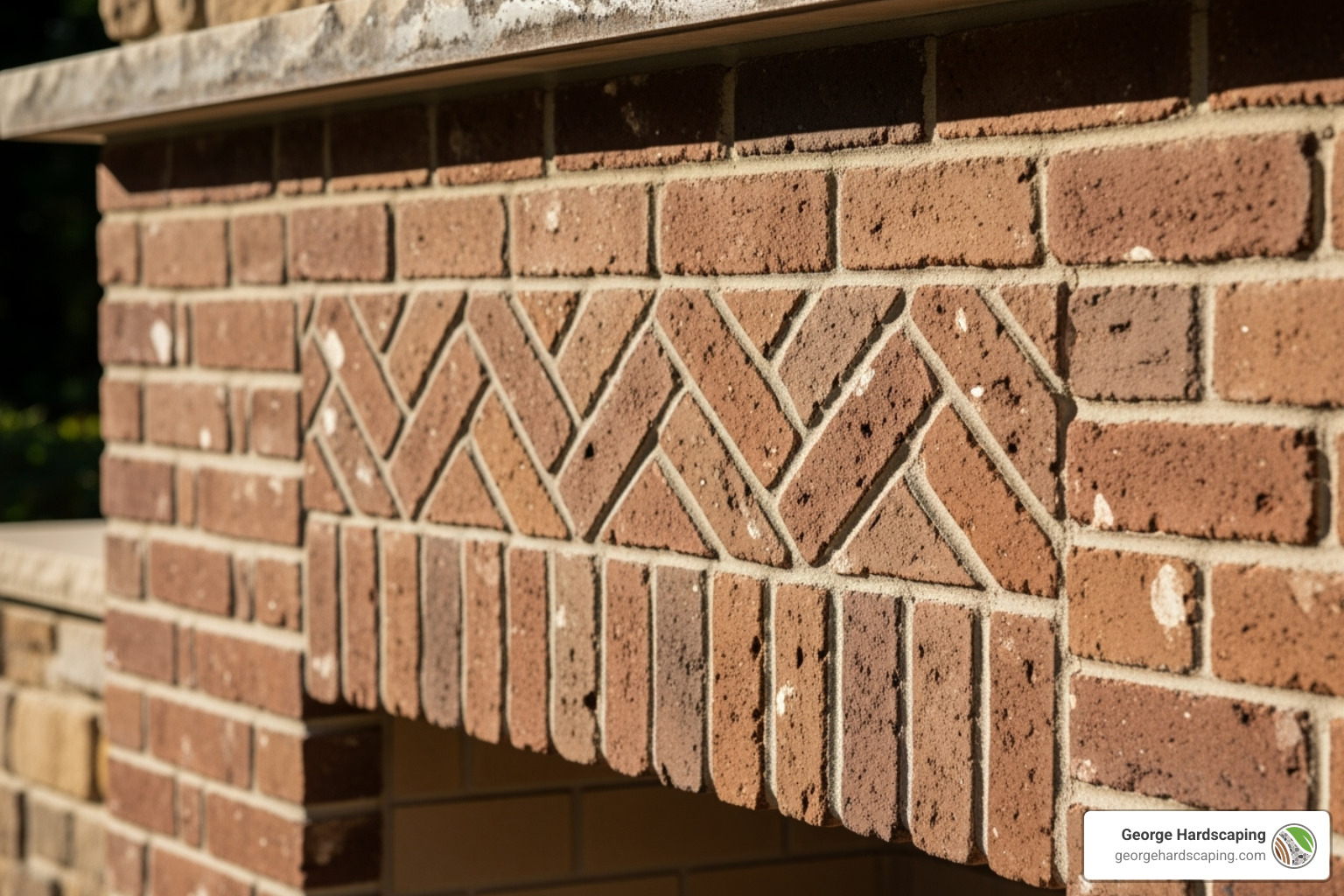
The design phase is where your outside fireplace brick vision becomes a detailed plan. Our goal is to make the finished fireplace look as if it was always meant to be part of your home—proportioned correctly, meticulously detailed, and seamlessly integrated with your patio and landscape.
Style and Material Choices
- Brick Color and Texture: Traditional reds, buff and brown earth tones, or coastal-friendly whites and grays—each creates a distinct mood. Wire-cut and molded bricks offer cleaner, more uniform lines; tumbled or reclaimed bricks bring patina and character.
- Mortar and Joints: Mortar color and joint finish (concave, raked, struck, flush) subtly transform a facade. Darker mortar can sharpen lines in contemporary designs; lighter mortar softens the look for a classic feel.
- Bond Patterns: Running bond provides clean horizontals; herringbone adds movement and texture (great for firebox backs or accent panels); stacked bond emphasizes modern geometry.
Scale, Proportions, and Seating Layout
A great design starts with human scale. Typical hearth seating height ranges from 16 to 18 inches, which also determines the perceived “grounded” feel of the structure. Fireplace openings are commonly 30 to 48 inches wide depending on site scale. For gatherings, most seating feels comfortable 6 to 10 feet from the fire—close enough for warmth, far enough for conversation and circulation. Low seat walls can arc around the fireplace to frame an outdoor room and simplify furniture placement.
If you’re planning a new patio or expanding an existing one, it’s best to design the fireplace and patio together so drainage, lighting, and traffic flow are dialed in from day one: https://georgehardscaping.com/patio-design-installation/
Functional Features to Consider
- Integrated Wood Storage: Keep seasoned logs dry and handy with matching brick cubbies that add symmetry and convenience.
- Mantels and Shelving: Oversized mantels offer space for planters, lanterns, and seasonal decor. Stone or dense hardwood slabs provide striking contrast with brick.
- Double-Sided Designs: A two-sided fireplace can serve both a lounge and dining area, or a pool deck and lawn terrace.
- Media Integration: If adding a television, we account for heat with baffles, noncombustible facings, and the right clearances.
- Lighting: Uplights at pilasters, downlights under mantels, and path lighting on seat wall caps all enhance safety and extend usability after dark.
Cohesion With Your Property
We source brick that complements your home’s exterior masonry or siding. We can echo architectural details from your house—arches, lintels, keystones—so the fireplace reads like a natural extension of your architecture. For inspiration across a range of styles and scales, browse our project gallery: https://georgehardscaping.com/gallery/
Our custom approach ensures your outside fireplace brick structure is beautiful, functional, and uniquely yours. When everything from bond pattern to bench height is considered, the result is a space that you’ll use constantly.
Planning and Installation: From Concept to Cozy Nights
Proper planning is the most critical phase of building an outside fireplace brick structure. It ensures safety, longevity, and compliance with local regulations in Essex County, Massachusetts. Getting these details right from the start is what separates a joyful investment from a costly mistake.
Location, Safety, and Code Considerations
- Setbacks and Clearances: Maintain safe distances from homes, sheds, fences, and plantings. Many municipalities require 10 to 20 feet of clearance from combustible structures. Always confirm local rules and HOA guidelines.
- Prevailing Winds: Orient the fireplace so smoke moves away from seating and entries. Being thoughtful about wind patterns drastically improves comfort.
- Overhead Hazards: Keep the area clear of overhanging branches, pergola rafters, or low utility lines.
- Chimney Height and Draft: Proper termination height, a well-proportioned throat, and an adequately sized flue help smoke rise and disperse effectively. For general code resources, consult the International Code Council: https://www.iccsafe.org/ and NFPA standards: https://www.nfpa.org/
- Massachusetts Fire Code: Outdoor fire features often fall under the Massachusetts Comprehensive Fire Safety Code (527 CMR 1.00). Review state guidance and coordinate permits with your town: https://www.mass.gov/lists/massachusetts-comprehensive-fire-safety-code-527-cmr-100
We manage permitting and coordinate with inspectors to keep your project compliant and on schedule.
Foundations, Footings, and Drainage
A brick fireplace is heavy; it needs proper support. We design footings to reach below local frost depth and reinforce them for long-term stability. The hearth and structure typically sit on a reinforced concrete footing with provisions for drainage—especially important on the North Shore where freeze–thaw cycles are common. Strategic weeps, cap details, and flashing reduce water intrusion and extend the life of your masonry.
Masonry Materials and Construction Details
- Firebox and Refractory: Fireboxes are lined with refractory firebrick laid with high-temperature mortar. The smoke chamber transitions smoothly from the firebox to the flue for efficient draft.
- Chimney and Cap: A robust flue liner, properly sized to the firebox, is essential. We finish with a durable cap and spark arrestor to keep out rain, critters, and embers.
- Brick Selection: We match or complement your home’s brick and mortar profile. Brick quality and joint tooling affect not just aesthetics but weather performance.
- Technical Guidance: For masonry best practices, see Brick Industry Association technical notes: https://www.gobrick.com/Technical-Notes
Utilities and Licensed Trades
Gas Fireplaces: Gas lines and connections must be installed by licensed professionals and inspected. We coordinate trenching routes, shutoff locations, and appliance specifications with the appropriate trades.
Electrical: Some gas units or accessories (ignition systems, lighting, or TVs) require electrical service. We plan conduit runs and weather-rated boxes to keep everything clean and code-compliant.
Integrating With Your Hardscape Plan
A fireplace is often the anchor for a larger outdoor living upgrade. Consider new pavers, natural stone, or brick patios; seat walls; and steps that mirror your fireplace materials. This holistic approach yields a more coherent, inviting space: https://georgehardscaping.com/patio-design-installation/
Timeline and Process
- Design and Scope: We collaborate on the look, size, and features, then finalize a detailed plan and schedule.
- Permits and Layout: We handle permits and site layout, including setbacks and utility markings.
- Foundations and Masonry: Footings, structural work, firebox and flue, then facade brickwork and finishing details.
- Final Inspection and Orientation: We walk you through operation, maintenance, and seasonal care.
Strong CTA: Ready to start with a code-compliant design and clear budget? Request your custom on-site consultation and estimate: https://georgehardscaping.com/request-estimate/
We bring craftsmanship, planning, and permitting together so your outside fireplace brick project is safe, beautiful, and built to last.
Maintaining Your Outdoor Brick Fireplace for Lasting Beauty
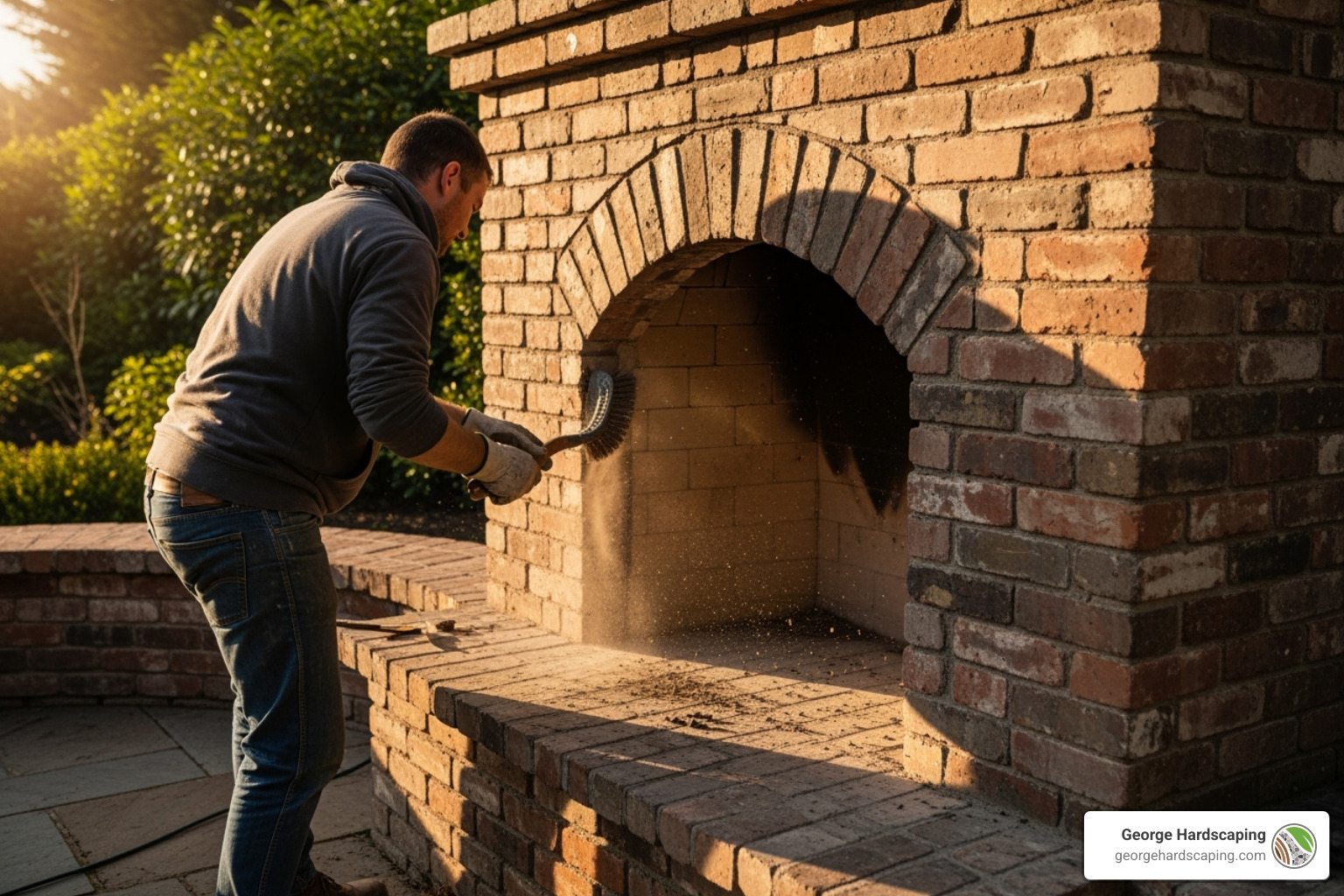
Your outside fireplace brick structure is built to withstand New England’s seasons, but a little maintenance will protect your investment and keep it looking its best for years. The good news: masonry fireplaces are fundamentally low-maintenance when they’re constructed correctly.
Core Maintenance Tasks
- Annual Chimney Service: Wood-burning units should be inspected and cleaned by a qualified professional annually to remove creosote and confirm draft performance. Gas units benefit from an annual inspection as well to verify burners, valves, and venting are functioning properly. To locate trained chimney professionals and learn best practices, visit the Chimney Safety Institute of America: https://www.csia.org/
- Ash and Soot Management: After ashes cool completely (24–48 hours), scoop into a metal container with a tight-fitting lid. Never use plastic or paper bags; embers can stay hot longer than you think. Clean soot stains on exterior brick with a stiff brush and mild soapy water. Avoid high-pressure washing, which can damage mortar.
- Mortar and Brick Checks: Inspect mortar joints a couple of times per year for hairline cracks or spalls from freeze–thaw cycles. Early tuckpointing prevents small issues from becoming structural problems. Need help? Our masonry team handles repairs large and small: https://georgehardscaping.com/hardscaping-masonry-services/
- Water Management: Keep caps, crowns, and flashings in good condition. Consider breathable, professional-grade water repellents (silane/siloxane) on exterior brickwork to reduce moisture absorption while allowing vapor to escape. Avoid non-breathable sealers that can trap moisture.
- Off-Season Protection: A fitted, waterproof cover can keep leaves, snow, and debris out when you’re not using the fireplace. Remove the cover during use and ensure adequate airflow to prevent condensation.
A well-maintained brick fireplace will actually gain character over time. By following a simple seasonal checklist and scheduling annual professional inspections, you’ll preserve performance, safety, and curb appeal for decades. For safer, cleaner wood-burning practices, the EPA’s Burn Wise program offers practical tips: https://www.epa.gov/burnwise
Frequently Asked Questions about Outdoor Brick Fireplaces
When planning an outside fireplace brick structure, homeowners often ask similar questions. Here are answers to the most common inquiries we receive in Essex County.
What’s the difference between an outdoor fireplace and a fire pit?
A fireplace is an enclosed structure with a chimney that directs smoke up and away, creating forward-radiating heat and a natural focal point. A fire pit is open, with 360-degree access for a casual, campfire feel. Both are great—your choice depends on your desired aesthetic and how you like to gather. If you’re leaning toward a pit, we also design custom versions: https://georgehardscaping.com/custom-outdoor-firepits/
Do outdoor wood-burning fireplaces need a chimney?
Yes. A properly designed chimney is essential for safe operation and effective draft. The chimney pulls smoke and combustion gases away from the firebox and your seating area. Chimneys and termination heights are also governed by codes. Explore general code resources at the ICC: https://www.iccsafe.org/ and NFPA: https://www.nfpa.org/
How far should an outdoor fireplace be from the house?
Local codes vary, but a common rule of thumb is 10 to 20 feet from the home and other combustible structures like fences and sheds. We verify local requirements and handle permitting to ensure compliance.
Do I need a permit for an outdoor fireplace in Massachusetts?
Most towns require permits for permanent masonry fireplaces—especially those with gas lines. We manage the process and coordinate inspections. For state-level guidance, see the Massachusetts Comprehensive Fire Safety Code (527 CMR 1.00): https://www.mass.gov/lists/massachusetts-comprehensive-fire-safety-code-527-cmr-100
Which is better: wood or gas?
It depends on your lifestyle. Wood offers unmatched ambiance and higher peak heat, but it requires tending and annual chimney cleaning. Gas delivers instant convenience, steady flames, and minimal cleanup, but needs licensed installation and inspection. We’ll help you weigh the tradeoffs and design the right system for your space.
Can I cook in an outdoor brick fireplace?
Yes—particularly with wood-burning designs. We can incorporate removable grill grates or plan a dedicated cooking feature like a pizza oven nearby. If culinary use is a priority, mention it early so we can size the firebox accordingly and detail durable hearth surfaces.
How do you prevent smoke from blowing into the seating area?
We orient the fireplace to the prevailing winds, size the firebox and flue correctly, and design a smoke chamber that promotes strong draft. A well-proportioned chimney cap and spark arrestor also help. Good design largely eliminates smoke nuisance.
What kind of maintenance should I expect?
For wood-burning units: annual chimney sweeping, periodic ash removal, and visual checks of mortar joints. Gas units: annual inspection of burners, valves, and venting. Keep the cap and crown in good condition, and consider breathable water repellent for exterior brick. For general maintenance tips, the Chimney Safety Institute of America offers useful guidance: https://www.csia.org/
Will a brick fireplace crack in winter?
Quality construction with proper footings, drainage, and materials minimizes cracking. Hairline mortar checks can happen in harsh freeze–thaw climates; timely tuckpointing addresses them before they spread. We design for New England conditions to maximize durability.
Can you match the brick to my home?
Yes. We source brick and mortar colors to harmonize with your home’s facade and existing masonry. Pattern, joint profile, and detailing are all chosen to complement your architecture. See examples of matched and blended masonry in our gallery: https://georgehardscaping.com/gallery/
How long does installation take?
Timelines vary by design complexity, permitting, and site conditions. A typical custom masonry fireplace might take several weeks from excavation and footings to final brickwork and inspection. We’ll provide a clear schedule during the estimate phase.
What’s the best way to plan the surrounding patio and seating?
Design the fireplace and patio together so circulation, drainage, and furniture layouts work as a system. We can integrate seat walls, steps, and lighting to create an outdoor room that feels complete. Learn more about cohesive patio and hardscape design: https://georgehardscaping.com/patio-design-installation/
Are portable fire features a good alternative?
Portable units can be a budget-friendly starting point, but they can rust, move around, and typically don’t block wind or control smoke as effectively. A permanent brick fireplace is a long-term investment in comfort, design, and property value.
If you still have questions, our team is happy to discuss options and site specifics. Request a design consultation and estimate: https://georgehardscaping.com/request-estimate/
Conclusion: A Timeless Investment for Your Home
Investing in an outside fireplace brick structure is more than a backyard improvement; it’s a legacy feature that elevates your lifestyle and enhances curb appeal. The permanence and timeless appeal of quality brick masonry ensure your fireplace will remain a beautiful and relevant feature for decades, gaining character with age.
From crisp spring evenings to chilly fall nights along the North Shore, a custom brick fireplace turns your patio into a true outdoor living room. It anchors gatherings, manages wind, extends your season, and ties together the architectural story of your property.
We combine design expertise, code knowledge, and meticulous masonry so your fireplace is safe, durable, and perfectly scaled to your home. Explore our capabilities and see the craftsmanship that goes into every project: https://georgehardscaping.com/hardscaping-masonry-services/
Strong CTA: Ready to bring warmth and architectural character to your backyard? Contact George Hardscaping to start designing your custom outdoor brick fireplace today: https://georgehardscaping.com/request-estimate/
Prefer to explore design ideas first? Browse our gallery and envision what’s possible for your space: https://georgehardscaping.com/gallery/
Bold CTA: Don’t wait for next season—schedule your on-site consultation and get a detailed, code-compliant plan and estimate now: https://georgehardscaping.com/request-estimate/
When you’re ready, we’re here with a clear process, expert craftsmanship, and a singular focus: creating an outside fireplace brick centerpiece that becomes the heart of your home.
