
What Does It Really Cost to Build an Outdoor Fireplace?
How much does it cost to build an outdoor fireplace is one of the most common questions homeowners ask before starting a backyard project — and the honest answer is: it depends a lot on what you want. Whether you are looking for a simple focal point for roasting marshmallows or a grand architectural statement that anchors your entire landscape, the price tag will reflect the complexity, materials, and labor involved. In the modern real estate market, the backyard has evolved from a simple patch of grass into a sophisticated extension of the home’s interior. This shift toward “outdoor living” has made fire features a central component of high-end landscape design.
Here’s a quick snapshot to answer that right away:
| Fireplace Type | Typical Cost Range |
|---|---|
| Prefab / Kit | $1,200 – $9,000 |
| Unfinished Contractor Kit | $1,250 – $3,750 |
| Custom-Built Masonry | $6,000 – $21,000+ |
| Luxury / High-End Custom | $25,000 – $50,000+ |
| Average (most homeowners) | ~$3,000 – $8,000 |
These are average costs based on internet data and do not represent actual pricing from George Hardscaping. Your project cost will vary based on materials, location, size, and site conditions.
Today’s backyards are about more than just lawn space. Patios, outdoor kitchens, and fire features have become some of the most popular home investments — and an outdoor fireplace sits at the top of that list. Whether you picture a quiet evening reading by the fire with your dog at your feet, or a lively gathering spot for friends and family, a fireplace transforms your outdoor space into a true extension of your home. In the Northeast, where the seasons change rapidly, a fireplace provides the literal and metaphorical warmth needed to enjoy your patio well into the autumn and early winter months. The psychological benefits of a crackling fire are well-documented, offering a sense of tranquility and a natural gathering point that screens and technology simply cannot replicate.
For homeowners in Essex County and the North Shore of Massachusetts, the investment can run a bit higher than national averages. Local labor rates, freeze-thaw foundation requirements, and material delivery costs all push numbers up. But the payoff — both in lifestyle and property value — makes it a project worth planning carefully. Understanding the nuances of local building codes and the physical demands of our climate is essential for any homeowner looking to make a lasting addition to their property. When you consider the cost, you must also consider the longevity; a well-built masonry structure in New England is an heirloom-quality addition that will serve your family for generations.
Basic how much does it cost to build an outdoor fireplace vocab:
- Outdoor Fireplace Kit
- How to Build an Outdoor Brick Fireplace
- Building an Outdoor Fireplace with Cinder Block
How Much Does It Cost to Build an Outdoor Fireplace?
When you begin researching how much does it cost to build an outdoor fireplace, you will find that the national average sits around $3,000, but that number is a bit like saying the average cost of a car is $30,000. It doesn’t tell the whole story. Depending on whether you choose a simple kit or a sprawling masonry masterpiece, your investment could range anywhere from $1,200 to over $21,000. In high-cost areas like the North Shore, premium custom builds often reach the $35,000 to $50,000 range when integrated into a larger outdoor living room. According to HomeAdvisor’s national cost database, the complexity of the chimney and the choice of fuel source are the two most significant factors that can cause these prices to fluctuate wildly. Furthermore, the U.S. Census Bureau notes that outdoor amenities continue to be a top priority for new construction and major renovations, signaling that these features are no longer considered “extras” but essential components of a modern home.
The wide variance in pricing is primarily driven by the “bones” of the fireplace. A prefabricated unit made of lightweight materials is significantly cheaper than a custom-built structure made from scratch using concrete blocks and natural stone veneer. According to the 2023 Remodeling Impact Report by the National Association of Realtors, an outdoor fire feature provides a 56% return on investment (ROI) when selling a home. Beyond the financial return, 78% of homeowners report a greater desire to be at home after completing such a project. This “joy score” is often what drives the decision more than the potential resale value. When you invest in a fireplace, you are essentially buying more time in your backyard, effectively increasing the usable square footage of your property for several months of the year.
Typical Price Ranges for how much does it cost to build an outdoor fireplace
To better understand your budget, it helps to break these projects down into three main categories:
- Low-End to Mid-Range ($1,200 – $9,000): This tier typically includes prefabricated kits or “unfinished” contractor kits. These units come with the internal firebox and chimney structure ready to go. You (or a pro) simply assemble the pieces and apply a finish like stucco or thin stone veneer. For instance, Romanstone kits like the Fremont or Rockwell models often range from $3,800 to $5,400 for the kit alone, not including the foundation or labor. These are excellent for homeowners who want a predictable look and a faster installation timeline. However, keep in mind that even a “kit” requires a proper concrete pad, which can add several hundred dollars to the total.
- High-End Custom Masonry ($10,000 – $25,000): This is where most homeowners in our area find their “sweet spot.” These are custom-designed structures built on-site. They require a deep, reinforced concrete foundation and professional masonry skills. You can find more details in our outdoor fireplace kit ultimate guide to see how these compare to pre-made options. These builds allow for complete creative freedom, from the shape of the hearth to the specific blend of stones used in the veneer. A custom build also allows for better integration with existing landscape features, such as retaining walls or specific patio patterns.
- Luxury Custom Builds ($25,000 – $50,000+): These are architectural statements. They often include extended chimney heights (15+ feet), integrated wood boxes, built-in seating walls, and premium natural stone. These projects almost always require professional fireplace installation to ensure the structure is safe and built to last for decades. At this level, the fireplace is often part of a larger master plan that includes lighting, sound systems, and high-end patio materials. You might also see features like double-sided fireboxes that serve both a dining area and a lounge area simultaneously.
Regional Cost Variations and how much does it cost to build an outdoor fireplace in Massachusetts
In Essex County, we face unique challenges that influence the bottom line. Unlike warmer climates where a fireplace can sit on a simple 4-inch slab, Massachusetts building codes often require foundations to extend 12 inches or more below the frost line to prevent shifting during our brutal winters. In some municipalities, this depth can even reach 48 inches depending on the weight of the structure. This additional excavation and concrete work can add $1,500 to $3,000 to a project before the first brick is even laid. Furthermore, the National Fire Protection Association (NFPA) standards dictate specific clearances from combustible structures, which can limit placement and increase the need for specialized heat shielding.
Labor rates in towns like Marblehead, Manchester-by-the-Sea, and Newburyport are also higher than the national average. You can expect to pay a skilled mason between $70 and $150 per hour. Furthermore, the cost of transporting heavy stone or brick to coastal or historic areas can add a premium to material costs. If you are looking for custom fireplace installation in the North Shore, it is vital to work with a team that understands these local environmental demands and the specific permitting requirements of each municipality. A local expert will know exactly how to navigate the Conservation Commission requirements that often apply to coastal properties in our region.
Key Factors Influencing Your Total Investment
When we sit down with homeowners in Beverly or Danvers to discuss how much does it cost to build an outdoor fireplace, we look at several “cost levers” that can move the price up or down. It is rarely just about the stone; it is about the logistics of the entire site. For example, a yard with a significant slope will require more extensive grading and potentially a retaining wall to create a level area for the fireplace, which can significantly impact the initial budget.
- Size and Scale: A standard fireplace might be 4 feet wide and 8 feet tall. If you want a 6-foot wide hearth with a 15-foot chimney to clear a patio roof, the material and labor costs will scale exponentially. Larger structures also require more significant structural engineering to handle wind loads and weight distribution. The volume of concrete needed for the footing also increases with the height and weight of the chimney.
- Accessibility: Can we get a bobcat and pallets of stone directly to the backyard? If we have to move materials by hand through a narrow gate in Salem or Rockport, labor costs will rise due to the extra time required. Site accessibility is one of the most overlooked factors in initial budgeting. In some historic North Shore neighborhoods, we may even need to use specialized small-footprint equipment to avoid damaging existing landscapes.
- Utilities: A wood-burning fireplace is self-contained, but a gas fireplace requires a licensed plumber to run lines. If your gas meter is on the opposite side of the house from the patio, that trenching can add $1,000 to $3,000. Additionally, if you want integrated lighting or an ignition system, electrical work will be required. According to the U.S. Department of Energy, choosing energy-efficient ignition systems can save on long-term operating costs, though they may have a higher upfront price.
Expert insights from Stone Age Manufacturing highlight that material choice is the biggest variable. Stucco is generally the most affordable finish, while natural stone requires the highest level of skill and time from a professional mason. If you are considering a more budget-friendly structural approach, building an outdoor fireplace with cinder blocks is a common method that provides a sturdy core for any finish you choose. This method allows for a high-end look without the high-end price tag of solid stone construction. It also provides a very stable substrate for stone veneer, which is less likely to crack than solid masonry in fluctuating temperatures.
Material Costs: Stone, Brick, and Stucco
The “skin” of your fireplace is what everyone sees, and it’s a major part of the budget. Here is a breakdown of what you might expect to pay for materials per square foot, including the necessary mortars and sealants:
- Stucco ($15 – $25/sq. ft.): The most economical choice. It provides a clean, modern look and can be tinted to match your home’s exterior. However, in the Northeast, it can be prone to cracking if the foundation shifts slightly due to frost. Regular maintenance is required to keep it looking fresh, and it may require a specialized mesh backing to ensure longevity in our climate.
- Brick ($20 – $35/sq. ft.): A classic New England choice. Brick is incredibly durable and fire-resistant. It offers a timeless aesthetic that complements many historic homes in our area. If you want to learn more about the specifics, check out our guide on how to build an outdoor brick fireplace. Reclaimed brick can offer even more character but often comes at a higher price point due to the cleaning and sorting labor involved.
- Stone Veneer ($25 – $50/sq. ft.): This gives you the look of a solid stone structure without the massive weight. It’s a popular choice for stone veneer fireplace installation because it allows for intricate patterns and a high-end finish. Veneers can be made of natural stone or high-quality manufactured materials. Modern manufacturing has made thin-cut natural stone veneer almost indistinguishable from full-bed stone.
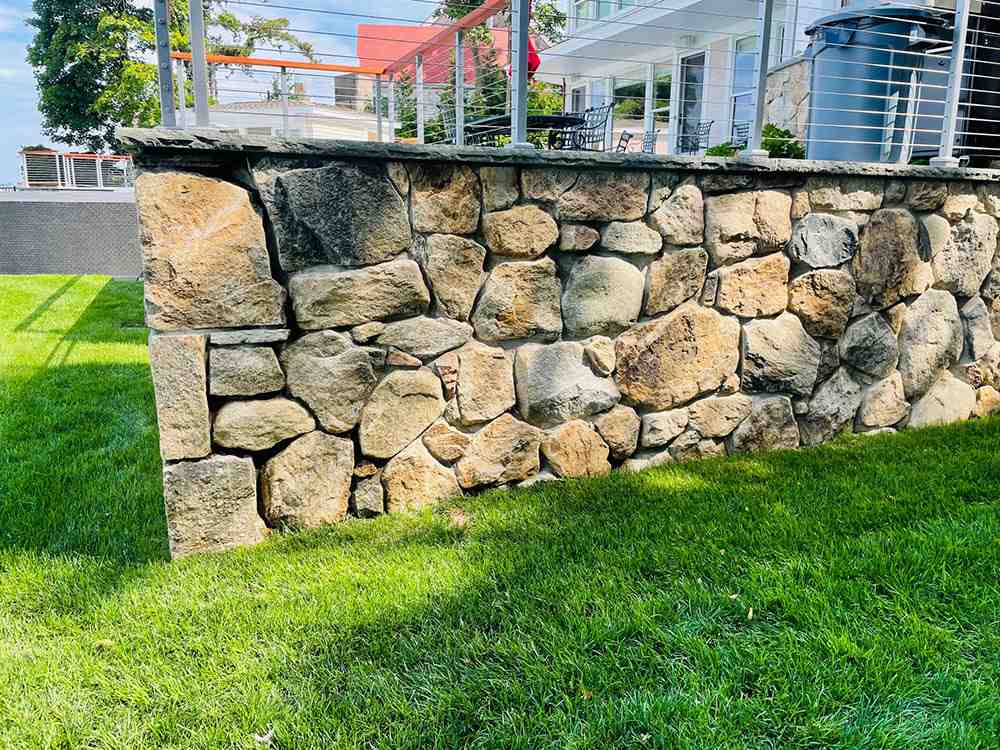
- Natural Stacked Stone ($30 – $60/sq. ft.): The gold standard. It requires the most labor because each stone must be hand-selected and chipped to fit, but the result is a structure that will literally last a lifetime. This material provides the most authentic and rugged look possible. In Massachusetts, using local fieldstone can create a fireplace that looks like it has been part of the landscape for centuries.
Fuel Source: Wood-Burning vs. Gas Lines
The debate between wood and gas isn’t just about ambiance; it’s about the installation process and long-term costs. The International Residential Code (IRC) provides strict guidelines on how these different fuel sources must be vented and shielded to ensure homeowner safety.
- Wood-Burning ($1,500 – $15,000): These are the most traditional. They require a taller chimney (usually 10-15 feet) to ensure proper draft and smoke clearance. While the unit itself might be simpler, the masonry requirements for a safe chimney often make these more expensive to build. You also have the ongoing cost and effort of sourcing and storing seasoned firewood. However, for many, the sound and smell of a real wood fire are irreplaceable.
- Natural Gas ($2,000 – $15,000): Gas fireplaces offer instant gratification. You flip a switch, and you have fire. However, you must factor in the cost of the gas insert ($2,000 – $5,000) and the plumbing. Gas lines typically cost $20 to $75 per linear foot to install, depending on the complexity of the run. Gas is often preferred in more densely populated areas where wood smoke might bother neighbors.
- Propane ($1,500 – $10,000): A great alternative if natural gas isn’t available. You’ll need a place to hide the tank, which might involve a small enclosure or underground burial. Propane can be more expensive to run than natural gas but offers the same convenience. It is a popular choice for rural properties in Boxford or Topsfield where natural gas lines may not reach.
For those who want the warmth without the massive structural requirement of a chimney, masonry fire pit construction is an excellent alternative that typically costs 50% to 70% less than a full fireplace. Fire pits are also more conducive to large groups as they allow for 360-degree seating and a more campfire-like atmosphere.
Installation Breakdown: Labor, Permits, and Site Prep
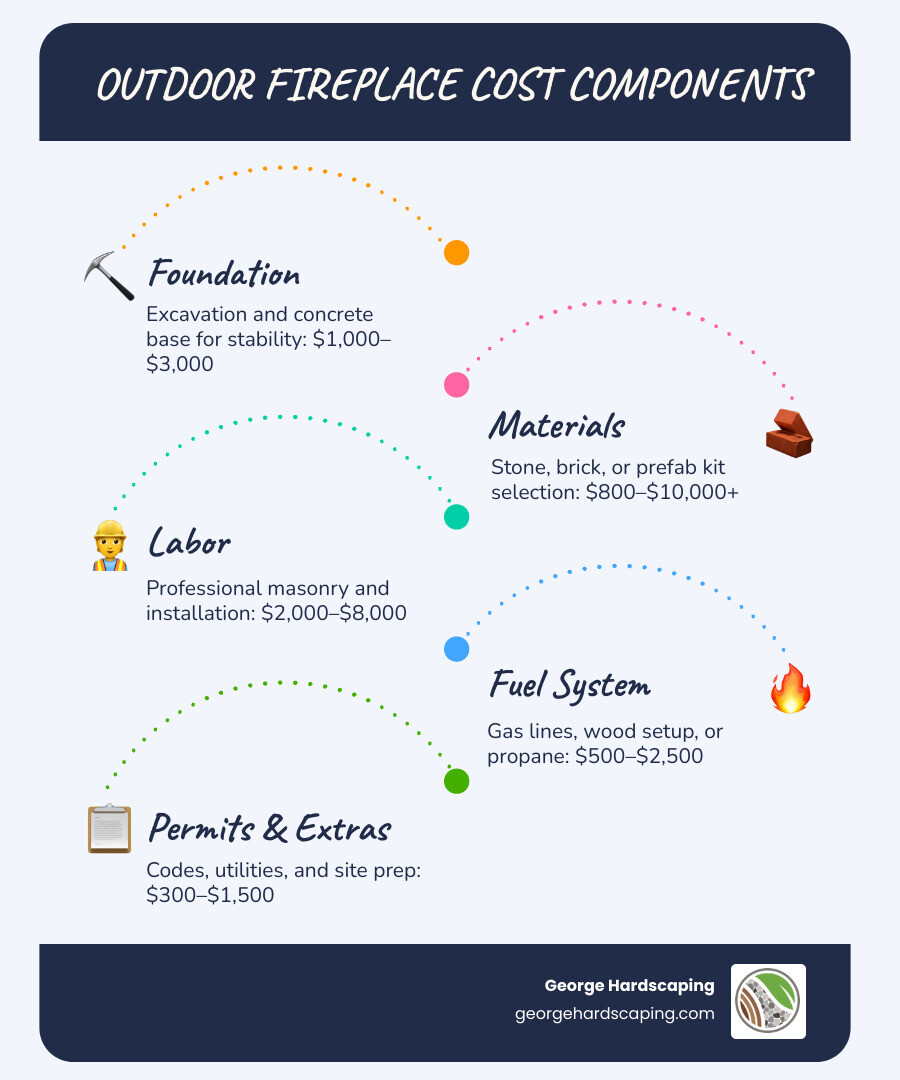
When we provide an estimate for how much does it cost to build an outdoor fireplace, the “hidden” costs of site preparation often surprise homeowners. You aren’t just paying for the stone you see; you’re paying for the engineering that keeps it standing through decades of New England weather. A fireplace is a massive structure, and without proper ground preparation, the freeze-thaw cycles of Massachusetts will quickly cause it to lean or crack.
- Demolition and Prep ($500 – $2,500): If we have to remove an old deck, dig out tree roots, or level a sloped yard in Boxford or Topsfield, that adds to the initial labor. Proper site preparation is the foundation of a successful project. This phase also includes soil compaction testing to ensure the ground can support the weight of several tons of masonry.
- Foundation ($1,500 – $4,000): As mentioned, our freeze-thaw cycles require a serious concrete slab. A custom masonry fireplace can weigh several tons; without a reinforced foundation that reaches below the frost line, it will lean or crack within three years. This is not an area where you want to cut corners. We typically use rebar-reinforced concrete poured to a depth that exceeds local frost line requirements, ensuring the structure remains perfectly level for decades.
- Permits ($100 – $1,000): Most towns in Essex County require a building permit for permanent structures. If you’re adding gas or electric, you’ll need additional trade permits. Each town has its own set of rules regarding setbacks and chimney heights. For example, a fireplace in a historic district like Salem may require approval from a historical commission, which can add time and administrative costs to the project.
- Labor ($2,000 – $10,000+): Labor typically accounts for 60% to 80% of a custom masonry project. It is meticulous work that cannot be rushed. A skilled mason is an artist who understands how to manage moisture, heat, and structural integrity simultaneously. The process involves laying the core, installing the firebox, building the smoke chamber, and finally applying the decorative veneer stone by stone.
Integrating your fireplace into a larger plan is often more cost-effective than doing it as a standalone project. Our patio with fireplace ultimate guide explains how to coordinate these features for the best flow and value. By combining projects, you can often save on mobilization fees and equipment rental costs. For instance, pouring the fireplace foundation at the same time as a new patio slab can save significantly on concrete delivery fees.
Professional Masonry vs. DIY Savings
We often get asked if a homeowner can save money by doing it themselves. While you can save roughly 20% to 30% on a project by providing the labor, we generally advise against DIY for anything beyond a simple portable unit or a basic kit. The risks of improper construction are simply too high when dealing with fire and heavy masonry. A poorly constructed chimney can lead to “back-puffing,” where smoke enters your seating area instead of exhausting upward, or worse, it can create a fire hazard for your home.
A fireplace involves fire, extreme heat, and massive weight. If the smoke chamber isn’t shaped correctly, the smoke will billow out the front instead of up the chimney. If the lintels aren’t sized right, the structure could collapse. Our building an outdoor fireplace guide covers the complexities involved, but for most homeowners in Peabody or Lynnfield, hiring a pro is the best way to ensure safety and code compliance. A professional build also comes with a warranty, providing peace of mind for your investment. Furthermore, a professional mason will ensure that the firebrick is laid with the correct refractory mortar, which is designed to withstand temperatures that would cause standard mortar to crumble.
Additional Costs and Enhancements
Once the basic structure is planned, you might want to add “the extras” that truly make the space functional. These aren’t just fluff; they change how you use the yard and can significantly increase the enjoyment of the space. Many homeowners find that these additions are what truly turn a fireplace into an outdoor living room.
- Wood Boxes ($1,000 – $3,000): Built-in niches to keep your firewood dry and within reach. These add a beautiful architectural element and keep your patio organized. They also prevent you from having to trek across a wet lawn to get more logs in the middle of an evening.
- Pizza Ovens ($3,000 – $8,000): Many homeowners choose to combine their fireplace with a wood-fired oven. This turns your fireplace into a functional outdoor kitchen. You can see examples of this in our guide on how to build an outdoor fireplace and pizza oven. This is a fantastic way to entertain guests and create a unique culinary experience in your own backyard.
- Seating Walls ($1,500 – $5,000): Integrating “sitting walls” into the hearth allows you to accommodate more guests without crowding the patio with chairs. These walls can also serve as planters or decorative borders. They provide a permanent, low-maintenance seating solution that defines the “room” around the fire.
- Lighting ($500 – $2,000): Low-voltage LED lighting tucked into the masonry can highlight the stone texture at night and provide safety. Well-placed lighting makes the fireplace a stunning visual feature even when it’s not in use. It also ensures that guests can safely navigate the patio area after the sun goes down.
Ready to get a precise quote for your project? Request a hardscaping estimate from our expert team today.
Frequently Asked Questions about Outdoor Fireplace Costs
Does an outdoor fireplace add value to a home?
Yes! Beyond the “enjoyment factor,” an outdoor fireplace is a high-demand feature for buyers in the Northeast. It effectively extends the “patio season” by two or three months, which is a huge selling point in Massachusetts. You can expect to recoup about 56% to 60% of the cost in home value, according to recent real estate data. It makes your property stand out in a competitive market, especially for families who prioritize outdoor entertaining. In many cases, it can be the deciding factor for a buyer choosing between two similar homes.
How much cheaper is a fire pit than a fireplace?
A fire pit is significantly more affordable. While a custom fireplace might start at $10,000, a high-quality custom masonry fire pit typically ranges from $2,500 to $5,000. Fire pits offer 360-degree seating but don’t provide the same wind protection or smoke control as a fireplace. They are a great option for smaller yards or tighter budgets. However, a fireplace offers a more formal, “room-like” feel and can act as a windbreak, making the patio more comfortable on breezy evenings.
Do I need a permit for an outdoor fireplace in Essex County?
In almost every case, yes. Towns like Ipswich, Gloucester, and Salem have strict codes regarding chimney height and distance from property lines or combustible structures (like your house or a wooden fence). Usually, a fireplace must be at least 10 to 15 feet away from any structure. We always recommend checking with your local building department before breaking ground to avoid costly fines or the need to relocate the structure later. Our team handles the permitting process for most of our clients to ensure everything is done by the book.
How long does it take to build a custom outdoor fireplace?
A typical custom masonry fireplace takes between 10 and 20 working days to complete, depending on the complexity and weather conditions. This does not include the time required for the concrete foundation to cure, which usually takes an additional 7 to 14 days. Prefabricated kits can often be installed in just 2 to 4 days once the foundation is ready. Weather is the biggest variable in New England; we cannot lay masonry in heavy rain or extreme freezing temperatures without specialized heating equipment.
What is the best material for a long-lasting fireplace?
In the North Shore climate, natural stone or high-quality stone veneer over a concrete block core is the most durable option. These materials handle the freeze-thaw cycles much better than stucco or thin brick. When properly sealed and maintained, a natural stone fireplace can last for 50 years or more. Natural stone also ages beautifully, developing a patina that only adds to its character over time, whereas manufactured materials may fade or show wear more quickly.
Can I put an outdoor fireplace on an existing deck?
Generally, no. A standard wooden deck is not designed to support the several thousand pounds of weight that a masonry fireplace carries. Furthermore, the fire risk is significant. If you want a fireplace on a deck, you would need to install a specialized lightweight gas unit or reinforce the deck structure with steel and concrete piers, which can be very expensive. In most cases, it is safer and more cost-effective to build the fireplace on a dedicated concrete pad at ground level.
What maintenance is required for an outdoor fireplace?
Maintenance is relatively minimal but important. For wood-burning units, you should have the chimney swept annually to remove creosote buildup. You should also inspect the mortar joints for any cracks (pointing) every few years, especially after a particularly harsh winter. For gas units, checking the burner and clearing any debris from the pilot light area is recommended. Sealing natural stone every 3-5 years can also help prevent moisture penetration and staining.
Can I use my outdoor fireplace in the winter?
Absolutely! In fact, that is one of the best times to use it. An outdoor fireplace provides a significant amount of radiant heat, making it possible to enjoy your patio even when there is snow on the ground. However, you should ensure that the area around the fireplace is clear of snow and ice to prevent slips. Using a fireplace in the winter is a great way to beat the “cabin fever” that often sets in during January and February in Massachusetts.
Conclusion and Next Steps for Your Backyard Project
Budgeting for an outdoor fireplace is all about balancing your vision with the realities of construction. Whether you opt for a sleek prefabricated unit or a hand-crafted stone monument, the key is to prioritize the foundation and the safety of the build. An outdoor fireplace is more than just a pile of stones; it is a gathering place that will host decades of memories, from summer s’mores to crisp autumn evenings with a glass of wine. It is an investment in your home’s value, but more importantly, it is an investment in your quality of life and your ability to enjoy the beauty of the North Shore year-round.
At George Hardscaping, we’ve spent years helping homeowners across the North Shore—from the historic streets of Salem to the coastal bluffs of Rockport—create outdoor spaces that stand the test of time. We understand that how much does it cost to build an outdoor fireplace is a significant investment, and we are committed to providing the craftsmanship that ensures every dollar adds value to your home. Our team handles everything from the initial design and permitting to the final stone placement, ensuring a stress-free experience for you. We take pride in our ability to match the architectural style of your home, whether it’s a classic Colonial, a modern farmhouse, or a coastal cottage.
If you are ready to stop dreaming and start building, we are here to help. You can request a hardscaping estimate today to get a personalized quote for your property. Or, if you’re still in the inspiration phase, explore our hardscaping and masonry services to see how a fireplace can fit into a total backyard transformation including custom walkways or a new paver driveway. We can help you visualize how a fireplace can anchor a new patio or serve as the centerpiece of a complete outdoor kitchen.
Your perfect evening by the fire is closer than you think! Don’t settle for a generic backyard when you can have a custom-crafted outdoor living room that reflects your style and enhances your lifestyle. Our commitment to quality means we only use the best materials and the most proven construction techniques, ensuring your fireplace remains a source of joy for many years to come.
Ready to transform your backyard? Contact George Hardscaping for a Consultation
