
Outdoor Fireplace Kit: Your #1 Backyard Upgrade!
Why an Outdoor Fireplace Kit is Your Backyard’s Best Upgrade
An outdoor fireplace kit can transform any backyard into a four-season destination for gathering, dining, and relaxation. These pre-engineered systems give you the structure, safety features, and performance you need to create a dramatic focal point without the cost and timeline of a fully custom build. Picture an October evening in Essex County: the leaves are changing, the air is crisp, and your patio becomes the warm heart of the home as friends and family gravitate toward the glow and crackle of the fire. That is the everyday magic a well-chosen kit delivers, creating a magnetic pull that encourages conversation and connection, turning ordinary nights into cherished memories.
Beyond ambiance, the investment case is compelling. Outdoor living remains one of the most in-demand features among homebuyers and homeowners alike, with industry groups noting sustained interest in fire features as both functional heat sources and social anchors. The Hearth, Patio & Barbecue Association reports continued growth in outdoor living projects and consumer demand for higher-quality, integrated solutions, underscoring the appeal of permanent backyard additions like fireplaces. Likewise, the National Association of Realtors’ Remodeling Impact resources highlight the strong enjoyment and resale value many outdoor projects create. According to BobVila’s analysis of outdoor upgrades, fire features consistently rank among the top improvements for return on investment. While exact ROI varies, many homeowners can see a significant value appreciation from well-executed outdoor fireplace installations, often recouping a substantial portion of the project cost at resale while enjoying years of use.
Modern kits make the experience accessible. Gone are the days when creating a masonry fireplace meant months of on-site work and budgets that balloon past $15,000 before finishing materials. Today’s engineered systems deliver reliable draft, efficient heat, and robust durability at a fraction of the time and cost. Many homeowners can complete a well-planned DIY assembly over a weekend, and professional crews can often erect the structural core within a single workday—then finish with stone, brick, or stucco to match your architecture.
At George Hardscaping, we design outdoor environments that feel cohesive, comfortable, and enduring. Whether you want to anchor a new patio, refresh an existing terrace, or plan a full outdoor living room, our team integrates the fireplace with your space, sightlines, and seating. We can coordinate the fireplace’s look with complementary elements—think coordinated patio design and installation, matching walkways and stairs, or nearby retaining walls—so the final result feels intentional and inviting.
Benefits at a glance, and why kits are often the smart approach:
- Ambiance and atmosphere: Nothing rivals the warm glow and gentle movement of flame for creating welcome and conversation.
- A true entertainment hub: Fire is a natural gathering point—perfect for quiet weeknights or a lively weekend with friends.
- Strong value: When executed with quality materials and a cohesive design, an outdoor fireplace can improve perceived and actual property value.
- Extend your season: Especially in New England, a fire feature combats shoulder-season chill, turning early spring and late fall into prime patio time.
- Predictable results: Engineered kits provide tested components, proven draft performance, and a faster, less disruptive path to enjoyment.
Kits vs. custom remains a common question. Kits excel when you want professional-grade performance and a streamlined build. They leverage pre-fabricated, engineered concrete cores, stainless components where needed, and straightforward assembly. Custom-built fireplaces are best when you want absolute design freedom—unique proportions, bespoke masonry details, or specialized materials not offered in kit catalogs. Either way, the key to success is a design-forward process and a meticulous installation.
If you’re weighing your options, our team can help you compare specific kits and what’s possible with a custom design through our full suite of hardscaping and masonry services. We’ll recommend the right path for your space, budget, and vision—and manage every step from layout to final lighting of the first fire.
Ready to turn your patio into a year-round destination? Book a zero-pressure site visit to discuss your goals and get a clear, written plan. Start now with a strong call to action: Request your free estimate from George Hardscaping, and let’s map the fastest path from idea to ignition.
Decoding the Options: Types, Materials, and Fuels
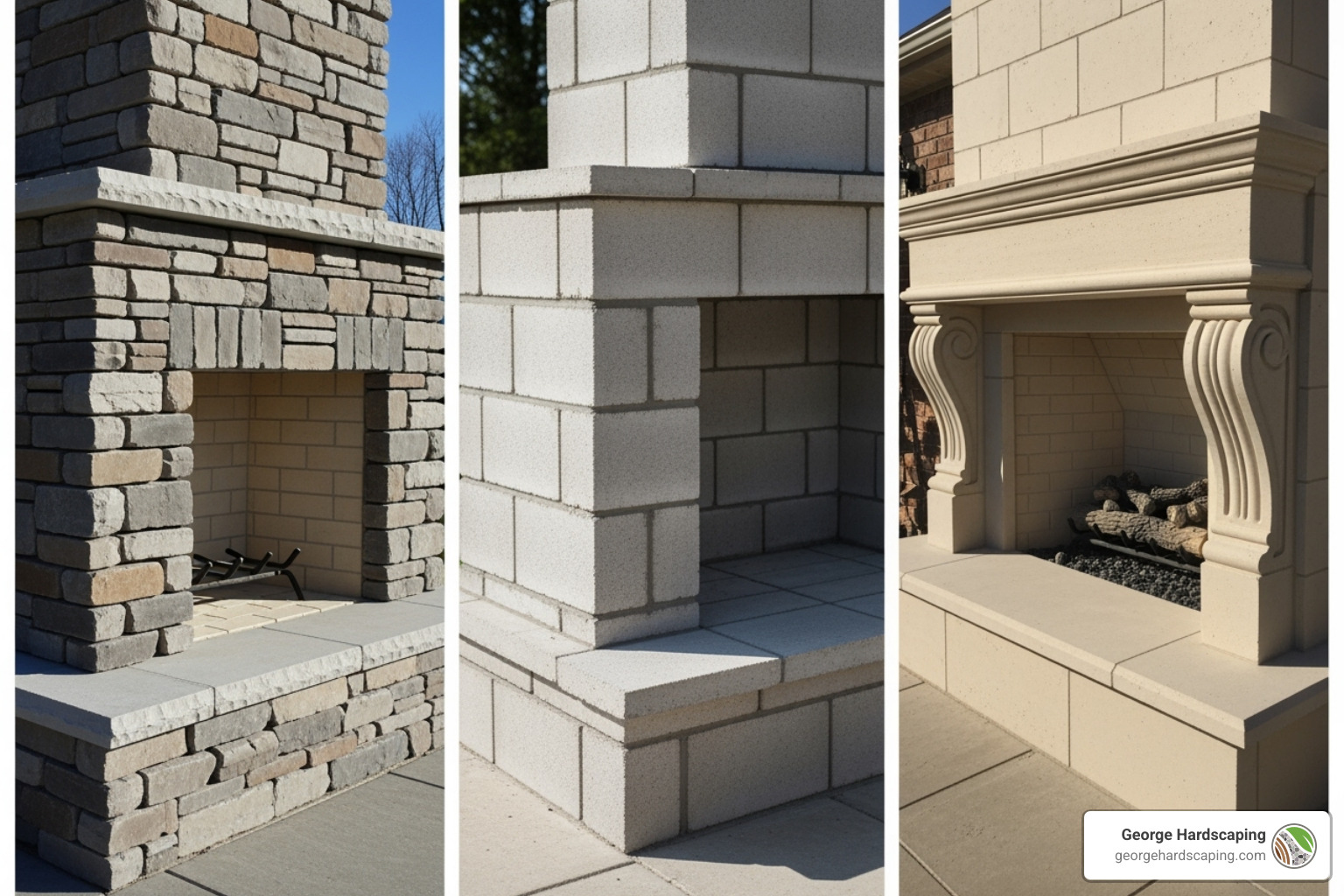
Choosing an outdoor fireplace kit can feel complex at first—there are multiple structural systems, finish options, and fuel choices. Once you know the major categories and what actually drives performance, the decision becomes much easier. Below we break down the primary options we specify and install across Beverly, Salem, and the broader North Shore.
Structural Types of Outdoor Fireplace Kits
- Modular concrete systems (engineered cores): These are the industry standard for durability, performance, and long-term stability. The core components are heavy, high-strength reinforced concrete sections designed to interlock and align precisely. Quality systems feature high-mass smoke chambers, large fireboxes for superior flame presence, and engineered flue transitions that promote excellent draft. It’s common for a robust modular system to weigh 5,000–7,000+ pounds once assembled. This significant mass acts as a thermal battery, absorbing heat from the fire and radiating it back into your seating area long after the flames have died down. This is a key performance difference compared to lighter, metal-framed units, which cool off almost immediately.
- Interlocking block kits: A middle-ground option that assembles like high-tolerance “building blocks.” These use precast or CMU components designed to lock together without complex masonry techniques. They are typically finished with stone or brick veneer. When installed carefully on a proper slab, they offer good longevity and appealing design flexibility at an approachable price point.
- Pre-fabricated units: These arrive largely complete. They are fast to place and connect, but they generally offer less customization in dimensions and finishes. They’re a fit when speed is paramount or when access constraints make moving large core components impractical.
When evaluating systems, certification and testing matter. Look for UL-127 and ULC-S610 where applicable—these standards indicate rigorous lab evaluation for safety and performance of factory-built fireplaces (UL 127 information: https://ulstandards.ul.com/standard/127). Also verify the chimney and spark arrestor details and ensure the manufacturer provides clear guidance for clearances to combustibles, ember protection, and hearth extensions.
Core Materials and Why They Matter
- Structural core: High-strength reinforced concrete and CMUs provide the backbone of a quality kit. Mass equals stability and heat-soak—your fire will look and feel better in a heavy, heat-retaining structure.
- Firebox and flue components: A proper firebox lined with firebrick withstands high temperatures and protects the core. Stainless steel, where used for flue liners and caps, resists corrosion and helps the system weather New England’s freeze-thaw cycles.
- Exterior finish: This is your canvas. Natural stone veneer, manufactured stone, brick slips (thin veneers), or a smooth stucco can all deliver different aesthetics—from rustic fieldstone to clean, modern lines. We can tie that finish to your existing walkways and stairs or adjacent retaining walls for a cohesive look.
Fuel Choices: Wood-Burning vs. Gas
- Wood-burning: The classic campfire experience—radiant heat, aroma, crackle, and the satisfaction of building a real fire. Consider access to dry, seasoned hardwood, storage solutions, and regular ash cleanup. For safety and best combustion practices, consult the EPA’s Burn Wise guidance on wood selection and burning tips (https://www.epa.gov/burnwise). You’ll also want to confirm local open burning rules, which vary by town in Massachusetts (state guidance: https://www.mass.gov/service-details/open-burning-safety).
- Natural gas: Instant-on convenience and clean operation. Requires a professionally installed gas line, correct sizing for BTU demand, shutoff valves, and code-compliant routing. Gas setups are ideal for busy families who want reliable ambiance at the flip of a switch.
- Propane (LP): Offers similar convenience to natural gas without needing a utility connection. You’ll need space for a properly sited tank (above or below ground) and safe routing of lines. Professional installation is required.
Many homeowners also appreciate the flexibility of future conversion. A high-quality wood-burning kit can often be retrofitted with a gas log set and burner system later on. This allows you to enjoy the authenticity of wood now with the option for push-button convenience in the future. When planning, it’s wise to install a gas stub-out near the fireplace location, even if you plan to burn wood initially, to make a future conversion simpler and more cost-effective.
For all gas appliances, ensure you’re working within local code and manufacturer specs. Reference the International Residential Code for general fireplace and chimney requirements (ICC IRC reference: https://codes.iccsafe.org/). Your specific kit will include detailed clearances, hearth extension dimensions, and chimney termination requirements.
Features That Separate Great Kits from the Rest
- Certification: Verified testing (UL/ULC) is non-negotiable for safety.
- Firebox size and shape: Bigger fireboxes allow better log placement, larger visible flames, and more radiant heat. A deeper box also helps contain embers.
- Draft engineering: An efficient smoke chamber and properly sized flue reduce smoke spillage and improve burn quality.
- Accessories and expandability: Log grates, spark arrestors, clean-out doors, and accessory options (wood boxes, hearth extensions, mantel blocks). Some kits also allow later conversion to gas.
- Weather resilience: Details like stainless caps, water-shedding drip edges, and high-quality mortar or adhesives help the finish last. We align these with the finish details used on your patio or hardscape surfaces through our hardscaping and masonry services.
- Manufacturer warranty and support: A reputable manufacturer stands behind their product with a comprehensive warranty on structural components. This provides peace of mind that your investment is protected against defects.
- Integration potential: If you plan a larger project—seat walls, a grilling island, or a future pavilion—choose a kit whose proportions and finish options will harmonize with your broader patio design.
Safety remains paramount across all choices. If people or furniture will sit close to the opening, consider screens and ember protection. The National Fire Protection Association offers helpful outdoor fire safety guidance (https://www.nfpa.org/education-and-research/home-fire-safety/outdoor-safety/outdoor-fires). We incorporate those best practices into our designs and installations.
Your Perfect Match: How to Choose the Right Kit
Choosing the right outdoor fireplace kit is about matching your lifestyle, space, and local rules with the technical realities of heat, draft, and clearances. A little planning upfront pays major dividends in daily enjoyment and long-term satisfaction.
Start With Your Space and Layout
- Measure the patio and map circulation: Note distances to seating, dining areas, doors, and walkways. A fireplace should anchor your outdoor “living room” without blocking natural pathways.
- Consider prevailing winds and views: Place the fireplace so smoke isn’t pushed back into seating. Also consider sightlines—from the kitchen window, the dining table, or a hot tub—to maximize enjoyment.
- Proportion and scale: In compact spaces, a towering structure can feel overwhelming. In larger backyards, a small fireplace can look under-scaled. As a rule of thumb, aim for a firebox opening that complements your primary seating group and a chimney mass that balances the overall scene.
- Fire safety and clearances: Most towns require minimum setbacks from structures and property lines. Manufacturers also publish clearances to combustibles, hearth extension sizes, and chimney termination heights. We help you confirm all of this with your local building department before you buy. For Massachusetts residents, consult the state’s guidance and your town’s building office; state-level resources on outdoor fire safety are a good starting point (https://www.mass.gov/service-details/open-burning-safety).
- Integration with existing hardscape: The best outdoor rooms feel cohesive. We regularly align a fireplace’s finish with existing walkways and stairs and coordinate seat walls or steps so conversation areas feel intentionally “framed.” If you’re planning a new patio, we’ll shape the entire layout through our patio design and installation service.
Wood vs. Gas: Which Lifestyle Matches Yours?
- Wood: Ideal if you enjoy ritual and the campfire experience. Plan for dry, seasoned storage (covered, off-grade) and occasional chimney sweeping. For efficient, lower-smoke burning, follow EPA Burn Wise recommendations (https://www.epa.gov/burnwise).
- Gas (natural gas or propane): Perfect for instant, clean flames. Particularly beneficial if you’ll use the fireplace frequently and want consistent, no-mess operation. A certified installer will size lines for the BTU load and ensure code-compliant placement. For general gas safety guidance, the U.S. Consumer Product Safety Commission provides useful information (https://www.cpsc.gov/Safety-Education/Safety-Education-Centers/Carbon-Monoxide-Information-Center).
Budgeting With Eyes Open
It’s helpful to view the “kit price” as just one part of the total project. While many quality kits land in the $3,000–$5,000 range, total installed costs (foundation, finish, labor, and gas line if applicable) often range from $9,000 to $15,000+ depending on size, finish materials, site access, and permitting. Consider these typical line items:
- Concrete foundation: A reinforced slab engineered for the fireplace’s weight and your soil conditions.
- Finish materials: Natural stone or high-quality manufactured veneer; brick slips; or stucco. Costs can vary dramatically here, from $15-$25 per square foot for manufactured stone to $30-$50+ per square foot for natural thin stone veneer, not including installation labor. Mortars, lath, and sealants add to material cost.
- Professional labor: Assembly, veneer application, and detail work to ensure a safe, durable, level build.
- Gas line installation (if applicable): Sizing and routing by a licensed professional, plus any trenching and shutoff hardware.
- Delivery and logistics: Heavy pallets may require specialized equipment to move across lawns, gravel, or slopes.
- Permitting and inspection fees: Most municipalities charge a fee for the building permit and subsequent inspections, which can range from a hundred to several hundred dollars.
- Landscaping and site restoration: After the heavy work is done, you may need to budget for repairing the lawn, adding new plantings around the fireplace, or installing low-voltage lighting to accentuate the new feature.
We help you see a full, transparent picture during planning and provide a single point of accountability through our turnkey hardscaping and masonry services.
Design Cohesion and Style Matching
Choose finishes that harmonize with your home’s architecture and colors. For a traditional colonial, consider classic brick or split-face stone. For a modern home, smooth stucco or linear stone can deliver crisp lines. If grade changes are involved or you want to shape conversation terraces, we can incorporate matching retaining walls so the fireplace feels “built into” the landscape rather than added on.
Permits and Local Code
Before purchasing, verify permitting needs. Some towns treat outdoor fireplaces similarly to masonry structures with footing requirements and inspections; others specify setbacks and spark arrestors. For general technical guidance on fireplaces and chimneys, the International Residential Code provides baseline standards (https://codes.iccsafe.org/). We coordinate permitting so your project proceeds smoothly and safely.
Ready to see options sized and styled for your exact space? Get a professional site plan, clear budget, and detailed schedule. Strong call to action: Request your free estimate and design consult to compare kits and finishes that fit your goals, timeline, and budget.
From Box to Blaze: Installation and Long-Term Care
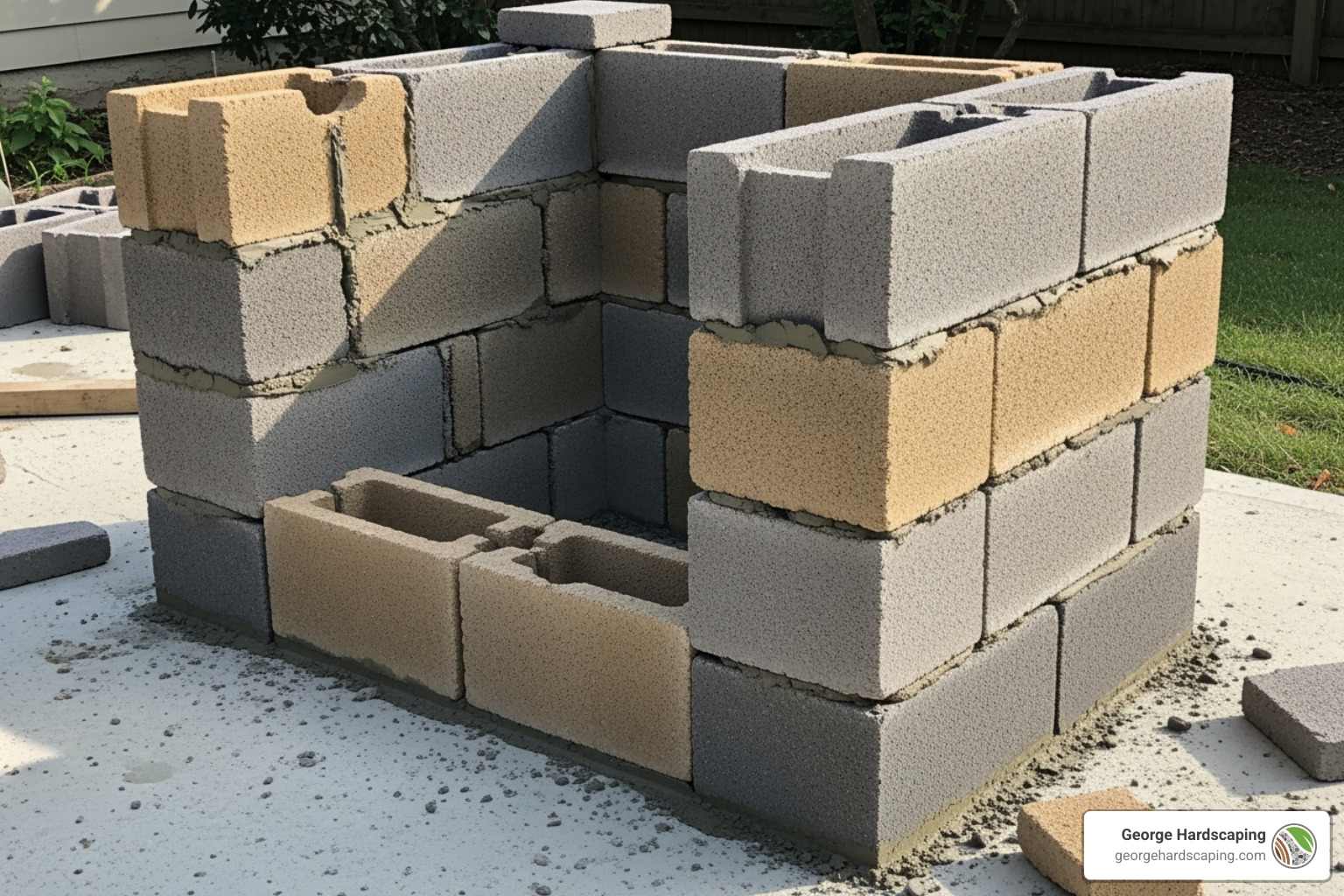
Seeing a pallet of components become a crackling centerpiece never gets old. Whether you plan to DIY or hire professionals, understanding the process—and the “why” behind each step—ensures a safe, durable, and beautiful result.
Installation Essentials
- Foundation first: Outdoor fireplace kits are heavy. A quality modular core can exceed 5,000–7,000 pounds before veneer. We typically specify a steel-reinforced, level concrete slab designed for the load and your soil. In New England, this means digging footings below the frost line (typically 48 inches in Massachusetts) to prevent the slab from heaving during winter freezes. A proper foundation isn’t just about support; it’s about ensuring your fireplace remains perfectly level and structurally sound for decades, preventing cracks in the veneer and ensuring safe operation. A common approach is a 6-inch slab with #4 rebar on a compacted gravel base, with thickened edges or piers as site conditions require. Local requirements vary; your building department and structural conditions will dictate the final spec.
- Level and plumb: Each course of the core must be perfectly level and aligned. Small errors compound as the chimney rises, impacting draft and aesthetics. Professional installers use laser levels and string lines to maintain precision throughout the build.
- Adhesives and mortars: Follow the manufacturer’s specified adhesives for core assembly and the right mortars for veneer. Outdoor-rated, polymer-modified mortars and properly detailed lath help veneers last.
- Chimney details: Proper flue sizing and termination height are key to draft and smoke management. Adhere strictly to the kit’s specs for chimney section assembly, offsets, and spark arrestors. The National Fire Protection Association’s guidance for outdoor fires is a good reference for safe clearances and ember control (https://www.nfpa.org/education-and-research/home-fire-safety/outdoor-safety/outdoor-fires). For code-level details on chimneys and fireplaces, consult the International Residential Code (https://codes.iccsafe.org/).
- Integration and finish: Veneer is where your fireplace takes on its personality. We tie the look to your patio pattern, seat walls, or steps so the space reads as one cohesive room. Coordinating the fireplace with surrounding hardscape is part of our turnkey hardscaping and masonry services.
- Site logistics: Kits arrive on heavy pallets and are typically curbside-delivered. Plan equipment and a safe path for materials to reach the site, especially if you have slopes, lawn, or gravel.
- Gas considerations (if applicable): Gas components must be installed and pressure-tested by a licensed professional. Proper BTU sizing, shutoff valves, and bonding/grounding requirements apply. For general consumer safety information regarding combustion appliances and carbon monoxide, see the U.S. Consumer Product Safety Commission (https://www.cpsc.gov/Safety-Education/Safety-Education-Centers/Carbon-Monoxide-Information-Center).
Maintenance for Longevity and Safety
A simple seasonal routine will keep your fireplace safe and beautiful for years to come:
- Spring Kickoff: After the last frost, give your fireplace a thorough inspection. Check for any mortar cracks that may have developed over the winter and have them sealed to prevent water intrusion. Clean any debris from the firebox and chimney cap. For gas units, have a certified technician inspect the burner, gas lines, and ignition system before the first use of the season.
- Summer Enjoyment: For wood-burning fireplaces, continue to clear ash regularly (only when fully cool) into a covered metal can. Keep the area around the fireplace clear of dry leaves or flammable debris.
- Fall Preparation (Wood-Burning): This is the perfect time for your annual professional chimney sweep. A certified sweep will remove flammable creosote buildup, inspect the flue liner, and ensure the spark arrestor is clear. The Chimney Safety Institute of America offers homeowner guidance and safety resources (https://www.csia.org/). Stock up on dry, seasoned hardwood and ensure your wood storage area is covered and protected from rain and snow. The EPA’s Burn Wise program provides excellent tips on wood selection and proper burning to reduce smoke and improve efficiency (https://www.epa.gov/burnwise).
- Winter Protection: While built to withstand the elements, covering your fireplace can extend the life of the veneer and keep the firebox dry. Use a high-quality, breathable cover that allows moisture to escape, preventing a damp environment that can degrade mortar over time.
Operating Safely
- Clearances: Maintain the manufacturer’s clearances to combustibles and keep furniture and soft goods (pillows, throws) outside spark range.
- Screens and spark arrestors: Use them—especially in breezy conditions or when children and pets are present.
- Supervision: Never leave a fire unattended and keep a hose, bucket, or extinguisher nearby. The U.S. Fire Administration offers seasonal safety reminders and resources (https://www.usfa.fema.gov/).
We handle all of the above—from slab to spark—so you enjoy an effortless build and years of low-stress ownership. If you prefer a DIY role, we can consult on layout, foundation specs, and finishing details, then step in for the parts you don’t want to tackle.
Frequently Asked Questions about Outdoor Fireplace Kits
When we meet with homeowners in towns like Essex, Topsfield, and Wenham, several questions come up again and again. Here are clear, straightforward answers to help you move forward with confidence.
How does an outdoor fireplace kit compare to a custom-built one?
Think of it as choosing between an engineered, pre-designed system and a fully bespoke build. Kits deliver speed, predictability, and proven draft performance. Custom builds offer unlimited design control and detailing at higher cost and longer timelines. We install both through our comprehensive hardscaping and masonry services and can help you evaluate which path best fits your space and goals.
What is the typical cost of an outdoor fireplace kit project?
Quality kits often cost $3,000–$5,000 for the core. Total installed projects typically range from $9,000 to $15,000+ depending on size, finish materials, site access, and whether gas is included. Remember to budget for a reinforced concrete slab, veneer, professional installation, and any gas line work. We’ll provide a transparent scope and line-item budgeting during your request for estimate.
Do I need a permit for an outdoor fireplace?
Often, yes. Requirements vary by town and can include setbacks, spark arrestors, and specific foundation details. We’ll coordinate with your local building department. For general fire safety guidance in Massachusetts, see the state’s open burning resources (https://www.mass.gov/service-details/open-burning-safety). For national code references on chimneys and fireplaces, consult the International Residential Code (https://codes.iccsafe.org/).
Wood or gas—which is right for me?
Wood offers the sensory experience of a real fire and strong radiant heat. Gas offers instant, clean flames with no ash. If you love ritual and don’t mind occasional cleanup, wood may be right. If you prefer foolproof convenience and frequent weeknight use, gas typically wins. Either way, we’ll size and specify a system that meets code and aligns with your lifestyle.
How do you keep smoke out of the seating area?
Proper placement and a well-engineered smoke chamber and flue are essential. We consider prevailing winds, chimney height, and clearances. Quality kits with UL-127 certification have been tested for draft performance (see: https://ulstandards.ul.com/standard/127). We also design seating layouts and wind screening elements—like low retaining walls—to help shield breezes without blocking air flow.
Can I install a fireplace kit on my existing deck or patio?
This is a critical question. Installing a multi-ton masonry structure on a standard wood deck is not safe and is against building codes. For existing concrete or paver patios, the answer is ‘it depends.’ Most standard patios are not built with a foundation sufficient to support the concentrated weight of a fireplace. Doing so can cause the patio to sink, crack, or heave. The correct approach is to cut out a section of the existing patio and pour a new, dedicated steel-reinforced concrete footing that extends below the frost line. Our team can seamlessly integrate this new foundation with your existing hardscape for a flawless final look.
What’s the real difference between an outdoor fireplace and a fire pit?
While both provide warmth and ambiance, they function very differently. A fire pit is an open-top feature, creating a 360-degree gathering space reminiscent of a campfire. It’s generally more casual. An outdoor fireplace is a structural feature with a firebox and a chimney. This design directs smoke up and away, which is a major advantage in seating areas. It also focuses radiant heat forward, making it an excellent choice for anchoring an ‘outdoor room’ and providing warmth to a specific zone. Fireplaces feel more architectural and permanent, often becoming the formal centerpiece of a patio design.
How long will a professionally installed outdoor fireplace kit last?
With proper installation and routine maintenance, a high-quality modular concrete fireplace kit is a lifetime investment. The core components—high-strength reinforced concrete—are incredibly durable and designed to withstand thousands of heating and cooling cycles. Stainless steel parts resist rust, and a properly applied veneer with the right mortars will endure New England weather for decades. The key is the installation quality: a robust foundation, correct assembly, and meticulous veneer work are what ensure your fireplace will be a source of enjoyment for 25 years or more.
Can I mount a TV above the outdoor fireplace?
It depends on clearances, mantel depth, and heat. Many kits allow for a mantel that helps deflect heat, but electronics are sensitive. We’ll check your specific TV’s temperature tolerances, the fireplace’s tested clearances, and recommend a safe mounting solution if it’s feasible—or suggest alternate TV locations in your patio design.
Can I cook with an outdoor fireplace?
Some homeowners toast marshmallows or use a grill grate accessory for simple cooking, but fireplaces aren’t optimized like dedicated grills or outdoor kitchens. If cooking is a priority, we’ll plan for a separate grilling island and still keep your fireplace as the ambiance centerpiece.
How much maintenance is involved?
Wood systems need periodic ash removal and an annual chimney sweep. Gas systems benefit from a yearly check of burners and connections. Plan a quick seasonal inspection for cracks, caps, and sealants. For chimney safety best practices, visit the Chimney Safety Institute of America (https://www.csia.org/). For clean burning and wood storage tips, review EPA Burn Wise (https://www.epa.gov/burnwise).
How quickly can my fireplace be installed?
Once permits are in hand and materials are onsite, the structural core can often be assembled in a day. Veneer and finishing typically add a few more days depending on complexity and weather. We’ll provide a clear schedule with your estimate.
Have more questions? We’re happy to help—no pressure. Start the conversation and get a tailored plan for your yard with a direct call to action: Request your free estimate and we’ll walk your site, review options, and provide a detailed proposal.
Conclusion: Bring Your Outdoor Vision to Life
Picture your next cool evening on the North Shore: a comfortable seating group clustered around a handsome, stone-clad fireplace; soft conversation; warm hands; and a patio that feels like a natural extension of your living room. That’s what a well-chosen, well-installed outdoor fireplace kit delivers—extended seasons, stronger property appeal, and countless memories.
The journey from a simple backyard to a luxurious outdoor living room is more accessible than ever. By understanding the differences in kit types, fuel sources, and finish materials, you can make an informed choice that aligns with your lifestyle and budget. Remember that success lies in the details: a solid foundation, professional assembly, and a design that feels woven into the fabric of your home and landscape. This isn’t just an upgrade; it’s a transformation that pays dividends in property value and, more importantly, in priceless moments shared with family and friends.
Whether you favor the classic ritual of a wood fire or the instant ambiance of gas, modern kits combine engineered performance with beautiful finishes and fast installation. Our team coordinates every detail—from precise placement and a robust foundation to a coordinated veneer that complements your patio design, walkways and stairs, and surrounding hardscaping and masonry.
Make this the season you turn your backyard into a year-round destination. Strong call to action: Request your free estimate from George Hardscaping. Prefer to explore service options first? See how our hardscaping and masonry services bring lasting performance and beauty to every project—then let’s plan your fireplace and get a date on the calendar.
