
How to Build an Outdoor Brick Fireplace: 1 Ultimate Guide
Why Building an Outdoor Brick Fireplace Transforms Your Backyard
Learning how to build an outdoor brick fireplace is about more than just stacking bricks; it’s about creating a permanent, architectural centerpiece that fundamentally changes how you experience your home. This single feature can increase your property value by up to 12% while providing an unparalleled gathering spot for family and friends.
An outdoor fireplace transcends its function as a simple heat source. It cultivates a unique environment that promotes well-being, with scientific studies confirming that time spent by a fire can significantly reduce stress and foster social bonding, as noted in the Journal of Environment and Behavior. The gentle crackle of wood and the mesmerizing dance of flames create an atmosphere of relaxation and connection that is hard to replicate.
Unlike a portable fire pit, a custom-built brick fireplace is a substantial, permanent structure that offers superior performance and aesthetic appeal. Its enclosed design provides excellent wind protection, ensuring a steady, enjoyable fire even on breezy evenings. Most importantly, the integrated chimney system provides critical smoke control, directing smoke up and away from your seating area. This eliminates the frustrating “musical chairs” that often happens around a smoky fire pit.
This feature alone transforms a simple patio into a true “outdoor room”—a defined, comfortable, and inviting space that extends your living area into the fresh air. While the construction process is a significant undertaking requiring careful planning and execution, the result is a deeply rewarding and valuable investment in your property, your lifestyle, and countless future memories.
Essential Steps to Build an Outdoor Brick Fireplace:
- Planning & Permitting: Check all local building codes, secure necessary permits, and finalize your design and location.
- Foundation: Excavate the site and pour a thick, steel-reinforced concrete foundation to support the structure’s immense weight.
- Base Construction: Build the base of the fireplace, often using concrete masonry units (cinder blocks) in a U-shape to create integrated wood storage.
- Firebox Construction: Construct the inner chamber where the fire will burn using specialized fire bricks and high-temperature refractory mortar.
- Throat & Smoke Chamber: Form the critical transition area above the firebox by carefully tapering the masonry inward to funnel smoke efficiently.
- Chimney & Flue: Install a flue liner and build the chimney stack around it to the required height to ensure a proper draft.
- Finishing Touches: Apply a decorative veneer (brick, stone, or stucco) and install a protective chimney cap.
- Curing: Allow the entire structure to cure for a minimum of 30 days before lighting the first fire to ensure maximum strength and durability.
Easy how to build an outdoor brick fireplace word list:
Planning and Preparation: Your Blueprint for Success
When learning how to build an outdoor brick fireplace, the planning stage is unequivocally the most critical phase. It is the foundation upon which the entire project rests, and thorough preparation is what separates a stunning, functional centerpiece from a costly, non-functional, or even dangerous mistake. This phase involves a deep dive into legal requirements, the thoughtful design of a safe and beautiful structure, and the careful sourcing of appropriate materials and tools.
Legal and Safety First: Codes, Permits, and Location
Before a single shovel of dirt is turned, you must steer the legal and safety landscape. Addressing these requirements upfront is non-negotiable and will save you from potential fines, legal disputes, or even a demolition order from your local municipality.
- Permits and Codes: Nearly all municipalities, including towns in Essex County, MA, like Beverly, Danvers, and Topsfield, require a building permit for a permanent structure like an outdoor fireplace. This process isn’t just red tape; it’s a safety measure. Your local building department will review your detailed plans—including dimensions, materials, and foundation specs—to ensure they comply with local and national safety standards for fire prevention and structural stability.
- Safety Clearances: Local fire codes are strict for a reason. They typically mandate that your fireplace be positioned 10 to 30 feet away from any combustible structure, which includes your house, deck, garage, and sheds. A minimum distance of 10 feet from property lines is also standard. These buffer zones are designed to prevent radiant heat or stray embers from igniting a fire.
- Overhead Clearance: Look up! Your chosen location must be completely free of overhanging tree branches, low-hanging power or utility lines, and any part of your home’s roofline or eaves. A clear vertical path is essential for heat and smoke to dissipate safely.
- Prevailing Winds: Consider the typical wind direction in your backyard. Position the fireplace so that the prevailing wind blows smoke away from your primary seating area and away from your home’s windows and doors.
- Call 811 Before You Dig: This is a legal requirement in every state. You must call 811 or visit the national portal at call811.com a few days before you plan to excavate. This free service alerts local utility companies to come and mark the approximate location of underground lines for gas, water, electric, and communications. Digging without this check is illegal and incredibly dangerous.
- HOA Regulations: If you live in a community with a homeowner’s association, review your covenants. They may have additional, stricter rules regarding the placement, size, design, or materials allowed for outdoor structures.
- On-Hand Safety: From day one of use, always have a reliable water source, like a charged garden hose, and a fire extinguisher rated for Class A fires (wood, paper) readily accessible.
Designing Your Fireplace: Size, Style, and Functionality
This is the creative stage where your vision begins to take solid form. A well-designed fireplace not only functions perfectly but also complements your home’s architecture and your outdoor lifestyle.
- Size and Scale: Proportionality is key. A massive, towering fireplace can overwhelm a small patio and feel out of place, while a diminutive one might get lost in an expansive landscape. Consider the overall scale of your yard and how the fireplace will relate to other elements like a patio, deck, or an Outdoor Kitchen and Fireplace combination.
- Aesthetics and Style: The design should feel like a natural extension of your home. For a classic Colonial or Tudor home, traditional red brick is a timeless choice. For a more rustic or modern home, a natural stone or manufactured stone veneer can be applied over the core brick and block structure. Consider details like a curved hearth, a specific mantel style, or arched openings.
- Functionality: Think about how you will use the space. Incorporating built-in wood storage boxes on either side of the firebox is both practical and aesthetically pleasing. Plan for seating—will you have built-in stone benches or use movable patio furniture? Consider adding a hearth that is wide and deep enough to double as extra seating.
- Fuel Type: While this guide focuses on brick (wood-burning) fireplaces, it’s a key decision. Wood offers the authentic, multi-sensory experience of a crackling fire. Gas logs, on the other hand, provide ultimate convenience with instant on/off control and no cleanup, but they require a professionally installed gas line.
- Custom vs. Kit: Fireplace kits offer a streamlined, pre-engineered solution that guarantees a proper draft, but they provide limited options for customization. A fully custom-built fireplace, designed and constructed by a skilled mason, allows for a truly unique design custom perfectly to your space and aesthetic preferences.
Essential Materials and Tools for How to Build an Outdoor Brick Fireplace
Using high-quality materials and the correct tools is fundamental to building a safe, durable, and beautiful fireplace that will last for decades.
Tools:
- Shovel, Mattock & Wheelbarrow
- 4-foot Level & Torpedo Level
- Pointing Trowel, Brick Trowel & Mortar Hawk
- Tape Measure & Framing Square
- Dead Blow Hammer or Rubber Mallet
- Mason’s Line and Line Blocks
- Angle Grinder with Masonry Blade
- Mortar Mixer or Mixing Tub and Hoe
- Safety Glasses, Dust Mask & Heavy-Duty Work Gloves
- Ladders & Scaffolding (for the chimney)
Materials:
- Concrete Mix (e.g., 4000 PSI) & Steel Rebar (#4 or #5)
- Concrete Masonry Units (Cinder Blocks)
- Fire Bricks (rated for high heat) for the firebox
- Refractory Mortar (pre-mixed, high-temperature) for the firebox
- Type S Masonry Mortar (for all other masonry)
- Steel Lintel (angle iron) for openings
- Clay or Ceramic Flue Liner
- Veneer materials (e.g., face brick, natural stone) and corresponding mortar, such as those used in Stone Veneer Fireplace Installation
- Chimney Cap with Spark Arrestor
DIY vs. Professional Installation: Choosing Your Path
Deciding whether to undertake this project yourself or to hire a professional masonry contractor is a critical decision with long-term consequences for your budget, timeline, and the final quality and safety of the fireplace. This section breaks down the realities of each path to help you make a well-informed choice.
The DIY Approach: Kits vs. Scratch-Built
If you’re considering the DIY route, an honest and realistic assessment of your skills, available time, and physical ability is paramount. This is not a weekend project. There are two primary DIY options:
Fireplace kits represent a middle ground for the ambitious and skilled DIYer. These pre-engineered systems come with pre-cut components, a detailed set of instructions, and all the necessary parts for the core structure. The main advantage is that complex engineering, like the smoke chamber-to-flue ratio, is already figured out, significantly reducing the risk of a poorly drafting, smoky fireplace. However, this convenience has a cost—kits typically start around $1,000 and can easily exceed $3,000 for the materials alone. Furthermore, your ability to customize the size, shape, and features is severely limited by the kit’s design.
Building from scratch offers complete creative freedom but is an expert-level DIY project. Success requires a robust, practical understanding of multiple trades. You must be proficient in reading blueprints, working with concrete, and performing high-quality masonry work. Crucially, you must also grasp the physics of fireplace construction, including proper draft ratios, the function of a smoke shelf, and the principles of thermal expansion.
The time commitment is substantial, often spanning multiple weekends or weeks, factoring in necessary curing times for the foundation and mortar. While the initial material costs might appear lower than a kit, you bear all the engineering risk. A mistake in the smoke chamber design or foundation pour can be catastrophic and expensive to fix, if it can be fixed at all.
Hiring a Professional Masonry Contractor
For the vast majority of homeowners, the most prudent and ultimately most valuable decision is to hire a professional Masonry Contractor. This path transforms the project from a personal challenge fraught with risk into a managed process with a guaranteed outcome. You are investing in expertise, safety, and durability.
Here’s a direct comparison of the two approaches:
| Factor | DIY (Scratch-Built) | Professional Installation |
|---|---|---|
| Total Cost | $1,500 – $4,000+ (materials only, not including tools or potential rework) | $5,000 – $15,000+ (average costs based on internet data, not George Hardscaping’s actual prices) |
| Timeline | Several weeks to months, depending on personal schedule | Typically 1-3 weeks from start to finish |
| Skill Required | Expert-level: masonry, concrete, engineering principles | Master craftsmen with years of specialized experience |
| Customization | Unlimited, but requires you to be the designer and engineer | Extensive custom design capabilities with expert guidance |
| Risk & Liability | Homeowner assumes 100% of risk for structural failure, safety hazards, and code violations | Contractor carries liability insurance; provides a professional warranty & guarantees code compliance |
What you are paying for with a professional is expertise and peace of mind. A seasoned mason, especially one familiar with the New England climate, understands critical local factors, from pouring foundations that resist frost heave to building smoke chambers that draft perfectly in variable weather. They manage the entire permit application and inspection process. A professionally built fireplace is not only constructed to code but also comes with a structural guarantee or warranty.
This protects your significant investment from the costly repairs and serious safety hazards—like fire risk or structural collapse—that can result from improper construction. At George Hardscaping, our service includes comprehensive design consultation, ensuring your new fireplace integrates flawlessly into your landscape and becomes a cherished feature for decades.
How to Build an Outdoor Brick Fireplace: A Step-by-Step Guide
With your plans finalized, it’s time to begin construction. This guide provides a walkthrough of the building process, from the foundation to the chimney.
Step 1: Preparing the Site and Pouring the Foundation
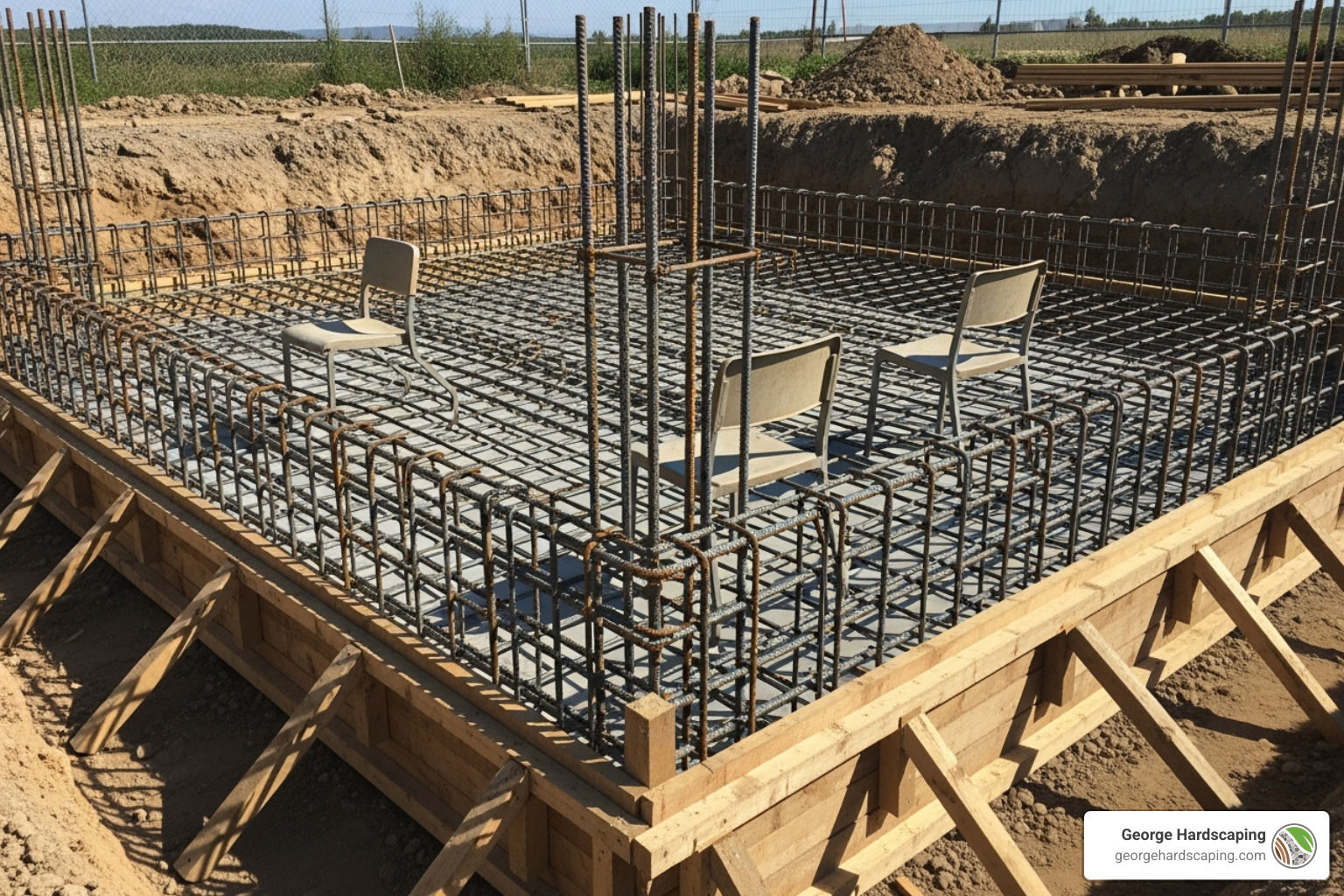
The foundation is the bedrock of your fireplace, supporting thousands of pounds of masonry. First, excavate the site, clearing all vegetation. A typical footprint is around 70×56 inches, but adjust this to your design. Dig deep enough to accommodate a stable base and account for your local frost line, which is critical in Massachusetts to prevent frost heave. You can check your local frost line depth on this map.
Level the excavated area and add a 2-inch layer of compacted gravel for drainage. Build a wooden form for the concrete, ensuring it is square and level. The concrete slab should be 4–6 inches thick and reinforced with a grid of rebar. Mix and pour the concrete, making sure it fully encases the rebar, and smooth the surface. Allow the concrete to cure for at least four to five days before you begin building on it.
Step 2: Constructing the Base and Firebox
With a solid foundation, you can start laying the core structure, typically with cinder blocks. Lay the first course of blocks for the wood storage box in a U-shape, using standard mortar. Ensure each block is level and plumb. Use a running bond pattern for strength, where the joints of each course are staggered. After three courses, place a steel lintel (angle iron) across the front opening to support the masonry above.
Next, lay solid hearth blocks on top of the base to form the floor of the firebox. The firebox itself—the inner chamber where the fire burns—must be built entirely with fire bricks and refractory mortar, as standard materials will crack under intense heat. Build the firebox walls, angling the back wall slightly inward to reflect heat outward.
Step 3: Building the Throat, Smoke Chamber, and Chimney
This stage is critical for ensuring your fireplace drafts properly and doesn’t spill smoke. The throat is the narrow opening just above the firebox that leads to the smoke chamber. The smoke chamber is a funnel-shaped section that directs smoke into the chimney. Construct it by corbelling (or racking) the bricks inward on each side, creating a smooth, tapered transition for the smoke.
Once the smoke chamber is formed, install the flue liner, a ceramic or metal pipe that runs the height of the chimney. The flue provides an insulated, smooth passage for smoke and is essential for safety and proper draft. Finally, stack the chimney blocks around the flue liner to the desired height. A taller chimney generally provides a better draft. This is a great time to consider how the chimney style integrates with other Hardscaping Services like a patio or retaining walls.
Best Practices for How to Build an Outdoor Brick Fireplace for Longevity
- Level and Plumb: Constantly check that every course is level and walls are vertically straight.
- Consistent Mortar Joints: Aim for uniform 3/8-inch to 1/2-inch joints for a professional look and even weight distribution.
- Running Bond: Always stagger blocks so vertical joints are centered over the blocks below for maximum strength.
- Reinforce Voids: For added integrity, fill cinder-block voids at corners and along long runs with concrete and rebar.
- Proper Mortar Mix: Mix mortar to a consistent, workable texture—not too wet or too dry.
Finishing Touches, Curing, and First Fires
The heavy lifting of building the main structure is complete, but the project is far from finished. The final steps—applying a veneer, allowing the masonry to cure properly, and safely lighting the first fire—are what transform your construction project into a beautiful, functional, and lasting fireplace.
Applying Veneer and Finishing Details
Now is the time to give your fireplace its final, defining look. The veneer is the decorative “skin” applied over the core cinder block structure. You have several veneer options, each with its own aesthetic and installation requirements:
- Full-Bed Brick or Stone: This is the most traditional and durable method, where full-size bricks or natural stones are tied to the block structure with metal ties and laid with mortar.
- Thin Veneer (Brick or Stone): These are thinner, lighter slices of real brick or stone. They are adhered directly to the blockwork (often over a scratch coat of mortar and metal lath) with a specialized polymer-modified mortar. This is a popular choice for achieving a rustic look without the weight and expense of full-bed stone.
- Stucco: A multi-layer application of cementitious plaster can provide a sleek, modern, or Mediterranean look. It can be tinted to a wide variety of colors.
Regardless of the material, a meticulous application is key to a professional result. Don’t forget to add a mantel. This can be a simple precast concrete slab, a thick stone lintel, or a rustic wooden beam (ensure it is installed with proper clearance from the firebox opening). The final, non-negotiable touch is the chimney cap. A high-quality cap, typically made of stainless steel or copper, prevents rain, snow, debris, and animals from entering your chimney. Most importantly, it should include a spark arrestor, a metal screen that contains embers and prevents them from landing on your roof or dry vegetation.
For a truly flawless finish, our Custom Fireplaces Installation services ensure every detail, from the mortar joints to the mantel placement, is executed to perfection.
The Importance of Curing
Patience during the curing process is absolutely essential. Rushing this step is a recipe for failure, potentially leading to cracks and long-term structural problems. Curing is a chemical process called hydration, where water in the mortar reacts with the cement to form strong, crystalline bonds. It is not simply “drying out.”
- Curing Time: You must wait a minimum of 7 days before even thinking about a small fire. However, a full 30-day cure is highly recommended for the structure to reach its maximum design strength and longevity, especially for a structure that will endure extreme thermal stress.
- Protect from Elements: During the curing period, protect the fireplace from the elements. Cover it with a tarp if heavy rain is forecast, as this can wash out uncured mortar and weaken the joints. In very hot, dry, or windy weather, you may need to gently mist the structure with water daily for the first week to slow down evaporation and prevent the mortar from curing too quickly, which can cause shrinkage cracks.
- Why It’s Crucial: Properly cured mortar can withstand the immense stress of thermal expansion and contraction that occurs every time you use the fireplace. Rushing the process results in weaker mortar that is prone to cracking, which compromises performance, safety, and the overall lifespan of your investment.
Lighting Your First Fire and Ongoing Maintenance
After the full curing period has passed, your fireplace is ready for its grand debut. Approach the first few fires methodically to temper the new masonry and ensure safety.
- Start Small: Your first three to five fires should be small, using only a few pieces of kindling and one or two small logs. This is called “tempering” or “breaking in” the fireplace, and it allows the materials to acclimate to the heat gradually and drives out any remaining residual moisture.
- Use Seasoned Hardwood: Always use dry, seasoned hardwood like oak, maple, or birch. Avoid green wood, which produces a lot of smoke and creosote, and never burn construction scraps, pressure-treated wood, or resinous softwoods like pine, which can create excessive sparks and creosote buildup.
- Increase Fire Size Gradually: Over the first several uses, you can slowly build larger fires. This gradual process gives the masonry time to adjust to higher temperatures without thermal shock.
- Never Leave a Fire Unattended: An outdoor fire is subject to shifting winds that can blow embers. Always remain nearby with a water source handy.
- Long-Term Maintenance: To keep your fireplace safe and beautiful, perform annual maintenance. Clean out the ash regularly (but leave a 1-inch ash bed, which helps create hotter fires). At the beginning of each season, inspect the firebox and chimney for any cracks in the mortar or bricks and have them repaired promptly. Have the chimney professionally inspected and swept every few years to remove creosote buildup.
Frequently Asked Questions about Building an Outdoor Fireplace
When homeowners are planning to build an outdoor brick fireplace, several common and important questions consistently arise. Here are straightforward, detailed answers to the most frequent concerns.
How far does an outdoor fireplace need to be from a house?
This is one of the most critical safety and legal questions. As a general rule, most local building and fire codes require a permanent outdoor fireplace to be positioned at least 10 to 25 feet away from any combustible structure. This includes your house, as well as detached garages, sheds, decks, and even wooden fences.
The specific distance can vary significantly between towns, so it is absolutely essential to confirm the exact setback requirements with your local building department before you even finalize your location. These regulations exist to protect your home and neighboring properties from the dangers of radiant heat and airborne embers. The location must also be completely clear of any overhanging elements like tree branches, utility lines, or roof eaves.
Does an outdoor fireplace add value to a home?
Yes, unequivocally. A well-designed and professionally constructed outdoor fireplace is a high-impact feature that adds significant value to a home. Multiple real estate and landscaping studies suggest it can increase your property’s value by as much as 12%. Beyond the direct financial return on investment, it dramatically improves what real estate agents call “curb appeal” and creates a highly desirable, functional outdoor living and entertainment area.
Potential buyers often view a feature like this not just as a simple upgrade, but as an entirely new lifestyle opportunity that comes with the house. This makes your home more memorable and attractive on the market. The key to this value-add is quality; a poorly built, cracked, or non-functional fireplace can actually be a liability and detract from your home’s value.
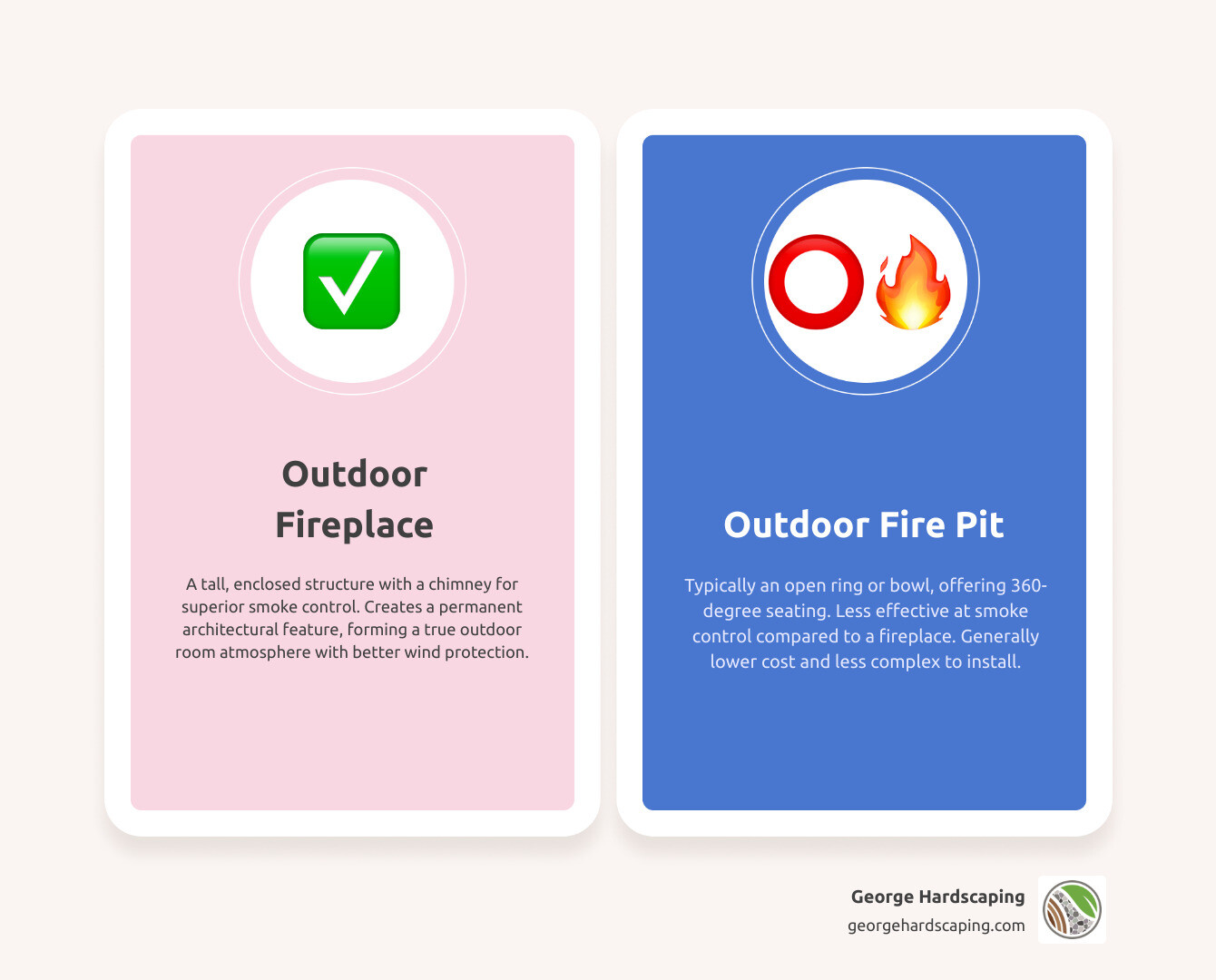
What is the difference between a fire pit and an outdoor fireplace?
While both features provide warmth and ambiance, they differ fundamentally in their structure, smoke control, function, and overall impact on your outdoor space.
- Structure and Seating: An Outdoor Fire Pits is typically a low-profile, open ring or bowl. This design allows for 360-degree seating, creating a casual, communal, campfire-like atmosphere.
- Smoke Control: This is the biggest functional difference. A fire pit has zero smoke control. As the wind shifts, guests are often forced to move their chairs to avoid the smoke. An outdoor fireplace, with its enclosed firebox, throat, and chimney, is specifically engineered to direct smoke up and away from the seating area, providing a much more comfortable and enjoyable experience.
- Ambiance and Function: A fireplace serves as a powerful architectural anchor. Its vertical presence helps to define a space, creating a more formal and enclosed “outdoor room” feeling. It also provides significantly better wind protection for the fire itself, making it easier to light and maintain a steady flame. While a fire pit is a gathering spot, a fireplace is the true centerpiece of a dedicated outdoor living room.
What is the best type of brick to use for the exterior?
This is an excellent question, as not all bricks are created equal. For the exterior veneer of your fireplace—the part exposed to the elements—you should use bricks rated for Severe Weather (SW). This is the highest durability grade for bricks. SW-grade bricks are manufactured to withstand high moisture and repeated freeze-thaw cycles without spalling (flaking) or cracking. Using a lower grade, like Moderate Weather (MW) or No Weather (NW), in a climate like New England’s will almost certainly lead to deterioration over time. While SW bricks may cost slightly more, they are a crucial investment in the longevity and appearance of your fireplace.
Conclusion: Your Investment in a Lifetime of Memories
Building an outdoor brick fireplace is a truly transformative project. It does more than just improve your backyard; it improves your entire home experience and lifestyle. It creates a magnetic, magical focal point for gathering with family and friends, a place where the simple act of sharing warmth and light leads to memories that will last a lifetime. From quiet, cozy evenings with a partner to lively summer gatherings and fall marshmallow roasts with children, the fireplace becomes the heart of your home’s outdoor life.
Whether you ultimately decide to build an outdoor brick fireplace as an ambitious DIY project or opt for professional installation, the path to a successful, safe, and durable result is paved with meticulous planning, the use of high-quality materials, and an unwavering adherence to safety standards. The DIY route can be an incredibly rewarding personal accomplishment, but it is an advanced undertaking that demands significant skill, time, and a deep understanding of the underlying engineering principles. From pouring a frost-proof foundation to correctly angling the walls of the smoke chamber, every single step is critical to the final outcome.
For most homeowners, the professional installation path offers the best and most secure return on investment. This path provides peace of mind and a guaranteed, high-quality result that a DIY project often cannot match. While the upfront cost is higher, you are investing in years of expertise that ensures your fireplace is built to code, drafts perfectly, and is engineered to withstand the harsh freeze-thaw cycles of New England winters. Professional craftsmanship is evident in every detail, from the structural integrity of the core to the flawless aesthetic of the final veneer.
This project is far more than a structure of brick and mortar; it’s a long-term investment in your home’s financial value and, more importantly, in your family’s happiness. The real return is measured not in dollars, but in decades of enjoyment and connection.
If you feel inspired by the possibilities but are daunted by the scope of this project, the expert team at George Hardscaping is here to guide you. We specialize in designing and building stunning, durable outdoor living spaces for homeowners across Essex County and the North Shore. We can translate your vision into a beautiful, functional fireplace that will become the cherished centerpiece of your backyard for many years to come.
Contact us today to discuss your options for a custom outdoor fireplace and take the first step toward changing your backyard into the ultimate personal retreat.
