
Patio with Fireplace: Ultimate Dream 2025
The Dream of Year-Round Outdoor Living
A patio with fireplace transforms your backyard into a true four-season room—part gathering place, part architectural statement, and part personal retreat. When thoughtfully designed and professionally built, it becomes the warm heart of your outdoor living space, extending your season well into spring and fall and making cool New England evenings not just comfortable, but unforgettable.
Getting the builder and the plan right is non-negotiable. A seasoned contractor will design for prevailing winds, seating sightlines, and code-compliant clearances, and will select materials that can endure New England’s freeze-thaw cycles. From reinforced footings below the frost line to proper chimney sizing and ventilation, professional expertise ensures safety, performance, and longevity. That’s why partnering with an expert is the most critical decision you’ll make.
Choosing poorly can lead to smoke issues, cracking masonry, code violations, or a fireplace that simply doesn’t suit how you live. This guide helps you define your goals, compare fuel types, choose materials, and understand permitting, timelines, and maintenance—so you can evaluate builders, ask the right questions, and protect your investment. Along the way, we’ll point to helpful resources and related services, including patio design and installation, complementary hardscaping, and even outdoor kitchens for the ultimate entertainment hub.
Strong next step: Ready to discover what’s possible on your property? Request a free, no-pressure design consultation and estimate to get started today.
The Enduring Allure: Why a Fireplace is the Ultimate Patio Upgrade
Imagine a crisp October evening when you don’t have to go inside—you simply light the fire, settle into deep-seated chairs, and watch the flames dance against the evening sky. A patio with fireplace doesn’t just extend your outdoor season; it reshapes how you live at home. It turns your patio into a destination, a magnet where conversations linger and memories take root.
Why homeowners love it
- Emotional appeal: Fire is a primal focal point. It gathers people, quiets busy minds, and makes even ordinary nights feel special.
- Everyday function: With smart placement and the right size firebox, a fireplace makes shoulder seasons feel like high summer. You gain weeks or months of usable outdoor time.
- Architectural anchor: A well-proportioned chimney and surround add vertical interest outdoors, visually balancing open sky and low patio surfaces. Done well, it feels like it has always belonged.
Financial confidence and market appeal
- Outdoor living is consistently cited as a value driver because it offers a tangible lifestyle upgrade buyers can see and feel during showings. According to the National Association of Realtors, outdoor features are among the improvements that resonate most with buyers and can influence perceived value.
- While ROI varies by region and project scope, luxury hardscape features like fireplaces often contribute to a stronger overall first impression and may help differentiate your home in competitive markets. Many homeowners tell us the real payoff, though, is personal: their patio becomes the most-used “room” at home.
Comfort and convenience choices
- Wood-burning: Classic ambience, crackle, and aroma. Requires dry wood storage, occasional ash cleanout, and careful consideration of smoke direction.
- Gas (natural or propane): Instant-on convenience and minimal maintenance with realistic log sets and clean burning. Ideal near covered spaces or in tighter neighborhoods. Explore options!
Why professional design and build matters
- Codes and safety: A compliant chimney height, correct clearances from combustibles, and a proper footing below the frost line are essential. Getting these wrong can lead to smoke spillage, settling, or worse.
- Placement and scale: Properly sizing the firebox to the patio and aligning the fireplace with main sightlines—both from the house and within the seating area—make the difference between “nice to have” and “we live out here.”
- Integration: Pairing a fireplace with coordinated paving, steps, seating walls, and soft landscape creates a true outdoor room.
Bottom line: If you want extended seasons, a dramatic focal point, and a feature that lifts everyday living, a professionally designed and built outdoor fireplace is a high-impact upgrade with enduring appeal.
Step 1: Envisioning Your Perfect Outdoor Hearth
Before choosing stone or picking fuel, clarify how the fireplace will serve your life. This vision informs size, placement, material choices, and budget.
Define its primary role
- Primary heat source: If warmth matters most, orient the fireplace so it radiates heat toward the main seating zone. Consider a generous firebox, a lower hearth to keep flames visible when seated, and a wind-aware position.
- Architectural centerpiece: Prefer a statement piece? Emphasize symmetrical massing, a defined mantel, and a proportional chimney stack that complements your home’s style and scale.
- Entertainment hub: If you host often, plan for circulation, side tables, and a bar or kitchen zone nearby. See outdoor kitchens and grill stations.
- Cooking feature: Some designs incorporate swing-out grates, a smoke shelf suited to cooking, or even a companion pizza oven for food-forward gatherings.
Right-size the experience
- Patio size and furniture: Oversizing can overpower a small patio; undersizing can look accidental on a large terrace. Mock up seating with painter’s tape or cardboard templates to visualize spacing and traffic flow.
- Sightlines: Walk through your home and look out the main windows and patio doors. Position the fireplace to create a compelling view from key rooms.
- Transitions: Plan clear, generous paths between the house, fireplace, and any adjacent areas (dining zone, play lawn, or garden).
Comfort, safety, and everyday use
- Wood storage and tools: If burning wood, include integrated storage cubbies, spark screen solutions, and a concealed ash cleanout plan.
- Shade and shelter: If your patio bakes in the sun or sees frequent drizzle, coordinate a pergola or roof with the fireplace design (ensuring proper clearances and venting).
- Universal design: Consider a level threshold from house to patio, slip-resistant pavers, and a seating layout with ample egress. For accessible design concepts at home, the AARP HomeFit Guide offers helpful tips.
Align with your home’s architecture
- Materials and color: Pull tones from your siding, roofing, or existing masonry for a cohesive look. See inspiration across styles in our gallery.
- Cohesive hardscape: A fireplace shines when it’s part of a larger composition—patios, steps, retaining elements, and plantings. Explore related services.
Document your vision
- Collect 3–5 reference photos, note your must-haves and nice-to-haves, and sketch a rough layout. Sharing these with your builder accelerates design and helps lock in a realistic scope and budget early.
Step 2: Exploring Fireplace Types, Fuels, and Materials
Choosing between permanent and portable, wood and gas, and brick or stone shapes everything from daily convenience to visual impact.
Permanent vs. portable
- Permanent fireplaces: Custom-built, structural elements in stone, brick, stucco, or concrete. They deliver the most heat, become a true focal point, and can add meaningful property appeal. They require design, permitting, excavation, a reinforced footing, and experienced masonry.
- Portable units: Chimineas and gas fire tables are flexible and budget-friendly. They are great for renters or test-driving fire features but offer less heat, smaller scale, and limited long-term value.
Fuel choices and practical implications
- Wood-burning: Traditional flames and sound with the aroma of real wood. Plan for dry storage, kindling, and ash disposal. Be mindful of neighbors and the wind. For responsible burning practices and understanding emissions considerations, see the U.S. EPA’s BurnWise resources.
- Natural gas or propane: Instant ignition, adjustable flames, and virtually smokeless operation—excellent near covered spaces or where neighbors are close. Running a natural gas line requires licensed installation; propane can use concealed tanks. Learn about gas outdoor fireplaces: https://georgehardscaping.com/gas-outdoor-fireplace/.
Safety and code considerations for any fire feature
- Clearances and venting: Maintain required distances from structures, overhangs, and vegetation. Proper chimney height and flue sizing improve draft and reduce smoke spillage. See NFPA guidance on outdoor fire safety.
- Under a roof or pergola: Gas often simplifies ventilation under covered areas, but both gas and wood must meet clearance and venting rules. Your builder will design for adequate draft and non-combustible surrounds.
- Local compliance: Most towns adopt versions of the International Residential Code (IRC). Your contractor should handle permits and inspections. Learn more about model codes at the International Code Council.
Common materials and what they mean for your project
- Stone: Natural, durable, and timeless—from rugged fieldstone to refined stacked-stone veneers. Excellent weathering in New England with minimal maintenance. Higher material and labor cost but exceptional longevity.
- Brick: Warm, classic character with endless bond patterns and color blends. Works especially well for traditional homes and can tie into existing brickwork.
- Stucco: Clean, modern lines with customizable color. When applied over a proper masonry substrate or block, it offers a sleek, cost-effective finish; periodic touch-ups may be needed.
- Concrete: Versatile and moldable for modern forms or integrated benches. Can be smooth, board-formed, or textured, and may be stained or sealed.
| Material | Cost (Average) | Maintenance | Style |
|---|---|---|---|
| Stone | High | Low | Natural, Rustic, Mediterranean, Traditional |
| Brick | Medium | Low | Traditional, Classic, Transitional |
| Stucco | Low to Medium | Medium | Modern, Contemporary, Mediterranean |
Note: These are broad averages. Actual pricing depends on size, complexity, and specification.
Beyond the face: firebox, flue, and components
- Firebox and throat: Proper dimensions, smoke shelf design, and flue size work together to improve draft and reduce smoke blowback.
- Flue liners and caps: Quality liners excel at heat management and draft. A cap with spark arrestor helps keep embers in and critters out. For maintenance best practices, the Chimney Safety Institute of America is a useful resource.
- Accessories: Andirons, grates, and spark guards for wood; realistic log sets, glass media, and wind guards for gas. Plan storage spots to keep the look tidy.
Choosing the right package
- Heat vs. aesthetics: If warmth is priority one, lean toward a larger wood firebox or higher-output gas burner. If you value low-maintenance ambience, a gas unit with a refined surround may be ideal.
- Budget alignment: If you want the look of stone at a more modest budget, consider a masonry core with a high-quality stone veneer or a stucco finish with stone accents.
If you’re unsure which direction to take, schedule a design consult. We’ll walk you through fuel options, draft considerations, and finishes—then align everything with your patio design and installation plan.
Step 3: Designing the Perfect Patio with Fireplace for Your Home
The best outdoor fireplaces feel native to the home and landscape. Design is where vision, function, and code compliance meet.
Popular design styles
- Rustic: Fieldstone, chunky mantels, and earthy joints create a lodge-like feeling.
- Modern: Crisp geometry and linear fireboxes pair with stucco, smooth concrete, or precise stone veneers.
- Traditional: Symmetry, brick bonds, and a defined mantel evoke timeless elegance.
- Mediterranean: Stucco in warm tones with arched openings and occasional tile accents.
- Craftsman: This style emphasizes natural materials, honest craftsmanship, and finely proportioned details. Think sturdy timber mantels, exposed joinery, and stone or brick that harmonizes with the surrounding landscape. The focus is on creating a structure that feels both robust and artfully integrated.
Layout and integration essentials
- Scale and proportion: Size the fireplace to the patio and home elevation. A common guideline is to keep the fireplace mass roughly one-third the width of the main patio edge it anchors, then adjust for context.
- Chimney height and draft: Proper chimney height relative to rooflines and nearby structures helps carry smoke away. Your builder will size the flue and chimney to local requirements.
- Hearth and seating: A slightly raised hearth can provide backup seating and a safe non-combustible zone. Orient seating to keep primary pathways clear.
- Built-in seating: Low seating walls or integrated benches create natural conversation zones and free up space for movable furniture.
- Wood storage and mantels: Storage cubbies keep logs dry and close at hand; a mantel adds visual presence and a place for seasonal decor.
Siting for comfort and performance
- Wind and microclimate: Set the fireplace where prevailing winds are least likely to push smoke toward seating. Use fencing or plantings as windbreaks when needed.
- Sun and shade: Place the seating area for morning or afternoon sun, and consider a pergola or umbrella for high-summer comfort.
- Views and indoor alignment: Line up the fireplace with key sightlines from kitchen and living spaces so the fire remains a visual anchor, even when you’re indoors.
Finish details and companion features
- Hardscape continuity: Match or complement patio materials so the fireplace and paving read as one composition.
- Lighting and power: Layer path lights, wall wash lights, and overhead accents for nighttime ambience; include an outdoor-rated outlet for string lights or speakers.
- Entertainment zone synergy: If you’re planning a grill station or full outdoor kitchen, place it within a few steps but out of smoke drift.
Design process, deliverables, and permits
- Concept to construction: Expect a measured site plan, scaled layout, and material selections. Many towns require permit drawings; your contractor should prepare and submit them.
- Landscape context: Coordinate plant choices with radiant heat and ember safety; avoid resinous conifers too close to the hearth. The American Society of Landscape Architects offers useful design insights.
Strong next step: Ready to translate inspiration into a buildable plan? Start your patio and fireplace design with our team.
Step 4: The Build: From Foundation to First Fire
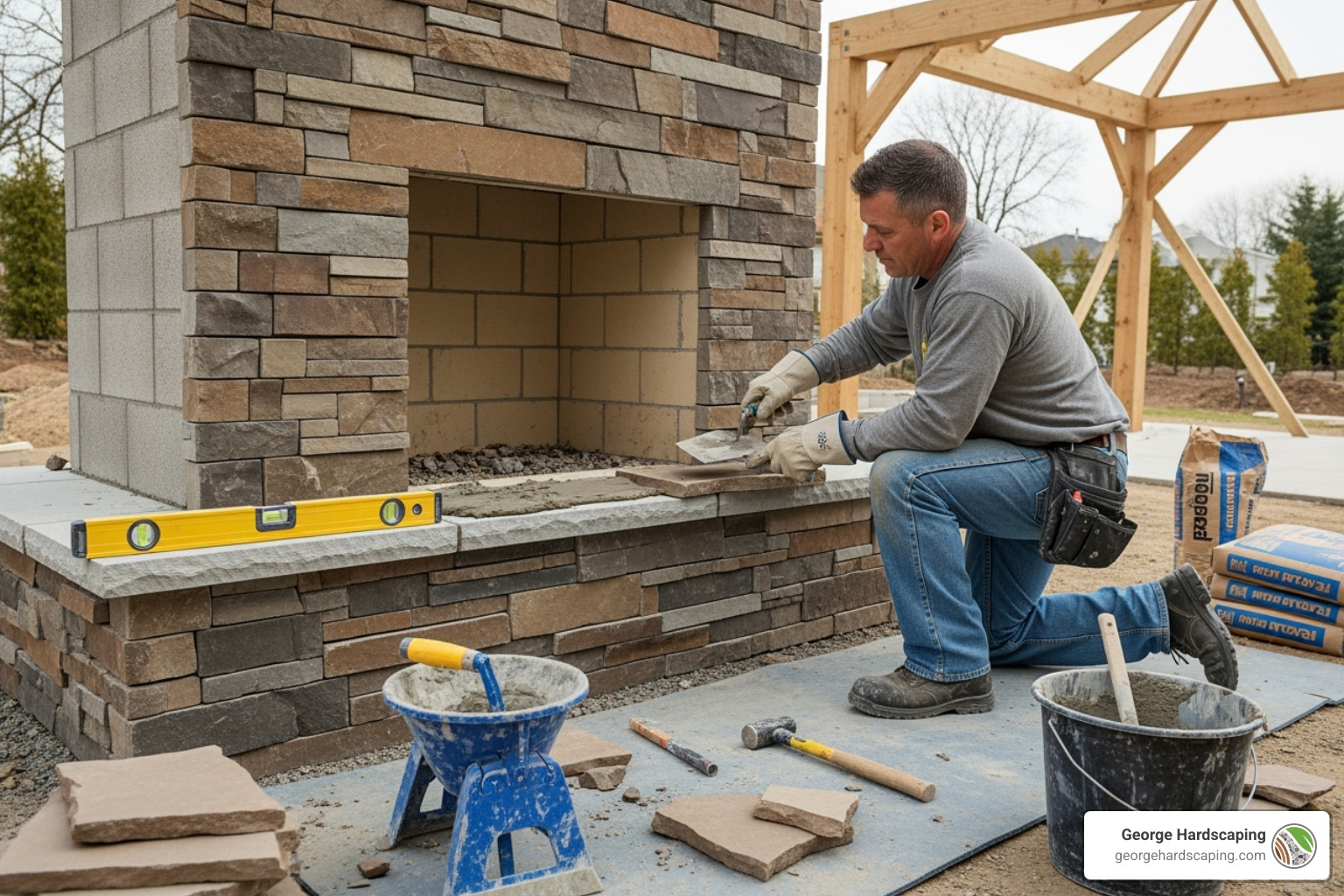
Outdoor fireplaces combine live fire, masonry, and structural loads—this is work for experienced professionals who understand local codes, soils, and seasonal conditions.
Installation and safety considerations
- Codes and permits: Towns across Essex County follow specific setbacks, chimney heights, and fuel rules. Your contractor should handle permitting and inspections to ensure compliance. Model codes are published by the International Code Council.
- Foundation: Fireplaces can weigh several tons and demand a reinforced concrete footing below the frost line to prevent heaving or tilt.
- Clearances: Maintain safe distances from siding, fences, and plantings; specify non-combustible finishes near heat.
- Venting and draft: Correct flue sizing and chimney height support clean burn and smoke control. For fire safety guidance, see the National Fire Protection Association.
Typical project stages
- Consultation and design: Site assessment, code review, and concept drawings; material selections and final scope.
- Site prep and excavation: Utility mark-outs, excavation for footing, and base preparation.
- Footing and core build: Reinforced concrete footing, masonry core, and firebox construction.
- Flue components and chimney: Liner installation, throat/smoke shelf integration, chimney build, and cap/spark arrestor.
- Finish work: Stone or brick veneer, stucco or concrete finishing, mantels, storage cubbies, and cleanup.
- Commissioning: Burn-in and safety checks, owner walkthrough, and maintenance orientation.
Budgeting and variables
- Range: Many custom outdoor fireplaces land between $3,000 and $15,000+, depending on size, material, fuel, site complexity, and finishes. Natural stone and intricate detailing increase cost; stucco over masonry can be budget-friendly without compromising performance.
- Site factors: Access for materials and equipment, extensive excavation, or complex drainage can affect cost and schedule.
- Lead time: Materials, permit timelines, and weather windows influence scheduling. Your builder should provide a clear timeline and communication plan.
Maintenance for longevity
- Wood-burning: Remove cool ash, keep wood dry, and schedule periodic chimney evaluations. The Chimney Safety Institute of America offers maintenance guidance.
- Gas systems: Have a technician check connections and burners annually; keep vents and intakes clear.
- Masonry care: Consider a breathable sealer on stone or brick; inspect joints after winter and address any movement promptly.
Why professional installation pays off
- Safety: Correct clearances, ventilation, and structural design protect people and property.
- Performance: Proper draft and proportion produce cleaner burns and better heat.
- Durability: A well-built fireplace weathers decades of use and improves your property’s appeal.
If you’re exploring a new build or an upgrade from a kit, talk to our specialists. We handle design, permitting, and construction from start to finish: professional installation https://georgehardscaping.com/professional-fireplace-installation/ and custom solutions https://georgehardscaping.com/custom-fireplace-installation/.
Frequently Asked Questions about Patio Fireplaces
We’ve compiled clear answers to the questions homeowners ask most before investing in an outdoor fireplace.
Can I install an outdoor fireplace on a covered patio or deck?
Yes—with careful design. Under a roof, ventilation and clearances are critical. For wood-burning fireplaces, the chimney and flue must be correctly sized to establish strong draft. Gas units simplify ventilation because they are virtually smokeless, but they still require proper clearances and, in some cases, specific venting. Use only non-combustible materials near heat. Your local building department will specify rules that your contractor will follow; many municipalities use model codes from the International Code Council.
What’s the difference between a fire pit and a fireplace?
A patio with fireplace is a contained structure with a dedicated firebox and a chimney to carry smoke up and away. It creates a focal wall and radiates heat forward, similar to an indoor hearth—ideal for establishing an “outdoor living room.” A fire pit is lower, open, and invites 360-degree gathering with a campfire vibe. Both are great; choose based on the atmosphere you want. We design and build both fireplaces and custom fire pits: https://georgehardscaping.com/custom-fire-pits/.
How long does a custom fireplace build take?
Design and permitting can take a few weeks to a couple of months depending on your town and material decisions. On-site construction often runs one to four weeks. Weather can affect schedules, particularly for concrete and masonry work in New England. We provide a project-specific timeline during consultation.
Which is better—wood or gas?
- Choose wood if you love the ritual, sound, and scent of real logs and don’t mind handling wood and ash. Burn seasoned wood and follow local guidelines; see EPA BurnWise for best practices.
- Choose gas if you value convenience and clean operation: instant-on, adjustable flame, and minimal cleanup. Gas is often preferred near covered areas and in denser neighborhoods.
How much does an outdoor fireplace cost?
Many projects range from $3,000 to $15,000+, with size, complexity, materials, and fuel type as key drivers. Natural stone and intricate design features raise cost; stucco or brick finishes can be more budget-sensitive. Site access, drainage, and electrical or gas runs also affect price. During consultation, we’ll align scope and budget so there are no surprises.
What are the key code and safety issues?
- Setbacks and clearances: Keep safe distances from structures, property lines, and overhead elements.
- Non-combustible zones: Use approved materials near and behind heat sources.
- Chimney height and caps: Correct height improves draft; add a cap with spark arrestor to help contain embers and keep wildlife out. See the National Fire Protection Association for general guidance.
Can I cook in my outdoor fireplace?
Yes, if the design accommodates it. Some fireplaces accept removable grates or feature cooking-friendly geometry. If cooking is a priority, we’ll tailor dimensions, materials, and accessories accordingly—or pair the fireplace with a dedicated grill station or outdoor kitchen: https://georgehardscaping.com/outdoor-kitchen-grill-station/.
Will smoke bother my neighbors?
Good design reduces smoke issues: correct chimney height, proper flue sizing, and siting away from prevailing winds. Burning seasoned hardwoods and keeping the fire hot and efficient also minimize smoke. For smoke-reduction guidance, visit EPA BurnWise.
What’s involved in maintenance?
- Wood: Remove ash once cool, inspect masonry seasonally, and schedule periodic chimney evaluations. The Chimney Safety Institute of America provides homeowner tips.
- Gas: Annual check of valves, connections, ignition, and burners. Keep vents clear and protect components from debris.
Can you add a fireplace to an existing patio?
Often yes. We’ll verify the patio’s structural capacity and, if needed, add a dedicated footing beside the patio and tie the surfaces seamlessly. If the patio is undersized, we can extend it during the build to set proper furniture spacing and circulation.
Can a fireplace go on a deck?
Wood-framed decks typically require improved structural design and non-combustible isolation details. In many cases, it’s more practical to build the fireplace on a new masonry landing adjacent to the deck. Your builder will evaluate loads, clearances, and code pathways before recommending a solution.
How do I plan lighting around the fireplace?
Layer low-glare path lights for safety, wall washing for texture, and targeted task lighting near seating or cooking areas. Coordinate electrical early, using outdoor-rated fixtures and wiring.
What about winterization?
For wood units, keep the firebox clean and protect the opening with a screen or cover when not in use. For gas units, shut off and cap supply lines if recommended by the manufacturer; protect control compartments from ice and debris. A breathable masonry sealer can help repel moisture during freeze-thaw cycles.
How can we integrate landscaping safely?
Choose heat-tolerant plantings and avoid resinous conifers too close to the hearth. Maintain clearances and use stone mulch near the fire area rather than shredded wood. For broader landscape planning insights, visit the American Society of Landscape Architects.
Do you handle design, permits, and construction?
Yes. We provide end-to-end service—from site evaluation and code coordination to design, permitting, masonry, and final walkthrough.
Ready to move from questions to a plan? Book your free on-site consultation and estimate now.
Bring Your Outdoor Vision to Life
A patio with fireplace becomes the warm, magnetic heart of your backyard—blending comfort, beauty, and year-round usability. When you partner with an experienced team, you get a safe, code-compliant structure that’s tailored to your home, your climate, and your lifestyle.
George Hardscaping designs and builds bespoke outdoor fireplaces and integrated patios across the North Shore of Essex County, MA—Beverly, Boxford, Danvers, Essex, Georgetown, Gloucester, Ipswich, Lynnfield, Manchester-by-the-Sea, Marblehead, Newburyport, North Reading, Peabody, Rockport, Rowley, Salem, Swampscott, Topsfield, and Wenham.
Strong CTA: Start your project with a free design consultation and written estimate today.
Want ideas before we meet? Explore our gallery of patios, fireplaces, and outdoor kitchens.
