What Makes a Brick Entryway Worth It (And What to Know Before You Choose One)
A well-designed brick entryway is one of the most impactful upgrades a homeowner can make — both for curb appeal and long-term value. Whether you’re thinking about a front walkway, porch floor, or interior mudroom, brick delivers a look that holds up for decades. The entrance of your home is the very first thing guests see, and it sets the tone for the entire property. Choosing a premium material like natural clay brick ensures that your home makes a lasting, sophisticated first impression.
Here’s a quick overview of what makes brick entryways stand out:
| Feature | Why It Matters |
|---|---|
| Durability | Brick can last 100+ years with proper installation |
| Slip resistance | Textured surface reduces fall risk, even when wet |
| Low maintenance | Seal, sweep, and occasional power wash — that’s mostly it |
| Design flexibility | Dozens of patterns, colors, and finishes available |
| Sustainability | Natural clay material with a very long service life |
| Curb appeal | Instantly elevates the look of any home exterior |
Modern interiors and exteriors are moving away from plain, flat surfaces toward materials with real texture and character. Brick fits that shift perfectly — it’s warm, grounded, and timeless without trying too hard. Unlike concrete or asphalt, which can look sterile and commercial, brick has an organic warmth that complements both historic and contemporary architecture.
For homeowners across Massachusetts — from Beverly and Gloucester on the North Shore to Woburn and Burlington further inland — brick is also a practical choice. It handles freeze-thaw cycles, wet New England winters, and heavy foot traffic better than many alternatives. The natural thermal properties of clay brick also mean it absorbs heat during the day and releases it slowly at night, which can help melt light snow and ice faster than other materials.
In this guide, we’ll walk through the best brick entryway designs, installation considerations, and what to expect when working with a professional masonry contractor.
Brick entryway terms simplified:
Why a Brick Entryway is the Ultimate Choice for Massachusetts Homes
When it comes to selecting materials for your home’s main threshold, New England weather demands something exceptionally tough. A brick entryway is not just an aesthetic upgrade; it is a structural shield against our harsh, ever-changing seasons. From the humid, salty air of coastal towns like Gloucester to the freezing inland winters of Woburn, your entryway must endure extreme environmental stress.
Slip Resistance and Safety
Massachusetts winters bring ice, slush, and constant moisture. Unlike polished stone or smooth concrete, clay brick boasts a naturally coarse, textured surface. This texture provides excellent slip resistance, ensuring a safer walking surface for your family and visitors. For homes with elderly residents or active children, this slip-resistant quality is invaluable, particularly during the wet spring and icy winter months in towns like Gloucester and Peabody. The natural grit of fired clay provides traction even when covered in a thin layer of frost, reducing the risk of dangerous slips and falls at your front door.
Durability and Freeze-Thaw Resilience
Our local climate is infamous for its freeze-thaw cycles. Water seeps into porous materials, freezes, expands, and causes cracking. High-quality, kiln-fired clay bricks are exceptionally dense and designed to withstand these extreme temperature swings without structural failure. When properly installed with a solid base and professional drainage planning, a brick entryway resists shifting, buckling, and cracking. This resilience is why historical structures throughout Woburn and Salem still feature original brickwork that has stood strong for centuries. The secret lies in the firing process, where clay is baked at temperatures exceeding 2,000 degrees Fahrenheit, fusing the minerals into a virtually indestructible block.
Long-Term Value and Sustainability
Investing in brick masonry means investing in a material that outlasts almost all modern alternatives. Real clay brick can easily last over 100 years with minimal maintenance. It is also an environmentally friendly, sustainable option made from natural clay and shale, which are abundant natural resources. Furthermore, because it does not decay, fade, or go out of style, it consistently boosts your home’s resale value and curb appeal.
To complement a stunning ground-level entry, many homeowners choose to pair their walkways with robust Steps and Brick Stairs to create a cohesive, grand entrance that stands the test of time.
Design Inspiration: 5 Timeless Brick Entryway Layouts
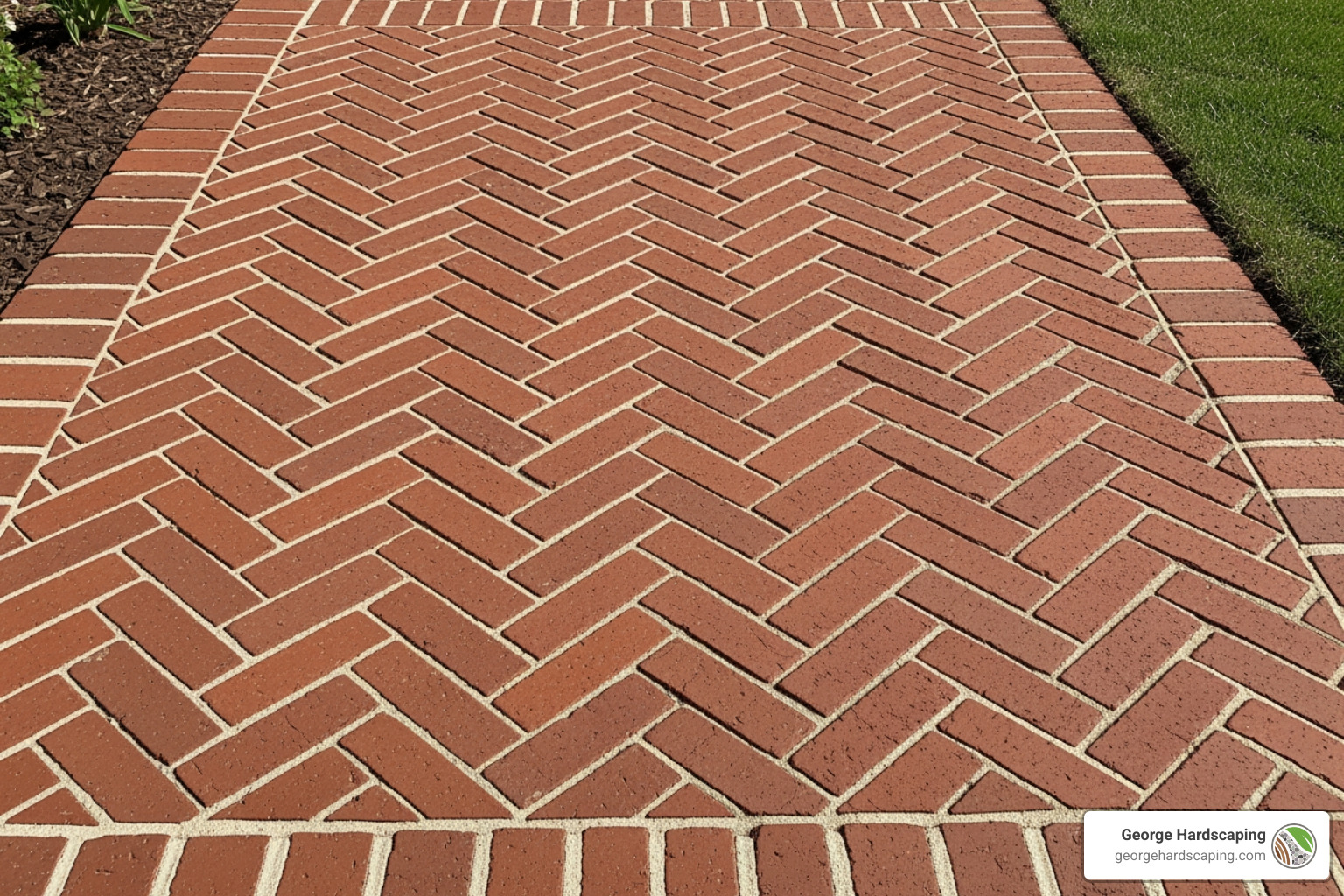
The layout pattern you select for your brick entryway dictates both its visual style and its structural integrity. Because brick is incredibly versatile, you can choose a pattern that matches your home’s specific architectural style, whether it is a historic colonial, a rustic farmhouse, or a sleek contemporary build. The arrangement of the bricks can also influence the perception of space, making a narrow walkway feel wider or a short path feel longer.
Classic Red Brick Entryway Walkways
For traditional, colonial, or Cape-style homes, nothing beats the classic red brick walkway. This design focuses on clean lines, warm tones, and polished border edging. Adding a distinct border (such as a soldier course, where bricks are laid standing upright side-by-side, or a sailor course, where they are laid lengthwise) helps frame the path and gives it a highly finished look. This classic approach highlights the natural variation in the brick colors, creating a warm and inviting path to your front door.
If you are looking for design inspiration to welcome your guests in style, you can explore these Charming Brick Walkways To Front Door Ideas For A Welcoming Entryway to find the perfect aesthetic match for your front yard.
Herringbone Brick Entryway Flooring
The herringbone pattern is a favorite for high-traffic entryways and mudrooms. Laid at either a 45-degree or 90-degree angle, this pattern features bricks placed perpendicular to one another in a zigzag fashion.
Beyond its striking visual texture, herringbone is highly regarded for its structural strength. The interlocking design distributes weight evenly, making it highly resistant to shifting under heavy foot traffic or the weight of heavy vehicles if used on a driveway. This makes it an exceptional choice for main entryways that see daily use.
While some ambitious homeowners attempt to replicate this look using thin brick systems, as detailed in this guide on a DIY Herringbone Brick Porch with Old Mill Brick – Old Mill Building Products , achieving perfect alignment and a durable outdoor finish requires a level of precision that is best left to professional masons.
Basket Weave and Stacked Bond Patterns
For a touch of vintage charm or mid-century modern style, the basket weave pattern is an excellent choice. This layout pairs horizontal and vertical bricks in alternating squares, creating an eye-catching geometric effect that resembles a woven basket. It is highly effective at disguising wear and tear, making it ideal for mudrooms and busy family entryways.
On the other end of the design spectrum, the stacked bond pattern—where bricks are laid directly on top of one another in straight grids—offers a clean, minimalist, and ultra-modern aesthetic. However, because stacked bond lacks interlocking strength, it must be installed with professional precision and a highly stable base to prevent shifting over time.
Key Installation and Material Considerations for Masonry Entryways
A beautiful brick entryway is only as good as the foundation beneath it. Before laying a single brick, several technical factors must be carefully evaluated to ensure the longevity of the installation. Skipping steps during the preparation phase is the leading cause of premature masonry failure, especially in regions with volatile weather.
Clay Brick vs. Concrete Pavers
While both options are popular, they offer different benefits:
| Feature | Clay Brick Pavers | Concrete Pavers |
|---|---|---|
| Composition | Natural clay fired at high heat | Molded concrete and aggregates |
| Color Longevity | Never fades (natural clay color) | Can fade over time due to UV exposure |
| Strength | Extremely high load-bearing capacity | Highly durable, but can wear down |
| Aesthetic | Classic, historic, and warm | Modern, varied shapes and colors |
Clay bricks are colored naturally by the minerals in the clay itself, meaning they will never fade, even after decades of exposure to direct sunlight. Concrete pavers, on the other hand, are colored with pigments that can gradually wash out or fade under intense UV rays.
Drainage and Sub-Base Preparation
In coastal towns like Ipswich and Gloucester, soil conditions can vary from sandy to heavy clay. Proper sub-base preparation is critical. We excavate the area to the correct depth—typically 6 to 8 inches for walkways and even deeper for areas subject to heavy loads. We then lay down a heavy-duty geotextile fabric to prevent soil mixing, followed by a compacted gravel base, and cover it with a precise layer of bedding sand.
Crucially, the entryway must be graded to slope slightly away from your home’s foundation (usually a minimum slope of 1/4 inch per foot). Proper drainage planning ensures that rainwater and melting snow run off safely, preventing pooling water that could freeze, expand, and damage the masonry or seep into your home’s basement.
Mortar vs. Sand-Set Installation
For outdoor walkways and steps, you can choose between a mortared (wet) installation or a sand-set (dry) installation. Mortared installations offer a rigid, solid feel and are perfect for matching existing brickwork, but they require expert care to prevent water from penetrating the joints. Sand-set installations use polymer sand to fill the joints, allowing for slight flexibility as the ground shifts. This flexibility is highly beneficial in New England, as it allows the walkway to breathe during freeze-thaw cycles without cracking.
If you are planning to build or upgrade your front steps along with your entryway, it is highly recommended to work with an experienced Contractor to Install Brick Stairs to ensure your porch steps are structurally sound and perfectly level.
Professional Masonry vs. DIY Thin Brick Systems
With the rise of thin brick veneer products and mesh-backed systems, many homeowners wonder if they should tackle their brick entryway as a DIY project. While thin brick can work beautifully for interior accent walls or kitchen backsplashes, outdoor flooring and high-traffic thresholds are a completely different story.
The Appeal and Limits of Thin Brick Veneers
Thin brick systems allow you to apply a thin layer of real clay brick over an existing concrete slab. While this is an option for protected porches or interior mudrooms, it does not offer the same structural integrity as full-sized brick pavers. Thin brick cannot support heavy loads on its own and is highly dependent on the condition of the concrete underneath. If the concrete slab cracks due to shifting soil in Danvers or Beverly, your thin brick surface will crack right along with it. Furthermore, thin brick is much more susceptible to moisture damage and freeze-thaw delamination when exposed to the elements.
The Risks of DIY Masonry
Achieving a level surface, consistent grout lines, and proper drainage slopes requires specialized tools and years of experience. Common DIY mistakes include:
- Poor base compaction: Leading to sunken, uneven bricks that create tripping hazards and collect standing water.
- Incorrect sloping: Which routes water directly toward your home’s foundation, potentially causing thousands of dollars in water damage.
- Poorly mixed mortar or improper joint sealing: Causing the bricks to pop loose after the very first winter freeze.
- Inconsistent joint spacing: Which ruins the visual appeal of patterns like herringbone or basket weave.
To understand the complexity of restoring and maintaining brick elements, you can read our guide on How to Repair Brick Steps to see what goes into professional masonry restoration. Hiring a professional ensures that your project is done right the first time, saving you thousands of dollars in future repairs and ensuring a beautiful, durable finish.
Frequently Asked Questions About Brick Entryways
How long does a brick entryway last in Massachusetts?
When installed by a professional masonry contractor, a traditional clay brick entryway can easily last 100+ years. The secret to this longevity lies in the preparation of the sub-base and the quality of the materials used. Even in coastal areas like Gloucester and Rockport, where salt air and intense winter storms put materials to the test, high-quality brick remains virtually indestructible. Over time, the brick will develop a beautiful patina that adds character to your home without compromising its structural integrity.
What is the average cost to install a brick entryway?
Based on public internet data and general industry averages, the cost to design and install a professional brick entryway typically ranges from $4,000 to $25,000.
Please note: This is a wide average cost range based on national online data and does not represent the actual pricing of George Hardscaping.
The final cost of your project will depend heavily on several factors:
- Size and Scope: The total square footage of the entryway and walkway.
- Design Complexity: Intricate patterns like herringbone require more cutting and labor than simpler running bond patterns.
- Site Preparation: The amount of excavation, grading, and old material removal required.
- Materials: The specific type of clay brick or pavers selected.
- Additional Features: Integrating custom steps, retaining walls, or landscape lighting.
How do you maintain a brick entryway floor?
Maintaining your brick entryway is surprisingly simple and requires very little effort. For outdoor spaces, we recommend:
- Regular sweeping: Keep the surface free of dirt, leaves, and organic debris to prevent mold and moss growth.
- Occasional power washing: A gentle wash once a year will keep the bricks looking vibrant. You can learn more about this in our guide on How to Clean Brick Steps.
- Sealing: Applying a breathable silane-siloxane sealer every 3 to 5 years protects the brick and mortar joints from moisture penetration and salt damage.
- Winter Care: In Woburn and other local towns, avoid using harsh chemical de-icers on your brick, as these can degrade the mortar joints over time. Opt for sand or calcium chloride instead.
Conclusion
A professionally designed and installed brick entryway is a timeless investment that elevates your home’s curb appeal, ensures safety, and stands up to the toughest Massachusetts weather. From classic red brick paths in Beverly to durable herringbone entryways in Gloucester, brick delivers unmatched beauty and structural integrity. It is a material that never goes out of style and only grows more charming with age.
At George Hardscaping, we specialize in premium masonry and hardscaping services across Essex County and the North Shore. Our team is dedicated to delivering flawless craftsmanship, whether you need a new walkway, a stunning porch, or professional Brick Step Repair Near Me. We bring years of local experience to every project, ensuring your entryway is built to last for generations.
Ready to transform your home’s entrance? Contact us today at +781-222-0805 to speak with our masonry experts, or Request an Estimate online to discuss your project and get a personalized quote!