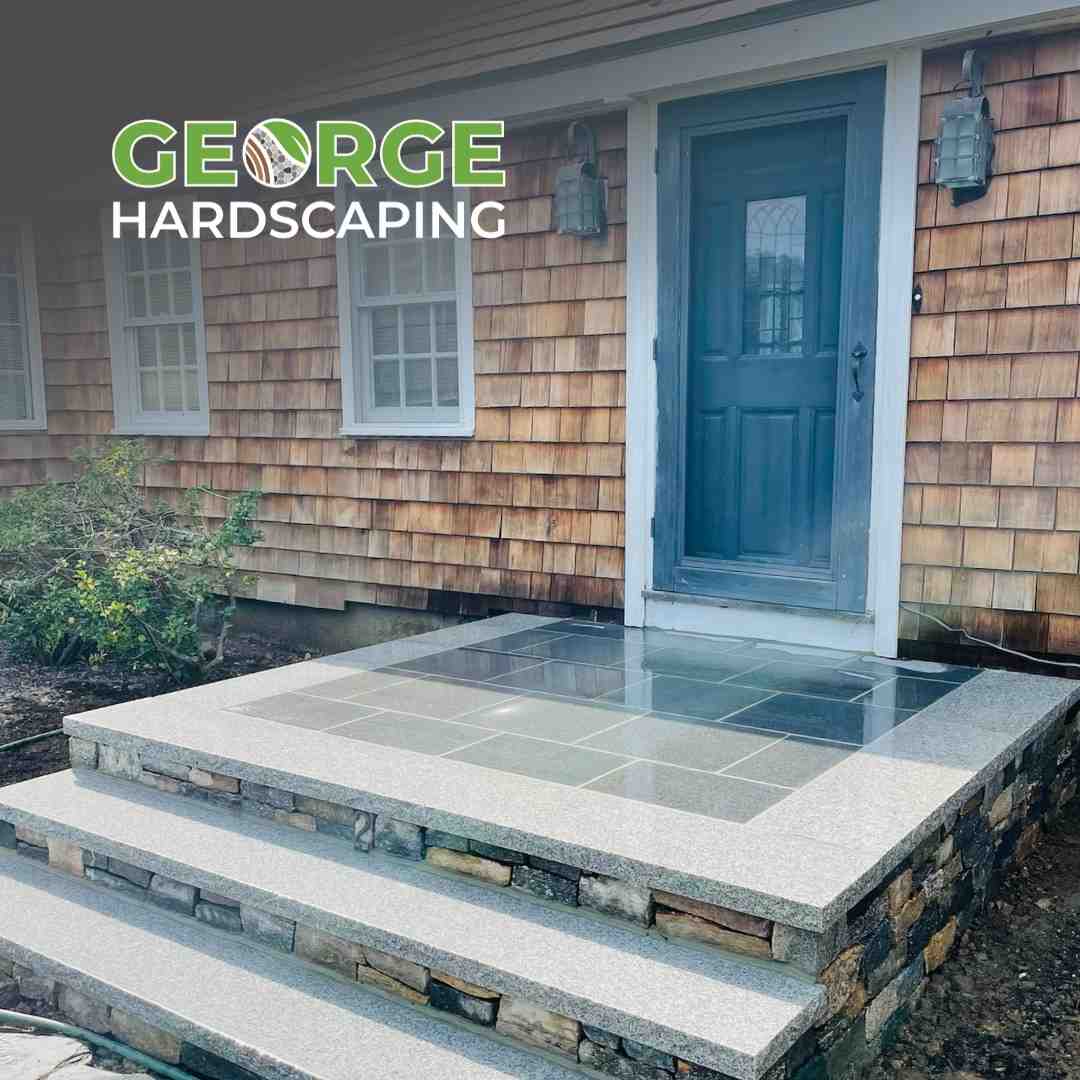
Why You Should Repair Stone Steps Before They Become a Bigger Problem
Maintaining the structural integrity of your home’s entryway is not just about aesthetics; it is a fundamental safety requirement. When you repair stone steps at the first sign of degradation, you are preventing a cascade of structural failures that can lead to total collapse. In the North Shore of Massachusetts, where historic homes meet a harsh coastal climate, stone masonry is a defining architectural feature. However, the very elements that make our region beautiful—the rain, the snow, and the shifting seasons—are the primary enemies of stone staircases.
According to the Natural Stone Institute, natural stone is one of the most durable building materials available, but its longevity depends entirely on the stability of its installation and the health of its mortar joints. If you notice movement, cracking, or sinking, waiting even one more season makes the damage worse and the eventual repair significantly more expensive.
Here’s a quick overview of what a professional-grade restoration process involves:
- Comprehensive Inspection: Evaluating each step for loose stones, hairline cracks, and sunken areas that indicate base failure.
- Surface Debridement: Cleaning the stone surfaces and meticulously removing old, failing mortar or degraded adhesives.
- Base Stabilization: Preparing the underlying foundation by compacting crushed stone and correcting drainage issues to prevent future settling.
- Precision Resetting: Re-leveling and resetting stones using the specific mortar type or high-strength adhesive suited for your stone’s porosity.
- Joint Integration: Filling joints with high-performance polymeric sand or specialized masonry mortar and allowing for a controlled cure (24–48 hours for initial set; up to 28 days for full structural strength).
- Protective Sealing: Applying a breathable penetrating sealer and establishing an annual inspection routine.
Stone steps take a relentless beating. In freeze-thaw climates like Essex County, MA, water seeps into microscopic gaps, freezes, and expands with a force of up to 30,000 PSI. This cycle cracks mortar from the inside out, leading to loose treads and sunken risers. By the time a homeowner notices a “wobble,” the internal structure is often already compromised.
While a simple reset might cost a few hundred dollars in materials for a DIYer, a full professional restoration can range from $1,500 to $4,500+ depending on the stone type and labor requirements. This guide provides the technical depth needed to tackle these repairs effectively, ensuring your entryway remains a safe, stunning focal point for decades.
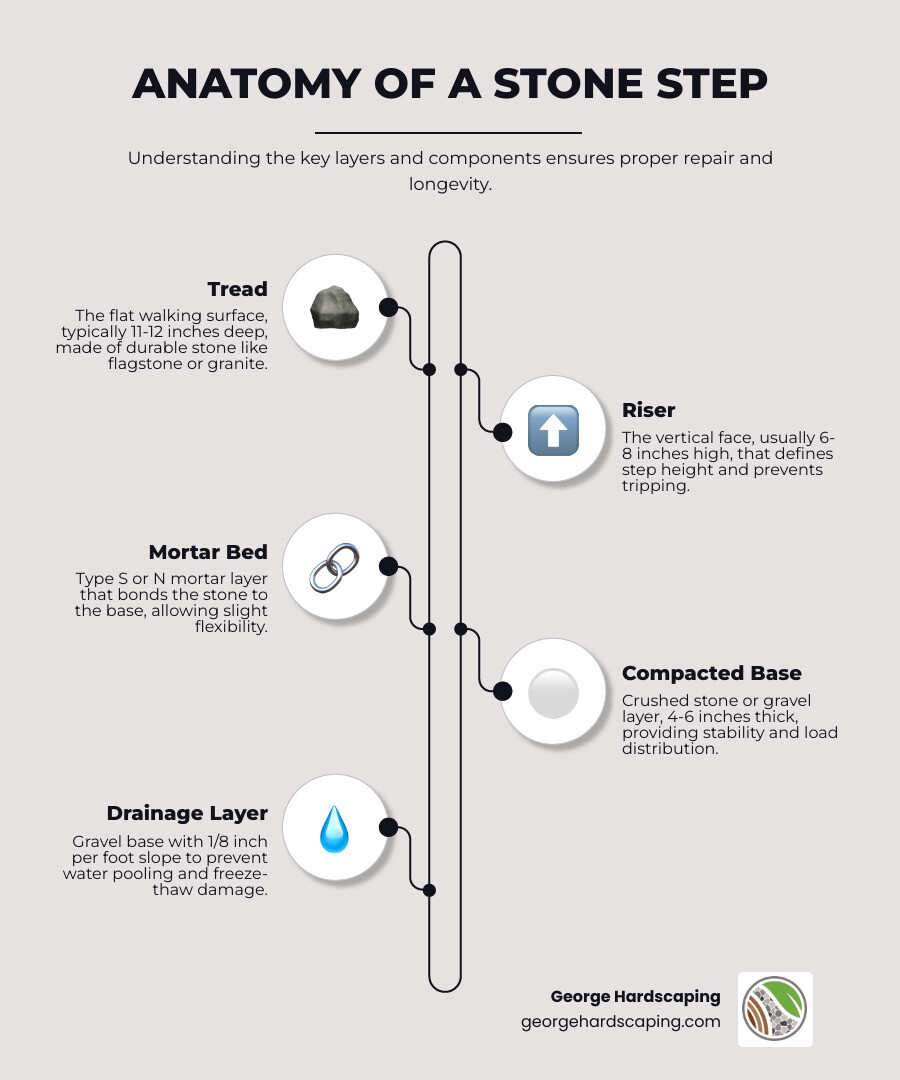
Simple Repair stone steps glossary:
- Stone Steps Contractor
- Stone steps cost
Identifying Common Issues Before You Repair Stone Steps
Before picking up a trowel, you must perform a forensic analysis of why the steps failed. In service areas like Beverly, MA and Ipswich, MA, the primary culprit is almost always the “freeze-thaw cycle.” This geological process occurs when water enters the pores of the stone or the gaps in the mortar. As the temperature drops, the water turns to ice, expanding by approximately 9%. This expansion exerts immense pressure on the surrounding masonry, eventually snapping the chemical bonds of the mortar.
Secondary to weather is the issue of soil mechanics. If the ground beneath your steps was not properly compacted during the initial stone-steps-installation, the weight of the stone (which can be hundreds of pounds per tread) will cause the foundation to sink. This is often exacerbated by poor drainage. If gutters or downspouts discharge water near the base of the stairs, the soil becomes saturated and loses its load-bearing capacity.
You should also look for stair-step cracks in brick or stone risers. These diagonal cracks are a classic symptom of differential settlement, where one side of the staircase is sinking faster than the other. Other common signs of trouble include:
- Loose Treads: Stones that “clunk” or shift when weight is applied, indicating a total bond failure.
- Erosion and Voids: Soil washing away from the sides, which can lead to a “hollow” sound when the steps are struck.
- Spalling and Delamination: Flaking of the stone surface, often caused by the use of harsh rock salts during winter.
- Thermal Expansion Cracks: Long, straight cracks that occur when the stone expands in the summer heat without adequate expansion joints.
To properly diagnose the situation, we recommend a “hands-on” pressure test. Walk the steps and apply weight to different corners of each stone. Sometimes a stone looks solid but has “directional instability,” meaning it only moves when stepped on from a specific angle. Use a piece of chalk or painter’s tape to mark every loose area and crack you find. This ensures you don’t miss a spot once the dust starts flying. Understanding these root causes is essential for a professional stone step repair that lasts more than a single season.
Essential Tools and Materials for Masonry Restoration
To Repair stone steps with professional results, you must understand the chemistry of your materials. A common DIY mistake is using a mortar that is too hard for the stone. For example, using a high-cement Type M mortar on a soft limestone can cause the stone itself to crack as the mortar refuses to give.
According to ASTM C270 standards, different mortar types serve different purposes. Generally, we use Type S mortar for structural repairs and heavy treads because of its high compressive strength (1,800 PSI). For repointing joints in vertical risers, Type N mortar (750 PSI) is often preferred for its superior workability and flexibility, which allows for minor thermal movement without cracking.
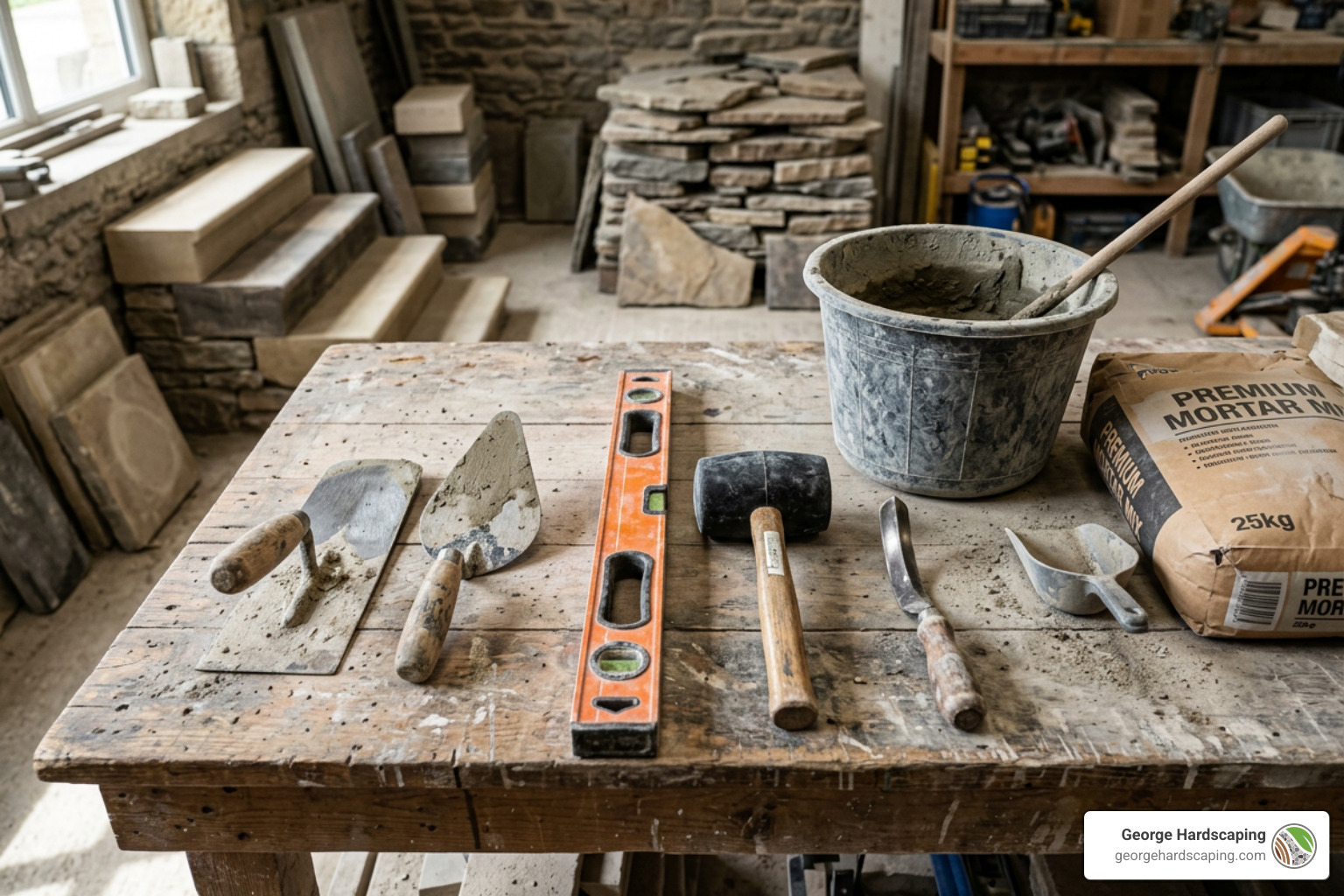
Here is a breakdown of the materials required for a high-quality repair:
| Material Type | Best Use Case | Key Benefit |
|---|---|---|
| Type S Mortar | Heavy treads and structural beds | High strength and durability |
| Type N Mortar | Repointing joints and soft stone | Greater flexibility for movement |
| Construction Adhesive | Dry-stack or thin-set repairs | Fast application, no mixing |
| Polymeric Sand | Joints between pavers or flagstones | Prevents weed growth and washouts |
| Bonding Agent | Pre-treating old concrete/stone | Improves adhesion of new mortar |
Beyond the “wet” materials, you’ll need a standard masonry kit: a brick trowel for spreading, a tuckpointing trowel for narrow joints, a 4-foot level to check your pitch, and a heavy rubber mallet for “persuading” stones into place without causing impact fractures.
High-Performance Cutting and Safety Equipment
When a stone is broken or needs to be resized, a standard hammer and chisel often result in jagged, unprofessional edges. For a clean finish, we utilize a battery-powered cut-off machine. These tools allow for precision cuts in granite and bluestone without the weight and fumes of gas-powered saws.
Safety is paramount when cutting stone. The Occupational Safety and Health Administration (OSHA) has strict guidelines regarding crystalline silica dust, which is released during cutting. Always use a saw with a water attachment to suppress dust and wear a NIOSH-approved respirator. This not only protects your health but also keeps the stone cool, preventing thermal shock that could lead to future cracking.
Step-by-Step Guide to Fixing Loose or Sunken Masonry
The secret to a lasting repair isn’t the stone itself—it’s the preparation of the substrate. If you simply apply new mortar over a sinking foundation, the step will fail again within months. The process begins with the careful removal of the loose stone. Use a pry bar and a cold chisel to break the old mortar bond, working slowly to avoid damaging adjacent stones.
Once the stone is removed, you must clear away all the old, crumbly mortar and debris. We often “score” the base—creating small notches in the underlying concrete or stone—to give the new mortar a mechanical “key” to bite into. This is a hallmark of professional stone step repair. If the step has sunken, you’ll need to rebuild the base. This involves adding layers of 3/4-inch crushed stone or “process” gravel and compacting it in 2-inch lifts. A hand tamper works for small areas, but for larger sections, a plate compactor is necessary to achieve the required density.
Preparing the Area to Repair Stone Steps Effectively
You cannot bond new mortar to old dust. After removing the loose stones and old mortar, we use a stiff wire brush to scrub the area clean. For deep restoration, cleaning outdoor masonry with a vacuum or even a light wipe-down with a masonry cleaner can remove oils and stubborn grime that prevent a chemical bond.
Before applying new mortar, lightly dampen the stone and the base with water. This is a critical step! If you apply wet mortar to a bone-dry stone, the stone will “wick” the moisture out of the mortar too quickly. This prevents the cement from hydrating properly, resulting in a weak, powdery bond that will fail under the first heavy frost.
Leveling and Resetting to Repair Stone Steps for Longevity
When you are ready for fixing loose stone steps, apply a thick bed of mortar (usually about 1-2 inches). We use the “furrowing” technique—using the tip of the trowel to create ridges in the mortar. This allows the stone to settle in more evenly and creates more surface area for the bond. For heavy granite or bluestone step options, we often brush a “slurry” made of pure Portland cement and water onto the bottom of the stone before placing it. This acts as a high-strength primer.
Once the stone is set, use your rubber mallet to tap it into place, checking your level constantly. Remember the golden rule of stair safety defined by the International Residential Code (IRC): riser heights should be uniform. A variation of even 3/8 of an inch between steps can cause a significant trip hazard. We aim for a pitch of roughly 1/8 inch per foot away from the house to ensure water sheds off the treads and doesn’t pool against the foundation. After the stone is level and pitched correctly, fill the joints and “slick” them with a jointing tool to seal the surface. Most mortars require 24 to 48 hours for an initial set, but they won’t reach full structural strength for about 28 days.
Specialized Techniques for Different Stone Types
Not all stones are created equal, and a technique that works for a rugged granite block might fail on a delicate piece of flagstone. Understanding the mineralogy of your steps is key to a successful repair.
- Granite: These are incredibly heavy and durable, often used in historic New England entryways. The main challenge is their weight and the fact that they are very non-porous. Using a Portland cement slurry is essential for getting mortar to stick to them. Granite is also highly resistant to salt, making it ideal for coastal areas.
- Bluestone: A dense sandstone, bluestone is popular for its color, but thin pieces (under 1.5 inches) are prone to cracking under heavy loads. If you’re looking for bluestone step options, we always recommend thicker “treads” for longevity. Bluestone can also “delaminate,” where layers of the stone peel off due to water penetration.
- Flagstone: Known for its natural, irregular beauty, flagstone can splinter over time. If a stone is flaking, it’s often better to replace the entire piece rather than trying to patch the surface. For more inspiration on material choice, check out these natural-stone-steps-ideas.
- Limestone and Travertine: These are softer, more porous stones. They are highly vulnerable to acid rain and salt damage. When working with limestone, avoid harsh chemical cleaners and stick to pH-neutral products to prevent etching the surface.
Achieving a Seamless Color and Texture Match
One of the biggest hurdles in DIY repair is making the new work look like it belongs with the old. If you use standard gray mortar on a 70-year-old staircase, the repair will stand out. We often mix a bit of local “stone dust” or masonry pigments into our mortar to match the existing color. For chips in the stone itself, you can use a two-part stone epoxy. Pro tip: save some of the dust from when you cut the stone and mix it into the epoxy. This creates a paste that matches the color and texture of the stone perfectly.
Handling Soft Joints and Material Transitions
Where stone steps meet a different material—like a wooden porch or a siding-covered wall—you should never use rigid mortar. Wood and stone expand at different rates. If you mortar that gap, it will crack within a season. Instead, we create a “soft joint” using high-quality masonry caulk or sealant. This allows the materials to move independently without letting water into the structure. This simple step prevents future heaving and rot, ensuring your stone-steps-installation remains intact for years to come.
Schedule a Professional Stone Step Installation
While minor resets and joint repairs are great DIY projects, some jobs require the heavy lifting and specialized knowledge of a professional masonry team. If your entire staircase is leaning, if the foundation has completely eroded, or if you want a complete aesthetic overhaul, it’s time to look into a full stone step installation service.
At George Hardscaping, we serve the North Shore with expert craftsmanship, ensuring every project meets local safety codes and stands up to the Massachusetts climate. Whether you are in Salem, MA or Newburyport, MA, we focus on structural integrity first, so your steps remain safe and beautiful for decades. We utilize advanced compaction techniques and high-performance materials that far exceed standard big-box store offerings. If you are comparing repair versus replacement, our team can also help you evaluate related masonry issues such as professional stone step repair, repairing loose stone steps, and design options for bluestone steps.
Ready to eliminate unsafe steps and upgrade your curb appeal? Request a free masonry estimate from George Hardscaping today!
Need expert help before the damage gets worse? Contact George Hardscaping now for a professional evaluation and repair plan.
Preventative Maintenance and Long-Term Care
The best way to Repair stone steps is to prevent the damage from happening in the first place. Once your repairs have cured for at least 28 days, apply a high-quality, breathable penetrating sealer. Unlike “film-forming” sealers that sit on top and make steps slippery, penetrating sealers soak into the stone to block water while still allowing internal moisture to evaporate. This is vital for preventing the freeze-thaw damage discussed earlier.
Review our comprehensive guide to landscape steps for more maintenance deep-dives, but here are the essentials:
- Seal Every 2-3 Years: Especially in high-traffic areas or steps exposed to heavy salt spray.
- Winter Safety: Never use rock salt (sodium chloride) on natural stone. It causes chemical erosion and accelerates the freeze-thaw cycle. Use stone-safe de-icers like calcium magnesium acetate (CMA).
- No Metal Shovels: Metal blades can scratch stone and chip the edges of your treads. Use plastic shovels with rubber strips to protect your investment.
- Refill Polymeric Sand: Check your joints every spring. If the sand has washed out, sweep in new polymeric sand to keep the stones locked tight and prevent weed growth.
- Bi-Annual Inspections: Walk your steps in the spring and fall. Catching a small crack today prevents a full collapse tomorrow. Look for signs of “efflorescence”—a white powdery substance that indicates water is moving through the masonry and leaching out salts.
Frequently Asked Questions about Stone Step Repair
Can stone steps be repaired without removing them entirely?
Yes, but it depends on the severity of the movement. If a stone is only slightly loose or has a minor hairline crack, you don’t always need to tear it out. For minor looseness, we can sometimes use an “adhesive injection” method, where a high-strength construction adhesive is squeezed into the gap to stabilize the stone. Small cracks can be filled with color-matched stone epoxy. However, if the stone “rocks” significantly or has sunken, removal is the only way to fix the underlying foundation issue. Ignoring a sinking base is the most common cause of repeat failures.
How long do repairs take to cure before they are safe for foot traffic?
While it’s tempting to use your front door immediately, patience is key for the chemical bonding process. Most modern mortars and adhesives reach an “initial set” within 24 to 48 hours. During this time, you should block off the stairs to prevent anyone (including pets) from stepping on the stones. However, the mortar won’t reach its full design strength for about 28 days. Avoid heavy impact, moving furniture, or power washing the steps during this first month. For more details on the curing process, consult the National Concrete Masonry Association guidelines.
When is it necessary to call a professional instead of doing DIY repairs?
You should call a professional if you notice any of the following:
- Widespread Sinking: If multiple steps are tilting or sinking, the entire foundation likely needs to be excavated and rebuilt with proper drainage.
- Structural Erosion: If the ground is washing out from under the concrete pad supporting the steps, creating a dangerous cantilever effect.
- Foundation Failure: Large cracks in the main concrete “core” of the staircase often require structural reinforcement.
- Safety Liability: If the steps are the primary entrance for a rental property or business, professional installation ensures you meet all safety and ADA compliance standards.
- Specialized Equipment: If the stones are massive granite blocks that require a crane or specialized lifting equipment, DIY is not an option.
Conclusion
Restoring your stone steps is one of the most rewarding home improvement projects you can undertake. It instantly boosts your home’s curb appeal and, more importantly, ensures the safety of everyone who visits. From the historic streets of Gloucester, MA to the quiet neighborhoods of Boxford, MA, well-maintained masonry is a hallmark of a cared-for home. By following the technical steps outlined in this guide—from proper base compaction to choosing the right mortar—you can ensure your repairs stand the test of time.
At George Hardscaping, we take pride in our North Shore masonry craftsmanship. We understand the unique challenges of Essex County’s geography and climate, and we build our steps to endure it. Whether you need a simple repair or a custom-designed outdoor space, we are here to help.
Don’t let your steps crumble for another season. Contact George Hardscaping for a consultation and let’s make your outdoor space solid, safe, and stunning once again.