
What Are Pool Deck Pavers — and Are They Right for Your Home?
Pool deck pavers are individual units made from concrete, natural stone, brick, or porcelain that fit together to form a durable, attractive surface around a swimming pool. They’re one of the most popular choices for homeowners across Massachusetts — from Beverly to Danvers to Gloucester — who want a backyard that looks great and holds up year after year.
In New England, our outdoor spaces are precious. We wait all winter for those few glorious months of summer, and when they arrive, we want to spend every possible moment poolside. However, the harsh coastal winds, heavy winter snows, and intense summer sun can take a massive toll on our outdoor hardscapes. That is why choosing the right material for your pool surround is one of the most critical decisions you will make for your property.
Quick answer: what you need to know about pool deck pavers
- What they are: Individual paving units (concrete, travertine, porcelain, brick) installed around a pool
- Why homeowners choose them: Safer than bare concrete, cooler underfoot, easier to repair, and far more attractive
- Best materials: Travertine and porcelain stay coolest; concrete pavers offer the best value; natural stone gives the most premium look
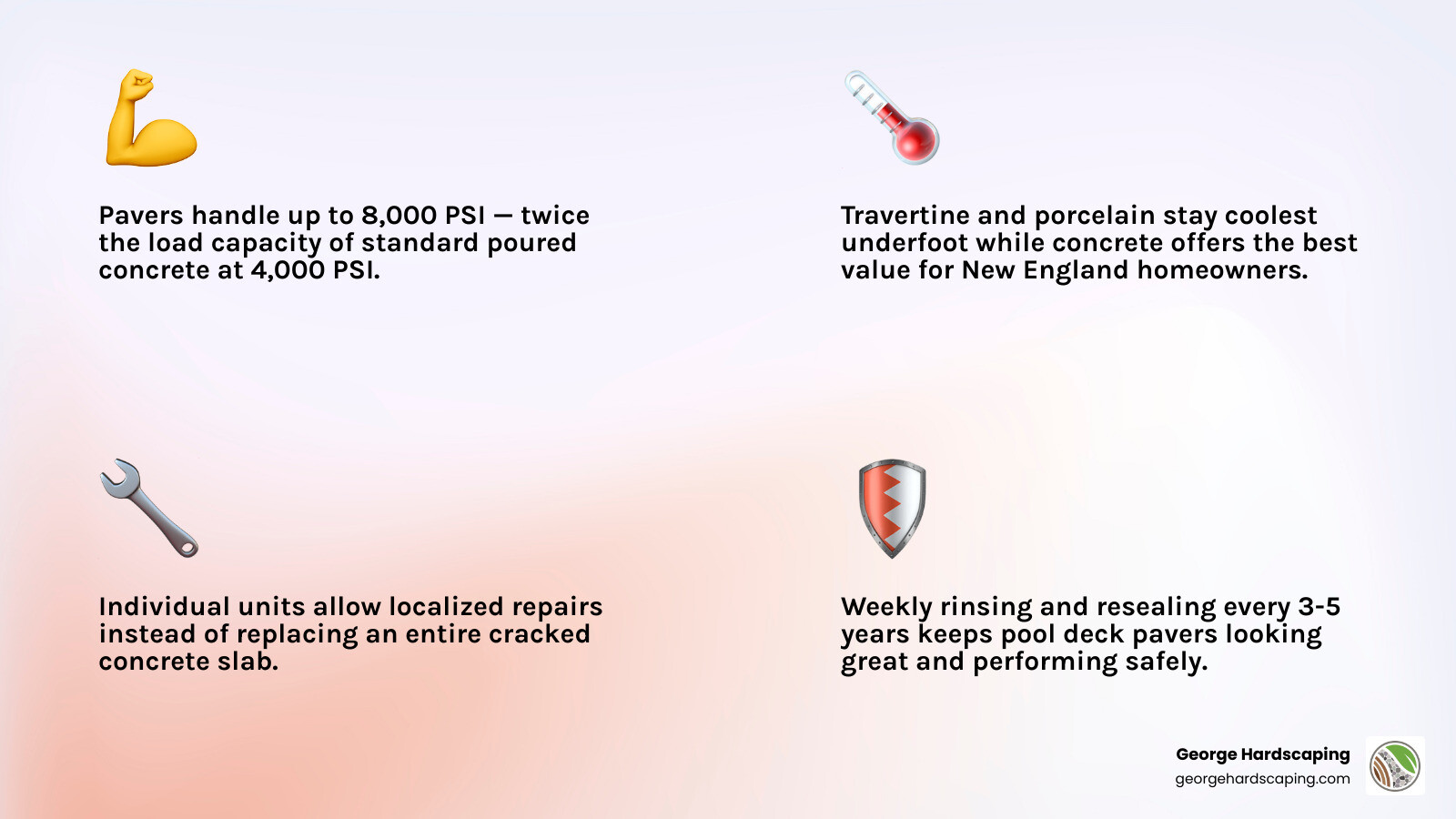
- Durability: Pavers handle up to 8,000 PSI — roughly twice the load capacity of standard poured concrete
- Maintenance: Rinse weekly; reseal every 3–5 years depending on material
- Cost: Widely variable based on material and project size (see the cost section below)
- Key installation factors: Proper base prep, drainage, and professional installation are critical for long-term performance
Here’s the honest truth about most concrete pool decks: they crack, they get hot, and they age badly. Poured concrete typically handles around 4,000 PSI, and improperly installed slabs often fail in under 10 years — with little to no warranty coverage. Pavers solve most of those problems in one upgrade.
Whether you’re building a new pool or replacing a tired old slab, choosing the right paving material makes a real difference — in comfort, safety, curb appeal, and long-term value.
This guide covers everything: materials, installation, maintenance, costs, and what works best in the New England climate.
Pool Deck Pavers terms simplified:
- how to seal pool deck pavers
- porcelain pavers for pool deck
- should i seal travertine pavers pool deck
Why Choose Interlocking Pavers Over Poured Concrete?
When planning a poolscape in Massachusetts, the debate between poured concrete and Pool Deck Pavers usually comes down to long-term performance. Standard poured concrete is highly prone to cracking due to Massachusetts’ harsh freeze-thaw cycles. When the ground shifts, concrete cracks.
To understand why this happens, we have to look at the physics of New England winters. During the colder months, moisture in the soil beneath your pool deck freezes and expands. This expansion exerts immense upward pressure on whatever is sitting on top of it—a phenomenon known as frost heaving. Because a poured concrete slab is a single, rigid monolithic structure, it has no way to relieve this stress. Consequently, it cracks. Once a crack forms, water penetrates deeper into the slab, accelerating the damage during the next freeze cycle.
In contrast, an Interlocking Pool Deck consists of individual units that flex and move naturally with soil shifts. The joints between the pavers are filled with flexible sand, allowing each individual unit to micro-adjust independently. This structural flexibility helps prevent the surface fractures that commonly affect solid concrete slabs. Furthermore, while typical poured concrete features a load capacity of around 4,000 PSI, high-quality interlocking pavers can withstand up to 8,000 PSI, offering twice the strength and durability under heavy patio furniture or foot traffic.
If a poured concrete deck cracks, repairing it seamlessly is difficult and often requires patching or full replacement. Patching concrete always leaves a visible scar because matching the color of aged concrete is virtually impossible. With pavers, localized repairs are much simpler. If a single paver is stained or damaged by pool chemicals, it can be removed and replaced with a matching piece. This ease of repair, combined with premium aesthetics, can enhance property appearance and long-term value.
Across Beverly, Danvers, Gloucester, Ipswich, and Woburn, professionally installed paver pool decks remain a strong choice for commercial-grade durability, safer footing, and long-term performance in Massachusetts conditions.
Main Types of Pool Deck Pavers and How They Compare
Choosing the right material is essential to balancing comfort, style, and safety. Below is a comparison of how the leading pool deck materials stack up against each other.
| Material | Heat Retention | Slip Resistance | Durability | Maintenance | Chlorine/Salt Resistance |
|---|---|---|---|---|---|
| Concrete Pavers | Moderate | Excellent (Textured) | High (8,000 PSI) | Low (Requires Sealing) | High |
| Travertine | Very Low (Stays Cool) | Excellent (Tumbled) | High | Low to Moderate | High |
| Porcelain | Low to Moderate | High (R11 Finish) | Very High | Extremely Low | Outstanding |
| Clay Brick | High (Gets Hot) | Moderate | High | Moderate | Moderate |
When designing your layout, finding the Best Pavers for Pool Area involves selecting a material that resists pool chemicals and salt while providing a safe, slip-resistant texture.
Concrete Pool Deck Pavers
Concrete pavers are highly versatile because they are manufactured in precise molds, allowing for uniform shapes, sizes, and a wide array of colors. Many projects across Beverly, Danvers, and Woburn use Concrete Pool Pavers because they offer the look of natural stone at a more accessible price point. From modern geometric patterns to rustic cobblestone textures, concrete options provide dependable grip and reliable structural integrity for Massachusetts pool environments.
Because they are engineered, concrete pavers can be designed with specific textures that mimic natural slate, flagstone, or even wood planks. They are also treated with protective sealants during or after manufacturing to resist fading from UV rays and degradation from chlorine. This makes them an incredibly practical and cost-effective choice for families who want a high-end look without the premium price tag of natural stone.
Natural Stone Pool Deck Pavers
For a luxurious, resort-style aesthetic, natural stone remains a top-tier option. Travertine, marble, limestone, and bluestone are leading choices for Pool Deck Stone Pavers. Travertine is highly favored because of its thermal properties—it naturally transfers heat back into the earth rather than retaining it, helping the surface stay cooler underfoot in direct summer sun.
Travertine is formed in geothermal hot springs, which gives it a unique cellular structure filled with tiny natural pockets. These pockets not only help dissipate heat but also provide natural slip resistance. To improve safety, a tumbled finish is often recommended because it provides a porous, non-slip texture that is gentle on bare feet. While natural stone can be more expensive to quarry and transport, its visual character and timeless appearance are hard to match. If you are considering this material, you can learn more about how to Install Travertine Pavers Around Pool to elevate your backyard design.
Porcelain Pool Deck Pavers
Porcelain is rapidly becoming a favorite for modern pool designs. Manufactured under extreme heat and pressure, Porcelain Pavers for Pool Deck are incredibly dense, non-porous, and resistant to UV fading, staining, and chemical damage. They absorb very little water, making them highly resistant to freeze-thaw issues—a major benefit in Massachusetts.
Because porcelain has a water absorption rate of less than 0.05%, water cannot penetrate the surface to freeze and cause cracking. This density also means that mold, mildew, and algae cannot take root, making porcelain exceptionally easy to clean. When comparing Natural Stone vs Porcelain Which Paver Reigns Supreme for Your Poolside Paradise, porcelain offers excellent stain resistance and very low maintenance, while natural travertine offers more organic variation. Both are strong options for projects in Gloucester, Ipswich, and Woburn depending on design goals and site conditions.
Critical Installation Factors for Long-Term Performance
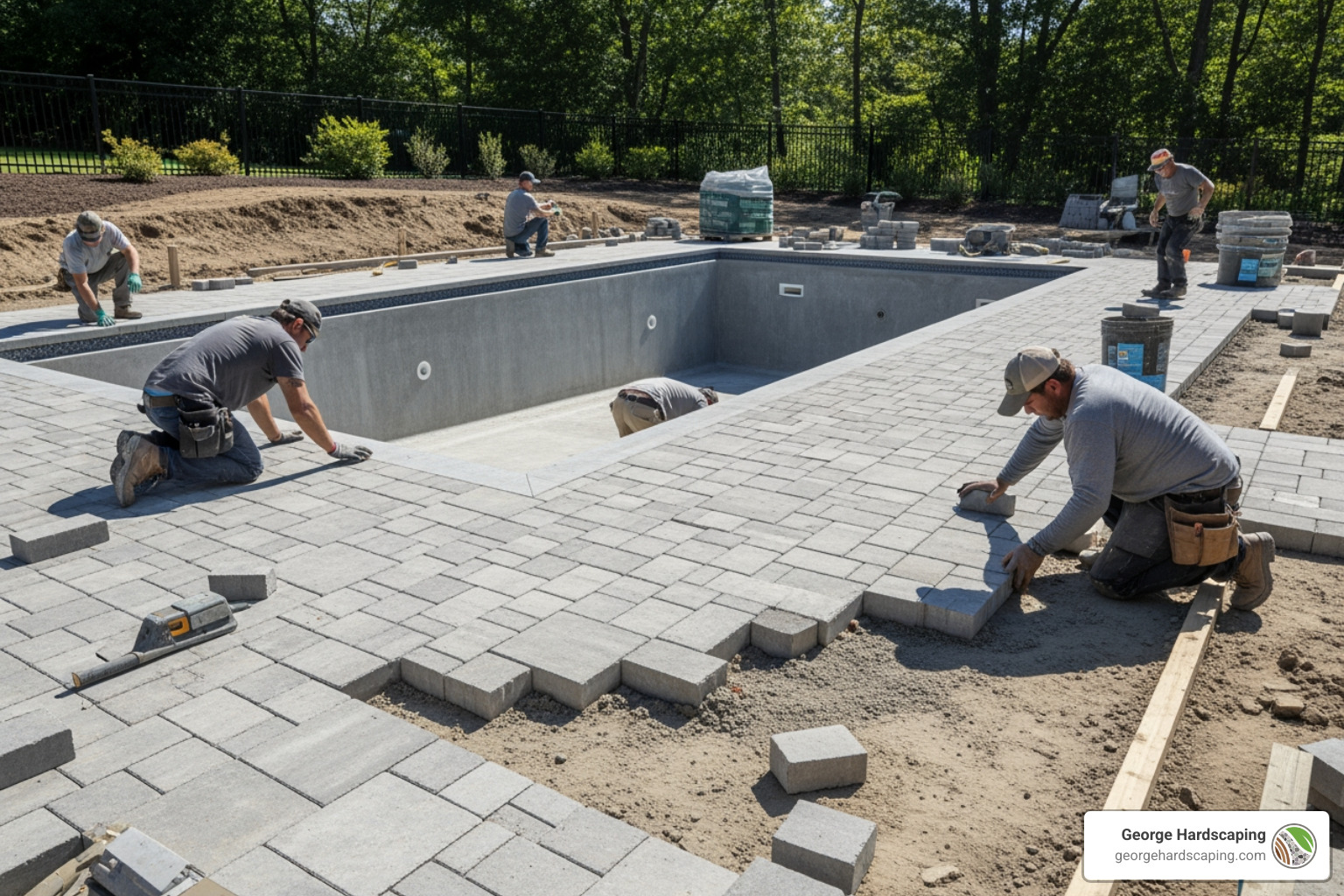
A pool deck is only as good as the foundation beneath it. Without proper preparation, even the most expensive pavers will shift, sink, or collect standing water. When we execute a Pool Paver Decks Installation in Gloucester, Danvers, Ipswich, Beverly, Woburn, and surrounding Massachusetts communities, we follow a rigorous installation process:
- Excavation and Soil Compaction: We excavate the area to the proper depth, which typically ranges from 8 to 12 inches depending on the soil type. Clay-heavy soils require deeper excavation to ensure a stable base. All organic material, roots, and loose soil are removed, and the subgrade is thoroughly compacted using heavy-duty vibratory plate compactors to prevent future settling.
- Base Preparation: A stable, gravel base is laid and compacted in lifts (layers of no more than 2 to 3 inches at a time). We use 3/4-inch crushed dense-graded aggregate, which provides the necessary structural support and allows water to drain away from the pool structure. This base is compacted to 98% Standard Proctor Density to ensure it will never shift under foot traffic or heavy patio furniture.
- Drainage Channels: Proper grading is vital. The deck must slope gently away from the pool (typically 1/4 inch per foot) to direct splash-out and rainwater toward drainage channels, preventing pooling. Standing water is not only a slip hazard but can also seep into the joints and destabilize the bedding sand over time.
- Weed Control and Edge Restraints: We install high-quality non-woven geotextile fabric between the subgrade and the gravel base to prevent soil mixing and help prevent weed growth. Heavy-duty PVC or concrete edge restraints are secured with 10-inch steel spikes to keep the pavers from shifting outward over time.
- Coping Integration: The pool coping — the edge transition between the pool shell and the deck — must be precisely aligned and secured using high-strength, flexible polymer-modified masonry adhesives to withstand constant water exposure and movement.
For homeowners interested in understanding more about the engineering behind interlocking paver systems, the Interlocking Concrete Pavement Institute (ICPI) is a respected industry resource covering best practices and technical standards.
Because pool decking is a technical hardscaping service, proper excavation, drainage planning, and base installation should be handled by an experienced professional team rather than approached as a DIY project.
Maintenance and Sealing for Poolside Hardscapes
To keep your pool deck looking pristine, simple routine maintenance is required. We recommend washing away surface debris weekly with a standard garden hose. For tougher stains or organic buildup, such as fallen leaves, acorns, or algae, a low-pressure power washer combined with a mild, biodegradable detergent is highly effective. Avoid using wire brushes or high-pressure nozzles too close to the surface, which can scratch or damage the surface of concrete or natural stone.
Joint sand replenishment is also crucial. Over time, wind, heavy rain, and pool splash-out can wash away the sand between the joints. We use high-quality polymeric sand, which contains special additives that bind together when activated with water. This creates a flexible, rubber-like joint that resists erosion, prevents weed growth, and deters insect infestation.
Sealing is another vital step in protecting your investment. While some porcelain products are naturally stain-resistant and do not require sealing, concrete, brick, and natural stones benefit immensely from professional sealing. Sealing shields the pavers from harsh pool chemicals, salt water, and intense UV rays while enhancing their natural colors.
There are two main types of sealers: penetrating sealers, which protect the stone internally without changing its appearance or slip resistance, and film-forming sealers, which can create a semi-gloss or wet-look finish. For pool decks, penetrating sealers are often preferred to maintain natural traction.
If you are wondering, “Should I Seal Travertine Pavers Pool Deck,” the answer is yes—especially in New England where winter salt and freeze-thaw cycles can degrade unsealed stone. Generally, sealants should be reapplied every 3 to 5 years to maintain peak protection.
Cost to Install Pavers Around a Pool in Massachusetts
When planning your pool deck budget, it is helpful to understand general market trends. Based on publicly available internet data, the average cost to install pool deck pavers nationally ranges from $15 to $25 per square foot. However, due to the unique demands of the Massachusetts climate, specialized labor, and high-quality regional materials, local pricing is highly variable.
Several factors influence the final cost of your project:
- Site Accessibility: If our crew can easily access your backyard with heavy machinery like excavators and skid steers, the project will move faster, reducing labor costs. Tight spaces, narrow gates, or steep slopes require manual labor, which increases the overall price.
- Existing Deck Removal: If we need to jackhammer and haul away an old, cracked concrete slab, this adds to the labor and disposal fees.
- Material Choice: Basic concrete pavers are the most budget-friendly, while premium imported travertine or high-end Italian porcelain represent a higher initial investment.
- Grading and Drainage: Complex yards that require retaining walls, French drains, or extensive grading to manage water runoff will require additional engineering and labor.
Please note: The following ranges are average industry costs sourced from publicly available online data and do not represent the actual pricing, estimates, or guarantees of George Hardscaping.
To account for industry variability, site accessibility, and material choices, a realistic price range for professional installation in Massachusetts is:
- Low-End Range (Basic concrete pavers, simple layouts): $30 to $45 per square foot (2x the national average)
- High-End Range (Premium travertine, porcelain, intricate patterns, difficult grading): $75 to $125+ per square foot (5x the national average)
While the initial investment might seem higher than poured concrete, a paver pool deck typically represents only about 20% of the overall pool construction budget. Given that a professionally installed paver deck can last for decades without the same cracking issues common to slabs, it often delivers strong long-term value for properties in Beverly, Gloucester, Ipswich, Danvers, and Woburn. If you are budgeting for an upcoming project, check out our guide on the Cost to Install Pavers Around Pool for a deeper breakdown of cost factors.
Frequently Asked Questions about Poolside Pavers
Are pool deck pavers slippery when wet?
Generally, no. As long as you select the correct finish, pavers are highly slip-resistant. For natural stone, a tumbled or sandblasted finish creates a porous, textured surface that provides excellent traction even when wet. For concrete pavers, textured styles are molded specifically to prevent slips. If you choose porcelain, ensure it has an R11 anti-slip rating, which is designed specifically for wet outdoor environments like pool surrounds and public walkways.
Do pool deck pavers get too hot for bare feet?
This depends heavily on the material and color. Darker brick and concrete pavers absorb and retain heat, which can make them uncomfortable in direct summer sunlight. However, light-colored travertine and porcelain transfer heat efficiently, staying remarkably cool. Travertine, in particular, has natural air pockets that resist heat transfer, making it one of the most comfortable surfaces for bare feet. To learn more about selecting the coolest options, read our article Don’t Get Burned The Best Pool Deck Materials for Summer.
How often should you seal pool deck pavers?
For most concrete and natural stone pavers, we recommend reapplying a high-quality sealer every 3 to 5 years. This interval ensures your deck remains protected against chlorine, saltwater, UV fading, and freeze-thaw damage. Porcelain pavers are dense and non-porous, meaning they generally do not require sealing.
Can pool deck pavers be installed over an existing concrete deck?
Yes, this is possible and is often referred to as an overlay. However, it requires the existing concrete slab to be in structurally sound condition with no major cracking, settling, or shifting. If the concrete is crumbling or uneven, installing pavers over it will lead to shifting and uneven surfaces. Additionally, you must account for the increased height of the deck, ensuring it does not block doorways or pool coping transitions.
Conclusion
A well-built pool deck is a critical part of any outdoor hardscaping project. By choosing high-quality Pool Deck Pavers over poured concrete, you are investing in a surface that offers superior durability, easier repairs, and timeless aesthetic appeal.
At George Hardscaping, we specialize in premium masonry and hardscaping services throughout Massachusetts. Whether your project is in Gloucester, Ipswich, Beverly, Danvers, or Woburn, our team is committed to delivering outstanding craftsmanship for pool decks, patios, walkways, and complete outdoor living spaces.
Ready to transform your poolside?
- Request a free estimate to discuss your project with our specialists and get a customized quote for your home.
- Explore our hardscaping and masonry services to see how we can elevate your landscape and create the backyard oasis of your dreams.
