
Why Combining Walkways and Steps Transforms Your Outdoor Space
Walkways and steps are two of the most powerful tools in landscape design — and when combined well, they do far more than just get you from point A to point B. In the context of modern residential architecture, these elements serve as the connective tissue of your property, bridging the gap between the structured environment of your home and the organic beauty of your garden. A well-executed path doesn’t just provide a surface for walking; it dictates the flow of movement, creates visual rhythm, and establishes a sense of arrival that can significantly increase your home’s market value. By integrating elevation changes into your horizontal paths, you create a dynamic landscape that feels intentional and professionally curated.
Here are the most popular ways to combine walkways and steps for maximum curb appeal and function:
- Paver walkway with integrated stone steps — blends hardscape materials for a seamless, polished look that works well with contemporary homes.
- Flagstone path with boulder steps — creates a natural, organic feel ideal for sloped gardens and woodland settings.
- Brick walkway with stacked block risers — classic and durable, great for traditional home styles and historic preservation.
- Concrete pavers with low-voltage lit steps — modern aesthetic with built-in safety for nighttime navigation.
- Stepping stones leading into tiered garden stairs — perfect for gently sloped yards with lush planting beds and perennial borders.
Whether you have a sloped North Shore property or a flat front yard that needs a visual upgrade, the right combination of paths and stairs can completely change how your outdoor space looks and functions. According to the National Association of Landscape Professionals, high-quality hardscaping is one of the top investments homeowners can make to improve their property’s “salability” and overall aesthetic impact. Beyond the financial return, there is the daily benefit of a safer, more navigable yard that encourages outdoor living and exploration.
The challenge most homeowners face isn’t choosing a material — it’s knowing how to connect different elevation changes, match materials, and make the whole design feel intentional rather than piecemeal. This guide walks you through the best design combinations, material pairings, and construction principles so you can make smart decisions for your property. We will explore the technical nuances of soil preparation, the ergonomics of step design, and the latest trends in New England hardscaping. We will also look at how to mitigate common issues like frost heave and drainage, which are particularly prevalent in our local climate.
Know your walkways and steps terms:
The Psychological Impact of a Grand Entrance
There is a psychological component to how we perceive a home’s entrance. A narrow, cracked, or poorly lit path can make a home feel unwelcoming or neglected. Conversely, a wide, sweeping walkway with sturdy, well-proportioned steps signals stability, care, and hospitality. When we design these spaces, we aren’t just laying stone; we are crafting the first impression your home makes on every guest. By integrating steps into a walkway, you create a “pause point” in the journey, allowing visitors to appreciate the surrounding landscape and the architectural details of your home’s facade. This “sequence of arrival” is a core principle in high-end landscape architecture, ensuring that the transition from the street to the front door is a pleasant, sensory experience rather than a utilitarian chore. A well-placed landing or a slight curve in the path can slow the pace, inviting guests to notice the texture of the stone and the scent of the garden.
Popular Materials for Walkways and Steps
Choosing the right material is the foundation of any successful hardscape project. In Essex County, we have to consider more than just looks; our materials must withstand the freeze-thaw cycles of Massachusetts winters while remaining safe and slip-resistant during April showers. The geological diversity of New England means we have access to incredible natural resources, but modern engineering has also provided us with manufactured options that offer superior durability and a wider range of aesthetic choices. Selecting a material requires a balance between the architectural style of the home and the practical demands of the site’s topography.
When we evaluate materials for walkways and steps, we look at four main categories: durability, maintenance requirements, aesthetic versatility, and cost. Each material brings a unique “personality” to your home. For instance, natural stone offers a timeless, high-end feel, while concrete pavers provide unmatched precision and variety. Understanding the Interlocking Concrete Pavement Institute (ICPI) standards for material quality can help you distinguish between budget-grade products and professional-grade pavers designed for longevity. High-quality materials are less likely to fade, crack, or shift over time, ensuring your investment remains beautiful for decades.
To help you navigate these choices, we’ve put together a comparison of the most common materials used in the North Shore area as of April 2026.
| Material | Durability | Maintenance | Cost (Average) | Best For |
|---|---|---|---|---|
| Concrete Pavers | High | Low | $15 – $45 per sq. ft. | Modern & Traditional |
| Natural Stone | Very High | Medium | $25 – $85 per sq. ft. | Rustic & High-End |
| Clay Brick | High | Medium | $20 – $60 per sq. ft. | Historic & Classic |
| Gravel/Crushed Stone | Low | High | $5 – $15 per sq. ft. | Casual Garden Paths |
Before you start digging, it is helpful to consult an expert guide to landscape stone steps to understand how different stones behave underfoot. Additionally, if you are looking for a more organic vibe, consider the benefits of laying a stone path which can weave through your garden beds with minimal disruption to the soil. Natural stone paths are particularly effective at blending the built environment with the surrounding flora, creating a more cohesive and peaceful outdoor sanctuary.
Concrete Pavers and Stepping Stones
Concrete pavers are the workhorses of the modern landscape. These interlocking units are engineered to be incredibly strong and are often freeze-resistant, making them ideal for our local climate. Popular options include the 12×12 pewter square for a clean, geometric look or a granite blend that mimics the natural flecks of New England stone. Modern manufacturing techniques allow for “permeable” pavers, which allow rainwater to filter through the joints and back into the ground, reducing runoff and protecting your local watershed. This is an increasingly important consideration for homeowners looking to implement sustainable practices in their landscape design.
One of the greatest advantages of pavers is their modular nature. If one piece cracks — perhaps from a heavy impact — we can simply pop it out and replace it without tearing up the entire path. This makes them a much more sustainable long-term investment than poured concrete, which is prone to unsightly cracking in our fluctuating temperatures. For homeowners in specific areas, we often recommend looking at paver walkways in Wilmington MA to see how these materials complement local architecture. The variety of colors and textures available in modern pavers allows for complete customization, from sleek, monochromatic designs to multi-tonal patterns that evoke the look of aged cobblestone.
If you are a DIY enthusiast, you might be interested in learning how to install stepping stones. Stepping stones are a fantastic way to create a secondary path that feels lighter and more whimsical than a fully paved walkway. They allow grass or groundcover to grow between the stones, softening the “hard” edges of your landscape and creating a biophilic connection between the built and natural worlds. This approach is perfect for side yards or paths leading to a garden shed where a full walkway might feel too heavy or formal.
Natural Stone and Brick Options
For those who want a project that looks like it has been part of the landscape for a century, natural stone and brick are the gold standards. Bluestone treads are a favorite in Essex County for their deep blue-gray hues and naturally slip-resistant surface. Flagstone slabs, with their irregular shapes, offer a “puzzle-piece” aesthetic that works beautifully in rustic or cottage-style gardens. When selecting natural stone, it is vital to consider the stone’s porosity; denser stones like granite or certain types of limestone will resist water absorption and salt damage better than softer sandstones. The unique variations in color and texture found in natural stone ensure that no two walkways are ever exactly alike.
Brick is another timeless choice, especially for historic homes in Salem or Ipswich. Modern clay pavers are fired at extremely high temperatures, making them much more durable than the bricks used for house siding. They provide a warm, rich color palette that only gets better with age. Brick can be laid in various patterns, such as herringbone or basketweave, to add visual interest and structural integrity to the path.
When planning these more traditional projects, you might seek inspiration for paths and walkways to see how colors like “bronze flagstone” or “black limestone” can contrast with your home’s siding. We also recommend installing a bluestone walkway for a premium finish that adds significant value to your property. If your project involves a steep entrance, hiring a specialized contractor for brick stairs ensures that the intricate masonry required for safe, beautiful risers is handled with professional care. Professional masons understand how to manage the weight of the stone and ensure that each riser is perfectly uniform for safety.
Essential Design Considerations for Walkways and Steps
Designing walkways and steps is an art that must be grounded in physics and ergonomics. If a step is too high, it’s a tripping hazard; if a walkway is too narrow, it feels cramped. We always start by shooting the grades — measuring the elevation changes of your yard using laser levels — to determine exactly where steps need to be placed to make the transition feel natural. A common mistake in amateur design is trying to “force” a path where the land doesn’t want it to go, leading to drainage issues and structural instability. Proper planning ensures that the path follows the natural contours of the land while providing a safe and comfortable walking surface.
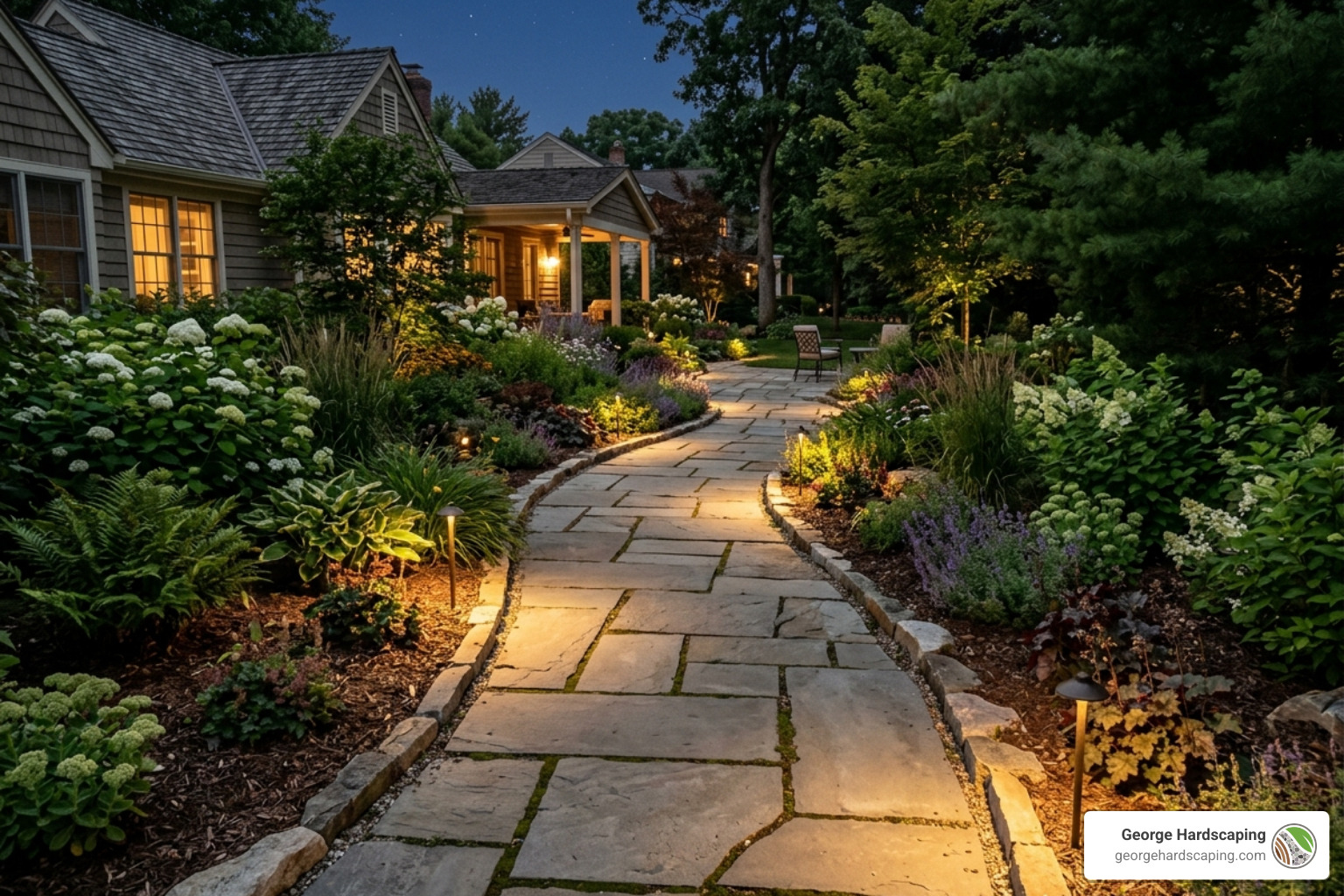
A well-designed path should feel like a journey. It should guide the eye and the feet toward a destination, whether that’s your front door, a hidden fire pit, or a backyard patio. For deep dives into the planning phase, check out our tips for walkway design and our guide on building a walkway on a slope. These resources provide detailed information on how to manage steep inclines and create a design that is both functional and aesthetically pleasing.
Width, Slope, and Curvature
The width of your walkway dictates the “social” feel of your yard. A 36-inch path is the standard for a single person, but if you want two people to be able to walk side-by-side comfortably, we recommend a width of 48 to 60 inches. This is particularly important for main entrance walkways where guests often arrive in pairs. A wider path also allows for more substantial plantings along the edges, creating a more immersive garden experience.
Accessibility is another crucial factor. For wheelchair access, a path must be at least 36 inches wide, but more importantly, it requires a 60-inch turnaround area. If the slope is too steep for a ramp (typically anything over a 1:12 ratio), we integrate steps into the design to break up the incline. Curvature adds a sense of mystery and elegance. While straight lines are formal and direct, curved paths feel more relaxed and can help mask imperfections in the property line. We often use curved paver walkway techniques to create flowing designs that don’t require hundreds of small, dusty cuts. For larger properties, exploring large paver walkway ideas can help you scale your design to match the proportions of your home. Large-format pavers can make a space feel more expansive and modern, reducing the number of joint lines and creating a cleaner look.
Safety Features for Walkways and Steps
Safety is non-negotiable. This is why we focus on slip-resistant textures, especially for areas near pools or under heavy tree cover where moss might grow. Using “bullnose” edges — which are rounded off — on steps makes them safer for children and pets and prevents the stone from chipping over time. According to the American Society of Landscape Architects (ASLA), proper lighting and slip-resistance are the two most critical factors in preventing outdoor falls. We also consider the “rise and run” of each step; a standard outdoor step usually has a 6-inch rise and a 12-to-14-inch tread depth to ensure a comfortable stride.
Lighting is the final “safety” layer. Low-voltage LED lights integrated into the step risers or along the path edges ensure that your walkways and steps are usable 24/7. Not only does this prevent falls, but it also highlights the textures of the stone at night, creating a stunning visual effect. When building stairs, we pay close attention to the treads. Learning the right way of installing stone stair treads ensures that each step is perfectly level and secure. For more aesthetic safety ideas, creative ideas for perfect paths can show you how to blend lighting and greenery for a secure, beautiful result. Well-placed lighting can also serve as a security feature, illuminating dark corners of the property and deterring unwanted visitors.
Installation and Maintenance Guide
A beautiful walkway is only as good as the dirt beneath it. Professional installation begins with proper excavation. In New England, we typically dig deep enough to accommodate a 6-inch compacted gravel base, followed by a 1-inch layer of leveled sand. This “flexible” base allows the stones to move slightly with the frost without cracking. Without this foundation, the freeze-thaw cycle would heave your stones out of alignment within a single season. The use of a geotextile fabric between the soil and the gravel base is also recommended to prevent the materials from mixing over time, which can lead to settling and uneven surfaces.
Once the stones are laid, we use polymeric sand to fill the joints. This specialized sand contains additives that cause it to harden when wet, locking the pavers in place and preventing weeds from sprouting in the gaps. For those tackling this as a DIY project, understanding how to build outdoor stone stairs is essential to ensure the structure doesn’t shift over time. If you prefer the look of traditional masonry, we have a guide on building a brick walkway on soil that covers the necessary prep work. Proper jointing is not just about aesthetics; it’s a critical structural component that keeps the entire system stable.
Professional Construction Techniques
When we handle an installation, we perform a thorough soil assessment. Clay-heavy soils in places like Danvers or Peabody require different drainage solutions than the sandier soils found closer to the coast in Gloucester or Rockport. You can learn more about local soil compositions through the UMass Amherst Soil Testing Laboratory. Proper compaction using heavy-duty vibrating plate tampers is what separates a professional job from one that will sink in two years. We often compact the base in 2-inch “lifts” to ensure maximum density and stability.
Structural reinforcement, such as using rebar or synthetic fibers in concrete slabs, is often necessary for steps that support significant weight. We pride ourselves on durable stone step construction that lasts for decades. If the scope of the project feels overwhelming, hiring a walkway paving contractor is the best way to ensure the job is done right the first time. A professional will also handle the necessary pitch (usually 1/4 inch per foot) to ensure water flows away from your home’s foundation, preventing basement leaks and ice patches in the winter. This attention to detail is what ensures the longevity of the installation.
Long-Term Care and Repair
Even the best-built walkways and steps need a little love over the years. We recommend sealing your pavers or natural stone every 3-5 years to protect them from UV damage and salt during the winter. This also helps with weed prevention and keeps the colors looking vibrant. Avoid using harsh rock salt in the winter, as it can eat away at the surface of concrete and certain natural stones; instead, use calcium chloride or sand for traction. Regular cleaning with a mild detergent and water can also prevent the buildup of organic matter and stains.
If you have an older home with existing masonry, you might notice the mortar between bricks starting to crumble. Knowing how to repoint brick steps can save you from having to replace the entire staircase. Regular maintenance and occasionally repairing brick walkways and stairs will ensure your hardscape remains a source of pride for your home rather than a chore. For more technical advice on masonry upkeep, This Old House offers excellent resources on historic home maintenance. Taking care of small repairs early can prevent them from turning into major, expensive structural issues later on.
Creative Inspiration for Modern Landscapes
Modern landscaping in April 2026 is all about clean lines and “organic modernism.” We are seeing a huge trend toward floating concrete steps — where the risers are hidden, making the steps appear to hover over a bed of river rocks or groundcover. This creates a sense of weightlessness and sophistication that complements minimalist architecture. Decomposed granite is another popular choice for a rustic, zen-like path that feels soft underfoot but stays firmly in place when properly edged. This material is excellent for creating a more relaxed, informal atmosphere in a backyard retreat.
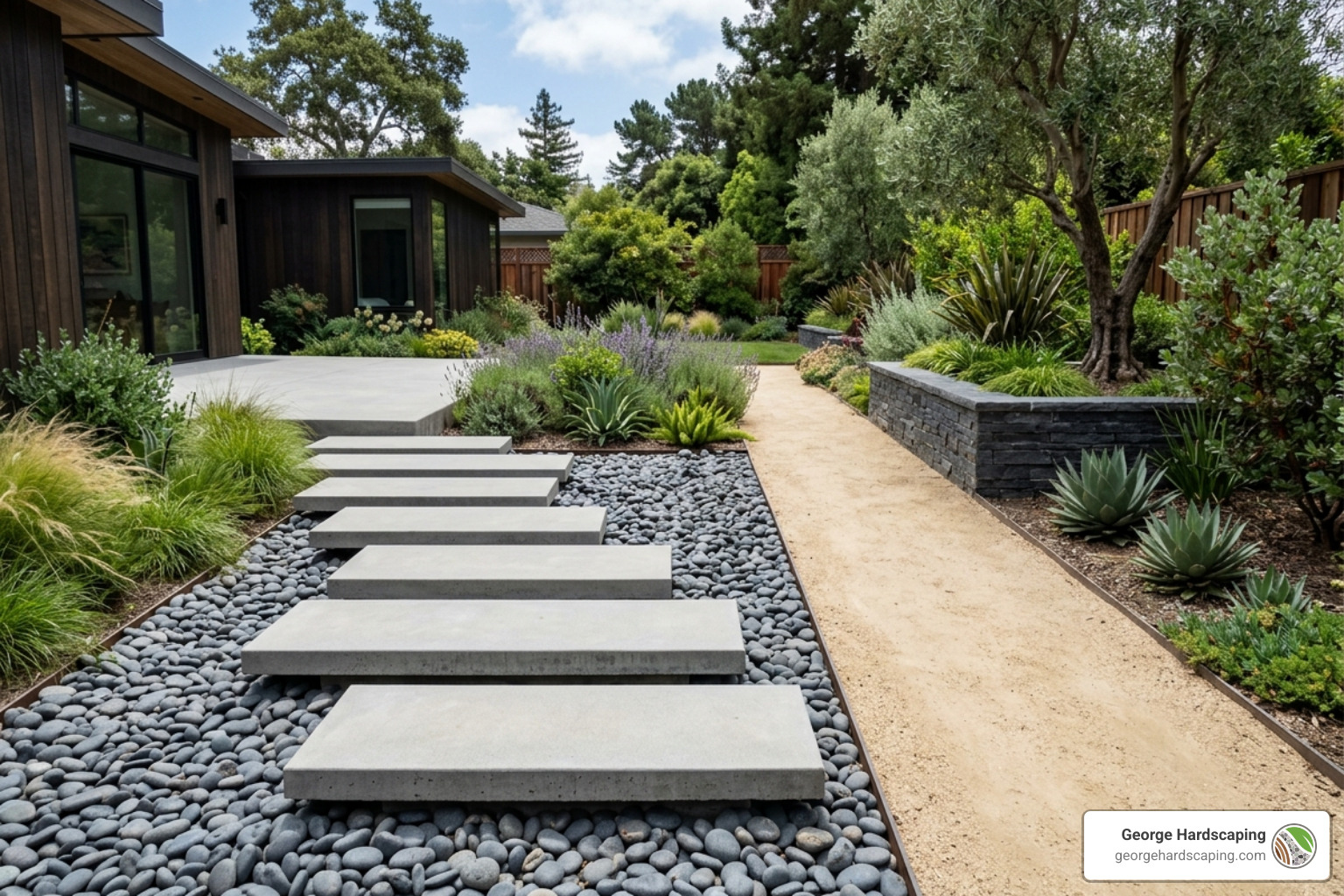
Whether you are looking for front yard walkway inspiration to boost your home’s value or a backyard walkway design guide to create a private sanctuary, the key is consistency. Your hardscape should feel like an extension of your home’s interior style. If you have a modern, open-concept interior, your outdoor paths should reflect that with large-format pavers and simple, geometric steps. Conversely, a more traditional home might benefit from the warmth of brick or the irregular charm of flagstone.
Regional Styles in Essex County
In the North Shore, we have a rich history of masonry. From the coastal granite of Rockport to the manicured estates of Manchester-by-the-Sea, our regional style often leans toward “rugged elegance.” We use local materials that look like they belong here. For instance, paver walkways in Lynnfield MA often feature more formal, symmetrical patterns, while custom walkways in Boxford MA might incorporate more natural stone to blend with the wooded surroundings. This regional approach ensures that the landscape feels grounded and appropriate for its environment.
If you want to make a statement right at the curb, exploring stone front step ideas is a great place to start. We often suggest incorporating “landing zones” — wider areas at the top or bottom of a set of steps — where you can place decorative planters or seasonal decor. This breaks up the verticality of the steps and makes the entrance feel more expansive and welcoming. These landings also provide a natural place for guests to pause and take in the view of the garden.
Enhancing Curb Appeal with Hardscaping
Hardscaping isn’t just about paths; it’s about the “frame” around your home. Retaining walls can be used to create level planting beds along a walkway, while garden edging keeps mulch from washing away during heavy rains. These features create landscape focal points that draw the eye and make a property look professionally maintained. If you are just starting to gather thoughts, our sidewalk design ideas can provide a spark of creativity. Of course, budget is always a factor, so we recommend checking our paver price and cost expectations to get a realistic sense of what your dream project might involve. Investing in quality hardscaping is one of the most effective ways to differentiate your home in a competitive real estate market.
Ready to Step Up Your Curb Appeal?
If you’re ready to transform your Essex County property with professional walkways and steps, don’t leave it to chance. At George Hardscaping, we specialize in creating durable, beautiful outdoor spaces that stand the test of time. Our team of experts is ready to bring your vision to life with precision and care. We handle everything from the initial design consultation to the final installation, ensuring a stress-free experience for our clients. Request a free hardscaping consultation today!
Frequently Asked Questions about Walkways and Steps
What is the best material for a slip-resistant walkway?
For the best slip resistance, we recommend textured natural stones like bluestone or flagstone. These materials have a natural “cleft” surface that provides excellent grip even when wet. If you prefer pavers, look for products with a “textured” or “architectural” finish rather than a smooth, polished surface. Porcelain slabs are also surprisingly slip-resistant and are a great modern alternative for pool decks and wet areas because they do not absorb water. It’s always a good idea to test a sample of the material when it’s wet to see how it feels underfoot before making a final decision.
How much does it cost to install a stone walkway and steps?
Based on general industry data for 2026, a standard walkway and step installation can range from $2,500 to $15,000+. A simple gravel path might sit at the lower end, while a custom-designed bluestone walkway with integrated masonry steps, retaining walls, and lighting will be on the higher end. Factors like excavation depth, material choice, and site accessibility significantly affect the final price tag. Please note these are average industry costs and not a direct quote for our services. We provide detailed, transparent estimates after a site visit to ensure there are no surprises.
Do I need a permit for outdoor steps in Massachusetts?
In many Essex County towns, including Beverly and Danvers, a permit is required if you are changing the footprint of your entrance or if the steps exceed a certain height (usually 30 inches above grade). Local building codes also dictate handrail requirements for sets of more than three steps. We always recommend checking with your local building department or an experienced contractor before starting work to ensure your project is compliant with safety regulations. Navigating these codes is part of the professional service we provide to our clients.
How long does a professional installation take?
A typical walkway and step project takes between 3 to 7 days, depending on the complexity and weather conditions. This includes excavation, base preparation, stone laying, and finishing. Larger projects involving tiered steps or extensive retaining walls may take two weeks or more. We strive to minimize disruption to your daily life during the construction process and keep the job site clean and organized. Our goal is to deliver a high-quality result in a timely manner.
Can I use salt on my pavers in the winter?
We strongly advise against using traditional rock salt (sodium chloride) on pavers or natural stone. Salt can cause “spalling,” where the surface of the stone flakes off, and it can also damage the polymeric sand in the joints. Instead, use calcium chloride-based de-icers or simple sand for traction. This will preserve the integrity and appearance of your walkways and steps for many years. Proper winter care is essential for protecting your investment and ensuring the longevity of the materials.
How do I prevent weeds from growing in my walkway joints?
The best way to prevent weeds is to use high-quality polymeric sand during the installation process. This sand hardens to create a durable barrier that is difficult for seeds to penetrate. Additionally, regular maintenance, such as sweeping away organic debris and occasionally applying a weed inhibitor, can help keep your walkway looking pristine. If weeds do appear, it’s best to remove them early before they have a chance to establish a deep root system.
Conclusion
Combining walkways and steps is one of the most effective ways to add structure, safety, and beauty to your New England home. By choosing materials that thrive in our climate — like concrete pavers, bluestone, and clay brick — and following sound design principles, you can create an outdoor space that serves your family for generations. The investment you make today in quality hardscaping will pay dividends in both your daily enjoyment of your home and its eventual resale value. A well-designed landscape is more than just an aesthetic upgrade; it’s an investment in your quality of life.
At George Hardscaping, we are proud to serve our neighbors throughout Essex County, from the historic streets of Salem to the coastal cliffs of Gloucester. Our commitment to quality craftsmanship, attention to detail, and regional expertise ensures that every project we touch enhances both the functionality and the value of your property. We don’t just build paths; we build the foundation for your outdoor memories. Our team is dedicated to providing personalized service and exceptional results on every project, no matter the size or complexity.
Whether you need a simple garden path or a grand tiered entrance, we are here to help you navigate the process from initial design to the final grain of polymeric sand. Don’t settle for a mediocre landscape when you can have a masterpiece that reflects your personal style and enhances your home’s natural beauty.
Explore our professional walkway and stair installation services or contact us for a free estimate to start your project today!
