
Why Choosing the Right Fire Pit Fuel Changes Everything
Fire pit fuel options include wood, propane, natural gas, bioethanol, gel fuel, wood pellets, and briquettes — each with different heat output, cost, convenience, and safety trade-offs. Choosing the right one is not just a matter of preference; it dictates the design, construction, and long-term enjoyment of your outdoor living space. Whether you are looking for the primal roar of a wood fire or the sleek, instantaneous glow of a gas-powered feature, understanding the nuances of each fuel type is essential for any homeowner in Essex County or the North Shore.
Here’s a quick comparison to help you decide fast:
| Fuel Type | Heat Output | Best For | Ease of Use |
|---|---|---|---|
| Seasoned Wood | Highest | Authentic experience, cooking | Moderate |
| Wood Pellets | High | Cleaner wood fires, efficiency | Easy |
| Propane | High | Portability, entertaining | Very Easy |
| Natural Gas | Medium-High | Frequent use, permanent setups | Very Easy |
| Bioethanol | Low | Indoor/tabletop ambiance | Very Easy |
| Gel Fuel | Very Low | Decorative, tabletop use | Very Easy |
There’s something genuinely satisfying about a backyard fire. The warmth, the glow, the excuse to stay outside a little longer as the New England autumn air begins to bite. But the fuel you choose shapes that whole experience — how hot it burns, how much upkeep it takes, what it costs, and whether it’s even allowed in your neighborhood. For many, the choice is between the nostalgic crackle of timber and the modern convenience of a switch-operated flame. However, the decision-making process involves technical considerations like BTU ratings, ventilation requirements, and local fire codes.
For homeowners in Essex County and the North Shore, local bylaws, HOA rules, and seasonal burn restrictions can narrow your options before you ever strike a match. In coastal towns like Marblehead or Gloucester, wind patterns might make wood-burning pits less practical due to smoke drift, whereas in more wooded areas like Boxford, wood might be the natural choice. The wrong fuel choice doesn’t just hurt your wallet — it can create real safety risks and ongoing headaches, such as excessive soot buildup or inadequate heat for large gatherings.
This guide breaks down every major fire pit fuel option clearly and honestly, so you can match the right fuel to your backyard, your budget, and the way you actually live. We will explore the thermal efficiency of different materials, the environmental impact of your choices, and the specific maintenance routines required to keep your fire feature in peak condition for decades.
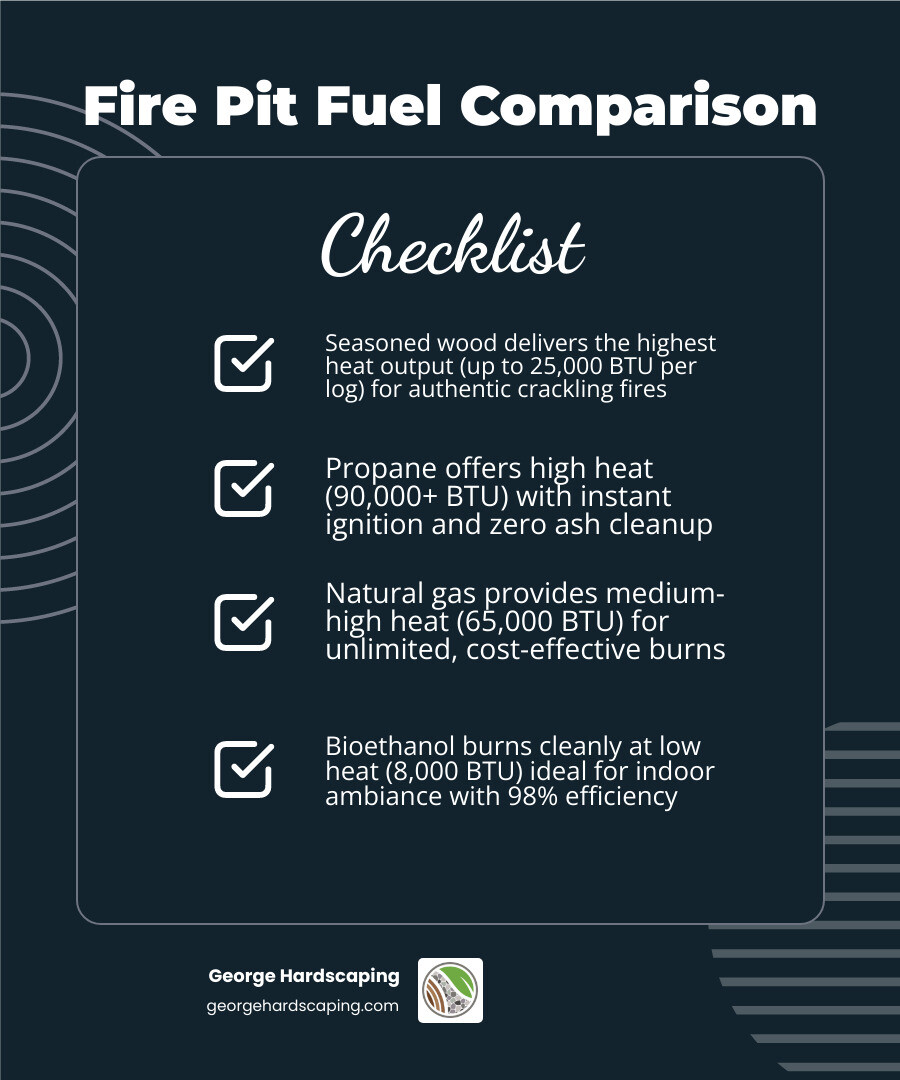
Fire pit fuel options terms at a glance:
The Core Fire Pit Fuel Options: A Comparative Overview
When we sit down with clients in Beverly or Newburyport to design a custom fire pit, the first question isn’t usually about the stone color—it’s about the fuel. Your choice of fuel dictates the entire engineering of the unit. You can’t just toss a log into a gas burner, and you certainly don’t want to try plumbing natural gas into a portable metal bowl. The infrastructure required for a gas line is vastly different from the drainage and ventilation needs of a wood-burning hearth.
The “best” fuel is a moving target. It depends on whether you want a roaring bonfire that can be seen from space or a sophisticated, smokeless flicker that complements a modern patio design. We often see homeowners struggle with the trade-off between the “authentic” feel of wood and the “clean” convenience of gas. To make an informed decision, one must look at the science of combustion and the practicalities of New England weather.
Heat Output and Efficiency
From a scientific perspective, heat is measured in BTUs (British Thermal Units). Research shows that propane is a powerhouse, providing approximately 2,500 BTUs per cubic foot compared to just 1,000 BTUs for the same volume of natural gas. However, seasoned wood remains the undisputed heavyweight champion of raw heat production. According to research on heat values of various fuels, the caloric content of seasoned hardwood provides a radiant warmth that gas often struggles to match in open-air environments. A large wood fire can generate upwards of 100,000 BTUs, creating a massive heat radius that is perfect for large outdoor parties during the colder months.
Portability and Maintenance
If you live in a historic district like Salem or Marblehead, you might value portability. Propane tanks offer the ultimate flexibility; you can move your fire feature around your brick outdoor firepit area as needed. Natural gas, conversely, is a permanent commitment. It requires a hardline installation, which we often integrate during the construction of masonry fire pits. This permanent installation adds significant value to the home but limits the fire pit to a single location.
Maintenance also varies wildly. Wood requires ash removal, soot scrubbing, and the constant management of a wood pile. Natural gas is the cleanest, emitting 99% less pollutants than wood, which means your fire pit stone stays looking pristine for years without the “charred” look. For those who prefer a low-maintenance lifestyle, gas is almost always the preferred route, as it eliminates the need for cleaning up embers and half-burnt logs the morning after a gathering.
The Financial Reality: Initial vs. Operating Costs
Based on industry data, the average cost of a fire pit setup can range from $300 for a basic portable model to over $9,000 for a high-end, custom-plumbed natural gas feature. While wood-burning pits are often the cheapest to build initially, the ongoing cost of high-quality seasoned wood can add up, especially if you are purchasing bundles from a local supplier rather than buying in bulk by the cord. Natural gas has the highest upfront cost due to professional plumbing requirements and permitting, but it offers the lowest hourly operating cost—often as low as $1 to $3 per hour depending on local utility rates in Massachusetts. Propane sits in the middle, with moderate equipment costs but higher fuel prices, as refilling a 20lb tank can cost between $20 and $30 for just a few nights of use.
Traditional Wood and Pellets: The High-Heat Classics
For many of our North Shore neighbors, a fire isn’t a fire unless there’s a crackle and a hint of woodsmoke in the air. It’s the “nostalgia factor” that keeps a wood-burning fire pit at the top of many wish lists. There is a ritualistic quality to building a wood fire—the gathering of kindling, the careful stacking of logs, and the slow growth of the flames—that gas simply cannot replicate.
Pros and Cons of Wood-Burning Fire Pit Fuel Options
The secret to a great wood fire is “seasoned” wood. This is wood that has been dried for at least six months to a year, reducing moisture content to below 20% so it burns hot and clean.
- Pros: Unbeatable heat, authentic aroma, and the ability to cook over an open flame. It’s the perfect companion for a backyard fire pit gathering where s’mores or open-flame grilling are on the menu. Wood fires also provide a dynamic visual experience as the logs shift and the coals glow.
- Cons: Smoke can irritate eyes and stick to clothing, a phenomenon often called the “campfire smell.” Sparks and embers pose a hazard, especially on windy nights in coastal towns like Gloucester or Rockport. Furthermore, wood piles can attract pests like termites, carpenter ants, or mice if stored too close to the home. You also have to deal with the “creosote” buildup if you burn unseasoned or soft woods.
If you want the wood experience without the “smoke-in-your-eyes” drama, kiln-dried logs are the gold standard. They are heat-treated in a kiln to a specific moisture level, ensuring they light instantly and burn with almost zero smoke. We always recommend using hardwoods like oak, hickory, or maple for our custom-fire-pits because they burn longer and hotter than softwoods like pine or cedar, which tend to pop and crack excessively.
The Rise of Wood Pellets and Briquettes
In recent years, wood pellets have surged in popularity, particularly for smokeless fire pit models like the Solo Stove or Breeo. These are made from highly compressed sawdust and wood waste, making them a renewable resource. According to EPA research on cleaner wood combustion, pellets burn significantly cleaner than traditional logs because their low moisture content (usually under 10%) allows for more complete combustion and fewer particulate emissions.
Pellets provide a very consistent burn rate and a high energy density. A standard 20lb bag can provide about two hours of high-intensity heat. The downside? They require specialized burners to ensure proper airflow, they leave behind a very fine ash that must be cleaned out frequently to maintain airflow, and you can’t really “damp down” a pellet fire once it’s roaring. For those looking for an eco-friendly alternative, wood briquettes—made from compressed wood chips—offer a similar high-heat, low-smoke experience but can be used in traditional fire pits more easily than small pellets.
Gas-Powered Convenience: Propane vs. Natural Gas
If you’re the type of person who wants a fire right now without the hassle of kindling and newspaper, gas is your best friend. Gas fire pits have revolutionized outdoor living by making the fire feature as easy to use as an indoor stove. This convenience factor means homeowners use their fire pits significantly more often than those with wood-burning units.
Propane Fire Pit Fuel Options for Portability
Propane is the most common choice for “plug-and-play” fire features. A custom propane fire pit usually runs off a standard 20lb tank—the same kind you use for your BBQ grill. This makes it an excellent choice for renters or those who aren’t ready to commit to a permanent gas line installation.
One of the biggest hurdles with propane is aesthetics. No one wants to look at a white plastic tank sitting on their beautiful new paver patio. We solve this by designing custom fire pit tables that house the tank internally or by using “tank hides” that double as side tables. Another consideration is the “freeze-up” effect; in very cold New England winters, propane tanks can struggle to vaporize fuel quickly enough to maintain a large flame, though this is rarely an issue for standard evening use.
Key Propane Stats:
- Heat: 2,500 BTUs per volume, offering a very hot, yellow flame.
- Burn Time: A 20lb tank typically lasts 4 to 9 hours depending on the flame height and the BTU rating of the burner.
- Convenience: Instant on/off and adjustable flame height via a simple dial.
Natural Gas: The Permanent Solution for Frequent Use
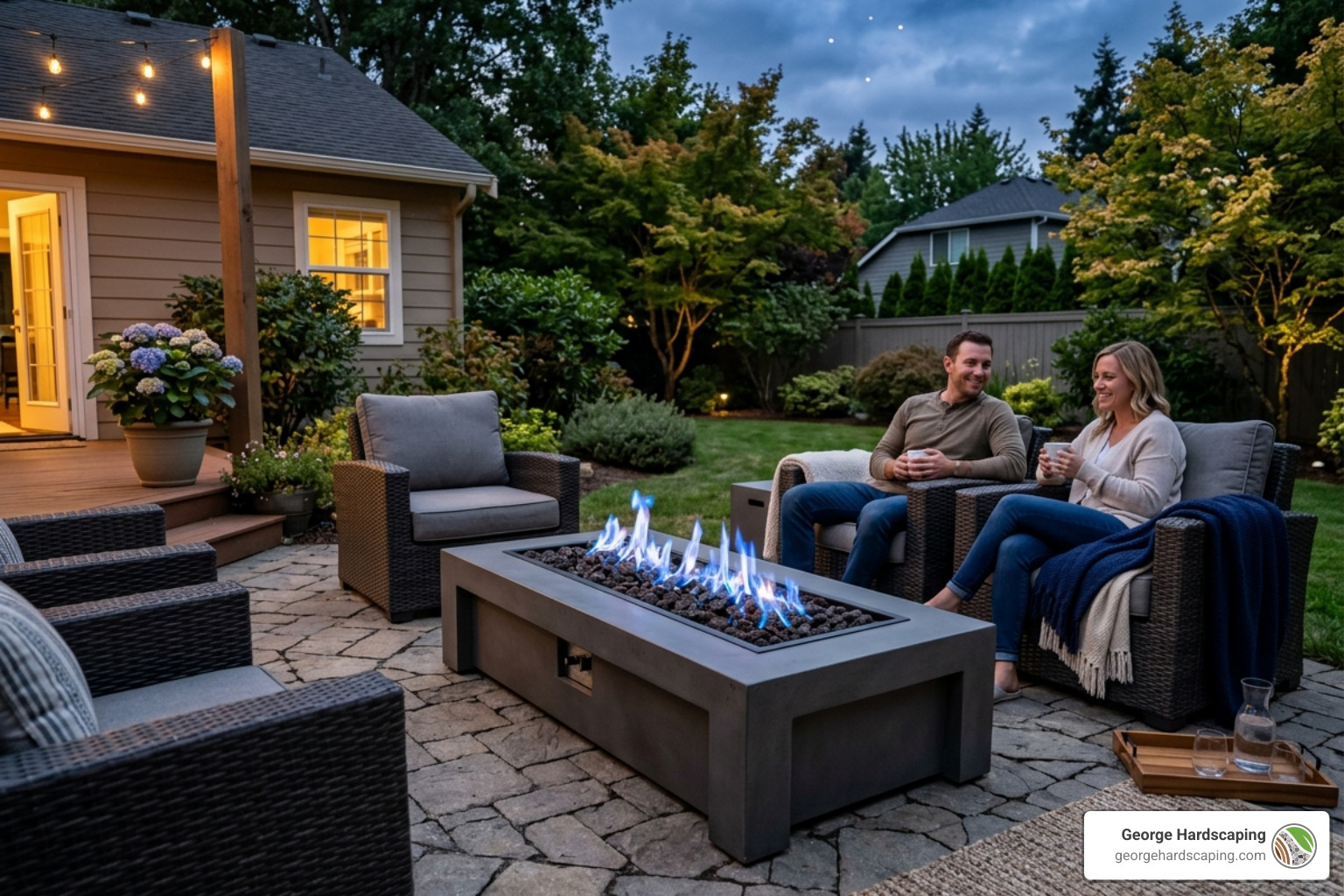
For those who plan on using their fire pit several times a week, a natural gas fire pit is the ultimate luxury. Because it is plumbed directly into your home’s gas line, you never have to worry about running out of fuel in the middle of a party. It provides a continuous, reliable fuel source that is ready at the flick of a switch or the press of a remote.
While natural gas has lower BTUs than propane, the convenience is unmatched. However, this is not a DIY project. In towns like Lynnfield and Peabody, local codes strictly require professional installation and pressure testing. We coordinate with licensed plumbers to ensure your gas fire pit installation is safe, permitted, and built to last. The installation involves trenching a line from the house to the pit, which is why we recommend planning this during the initial hardscaping and masonry phase.
Natural gas also burns the cleanest of all “real flame” fuels. It leaves zero soot on your fire glass or lava rocks, keeping your outdoor gas fireplace looking brand new. If you’re looking for a gas fire pit installer near you, we specialize in integrating these lines seamlessly under your walkways and stairs to maintain a clean, cord-free aesthetic.
Modern Alternatives: Bioethanol and Gel Fuels
Not every fire needs to be a structural masterpiece. Sometimes you just want a little ambiance for a dinner party or a small balcony in Swampscott where a full-sized fire pit isn’t feasible. This is where bioethanol and gel fuels shine, offering a ventless, smoke-free flame that can be used in a variety of creative ways.
Indoor and Tabletop Versatility
Bioethanol is a renewable energy source made by fermenting the sugar and starch components of plant by-products, such as corn or sugarcane. It is incredibly efficient—up to 98% fuel efficiency—because it doesn’t require a chimney or flue. This makes it ideal for indoor use or covered patio with fireplace setups where ventilation is limited. The flame produced by bioethanol is a beautiful, vibrant orange, and because it produces only heat, water vapor, and a tiny amount of CO2, it is often considered the most eco-friendly “real flame” option.
Gel fuel is even simpler. It usually comes in a canister that you drop into a holder and light. It’s thick and alcohol-based, so it won’t spill, making it very safe for tabletop use. However, don’t expect much warmth. Gel fuel is primarily decorative, producing about 3,000 to 13,000 BTUs—barely enough to take the chill off a small table. It is perfect for creating a “fire bowl” effect on a dining table or along a pool edge where the visual impact is more important than the thermal output.
A Critical Safety Warning
While these fuels are convenient, they come with significant risks if handled incorrectly. The CPSC has issued a safety alert on liquid alcohol hazards, specifically warning against “flame jetting.” This occurs when someone tries to refill a fire pit while it is still hot or burning. The vapor in the bottle can ignite, essentially turning the fuel container into a blowtorch. This has led to severe injuries and highlights the importance of following manufacturer protocols to the letter.
Safety Tips for Alcohol/Gel Fuels:
- Never refill a burner that is hot or lit: Wait at least 15-20 minutes for the unit to cool completely before adding more fuel.
- Use only the specific fuel recommended: Substituting isopropyl alcohol for bioethanol can lead to unpredictable flame behavior and dangerous fumes.
- Ensure the area is well-ventilated: While ventless, these fuels still consume oxygen. In small indoor spaces, ensure there is adequate air exchange to prevent the buildup of invisible vapors or carbon monoxide.
Safety, Maintenance, and Local Regulations
In Essex County, fire safety isn’t just a suggestion—it’s the law. Whether we are building a brick outdoor firepit in Danvers or a stone feature in Topsfield, we have to adhere to strict local bylaws that govern everything from the distance to the property line to the type of spark arrestor required.
Burn Injuries and Prevention
Safety should always be the priority, especially if you have children or pets. Research on fire pit-related burn injuries shows that many accidents happen the morning after a wood fire, when children step on coals that are still hot. A wood fire can stay hot enough to cause third-degree burns for up to 24 hours after the flames have died down.
To prevent injuries:
- Always use a custom fire ring: A custom fire ring helps contain the fuel and prevents logs from rolling out of the pit.
- Install a spark guard: On wood-burning units, a mesh screen is essential for catching flying embers that could ignite dry leaves or patio furniture.
- Gas Safety: For gas units, perform a “soapy water test” on connections annually to check for leaks. Ensure the emergency shut-off valve is easily accessible and that all guests know how to use it.
Local North Shore Regulations
Many towns on the North Shore, such as Ipswich and Lynnfield, have specific guidelines on where a fire pit can be placed (usually at least 15-25 feet from any structure, including fences and overhanging trees). During dry spells, local fire departments may issue burn bans. Interestingly, gas fire pits are often exempted from these bans because they don’t produce sparks and can be extinguished instantly, but you should always check with your local station before lighting up during a drought.
Maintenance is the key to longevity. We recommend an annual inspection of your custom fire pit. For wood pits, this means clearing out old ash which can hold moisture and cause the stone or mortar to deteriorate over time. For gas, it means ensuring the burner ports aren’t clogged by spider webs, soot, or debris, which can cause uneven flames or “back-burning” inside the unit.
Ready to upgrade your outdoor living space? At George Hardscaping, we don’t just build fire pits; we create destinations. Whether you want the rustic charm of a wood-burning hearth or the sleek convenience of a natural gas feature, our team of expert masons is here to help.
Click here to request a free estimate and let’s start planning your North Shore backyard oasis today!
Frequently Asked Questions about Fire Pit Fuel Options
Which fire pit fuel provides the highest heat output?
Seasoned hardwood is the king of heat. While propane has a high BTU density, a well-built wood fire creates a large bed of coals that radiates immense heat in all directions. If you are looking for a fuel that can keep a large group warm in the middle of a New England October, wood is your best bet. However, for consistent, directional heat, a high-BTU propane burner (60,000+ BTUs) can provide a very comfortable experience for smaller groups.
Can I use my fire pit during local burn bans or fire restrictions?
It depends on the fuel and the specific town ordinance. Wood-burning pits are almost always prohibited during burn bans due to the risk of flying sparks and embers. However, natural gas and propane fire pits are often allowed because they are considered “flame-controlled” devices that do not produce embers. Always call your local fire department in towns like Saugus or Manchester-by-the-Sea before lighting up during a dry spell to ensure you are in compliance with current safety levels.
What is the most cost-effective fuel for frequent backyard use?
If you have an existing gas line, natural gas is the clear winner. While the initial setup might cost a few thousand dollars for plumbing and permitting, the hourly operating cost is significantly lower than buying bundles of wood or refilling propane tanks. Over a five-year period, a frequent user (someone who lights a fire 2-3 times a week) will save hundreds, if not thousands, of dollars with natural gas compared to propane.
Is it safe to cook over gas fire pits?
While you can roast marshmallows over a gas fire pit, it is generally not recommended to cook greasy foods like burgers or hot dogs directly over the flames. Dripping fat can clog the burner ports and create a permanent mess on your fire glass or lava rocks. If cooking is a priority, a wood-burning pit or a specialized pellet-fed fire pit with a grill grate is a much better option.
How do I know if my wood is properly seasoned?
Properly seasoned wood will have visible cracks (checks) at the ends, feel surprisingly light for its size, and make a hollow “clink” sound when two pieces are struck together, rather than a dull thud. You can also use a digital moisture meter; any reading below 20% is considered good for burning. Using unseasoned “green” wood will result in a smoky, frustrating fire that produces very little heat and a lot of creosote.
Conclusion: Choosing Your Perfect Flame
Choosing between fire pit fuel options ultimately comes down to your lifestyle, your budget, and your aesthetic goals. Do you enjoy the ritual of building a fire, the scent of woodsmoke, and the high-intensity heat of a traditional hearth? Or do you want the “instant-on” luxury of gas that allows you to enjoy a 20-minute fire after work without any cleanup? Do you need something portable for your pool deck, or are you looking for a permanent, plumbed centerpiece for your landscape design?
At George Hardscaping, we’ve spent years perfecting the art of the fire feature across the North Shore. From the rugged coast of Gloucester to the quiet suburbs of Boxford, we understand the local climate and the materials that stand up to the harsh New England elements. We specialize in custom outdoor fire pits that aren’t just functional—they are beautiful additions to your home’s value and your family’s quality of life.
Don’t settle for a “one-size-fits-all” solution from a big-box store that will rust out in two seasons. Let us help you design a custom fire pit that uses the right fuel for your needs and fits perfectly into your hardscape design. Whether it’s a natural gas masterpiece or a traditional stone wood-burner, we bring craftsmanship and safety to every project.
Contact George Hardscaping today to schedule your consultation. Let’s build something that keeps your family warm and creates lasting memories for years to come!
