
Hardscaping & Masonry · Gloucester, MA
Walkway and stair installation in Essex County, MA
George Hardscaping builds walkways and garden stairs for homes in Gloucester and across Essex County. We have served the North Shore since 2005, and these paths link the driveway, the door, the patio and the yard.
4.9 on Google from 36 reviews
Walkways
A path you will use every day
A good walkway follows the way people already move around the property: car to door, door to patio, patio to yard. It should look like it belongs with the house and hold up to daily foot traffic. We work with you from the first design ideas through installation, so the path fits your style and your home's exterior.
Pavers are a common choice for walkways and for the stairs along them. They come in many colors, shapes, patterns and sizes, and they give more grip underfoot than smooth concrete, which counts on the North Shore in winter. This page covers paths across the property. New steps at the front door are a separate job, covered on Steps & Brick Stairs.
Walkways are one part of our hardscaping and masonry work, and Google shows a 4.9 average from 36 ratings. We work out of Gloucester and take jobs in 20 North Shore towns, listed on our service area page.
- Stands up to heavy foot traffic and harsh weather
- More slip resistance than smooth concrete
- Cleans up with a pressure washer
- A damaged paver can be repaired or replaced
- Colors and patterns to suit the house
Recent Work
Recent walkway and garden-stair projects
Three paths we built for North Shore homeowners, and what each one had to solve.
-
01
A stepping-brick path in Essex County
A homeowner in Essex County had us install stepping bricks as a garden pathway. The result is a functional path that matches the rustic look of the garden.
-
02
Boxford: stone stairs across a stream
In a Boxford garden with a stream running through it, we built stone stairs that cross back and forth over the water at several points. The stairs also helped with drainage challenges on the site.
-
03
Danvers: stone stairs with built-in planters
In Danvers we built stone stairs with planters set into them in alternating patterns.
Before and After · Rowley, MA
A Rowley front entry with new stone steps and walkway
Choosing a Surface
Brick, concrete or pavers: which fits the situation
Here is how the three common choices compare for a path on the North Shore.
-
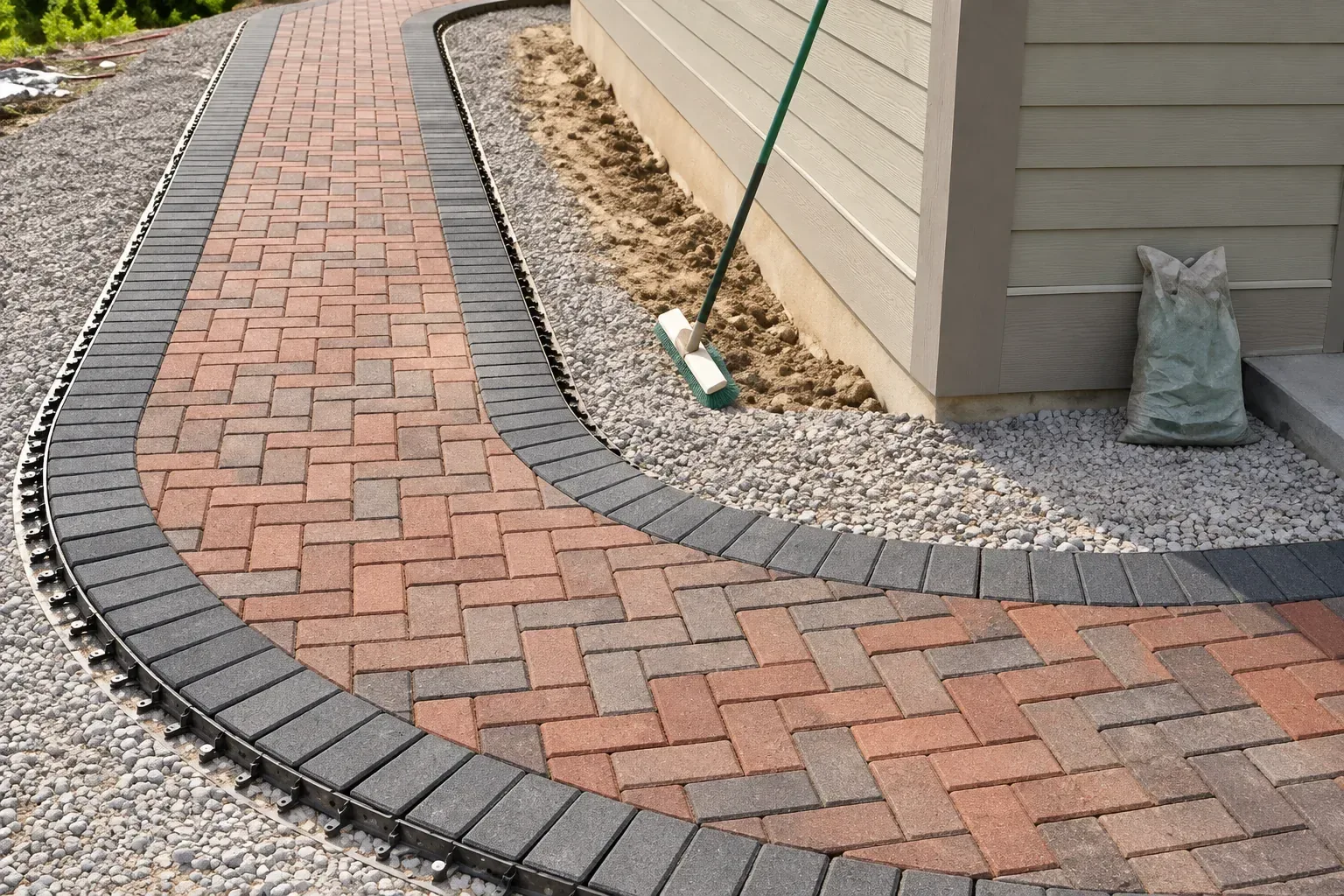
Brick walks
Brick laid in a pattern such as herringbone, often with a border. Mortared joints are a weak point in freeze-thaw and road salt, according to CMHA guidance, so ask how the joints will be handled.
-

Concrete walkways
A poured walk can follow a curve along the side of a house. Smooth concrete gives less grip than pavers when wet or icy.
-
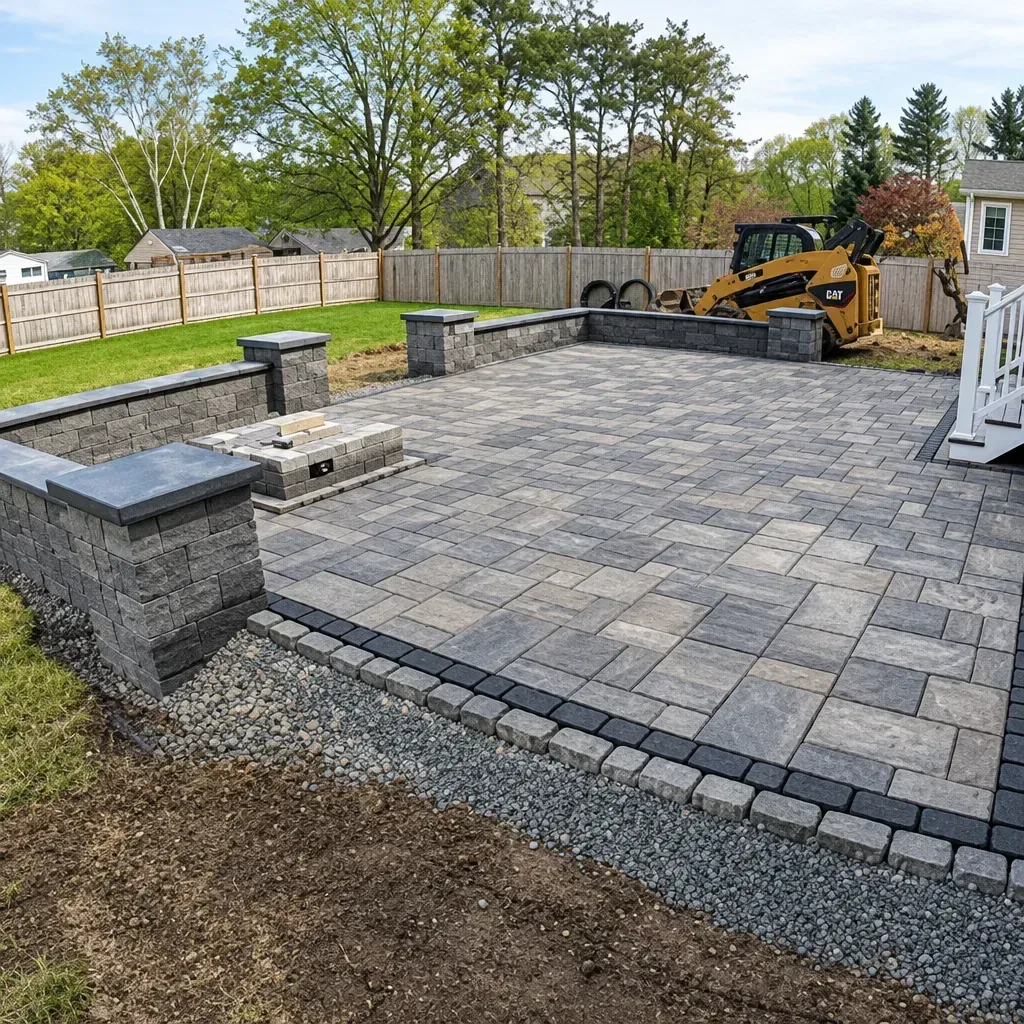
Pavers
Pavers handle foot traffic and weather, clean up with a pressure washer, and come in many colors and patterns. A damaged paver can be lifted out and replaced without redoing the whole path.
Planning
Plan the route before you pick a surface
Walk the property with a notebook. These five things decide where the path goes and what it needs to handle.
-
01
Where people really walk
Worn strips in the lawn mark the route people already take. A path that fights that habit gets cut across.
-
02
What it has to reach
List every stop: driveway, side door, patio, shed, the back of the yard. One path can branch, but each branch adds length and cost.
-
03
Changes in grade
Where the ground rises or falls, the route may need stairs or a landing. Ledge and boulders are common on Cape Ann, and they can push the route sideways.
-
04
Water and snow
Watch where rain pools and where plowed snow gets piled. A path that stays wet or icy is one people avoid.
-
05
Width and edges
Two people side by side, a wheelbarrow or trash barrels all need room. Edging keeps the sides from drifting.
What a Sound Job Involves
How a paver walkway is built, per industry guidance
These points come from ICPI and CMHA paver guidance. Ask any installer about them before you sign.
-
01
A compacted base
ICPI Tech Spec 2 calls for at least 4 inches of compacted base under walkways on well-drained soil. Colder climates with wet or weak soil need 2 to 4 inches more.
-
02
Edges that hold
The same guidance calls for edge restraints that touch the side of the paver along at least 1 inch of height. Without them, a path spreads and the joints open.
-
03
Sand and joints
ICPI says frozen or saturated bedding sand should not be installed. Dry joint sand is swept in and the pavers are compacted again until the joints are full.
-
04
Salt and freeze-thaw
CMHA notes concrete pavers can resist deicing salts better than many paving materials. Our driveway page covers the ICPI freeze-thaw standard in full.
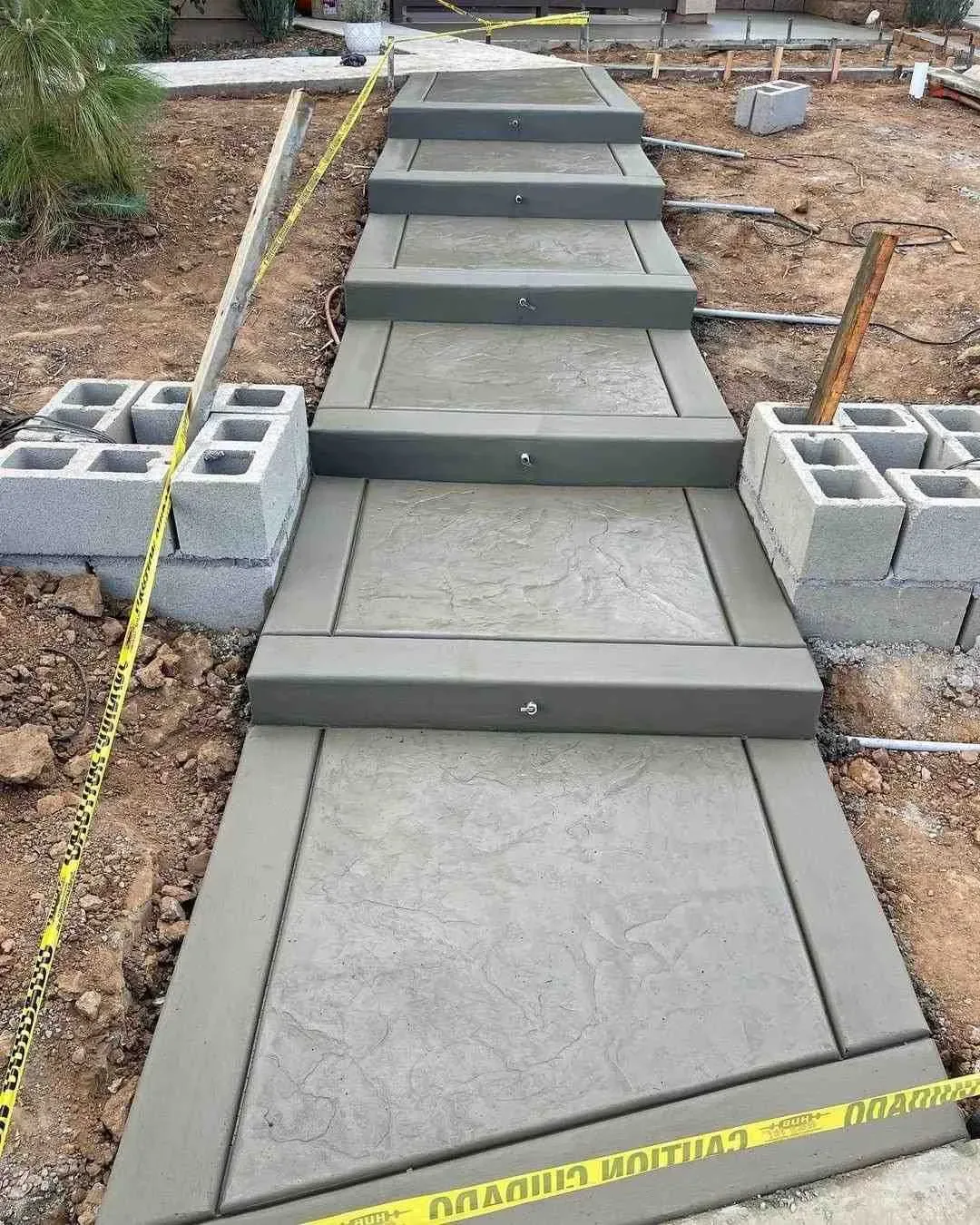
Garden Stairs
When the path has to climb
Where a slope cuts across the route, stairs let the path keep going. Stairs can sit inside a garden path, between planters, or across a stream, as in the Boxford and Danvers projects above.
Stairs built into a path are planned along with the route, the drainage and the planting. New steps at the front door are a different job, with their own code limits, covered on the steps page. For a slope that needs holding back beside the path, see retaining walls.
- Stairs planned as part of the route
- Drainage considered alongside the stairs
- Planters or plantings built into the stairs
- A separate page for front-door entry steps
Before the First Paver
Two checks before any walkway is built
Call 811 before anyone digs. Our hardscaping page covers Dig Safe. These two checks come after that.
-
01
Ask about a permit
Generally, sidewalks not more than 30 inches above the adjacent grade are exempt from a building permit under 780 CMR. Confirm with your town, because the local building inspector decides.
-
02
Check for wetlands
Land within 100 feet of a wetland is in the state buffer zone and needs conservation commission review. For a path near the water, ask your town's conservation agent first.
What Clients Say
A Swampscott homeowner on the stairs we built
"The first time visitors approach our new floating steps, they always pause and do a double-take," says Mark, a Swampscott homeowner whose mid-century modern home got the upgrade. "They create this wonderful sense of lightness and movement that conventional steps simply can't match."
George Hardscaping has served the North Shore since 2005, more than 20 years of paths, stairs and stonework. Walkways here often lead to a patio or a paver driveway, and we build in Gloucester, Rockport and Ipswich and the towns around them.
74 Essex Ave, Gloucester, MA 01930Planning a path across the property?
Tell us where it starts, where it ends and what the ground does in between.
From the Blog
Walkway and step guides
- WalkwaysLaying a cobblestone walkway
- StepsBuild stone steps: the complete guide
- SlopesHow to install a retaining wall on a slope
Questions
Walkway questions
Which walkway surface handles a North Shore winter best?
Concrete pavers are a strong choice, because CMHA says they can resist deicing salts better than many paving materials. Brick can work too, but CMHA warns that mortared joints carry a high risk of deterioration from freeze-thaw and salt.
How deep does the base under a paver walkway need to be?
ICPI Tech Spec 2 calls for at least 4 inches of compacted base on well-drained soil. In colder climates, wet or weak soil needs 2 to 4 inches more. Ask any installer how they set base depth for your yard.
What makes one walkway quote higher than another?
Length, grade changes, stairs, site access and the surface you choose are the main factors. A path that branches or crosses ledge costs more than a straight run on level ground. We keep you informed on costs and materials from the first design ideas through installation.
Do I need a permit to build a walkway?
Often not, but your town decides. Under Massachusetts code 780 CMR, sidewalks not more than 30 inches above the adjacent grade are generally exempt from a building permit. Ask your local building inspector, and ask the conservation agent if the path is near a wetland.
Is a walkway with stairs the same job as new front steps?
No. Stairs in a walkway are planned with the route, drainage and planting, as in our Boxford stream stairs and Danvers planter stairs. Front-door entry steps carry their own code limits and are covered on our steps page.
Which towns do you build walkways in?
We build in 20 North Shore towns, from Gloucester, Rockport and Ipswich to Danvers, Boxford, Swampscott and Salem. Our base is 74 Essex Ave in Gloucester. The service area page lists every town.
Request a Walkway Estimate