
Hardscape Designers Near Me: Top 5 Trusted Experts 2024
When considering hardscape designers near me in Essex County, MA, or the North Shore, finding the right fit can transform your outdoor space into a stunning retreat. Hardscaping offers numerous benefits, enhancing both the beauty and functionality of your property.
- What is hardscaping? It’s the use of non-living elements like stone, concrete, and wood to create features such as patios, walkways, and retaining walls.
- Why is hardscaping important? It adds value, prevents soil erosion, and seamlessly connects different outdoor spaces.
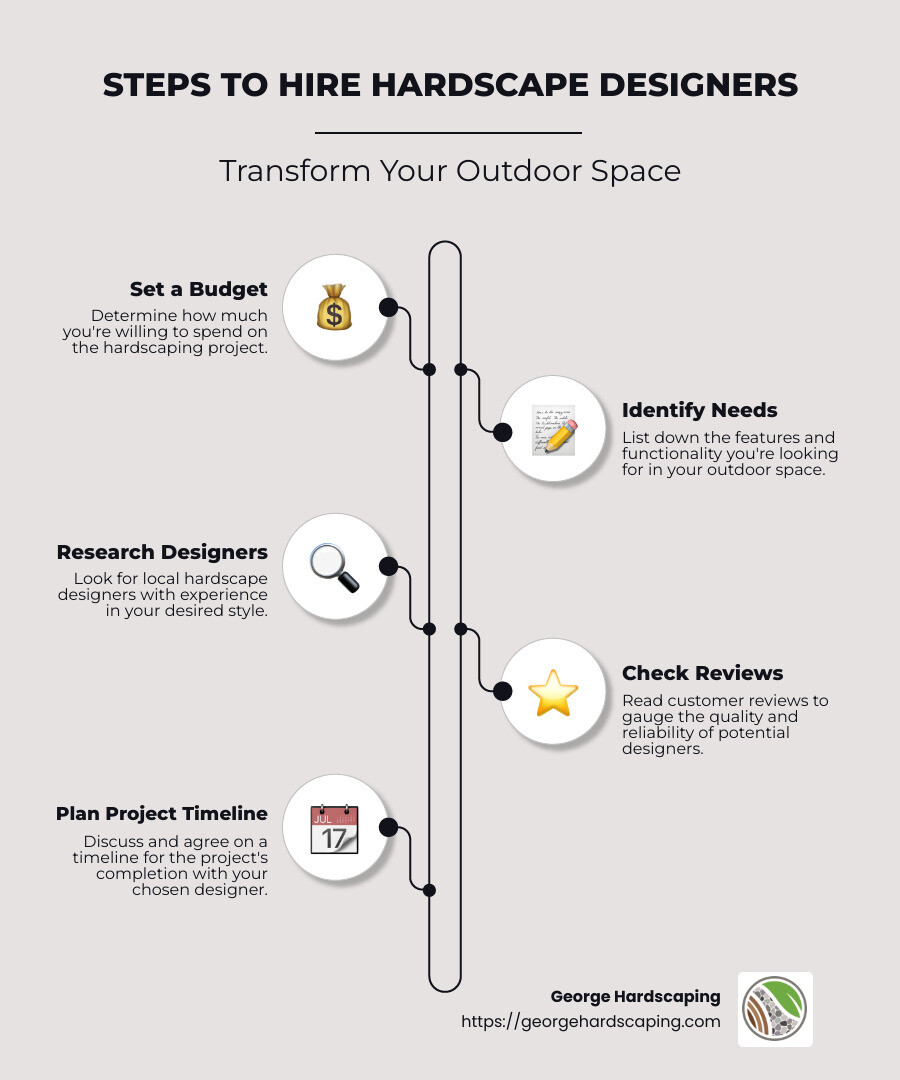
- First steps: Identify your needs, consider your budget, and seek local expert help for custom solutions.
Hardscape projects not only improve the aesthetics of your home but also provide practical benefits by managing landscapes effectively. Engaging with knowledgeable professionals is key, as they bring regional expertise and personalized design plans to the table. Whether you’re looking to entertain or simply enjoy the outdoors more, communicating your vision clearly is crucial to achieving the desired outcome.
Know your hardscape designers near me terms:
– hardscape design services
– hardscape landscapers
– hardscape maintenance service
What is Hardscaping?
Hardscaping is all about the non-living elements of your outdoor space. Think of it as the backbone of your garden or yard. Unlike softscaping, which involves plants and flowers, hardscaping uses durable materials like stone, concrete, and wood to create structures and features.
Differences from Landscaping
While landscaping includes both living and non-living components, hardscaping focuses solely on the latter. It’s about creating paths, patios, and walls that give your outdoor area structure and form. Landscaping is broader, covering everything from planting trees to installing irrigation systems.
Here’s a simple breakdown:
| Aspect | Hardscaping | Landscaping |
|---|---|---|
| Components | Non-living (stone, wood, concrete) | Living and non-living (plants, soil) |
| Purpose | Structure, durability, functionality | Aesthetics, ecology, soft features |
| Examples | Patios, retaining walls, walkways | Lawns, flower beds, trees |
Common Materials
Hardscaping uses a variety of materials, each bringing its own benefits:
- Stone: Offers a natural look and is long-lasting. Great for patios and paths.
- Concrete: Versatile and durable, ideal for driveways and walkways.
- Wood: Provides warmth and can be used for decks and pergolas.
These materials not only improve the visual appeal but also add value to your property. They require less maintenance than plants, making them a practical choice for homeowners.
Hardscaping is an essential component of any well-designed outdoor space. It provides the foundation upon which the rest of your landscape thrives. Whether you’re building a simple patio or a complex outdoor kitchen, understanding the basics of hardscaping is the first step toward creating a functional and beautiful environment.
Finding the Right Hardscape Designers Near Me
When it comes to changing your outdoor space, finding the right hardscape designers near me is crucial. With the right team, you can turn your vision into reality. Here’s how to start your search and ensure you pick the best fit for your project.
Research
Begin by doing some homework. A simple online search can yield a list of potential designers in your area. Look for those with a solid online presence and informative websites. A well-maintained website often reflects a professional approach.
Check out directories and platforms like HomeAdvisor or Angi for local listings and ratings. These platforms can provide insights into companies like George Hardscaping, known for their custom patio designs and commitment to quality.
Reviews
After compiling a list, dive into reviews. Customer feedback is invaluable. It offers a glimpse into the experiences of past clients. Look for consistent themes in the reviews, such as timely project completion and professionalism.
For example, a client might say, “George Hardscaping delivered our patio on time and within budget, and we love the result!” Such reviews can give you confidence in your choice. Aim for designers with a high number of positive reviews and testimonials.
Local Experts
Choosing a local expert has unique advantages. Local designers understand the climate and soil conditions, which are crucial for durable hardscaping. They also know the local regulations and permit requirements, ensuring a smoother project process.
Meeting with potential designers in person can also give you a better feel for their style and approach. Discuss your ideas and see how they respond. A good designer will listen and provide feedback that improves your vision.
Making the Decision
Once you’ve gathered enough information, compare your options. Consider their experience, portfolio, and customer service. Don’t hesitate to ask for a free consultation or estimate—many designers, including George Hardscaping, offer this as a standard practice.
Choosing the right hardscape designer is about more than just cost; it’s about finding a partner who shares your vision and can bring it to life. With thorough research, careful review of feedback, and a focus on local expertise, you’ll be well on your way to creating the perfect outdoor space.
Key Considerations When Choosing a Hardscape Designer
Selecting a hardscape designer is more than just a quick decision. It’s about finding the right fit for your project’s needs and your personal style. Here are some key considerations to guide you:
Experience
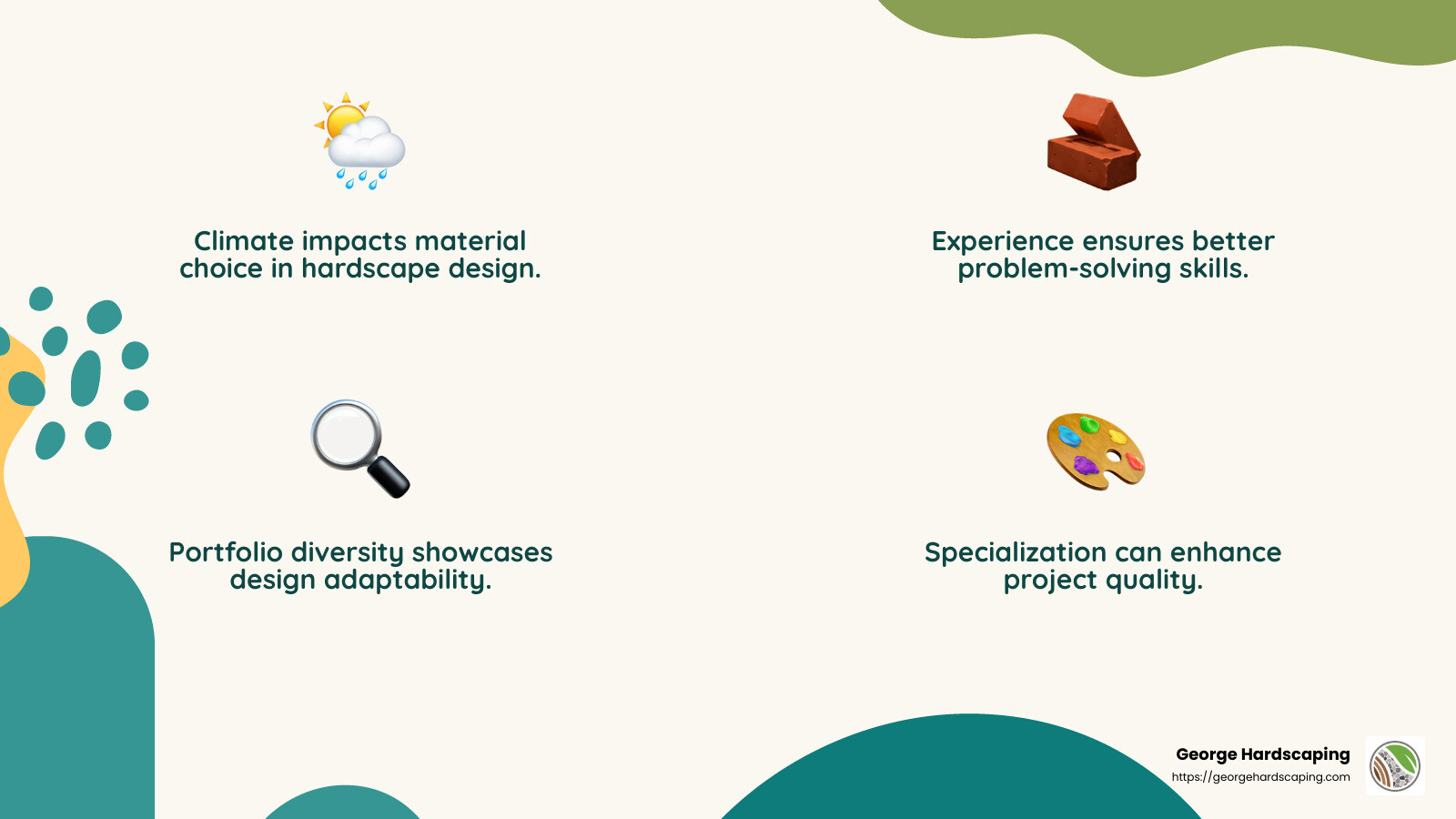
Experience matters. A designer with years in the field often brings a wealth of knowledge and problem-solving skills. Ask potential designers how long they’ve been in business and request references from past projects. An experienced designer will have a track record of successful projects and happy clients.
Portfolio
A designer’s portfolio is their visual resume. Look for diversity in their past projects. This shows their ability to adapt to different styles and preferences. Whether you want a modern patio or a rustic walkway, their portfolio should reflect a range of styles and designs. Check for quality and attention to detail in their completed work.
Specialization
Hardscape design is broad, covering everything from patios to retaining walls. Some designers specialize in specific areas, like driveway paving or garden paths. Identify your project’s needs and find a designer who excels in those areas. Specialization often means a deeper understanding of the materials and techniques needed for specific projects.
Local Climate Knowledge
Local climate plays a crucial role in hardscape design. A designer familiar with your area’s weather patterns can recommend materials that withstand local conditions. For instance, in colder climates, certain paving stones might be more suitable to prevent cracking during freeze-thaw cycles. Local knowledge ensures your hardscape is both beautiful and durable.
Making Your Choice
Choosing the right designer involves weighing these factors against your needs and budget. Don’t rush the process. A good hardscape designer, like those at George Hardscaping, will be open to discussing their experience, showing their portfolio, and explaining how they plan to tackle your project.
By focusing on experience, portfolio quality, specialization, and local climate knowledge, you’ll be better equipped to choose a designer who will transform your outdoor space into something truly special.
Services Offered by Hardscape Designers
When you’re searching for hardscape designers near me, it’s important to understand the range of services they offer. Here’s a breakdown of what you can expect:
Design
Design is the first step in any hardscaping project. A good designer will work closely with you to understand your vision and preferences. They’ll create detailed plans that consider aesthetics, functionality, and sustainability. This phase often includes selecting materials, such as concrete, stone, or brick, which are popular for their durability and versatility.
- Patios: Extend your living space outdoors with a custom-designed patio.
- Walkways: Create beautiful, safe paths that guide guests through your landscape.
- Retaining Walls: Add structure and interest while preventing soil erosion.
Installation
Once the design is finalized, the installation phase begins. This is where the hardscape designer’s expertise truly shines. They’ll coordinate the entire process, from sourcing materials to managing the construction crew. Professional installation ensures that everything is built to last, with attention to detail and craftsmanship.
Installation Highlights:
- Paver Walkways: Durable and stylish, pavers are a popular choice for many homeowners.
- Outdoor Kitchens: Perfect for those who love entertaining, outdoor kitchens can include grills, countertops, and even sinks.
- Fire Pits: Create a cozy gathering spot for family and friends to enjoy year-round.
Maintenance
Maintenance is crucial to keep your hardscape looking its best. Some designers offer ongoing maintenance services to ensure your investment remains in top condition. This can include cleaning, sealing surfaces, and repairing any damage.
Maintenance Services:
- Regular Cleaning: Prevents build-up of dirt and debris.
- Sealing: Protects surfaces from weather and wear.
- Repairs: Fixes any cracks or damages promptly to avoid larger issues.
Custom Projects
For those with unique ideas or specific needs, custom projects can bring your vision to life. Whether it’s a bespoke water feature or a personalized garden path, designers can tailor their services to meet your exact specifications.
Custom Project Ideas:
- Water Features: Add tranquility and elegance with custom fountains or ponds.
- Living Walls: Incorporate vertical gardens for a touch of greenery in tight spaces.
- Unique Structures: Think outside the box with pergolas, arbors, or custom-built seating areas.
With these services in mind, you’ll be well-equipped to choose a hardscape designer who matches your vision and improves your outdoor space. Next, we’ll dive into some frequently asked questions about hardscape designers to help you make an informed decision.
Frequently Asked Questions about Hardscape Designers
How long does a typical hardscaping project take?
The duration of a hardscaping project can vary significantly depending on the complexity and size of the project. Simple installations like a small patio or walkway might take a few days to a week. Larger projects, such as outdoor kitchens or extensive retaining walls, could take several weeks to complete.
Factors that influence project duration:
- Project Size: Larger areas require more time for both preparation and installation.
- Design Complexity: Intricate designs with custom features take longer to execute.
- Weather Conditions: Inclement weather can cause delays, especially for projects requiring concrete or mortar.
It’s crucial to discuss timelines with your chosen hardscape designers near me to set realistic expectations and ensure a smooth process.
What are some common hardscape features?
Hardscaping involves incorporating non-living elements into your landscape design to improve functionality and aesthetics. Here are a few popular features:
- Patios: These extend your living space and provide a perfect spot for outdoor gatherings.
- Walkways: They offer safe and aesthetically pleasing paths throughout your garden or yard.
- Retaining Walls: These not only add visual interest but also help in managing soil erosion and creating level areas on sloped land.
- Fire Pits: A cozy addition that serves as a focal point for outdoor entertainment.
- Outdoor Kitchens: Ideal for those who love to cook and entertain outdoors, featuring grills, counters, and more.
These features not only add beauty but also increase the functionality of your outdoor space.
How does hardscaping impact property value?
Investing in hardscaping can significantly boost your property’s value. Well-designed and maintained hardscape features improve curb appeal, making your home more attractive to potential buyers.
Benefits to property value:
- Increased Usable Space: Features like patios and decks add functional living space.
- Low Maintenance: Hardscaping elements are durable and require less upkeep than traditional landscaping.
- Aesthetic Appeal: Thoughtfully designed hardscapes add a polished look to your property, which is appealing to buyers.
According to research, elements like patios and retaining walls can increase a home’s value by making it more appealing and inviting. This can lead to a higher resale value and a quicker sale when the time comes.
Understanding these aspects can help you make informed decisions and maximize the benefits of your hardscaping investment. Next, let’s explore how to plan your hardscaping project to ensure it aligns with your budget and design preferences.
Planning Your Hardscaping Project
When planning a hardscaping project, consider several key factors to ensure your outdoor space is both beautiful and functional. Here’s how to get started:
Budgeting
Your budget is the foundation of your hardscaping project. Start by determining how much you are willing to spend. Consider costs for materials, labor, and unexpected expenses. While it might be tempting to cut corners, investing in quality materials and experienced hardscape designers near you can save you money in the long run by reducing maintenance needs and enhancing durability.
Tips for budgeting:
- Get Written Estimates: Reach out to multiple contractors to compare prices. A detailed written estimate should include costs for materials, labor, and any additional features.
- Prioritize Features: Decide which elements are most important to you and allocate your budget accordingly. For instance, if an outdoor kitchen is your priority, you might choose simpler materials for walkways.
Timeline
Establishing a timeline helps keep your project on track. Discuss with your designer how long each phase will take and factor in potential delays due to weather or availability of materials.
Timeline considerations:
- Project Scope: Larger or more complex projects naturally take longer.
- Seasonal Factors: Some installations are best done in specific weather conditions. For instance, concrete work requires dry conditions to set properly.
- Availability of Designers: Popular designers may have a waiting list, so plan accordingly.
Design Preferences
Your hardscape should reflect your personal style and complement your home’s architecture. Spend some time exploring different styles and features to find what resonates with you.
Design tips:
- Create a Mood Board: Gather images of designs you like to share with your designer. This helps them understand your vision.
- Consider Cohesion: Ensure your hardscape elements work well together and with existing landscaping.
- Functionality First: While aesthetics are important, functionality should be a priority. Think about how you will use the space and design accordingly.
Functionality
A functional design improves usability and enjoyment of your outdoor space. Consider how different features will serve your lifestyle needs.
Key functionality elements:
- Traffic Flow: Design walkways and paths that guide movement through the space smoothly.
- Seating Areas: Ensure there are comfortable spots for relaxation and entertainment.
- Multi-Use Spaces: Consider designs that offer flexibility, such as patios that can host both dining and lounging.
By focusing on these aspects, you can create a hardscape that not only looks great but also improves your outdoor living experience. Planning carefully ensures your project aligns with your vision and budget, paving the way for a successful change of your outdoor space.
Conclusion
At George Hardscaping, our commitment to quality craftsmanship and enhancing outdoor spaces is at the heart of everything we do. We believe that a well-designed hardscape can transform your outdoor area into a beautiful and functional extension of your home.
Our team of experts specializes in creating stunning patios, walkways, retaining walls, steps, and custom firepits. We serve the North Shore with a dedication to quality that ensures your project not only meets but exceeds your expectations.
Why Choose George Hardscaping?
- Expertise and Experience: With years of experience in the field, we understand the nuances of different materials and techniques. Our knowledge helps us create durable structures that withstand the test of time.
- Personalized Service: We work closely with you to understand your vision and bring it to life. Whether you’re looking for a serene garden path or a lively outdoor entertainment space, we tailor our designs to suit your needs.
- Quality Materials: We use only the best materials available, ensuring that your hardscape is both beautiful and long-lasting. Our attention to detail guarantees a finish that adds value to your property.
- Commitment to Satisfaction: Your satisfaction is our top priority. From the initial consultation to the final touches, we strive to provide a seamless and enjoyable experience.
If you’re ready to improve your outdoor space with a professional touch, consider partnering with us at George Hardscaping. We are here to make your dream landscape a reality.
Explore our services and get started on your project today.
Transform your outdoor area with George Hardscaping, where quality meets creativity, and let us help you enjoy your outdoor space like never before.
