
Is Stone Veneer Worth It for Lynnfield, MA Homes?
If you’re exploring stone veneer in Lynnfield, MA, here’s a quick summary of what you need to know:
- What it is: A thin layer of real or manufactured stone applied to exterior or interior surfaces for the look of full stone at a fraction of the weight and cost
- Best uses: Home foundations, siding accents, chimneys, fireplaces, retaining walls, and outdoor living spaces
- Natural vs. manufactured: Natural stone veneer lasts longer and holds up better to New England freeze-thaw cycles; manufactured (cultured) stone costs less upfront and installs more easily
- Typical cost: Industry averages from public online data range widely — from roughly $15 to $75+ per square foot installed, depending on material, scope, and site conditions. These are general online averages and do not reflect George Hardscaping’s actual rates.
- Who installs it: A licensed local masonry contractor with New England climate experience
Lynnfield is one of the most desirable towns on Massachusetts’ North Shore. Median home values are approaching $1 million, and many properties were originally built in the 1960s. That combination creates real pressure — and real opportunity — for homeowners who want exteriors that match the quality of the neighborhood.
Stone veneer is one of the most impactful upgrades you can make. It adds visual weight, texture, and timeless character to a home. And unlike full natural stone, it doesn’t require a structural overhaul to install.
But not all stone veneer is the same. The material you choose, and the contractor who installs it, make a huge difference — especially in a climate like ours, where winters are brutal and moisture gets into everything.
This guide from George Hardscaping walks you through everything: materials, applications, installation, costs, and how to make the right call for your Lynnfield property.
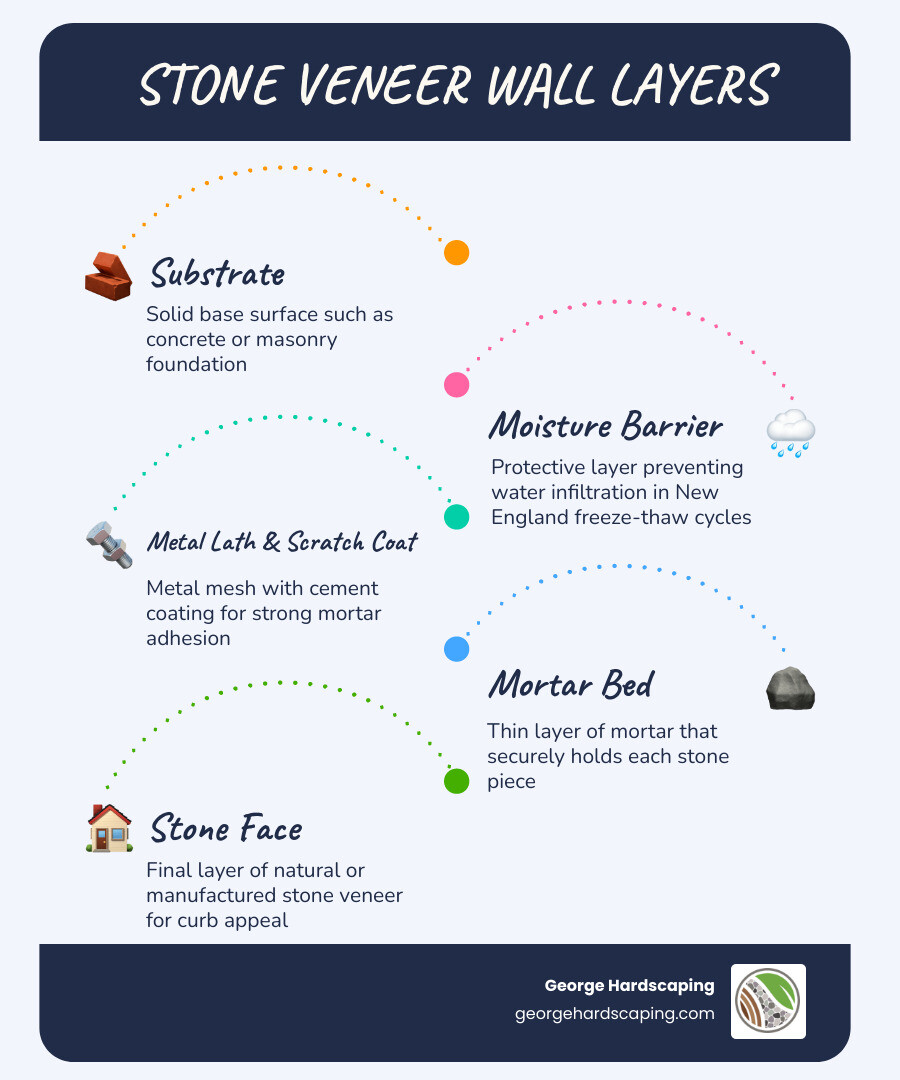
Quick look at Stone Veneer Lynnfield MA:
Understanding Stone Veneer: Natural vs. Manufactured
When planning an exterior or interior masonry upgrade, the first major decision is choosing between natural thin stone veneer and manufactured (often called cultured or faux) stone veneer. While they can look remarkably similar from a distance, their composition, long-term durability, and performance under New England skies are vastly different.

Natural Thin Stone Veneer
Natural thin stone veneer is made from 100% authentic stone quarried directly from the earth or gathered from historic fields. Large boulders and slabs are sliced using precision diamond saws into thin profiles, typically ranging from 1 to 2 inches thick. This process reduces the weight of the stone by up to 75% compared to traditional full-bed building stone, making it far easier to transport and install without sacrificing the organic beauty of the material.
Because it is real stone, every piece features unique mineral veining, organic textures, and color variations that run entirely through the material. Brands like Stoneyard’s Boston Blend Premium Real Stone Veneer utilize authentic New England fieldstone gathered from historic farms. This yields an incredibly authentic, historically accurate look that matches the traditional architecture of local towns like Salem and Beverly. Another excellent regional option is Premium Natural Stone from Fieldstone Veneer, which showcases the rugged beauty of native New England landscapes.
Manufactured (Cultured) Stone Veneer
Manufactured stone veneer is a man-made product molded from a mixture of Portland cement, lightweight aggregates (such as expanded shale, clay, or pumice), and iron oxide mineral pigments. It is designed to mimic the appearance of natural stone at a lower weight and a more accessible price point.
Products like Black Bear Mountain Stone Field Stone Midnight are highly popular for interior accents and protected exterior applications. They often feature built-in designs like Color Lock technology to protect the concrete base from rapid fading. However, because manufactured stone is essentially colored concrete, it is more porous than natural stone and can be susceptible to wear, chipping, and fading over decades of exposure. If a manufactured stone chips, the lighter concrete aggregate underneath is often exposed, revealing the artificial nature of the material.
| Feature | Natural Thin Stone Veneer | Manufactured (Cultured) Stone Veneer |
|---|---|---|
| Material Composition | 100% genuine quarried or field-harvested stone | Portland cement, aggregates, and mineral pigments |
| Aesthetic Authenticity | Unique pieces; colors run entirely through the stone | Repetitive patterns; color is often surface-applied |
| Durability & Lifespan | Generational (lasts centuries); highly scratch-resistant | 20 to 50 years; prone to chipping and showing concrete base |
| Porosity & Weathering | Low porosity; impervious to freeze-thaw cycles | Higher porosity; absorbs moisture and can scale or crack |
| Maintenance | Extremely low; tolerates gentle pressure washing | Low; requires specialized, non-acidic cleaning |
| Value Retention | High; significantly boosts long-term property resale value | Moderate; provides immediate aesthetic appeal but wears faster |
Selecting the Best Stone Veneer Lynnfield MA for Your Home’s Exterior
Choosing the right material for your home in Lynnfield, MA, depends heavily on your budget, structural goals, and aesthetic preferences. If you own a historic New England Colonial or a luxury custom estate, natural stone veneer is almost always the superior investment. It blends seamlessly with the natural landscape of Essex County and preserves the historical integrity of properties in nearby Danvers and Peabody.
For contemporary homes or interior accents like fireplaces, high-quality manufactured stone can be a fantastic, cost-effective alternative. However, given our local climate, we always urge homeowners to weigh the long-term weather resistance of real stone against the lower upfront cost of concrete alternatives. Investing in natural stone ensures that your home’s exterior remains pristine and structurally sound for generations to come.
Benefits of Installing Stone Veneer Lynnfield MA
Investing in professional Stone Veneer Lynnfield MA installation offers numerous functional and aesthetic advantages that go far beyond a simple cosmetic facelift. For homeowners looking to maximize their property’s potential, this upgrade delivers exceptional value across multiple fronts.
- Substantial Boost in Property Value: In prestigious North Shore communities, exterior aesthetics are directly tied to property valuation. According to national remodeling cost vs. value surveys, stone veneer installations consistently rank among the top home improvement projects for return on investment (ROI), often recouping over 90% of their cost at resale. Adding natural stone veneer to your home’s foundation or siding creates an immediate sense of luxury, helping your home stand out in competitive real estate markets like Swampscott and Lynnfield.
- Modernizing 1960s Architecture: Many neighborhoods in the area feature split-levels, ranches, and colonials built during the mid-20th-century housing boom. Integrating stone veneer accents along the lower third of your siding or around the garage entrance instantly modernizes these classic layouts, giving them a high-end, contemporary edge. It breaks up the monotony of long vinyl or wood siding runs, adding organic texture and visual weight.
- Unmatched Durability and Weather Protection: Unlike vinyl or wood siding, which can warp, rot, or fade under the elements, natural stone veneer acts as an incredibly tough shield against wind-driven rain, heavy snowpack, and intense summer sun. It is completely impervious to rot, insect damage, and wood-boring pests, providing an extra layer of defense for your home’s structural framing.
- Low Maintenance Requirements: Once properly installed by a professional team, stone veneer requires virtually no upkeep. There is no need for painting, staining, or sealing every few years—just an occasional rinse with a garden hose to clear away dust and organic debris. This makes it one of the most hassle-free exterior materials available today.
To learn more about how we integrate masonry and structural upgrades into complete landscape overhauls, explore our comprehensive Hardscaping Services Lynnfield MA.
Common Applications for Lynnfield Properties
One of the greatest attributes of thin stone veneer is its incredible versatility. Because it is lightweight compared to full-bed stone, it can be applied to almost any structurally sound wall without requiring extensive footing modifications or heavy steel lintels.
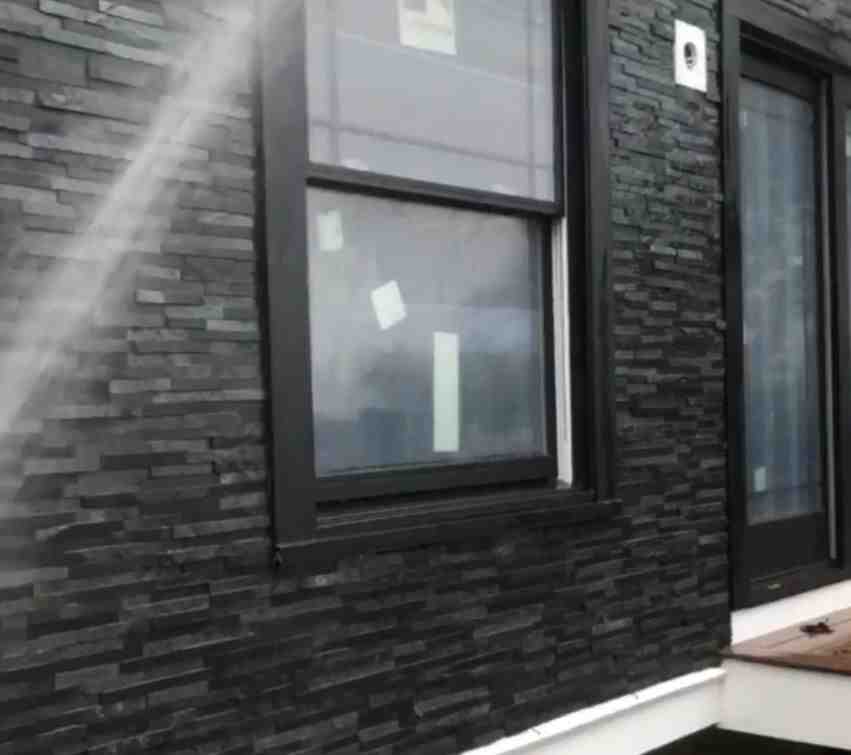
Foundation Accents and Water Tables
Perhaps the most common application in our area is covering exposed poured-concrete or concrete-block foundations. A plain grey concrete foundation can make even the most beautiful home look unfinished. By applying a stone veneer “water table” (covering the bottom few feet of the home), you anchor the house to its surrounding landscape, creating a cohesive transition from the earth to your siding. Historically, water tables served to shed rainwater away from the wooden sill plate of the home; today, they provide both this protective function and an unmatched aesthetic upgrade.
Chimney and Fireplace Refacing
A brick chimney that has seen better days can be transformed into a stunning architectural focal point. Whether you are looking to update an outdated interior hearth or completely reface an exterior chimney stack, thin stone veneer provides a dramatic transformation. Because thin veneer does not require a concrete foundation ledge to support its weight, it can be installed directly over existing brick or concrete block. For interior projects, our specialized Stone Veneer Fireplace Installation services ensure that the masonry is beautifully executed, safe, and built to handle high thermal output while complying with all local building codes.
Retaining Walls and Hardscape Features
If you are installing structural or decorative retaining walls to manage sloped yards in hilly areas of Peabody or Danvers, facing those concrete walls with stone veneer completely changes the dynamic of your outdoor living space. It turns a functional erosion-control feature into a gorgeous landscape accent. We recommend checking out local solutions like Goodwood General Construction’s Retaining Wall Services or incorporating veneer into your custom outdoor kitchens, seating walls, and steps. Veneering these features creates a cohesive, high-end look that ties your entire backyard oasis together.
The Professional Installation Process and Climate Resilience
The climate of the North Shore of Massachusetts is notoriously tough on exterior masonry. With freezing winter temperatures, humid summers, and frequent winter freeze-thaw cycles, water management is the single most critical factor in any stone installation.
When water penetrates behind stone veneer, it expands as it freezes. This expansion exerts incredible pressure, easily popping stones off the wall or cracking the underlying mortar if the installation was rushed or poorly detailed.
[Wood or Concrete Wall]

[Water-Resistive Barrier] (Protects framing from rot)

[Metal Lath & Fasteners] (Provides mechanical grip)

[Scratch Coat of Mortar] (Creates a textured base)

[Type S Mortar Bed] (Bonds stone to scratch coat)

[Stone Veneer Piece] (Natural or manufactured stone)
To ensure maximum climate resilience, a professional installation must follow a strict, multi-step process:
- Moisture Barrier Installation: Two layers of water-resistive barrier (WRB) are applied over the wood sheathing to prevent moisture from reaching the home’s framing. A weep screed is installed at the bottom of the wall to allow any trapped moisture to safely drain out.
- Metal Lath Attachment: Galvanized, self-furring metal lath is securely fastened to the wall studs using corrosion-resistant fasteners. This lath acts as the structural “skeleton” that holds the heavy mortar bed and prevents sagging.
- The Scratch Coat: A specialized mortar scratch coat (typically Type S mortar) is applied over the lath to a thickness of roughly 1/2 inch. Once it begins to set, it is scraped with horizontal grooves using a scarifier to create a textured, high-grip surface.
- Stone Layout and Fitting: Each stone is carefully selected, cut, and dry-laid on the ground to ensure an appealing mix of colors, shapes, and sizes before it ever touches the wall. Masons will hand-tool the edges of natural stone to ensure tight, clean joints.
- Mortar Adhesion and Grouting: High-bond polymer-modified mortar is applied to both the wall and the back of each stone (a process called back-buttering). The stones are pressed firmly into place, and the joints are filled with grout to seal the system against moisture intrusion.
For homeowners looking at siding integration, check out PlumPro Exteriors’ Siding Services or consult with local suppliers like TLC Supply’s Thin Stone Veneer Options to select materials designed specifically to withstand harsh coastal New England weather.
Why Professional Stone Veneer Lynnfield MA Installation Beats DIY
While home improvement shows make stone veneer installation look like a simple weekend project, the reality is highly technical.
A DIY attempt can easily lead to catastrophic failures. If the water-resistive barrier is flashed incorrectly around windows, doors, or sill plates, water will seep behind the stone. Over time, this leads to hidden wood rot, structural framing damage, and toxic mold growth inside your walls.
Furthermore, handling the structural load of heavy natural stone requires precise calculation. If the mortar mix is incorrect or the scratch coat is poorly cured, entire sections of stone can fall, creating significant safety hazards. Hiring an experienced crew with deep roots in Masonry Services Lynnfield MA ensures your investment is backed by professional-grade warranties, proper flashing details, and flawless execution. Professional masons understand how to handle expansion joints, weep holes, and transition flashing to keep your home dry and beautiful for decades.
Cost Expectations and Maintenance for Lynnfield Homeowners
When budgeting for a stone veneer project, it is helpful to look at general industry trends. Based on public internet data, the average cost of professional stone veneer installation in the Northeast typically sits around $30 per square foot.
However, because every home features unique challenges—such as multi-story scaffolding needs, complex corner cuts, foundation preparation, or historic preservation requirements—actual project costs vary widely. To account for this immense industry variability, a realistic price range for local projects spans from $60 per square foot (two times the average) for basic accent walls up to $150 or more per square foot (five times the average) for premium, highly detailed natural stone installations.
Please note: These price ranges are based on general online data and industry averages. They do not represent the actual pricing or estimates of George Hardscaping.
Cleaning and Maintenance
Once your stone veneer is installed, keeping it beautiful is incredibly simple:
- Avoid High-Pressure Washing: Never use a commercial pressure washer at close range on manufactured stone veneer, as it can blast away the surface pigments and erode the mortar joints. For natural stone, only use low-pressure settings to avoid etching the stone surface.
- Use Gentle Cleansers: Clean the stone using a soft-bristled brush, warm water, and a mild dish soap. Avoid harsh acids, chemical bleach, or wire brushes, which can etch natural stone or permanently discolor concrete-based manufactured stone.
- Inspect Annually: Once a year, walk around your home to check the mortar joints for any hairline cracks, especially near the ground level where freeze-thaw action is most intense. Promptly repairing minor cracks prevents water from entering and causing larger issues.
- Address Efflorescence Promptly: If you notice a white, powdery substance on the surface of your stone or mortar, this is efflorescence—a natural occurrence where soluble salts migrate to the surface. It can usually be scrubbed away with a stiff brush and clean water, or a very mild vinegar solution.
If you are ready to discuss your project’s specific requirements and receive an accurate, professional estimate tailored to your Lynnfield home, we invite you to reach out to our team today.
For a deeper look at the installation process, design options, and structural requirements, visit our dedicated Stone Veneer Installation page.
Frequently Asked Questions about Stone Veneer Lynnfield MA
How does stone veneer hold up in Massachusetts winter weather?
When installed by professional masons who prioritize proper flashing and moisture barriers, stone veneer holds up incredibly well against Massachusetts winters. Natural stone veneer is virtually impervious to freeze-thaw cycles because of its low porosity. Manufactured stone can also perform well, provided it is sealed correctly and kept away from direct contact with chemical deicers and salt, which can corrode concrete.
What is the typical lifespan of natural stone veneer?
Natural thin stone veneer is practically permanent. Because it is made of genuine New England fieldstone or quarried granite, it will easily last for generations without structural degradation. Manufactured stone alternatives typically carry manufacturer warranties ranging from 20 to 50 years, but they may show signs of surface wear, fading, or moisture damage much sooner if exposed to harsh, unshielded weather.
Can stone veneer be installed over existing concrete foundations?
Yes, stone veneer can absolutely be installed over clean, unpainted, and structurally sound concrete or concrete-block foundations. The concrete surface must be thoroughly cleaned of any dirt, form-release agents, or paint. If the concrete is smooth, a metal lath and scratch coat must be applied first to ensure the mortar has a strong mechanical bond to the wall.
Does thin stone veneer require a structural ledge or footing?
No, one of the primary benefits of thin stone veneer (both natural and manufactured) is that it does not require a structural concrete ledge or foundation footing. Because it is typically less than 15 pounds per square foot, building codes allow it to be supported directly by the wall structure, making it ideal for remodeling projects where adding a concrete ledge is not feasible.
How do you prevent water from getting behind the stone veneer?
Water intrusion is prevented through a combination of a high-quality double-layer Water-Resistive Barrier (WRB), proper flashing around windows, doors, and rooflines, and the installation of a weep screed at the bottom of the wall. This system ensures that any moisture that does penetrate the stone can safely drain down and out of the wall assembly without contacting the wood framing.
Conclusion
Upgrading your home with Stone Veneer in Lynnfield, MA, is one of the most rewarding investments you can make. Whether you are looking to cover an unsightly concrete foundation, build a striking fireplace surround, or elevate your home’s curb appeal with a gorgeous natural stone facade, choosing the right materials and the right local masonry team is essential.
At George Hardscaping, we bring years of dedicated masonry and hardscaping expertise to every project across Essex County and the North Shore. From selecting beautiful, historically authentic New England stone to ensuring flawless, weather-resistant installation, we take pride in delivering craftsmanship that stands the test of time.
Ready to transform your home’s exterior? Contact us today to discuss your vision.
- Call us directly: +781-222-0805
- Get a personalized quote: Request an Estimate
