
Driveway Pavers: Top 4 Best Options for 2024
Introduction
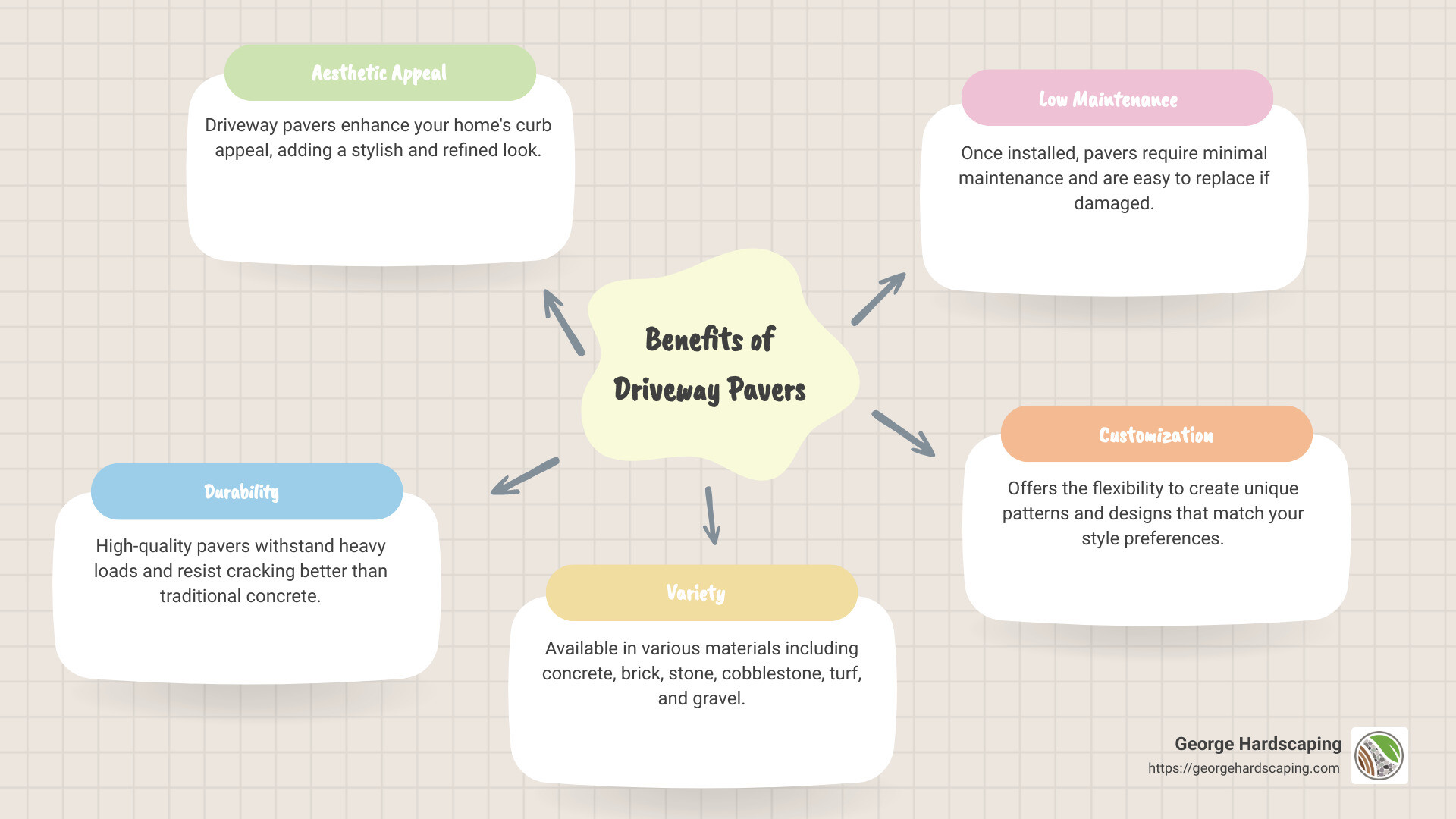
Driveway pavers are more than just a functional necessity; they’re an opportunity to boost your home’s curb appeal and add lasting value. Choosing the right pavers can dramatically transform your driveway, making it both attractive and durable. Here are some quick points to help you get started:
- Top options: Concrete, brick, stone, cobblestone, turf, and gravel pavers.
- Key factors: Cost, durability, and maintenance.
- Popular brands: Angelus, Belgard, and Roadlock® pavers.
Whether you desire an old-world charm or a contemporary flair, the right paver choice will enhance both the aesthetics and functionality of your outdoor space. Your new driveway shouldn’t just look good; it should also withstand time and weather.
Start making informed choices today with these expert insights into driveway pavers.
Types of Driveway Pavers
When choosing driveway pavers, it’s important to consider the material that best fits your needs in terms of aesthetics, durability, and maintenance. Here are some popular types:
Concrete Pavers
Concrete pavers are a versatile and durable choice for driveways. They can be poured into various shapes and textured or colored to fit your home’s style. Concrete is particularly effective in warmer climates where freeze-thaw cycles aren’t a concern. However, it can stain and crack over time, so periodic sealing is recommended to maintain its appearance.
Pros:
– Durable and versatile
– Can be molded into different shapes and colors
– Low maintenance with periodic sealing
Cons:
– Can crack in colder climates
– Prone to staining
Brick Pavers
Brick pavers offer a classic, timeless look that can significantly boost curb appeal. They come in various colors and can be laid in several patterns, adding character and value to your property. While bricks are durable, they require some maintenance such as regular cleaning and occasional replacement of loose or cracked bricks.
Pros:
– Timeless and classic appearance
– Variety of colors and patterns
– Durable with proper maintenance
Cons:
– Requires regular cleaning
– Occasional replacement of loose or cracked bricks
Stone Pavers
Natural stone pavers, such as granite, slate, or bluestone, provide a unique and upscale look. Each piece has distinct colors and textures, giving your driveway a one-of-a-kind appearance. Stone is extremely durable and can last for decades but tends to be on the pricier side both in terms of materials and installation.
Pros:
– Unique and upscale appearance
– Extremely durable
– Long-lasting
Cons:
– Expensive
– Labor-intensive to install
Cobblestone Pavers
Cobblestone pavers bring an old-world charm to your driveway. They are incredibly durable and can withstand heavy loads, making them ideal for driveways. The irregular shape and natural look of cobblestones add a rustic appeal to any property.
Pros:
– Old-world charm and rustic appeal
– Extremely durable
– Can withstand heavy loads
Cons:
– Expensive
– Can be uneven, making snow removal difficult
Turf Pavers
Turf pavers are a combination of concrete or plastic grids filled with soil and grass. They create a permeable surface that reduces runoff and blends with the landscape. Turf pavers are perfect for low-traffic areas and can help in managing stormwater while keeping the aesthetic of a green, lush lawn.
Pros:
– Eco-friendly and permeable
– Blends with the landscape
– Reduces runoff
Cons:
– Not suitable for high-traffic areas
– Requires regular lawn maintenance
Gravel Pavers
Gravel pavers are a cost-effective and natural-looking option. They consist of a honeycomb grid made from plastic or another durable material, which is then filled with gravel. This structure allows rainwater to permeate directly into the soil, reducing runoff and promoting groundwater recharge.
Pros:
– Cost-effective
– Natural look
– Eco-friendly
Cons:
– Gravel can shift over time
– Requires regular maintenance to keep gravel in place
Choosing the right driveway paver can dramatically transform your home’s entrance, enhancing both its beauty and functionality. Next, we’ll explore some of the top driveway paver options available to help you make an informed decision.
Top Driveway Paver Options
When selecting driveway pavers, you want options that combine durability, aesthetics, and functionality. Below are some of the top choices that can elevate your driveway’s appeal.
Angelus Castle Cobble
Angelus Castle Cobble pavers are perfect for those looking to add old-world charm to their driveway. These pavers feature a rugged, timeless look that can handle heavy vehicle loads. Their robust design makes them a favorite for both residential and commercial projects.
Pros:
– Timeless, rugged appearance
– High load-bearing capacity
– Low maintenance
Cons:
– Limited color options
– Can be more expensive than other pavers
Angelus Courtyard
If you’re after a more refined and symmetrical look, Angelus Courtyard pavers are an excellent choice. Their uniform size and shape allow for versatile laying patterns, making them ideal for contemporary homes.
Pros:
– Versatile design options
– Sleek, modern appearance
– Durable and long-lasting
Cons:
– Requires precise installation
– Can be slippery when wet
Belgard Mega Lafitt
Belgard Mega Lafitt pavers offer the appearance of natural stone with the durability of concrete. These large-format pavers are perfect for homeowners seeking a sophisticated style without compromising on strength.
Pros:
– Natural stone appearance
– Large format for quicker installation
– Highly durable
Cons:
– Higher initial cost
– Requires professional installation for best results
Roadlock® Driveway Pavers
Roadlock® driveway pavers are designed for heavy-duty applications, making them ideal for driveways that see a lot of traffic. They offer exceptional durability and are engineered to withstand harsh weather conditions.
Pros:
– Extremely durable
– Suitable for high-traffic areas
– Resistant to weather damage
Cons:
– Limited design options
– Can be more expensive due to specialized materials
Each of these driveway paver options offers unique benefits, catering to different aesthetic preferences and functional needs. Whether you seek the rustic charm of Angelus Castle Cobble or the robust durability of Roadlock® pavers, there’s a perfect match for every driveway project.
Next, we’ll delve into the pros and cons of different driveway pavers to help you weigh your options more effectively.
Pros and Cons of Different Driveway Pavers
Choosing the right driveway pavers involves weighing several factors, including cost, durability, maintenance, aesthetics, and installation. Here’s a breakdown to help you make an informed decision:
Cost
Pros:
– Concrete Pavers: Mid-range cost, averaging $8 to $15 per square foot.
– Asphalt: Budget-friendly, especially for long driveways, costing around $2 to $6 per square foot.
– Brick Pavers: More expensive, but they add significant value to your property.
Cons:
– Stone Pavers: Tend to be pricier, ranging from $10 to $50 per square foot.
– Pavers in General: Higher upfront cost compared to plain concrete or asphalt.
Durability
Pros:
– Concrete Pavers: Durable and versatile, ideal for warmer climates.
– Asphalt: Handles freeze-thaw cycles well, lasting 25 to 30 years with proper maintenance.
– Stone Pavers: Extremely durable, with a lifespan of several decades.
Cons:
– Asphalt: Requires regular sealing and may become soft in hot weather.
– Concrete: Can crack over time, particularly in colder climates.
Maintenance
Pros:
– Pavers: Easy to replace individual damaged units without redoing the entire driveway.
– Concrete: Low maintenance, needing only periodic sealing.
– Asphalt: Can be resurfaced and repaired, extending its lifespan.
Cons:
– Brick Pavers: Require regular cleaning and occasional replacement of loose or cracked bricks.
– Stone Pavers: Weeds may grow through gaps, requiring consistent upkeep.
Aesthetics
Pros:
– Brick Pavers: Offer a classic, timeless look with various color options.
– Stone Pavers: Unique and upscale, each piece has distinct colors and textures.
– Grass Pavers: Eco-friendly and blend well with the landscape.
Cons:
– Asphalt: Limited style options, mostly available in black.
– Concrete: Can stain and may not offer the same aesthetic appeal as other materials.
Installation
Pros:
– Asphalt: Quick to install and budget-friendly.
– Concrete Pavers: Versatile and can be poured into various shapes and textures.
Cons:
– Pavers: Labor-intensive installation process, making it more expensive.
– Stone Pavers: Requires skilled labor, adding to the installation cost.
Each type of driveway paver has its pros and cons, making it essential to consider your specific needs and preferences. Next, we’ll compare the costs associated with different driveway pavers to give you a clearer picture of your investment.
Cost Comparison of Driveway Pavers
When planning for driveway pavers, understanding the costs involved is crucial. Below, we’ll break down the costs into four main categories: installation, materials, long-term value, and maintenance.
Installation Costs
Concrete Pavers: Installation for concrete pavers can range from $8 to $12 per square foot. The process is labor-intensive, requiring skilled workers to ensure proper placement and leveling.
Asphalt: Asphalt driveways are more budget-friendly, with installation costs ranging from $2 to $6 per square foot. Asphalt is quicker to install, making it a cost-effective option for larger driveways.
Natural Stone Pavers: Installing natural stone pavers can be quite expensive, ranging from $10 to $50 per square foot. This cost accounts for the skilled labor required to handle and place each stone properly.
Brick Pavers: Brick pavers fall in the mid-range, with installation costs between $10 and $30 per square foot. The process is slightly less labor-intensive than stone but still requires careful placement and leveling.
Material Costs
Concrete Pavers: These are generally the most affordable, with material costs around $2 to $4 per square foot.
Asphalt: Asphalt is also budget-friendly, with material costs ranging from $1 to $3 per square foot.
Natural Stone Pavers: The cost of natural stone varies widely depending on the type, ranging from $5 to $20 per square foot. Premium stones like granite and slate can be on the higher end of this range.
Brick Pavers: Brick pavers cost between $4 and $8 per square foot. They offer a classic look but at a higher price than concrete.
Long-Term Value
Concrete Pavers: Concrete pavers are durable and can last 30 to 40 years with proper maintenance. They offer a good return on investment due to their longevity and low maintenance needs.
Asphalt: Asphalt driveways typically last 15 to 30 years. Regular sealing can extend their lifespan, but they may require more frequent repairs than other materials.
Natural Stone Pavers: Natural stone is highly durable, often lasting several decades. The high initial cost is offset by its long-term durability and minimal maintenance.
Brick Pavers: Brick pavers can last 25 to 30 years. They offer a timeless look and add significant value to your property.
Maintenance Costs
Concrete Pavers: Maintenance involves occasional resealing and cleaning, costing about $0.50 to $1 per square foot annually.
Asphalt: Requires regular sealing every few years, with maintenance costs around $0.20 to $0.30 per square foot annually.
Natural Stone Pavers: Minimal maintenance is needed, mostly cleaning. Costs are relatively low, around $0.10 to $0.20 per square foot annually.
Brick Pavers: Maintenance involves cleaning and occasionally replacing loose or cracked bricks. Annual costs range from $0.50 to $1 per square foot.
By comparing these costs, you can choose the best driveway pavers for your budget and needs. In the next section, we’ll help you decide which pavers are right for your specific situation.
How to Choose the Right Driveway Pavers
Choosing the right driveway pavers involves more than just picking a style you like. Consider factors like climate, style preferences, load-bearing capacity, and maintenance requirements to make an informed decision.
Climate Considerations
The climate in your area plays a big role in determining the best type of pavers for your driveway. For example:
- Hot Climates: Concrete pavers perform well in hot climates but can crack under freeze-thaw cycles.
- Cold Climates: Asphalt and brick pavers handle freeze-thaw cycles better, reducing the risk of cracks.
- Rainy Areas: Permeable pavers are ideal for areas with heavy rainfall as they allow water to seep through, reducing runoff and preventing flooding.
Style Preferences
Your home’s style should guide your choice of pavers. Here are some options to consider:
- Traditional Homes: Brick pavers offer a classic, timeless look.
- Modern Homes: Concrete pavers come in various shapes and colors, perfect for a contemporary feel.
- Natural Aesthetic: Stone pavers like granite or slate provide a unique, upscale appearance.
Load-Bearing Capacity
If your driveway needs to support heavy vehicles, you’ll need pavers with high load-bearing capacity. Here’s a quick guide:
- Concrete Pavers: Durable and can support heavy loads.
- Natural Stone Pavers: Extremely strong and long-lasting.
- Brick Pavers: Suitable for standard vehicles but may need extra support for heavier loads.
Maintenance Requirements
Different pavers have different maintenance needs. Consider how much time and effort you’re willing to invest in upkeep:
- Concrete Pavers: Require sealing every few years to prevent stains and cracks.
- Brick Pavers: Need regular cleaning and occasional replacement of loose or cracked bricks.
- Permeable Pavers: Low maintenance, just regular sweeping and occasional rinsing.
By factoring in these considerations, you can choose the best driveway pavers to enhance the beauty and functionality of your outdoor space.
Frequently Asked Questions about Driveway Pavers
What is the best paver to use for a driveway?
When selecting the best driveway pavers, consider options that combine durability with aesthetic appeal. Here are three popular choices:
- Angelus Castle Cobble: Known for its rugged, old-world charm, this paver adds timeless beauty to modern driveways. Its robust design efficiently handles vehicle loads.
- Angelus Courtyard: Ideal for those seeking a more refined, symmetrical look. Its uniform size and shape allow for versatile laying patterns, making it a favorite for contemporary homes.
- Belgard Mega Lafitt: Offers the appearance of natural stone with the durability of concrete. This paver is perfect for homeowners looking for a large-format paver that combines strength with sophisticated style.
Each of these options provides unique aesthetic and functional benefits, ensuring there’s a perfect match for any modern driveway project.
Is it cheaper to lay concrete or pavers?
Concrete is generally cheaper to install than pavers. Here are some key points to consider:
- Installation Costs: Concrete costs up to $24 per square foot, while pavers can range from $15,000 to $25,000 for a medium-sized driveway.
- Long-term Value: While concrete may be less expensive initially, pavers offer better long-term value. They are less prone to cracking and can be replaced individually if damaged.
- Durability: Pavers tend to last 30 years or more, whereas concrete driveways typically last 20-30 years. Maintaining pavers is also easier since you can replace individual pieces.
What is the downside of a paver driveway?
While paver driveways offer many benefits, there are some downsides to consider:
- Higher Cost: The initial cost of installing pavers is higher than other materials like concrete or asphalt. This includes both the materials and the labor involved in laying each piece individually.
- Labor-Intensive Installation: Installing pavers is a labor-intensive process that requires precise placement and alignment. This can increase the overall installation time and cost.
By understanding these aspects, you can make an informed decision about whether pavers are the right choice for your driveway.
Conclusion
Choosing the right driveway pavers can transform your outdoor space into a stunning and functional area that enhances the overall appeal of your home. At George Hardscaping, we specialize in delivering top-notch hardscaping services, ensuring that your project is not only beautiful but also built to last.
With years of experience serving Essex County, MA, and the North Shore, our team is committed to quality craftsmanship. We take pride in our attention to detail and dedication to customer satisfaction. Whether you’re looking to install a new driveway, patio, or custom outdoor feature, we have the expertise to bring your vision to life.
Enhance your outdoor spaces with the durability and aesthetic appeal of driveway pavers. Contact us at George Hardscaping to discuss your project and see how we can help you create the perfect outdoor environment for your home.
For more information, reach out to us or follow us on Facebook for updates and inspiration.

