
Commercial Snow Removal: 7 Powerful Benefits in 2025
Winter’s Business Challenge: Managing Snow and Ice
Commercial snow removal is the professional clearing of snow and ice from business properties like parking lots, sidewalks, and entrances to ensure safety and accessibility during winter months.
What is commercial snow removal?
– Definition: The professional clearing of snow and ice from business properties
– Scope: Includes parking lots, walkways, entrances, loading docks
– Equipment: Uses specialized machinery like plows, skid-steers, and salt spreaders
– Timing: Often performed before business hours or during overnight hours
– Cost: Typically ranges from $0.05 to $1.50 per square foot depending on contract type and location
When winter storms hit, the difference between a thriving business and one that’s forced to close often comes down to how quickly snow and ice are managed. For commercial property owners and managers, accumulated snow isn’t just an inconvenience—it’s a liability risk and potential revenue killer.
“A well-developed commercial snow plowing program ensures that your customers and employees stay safe by removing any snow and ice that could lead to an accident,” notes one industry expert in our research.
The stakes are particularly high for essential services like healthcare facilities, where snow-covered pathways can prevent patients from accessing critical care. According to our research, retail centers during holiday shopping seasons face similar challenges, with impassable entryways directly impacting their bottom line.
Commercial snow removal isn’t simply about clearing pavement. It’s about maintaining business continuity, protecting your reputation, and ensuring that your first winter impression isn’t your last customer interaction.
With proper planning and professional service, the challenges of winter weather can be managed effectively, allowing your business to operate smoothly even when Old Man Winter is at his worst.
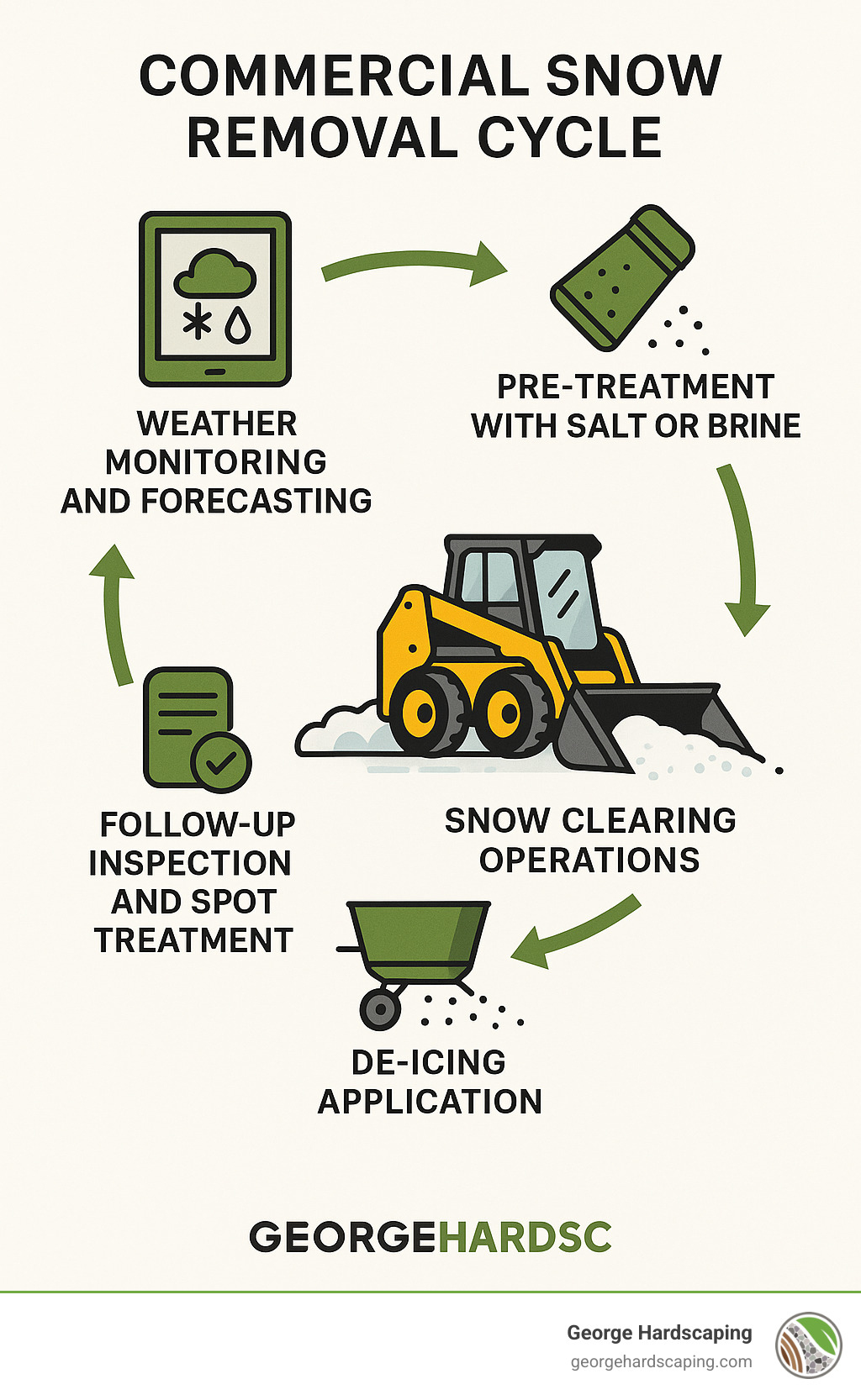
Terms related to commercial snow removal:
– commercial snow removal contracts
– commercial snow removal insurance
– how to price commercial snow removal
What Is Commercial Snow Removal & Why It Matters
Commercial snow removal goes far beyond simply pushing snow to the side of your property. It’s a comprehensive winter management service that ensures your business remains accessible, safe, and fully operational during even the harshest winter weather. For businesses throughout Essex County, MA—from Salem to Newburyport—effective snow management isn’t just convenient; it’s absolutely essential.
When winter storms hit, your business faces real challenges. Customers need clear paths to reach you. Employees need safe access to work. Emergency vehicles need unobstructed routes to your building. All of these concerns make commercial snow removal a critical business investment rather than an optional service.
“The day after a major snowstorm can be one of our busiest or deadest days—it all depends on how quickly our lot gets cleared,” shared one property manager from a Danvers retail center. This reality highlights how directly winter weather management affects your bottom line.
A comprehensive commercial snow removal program typically covers everything from plowing parking lots and clearing walkways to applying de-icing treatments and relocating snow to designated areas. For businesses facing Massachusetts’s unpredictable North Shore winters, where significant accumulation can happen in just hours, having a reliable snow management plan isn’t optional—it’s a business necessity.
The true value of professional snow management comes from several key areas: accessibility for customers and staff, business continuity that prevents weather-related closures, reputation management that maintains your professional image, emergency access that keeps fire lanes clear, and insurance compliance that can actually reduce your premiums.
Modern Equipment for Commercial Snow Removal
The single plow truck of yesteryear simply won’t cut it for today’s commercial properties. Modern commercial snow removal operations rely on specialized equipment designed for efficiency, effectiveness, and property protection.
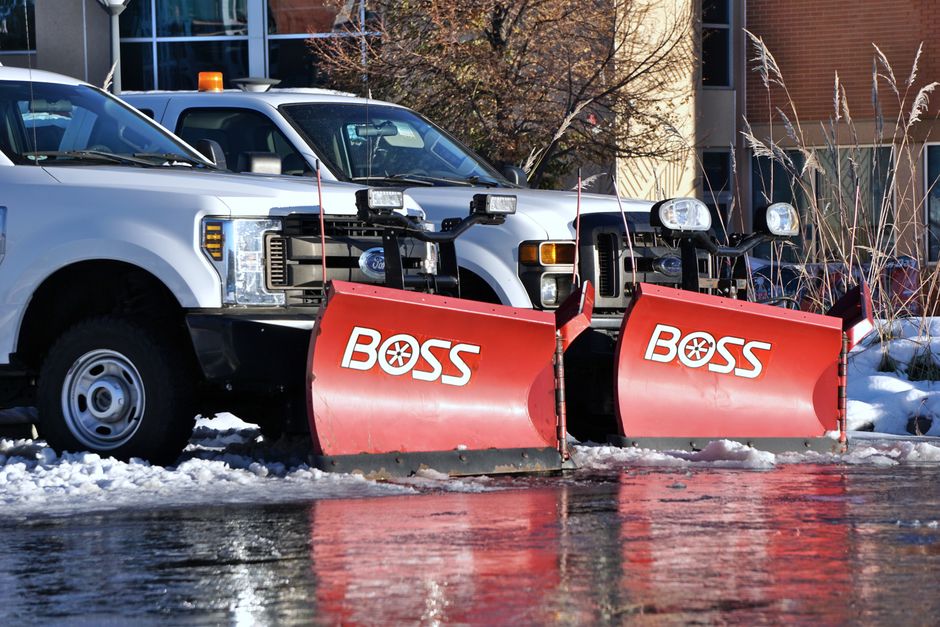
According to our industry research, Bobcat skid-steer loaders have become the workhorses of snow removal across North America. Their popularity stems from incredible maneuverability in tight spaces combined with impressive pushing power and attachment versatility. These machines form the backbone of efficient commercial operations.
At George Hardscaping, we’ve invested in commercial-grade equipment featuring heated cabs (because nobody works efficiently when they’re freezing!), improved lighting systems for nighttime operations, and GPS tracking technology. These investments translate directly to faster response times and more thorough clearing for our commercial clients throughout Essex County.
The modern snow removal arsenal includes specialized tools for every situation. Skid-steer loaders steer tight corners while moving significant snow volumes. V-blades can be configured in five different positions to handle various snow conditions. Snow pushers contain and move large volumes efficiently, while calibrated salt spreaders ensure precise application of de-icing materials to protect both your property and the environment.
Equipment reliability is another crucial factor. When a storm hits, having immediate access to replacement parts can mean the difference between clearing your property on schedule or facing frustrating delays. That’s why professional services maintain relationships with suppliers and keep essential components on hand throughout the winter season.
Key Benefits of Commercial Snow Removal
Professional commercial snow removal delivers value that extends far beyond simply clearing snow from your property.
Reduced slip-and-fall incidents represent perhaps the most significant benefit. According to insurance industry data, winter-related slip-and-fall claims can cost businesses thousands in liability and increased premiums. Professional snow management dramatically reduces these incidents through thorough clearing and proper de-icing.
Your customers expect safe access to your business regardless of weather conditions. When they arrive to find clear pathways and treated surfaces, you’re demonstrating your commitment to their safety and convenience. This improved customer experience encourages them to visit your business even during challenging weather.
Employee safety and productivity also improve with professional snow management. When your staff can safely access your facility, attendance improves and on-the-job injuries decrease. This keeps your operation running smoothly even when Mother Nature has other plans.
“Our patients need reliable access regardless of weather conditions,” explained a healthcare facility manager in Beverly. “Professional snow removal isn’t an expense—it’s an essential service that keeps our facility functioning.”
Your property itself benefits too. Extended pavement life comes from proper snow removal techniques and appropriate de-icing that prevent the freeze-thaw damage that deteriorates parking lots and walkways over time. This protection translates to reduced maintenance costs in the long run.
Perhaps most directly impacting your business is the reduced downtime that professional services provide. When crews clear snow before business hours, you don’t lose valuable operating time waiting for conditions to improve. Your business opens on schedule, maintaining both revenue flow and customer confidence.
All these benefits combine to project a professional image that speaks volumes about your business. A well-maintained, snow-free property demonstrates competence and attention to detail—qualities customers naturally associate with your business practices.
Risks, Liability, and Safety Benefits
Risks, Liability, and Safety Benefits
Winter transforms beautiful commercial properties into potential liability nightmares faster than you can say “snowstorm.” Those pristine white drifts might look picturesque, but for business owners, they represent serious risks that can impact both your bottom line and legal standing.
When snow and ice accumulate on your commercial property, you’re essentially hosting an accident waiting to happen. Slip-and-fall hazards become your unwelcome winter tenants, creating treacherous conditions that can lead to serious injuries. And it’s not just ground-level concerns – ice buildup on roofs and overhangs creates dangerous falling hazards that can injure passersby without warning.
“Heavy snow can collapse roofs and bring down power lines,” our research consistently shows. These structural concerns aren’t just maintenance issues – they represent catastrophic risks to your building, inventory, and anyone inside. Meanwhile, businesses must maintain ADA compliance even during the harshest weather, ensuring that individuals with disabilities can safely access your facilities regardless of snow conditions.
Perhaps most directly impactful to your operation is the threat of business interruption. When your parking lot resembles an ice rink and your entrances are blocked by snow drifts, you’re essentially closed for business – even if your doors are technically open.
The financial implications? They’re substantial. A single slip-and-fall claim can easily cost tens of thousands in legal fees and settlements. For businesses operating on thin margins, especially during winter months, these unexpected expenses can be devastating.
How Commercial Snow Removal Cuts Liability Costs
Professional commercial snow removal doesn’t just clear snow – it clears you of potential liability. When you partner with experts like George Hardscaping, you gain several protective measures that significantly reduce your risk exposure.
First, you’ll receive documented service records detailing exactly when and how your property was maintained. These records create a “reasonable care” defense that proves you took appropriate action to keep your property safe – a crucial element if incidents do occur despite your best efforts.
Our teams implement proper de-icing protocols that prevent the formation of dangerous black ice, applying materials strategically rather than haphazardly. This approach not only improves safety but also minimizes environmental impact and reduces damage to your hardscaping investments.
With proactive monitoring of weather conditions, we can often pre-treat surfaces before storms hit, preventing ice from bonding to pavement in the first place. During extended winter events, our consistent maintenance prevents dangerous accumulation that would otherwise create hazardous conditions.
As one industry expert perfectly summarized: “The biggest benefit of hiring professionals is that peace of mind is ‘priceless’.” By transferring winter maintenance responsibilities to insured professionals, you effectively transfer much of your liability risk as well.
Local Regulations & Compliance
Beyond safety concerns, commercial snow removal involves navigating a complex web of local regulations that vary throughout Essex County and Massachusetts. Staying compliant isn’t optional – it’s mandatory.
Many municipalities enforce strict snow piling ordinances that dictate where snow can be relocated. Piling snow near intersections, for instance, can create dangerous visibility issues and result in citations. Similarly, cities like Salem and Newburyport have specific sidewalk clearing requirements that mandate property owners clear adjacent sidewalks within designated timeframes after storms.
Environmental regulations increasingly restrict salt application near sensitive areas like wetlands and water sources. Improper snow management can also block drainage systems, creating storm water management issues that potentially violate local ordinances and create flooding problems for neighboring properties.
Some communities even impose time restrictions on when noisy snow clearing operations can occur, particularly for properties adjacent to residential areas. Violating these quiet hours can result in complaints and fines.
Non-compliance with these regulations can quickly snowball into fines, citations, and increased liability exposure. Working with a knowledgeable local contractor like George Hardscaping ensures your property remains compliant with all applicable regulations while maintaining safe conditions for everyone who visits your business.
For more information about insurance considerations, visit our guide to Commercial Snow Removal Insurance to understand how proper coverage protects your business.
Equipment, Technology, and Sustainable Practices
Modern commercial snow removal has evolved far beyond the basic plow truck. Today’s professional services leverage advanced equipment and technology to deliver more efficient, effective, and environmentally responsible results.

When winter storms hit Essex County, our crews at George Hardscaping are equipped with the latest tools to keep your property safe and accessible. GPS tracking systems guide our teams efficiently between properties, ensuring no one gets missed during heavy snowfall events. Meanwhile, sophisticated weather monitoring systems help us anticipate storm patterns, often allowing us to deploy resources before the first flakes fall.
Our operators stay comfortable and alert in heated equipment cabs, which might seem like a luxury but actually translates to better service for you. A warm, comfortable operator can work longer shifts with greater focus and precision – essential when clearing your commercial property at 3 AM during a nor’easter.
“The days of ‘eyeballing it’ with salt applications are long gone,” explains one of our veteran operators. “Today’s calibrated material spreaders let us apply exactly what’s needed – no more, no less.” This precision not only saves materials but significantly reduces environmental impact on surrounding landscapes and waterways.
Many of our commercial clients are particularly impressed with our brine application systems. These pre-treatment solutions prevent ice from bonding to pavement in the first place, making subsequent clearing more effective while reducing the amount of solid salt needed. It’s a win-win for both property safety and environmental responsibility.
We’ve also expanded our inventory of eco-friendly de-icing products that are gentler on concrete, vegetation, and pet paws while still maintaining the safety standards your business requires.
Technology’s Role in Commercial Snow Removal
The technology revolution hasn’t bypassed the snow removal industry – quite the opposite. Today’s commercial snow removal services leverage digital tools that transform how we serve our clients throughout the North Shore.
Our real-time alert system keeps property managers informed throughout storm events. Rather than wondering when your lot will be cleared, you’ll receive automated updates as our teams arrive, complete service, and move to their next location. This transparency builds confidence during stressful weather events.
Behind the scenes, route optimization software ensures we deploy our fleet in the most efficient manner possible. This means faster response times for all our clients, even during the heaviest storms when resources are stretched thin.
Commercial clients particularly appreciate our secure client portal where they can review service history, submit special requests, and communicate directly with our team. The days of playing phone tag during storm events are over.
Perhaps most valuable from a liability perspective is our digital documentation system. Every service visit is recorded with time-stamped photos and GPS verification, creating an indisputable record that your property received proper attention. Should a slip-and-fall claim arise, this documentation often proves invaluable.
“Using GPS and mapping software to calculate exact plowable square footage can reduce estimation errors and build client trust,” notes one industry expert. At George Hardscaping, we’ve acceptd this precision approach, ensuring accurate pricing and thorough service for commercial properties throughout Essex County.
You can see how technology improves commercial snow management in this informative Help Reduce Risk & Increase Accessibility Video.
Sustainable Salt & Ice Management
Environmental stewardship has become a crucial component of professional commercial snow removal. We recognize that what we do on your property today impacts the local ecosystem tomorrow.
Calibrated application rates form the foundation of our sustainable approach. Our modern spreaders are precisely tuned to apply just enough material to maintain safety without wasteful excess. This precision benefits both your budget and the surrounding environment.
The most effective sustainable strategy often happens before storms arrive. Our pre-treatment approach with brine solutions creates a barrier that prevents ice from bonding to pavement. This proactive step significantly reduces the total salt needed throughout a winter season.
“Road salt is the most widely used de-icing material but can harm groundwater, lakes, rivers, and wildlife habitats over years of application,” cautions environmental experts. That’s why we’ve invested in alternative materials like calcium magnesium acetate and organic additives that reduce chloride pollution while maintaining effective ice control.
We also pay careful attention to runoff management when planning snow pile locations. Strategic placement that considers drainage patterns helps minimize water contamination when melting occurs. This thoughtful approach protects nearby vegetation, water features, and wildlife habitats.
Our commitment to sustainable practices extends to ongoing education. Our team pursues training and certification in environmentally responsible snow management techniques. These professional development programs ensure we stay current with best practices that balance safety with environmental protection.
Learn more about responsible winter maintenance in The Importance of Proper Salt Application video, which highlights techniques we employ at commercial properties throughout Essex County.
At George Hardscaping, we believe effective commercial snow removal doesn’t have to come at the environment’s expense. Our sustainable approach keeps your property safe while protecting the natural beauty that makes Massachusetts’s North Shore special.
Contract Types, Pricing, and Preparing Your Property
When it comes to commercial snow removal, understanding your contract options is like knowing which snow boots to wear – get it wrong, and you’ll end up with cold feet! Different contract structures distribute risk and costs in various ways, so choosing the right model depends on your budget, risk tolerance, and specific property needs.

The right contract can make all the difference between a winter of worry and a season of smooth operations. Let’s break down the common options that keep Essex County businesses running when the snow starts falling.
Common Contract Types
Most property managers in our area choose from four main commercial snow removal contract types. Each has its sweet spot depending on your needs.
Pay-Per-Push contracts are exactly what they sound like – you pay each time snow is cleared. This works beautifully if you’re in an area with unpredictable or minimal snowfall. With these agreements, services typically kick in at specified trigger depths (often 2 inches), and you only pay when Mother Nature decides to deliver. As one property manager told us, “In light winters, pay-per-push saved us thousands, but we did have to budget carefully for those surprise February blizzards.”
Seasonal contracts offer the comfort of consistency with a fixed monthly or seasonal rate regardless of how much snow falls. Think of it as snow removal insurance – you know exactly what you’ll pay throughout the winter, which makes budgeting a breeze. These contracts are ideal for businesses that absolutely cannot risk service delays, like healthcare facilities or essential retailers. Some seasonal contracts include caps on service frequency or total snowfall, so read the fine print!
Time-and-Materials arrangements bill based on actual time spent and materials used. This transparent approach works well for supplementing other contract types during extreme events that exceed normal parameters. One retail manager in Danvers noted, “We use time-and-materials as our backup plan for those rare 24-inch storms that would otherwise break the bank on our regular contract.”
Hybrid Contracts blend elements of seasonal and per-occurrence models, offering a base service level with additional charges for extreme events. These balanced agreements have become increasingly popular across New England’s variable climate, providing budget predictability while protecting both parties from extraordinary costs.
| Contract Type | Pros | Cons | Best For |
|---|---|---|---|
| Pay-Per-Push | • Only pay when service occurs • Direct correlation between cost and service • Lower cost in light winters |
• Unpredictable monthly costs • Higher per-service rates • Potential budget overruns in heavy winters |
• Properties with flexible budgets • Regions with unpredictable snowfall • Businesses with limited winter operations |
| Seasonal | • Predictable monthly costs • Priority service during heavy storms • No surprise charges |
• Paying regardless of actual snowfall • Potential for overpaying in light winters • May include service limitations |
• Properties requiring budget certainty • Essential businesses that can’t risk delays • Areas with consistent winter weather |
| Time-and-Materials | • Transparent cost structure • Pay for actual resources used • Flexibility for varying conditions |
• Least predictable costs • Requires detailed service verification • Can lead to disputes over time spent |
• Supplemental to other contract types • One-time or occasional service needs • Properties with unique clearing requirements |
| Hybrid | • Balances budget predictability with fairness • Protection from extreme costs • Customizable to specific needs |
• More complex contract terms • Requires clear trigger thresholds • May still have some cost variability |
• Most commercial properties in New England • Businesses balancing certainty with cost control • Properties with varying seasonal requirements |
Note: These are average industry contracts based on research. George Hardscaping offers customized solutions custom to each property’s specific needs.
Pricing Factors for Commercial Snow Removal Services
“How much will it cost?” is always the million-dollar question (though hopefully your commercial snow removal won’t actually cost a million dollars!). Based on industry research, commercial rates typically range from $0.05 to $1.50 per square foot. For perspective, a 100,000 square foot big box store lot might see seasonal contracts starting around $20,000, though costs can climb significantly higher depending on service level and location.
Please note that these figures represent industry averages based on research and not actual pricing from George Hardscaping. For a customized quote, please contact us directly.
Several key factors influence what you’ll pay to keep your property clear and safe. Property size and layout naturally plays a major role – larger properties require more time and resources, though economies of scale may actually reduce your per-square-foot costs compared to smaller lots.
The scope of service you need makes a big difference too. Basic plowing costs less than comprehensive service including sidewalks, entrances, and de-icing. As one property manager in Salem told us, “Complete coverage costs more upfront but saved us thousands in potential liability.”
Your geographic location matters significantly – areas with higher snowfall averages typically command higher rates, which is why rates in Newburyport might differ from those in Beverly. Access challenges like numerous obstacles, tight spaces, or complex layouts require more time and specialized equipment, affecting your bottom line.
Response time requirements also impact pricing – faster guaranteed response times increase costs due to the resources that must be dedicated to your property. The de-icing materials included in your contract affect overall pricing too, with premium environmental options sometimes commanding higher rates.
Some properties benefit from equipment storage on-site, keeping dedicated machines ready for immediate response. This arrangement adds cost but dramatically improves service speed. Finally, your contract length and structure influences pricing – longer-term commitments may reduce rates, while flexible arrangements typically cost more.
When comparing proposals from different providers, make sure you’re evaluating comparable service levels. The lowest bid rarely delivers the most value, especially when considering liability protection and business continuity. As one shopping center manager in Peabody learned, “The $3,000 we ‘saved’ with a bargain provider cost us $15,000 in lost revenue from a single poorly managed storm.”
Preparing Your Property for Winter
The best commercial snow removal experience starts long before the first flakes fall. Proper preparation can significantly improve service effectiveness and reduce property damage.
Marking boundaries and hazards is essential winter prep that many property owners overlook. Installing snow stakes along curbs, walkways, and parking lot edges helps plow operators steer safely when everything’s covered in white. Don’t forget to mark fire hydrants, drainage areas, and other infrastructure that needs protection. One restaurant owner in Danvers told us, “The year we didn’t stake our curbs, we had thousands in landscape repairs come spring.”
Designating snow storage areas in advance prevents headaches later. Work with your contractor to identify appropriate locations for snow piles that won’t block visibility or drainage. Consider how snow storage will affect traffic flow and parking capacity – that corner space might seem perfect until you realize it eliminates four prime parking spots! Smart property managers also consider drainage patterns to prevent ice formation during melting periods.
Before winter hits, take time to secure site fixtures that could be damaged during snow removal operations. Remove or secure seasonal furniture, displays, and lightweight fixtures that might hide under snow. Ensure all signage is properly anchored to withstand plow operations, and protect vulnerable landscaping with appropriate covers or barriers.
Establishing clear communication protocols with your snow removal provider prevents confusion when time is of the essence. Define emergency contact procedures for urgent situations and create notification systems for employees and customers regarding property conditions. A medical office in Beverly created a simple text alert system that notified staff about lot conditions before their morning commute – a small step that dramatically improved employee satisfaction during winter months.
Finally, reviewing and updating contracts before the season begins ensures everyone has clear expectations. Verify that your service agreement clearly defines triggers, expectations, and responsibilities. Double-check insurance requirements and documentation, and make sure you understand billing procedures and dispute resolution processes.
By taking these proactive steps, you’ll not only improve the effectiveness of your commercial snow removal service but also reduce the risk of property damage and ensure clearer expectations when winter arrives. As one property manager put it, “The best snow removal plan is the one you create while the sun is still shining.”
Choosing the Right Commercial Snow Removal Partner & FAQs
Selecting the right commercial snow removal partner isn’t just a winter preparation task—it’s a strategic business decision that directly impacts your property’s safety, accessibility, and ability to operate when the snow starts falling.
Winter in Essex County doesn’t mess around, and neither should your snow management strategy. Finding a reliable partner means looking beyond just price to ensure your business stays open when competitors are shoveling out.
When evaluating potential snow removal companies, consider their track record first. How many winters have they successfully steerd? Do they handle properties similar to yours? A contractor experienced with shopping centers might not understand the unique needs of your medical facility or industrial complex.
Equipment capacity matters tremendously. Your provider should have not just enough equipment for your property, but backup machines when (not if) breakdowns occur. Ask about their fleet size, maintenance protocols, and where equipment is staged relative to your location.
Response capability is perhaps the most critical factor. The best snow removal plan means nothing if crews arrive hours after your opening time. Look for providers offering clear response time guarantees and 24/7 storm monitoring systems.
Good communication can make or break your winter experience. Your provider should offer proactive storm alerts, clear service documentation, and responsive customer service when you have questions or concerns.
“Employing local snow removal services supports the local economy and delivers personalized care,” notes industry research. Local companies like George Hardscaping bring the advantage of proximity, familiarity with Essex County’s unique weather patterns, and established community relationships.
Questions to Ask Before You Sign
Before putting pen to paper on your commercial snow removal contract, arm yourself with these essential questions:
About their experience: How many commercial winters have they weathered? Which nearby businesses trust them? Can they provide references from properties similar to yours?
Regarding insurance: What liability coverage limits do they maintain? How do they document pre-existing property damage? What happens if a plow damages your curbing or landscaping?
Service specifics matter: How quickly will crews arrive after snow reaches your trigger depth? What’s their ice management approach before, during, and after storms? Will you see the same familiar faces throughout the season?
Equipment questions: Which specific machines will service your property? Is equipment dedicated to your site or shared among clients? What’s their contingency plan when equipment inevitably breaks down during the season’s worst storm?
Materials and application: How do they ensure adequate salt supply when regional shortages occur? What specific de-icing materials do they use, and how are they applied? Do they offer environmentally responsible alternatives to traditional rock salt?
Communication protocols: How will you receive updates before, during, and after storm events? What weather monitoring systems guide their operations? How can you request additional service if conditions warrant?
Taking time to thoroughly discuss these points reveals not just a provider’s capabilities, but their professionalism and attention to detail—qualities that truly matter when winter is at its worst.
Frequently Asked Questions about Commercial Snow Removal
What is the typical response time during a storm?
Response times vary based on your contract terms, storm severity, and property priority level. Most commercial contracts specify service beginning when accumulation reaches a predetermined trigger depth—typically 1-2 inches, though premium agreements may feature lower thresholds.
At George Hardscaping, we prioritize properties based on a combination of contract specifications, usage patterns, and critical needs. Healthcare facilities, emergency services, and essential businesses naturally receive priority attention, with typical response times within 1-2 hours of reaching trigger depths.
Rather than waiting until storms end, we implement continuous clearing during ongoing weather events. This approach maintains accessibility throughout the storm rather than leaving your property impassable until cleanup begins.
How is equipment allocated for my site?
Your property’s equipment allocation depends on several interconnected factors. Larger properties naturally require more substantial equipment, while complex layouts with tight spaces need specialized machines. Your contract level significantly impacts equipment priority—premium service agreements include dedicated equipment assignments that ensure immediate response.
We strategically cluster nearby properties to maximize efficiency without compromising service quality. This geographical approach allows us to maintain more equipment in your area while ensuring rapid response.
For critical operations like hospitals or 24-hour facilities, we provide priority allocation during major events. Some clients even opt for dedicated on-site equipment during winter months. As our research indicates, “Leaving machines on-site during the contract period guarantees immediate response, especially for critical facilities like hospitals.”
This arrangement ensures the fastest possible response but typically comes with premium pricing to offset the equipment commitment.
Can services be bundled with landscaping?
Absolutely! Many of our commercial clients find tremendous value in bundling commercial snow removal with year-round landscape maintenance. This integrated approach creates a seamless property care experience with several distinct advantages.
First, you’ll enjoy truly seamless seasonal transitions. The same team that knows your property in summer understands exactly how to care for it when winter arrives. This comprehensive property knowledge means crews are intimately familiar with potential hazards, drainage patterns, and special considerations unique to your site.
From a management perspective, bundled services simplify your administrative workload. One provider, one contact point, one relationship to manage—all reducing your property management burden.
Many clients appreciate the potential cost efficiencies that come with bundled services. Rather than separate contracts with different providers, an integrated approach often delivers better value while ensuring consistent quality standards.
Perhaps most valuable is the coordinated property preparation that bundled services enable. Your fall cleanup and winter preparation seamlessly integrate with snow readiness planning, creating a comprehensive approach to property care.
At George Hardscaping, our year-round property maintenance solutions include both landscape management and commercial snow removal services, ensuring your property receives consistent, knowledgeable care regardless of what New England’s weather throws your way.
Conclusion
When winter strikes in Essex County, commercial snow removal becomes the unsung hero of business continuity. It’s not just about clearing snow—it’s about protecting your investment, your people, and your reputation when the forecast turns frightening.
The peace of mind that comes from having a reliable snow management partner simply can’t be overstated. Imagine arriving at your business after an overnight snowstorm to find perfectly cleared parking lots, safely treated walkways, and happy customers who can access your services without hesitation. That’s the difference professional commercial snow removal makes.
Throughout Essex County—from the busy streets of Salem to the coastal properties of Newburyport—businesses face unique winter challenges. The right snow management solution balances your specific needs with local regulations, environmental considerations, and budget realities.
At George Hardscaping, we understand the North Shore’s winter patterns and how they impact commercial properties. Our team combines local knowledge with modern equipment and sustainable practices to keep your business accessible regardless of what Mother Nature delivers. We’re not just clearing snow; we’re protecting your business operations, your customers’ safety, and your peace of mind.
Winter preparation shouldn’t wait until the first flake falls. By developing your snow management plan now, you’ll secure priority service when you need it most. Our comprehensive approach includes pre-season property assessments, customized service plans, and clear communication protocols that ensure nothing gets overlooked when storms arrive.
Don’t let winter weather disrupt your business or create unnecessary liability risks. With our snow-plowing services, you’ll face every forecast with confidence, knowing your property will remain safe, accessible, and operational—even during the most challenging winter conditions.
Contact George Hardscaping today to develop your custom winter management plan. We’ll work with you to understand your specific needs, address your concerns, and create a solution that keeps your business running smoothly all winter long. When it comes to commercial snow removal, the best time to prepare is before the snow starts falling.
