
Commercial Snow Removal Insurance: Top 5 Vital Facts
Commercial snow removal insurance is a critical safeguard for businesses operating in harsh winter climates. It offers protection against the financial risks associated with snow removal operations. When snow blankets the landscapes of Essex County, MA, or the North Shore, businesses like George Hardscaping step in to clear the way. Here’s what you need to know:
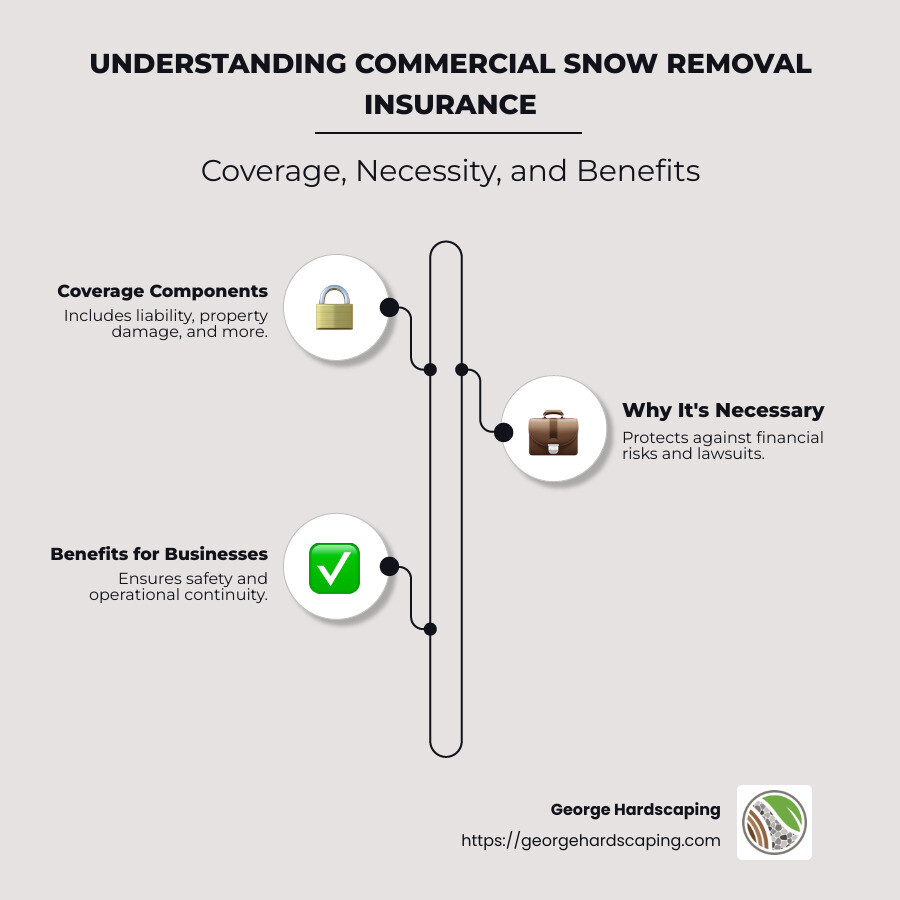
- What it is: Commercial snow removal insurance covers liability and damages that may occur during snow removal services.
- Why it matters: It protects your business from the high costs of accidents and property damage.
- Who needs it: Any business involved in snow removal or management should have it.
In areas prone to heavy snow, like New England, snow can grind everything to a halt. For businesses, this means potential safety hazards, downtime, and liability concerns. George Hardscaping, operating across the North Shore, is well-versed in these challenges and offers peace of mind with robust insurance coverage. This ensures safety and efficiency, keeping pathways clear and businesses running smoothly.
Know your commercial snow removal insurance terms:
– commercial snow removal contracts
– commercial snow removal rates per square foot
– how to price commercial snow removal
Why is Commercial Snow Removal Insurance Important?
Liability, Protection, and Legal Requirements
Commercial snow removal insurance is not just a nice-to-have; it’s essential for businesses like George Hardscaping operating in snowy regions. Here’s why:
Liability
When your business is responsible for clearing snow, accidents can happen. Imagine a customer slipping on an icy patch that wasn’t fully cleared. Without insurance, your business could face hefty legal fees and payouts.
Did you know? Slip and fall accidents are one of the most common liabilities for snow removal companies. Protecting against these incidents is crucial.
Protection
Snow removal is more than just plowing snow. It involves clearing driveways, parking lots, and sidewalks—areas that are critical for safety. With commercial snow removal insurance, you protect your business from the unexpected costs of property damage or injury.
- Property Damage: If your equipment accidentally damages a client’s property, insurance can cover the repair costs.
- Injury Coverage: Protects you from financial loss if someone gets injured during your operations.
Legal Requirements
In many areas, having the right insurance isn’t just smart—it’s required. Laws vary, but most regions mandate that snow removal businesses carry specific types of insurance to operate legally.
Fact: In some states, failing to carry the required insurance can result in fines or even business closure.
For businesses like George Hardscaping, operating in North Shore towns such as Beverly, Lynnfield, and Gloucester, staying compliant with local regulations is non-negotiable. Insurance not only shields you from financial loss but ensures you meet all legal obligations.
In the unpredictable New England winters, having commercial snow removal insurance is like having a sturdy snow shovel—it’s essential for clearing the path ahead.
Key Components of Commercial Snow Removal Insurance
When it comes to commercial snow removal insurance, understanding its key components is crucial. These components ensure that businesses like George Hardscaping are protected from various risks associated with snow removal operations.
General Liability
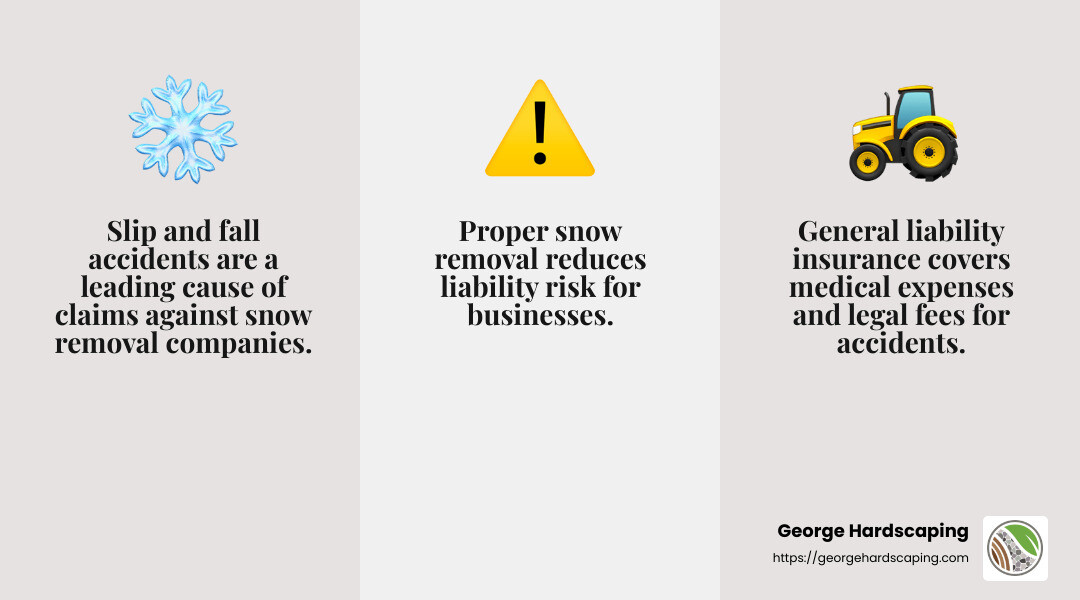
General liability insurance is the backbone of any snow removal business’s coverage. It protects against claims related to bodily injury and property damage. For instance, if a passerby slips on a patch of ice that wasn’t adequately cleared, general liability insurance can cover medical expenses and legal fees.
Fact: Slip and fall accidents are a leading cause of claims against snow removal companies.
Commercial Auto
Snow removal often involves using vehicles like plows and salt trucks. Commercial auto insurance covers these vehicles in case of accidents, theft, or damage. This insurance ensures that if a snow plow accidentally hits a parked car, the costs are covered.
- Coverage includes:
- Vehicle damage
- Third-party injury claims
- Legal defense costs
Workers’ Compensation
Snow removal is labor-intensive and can be hazardous for workers. Workers’ compensation insurance is essential as it covers medical expenses and lost wages for employees injured on the job. This coverage is crucial for protecting both employees and the business.
Did you know? In icy conditions, the risk of worker injuries increases significantly, making this coverage vital for companies like George Hardscaping.
Inland Marine
Inland marine insurance might sound unusual, but it’s important for snow removal businesses. It covers equipment and tools that are transported from one location to another. For example, if a snowblower is damaged while being moved to a client’s site, inland marine insurance can cover the repair or replacement costs.
Example: A snow removal company transporting a snowblower to a new site experiences a traffic accident. Inland marine insurance covers the damaged equipment, ensuring operations can continue without delay.
By understanding these key components, businesses can ensure they have comprehensive protection against the unique risks of snow removal. For companies like George Hardscaping, having the right insurance is as essential as having the right equipment to tackle New England’s harsh winters.
Factors Affecting the Cost of Commercial Snow Removal Insurance
Several factors influence the cost of commercial snow removal insurance. Understanding these can help businesses like George Hardscaping manage their insurance expenses effectively.
Location
Where your business operates plays a big role in insurance costs. Areas with harsh winters, like New England, often face higher premiums. This is because the risk of accidents and claims increases with more frequent and severe snowstorms.
Coverage Needs
The level of coverage you choose affects the price. More comprehensive coverage provides better protection but comes at a higher cost. It’s crucial to balance coverage with affordability to ensure your business is protected without overpaying.
Driving History
Insurance companies look at the driving records of employees who operate snow removal vehicles. A clean driving history can lower premiums, while past accidents or traffic violations can increase costs.
Claims History
If your business has a history of insurance claims, expect higher premiums. Insurers view frequent claims as an indicator of risk. Keeping claims to a minimum through effective safety measures can help reduce costs.
Employees
The number of employees you have also affects insurance costs. More employees mean a higher risk of accidents and injuries, which can result in increased workers’ compensation premiums.
Vehicles
The type and number of vehicles used in snow removal impact insurance costs. Larger fleets or specialized equipment like snow plows and salt trucks require more coverage, increasing premiums. Regular maintenance and safe operation can help manage these costs.
By understanding these factors, businesses can make informed decisions about their insurance needs. For George Hardscaping, this means strategically managing risks to keep insurance costs in check while maintaining comprehensive coverage.
How to Choose the Right Commercial Snow Removal Insurance
Choosing the right commercial snow removal insurance is key to protecting your business, like George Hardscaping, from unforeseen liabilities. Here’s a simple guide to help you make the best decision.
Coverage Options
Start by considering the different types of coverage your business might need. Common options include:
- General Liability Insurance: Covers third-party injuries or property damage. Essential for any snow removal business.
- Commercial Auto Insurance: Protects vehicles used in snow removal operations. This is crucial for George Hardscaping’s fleet of trucks.
- Workers’ Compensation: Covers medical costs and lost wages if an employee gets injured on the job. This is vital for protecting your team.
- Inland Marine Insurance: Covers tools and equipment that are transported or used off-site. This ensures that your snow removal equipment is protected.
Selecting the right mix of these coverages ensures comprehensive protection for your business.
Policy Limits
Policy limits dictate the maximum amount an insurer will pay for a covered loss. It’s important to choose limits that match the potential risks your business faces. For instance, if you operate in a high-snowfall area like New England, higher limits might be necessary to cover possible high-cost claims.
Tip: Review past claims and current assets to determine appropriate limits. This helps in preventing underinsurance.
Risk Assessment
Conducting a risk assessment is a critical step in choosing the right insurance. This involves:
- Identifying Potential Hazards: Consider risks specific to snow removal, such as icy roads and heavy snowfalls.
- Evaluating Existing Safety Measures: Check the effectiveness of your current safety protocols. Are they sufficient to minimize risks?
- Consulting with Experts: Insurance agents can provide valuable insights into industry-specific risks and suitable coverage options.
By understanding your unique risks, you can tailor your insurance policy to provide adequate protection without paying for unnecessary coverage.
Choosing the right insurance involves balancing comprehensive protection with cost-effectiveness. For businesses like George Hardscaping, this means carefully evaluating coverage options, policy limits, and conducting thorough risk assessments to ensure they are well-protected against the challenges of New England winters.
Frequently Asked Questions about Commercial Snow Removal Insurance
Why is snow removal insurance so expensive?
Lawsuits and Regulations: Snow removal businesses face high risks. Slips and falls on icy surfaces are common and can lead to costly lawsuits. Regulations require businesses to maintain safe environments, increasing the need for comprehensive insurance.
Premiums: Due to these risks, insurance premiums can be high. Insurers set premiums based on the likelihood of claims. In snow-prone areas like New England, the risk is higher, so premiums reflect that.
What is the general liability code for snow removal?
General Liability Code 99310: This is the specific code used for snow removal services. It helps insurance companies classify the type of work and assess the risk level associated with it. Knowing this code is crucial when discussing policy terms with insurers, ensuring you get the right coverage for your business.
How do I organize my snow removal business?
Marketing Strategy: A clear marketing strategy can help you reach potential clients. Highlight your services, like those offered by George Hardscaping, to show how you can handle challenging winters. Use local SEO strategies to target areas like Beverly, MA, and Lynn, MA.
Contracts: Draft clear contracts with clients outlining the scope of work, pricing, and terms. This not only protects your business legally but also sets clear expectations with clients.
Dispatching: Efficient dispatching is key to managing snow removal operations. Use technology to track weather conditions and deploy your fleet promptly. George Hardscaping’s approach of monitoring forecasts ensures timely service, which is crucial for client satisfaction.
By understanding these elements—lawsuits, regulations, premiums, and operational strategies—you can better manage your snow removal business and ensure it runs smoothly even during the harshest winters.
Conclusion
At George Hardscaping, we understand the unique challenges that come with New England winters. Our commitment to quality and craftsmanship has established us as a trusted name across the North Shore. From the busy streets of Beverly to the serene landscapes of Marblehead, we ensure that our snow removal services meet the highest standards.
Quality and Craftsmanship: Our team is equipped with the expertise and equipment necessary to handle even the most severe snowstorms. We prioritize safety and efficiency, ensuring that your driveways, parking lots, and walkways are clear of snow and ice. Our dedication to excellence is reflected in every service we provide, making us the go-to choice for reliable snow management.
Serving the North Shore: With locations across Essex County, including towns like Gloucester, Salem, and Swampscott, we are always ready to assist you. Our local presence allows us to respond quickly and effectively to your snow removal needs, minimizing disruptions to your daily operations.
Choosing George Hardscaping means choosing a partner committed to maintaining the safety and accessibility of your property throughout the winter months. For more information about our services and how we can assist you, please visit our Snow Plowing Services page.
We look forward to helping you steer the winter season with confidence and peace of mind.
