
How to Price Commercial Snow Removal: 2024 Success Guide
How to price commercial snow removal is a crucial skill for both seasoned contractors and newcomers in the snow management industry. For businesses, understanding the pricing strategy not only ensures profitability but also helps build strong relationships with clients. In this thriving industry, companies are expected to provide safe and accessible environments during harsh winter conditions. Proper pricing is the cornerstone of delivering reliable service while managing costs effectively.
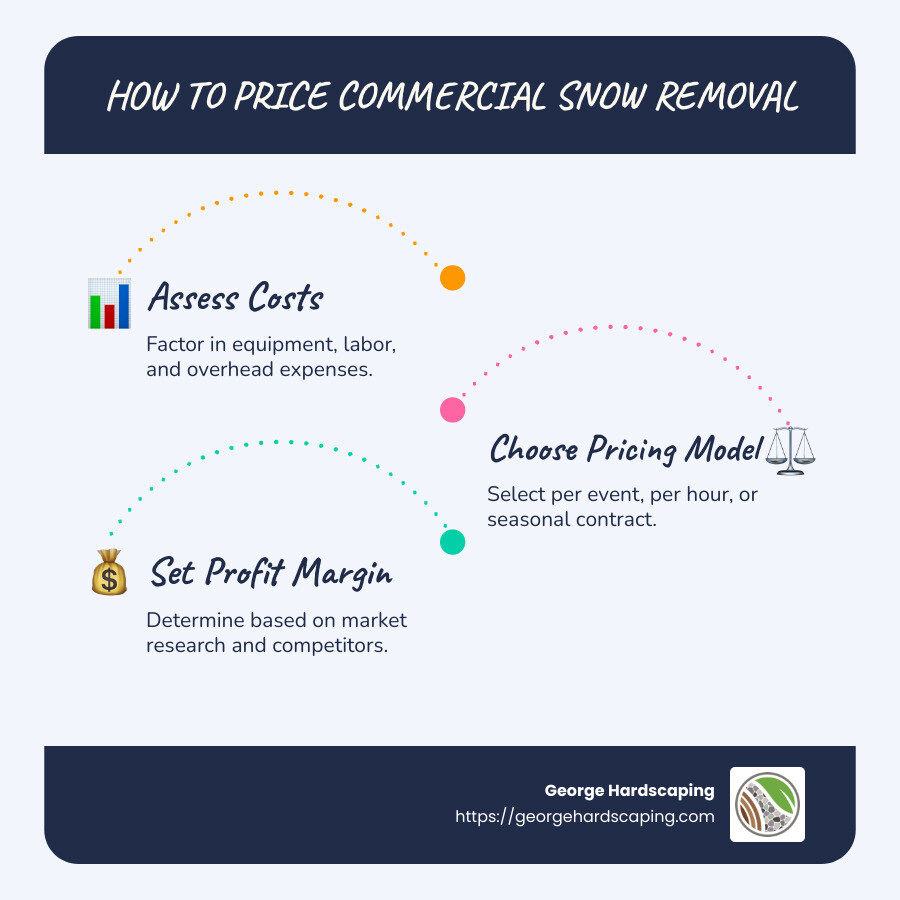
- Assess your Costs: Consider equipment, labor, and overhead expenses.
- Choose a Pricing Model: Per event, per hour, or seasonal contract.
- Research Competitors: Understand market rates and customer expectations.
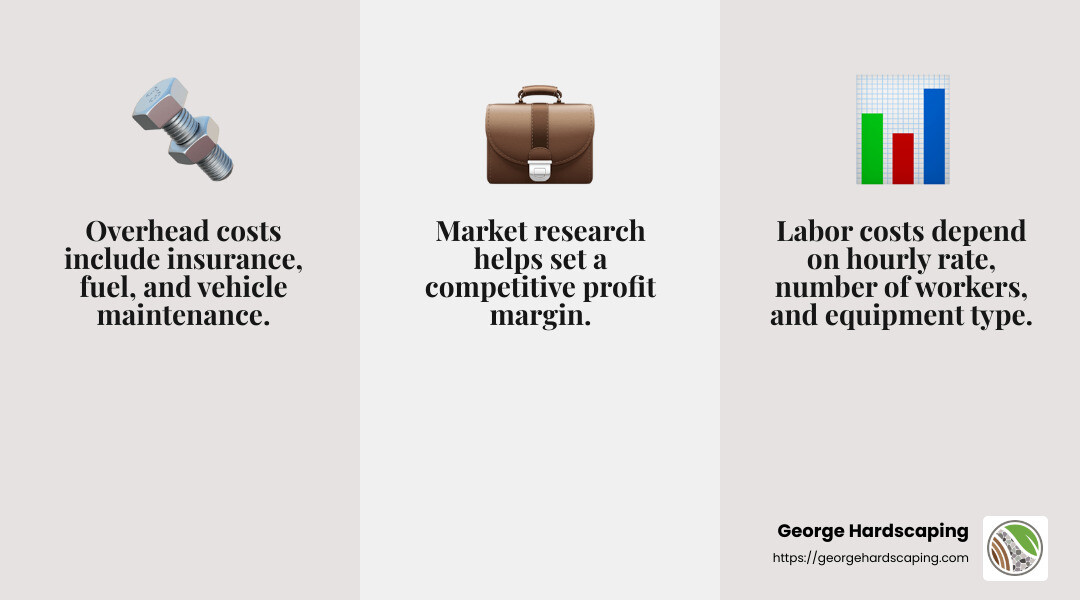
- Calculate Overhead: Factor in insurance, fuel, and vehicle maintenance.
- Set a Profit Margin: Based on market research and competitive analysis.
Comprehending how to price commercial snow removal strategically can open up significant business opportunities. The snow removal business is challenging, but with the right tools and knowledge, it is possible to steer this demanding landscape profitably.
How to price commercial snow removal terms made easy:
– commercial snow removal contracts
– commercial snow removal rates per square foot
Understanding Snow Removal Pricing Models
Choosing the right pricing model for snow removal services is essential for maintaining profitability and meeting client needs. There are several models to consider, each with its own benefits and challenges.
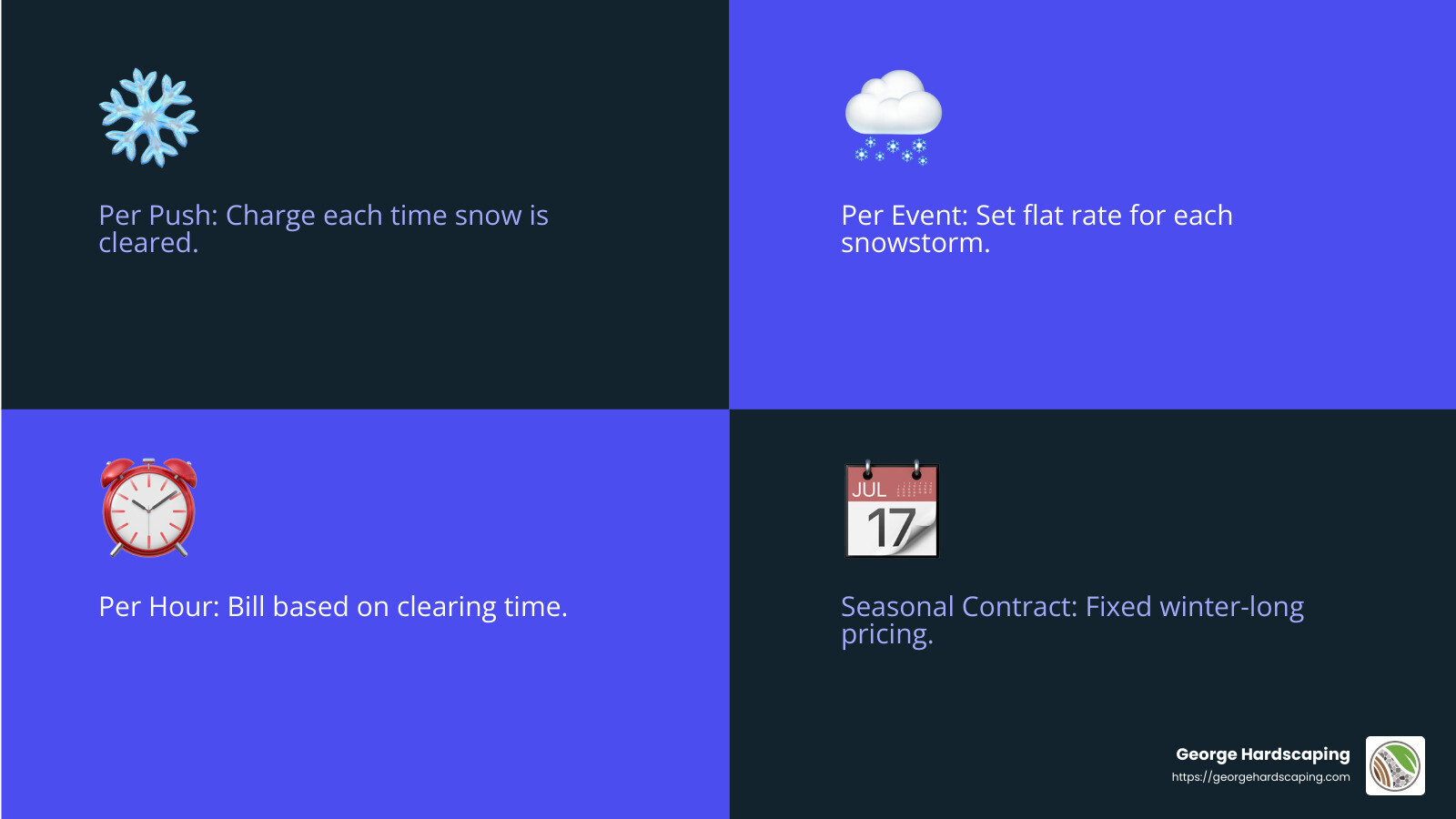
Per Push
In the per push model, you charge clients each time you clear snow from their property. This method works well in areas with frequent but manageable snowfall. It’s straightforward: the more it snows, the more you earn. However, clients may try to minimize costs by requesting fewer pushes, which can impact overall earnings.
Per Event
The per event model charges a flat rate for each significant snow event, like a snowstorm. This approach is ideal for regions with fewer but more intense snowfalls. It allows for predictable income per event, but if the season has fewer events than expected, revenue can be lower.
Per Hour
Charging per hour involves billing clients based on the time it takes to clear their property. This model is clear-cut and ensures you’re compensated for labor time. It’s crucial to estimate job duration accurately to avoid undercharging.
Per Inch
With the per inch model, you charge based on the amount of snow accumulated. This flexible strategy adjusts to varying snowfall amounts. It’s important to have accurate snowfall measurements to ensure fair billing.
Seasonal Contract
A seasonal contract offers clients a fixed price for snow removal services throughout the winter. This model provides steady income and is popular in areas with consistent snowfall. However, if the winter is harsher than usual, it could strain resources and affect profitability.
Multi-Seasonal Contract
The multi-seasonal contract extends the seasonal model over several years. It provides long-term income stability and strengthens client relationships. However, it requires precise forecasting and risk management to ensure profitability across varying winters.
Understanding these pricing models helps in crafting a strategy that aligns with your business goals and local weather patterns. Whether you choose per push, per event, or a seasonal contract, the key is to adapt to your specific market conditions and client needs.
How to Price Commercial Snow Removal
Pricing commercial snow removal involves several key steps. Understanding these will ensure your business remains profitable while meeting client expectations.
Calculating Overhead Costs
First, let’s talk about overhead costs. These are the expenses your business incurs just to keep running, regardless of how many jobs you take on. Key overhead costs include:
- Insurance: This covers vehicle and liability insurance. It’s non-negotiable for protecting your business.
- Fuel: Snow removal equipment runs on fuel, and prices can fluctuate, so it’s crucial to budget accordingly.
- Vehicle Maintenance: Regular maintenance keeps your snow plows and trucks in good condition, preventing costly breakdowns.
These costs should be calculated annually and divided by the number of jobs you expect to handle. This gives you a baseline for what each job needs to cover in terms of overhead.
Estimating Labor and Equipment Costs
Next, you need to estimate labor and equipment costs. This involves calculating how much you’ll spend on workers and the tools they use:
- Hourly Rate: Determine the wage you’ll pay your workers. Remember to include taxes and benefits.
- Number of Workers: Calculate how many workers you’ll need for each job. This depends on the size and complexity of the site.
- Equipment Type: Different jobs require different tools. A large parking lot might need a snow plow, while a small walkway might only need a snow blower.
By estimating these costs accurately, you ensure that your pricing covers all necessary expenses and compensates your team fairly.
Setting a Profit Margin
Finally, consider your profit margin. This is the amount you add on top of costs to ensure your business is profitable. Setting the right profit margin involves:
- Market Research: Understand what other companies in your area charge for similar services.
- Competitive Pricing: Ensure your prices are competitive but still allow for a healthy profit.
- Customer Demographics: Wealthier clients might be willing to pay more for premium services, while others might prioritize cost savings.
Most businesses add a markup of 2% to 50% depending on their overhead and market conditions.
By carefully considering these factors, you can develop a pricing strategy that balances profitability with client satisfaction. This approach will help George Hardscaping thrive even during the most challenging winters.
Factors Influencing Snow Removal Pricing
When determining how to price commercial snow removal, several factors come into play. These variables can significantly affect your pricing strategy, ensuring your services are both competitive and profitable.
Impact of Snow Amount and Frequency
Amount of Snow: The volume of snow is a primary factor in pricing. More snow means more work, requiring additional time, labor, and equipment. Some companies opt to charge by the inch, with common breakdowns for 1-3 inches, 3-6 inches, and hourly rates beyond that.
Frequency of Snow Events: Areas with frequent snow events may benefit from seasonal contracts, providing a stable income stream while offering clients a predictable cost. Using location-specific weather forecasts, like those from Frost Solutions, can help anticipate snow events and adjust resources accordingly, increasing efficiency and cost-effectiveness.
Weather Predictions: Accurate weather predictions allow you to prepare for snow removal jobs in advance. This can help in allocating resources and avoiding unnecessary costs, ultimately impacting your pricing strategy. Predictive tools provide insights into expected snow severity, enabling better planning and pricing.
Property and Location Considerations
Property Size: The size of the property directly affects the cost. Larger areas like parking lots require more time and equipment, while smaller areas like driveways or sidewalks might be quicker but still need attention to detail.
Location: The geographical location of a property influences pricing due to varying snow amounts and accessibility. Urban areas might have different needs compared to rural ones, where travel time and terrain can increase costs.
Special Conditions: Unique property features or conditions can also impact pricing. For instance, properties with multiple curbs, obstacles, or difficult terrain may require more time and specialized equipment, leading to higher costs.
Driveway Size, Parking Lots, Sidewalks, and Roofs: Each of these areas requires different approaches. Driveways and sidewalks might need snow blowing, while large parking lots are better suited for plowing. Roof snow removal is a specialized service that can prevent ice dams and structural damage, often priced separately due to the added risk and effort.
By considering these factors, you can tailor your pricing model to fit each client’s specific needs, ensuring a fair and profitable arrangement. Understanding the nuances of snow removal pricing helps George Hardscaping offer competitive and effective solutions custom to the unique challenges of each property.
Frequently Asked Questions about Snow Removal Pricing
What are the average snow removal rates per hour?
Snow removal rates can vary widely depending on several factors, but generally, hourly rates range from $25 to $75. This range is influenced by the region, the complexity of the job, and the equipment used. For example, using a snow blower for a residential sidewalk might lean towards the lower end, while clearing a large commercial parking lot with heavy machinery could be higher.
When setting your rates, consider the average in your area and the specifics of each job. Overhead costs like insurance, fuel, and vehicle maintenance must be covered, so factor these into your hourly rate to ensure profitability.
How do seasonal contracts benefit customers and businesses?
Seasonal contracts offer a win-win for both customers and businesses. For customers, these contracts provide a predictable cost for snow removal services throughout the season, regardless of the number of snow events. This can be particularly appealing in regions with frequent snowfalls, as it eliminates the uncertainty of per-event pricing.
For businesses, seasonal contracts ensure a steady income stream throughout the winter months. They also allow for better resource planning and allocation, as the volume of work is more predictable. Offering seasonal contracts can strengthen customer relationships by providing peace of mind and demonstrating reliability.
What factors should be considered for roof snow removal pricing?
Roof snow removal is a specialized service due to the risks and equipment involved. Pricing for this service typically includes several considerations:
- Safety Concerns: Removing snow from roofs is dangerous and requires special equipment and trained personnel. This increases the cost compared to ground-level snow removal.
- Roof Size and Access: Larger roofs or those with difficult access may require more time and effort, leading to higher charges.
- Potential for Damage: Ice dams and heavy snow can cause significant damage to roofs. Offering this service can prevent costly repairs for the client, justifying a higher price.
- Additional Services: Consider offering extras like installing roof heating cables, which can reduce snow buildup. These systems can be priced separately, often ranging from $400 to $1,200 for installation.
By understanding these factors, businesses like George Hardscaping can price roof snow removal services effectively, ensuring safety and customer satisfaction.
Conclusion
At George Hardscaping, we understand the importance of a well-thought-out pricing strategy for commercial snow removal. Our approach is designed to balance fair pricing with quality service, ensuring both customer satisfaction and business growth.
Customer Satisfaction is at the heart of everything we do. By offering flexible pricing models like per event, per inch, or seasonal contracts, we cater to the diverse needs of our clients. This flexibility helps us build strong, long-term relationships with our customers. They know they can rely on us to keep their properties safe and accessible, regardless of the winter weather.
Our commitment to business growth is evident in our strategic pricing. We continuously conduct market research to stay competitive and ensure our rates reflect the value and expertise we bring. This proactive approach not only attracts new clients but also retains existing ones, fostering a loyal customer base.
Incorporating cutting-edge technology and efficient resource management, we optimize our operations to reduce costs without compromising service quality. This efficiency allows us to maintain a healthy profit margin, which is crucial for the sustainability and expansion of our business.
By prioritizing both customer satisfaction and business growth, George Hardscaping positions itself as a leader in the snow removal industry. Our clients trust us to deliver exceptional service, and we take pride in helping them steer the challenges of winter with ease.
For more information on our snow removal services, visit our Snow Plowing Services page.
