
The Shift to Sustainable Surfaces: What is a Pervious Driveway?
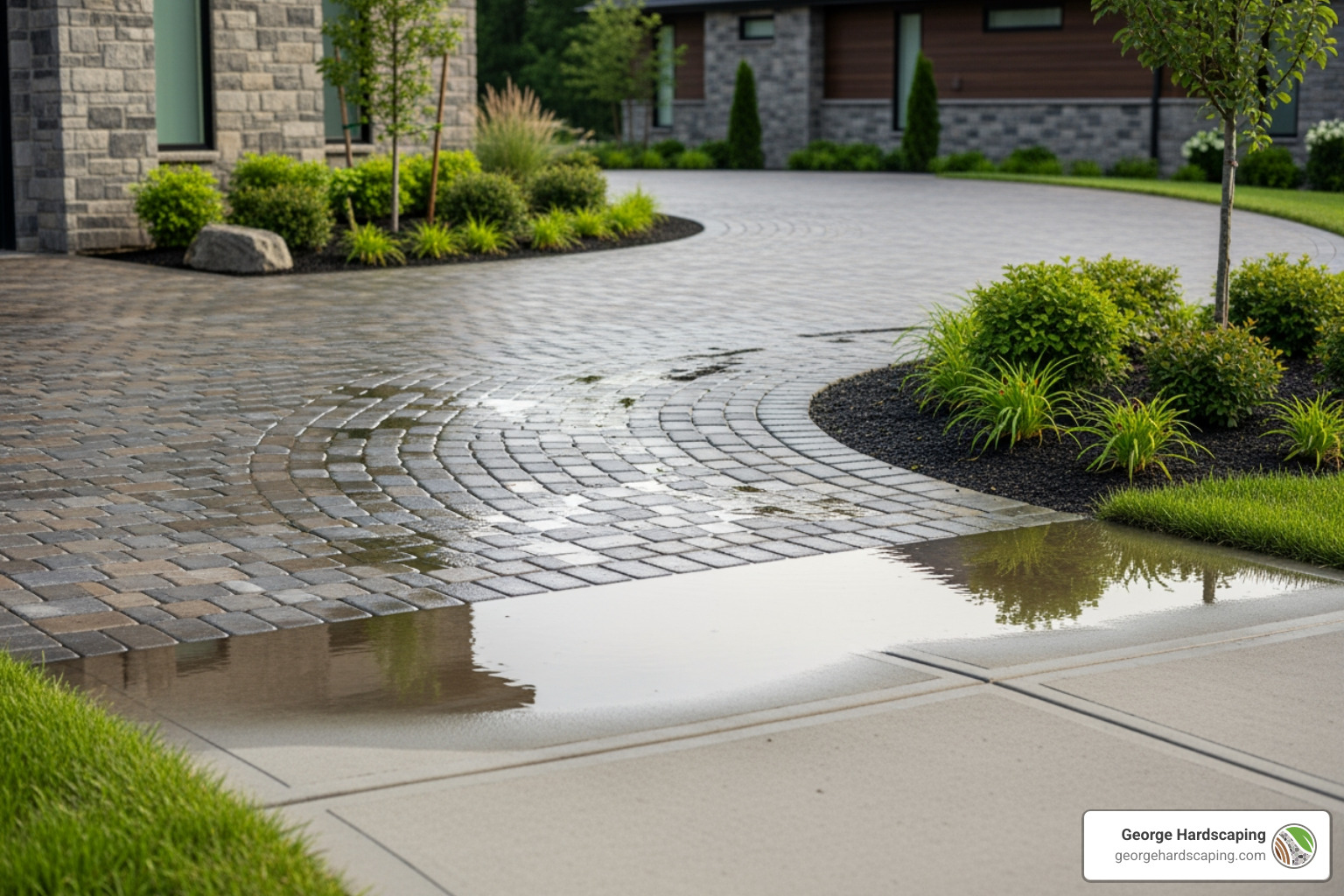
If you’ve ever watched water pool on your driveway during a rainstorm, you’ve witnessed the problem with traditional paving. Most driveways are made of impervious surfaces like conventional asphalt or concrete, meaning water cannot pass through them. This creates stormwater runoff that carries pollutants like oil, dirt, and fertilizers into local storm drains and waterways. When just 12% of a watershed is covered with impervious surfaces, water quality begins to decline, harming local ecosystems.
Pervious driveway materials offer a sustainable solution. These innovative surfaces are designed to mimic how natural land absorbs water. Instead of creating runoff, they allow rainwater and snowmelt to filter through the pavement into the ground below. This process recharges groundwater, filters pollutants, and reduces the strain on municipal drainage systems.
For homeowners in Essex County and the North Shore of Massachusetts, where managing stormwater is a growing concern, a pervious driveway is a smart, functional, and attractive choice. According to the EPA, permeable pavements can reduce runoff by 45-99%, making a significant environmental impact.
These eco-friendly options include:
- Permeable Interlocking Concrete Pavers (PICP): Concrete units with aggregate-filled gaps for water to pass through.
- Pervious Concrete: A porous concrete mix with 15-25% air space that allows water to drain directly through the slab.
- Porous Asphalt: An open-graded asphalt mix with 16-22% air voids for excellent drainage.
- Gravel and Grid Systems: Plastic or concrete grids filled with gravel or grass for a stable, natural-looking permeable surface.
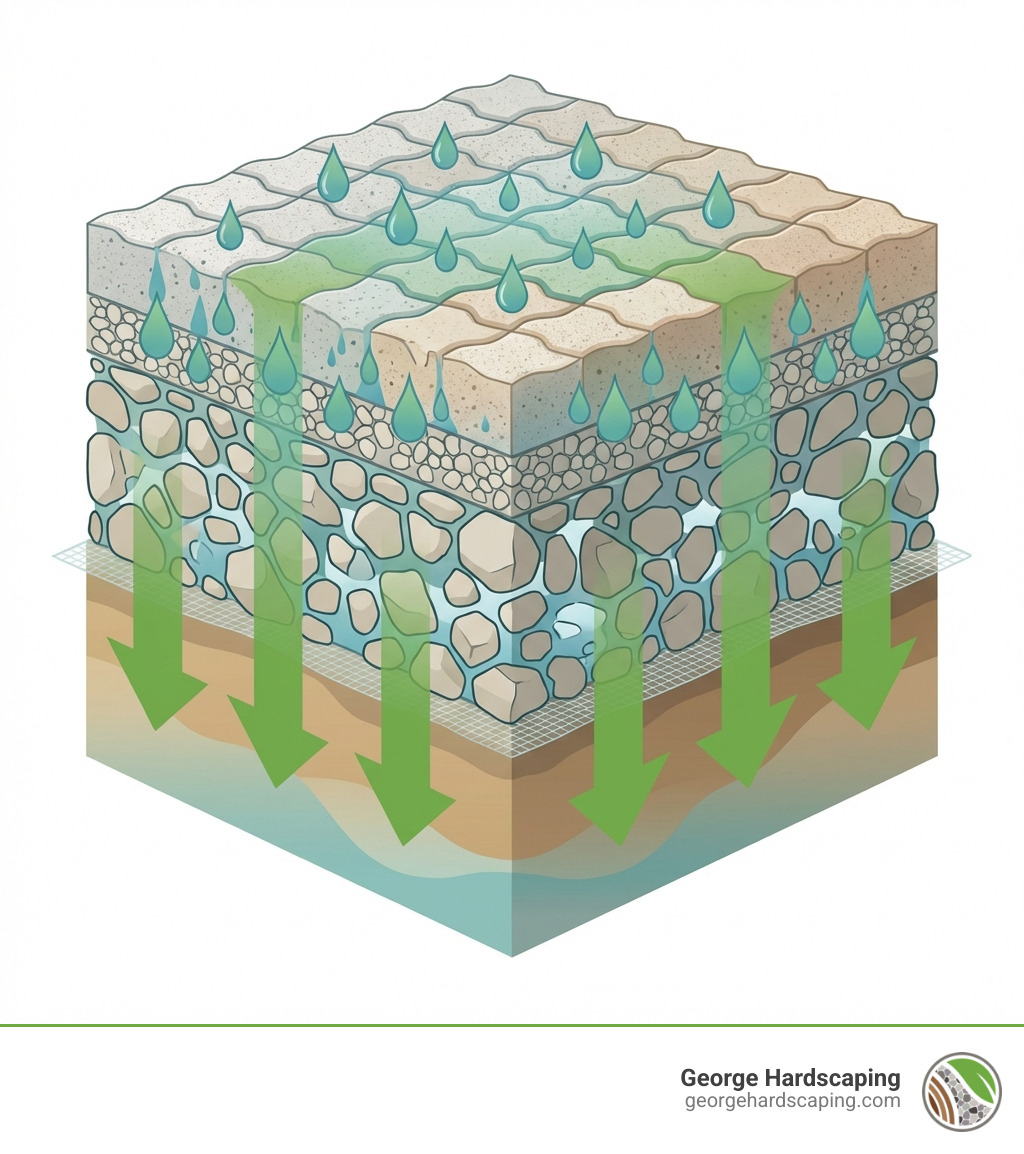
All of these materials are installed over a stone reservoir base that temporarily stores water before it infiltrates the soil, as shown in the diagram below.
Understanding the Core Benefits
Choosing pervious driveway materials is a sustainable decision that offers numerous advantages, especially for properties in Essex County, MA.
- Superior Drainage and Flood Control: Pervious driveways dramatically reduce surface runoff by allowing water to seep into the ground. This mitigates localized flooding, prevents standing water, and protects your home’s foundation and landscaping from water damage.
- Erosion Prevention: By slowing down and absorbing stormwater, pervious surfaces reduce the erosive force of runoff. This helps stabilize the surrounding soil and prevents sediment from washing into storm drains and local waterways.
- Improved Water Quality: As water percolates through the aggregate layers, pollutants like oil, heavy metals, and sediment are filtered out. This natural filtration process, detailed in resources like A Resident’s Guide to Pervious Pavement, protects the quality of our local rivers and coastal waters.
- Safer Winters with Less Salt: Because water drains away quickly, pervious surfaces are far less prone to ice formation. Research from the University of New Hampshire Stormwater Center shows that porous asphalt can require up to 75% less de-icing salt, saving you money and reducing environmental harm.
- Groundwater Recharge: By returning rainwater to the earth, pervious driveways help replenish local aquifers. This is vital for maintaining healthy groundwater levels that support local streams and ecosystems.
- Reduced Urban Heat Island Effect: Unlike dark, dense asphalt that absorbs heat, pervious surfaces (especially lighter-colored pavers or grass grids) stay cooler. Their porous structure allows for evaporative cooling, creating a more comfortable microclimate around your home.
Pervious vs. Impervious: A Critical Distinction
Understanding the difference between pervious and impervious surfaces helps clarify why material choice matters so much for your driveway.
- Impervious Surfaces: Traditional asphalt and standard concrete are considered impervious because they do not allow water to pass through. Instead, rainfall runs off the surface, picking up pollutants and quickly overwhelming storm drains during heavy storms. Common examples include conventional driveways, parking lots, and many city streets.
- Environmental Consequences: As impervious cover increases across a watershed, streams receive more frequent and intense pulses of runoff. This can cause streambank erosion, degrade habitat, and carry contaminants like oil, metals, and lawn chemicals into rivers, lakes, and coastal waters. Studies have shown that when just about 10–12% of a watershed is covered by impervious surfaces, local water quality and aquatic life start to decline measurably.
- Pervious Surfaces: In contrast, pervious or permeable pavements are designed to let water soak through the surface into a stone reservoir and then into the subgrade soil. This mimics how undisturbed soil and vegetation handle rainfall, slowing it down, filtering it, and allowing it to recharge groundwater instead of becoming polluted runoff.
By choosing pervious driveway materials for your home in Beverly, Danvers, Ipswich, or anywhere on the North Shore, you are effectively turning a hard, runoff-generating surface into a small but powerful stormwater management tool that works with nature instead of against it.
A Deep Dive into Pervious Driveway Materials
This section will compare the most common options, helping you decide which is best for your property’s needs and aesthetic goals.
Permeable Interlocking Concrete Pavers (PICP)
Permeable Interlocking Concrete Pavers (PICP) are a popular and versatile choice for pervious driveway materials, blending high-end aesthetics with excellent stormwater management.
- How They Work: A PICP system consists of solid concrete pavers separated by small, open-graded aggregate-filled joints. Water flows through these joints into a multi-layered stone base below, which acts as a reservoir before the water infiltrates the soil. This base also provides the structural support needed for vehicular traffic.
- Design Versatility: PICP offers best design flexibility. Pavers come in a vast array of colors, shapes, and textures, allowing for custom patterns, borders, and accents. This versatility is why we often use them in our patio design services and for creating beautiful walkway design.
- Durability and Strength: When installed correctly, PICP systems are incredibly durable and can handle heavy residential loads. The interlocking units create a strong, flexible pavement that resists cracking and can last for decades, often outperforming traditional surfaces.
- Green Building Benefits: Using PICP can contribute to green building certifications like LEED by effectively managing stormwater and reducing the urban heat island effect, which can sometimes lead to tax incentives.
We specialize in designing and installing functional and beautiful permeable paver systems. If you’re considering this neat, eco-friendly option, we invite you to explore our permeable paver options.
Pervious Concrete
Pervious concrete offers a more uniform, modern aesthetic while providing the same environmental benefits as other pervious driveway materials.
- Composition: Unlike traditional concrete, pervious concrete is made with little to no sand, creating a mix of cement, water, and coarse aggregate. This results in a solid-looking but highly porous material with 15-25% interconnected voids that allow water to pass directly through.
- Installation and Strength: Installing pervious concrete is a specialized task that requires an experienced crew to manage the mix, placement, and curing process. When done correctly, it creates a rigid, durable pavement with a lifespan of 20 to 40 years.
- Applications and Cost: It is well-suited for driveways, sidewalks, and parking areas where a clean, continuous surface is desired. According to industry data, pervious concrete systems typically range from $15 to $40 per square foot installed. For more technical details, you can learn about pervious concrete systems from the Portland Cement Association.
Porous Asphalt
Porous asphalt, also known as open-graded asphalt, is a highly effective permeable option, especially favored in cold climates like Massachusetts.
- How It Works: This material uses an asphalt mix with fewer fine particles, creating 16-22% air voids. This porous layer is installed over a deep stone reservoir base that stores water as it drains through the surface.
- Cold Climate Champion: Porous asphalt excels in winter. Its ability to drain water rapidly prevents ice and black ice from forming, significantly improving safety. Studies show it can reduce the need for de-icing salts by 75% or more, as detailed in this Tech Brief on porous asphalt pavements from the Federal Highway Administration.
- Other Benefits: The open-graded structure also absorbs sound, making it a quieter surface than traditional asphalt or concrete. According to industry data, the cost generally ranges from $11 to $38 per square foot installed.
Gravel and Grid Systems
For a more natural aesthetic or a budget-friendly entry into pervious driveway materials, gravel and grid systems are an excellent solution.
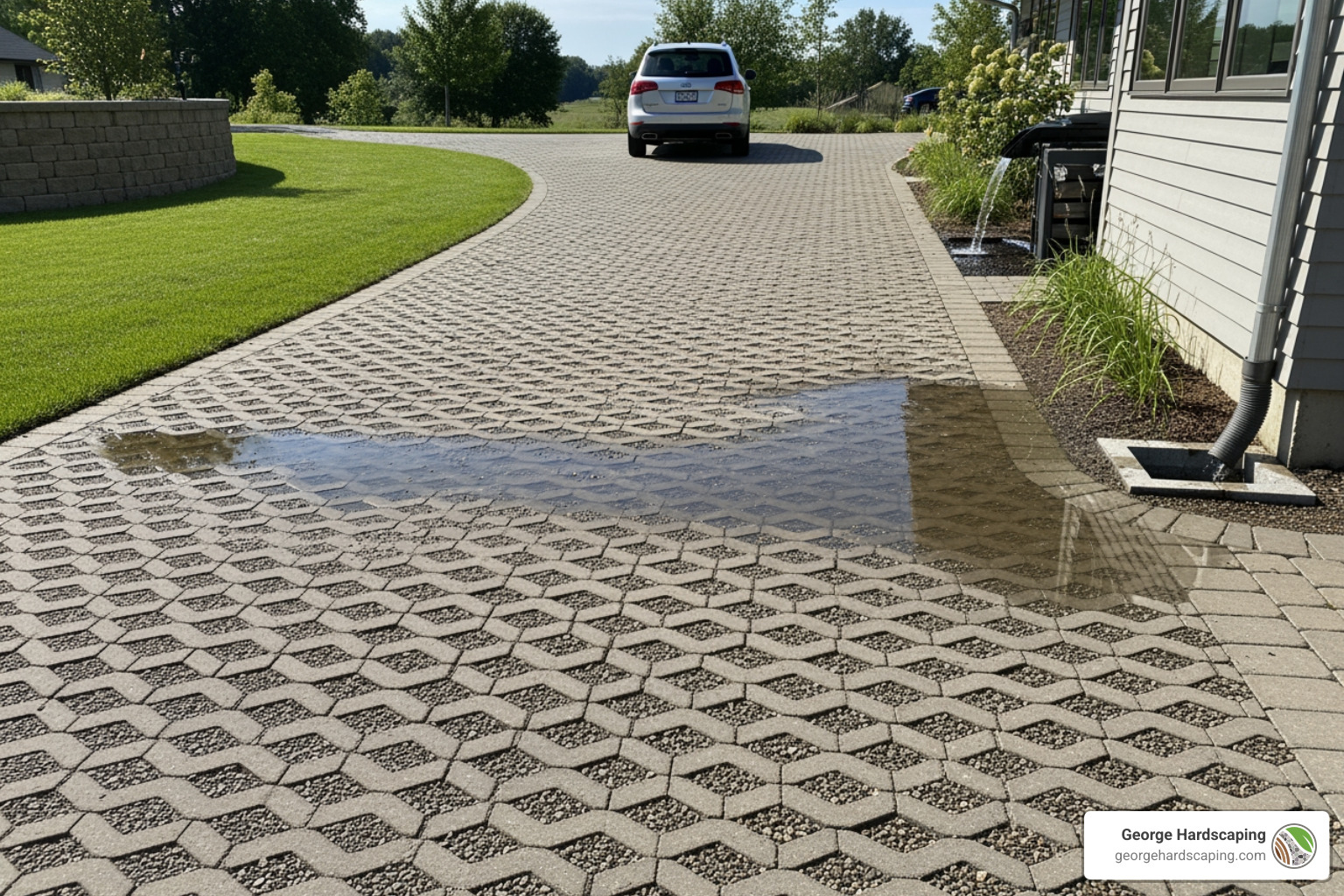
- Types of Systems: The simplest option is a loose gravel driveway, which allows for good infiltration but may require regular maintenance. For improved stability, plastic or concrete grid systems are used. These honeycomb-like structures are filled with either gravel or a mix of soil and grass.
- Aesthetics and Application: Grass-filled grids (or “grass pavers”) create a green, drivable surface that blends seamlessly with your lawn. Gravel-filled grids provide the rustic look of gravel without the issues of migration and rutting. These systems offer a natural look and are often best for lower-traffic areas, overflow parking, or access lanes.
- Key Considerations: Both loose gravel and grid systems are typically more cost-effective than other pervious options. However, proper installation with a stable base and robust edge restraints is crucial to contain the material and ensure long-term performance. You can see examples in our project gallery for inspiration.
[TABLE] Comparing Pervious Driveway Materials
Choosing the right pervious driveway materials depends on a balance of cost, aesthetics, performance, and maintenance. Here’s a comparative overview to help you weigh your options:
| Feature | Permeable Interlocking Concrete Pavers (PICP) | Pervious Concrete | Porous Asphalt | Gravel & Grid Systems |
|---|---|---|---|---|
| Initial Cost (installed/sf) | $36 – $53 | $15 – $40 | $11 – $38 | Generally lower, varies by grid type |
| Lifespan | 20-30+ years | 20-40 years | 20-30+ years | 10-20+ years (gravel needs replenishment) |
| Maintenance Level | Moderate (sweeping, vacuuming, occasional weed) | Moderate (sweeping, pressure washing) | Moderate (sweeping, vacuuming) | Moderate-High (raking, replenishment, weed) |
| Aesthetic Options | High (colors, shapes, patterns, textures) | Moderate (uniform, some color options) | Moderate (similar to traditional asphalt) | High (natural, rustic, green with turf) |
| Cold Climate Performance | Excellent (freeze-thaw resistant, less de-icer) | Good (voids for expansion, less de-icer) | Excellent (75%+ less de-icer, rapid melt) | Good (drainage, less ice, no damage from freeze-thaw) |
Please note: The cost ranges provided are average estimates based on internet data and are not actual prices from George Hardscaping. Project costs can vary significantly based on site conditions, material choices, design complexity, and regional labor rates. We encourage you to contact us for a personalized estimate for your property in Essex County.
Design, Installation, and Long-Term Care
A beautiful and functional pervious driveway requires proper planning from the ground up. Understanding the structural design, installation process, and maintenance is key to its longevity and performance.
Structural and Design Considerations
Building a successful pervious driveway is an engineering task that requires careful site-specific planning to ensure optimal performance and durability.
- Site and Soil Assessment: Every project must begin with a thorough site assessment. This includes evaluating the property’s slope, existing drainage patterns, and, most importantly, the underlying soil. We conduct infiltration tests to determine how quickly the native soil can absorb water, which is critical for designing the system correctly.
- Subgrade and Base Design: Unlike traditional driveways, the subgrade (the native soil layer) for a pervious system is prepared to maximize infiltration, not prevent it. Above this, a multi-layer system is built, consisting of a deep reservoir base of open-graded stone, a bedding course, and the surface material. The depth of the reservoir is calculated based on soil type and expected rainfall to store water temporarily as it infiltrates.
- Geotextile Fabric: A permeable geotextile fabric is placed between the native soil and the stone base. This crucial layer prevents soil from migrating up and clogging the stone reservoir while still allowing water to drain through.
- Slope Management: While pervious systems work on gentle slopes, steeper grades may require special design features like terracing or internal check dams to slow water flow and prevent erosion within the base layers. Our expertise in hardscaping and masonry services allows us to engineer effective solutions for challenging sites.
- Aesthetic Design: Functionality doesn’t mean sacrificing style. Pervious driveways offer immense design potential. We can help you explore ideas like mixing permeable pavers with decorative gravel borders or creating striking geometric patterns with contrasting paver colors. These are similar to the custom approaches we take with our patio design ideas.
The Installation Process Explained
The installation of a pervious driveway is a precise, multi-step process that demands professional expertise to ensure long-term success.
- Professional Installation is Key: Due to the complex layering and specific material requirements, this is not a typical DIY project. A qualified contractor like George Hardscaping ensures every step, from excavation to final compaction, is done correctly.
- Excavation and Subgrade Preparation: The site is excavated to a specific depth to accommodate the stone base. The subgrade soil is then prepared to maintain its natural permeability, avoiding the heavy compaction used for traditional driveways.
- Layering and Compaction: The geotextile fabric is laid, followed by the aggregate base layers. These layers of clean, open-graded stone are installed in lifts and lightly compacted to provide a stable, load-bearing structure that is also highly porous.
- Surface Installation: Depending on the material, this involves either carefully laying interlocking pavers, pouring and finishing pervious concrete, or paving with porous asphalt. Each material requires specific techniques to ensure permeability and strength.
- Edge Restraints and Joint Filling: Robust edge restraints are installed to keep the driveway structure contained. For pavers, the joints are filled with fine, open-graded aggregate and compacted to lock the system together while allowing water to flow through.
Understanding this detailed driveway installation process highlights the importance of choosing an experienced professional for your project.
Maintenance Best Practices for Pervious Driveway Materials
Proper maintenance is essential to keep your pervious driveway functioning correctly and looking great. The primary goal is to prevent the surface pores from clogging with sediment and debris.
- Regular Cleaning: The most important task is to keep the surface clean. Regularly use a leaf blower or broom to remove leaves, dirt, and other debris before they can wash into the pores. This is especially important in the fall.
- Landscape Management: Prevent soil, mulch, and grass clippings from washing or blowing onto the driveway. Well-maintained garden beds, sometimes using retaining walls, can help contain surrounding landscape materials.
- Deeper Cleaning: For a more thorough cleaning, periodic vacuuming with a regenerative air sweeper is effective at removing fine sediment from the pores of pervious concrete and asphalt. This is typically done once or twice a year by a professional service.
- Winter Maintenance: Pervious driveways require a different approach in winter:
- Plowing: Use a plow with a rubber blade edge set about an inch above the surface to avoid damaging pavers or the pavement. Our professional snow plowing services use these best practices.
- De-icers: Never use sand, as it will clog the system. Since pervious surfaces form less ice, de-icers are needed less often. When necessary, use them sparingly. Salt-free, liquid de-icers are a better choice than rock salt.
- Stain Removal: Address oil or other fluid spills quickly using absorbent materials and cleaners designed for porous surfaces to prevent contaminants from seeping into the ground.
By following these straightforward maintenance steps, homeowners in Beverly, Peabody, Salem, and surrounding communities can keep their pervious driveway materials performing at a high level for decades.
Is a Pervious Driveway Right for You? Weighing Costs and Limitations
While the environmental benefits are clear, it’s important to consider the financial investment and potential drawbacks before making a decision.
Analyzing the Cost: Pervious vs. Traditional Driveways
While pervious driveway materials can have a higher initial cost, they often provide a superior long-term return on investment.
- Initial Cost: On average, pervious surfaces can cost 4-15% more upfront than their impervious counterparts. The installed cost varies by material, with industry data suggesting ranges of $11-$38/sf for porous asphalt, $15-$40/sf for pervious concrete, and $36-$53/sf for permeable pavers. These are broad estimates, and a precise quote depends on your specific project.
- Long-Term Savings: The upfront premium is often offset by significant long-term savings. Pervious systems can reduce or eliminate the need for conventional drainage infrastructure like catch basins or underground pipes. In winter, the reduced need for salt and de-icing (savings of 75% or more) adds up. Furthermore, by preventing water damage to foundations and landscaping, they help you avoid costly future repairs.
- Lifespan and ROI: With proper maintenance, pervious driveways are built to last. Lifespans of 20 to 40 years are common, often exceeding that of traditional asphalt. When you factor in the durability, lower maintenance costs, and environmental benefits, a pervious driveway represents a sound investment in your property’s value and sustainability.
Potential Drawbacks and Limitations
While highly beneficial, pervious driveway materials are not suitable for every situation. It’s important to be aware of their limitations.
- Site Constraints: Pervious systems are not ideal for all locations. Very steep slopes can cause erosion issues within the base layers, and sites with a high water table or extremely dense, non-draining clay soil may not be suitable. A professional site evaluation is necessary to determine feasibility.
- Clogging Risk: The biggest operational risk is clogging. If the surface is not regularly cleaned of fine sediment, leaves, and debris, its permeability can decrease over time, defeating its purpose. A commitment to routine maintenance is essential.
- Installation Expertise Required: The performance of a pervious driveway is highly dependent on correct installation. Mistakes like over-compacting the subgrade or using the wrong materials can lead to system failure. This is why it is crucial to hire a qualified installer with proven experience in permeable paving.
- Load Limitations: While most pervious systems are designed for residential traffic, some lighter-duty options like certain grid systems may not be suitable for very heavy vehicles or high-traffic areas.
Performance in Cold Climates
For homeowners in Essex County, MA, how a driveway performs in winter is a critical factor. Fortunately, pervious driveway materials excel in cold climates, often outperforming traditional pavements.
- Freeze-Thaw Resilience: Traditional pavements crack over time as trapped water freezes and expands. Pervious systems avoid this. The interconnected voids provide space for water to freeze without causing structural damage, leading to a longer lifespan in harsh winters.
- Reduced Ice Formation: This is a major safety benefit. Because snowmelt and rain drain through the surface instead of pooling, there is significantly less water available to freeze into dangerous ice patches. This rapid drainage makes for a much safer driveway.
- Drastically Less Salt Needed: The reduction in ice formation means a drastically reduced need for de-icing salts. As confirmed by research from institutions like the UNH Stormwater Center, permeable surfaces can remain safe with up to 75% less salt, which protects your landscaping, pets, and local water quality.
- Importance of Proper Design: Excellent cold-weather performance depends on a design that accounts for the local frost depth. The stone reservoir base must be deep enough to keep stored water below the frost line, preventing the entire system from freezing solid.
In summary, pervious driveways are an ideal choice for Massachusetts, offering superior safety, durability, and environmental performance through our tough winters.
If you are comparing options for a new driveway in Marblehead, Swampscott, Manchester-by-the-Sea, or any nearby community, George Hardscaping can walk you through detailed cost and performance scenarios so you can choose the pervious driveway materials that fit your budget, your property, and the way you use your outdoor space.
Frequently Asked Questions about Pervious Driveways
How long does a pervious driveway last?
With proper installation and regular maintenance, a pervious driveway can last 20 to 40 years, often outliving traditional asphalt. The lifespan depends on the material and, most importantly, on consistent maintenance to prevent the pores or joints from clogging with sediment.
Can you plow a pervious driveway?
Yes, but with care. It is recommended to use a plow with a rubber or urethane blade edge and to set the blade about an inch above the pavement to avoid catching paver edges or damaging the surface. Never use sand for traction, as it will clog the system. For our clients, our snow plowing services adhere to these best practices to protect your investment.
Do pervious driveways get weeds?
Weeds can occasionally grow in the joints of permeable pavers, but it is less common than with traditional pavers. The angular aggregate used in the joints does not hold moisture or organic matter well, making it a poor environment for weed growth. Regular sweeping to remove debris is the best way to prevent weeds from starting.
Are pervious driveway materials suitable for shaded or wooded lots?
Yes, but additional care may be needed. Driveways in shaded or wooded areas around towns like Boxford, Topsfield, or North Reading tend to collect more leaves and organic debris, which can clog pores over time. Choosing pervious driveway materials with wider joints, scheduling periodic vacuum sweeping, and keeping overhanging branches trimmed can help maintain performance.
Will a pervious driveway look different from a regular driveway?
It depends on the material you choose. Permeable interlocking pavers can be virtually indistinguishable from traditional paver driveways, especially when coordinated with adjacent patio design services or walkways. Pervious concrete and porous asphalt have a slightly more textured appearance, while gravel and grid systems offer a distinctly natural, rustic aesthetic.
Is a pervious driveway a good DIY project?
While a simple loose gravel path might be manageable for a skilled DIYer, installing a high-performance pervious system like PICP, pervious concrete, or porous asphalt is a complex task best left to certified professionals. The long-term success of these driveways hinges on precise engineering that a typical DIY project cannot replicate. This includes conducting soil infiltration tests, calculating the required depth of the stone reservoir base, and preparing the subgrade to encourage drainage rather than compacting it.
Mistakes in any of these steps—such as using the wrong aggregate size, over-compacting the base, or improper curing of concrete—can lead to clogging, instability, and complete system failure. Investing in a qualified installer ensures the job is done right, protecting your investment and guaranteeing decades of performance.
Can a pervious driveway handle heavy vehicles like a moving van or oil truck?
Absolutely. When properly designed, pervious driveways are engineered to handle the same loads as traditional driveways, including heavy residential vehicles. The key to their strength lies not in the surface material alone, but in the deep, multi-layered stone base beneath it. This base is designed to distribute the weight of a vehicle across a wide area, preventing rutting or settling.
Permeable Interlocking Concrete Pavers (PICP) are especially robust due to their interlocking nature. Pervious concrete and porous asphalt also offer excellent durability. A professional contractor will design the system’s base depth according to your specific needs and expected traffic, ensuring it can support everything from daily drivers to occasional heavy trucks.
Are there tax credits or financial incentives for installing a pervious driveway?
Yes, in many areas, homeowners can find financial incentives for choosing a permeable driveway. As municipalities across the North Shore face increasing pressure on their stormwater systems, many offer programs to encourage green infrastructure. These incentives can include rebates on stormwater utility fees, tax credits, or grants. For example, some towns within the Ipswich River Watershed have offered cost-sharing programs.
Furthermore, using pervious materials can contribute points toward green building certifications like LEED (Leadership in Energy and Environmental Design), which can enhance your property’s value. We recommend checking with your local town hall or conservation commission in communities like Danvers, Peabody, or Beverly to explore current programs.
If you have more questions about design, performance, or maintenance for your specific property in Essex County, George Hardscaping is happy to provide guidance and on-site evaluations.
Build a Better Driveway with George Hardscaping
Choosing a pervious driveway is an investment in your property’s value, functionality, and the local environment. From stunning permeable pavers that improve curb appeal to robust systems that solve drainage problems, the options are more versatile than ever. If you’re in Essex County, MA, and ready to explore a sustainable and beautiful driveway solution, the experts at George Hardscaping can guide you through the design and installation process. We pride ourselves on enhancing both the aesthetics and functionality of outdoor spaces, from patio design and installation to custom outdoor firepits and pool deck installation.
When you partner with George Hardscaping for your pervious driveway materials, you get:
- Thoughtful, site-specific design that addresses drainage, aesthetics, and long-term durability.
- Skilled installation crews experienced with permeable pavers, gravel and grid systems, and integrated hardscape features.
- A team that understands North Shore soils, slopes, and winter conditions in communities like Gloucester, Rockport, Newburyport, and beyond.
If you are already planning improvements like new walkways, upgraded hardscaping and masonry services, or a reimagined outdoor living area, this is the perfect time to consider upgrading your driveway to a permeable system that ties everything together.
Ready to transform your driveway and protect the environment? Request your free estimate from George Hardscaping today!
Prefer to talk through options for pervious driveway materials in person? Reach out to schedule a site visit anywhere in our Essex County service area, and our team will walk you through materials, design ideas, and budget ranges so you can move forward with confidence.
