
Replace Railroad Tie Retaining Wall: 1 Ultimate Guide
Why Your Old Railroad Tie Wall is a Ticking Time Bomb
Replace railroad tie retaining wall projects have become an urgent priority for homeowners across Essex County, as these once-popular structures are now systematically failing. Decades ago, they were seen as a rugged, cost-effective way to terrace a yard or hold back a slope. Today, thousands of these walls are well past their expiration date, transforming from functional landscape elements into dangerous liabilities that threaten safety, diminish property value, and pose significant environmental risks.
Quick Answer: How to Replace a Railroad Tie Retaining Wall
- Plan & Permit: Assess the project scope and check local town requirements for permits, especially for walls over 3-4 feet.
- Safe Demolition: Carefully dismantle the old wall, using protective gear to avoid contact with creosote-treated wood.
- Excavation & Foundation: Dig a proper trench and install a multi-layered, compacted gravel base that is perfectly level.
- Drainage System: Install a perforated drain pipe, clean drainage stone, and geotextile fabric to manage hydrostatic pressure.
- Build New Wall: Construct the new wall using durable, interlocking concrete blocks, ensuring staggered joints and proper setback.
- Backfill & Compact: Backfill behind the wall in incremental lifts, compacting the soil as you go to prevent future settling.
- Finishing Touches: Add capstones with landscape adhesive and integrate the new wall into your landscape design.
Old railroad tie walls are ticking time bombs, not because of a single flaw, but due to a combination of inherent weaknesses. The wood, even when treated, is an organic material susceptible to the relentless forces of nature. In New England, the brutal freeze-thaw cycles are particularly destructive. Water penetrates the wood, freezes, expands, and breaks down the fibers from within. This process, combined with constant moisture from the soil, creates the perfect environment for rot, fungal growth, and insect infestation. The result is a wall that loses its structural integrity year after year until it can no longer withstand the immense pressure of the soil it’s meant to retain.
This structural decay has serious consequences. A deteriorating railroad tie wall is a major eyesore that significantly detracts from your home’s curb appeal. For homeowners looking to sell, it’s a red flag for buyers and home inspectors, often leading to difficult negotiations, demands for replacement, or even a failed sale. More importantly, the risk of a sudden collapse is very real. A failing wall can give way without warning, potentially causing catastrophic damage to your property, your neighbor’s property, or resulting in serious injury. Proactive replacement isn’t just an aesthetic upgrade; it’s a critical safety measure.
The Hidden Dangers of Creosote
Beyond the structural risks, the chemical composition of railroad ties presents a more insidious danger: creosote. This tar-like substance is a powerful wood preservative, but it’s also a toxic cocktail of chemicals, including polycyclic aromatic hydrocarbons (PAHs), which are classified as probable human carcinogens by the Environmental Protection Agency (EPA). The EPA categorizes creosote as a restricted-use pesticide, meaning it is not intended for residential applications.
- Health Risks: Direct skin contact with creosote can cause chemical burns, rashes, and blistering. Inhaling its fumes, especially on hot, sunny days when the tar warms up, can lead to respiratory irritation. The risks are particularly high for children and pets who might play near or sit on the walls. For comprehensive information, consult authoritative sources like The EPA’s guide on creosote safety and Health Canada’s creosote information.
- Environmental Contamination: Over many years, creosote continuously leaches from the ties into the surrounding soil. This contamination can kill nearby plants, render garden beds unusable for growing vegetables, and pollute local groundwater. The environmental damage can persist long after the wall is gone.
- Disposal Challenges: You cannot simply throw old railroad ties in a dumpster or take them to the local landfill. Because they are treated with a hazardous chemical, they require special disposal procedures mandated by state and local regulations. This often involves transport to a licensed facility, which can be complicated and add significant cost to your project. Burning creosote-treated wood is illegal and extremely dangerous, as it releases toxic chemicals into the air.
5 Telltale Signs Your Wall Needs Immediate Replacement
Recognizing the warning signs of failure is key to preventing a disaster. If you see any of the following, it’s time to start planning to replace railroad tie retaining wall structures immediately:
- Rotting or Crumbling Wood: This is the most obvious sign. Probe the ties, especially near the bottom where they contact the soil, with a screwdriver. If the wood is soft, spongy, or flakes away easily, the rot is severe. Look for fungal growth, mushrooms, or dark, damp patches.
- Warping, Bowing, or Shifting: Look down the line of the wall. Are the ties straight, or are they bulging outwards in the middle? This bowing is a classic sign that the wall is losing its battle against soil pressure and is on the verge of failure.
- Insect and Pest Damage: Termites and carpenter ants are drawn to moist, decaying wood. Look for small holes, tunnels, or piles of sawdust-like material (known as frass) near the base of the wall. These pests can hollow out the ties, leaving a fragile shell that offers no real support.
- Soil Erosion and Drainage Failure: Are you seeing gullies or channels where soil is washing out from behind or underneath the wall after it rains? This indicates that the wall is no longer retaining soil effectively and that its drainage system (if it ever had one) has failed. This can lead to dangerous sinkholes behind the wall.
- Leaning or Separation: If the entire wall is tilting forward or if you can see large, growing gaps between the individual ties, a collapse could be imminent. This often points to a catastrophic failure of the foundation or the tie-backs (deadmen) that are supposed to anchor the wall to the hillside. For these advanced structural issues, our team is an expert in modern solutions like helical anchors retaining wall repair.
Upgrading to a modern retaining wall system built with materials like interlocking concrete blocks not only resolves these safety and environmental hazards but also dramatically improves your property’s value and usability. A professionally installed wall is a sound investment, and our retaining wall landscaping services can help you integrate the new structure beautifully into your overall outdoor design.
Choosing Your Upgrade: Why Concrete Block Retaining Walls Are the Best Replacement
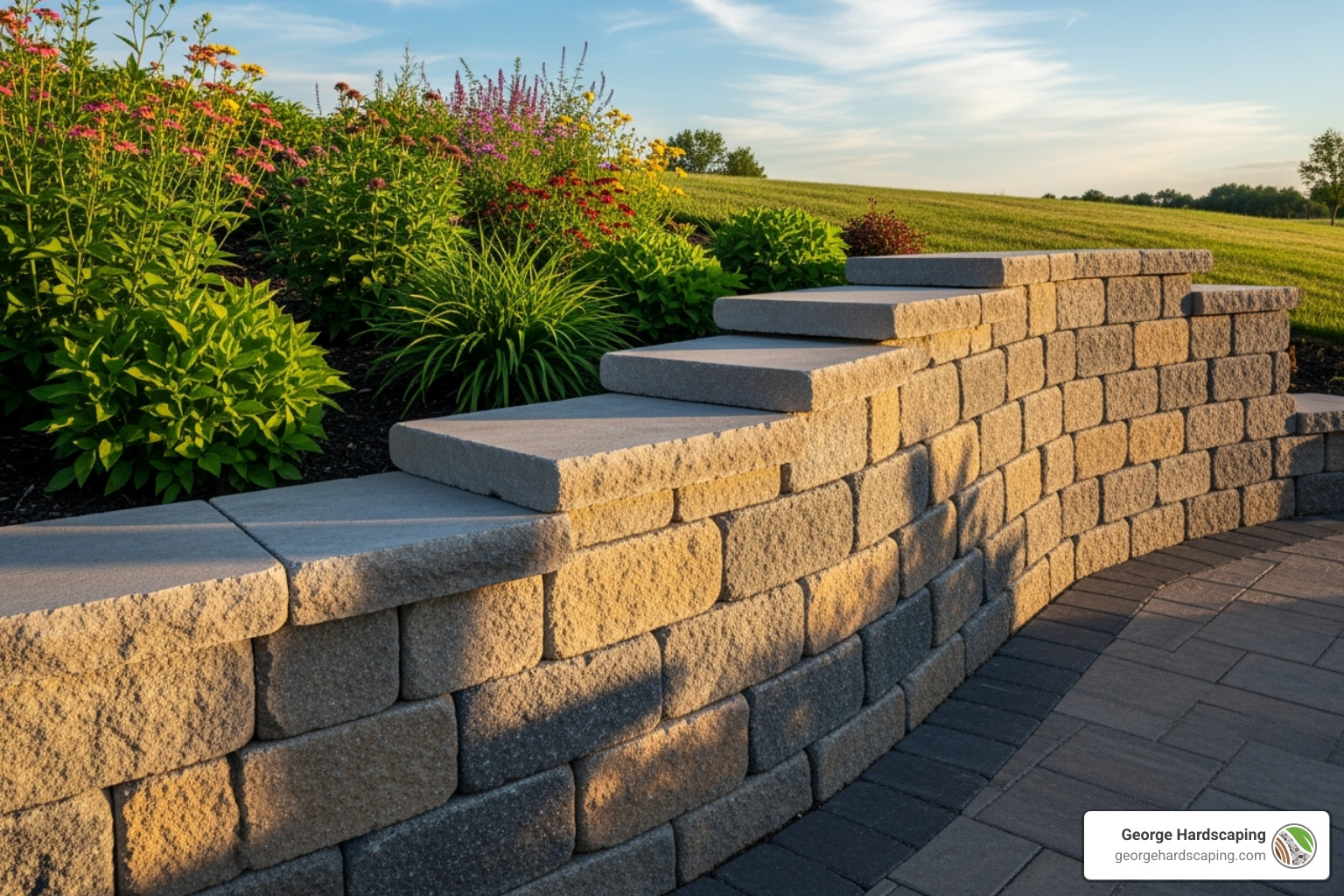
When you make the decision to replace railroad tie retaining wall structures, you are opening the door to a world of modern materials that offer vast improvements in durability, aesthetics, and long-term value. The retaining wall industry has undergone a technological revolution, moving away from the crude, temporary solutions of the past to highly engineered systems that combine immense strength with sophisticated design.
While several options exist, interlocking concrete blocks consistently emerge as our top recommendation for the vast majority of residential projects in Essex County. These Segmental Retaining Wall (SRW) systems offer an unparalleled combination of engineered strength, design flexibility, and installation efficiency. Unlike old-fashioned walls that rely solely on their immense weight to hold back soil, modern interlocking systems use advanced mechanical connections—such as integrated rear lips or high-strength pins—to create a unified, flexible structure that performs exceptionally well against the pressures of soil and New England’s demanding freeze-thaw cycles.
Let’s explore how different materials stack up for your replacement project:
- Pressure-Treated Timber: While an improvement over railroad ties, pressure-treated wood is still susceptible to the same fundamental weaknesses: rot and insect damage. Though its lifespan is longer (20-30 years), it is still a temporary solution that will eventually need replacement. The chemicals used in modern pressure-treating are safer than creosote but can still raise environmental concerns for some homeowners.
- Poured Concrete: A poured concrete wall, reinforced with steel rebar, is incredibly strong and can be formed into any shape. However, it is a rigid structure. Without meticulous engineering and installation of expansion joints, it is prone to cracking under the soil and temperature pressures of our climate. The industrial look can also be harsh unless it is faced with a veneer, which adds significant cost.
- Natural Stone (Dry Stack or Mortared): For sheer beauty and timelessness, nothing beats natural stone. A well-built stone wall can last for centuries and adds incredible character to a property. However, building with natural stone is a true art form that is extremely labor-intensive and requires highly skilled masons. The cost is typically the highest of all options, and dry-stack walls require careful planning to ensure proper drainage.
- Boulder Walls: Composed of large, irregular boulders, these walls offer a rugged, naturalistic look that blends beautifully into the New England landscape. They are extremely durable and effective at retaining soil. The primary challenge is the need for heavy machinery (excavators) to lift and place each boulder, making it a job exclusively for experienced professionals.
Here is a summary table for quick comparison:
| Retaining Wall Material | Average Cost (per sq ft) | Average Lifespan | DIY-Friendliness (for small walls) | Key Considerations |
|---|---|---|---|---|
| Railroad Ties (New) | $15 – $30 | 10-20 years | Medium | Creosote toxicity, guaranteed rot, warping, disposal issues |
| Pressure-Treated Timber | $20 – $40 | 20-30 years | Medium | Still susceptible to rot & insects, eventual replacement needed |
| Interlocking Concrete Blocks | $30 – $60 | 50-100 years | High | Best balance of cost, durability, and aesthetics; low maintenance |
| Natural Stone (Dry Stack) | $40 – $80 | 100+ years | Low (professional required) | Highest aesthetic appeal, very labor-intensive, premium cost |
| Poured Concrete | $40 – $70 | 50-100 years | Very Low (professional required) | Very strong but can crack, industrial look, requires veneer |
| Boulder Walls | $35 – $70 | 100+ years | Low (professional required) | Natural look, extremely durable, requires heavy equipment |
Note: These are average costs based on internet data and not actual costs for George Hardscaping. Actual costs can vary widely based on material selection, wall height, site conditions, and local labor rates.
The Superior Choice: Interlocking Concrete Blocks
Segmental Retaining Walls (SRW systems) made from high-strength concrete blocks represent the pinnacle of modern wall technology for residential use. The interlocking mechanism is the key to their success. Each block is precisely manufactured to lock into the courses above and below it, creating a single, massive structure that is both strong and flexible enough to handle ground movement. This inherent flexibility makes it far more resilient in our challenging climate than a rigid poured concrete wall.
- Unmatched Design Versatility: Leading manufacturers produce an incredible array of colors, textures, and sizes. You can choose blocks that perfectly mimic the look of weathered natural stone, classic quarried limestone, or sleek architectural concrete. This ensures a seamless match for any home style, from a historic North Shore colonial to a modern coastal retreat. You can explore the possibilities on our retaining wall block options page.
- DIY-Friendly (for small, non-critical walls): For simple garden walls under four feet in height that are not supporting critical structures, the uniform dimensions and manageable weight of the blocks make this an achievable DIY project. However, success is entirely dependent on getting the foundation and drainage absolutely perfect.
- Virtually Zero Maintenance: Unlike wood, concrete block walls are impervious to rot, pests, and warping. They require no painting, staining, or sealing. Once installed correctly, a block wall provides decades of worry-free performance, saving you time and money in the long run.
Our professional block retaining wall construction process guarantees that every installation adheres to the highest engineering standards for structural integrity and long-term durability.
Other Modern Alternatives (Offered by George Hardscaping)
While concrete blocks are our top recommendation for their balance of features, we are experts in crafting walls from other premium materials to suit unique landscapes and aesthetic goals.
- Natural Stone and Boulder Walls: For clients seeking a statement piece of timeless elegance, we specialize in natural stone. These walls are a testament to craftsmanship and can last for more than a century, becoming a defining feature of your property. Their installation is a complex art requiring the most experienced craftsmen, and our expertise in natural stone retaining walls ensures a result that is both breathtaking and built to last.
- Engineered Timber and Composite Materials: For those who love the aesthetic of wood but want to avoid the problems of traditional timber, modern engineered and composite wood products offer a compelling alternative. These materials are designed with enhanced resistance to rot and insects and often represent a more eco-friendly retaining wall solution, utilizing safer preservatives and sustainable manufacturing practices.
The Ultimate Guide to How to Replace a Railroad Tie Retaining Wall
Embarking on a project to replace railroad tie retaining wall structures can seem like a monumental task, but with careful planning and a step-by-step approach, it becomes a manageable process. A successful, long-lasting retaining wall is built twice: first in the planning phase, and second on site. Rushing this process is the number one cause of premature failure.
Before a single shovel hits the ground, you must do your homework. Your timeline should be realistic, always accounting for potential weather delays in New England. Your first official step should be to contact your local town building department (in Danvers, Beverly, Ipswich, etc.) to inquire about permitting requirements. Most municipalities require a building permit and sometimes a stamped engineering plan for any retaining wall over 3 to 4 feet in height.
Next, you must call 811 (Dig Safe) at least a few days before you plan to excavate to have all underground utility lines marked. Hitting a gas or electric line is a dangerous and costly mistake. Finally, assemble your safety gear. When handling old creosote ties, heavy-duty, chemical-resistant gloves, long sleeves and pants, safety glasses, and a NIOSH-approved respirator or dust mask are not optional—they are essential for protecting yourself from toxic exposure. Your tool list will include heavy-duty shovels, a pickaxe, a level (4-foot minimum), a hand tamper or plate compactor, a reciprocating saw with a demolition blade, and a sturdy wheelbarrow.
Step 1: Safely Removing and Disposing of Old Railroad Ties
This is the most physically grueling and hazardous part of the project. Do not underestimate it. Old ties are often waterlogged and can easily weigh over 200 pounds each. This is a two-person job at minimum. Start by clearing all vegetation and obstacles from the area. Begin dismantling the wall from the top course down. A sledgehammer and a long pry bar will be needed to loosen ties that are pinned or interlocked. For walls holding back a significant slope, you must install temporary shoring to brace the soil and prevent a landslide during demolition.
Disposal is a critical, regulated step. Creosote-treated wood is classified as hazardous waste in Massachusetts and cannot be disposed of in regular trash, construction dumpsters, or municipal landfills. You must research your local regulations for proper disposal. This typically involves transporting the ties to a specially licensed processing facility or incinerator. Be prepared for this to be a significant line item in your budget, as these facilities charge by weight and may have specific transport requirements. Under no circumstances should you ever burn creosote-treated wood in a fireplace or fire pit. Burning releases the toxic chemicals as airborne dioxins, which are extremely hazardous to your health and the environment.
Step 2: Excavation and Building a Solid Foundation
A retaining wall is a structural system, and its foundation is the most critical component. A faulty foundation guarantees the failure of the entire wall. The goal is to create a stable, level base that will not shift or settle over time.
First, excavate a trench for the new wall. The trench should be wide enough to accommodate the block and a drainage zone behind it, and deep enough for a 6-inch gravel base plus at least half the height of your first block course (e.g., for an 8-inch tall block, you’d bury 4 inches). For a 3-foot-tall wall, a total trench depth of 10-12 inches is standard. Fill the bottom of the trench with 6 inches of ¾-inch crushed stone (compactible granular fill).
This gravel base distributes the weight of the wall and allows water to drain away. Using sand or soil is a common DIY mistake that leads to settling. Compact this gravel base thoroughly with a hand tamper or, ideally, a rented plate compactor, making multiple passes until it is rock solid.
The first course of blocks must be perfectly, flawlessly level. Use a 4-foot level to check for levelness both front-to-back and side-to-side on every single block. Even a tiny imperfection here will be magnified into a large, ugly, and unstable lean as you build higher. This is the most tedious but most important part of the installation. Our detailed guide provides more visuals on this process: retaining wall construction detail.
Step 3: The Secret to Longevity: Installing Proper Drainage
Water is the arch-nemesis of every retaining wall. The pressure exerted by water-saturated soil (hydrostatic pressure) can be immense, easily pushing over a poorly designed wall. A comprehensive drainage system is not an optional upgrade; it is essential for the wall’s survival.
- Perforated Drain Pipe: Lay a 4-inch diameter perforated drain pipe (with the holes facing down) on the gravel base directly behind the first course of blocks. This pipe is the main artery of your drainage system, collecting water and carrying it away to a safe discharge point at the ends of the wall.
- Clean Gravel Backfill: Immediately behind your wall, backfill with at least 12 inches of clean, ¾-inch crushed stone. This creates a “drainage zone.” Water moving through the soil will hit this zone and flow freely down to the perforated pipe instead of pushing against your blocks.
- Geotextile Filter Fabric: This is the unsung hero of the system. Drape a heavy-duty, non-woven geotextile fabric between the clean gravel drainage zone and the native soil you will use as backfill. This fabric acts as a filter, preventing silt and clay from the native soil from migrating into and clogging the clean gravel, which would render your drainage system useless over time.
In Essex County, where heavy clay soils are common and freeze-thaw cycles are severe, a robust retaining wall drainage system is the single most important factor in ensuring a 50+ year lifespan for your wall.
Step 4: Stacking, Backfilling, and Finishing Your Block Wall
With the foundation and drainage in place, the rest of the wall assembly is relatively straightforward.
- Stack and Interlock: Sweep each block clean before placing the next course. Stack the blocks according to the manufacturer’s instructions, ensuring the interlocking lip or pin system engages securely. Most systems have a built-in setback, which creates a slight backward lean that dramatically increases the wall’s strength.
- Stagger Joints: Just like in bricklaying, you must stagger the vertical seams between blocks from one course to the next. This distributes the load and pressure across the entire wall face, eliminating weak vertical lines.
- Backfill in Lifts: Do not wait until the wall is fully built to backfill. After every one or two courses are laid, pull your filter fabric up, fill the drainage zone with clean stone, and then backfill behind it with your native soil. Compact this soil in 6-8 inch layers (lifts) to ensure there are no voids that will cause settling later.
- Install Geogrid (If Needed): For walls taller than 3-4 feet, geogrid reinforcement is typically required. This is a strong, flexible mesh that is laid horizontally on top of a block course and extends back into the slope, where it is buried in the compacted backfill. It mechanically ties the wall to the earth behind it, creating a solid, reinforced soil mass.
- Add Capstones: Once the wall reaches its final height, secure the capstones or coping units to the top course with a high-strength concrete adhesive. This provides a beautiful, finished look and protects the block cores from water infiltration.
This process follows the professional standards outlined in our guide on how to install retaining wall systems.
DIY vs. Hiring a Pro: Knowing Your Limits
The decision to replace railroad tie retaining wall structures yourself versus hiring a professional contractor is a critical one. It’s about more than just saving money on labor—it’s a calculated risk assessment involving safety, the quality of the final product, and the longevity of your investment. A retaining wall is not a decorative garden border; it is an active structural element engineered to hold back tons of soil. A failure doesn’t just look bad; it can lead to a landslide in your yard, causing catastrophic damage to your property, your neighbor’s property, or your home itself.
The physical demands of this project are immense and often underestimated. You are not just lifting a few blocks. You are performing a major earth-moving operation. A single waterlogged railroad tie can weigh over 200 pounds. A standard concrete block weighs between 40 and 80 pounds. For a modest 50-foot long, 3-foot high wall, you will be moving several tons of old ties, new blocks, gravel, and soil, almost entirely by hand.
Beyond sheer strength, the work requires precision and endurance. The first course of blocks must be perfectly level, an exacting task that can take hours of patient adjustment. Any error here will be magnified with each subsequent layer, resulting in a wall that is visibly crooked and structurally compromised.
Furthermore, a professional brings more than just muscle. They bring an understanding of soil mechanics, water management, and the specific engineering principles required for a stable wall. The number one cause of retaining wall failure is improper drainage, a concept that goes far beyond simply laying a pipe behind the wall.
A pro also has access to specialized, efficiency-boosting equipment like laser levels, plate compactors, and skid-steer loaders that are essential for achieving a professional-grade result. For expert guidance on vetting and selecting a qualified contractor, see our comprehensive guide on how to find a contractor to build a retaining wall.
When to Absolutely Call a Professional
While a small, simple garden wall might be within reach for a skilled DIYer, certain conditions make a professional hire non-negotiable. Attempting these projects yourself is not just inadvisable; it’s dangerous and financially reckless. You must hire a licensed and insured professional if:
- The wall is over 3-4 feet tall. At this height, the pressure from the soil is immense. Most local building codes mandate that these walls require a building permit and a plan stamped by a licensed structural engineer. A professional will handle the engineering and permitting process correctly.
- The wall is near critical structures. If the wall is supporting a driveway, patio, swimming pool, or is within 10 feet of your home’s foundation, the stakes are too high. A failure could undermine these structures, leading to tens of thousands of dollars in collateral damage.
- You have steep slopes or poor soil conditions. Essex County has a variety of challenging soils, from expansive marine clay to loose, sandy loam. These soils require specific construction techniques, soil reinforcement (geogrid), and engineered drainage systems that are beyond the scope of DIY guides.
- The site has complex drainage issues or a high water table. If your yard is naturally wet, sits at the bottom of a hill, or is prone to flooding, a standard drainage system will not be enough. An expert is needed to design a comprehensive water management solution to protect your investment.
For these complex and high-stakes projects, our team has proven experience in large retaining wall construction that meets and exceeds all engineering and safety standards.
What to Look for in a Retaining Wall Contractor
Choosing the right contractor is the most important decision you’ll make. A cheap, inexperienced installer can turn expensive, high-quality materials into a failing wall in just a few years. Look for a contractor with:
- Deep Local Experience: A contractor who works primarily in Essex County will be intimately familiar with the local soil types, climate challenges, and municipal permitting processes. This local knowledge is invaluable.
- A Strong, Verifiable Portfolio: Don’t just look at pictures of new walls. Ask to see examples of their work that are 5, 10, or even 15 years old. A well-built wall should still look great and perform perfectly after a decade.
- Proper Licensing and Insurance: This is non-negotiable. Ask for a copy of their Massachusetts Construction Supervisor License (CSL) and certificates of liability and workers’ compensation insurance. This protects you from liability for accidents on your property.
- Technical Expertise and Certifications: A great contractor will be able to clearly explain the ‘why’ behind their plan—why they chose a certain depth for the foundation, why they are using a specific drainage aggregate, and how their plan conforms to industry best practices. Certifications from organizations like the National Concrete Masonry Association (NCMA) are a strong indicator of commitment to quality.
- A Detailed, Written Contract: The contract should specify the exact scope of work, materials to be used, project timeline, payment schedule, and warranty information. Vague contracts lead to disputes.
At George Hardscaping, we pride ourselves on being a premier retaining wall installer on the North Shore. We combine decades of local experience with a steadfast commitment to sound engineering, ensuring your new wall is a lasting asset for your property. Contact us to discuss your project and see how our professional approach makes all the difference.
Frequently Asked Questions about Replacing Railroad Tie Walls
When homeowners in Essex County decide it’s finally time to replace railroad tie retaining wall structures, they understandably have many questions. This is a significant investment, and it’s important to have clear, accurate information. Here are detailed answers to the most common inquiries we receive.
How much does it cost to replace a railroad tie retaining wall?
This is the most frequent question, and the honest answer is: it varies significantly. Providing a generic per-square-foot price can be misleading because the final cost is influenced by a host of project-specific factors. A comprehensive quote will account for:
- Wall Size and Materials: The length and height of the wall determine the square footage. The material choice is also a major factor; interlocking concrete blocks typically cost $30-$60 per square foot for materials and installation, while natural stone is often higher.
- Demolition & Disposal: This is a significant cost unique to railroad tie replacement. It includes the intensive labor to dismantle the old wall and the fees for transporting and legally disposing of the creosote-treated ties as hazardous waste. This can add several dollars per square foot to the total cost.
- Site Accessibility: How easily can machinery and materials get to the wall location? A backyard with steep slopes or narrow access that requires materials to be moved by wheelbarrow will have higher labor costs than a front yard with easy access for a skid-steer.
- Excavation and Soil Conditions: The amount of earth that needs to be moved and the type of soil on your property affect the labor and equipment required. Poor soils may require more extensive excavation and the import of engineered backfill.
- Drainage Complexity: The standard drainage system is part of the base cost, but sites with significant water runoff or high water tables may require a more robust, engineered system with additional pipes, drains, and grading, which will increase the price.
As a very general guideline, a professional replacement project can range from $40 to $100 per square foot, all-inclusive. The only way to get an accurate number is with a detailed, on-site estimate. For a deeper dive into budgeting, see our retaining wall construction cost guide.
How long will a new concrete block retaining wall last?
This is where the true value of the investment becomes clear. While a railroad tie wall might last 10-20 years before becoming a problem, a properly installed concrete block retaining wall, built to industry standards, will last 50 to 100 years, or even longer.
The incredible longevity comes from a combination of superior materials and, most importantly, superior installation methods. The high-strength concrete blocks themselves are engineered to be resistant to decay, rot, and pests. The interlocking design creates a strong yet flexible structure that can accommodate the ground movement caused by New England’s freeze-thaw cycles without failing. However, this lifespan is entirely conditional on proper installation. The wall’s longevity is a direct result of a correctly built foundation and a highly effective drainage system. A poorly built wall, even with the best materials, can fail in less than a decade. The professional installation is what you are investing in, not just the blocks.
Can I build the new wall in front of the old railroad tie wall?
We are asked this frequently by homeowners looking for a shortcut to save on the cost of demolition and disposal. Our professional advice is unequivocal: do not do this. Building a new wall in front of an old, failing wall is a fundamentally flawed approach that is guaranteed to cause problems and lead to the premature failure of your new wall.
Here’s why this is a terrible idea:
- It creates a ‘rot sandwich’ that traps moisture. The space between the old and new walls will inevitably collect water, creating a perpetually damp, oxygen-deprived environment. This will hyper-accelerate the decay of the old ties and create a breeding ground for mold, fungus, and pests like termites and carpenter ants.
- It provides an unstable, shifting foundation. Your new wall would be built on, or directly in front of, a base that is actively decomposing, settling, and shifting. As the old ties rot away into mush, they will create voids in the soil, causing your new wall to settle unevenly, lean, crack, or even collapse.
- It puts immense pressure on the new wall. The old, failing wall is no longer providing any structural support. This means your new wall will have to contain not only the pressure of the soil but also the dead weight and outward pressure of the decomposing old wall. This added load is often not accounted for in a standard design.
Complete removal of the old wall is the only correct and professional method. It is the only way to address any underlying soil and drainage issues, and it is the only way to build a stable foundation for a new wall that is designed to last for generations. The upfront cost of proper demolition is a small price to pay to ensure the longevity and structural integrity of your significant new investment.
Secure Your Landscape for Decades to Come
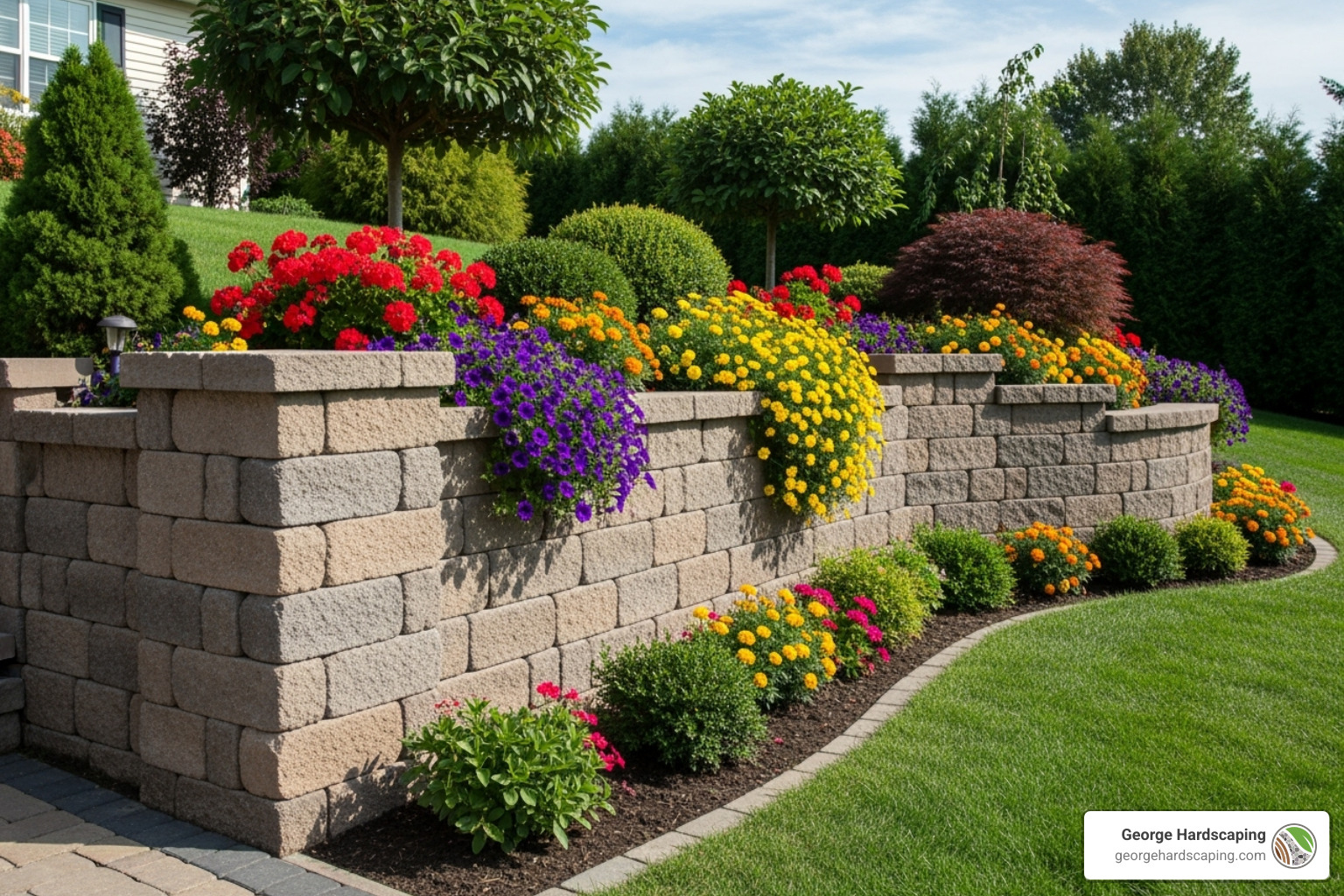
When you choose to replace railroad tie retaining wall structures with a modern, professionally engineered system, you are doing more than just solving a problem. You are making a permanent, high-value upgrade to your property’s safety, functionality, and beauty. This is an investment that pays dividends for decades, providing benefits that last for generations.
The long-term advantages are undeniable and transformative:
- Permanent Safety: You eliminate the constant worry of a potential collapse and remove toxic, creosote-leaching materials from your family’s environment.
- Zero Maintenance: Free up your time, energy, and money. Instead of patching and propping up a failing wooden wall, you can simply enjoy a beautiful, stable landscape feature that requires virtually no upkeep.
- Enhanced Home Value: A professionally built retaining wall is a significant asset. It boosts curb appeal, increases usable yard space, and is a major selling point that home inspectors and potential buyers view favorably.
- Total Peace of Mind: Relax and enjoy your property, knowing your landscape is secured by a wall that has been expertly engineered and constructed to withstand the harshest weather New England can throw at it.
The visual transformation is often the most rewarding part. The clean lines, rich colors, and sophisticated textures of a modern block wall can redefine your entire outdoor living space, turning a hazardous eyesore into a stunning, high-end focal point that you can be proud of.
For residents throughout Essex County, MA—from the coastal communities of Beverly, Gloucester, Manchester-by-the-Sea, Marblehead, and Newburyport to the inland towns of Danvers, Boxford, Ipswich, Topsfield, and Andover—George Hardscaping provides expert retaining wall installation services tailored to the specific demands of our region.
We are not just builders; we are local craftsmen who understand the unique challenges posed by the North Shore’s variable soil compositions, high moisture levels, and severe freeze-thaw cycles. Our team combines this deep local knowledge with an unwavering commitment to superior craftsmanship and sound engineering principles. We build walls that are not only beautiful on day one but remain structurally sound for decades to come.
Don’t let a deteriorating railroad tie wall continue to be a source of stress and a liability for your property. The advanced materials and construction techniques available today offer a far superior, permanent solution.
Take the first step towards a safer, more beautiful property. Request a professional estimate today! Let our team at George Hardscaping provide a comprehensive consultation and show you how we can secure your landscape with a durable, elegant retaining wall built to last a lifetime.
