
Retaining Wall Installer: 3 Expert Tips for Success
Why Choosing the Right Retaining Wall Installer Matters
Finding the right retaining wall installer can make the difference between a beautiful, long-lasting landscape feature and a costly headache. A professional installer does more than just stack blocks; they provide a comprehensive service that ensures your wall is engineered for safety and longevity.
This includes a thorough site assessment, design consultation, and guidance on material selection, from concrete blocks to natural stone. For walls over a certain height (typically 3–4 feet), they handle necessary permits and engineering. The core of their work involves proper excavation, building a compacted base, and installing critical drainage systems and reinforcement. This expertise prevents soil erosion, manages water, and creates usable outdoor space on sloped properties, ultimately increasing your property’s value and curb appeal.
The difference between a properly installed retaining wall and a failed one often comes down to experience and attention to detail. As one industry expert notes, “The main reason for retaining walls failing is a lack of drainage, often due to improper construction.” A quality installer will have extensive team experience, proper licensing and insurance, and a portfolio of successful projects, ensuring your wall stands the test of time.
The Foundation of a Great Landscape: What Retaining Walls Do
A retaining wall is an engineered structure designed to hold back soil and manage elevation changes, but its role extends far beyond being a simple barrier. It’s a versatile tool that blends function and form to solve some of your property’s biggest challenges while enhancing its beauty.
The primary function of a retaining wall is to provide soil stability, preventing erosion and landslides on sloped terrain. By holding soil in place, it protects your topsoil and landscaping investment, especially during heavy rains. This is closely tied to water drainage management. A professionally installed wall is engineered with a drainage system to channel water away from your home’s foundation. This prevents pooling and mitigates the immense force of hydrostatic pressure—the pressure exerted by water-saturated soil—which is a leading cause of wall failure. Without proper drainage, this pressure can build up behind the wall, causing it to bulge, crack, or even collapse.
Beyond these practical benefits, retaining walls are masters at changing landscapes. They turn unusable hillsides into functional areas like terraced gardens, level patios for outdoor dining, or even a safe, flat play area for children. This change effectively maximizes your usable yard space. They also help define outdoor areas, creating natural boundaries that give your landscape a polished, intentional look. A low wall can separate a lawn from a garden bed, while a taller structure can create a sense of enclosure for a private courtyard or sunken fire pit area. For gardeners, they can be used to create raised garden beds with improved soil, better drainage, and easier access for planting and weeding.
These functional and aesthetic improvements translate directly into increased property value. A professionally installed retaining wall signals to potential buyers that major drainage and landscaping issues have been solved. It boosts curb appeal, adds usable square footage to your property, and serves as a long-term investment that can last for decades. It’s a win-win: you get to enjoy a more beautiful, functional yard while increasing your home’s future worth.
Exploring Your Options: Types and Materials for Retaining Walls
Choosing the right retaining wall involves balancing your budget, landscape needs, and personal style. The material you select will dramatically impact your wall’s appearance, durability, and performance, especially in New England’s challenging climate. Popular options range from versatile concrete blocks and timeless natural stone to ultra-strong poured concrete.
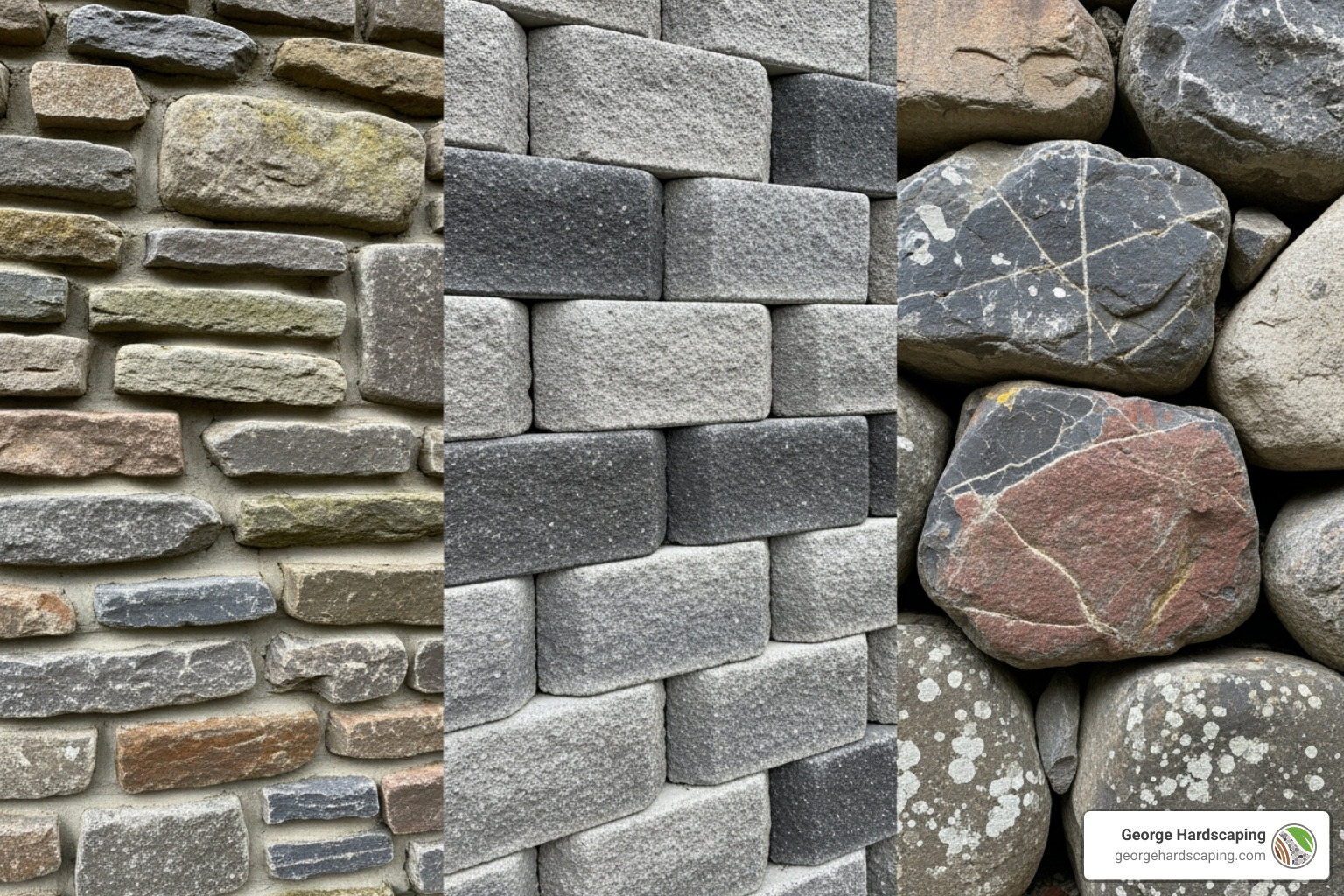
Common Retaining Wall Types
Before selecting materials, it’s helpful to understand the two main structural approaches a retaining wall installer might use:
- Gravity Walls: These walls rely on their own immense weight and mass to hold back soil. Built from heavy materials like large stones or solid concrete blocks, their stability comes from their sheer bulk. They are simple, reliable, and can last for generations with minimal maintenance. More on gravity retaining wall construction.
- Cantilevered Walls: These are more complex, engineered systems. They use an L-shaped or T-shaped footing that anchors the wall, cleverly using the weight of the backfill soil to improve stability. Typically made from reinforced concrete, they are an efficient choice for taller walls that require professional engineering. More on cantilever retaining wall construction.
Popular Material Choices
Here’s a look at some of the most common materials used for retaining walls.
| Material Type | Cost (Average) | Lifespan (Average) | Aesthetics | Maintenance (Average) |
|---|---|---|---|---|
| Concrete Blocks | Moderate | 50–100 years | Modular, various colors/textures, modern to rustic | Low (occasional cleaning, efflorescence management) |
| Poured Concrete | Moderate to High | 100+ years | Smooth, versatile finishes, custom textures | Low (sealing, crack repair if needed) |
| Natural Stone/Boulders | High | 100+ years, centuries | Organic, rustic, timeless, unique, integrated | Low (occasional cleaning, joint repair if mortared) |
Disclaimer: The costs and lifespans listed above are general averages based on internet data and do not represent specific pricing or guarantees for George Hardscaping. Actual costs and lifespans can vary significantly depending on quality of materials, installation complexity, climate, and maintenance.
Interlocking concrete blocks are popular for their versatility and value. Available in a vast array of colors, textures, and sizes, they can create looks from sleek and contemporary to rustic stacked stone. Their interlocking design provides strength and flexibility. Information on retaining wall stones.
Poured concrete is the top choice for strength and durability, especially for tall walls or those bearing significant loads. Modern concrete can be stamped, colored, or textured for a custom finish, offering a seamless look and incredible longevity.
Natural stone and boulders offer authentic character and timeless beauty that manufactured materials cannot replicate. Using granite, fieldstone, or massive armour stone boulders creates a feature that feels integral to the landscape. These materials are incredibly durable and develop a beautiful patina over time, creating a wall that could outlast the home itself. Information on boulder retaining wall construction.
The Blueprint for Success: The Professional Installation Process
Building a durable retaining wall is a science that demands expertise in structural engineering, drainage, and site preparation. A professional retaining wall installer follows a meticulous process to ensure the structure is not only beautiful but built to last for decades.
This process begins with a detailed site assessment and design phase, moves into permitting and preparation, and culminates in the final construction and cleanup. This dedication to a proven methodology is what separates a professional installation from a DIY project that might fail prematurely. For a closer look at the technical details, you can explore More on retaining wall construction detail.
Step 1: Consultation and Design
Every project starts with a conversation to understand your goals, whether it’s preventing erosion or creating a new patio space. An expert will then conduct a thorough site evaluation, assessing the terrain, soil conditions, and water flow. This informs material selection and the overall design. For complex projects, 3D modeling can help you visualize the final result. This collaborative phase ensures the finished wall is a perfect fit for your property and vision. Learn more about our process at More on retaining wall design.
Step 2: Permitting and Preparation
With a design in place, the next step is preparing the site. This often involves navigating local building codes and securing permits, especially for walls over 3-4 feet high. An experienced installer is familiar with these municipal requirements and can manage the application process to avoid delays. Understanding when a permit is required is a key part of professional service, ensuring your project is fully compliant with local regulations.
Next, site excavation clears the area for the wall’s foundation. The depth and width of the excavation are precisely calculated based on the wall’s height and soil type. This is followed by the base layer installation, arguably the most critical step for long-term stability. A thick layer of compacted crushed stone (typically ¾-inch angular stone) creates a solid, level footing. This base must be carefully compacted in layers to prevent settling and shifting over time, which could compromise the entire structure. A specialized geotextile fabric is often laid to separate the base from the surrounding soil, preventing the native soil from mixing with the aggregate and clogging the drainage system.
Step 3: Construction and Finishing
During wall construction, each course of blocks or stones is carefully laid to be perfectly level and aligned. For taller walls, geogrid reinforcement is installed at specific intervals as dictated by the engineering plan. This grid-like material is a high-tensile polymer mesh that locks into the wall and extends deep into the soil behind it. It effectively ties the wall to the earth, creating a unified, reinforced soil mass that provides crucial tensile strength to resist soil pressure and prevent failure.
Proper drainage is non-negotiable. The area directly behind the wall is backfilled with clear stone aggregate, not soil. This creates a vertical drainage column that allows water to flow freely downwards instead of pushing against the wall. A perforated drainage pipe (weeping tile), wrapped in a filter sock, is installed at the base to collect this water and channel it safely away from the wall to a suitable discharge point. This comprehensive system is the primary defense against the buildup of hydrostatic pressure, a leading cause of wall collapse.
Finally, finishing touches like decorative caps are glued into place, and the site is thoroughly cleaned, leaving you with a beautiful, functional, and expertly constructed retaining wall.
Vetting the Experts: How to Hire the Best Retaining Wall Installer
Choosing the right retaining wall installer is the most critical decision for your project. A well-built wall is a structural asset that protects your property and adds value, while a poor installation can lead to costly repairs and safety issues. Empowering yourself with the right information will help you select a qualified contractor for this vital hardscaping project.
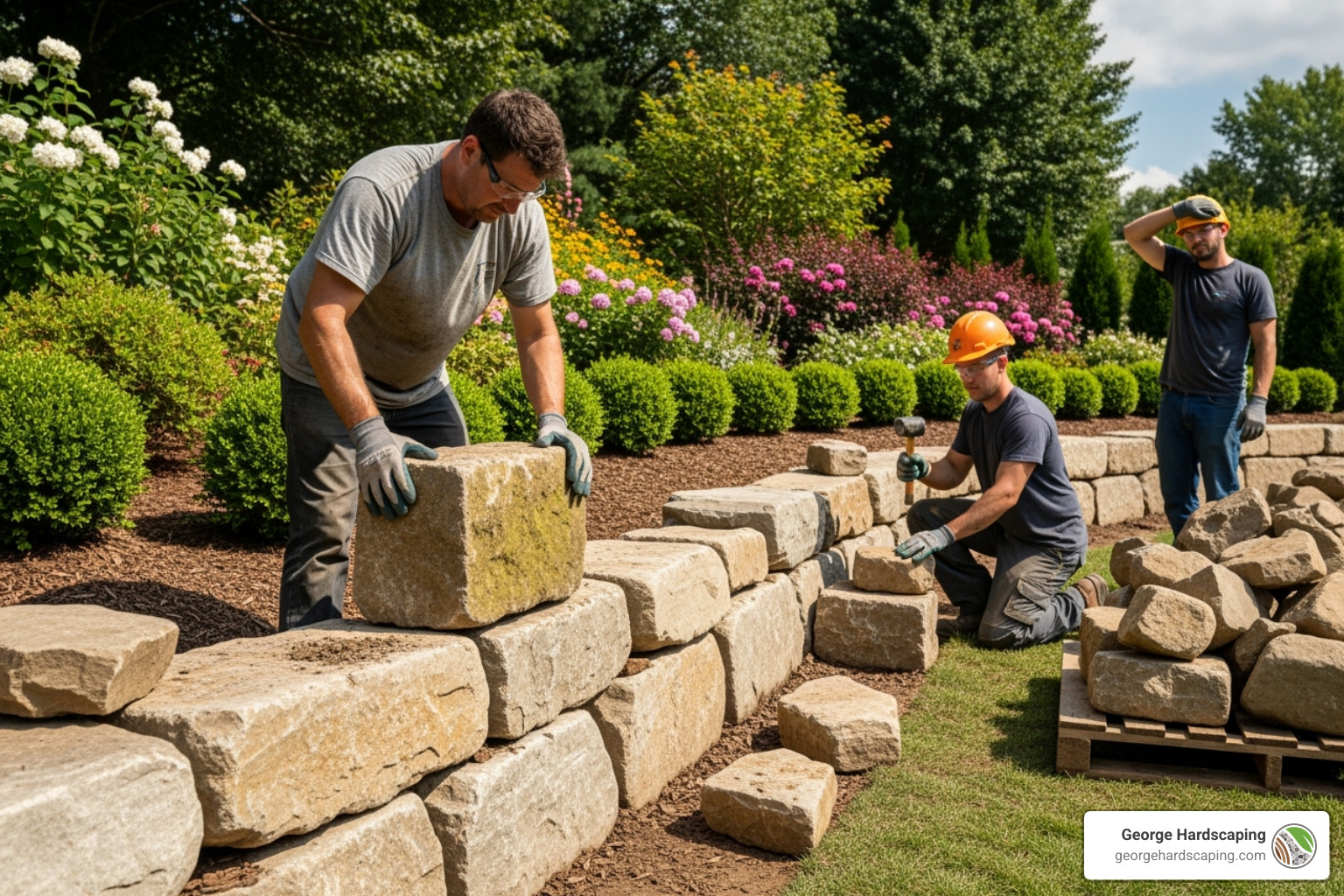
For more insights, you can explore our guide on How to find a retaining wall contractor.
Key Qualities of a Professional Retaining Wall Installer
Look for these essential qualities when vetting potential installers:
- Experience and Expertise: Seek a company with a proven track record and years of collective experience. An experienced team has encountered and solved a wide range of challenges.
- Licensing and Insurance: This is non-negotiable. It protects you from liability and ensures you are working with a legitimate business.
- Positive Customer Reviews: Check online testimonials and ask for references. A history of high customer satisfaction is a strong indicator of quality and professionalism.
- Strong Portfolio: A reputable installer will be eager to show you their past projects. This allows you to assess their craftsmanship and see work similar to what you envision.
- Clear Communication: A good contractor explains the process, answers questions patiently, and provides regular updates, ensuring a smooth and transparent project.
Understanding Retaining Wall Costs
Disclaimer: The following costs are national averages based on internet data and do not represent pricing for George Hardscaping. Actual costs vary widely based on location, materials, and project complexity.
Retaining wall costs can vary significantly. While some smaller projects may cost between $2,000 and $8,000, larger or more complex installations can easily exceed $25,000. On a per-linear-foot basis, prices can range from $75 to over $250, depending on the factors below. Labor alone can range from $50 to over $150 per linear foot.
Key factors influencing cost include:
- Materials: Concrete blocks are typically more budget-friendly than natural stone or poured concrete.
- Wall Size: Taller and longer walls require more materials, labor, and reinforcement.
- Site Accessibility: Difficult-to-access sites may increase labor costs.
- Design Complexity: Curves, stairs, and other custom features add to the price.
- Permits & Engineering: Walls over 4 feet often require an engineer’s stamp, which is an additional cost.
For a precise estimate, a direct consultation is necessary. You can learn more at our page on retaining wall construction cost.
Questions to Ask Your Prospective Retaining Wall Installer
Arm yourself with these questions before hiring:
- How do you handle drainage? This is the most critical question. They should detail their use of clear stone backfill and perforated pipes.
- What is your process for base preparation? A proper base is key to longevity. They should describe compacting the subsoil and installing a deep, compacted aggregate base.
- Can I see examples of your work? A portfolio demonstrates their skill and experience.
- What warranties do you offer? A reputable installer will stand behind their work, typically with a 2-year workmanship warranty.
- How long will the project take? They should provide a realistic timeline.
- Are you licensed and insured? Always verify for your own protection.
- What materials do you recommend for my project and why? This reveals their expertise and helps you understand your options.
- Do you handle permits and engineering for taller walls? This should be a standard part of their service for larger projects.
Protecting Your Investment: Wall Maintenance and Longevity
A professionally installed retaining wall is a low-maintenance workhorse, but a little routine care will ensure it looks and performs its best for decades. Think of it as a seasonal checkup to catch small issues before they become big problems. The good news is that most maintenance is simple and straightforward.
Key areas of focus are routine inspections, cleaning, and ensuring the drainage system is clear. By preventing common problems like water buildup or soil overloading, you are protecting your investment and extending your wall’s lifespan. Common issues to watch for include cracking or bulging, which can signal drainage problems, and efflorescence. Efflorescence is the white, chalky residue that can appear on concrete or masonry surfaces. It’s caused by water-soluble salts migrating to the surface and is primarily a cosmetic issue, though it can indicate moisture is passing through the wall.
Simple Maintenance Tips
- Regularly inspect for cracks or leaning. Every few months, especially after heavy rain or freeze-thaw cycles, walk the length of your wall. Minor hairline cracks are often cosmetic, but any signs of movement, bulging, or structural shifting warrant a professional opinion immediately.
- Keep weep holes clear of debris. These small openings at the base of some walls allow water to escape. During yard cleanup, ensure they are not blocked by leaves, dirt, mulch, or plant growth. A clogged weep hole can lead to pressure buildup.
- Manage water runoff. Ensure gutters and downspouts direct water away from the area behind your retaining wall. Concentrated water flow can saturate the soil and add immense pressure. Grade the soil above the wall to slope away from it.
- Avoid piling extra weight against the wall. Don’t add large amounts of soil, construction materials, or heavy objects on top of the backfill area unless the wall was specifically engineered for that additional surcharge load.
- Clean stains as needed. For efflorescence, a stiff brush and water may be enough, but specialized masonry cleaners are also available. For moss or algae, a solution of water and vinegar or a commercial cleaner can be effective. Regular cleaning not only improves aesthetics but also helps you stay familiar with your wall’s condition.
- Manage nearby vegetation. Be mindful of large trees planted too close to the wall. Their roots can exert powerful forces over time, potentially damaging the structure. It’s best to plant trees a safe distance away, at least as far as their mature canopy width.
Frequently Asked Questions About Retaining Wall Installation
Considering a retaining wall is a big decision, and it’s natural to have questions. Here are straightforward answers to some of the most common inquiries we receive from homeowners.
What services do professional retaining wall installers offer?
A professional retaining wall installer provides a complete, end-to-end service. This includes an initial consultation and design, site assessment, handling permits, excavation, and installing the wall with proper base preparation, drainage, and reinforcement. They also manage the backfilling, finishing touches, and final site cleanup. Many, like George Hardscaping, also offer repair services for existing walls.
How do I know if my property needs a retaining wall?
Your property will often show clear signs. You likely need a retaining wall if you have:
- Soil Erosion: Noticeable washing away of soil on slopes during rain.
- Unusable Slopes: A sloped yard you wish to convert into a flat, functional space for a patio, garden, or play area.
- Water Management Issues: Runoff flowing toward your home’s foundation.
A professional consultation is the best way to determine if a retaining wall is the right solution for your landscape.
Can a retaining wall be repaired, or does it need to be replaced?
This depends entirely on the type and extent of the damage. Minor issues like small cracks, minimal bulging, or cosmetic stains (efflorescence) can often be repaired. However, significant structural problems—such as major tilting, large cracks, or shifting—usually indicate a failure of the foundation or drainage system. In these cases, patching the wall is not a safe or effective long-term solution. A full replacement is almost always the recommended course of action to ensure the new wall is stable, safe, and built to last.
Conclusion
From understanding a retaining wall’s vital role to exploring materials and the installation process, it’s clear that your choice of retaining wall installer is crucial. A professionally built wall is more than an aesthetic upgrade; it’s a structural safeguard for your property.
It provides essential structural safety, prevents soil erosion, and manages water runoff, all while creating more usable space and boosting your property value. This long-term investment pays dividends in both function and curb appeal. The process, from design to construction, requires a blend of expertise, quality materials, and structural knowledge that only an experienced, licensed, and insured professional can provide.
For homeowners in Essex County, MA, looking to improve their outdoor spaces, George Hardscaping offers expert craftsmanship in building durable and beautiful retaining walls. We are committed to changing your landscape with quality and precision.
Ready to transform your landscape?
Contact a professional retaining walls contractor today
Like us on Facebook!
