
Retaining Wall Block Options: 10 Best Powerful Choices 2025
Why Choosing the Right Retaining Wall Block Options Matters
Retaining wall block options range from standard concrete blocks starting at 8x8x16 inches to large-format natural stone and specialized interlocking systems. Your choice depends on wall height, soil conditions, budget, and aesthetic goals.
Main Retaining Wall Block Types:
– Concrete/Segmental blocks – Most common, 3,000-5,000 PSI strength, dry-stack installation
– Natural stone blocks – Premium look, granite/fieldstone, higher cost but lasting appeal
– Large modular blocks – Up to 2.5×2.5×5 feet, 4,200+ pounds, commercial applications
– Gabion systems – Wire cages filled with stone, excellent drainage
– Timber blocks – Railroad ties or treated lumber, budget-friendly short-term option
– Interlocking systems – Tongue-and-groove design, no mortar needed
Whether you’re dealing with soil erosion on your North Shore property or want to create usable terraced space, the right blocks make all the difference. As one industry expert noted: “Grading is among the most important factors that dictate your landscape’s shape; a retaining wall offers both soil protection and dynamic visual elevation.”
Most residential projects use standard concrete blocks for walls under 4 feet. Anything taller typically requires professional engineering and may need reinforcement with geogrid or steel. Concrete blocks offer the best balance of cost, durability, and ease of installation for most homeowners.
The key is matching your block choice to your specific needs – from simple garden borders to heavy-duty slope stabilization that can handle New England’s freeze-thaw cycles.
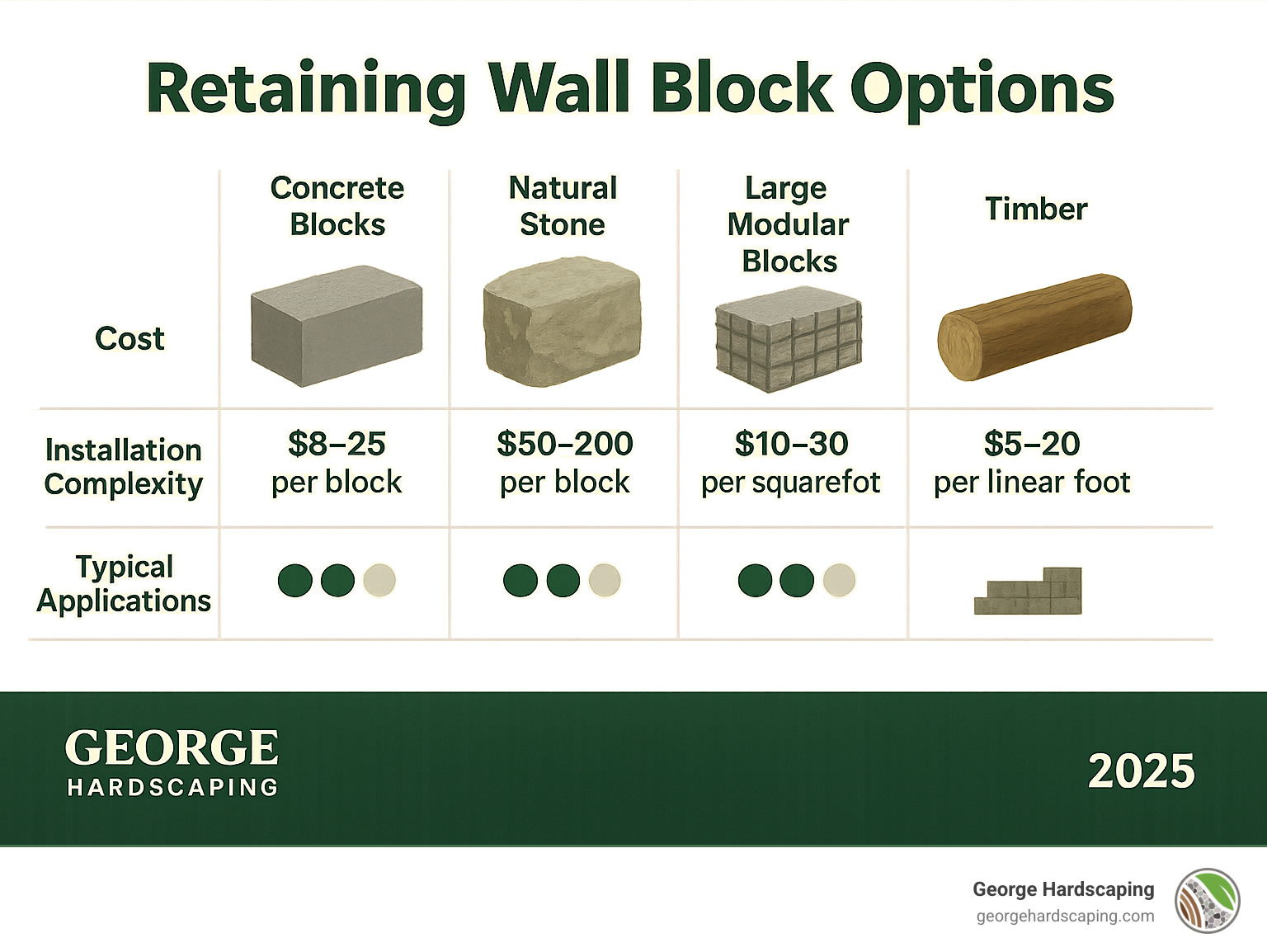
Basic retaining wall block options glossary:
– Retaining Walls Installation
– how much for retaining wall installation
– patio retaining wall installation
Understanding Retaining Wall Blocks
After building hundreds of retaining walls across Essex County, we’ve learned that understanding your retaining wall block options is the foundation of any successful project. Think of retaining wall blocks as the workhorses of your landscape – they’re doing the heavy lifting to hold back soil, prevent erosion, and create those beautiful terraced spaces that make North Shore properties so stunning.
The magic happens when you understand how these blocks actually work. Gravity walls use their own weight to push back against soil pressure, working beautifully for walls under 4 feet tall. Reinforced walls use geogrid reinforcement to handle much taller installations when properly engineered.
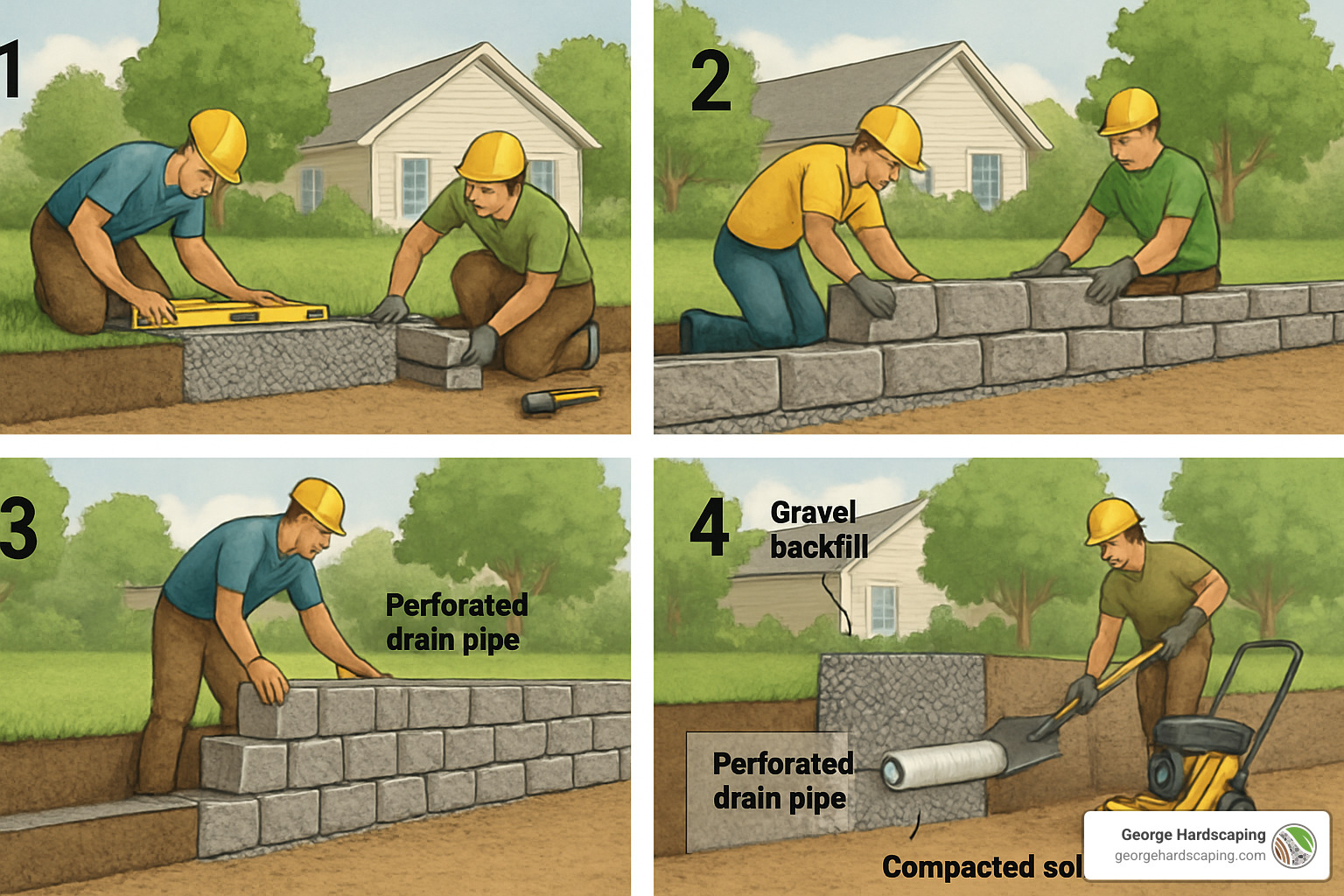
Most homeowners start with standard residential blocks measuring 8x8x16 inches and weighing about 65-75 pounds each. Today’s retaining wall block options range from lightweight hollow designs to massive commercial blocks weighing over 4,000 pounds.
Compressive strength typically delivers 3,000 to 5,000 PSI, handling serious pressure without cracking. The drainage story is crucial in Massachusetts where we deal with freeze-thaw cycles. Modern blocks include built-in drainage features with proper gravel backfill and perforated drain pipes.
For more detailed information about stone options, check out our guide on Retaining Wall Stones.
What Is a Retaining Wall Block?
A retaining wall block is a purpose-built unit designed to handle lateral soil pressure. Unlike regular building blocks, these are engineered specifically for the tremendous forces that soil creates, especially during New England freeze-thaw cycles.
The structural support function prevents erosion and slope failure while changing functional structures into attractive landscape features that improve property value. Modern blocks feature built-in setback angles, interlocking mechanisms, and drainage considerations designed by engineers who understand soil mechanics.
Key Materials & Specs You Must Know
Concrete blocks dominate the market with compressive strengths between 3,000-5,000 PSI. Most use dry-cast manufacturing, creating dense, durable units that handle freeze-thaw damage while keeping costs reasonable.
Natural stone blocks bring beauty and longevity. Granite and fieldstone offer natural color variation and texture that improves with age. They cost more upfront but can last centuries with minimal maintenance.
Gabion baskets filled with stone excel in drainage-critical applications and handle ground movement without failing. The galvanized steel or PVC-coated wire resists corrosion effectively.
Timber options include railroad ties and treated lumber – budget-friendly and perfect for temporary solutions, though with limited lifespan compared to stone or concrete.
The choice between hollow-core and solid-core blocks affects weight and installation. Hollow-core blocks reduce weight to 65-75 pounds while maintaining strength. Solid-core blocks offer maximum strength though they’re heavier to work with.
Retaining Wall Block Options Explained
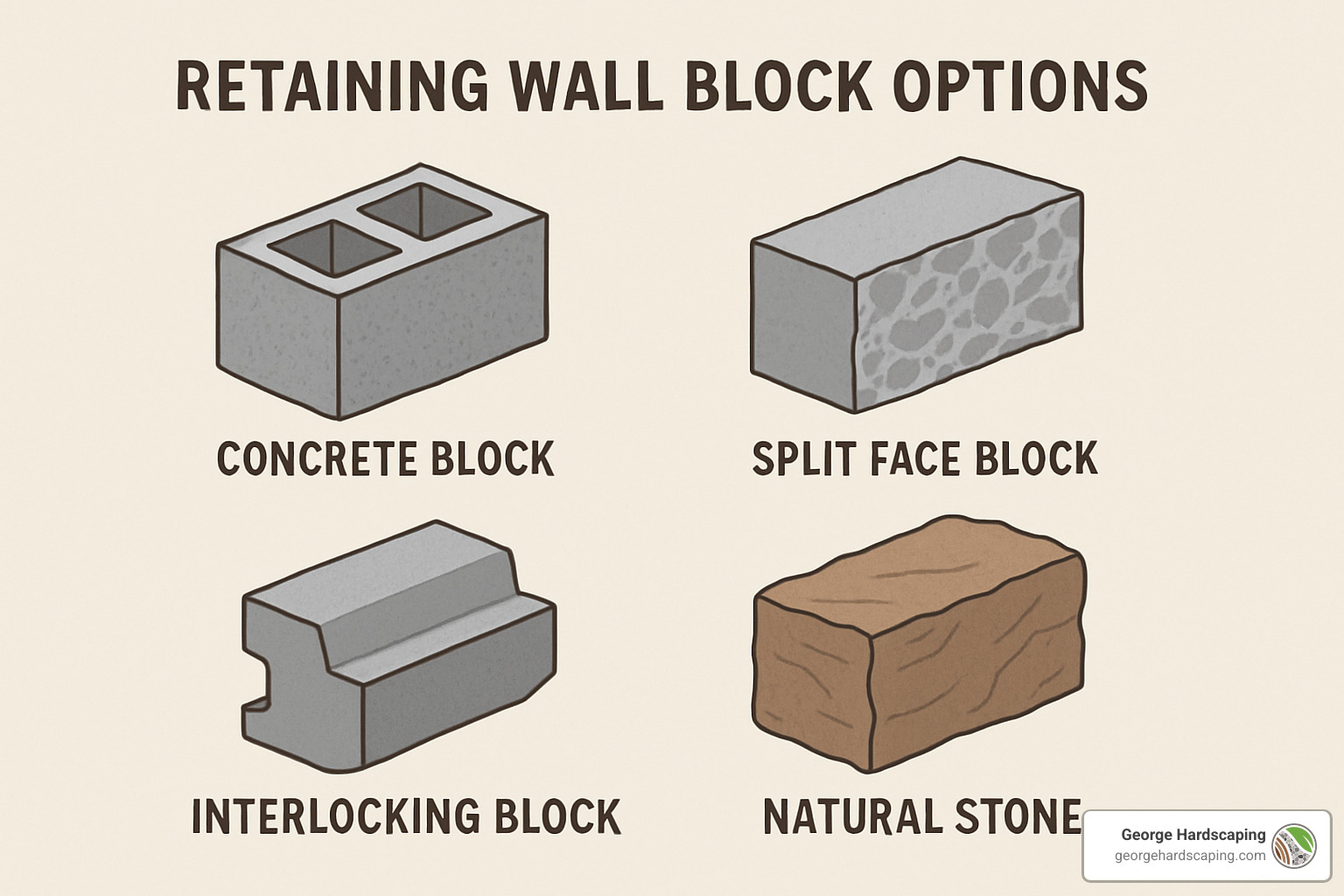
Walking through our material yard, you’ll see how retaining wall block options have evolved from basic concrete blocks into an exciting world of choices – from sleek segmental systems to rugged natural stone and eco-friendly options.
Concrete segmental blocks handle most residential jobs because they’re reliable, affordable, and easy to work with. Natural stone and boulder options create that premium, timeless look for special projects. Gabion systems work beautifully where drainage is critical, while timber blocks provide rustic charm and sustainable blocks with recycled content appeal to environmentally conscious homeowners.
Manufacturing has improved significantly. Wet-cast blocks give smooth, refined finishes, while dry-cast blocks offer realistic stone textures and colors. Large modular blocks are game-changers for commercial projects needing serious structural power with fast installation.
Modern blocks come in textures so realistic you have to touch them to believe they’re not natural stone, allowing custom looks that make properties truly unique.
Concrete & Segmental Retaining Wall Block Options for Everyday Projects
Standard segmental retaining walls just work. These blocks, typically 8x8x16 inches, are designed for dry-stack installation – no mortar, no fuss, just blocks that fit together perfectly.
Solid-core blocks are our bread and butter recommendation. They eliminate extra steps with no concrete filling or pins needed. The built-in tongue-and-groove system automatically creates proper alignment and setback angle.
Hollow-core designs are lightweight champions at 65-75 pounds per block instead of 80-90 pounds. Your back will thank you during installation, and you won’t need heavy equipment for smaller projects.
The magic of dry-stack installation makes these blocks popular with contractors and DIY homeowners. Blocks stack naturally with built-in setback angles creating proper wall geometry automatically. Base preparation is critical, but actual stacking is straightforward.
Universal caps provide the finishing touch, spanning multiple blocks for clean lines and water protection. Most systems offer matching step treads and corner units for complete, polished designs.
Natural Stone & Boulder Retaining Wall Block Options for Premium Looks
When clients want walls that look like they’ve been part of the landscape forever, we turn to natural stone blocks. They cost more than concrete, but there’s something about real stone that can’t be replicated.
Granite blocks are natural stone workhorses, providing consistent color and texture with incredible strength. Available rough-split for rugged looks or smooth-faced for refined appearances.
Fieldstone blocks offer character with natural color variations creating walls with real personality. They require more installation skill due to irregular shapes, but results look like they grew naturally from the ground.
Outcropping-style blocks combine manufactured reliability with massive natural stone looks. Some wet-cast blocks weigh 2,000 to 4,000 pounds per pallet, creating walls resembling natural rock formations.
The rustic faces and color variation in natural stone create visual interest that changes throughout the day as light hits different angles, from classic New England gray granite to warm browns and earth tones.
For more detailed information about stone options and installation techniques, check out our comprehensive guide on Stone Retaining Walls.
Alternative Solutions: Gabion, Timber & Sustainable Blocks
Gabion systems use galvanized wire cages filled with stone, perfect for drainage-critical spots or areas expecting ground movement. The flexible nature means they bend rather than break.
Wire cages use heavily galvanized steel or PVC-coated wire resisting corrosion. Standard sizes run from 3x3x3 feet up to 6x3x3 feet, filled with 4 to 6-inch diameter stone.
Timber blocks including railroad ties and treated lumber provide weathered, rustic looks perfect for certain settings. They’re not forever solutions requiring regular maintenance, but work great for temporary installations or cabin-in-the-woods aesthetics.
Sustainable blocks made from recycled concrete, clay bricks, and reclaimed materials are exciting developments. Some innovative systems create plantable living walls where vegetation grows through the wall face, becoming more beautiful as they age while helping with erosion control and providing wildlife habitat.
Design, Cost & Installation Essentials
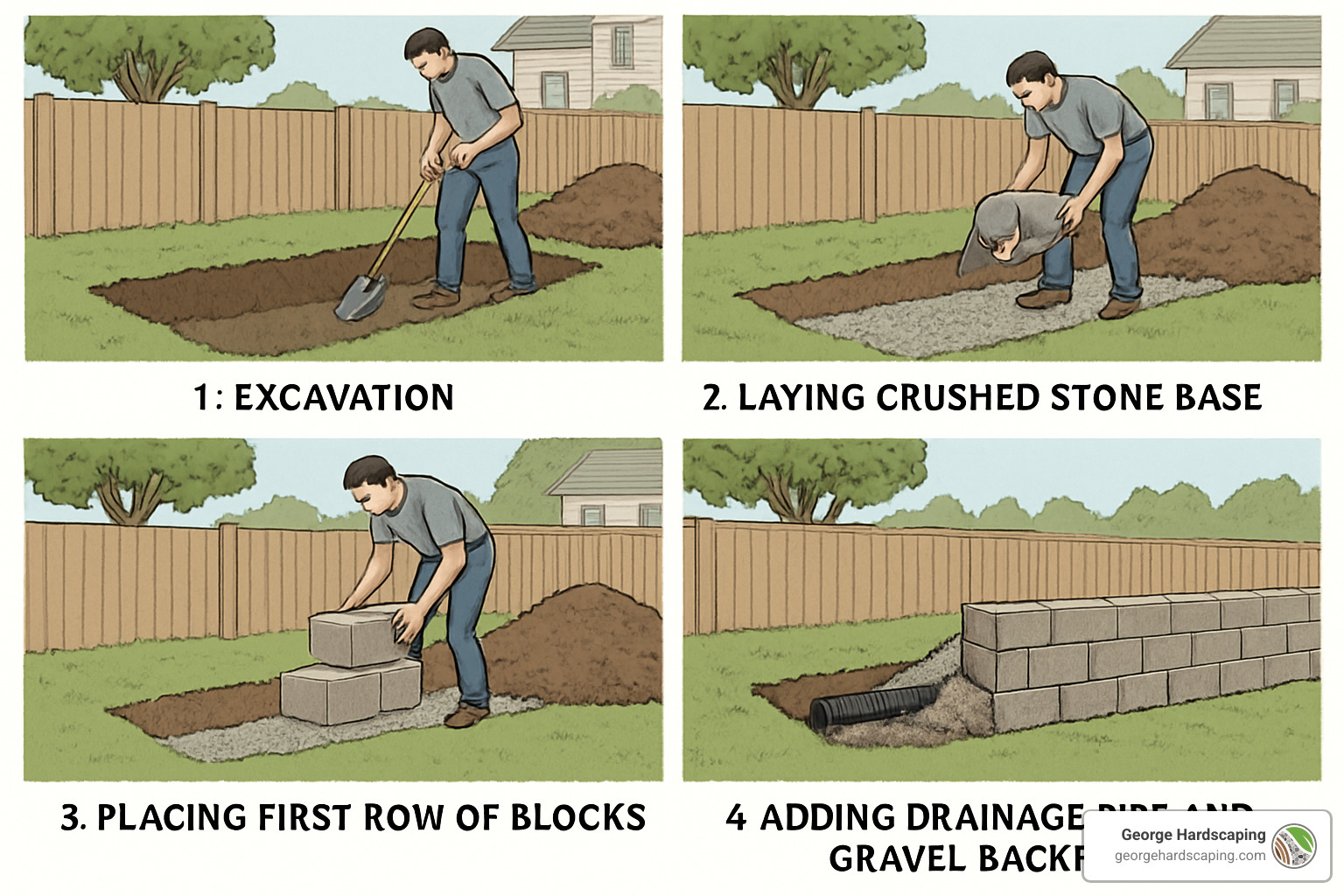
Building a retaining wall isn’t just about stacking blocks – it’s about creating a structure that will stand strong for decades. With proper planning and attention to detail, your retaining wall block options can deliver both beauty and performance.
The magic starts underground with excavation and crushed stone base preparation. We typically dig down 6 inches plus an additional inch for every foot of wall height – this keeps your wall from becoming an expensive pile of rubble.
Geogrid reinforcement becomes crucial for walls over 4 feet tall. These synthetic mesh materials extend back into the soil like roots, dramatically increasing holding power. The setback angle built into most block systems – usually 6 to 12 degrees from vertical – works with gravity instead of fighting it.
Here in Massachusetts, frost footings matter due to freeze-thaw cycles. Building codes typically require permits for walls over 3 to 4 feet, and engineering may be required for structural or exceptionally tall installations.
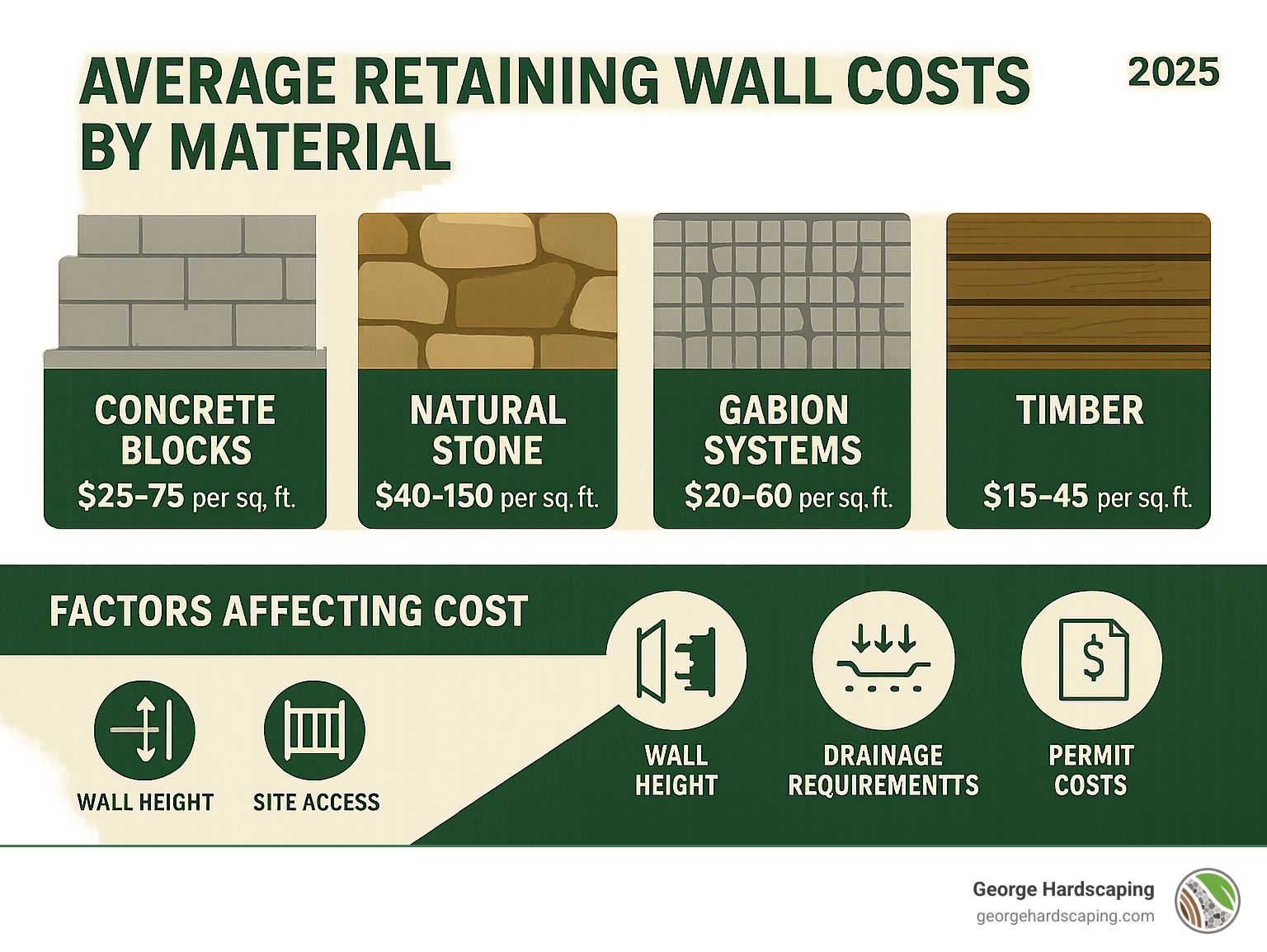
Average pricing ranges from $25 to $150 per square foot based on internet data – though actual costs vary based on site conditions, chosen blocks, and project complexity. Simple garden walls using basic concrete blocks hit the lower end, while natural stone walls with complex drainage reach the higher range.
The DIY versus professional decision usually comes down to wall height and comfort level with heavy equipment. Small garden walls under 3 feet might be manageable, but anything taller or structural should involve professionals.
Maintenance for properly built walls is minimal – periodic inspection, keeping drainage outlets clear, and occasional joint cleaning.
For technical details, check out our Retaining Wall Construction Detail guide and Retaining Wall Construction Cost analysis. For deeper information about reinforcement systems, more research on geogrid reinforcement provides excellent technical background.
Step-by-Step Installation Flow
Base preparation sets the stage for everything that follows. We excavate to proper depth and extend beyond the wall footprint for drainage features. The crushed stone base gets compacted in lifts until rock solid.
First course leveling demands perfection because every mistake gets magnified building higher. The base must be level both side-to-side and front-to-back, determining whether your wall looks professional.
Stacking blocks follows manufacturer specifications. Most modern systems have built-in features ensuring proper setback and alignment automatically. Each course gets checked for level and alignment before moving up.
Adding geogrid at specified intervals transforms simple gravity walls into reinforced earth structures. Geogrid extends back into retained soil and gets covered with additional backfill.
Cap installation provides finished look and weather protection. Construction adhesive secures caps, and careful cutting ensures proper fit at corners and ends.
Final grading integrates your new wall with surrounding landscape, ensuring proper drainage and connecting to existing systems for long-term performance.
Common Mistakes & How to Avoid Them
Poor drainage kills more retaining walls than any other factor. Water buildup creates hydrostatic pressure pushing over walls that should easily handle soil loads. Always include proper drainage with gravel backfill, perforated drainage pipe, and reliable outlets.
Inadequate compaction in backfill areas creates settling that pulls walls apart over time. Every lift of backfill needs proper compaction with appropriate equipment.
Wrong block choice for specific applications leads to performance problems showing up months or years later. Match your retaining wall block options to actual engineering requirements.
Ignoring setback requirements creates walls that lean forward progressively. The setback angle is engineered into block systems for good reason.
Budgeting & When to Call a Pro
Equipment needs can surprise first-time builders. Even modest projects require excavation equipment, compaction tools, and material handling capabilities. Larger blocks may need cranes or specialized lifting equipment.
Hidden expenses include permits and engineering fees, site access improvements, utility relocations, drainage connections, and landscape restoration. We recommend budgeting 15 to 20 percent above base estimates for contingencies.
The return on investment for quality retaining walls is excellent. They prevent costly erosion damage, create valuable usable space, and improve property values significantly.
Hiring criteria should emphasize experience with similar projects, proper licensing and insurance, and references from recent work. Quality installation is critical for long-term success.
For professional installation services, visit our Retaining Wall Contractor page.
Frequently Asked Questions about Retaining Wall Block Options
After years of building retaining walls across Essex County, we’ve heard most questions about retaining wall block options. Here are the most common ones with straight answers to help you plan your project.
How do I calculate the number of blocks I need?
The basic math: take your wall length times height, then divide by the face area of each block. For a 50-foot long, 4-foot high wall using standard blocks with 8×16-inch faces: (50 × 4) ÷ (8/12 × 16/12) = 200 ÷ 0.89 = 225 blocks.
Real walls aren’t that simple though. You’ll have corners, maybe curves, and blocks break during installation. We always tell clients to add 10-15% extra for waste and breakage. Better to have blocks left over than stop work because you’re short.
Don’t forget finishing touches. Cap blocks typically cover about 1.5 feet each, calculated separately. Corner blocks, half-units, and specialty pieces need factoring in too.
Most manufacturers have online calculators or will help figure out exactly what you need with your wall dimensions.
Do I need a permit for walls over 3-4 ft?
Every Massachusetts town has its own rules. Most communities require permits for walls over 3-4 feet, but some kick in at 30 inches while others allow up to 4 feet without paperwork.
Walls don’t have to be tall to need permits. If your wall supports a driveway, sits close to property lines, or is near wetlands, you might need permits regardless of height. Walls over 4 feet almost always require engineering calculations.
Call your local building department before planning. It’s a quick call that can save major headaches. Some towns are strict about setbacks from property lines and utilities too.
The permit process usually takes a few weeks, so factor that into your timeline.
What maintenance keeps my wall trouble-free for decades?
Properly built retaining walls are low-maintenance, but a little attention each year goes a long way toward decades of great performance.
Start with annual spring walkthrough. Look for blocks that seem shifted, caps that moved, or new cracks. These usually signal drainage or soil movement issues behind the wall.
Keep drains flowing freely – this is huge. Check that water flows out of drainage pipes and away from the wall. Clear debris from drainage areas and ensure nothing blocks outlets. Clogged drains create water buildup and pressure causing real problems.
Manage vegetation thoughtfully. Pull weeds growing between blocks and trim plants that might interfere with drainage. For plantable living wall systems, you want some vegetation but keep it controlled.
Winter prep matters in New England. Ensure drainage works well before ground freezes and clear ice dams. Avoid road salt near your wall – it’s tough on blocks and nearby plants.
Most of our walls need nothing more than this basic care when built right with quality retaining wall block options and proper installation.
Conclusion
Choosing the right retaining wall block options is like picking the perfect foundation for your home – it needs to work structurally while looking great for decades to come. After helping countless North Shore homeowners transform their properties, we’ve learned that the best walls balance practical needs with personal style.
Your decision ultimately comes down to three key factors: what your site requires structurally, what appeals to your aesthetic sense, and what fits your budget. Standard concrete blocks deliver reliable performance at reasonable cost, making them perfect for most residential projects. Natural stone creates that premium New England look that never goes out of style, though it requires a bigger investment. The newer sustainable and modular systems offer exciting possibilities for homeowners who want something different.
Safety comes first, always. We can’t stress this enough – walls over 4 feet tall, anything supporting a driveway or structure, or installations in tricky soil conditions need professional engineering. We’ve seen too many DIY disasters where someone tried to save money upfront only to face expensive repairs later. The peace of mind from proper installation is worth every penny.
Project planning should start with understanding your soil conditions and drainage needs. Massachusetts weather is tough on retaining walls, especially during our freeze-thaw cycles. The right blocks, properly installed with good drainage, will handle whatever Mother Nature throws at them.
The long-term value of quality retaining walls goes way beyond preventing erosion. They create usable outdoor space, protect your landscape investment, and boost property values. We’ve had customers tell us their retaining walls were the best home improvement they ever made – both for functionality and curb appeal.
For more comprehensive guidance on landscape applications, check out our Landscape Retaining Walls resource.
George Hardscaping proudly turns these retaining wall block options into lasting North Shore landscapes. We know Essex County soil conditions, local building codes, and what works best in our climate. From that first conversation about your vision through the final cleanup, we’re committed to creating walls that perform beautifully for generations.
Your outdoor space deserves the same attention to detail you’d give your home’s interior. The right retaining wall block options can transform a sloping yard into terraced gardens, turn an erosion problem into an attractive feature, or create the perfect backdrop for your outdoor entertaining area.
Ready to explore what’s possible for your property? We’d love to walk your site and discuss how the right blocks can solve your challenges while creating something beautiful. We serve Beverly, Boxford, Danvers, Essex, Georgetown, Gloucester, Ipswich, Lynnfield, Manchester-by-the-Sea, Marblehead, Newburyport, North Reading, Peabody, Rockport, Rowley, Salem, Swampscott, Topsfield, and Wenham – basically everywhere on the North Shore where great retaining walls make a difference.
