
Natural Stone Retaining Walls: Top 5 Stunning Benefits
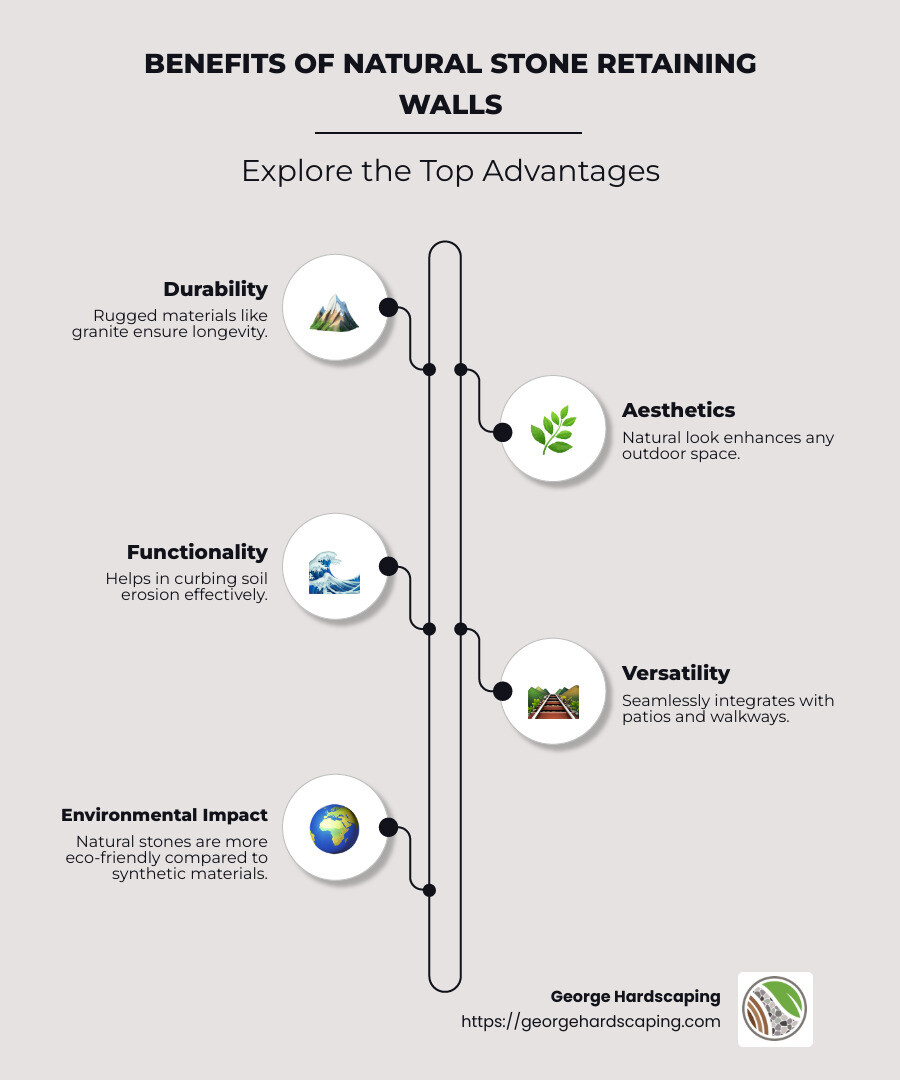
Natural stone retaining walls are a time-tested solution for enhancing outdoor spaces. These sturdy structures not only add visual appeal but also offer a practical way to manage your landscape. Whether you’re battling soil erosion or simply want to create more usable outdoor areas, natural stone retaining walls can be a beautiful and effective choice. Here’s what you need to know:
- Durability: Made from rugged materials like granite and sandstone, they stand up to harsh weather and time.
- Aesthetics: Their natural look complements any style, adding a touch of elegance to gardens and yards.
- Functionality: Ideal for creating level areas in sloped terrains, they help in curbing soil erosion and managing run-off water.
Homeowners in Essex County, MA, and the North Shore can use these walls to seamlessly integrate features like patios, walkways, and even fire pits. At George Hardscaping, we focus on quality craftsmanship to ensure your outdoor space becomes a serene, durable, and visually appealing haven.
Glossary for Natural stone retaining walls:
– Garden retaining wall ideas
– Modern retaining wall designs
Types of Natural Stone for Retaining Walls
When it comes to building natural stone retaining walls, selecting the right type of stone is crucial. Each stone type offers unique characteristics that can influence the wall’s appearance, durability, and functionality. Let’s explore four popular types of natural stone used in retaining walls: flagstone, bluestone, granite, and fieldstone.
Flagstone
Flagstone is a versatile choice for retaining walls. It’s known for its flat, thin layers, making it easy to stack. This stone is often used for creating a rustic, natural look. Its earthy tones blend well with garden landscapes, adding a serene touch. Flagstone is also relatively easy to work with, which can reduce labor costs during installation.
Bluestone
Bluestone is another favorite for retaining walls, particularly for those seeking a more sophisticated look. It’s a type of sandstone, known for its blue-gray hues. Bluestone offers a sleek and modern aesthetic, making it a great choice for contemporary designs. It’s durable and can withstand harsh weather, which is ideal for the variable climate in Massachusetts.
Granite
Granite is celebrated for its strength and longevity. This stone is perfect if you’re looking for a wall that can last for decades, even centuries. Granite comes in various colors, from light grays to deep blacks, allowing for customization to match any outdoor setting. Its durability makes it a bit pricier, but it’s a worthwhile investment for those prioritizing longevity.
Fieldstone
Fieldstone is the epitome of natural beauty. Typically gathered from local fields, this stone is known for its irregular shapes and sizes, which can create a charming, old-world feel. Fieldstone walls have a rugged appearance that fits perfectly in rustic or natural landscapes. However, its irregularity can make the construction process more labor-intensive.
Choosing the right stone is just the beginning. Each type has its own set of benefits and aesthetic qualities, allowing you to tailor your wall to your specific needs and style preferences. At George Hardscaping, we help our clients in Essex County, MA, select the perfect stone to complement their outdoor spaces.
Benefits of Natural Stone Retaining Walls
Natural stone retaining walls offer a range of benefits that make them a popular choice for homeowners looking to improve their outdoor spaces. Let’s explore the key advantages: durability, aesthetics, and functionality.
Durability
One of the standout features of natural stone is its durability. Stones like granite and bluestone are known for their ability to withstand harsh weather conditions, from freezing winters to scorching summers. These stones won’t crack or deteriorate easily, which means fewer repairs and replacements over time.
- Granite, for example, is celebrated for its strength and longevity. It’s a rock-solid choice that can last for decades, even centuries. This makes it a smart investment for those who value long-term reliability.
Aesthetics
Natural stone retaining walls are not just about function; they’re also about aesthetic appeal. The variety of stones available allows you to choose a look that complements your home and landscape.
- Flagstone offers earthy tones that blend beautifully with garden landscapes, creating a serene and natural ambiance.
- Bluestone, with its blue-gray hues, provides a sleek, modern aesthetic that’s perfect for contemporary designs.
These walls can transform a simple yard into a stunning outdoor retreat, potentially increasing your home’s curb appeal and value.
Functionality
In addition to looking great and lasting long, natural stone retaining walls are highly functional. They are excellent at preventing soil erosion, especially on sloped terrain. By holding back soil, they maintain the integrity of your landscape and protect your garden from erosion.
Moreover, these walls can create usable space by leveling uneven ground. Imagine adding a flat area for a patio, garden, or seating area. This not only improves the functionality of your yard but also provides a perfect spot for outdoor gatherings.

Natural stone retaining walls are not just a practical choice; they’re a beautiful and durable solution to improve any yard. Whether you’re looking to improve aesthetics, functionality, or both, these walls offer a versatile option that can be custom to meet your needs.
Cost Considerations for Natural Stone Retaining Walls
When planning to build natural stone retaining walls, understanding the cost is crucial. Let’s break down the key cost factors: average cost, labor costs, and material costs.
Average Cost
The cost of natural stone retaining walls can vary widely based on several factors. On average, homeowners might spend between $20 and $50 per square foot, including materials and installation. This range can fluctuate depending on the type of stone, wall height, and design complexity.
Material Costs
The choice of stone significantly impacts the overall cost. Here are some common options:
- Granite: Known for its durability, granite is a premium choice. It can cost between $10 to $30 per square foot. Its strength and longevity make it a worthwhile investment for those seeking a long-lasting solution.
- Flagstone: This stone offers a more rustic look and is generally more affordable, ranging from $10 to $25 per square foot. Its natural beauty makes it a popular choice for many homeowners.
- Fieldstone: Typically sourced locally, fieldstone can be a cost-effective option, especially if you have access to it on your property. Prices can vary based on availability and region.
Labor Costs
Labor costs are another significant factor. Installing a natural stone retaining wall requires skilled craftsmanship. Labor can account for about half of the total project cost, ranging from $5 to $11 per square foot. This includes site preparation, stone laying, and finishing touches.
Several elements can influence labor costs:
- Complexity of Design: Intricate designs with curves or varying heights will require more labor and time, increasing costs.
- Site Accessibility: If the site is difficult to access, expect higher labor costs due to additional equipment handling and time.
Additional Considerations
While natural stone walls are generally more expensive than alternatives like poured concrete, their durability and aesthetic appeal often justify the investment. They not only improve the beauty of your yard but also increase property value.
Understanding these cost factors will help you budget effectively and make informed decisions about your retaining wall project. Always consider obtaining multiple quotes to ensure competitive pricing and professional advice custom to your specific situation.
Building a Natural Stone Retaining Wall
Creating natural stone retaining walls can transform your yard into a beautiful and functional space. Let’s explore some practical tips and options for construction, design, and installation.
Construction Tips
- Plan and Design: Before you start, sketch out your design. Consider the wall’s purpose—whether it’s for aesthetics, erosion control, or creating usable space. This will guide your choice of stone and design complexity.
- Choose the Right Stone: For durability, granite is a top choice. If you prefer a rustic look, fieldstone or flagstone may be more suitable. Each stone type offers unique aesthetics and structural benefits.
- Prepare the Site: Clear the area of vegetation and debris. Make sure to call 8-1-1 to mark underground utilities before you dig. Dig a trench about 12 inches deep and fill it with compactible gravel to create a solid base.
- Dry-Stack Method: This technique involves stacking stones without mortar. It’s ideal for walls under 3 feet tall. The key is to fit stones tightly together, staggering joints to improve stability.
- Ensure Proper Drainage: Lay landscape fabric behind the wall and fill the space with drainage gravel. This prevents water buildup, reducing pressure on the wall.
Design Options
- Straight vs. Curved Walls: Straight walls are easier to build but consider curves for a more natural look. Curved walls can blend beautifully with the landscape.
- Terraced Walls: For slopes, terraced designs create multiple levels, adding depth and interest to your yard. This also helps manage runoff and erosion.
- Stone Patterns: Experiment with different stone arrangements. Random patterns offer a natural look, while uniform patterns provide a clean, modern appearance.
Installation Process
- Organize Your Stones: Group stones by size and shape. Use larger, flat stones for the base and reserve the smoothest stones for the top.
- Lay the First Course: Begin with the largest stones, ensuring they are level and stable. Use a carpenter’s level to check your work as you go.
- Build Upwards: Continue stacking stones, staggering them for stability. Adjust each stone to minimize wobble. For added security, consider using masonry adhesive on the top layer.
- Backfill and Finish: As you build, backfill with drainage gravel to support the wall. Once complete, add topsoil and plantings to blend the wall into the landscape.
Building a natural stone retaining wall is a rewarding project that improves your outdoor space. With careful planning and execution, you can create a structure that is both beautiful and functional. Up next, we’ll address some frequently asked questions to help you make informed decisions during your project.
Frequently Asked Questions about Natural Stone Retaining Walls
What is the best stone to use for a retaining wall?
When choosing the best stone for a natural stone retaining wall, consider both aesthetics and functionality. Granite is an excellent choice due to its durability and timeless appeal. It can withstand harsh weather and requires minimal maintenance. If you’re aiming for a more rustic or natural look, flagstone is a popular option. Its flat, irregular shapes allow for creative designs and a charming appearance.
Are natural stone walls expensive?
The cost of natural stone retaining walls can vary significantly. Factors like the type of stone, wall height, and labor can affect the price. Generally, natural stone walls are more expensive than alternatives like poured concrete due to the material’s premium quality and the labor-intensive installation process. However, the investment can be worthwhile, as stone walls offer best durability and aesthetic appeal.
What’s the cheapest stone retaining wall cost?
If budget is a primary concern, consider using poured concrete, which tends to be more affordable than natural stone. However, if you’re set on natural stone, fieldstone can be a cost-effective option. It’s often sourced locally, which can reduce transportation costs. That while cheaper options exist, investing in quality materials like granite can save money on repairs and maintenance in the long run.
Building a natural stone retaining wall involves various decisions, from selecting the right stone to managing costs. By understanding your options, you can make informed choices that align with your budget and design preferences. Next, we’ll conclude with insights into George Hardscaping’s commitment to quality craftsmanship in Essex County, MA.
Conclusion
At George Hardscaping, we believe that every yard deserves the timeless beauty and durability of natural stone retaining walls. Our team, based in Essex County, MA, is dedicated to changing outdoor spaces with precision and care. We understand that a retaining wall is not just a functional element; it’s a key feature that improves both the aesthetics and usability of your landscape.
Quality craftsmanship is at the heart of what we do. Our skilled professionals have years of experience in designing and building retaining walls that stand the test of time. We take pride in using only the finest materials, such as granite and flagstone, to ensure that your wall not only looks stunning but also performs exceptionally well against the elements.
We serve a wide range of locations across the North Shore, including Beverly, Danvers, and Salem, among others. Whether you’re looking to prevent soil erosion, create usable space, or simply lift the look of your garden, our team is ready to help you achieve your vision.
If you’re considering a natural stone retaining wall for your property, we invite you to explore the possibilities with us. Visit our Retaining Wall Contractor page to learn more about our services and see how we can bring your outdoor space to life with craftsmanship you can trust.
