Which Ice Melt Is Safe for Stone and Brick Front Steps? A North Shore Winter Guide
Learn how de-icers damage masonry steps, which products are gentler, and how to keep your front steps safe through a freeze-thaw winter.
The short answer
- Most de-icer damage happens when brine soaks into brick, mortar and porous stone, then freezes and leaves salt crystals behind.
- Calcium magnesium acetate (CMA) is generally the gentlest melt for masonry. Use any chloride sparingly, and never put ammonium-based products or fertilizer on steps.
- Shovel early, scatter melt thinly, clear the slush away, and use grit for traction instead of adding more salt.
- Look for open joints and loose treads before the first big storm, because damaged steps absorb much more brine.
Why ice melt is hard on stone and brick steps
De-icers don't usually dissolve stone. The bigger problem is the water they create. Ice melt turns ice into brine. That brine seeps into brick, mortar joints and porous stone, and when the night turns cold it freezes and expands inside the material. North Shore winters cross the freezing mark over and over, so a set of front steps can go through that cycle many times between the first snow and spring.
Salt also does damage of its own. As brine dries, crystals form inside the pores of the masonry and press outward as they grow. Heavily salted steps tend to show the results: faces that flake or pop off (called spalling), joints that turn sandy, and a white powdery bloom known as efflorescence.
Which steps are most at risk
- Older, softer brick, especially where the hard outer skin has already chipped or worn away
- Mortar joints that are cracked, sunken or missing
- Concrete steps in their first year, and concrete steps with a brick or stone veneer
- Softer stones such as sandstone and some fieldstone
Dense granite and good bluestone treads stand up better. Their joints and the bedding underneath are still exposed, though. Chloride melts also rust steel railings. When a post set into masonry rusts, the rust swells and can crack the brick or stone around it.
Steps that already have open joints or chipped faces take on more brine, so every scoop of salt does more harm there.
How the common ice melts compare
Rock salt (sodium chloride)
Rock salt is cheap and sold everywhere. It slows down badly in deep cold, which tempts people to keep pouring. Heavy, repeated use is linked to spalling on brick and concrete. It also burns the shrubs beside your steps and corrodes metal. A light scattering on dense stone is usually tolerable. On old brick, it's the roughest of the everyday options.
Calcium chloride
Calcium chloride works at lower temperatures and acts faster, so you can get by with less. It also draws moisture from the air. That keeps surfaces damp and can leave a slick film that gets tracked indoors. Overuse brings the same freeze-thaw and corrosion trouble as rock salt.
Magnesium chloride
This one is often sold as the gentler chloride, and its residue is less noticeable. On concrete, though, research suggests magnesium chloride can react with the cement paste itself over time. That makes it a poor pick for concrete steps or concrete under a veneer. Treat it as a use-sparingly product.
Acetate-based melts (CMA and potassium acetate)
Calcium magnesium acetate is generally considered the kindest de-icer for masonry, metal and plants. Potassium acetate is also milder on metal and plantings, but some studies have tied it to deterioration in concrete made with certain aggregates. So "gentle" is relative on concrete steps, and a light hand still matters. Acetates cost more and work more slowly. They do their best work spread before a storm, so ice can't bond to the surface.
Products to keep off masonry
Skip ammonium-based de-icers such as ammonium sulfate or ammonium nitrate. Some lawn fertilizers contain them too. They can chemically attack concrete and mortar, so fertilizer should never stand in for ice melt.
Sand and grit
Sand and grit don't melt anything. They do give instant traction, and they don't soak into the masonry. Coarse sand or a grit product works well. Clay kitty litter turns to slippery paste when wet, so leave it in the bag.
Whatever you buy, read the active ingredients. Words like "safe" or "pet friendly" don't follow a single standard. If you also care about runoff into nearby soil and water, our guide to eco-friendly snow removal covers that side of things.
"Safe for concrete" on a bag is a marketing phrase, so check the ingredient list and the manufacturer's notes about new concrete and masonry.
A winter routine that uses less melt
The surest way to protect your steps is to need less de-icer in the first place. This routine keeps the walking surface safe while putting less brine into the masonry:
- Shovel early and often. Clear snow before feet pack it into ice. On brick and softer stone, use a plastic shovel or one with a poly or rubber edge. Metal blades chip treads and front edges.
- Leave ice choppers in the garage. Hammers, picks and choppers crack stone faces and knock out mortar. Let a small amount of melt loosen the ice, or put grit on top of it for footing.
- Pre-treat lightly. Before freezing rain or snow, spread a thin layer of acetate melt or a small amount of chloride. That keeps ice from bonding to the surface.
- Scatter granules apart. A cup or small hand spreader helps, and the label tells you the rate. Extra product doesn't work faster. It just makes more brine.
- Move the slush. Once the ice loosens, shovel or broom the slush off the steps and away from plantings. Brine left sitting soaks in and refreezes overnight.
- Stop the drip. A downspout or roof edge that drips onto your steps builds fresh ice every day. Point a downspout extension away from the steps. Leave gutter and roof work to a professional in icy weather, because ladders on frozen ground are dangerous.
If you're short on time or product, safety comes first. Put grit on the main walking line, wear traction cleats, and keep a hand on the railing.
A little grit over a light scattering of melt often gives better footing than a heavy dose of salt on its own.
Check your steps before the first big storm
Late fall, while the steps are still dry and clear, is the best time to give them a slow once-over. If snow has already arrived, do the same walk-through on the next mild, dry day. Look for:
- Cracked, sandy or missing mortar joints
- Treads or bricks that rock, shift or sound hollow underfoot
- Flaking faces or chipped front edges
- Gaps where the steps meet the house, landing or walkway
- Rust or wobble at railing posts
A few jobs are fine for a homeowner. Sweep the steps, pick leaves and debris out of the joints, and make sure downspouts drain away. If a tread is loose, mark it or block off that side so nobody puts weight on it when it's icy.
About sealers
A breathable, penetrating sealer made for masonry can reduce how much brine gets in. Most need dry masonry and mild temperatures, so follow the label. If the weather has already turned cold, plan it for spring. Avoid glossy, film-forming coatings, which can trap moisture inside and make the steps slick.
When it's a job for a mason
Repointing joints and resetting loose treads both need mortar that cures above freezing. Once winter sets in, a qualified mason can tell you whether a temporary fix makes sense or whether the work should wait for warm weather. Our guide to stone step repair explains what those repairs usually involve.
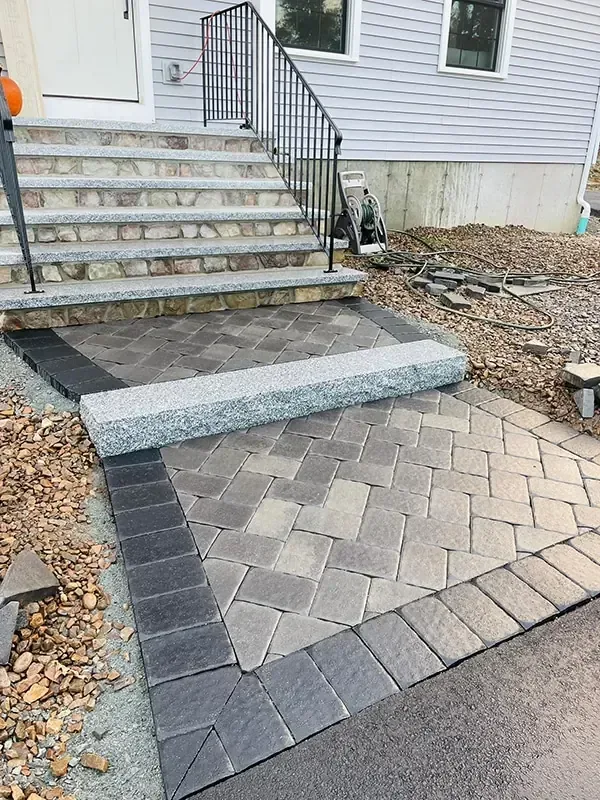
Sometimes the inspection shows steps that are past patching, with crumbling brick, treads that keep sinking, or water that pools on every step. George Hardscaping builds steps and brick stairs for homeowners in North Shore towns such as Ipswich, Beverly and Marblehead, and its project list includes a stone front steps and walkway job in Rowley. If new steps are on your list, you can request an estimate.
A step that rocks underfoot is a fall hazard on ice, so mark it or block it off until it can be fixed.
Spring cleanup after a salty winter
Once temperatures stay above freezing, wash the winter off your steps so leftover salt stops working on them.
- Sweep up grit and sand before it gets ground into the surface or washed into joints.
- Dry-brush white efflorescence with a stiff nylon brush first. Wetting it right away dissolves the salt and sends it back into the masonry.
- Rinse well with plain water from a garden hose to flush out what's left.
- Keep the pressure washer away from older brick and mortar. High pressure can blast out joints and strip soft brick faces. Acid-based cleaners belong in a professional's hands, since they can etch stone and burn mortar.
- Inspect again. Compare with your fall check. New flaking, wider cracks or joints gone sandy show where water got in over the winter.
For moss, stains and grime beyond salt, see how to clean brick steps. Warm months are also the window for repointing brick steps.
If your steps end up being rebuilt, two design choices pay off every winter after. Dense tread materials like granite or bluestone absorb less brine. Treads pitched slightly so water runs off, instead of sitting in a puddle, freeze less often. Steps that shed water quickly need less de-icer, which means less damage the following year and the year after that.
If white powder keeps coming back week after week, water is still finding its way into the masonry, and the source is worth tracking down.
Common questions
Is calcium chloride safer than rock salt for brick steps?
Calcium chloride works in colder weather, so you can usually use less of it, and that helps. It is still a chloride, though, and overuse brings the same freeze-thaw and corrosion problems. For older brick, CMA or plain grit is the gentler choice.
Can I use ice melt on new concrete or newly built steps?
Concrete in its first year is especially prone to surface scaling, and many de-icer makers warn against chloride products on it. Rely on grit for traction that first winter, and ask whoever built the steps what they recommend for the materials used.
Is pet-friendly ice melt also safe for my stone steps?
Not necessarily. "Pet friendly" has no single standard, and some of those products still contain chlorides. Read the active ingredients, and lean toward acetate-based melts or grit, which tend to be easier on both paws and masonry.
Should I seal my brick or stone steps against salt?
A breathable, penetrating masonry sealer can cut down how much brine soaks in. It needs dry masonry and mild weather, so if it's already cold, plan it for spring. Avoid glossy film-forming coatings that trap moisture.