Continuous Walkway or Stepping Stones? Match the Path to Daily Use
Continuous Walkway or Stepping Stones? Match the Path to Daily Use
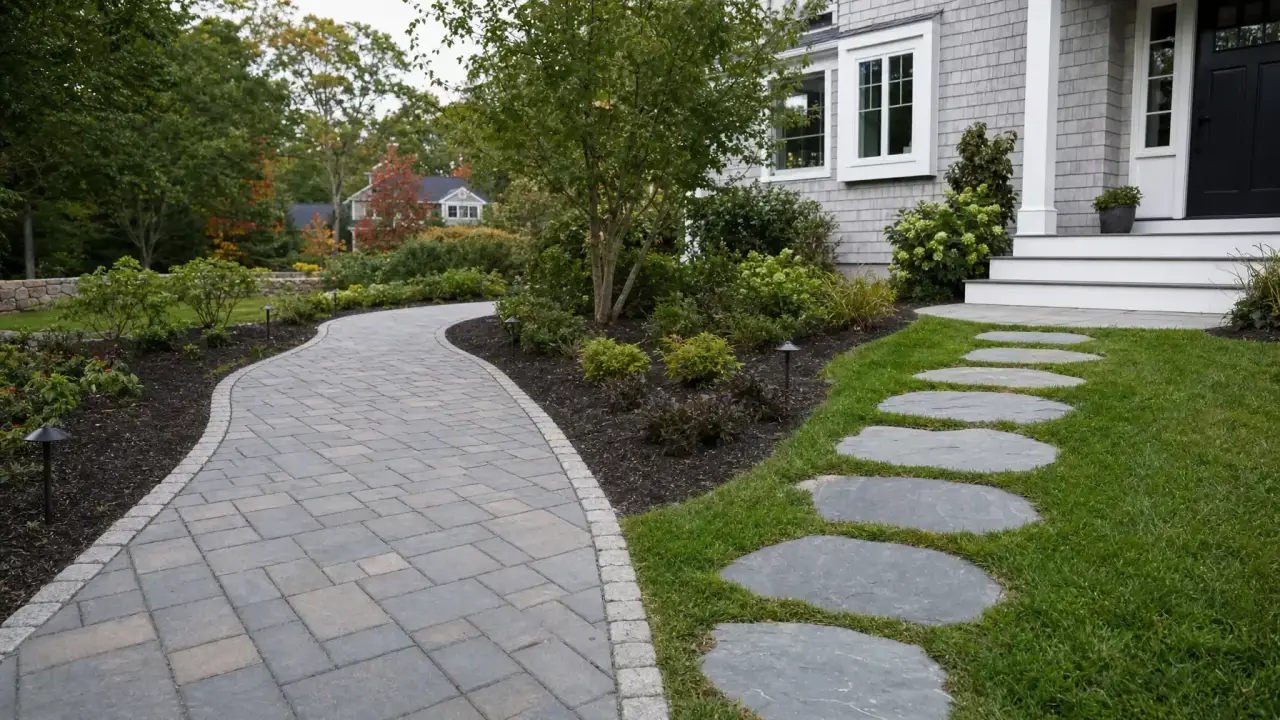
A continuous walkway is generally the stronger starting preference when a route needs to support frequent trips, carried items or people who cannot comfortably adjust their stride between separate stones. Spaced stepping stones may be worth discussing for occasional garden access where users can comfortably follow the individual walking surfaces. The distinction is about how the route works—not simply which format looks better.
Use this comparison to decide whether separated walking surfaces fit your routines. Your notes can establish a preliminary preference; they cannot confirm that a particular layout is suitable for the site or its intended users.
Does the route allow a deliberate pace?
For a primary entrance or everyday connection, ask whether people should be able to walk naturally without matching their steps to individual stones. Consider the trip home with bags, the visitor approaching an unfamiliar entrance and the household member accompanying a child. These uses favor discussing a connected surface rather than choosing separated stones for their appearance.
For occasional garden access, a slower, deliberate stone-to-stone route may fit the intended use. But the destination matters as much as frequency: if someone needs that path to reach an important part of the property, occasional use does not make their access needs optional.
What each format asks of the person walking
Here, a continuous walkway means a connected walking surface rather than separate stones divided by grass, planting or loose material. It can still have joints. Its practical appeal is that users do not have to aim their steps at isolated landing spots.
A spaced-stone route asks users to coordinate their foot placement with the stones. Whether that feels natural depends on the person and the proposed arrangement. A layout that suits someone walking alone may not suit someone carrying bulky items, accompanying a child or receiving assistance from another person.
Rolling use deserves its own question. If a stroller, wheeled mobility aid or garden cart needs to travel the route, identify that requirement before settling on separated stones. Do not assume that the gaps will be usable rolling surfaces.
Note Continuous does not automatically mean accessible or safe for every user. Surface condition, transitions, slope and the overall arrangement still need professional assessment. Describe the movement the route must support rather than treating a format choice as proof of suitability.
Use a route-use worksheet to compare the formats
For each prompt, record your household’s actual use, then mark whether it favors a continuous surface, leaves spaced stones worth discussing or needs professional input. Keep essential needs separate from appearance preferences.
- Destinations: Write where the route starts and ends. Is this essential access, or an optional garden route? Essential access gives you less flexibility to accept a format that some users find awkward.
- Frequency: Describe how often the connection is used. Would deliberate stone-to-stone foot placement become an inconvenience during repeated trips?
- Items carried: List what people carry. Would those items block the view of separate stones or make adjusting a stride difficult? If so, favor discussing a continuous surface.
- Users and assistance: Note whether anyone needs help walking, accompanies children or uses a mobility aid. Ask whether separated surfaces can accommodate that movement rather than assuming everyone can follow the same stride.
- Wheeled items: List what must roll along the path. Treat this as an unresolved suitability question for spaced stones, not something to solve by assuming wheels can cross the gaps.
- Upkeep preferences: Record whether you are willing to maintain grass, planting or loose material between stones, and whether the path must remain available during winter.
Compare upkeep, including the spaces between stones
Neither format should be treated as maintenance-free. For a continuous walkway, ask about care of the surface, joints and edges. For spaced stones, also ask what will occupy the gaps and how that area will be maintained. Grass, planting and loose material create different upkeep tasks; the spaces are part of the decision, not leftover details.
If the route must stay in use during winter, make seasonal clearing an explicit design question. Ask how the proposed surface and gap treatment would be cleared and maintained. Do not assume either format will work with your current clearing method without having the proposed arrangement assessed.
Turn your notes into a preliminary choice
Favor discussing a continuous walkway when your notes emphasize essential daily access, carrying items, varied mobility needs or rolling use. These priorities point toward an uninterrupted walking surface rather than a route that depends on deliberate stone-to-stone foot placement.
Keep spaced stepping stones under consideration when access is occasional, the intended users can comfortably follow separate stones, and caring for the gaps fits your maintenance preferences. Occasional use alone is not enough if someone still needs a continuous route to reach the destination.
When priorities conflict, do not settle the question by counting preferences. Mark essential access needs as requirements and ask whether the proposed format can meet them. Leave dimensions, grading, elevation changes and construction details to the site assessment.
Bring the route’s purpose to the design discussion
George Hardscaping designs and constructs walkways connecting different areas of a property and serves Essex County, MA and the North Shore. Learn about its walkway and stair services, or request an estimate with your route-use notes. Explain what the connection needs to support, then discuss which walking-surface format is suitable before choosing its appearance.