
Commercial snow clearing: The Ultimate Guide 2025
Commercial snow clearing is an essential service for business owners in Essex County, MA, especially during the harsh New England winters. Businesses rely on efficient snow removal to keep their properties safe and accessible for customers and employees.
Here’s a quick overview:
- Why is it important? It ensures safety, maintains accessibility, and minimizes injury risks.
- How is it done? By using specialized equipment like heavy-duty snow plows and de-icers.
- Key considerations: Understand property layout, potential hazards, and efficient snow stacking.
Commercial snow clearing is all about keeping pathways open and business operations running smoothly during snowy months.
As winter approaches, having a reliable snow removal plan is crucial. By choosing the right strategies and partners, businesses can focus on what they do best without disruptions caused by snow and ice.
Essential Commercial snow clearing terms:
– Driveway snow removal
– Eco-friendly snow removal
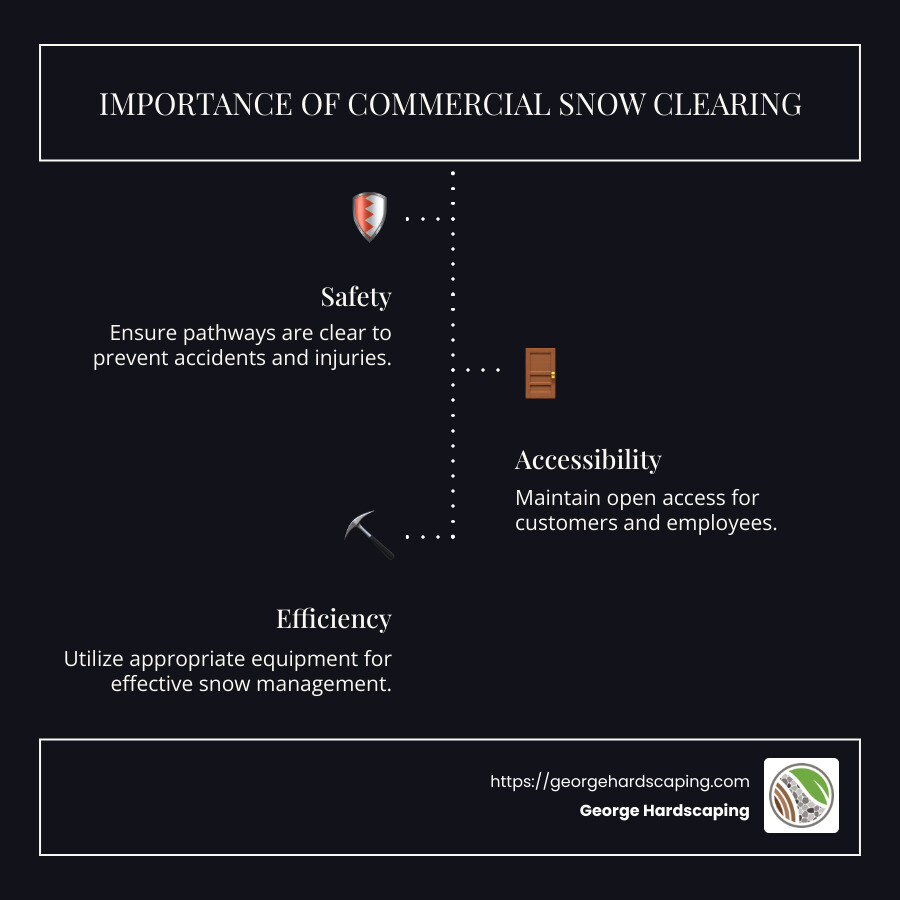
Importance of Commercial Snow Clearing
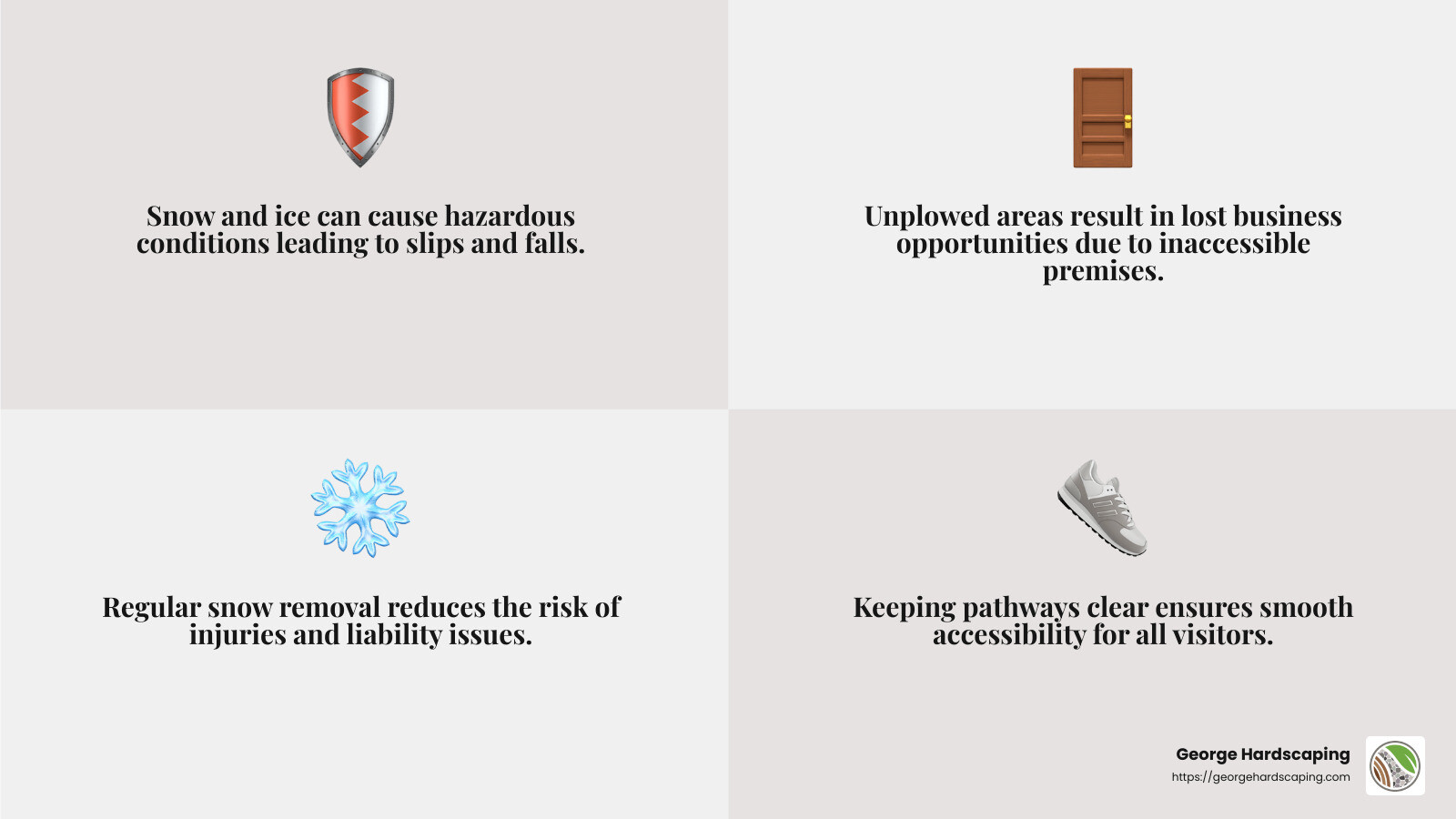
Safety First: For any business, ensuring the safety of customers and employees is top priority. Snow and ice can create hazardous conditions, leading to slips and falls. According to the National Safety Council, slip and fall accidents are one of the most common causes of workplace injuries. Commercial snow clearing helps prevent these incidents by removing snow and treating icy areas promptly.
Accessibility Matters: Imagine a customer trying to access your business but being unable to because of an unplowed parking lot. Not only does this create inconvenience, but it also results in lost business opportunities. By keeping entrances and pathways clear, businesses ensure smooth accessibility for both vehicles and pedestrians. This is particularly important for emergency services and deliveries that need to reach the premises without delay.
Reducing Injury Risk: Ice and compacted snow can turn any walkway into a potential hazard. By employing techniques like de-icing and regular snow removal, businesses reduce the risk of injuries. This proactive approach not only protects individuals but also minimizes potential liability issues for the property owner.
In conclusion, commercial snow clearing is not just about removing snow—it’s about maintaining a safe and welcoming environment for everyone. By prioritizing safety, ensuring accessibility, and reducing injury risks, businesses can operate smoothly even in the toughest winter conditions.
Next, we will explore the techniques and equipment that make effective snow clearing possible.
Techniques and Equipment for Effective Snow Clearing
When it comes to commercial snow clearing, having the right techniques and equipment is crucial for efficient and effective results. Let’s break down the essentials.
Heavy Equipment
For large commercial properties, heavy equipment is often the backbone of snow clearing operations. This includes skid loaders and dump trucks, which are vital for moving large volumes of snow quickly. According to George Hardscaping, having heavy equipment ready ensures that snow can be hauled away efficiently, making more space available and keeping properties accessible.
Snow Plows
Snow plows are the workhorses of any snow clearing operation. They come in various sizes and designs, each suited to different types of properties. For example, plowing at right angles to the main artery of a parking lot is typically most efficient for areas over 100,000 square feet. This method creates windrows by making back-and-forth passes, which can then be pushed to the edges. It’s important to plan routes that minimize backtracking and maximize forward driving to save time and fuel.
De-Icing
De-icing is a critical step in preventing slips and falls after the snow has been cleared. It involves applying materials like salt or sand to melt ice and improve traction. Companies like Iowa Landscape Supply emphasize the importance of using the latest techniques and materials to ensure safety even during extreme temperatures. Proper de-icing not only keeps pathways safe but also extends the effectiveness of snow clearing efforts.
Smart Planning
Beyond equipment, smart planning is essential. Before the snow season begins, inspecting commercial properties for potential hazards and marking obstacles with reflectors can prevent damage and improve efficiency. This preparation, combined with a clear strategy for where to pile snow and how to handle different snow accumulations, ensures that snow clearing operations are both safe and effective.
By utilizing the right equipment and techniques, businesses can maintain clear and safe environments, no matter how severe the winter weather gets. Up next, we’ll dive into how to quote commercial snow clearing services, ensuring that your operations are not only effective but also profitable.
How to Quote Commercial Snow Clearing Services
Quoting commercial snow clearing services can be tricky, but with the right approach, you can ensure profitability while providing competitive rates. Let’s break it down into three key components: hourly rate, profit margin, and overhead.
Hourly Rate
Your hourly rate is the foundation of your pricing structure. It should cover labor, equipment usage, and basic materials like de-icing agents. To set a competitive rate, research local market prices and consider factors such as the size of the property and the complexity of the job. For instance, properties with extensive parking lots or multiple driveways may require additional time and resources, which should be reflected in the rate.
Profit Margin
To ensure your business remains profitable, calculate a profit margin that reflects your financial goals. A typical profit margin for snow clearing services ranges from 10% to 30%, but this can vary based on your business model and local competition. Your profit margin should be added on top of your costs, not included within them. This ensures you’re not just covering expenses but also growing your business.
Overhead
Overhead includes all the ongoing expenses necessary to run your business, such as insurance, maintenance, and administrative costs. It’s crucial to factor these into your pricing to avoid undercharging. For example, insurance coverage can vary depending on whether you’re working on residential or commercial properties, so ensure you’re adequately covered and include these costs in your quote.
To accurately quote a job, consider these components together. Here’s a simplified example:
- Calculate Costs: Determine the total costs, including labor, equipment, materials, and overhead.
- Add Profit Margin: Apply your desired profit margin to the total costs.
- Set Hourly Rate: Divide the total by the estimated hours to get your hourly rate.
By understanding and applying these principles, you can create quotes that are fair to both you and your clients. This approach not only helps maintain profitability but also builds trust with your clients by providing transparent and justifiable pricing.
Next, we’ll address some frequently asked questions about commercial snow clearing, such as the average costs and necessary licenses.
Frequently Asked Questions about Commercial Snow Clearing
What is the average cost of commercial snow removal?
The cost of commercial snow clearing can vary significantly based on several factors, including the size of the area, the complexity of the job, and the local market. On average, businesses might expect to pay anywhere from $50 to $150 per hour for snow removal services. Larger properties or those with more complex needs, such as multiple parking lots or walkways, can push costs higher.
Materials, such as de-icing agents, can also affect pricing. The use of specialized equipment like skid loaders or dump trucks, especially during heavy snowfall, can further increase costs. It’s essential to get a detailed quote that breaks down these elements, so you understand what you’re paying for.
Do you need a license to do snow removal?
In most areas, a specific license for snow removal isn’t required. However, there are regulations you should be aware of. For example, some municipalities may require a business license or permit to operate legally. Additionally, having liability insurance is crucial, as it protects your business in case of accidents or damages during snow clearing.
Be sure to check local regulations in the North Shore, MA area, where cities like Beverly, Danvers, and Salem may have specific requirements. Staying compliant not only protects your business but also builds trust with your clients.
How do you quote commercial snow removal?
Quoting for commercial snow clearing involves several steps to ensure you’re competitive yet profitable. Here’s a simple guide:
- Determine the Scope: Assess the property’s size and the complexity of the job. Larger areas or those with obstacles like medians or fire hydrants might require more time and equipment.
- Estimate Labor and Equipment Costs: Calculate the number of workers needed and the type of equipment required. For instance, large lots might need heavy machinery, while smaller areas could be managed with standard plows.
- Include Material Costs: Factor in the cost of materials like salt or de-icing agents. These are essential for keeping surfaces safe and should be part of your quote.
- Calculate Overhead: Don’t forget ongoing business expenses such as insurance, vehicle maintenance, and administrative costs. These should be included to ensure you’re covering all aspects of your operation.
- Add a Profit Margin: Once costs are calculated, apply a profit margin to ensure your business remains profitable. This margin typically ranges from 10% to 30%.
By following these steps, you can provide a transparent and justified quote that reflects both the value of your services and the needs of your clients. This process helps build trust and ensures you’re fairly compensated for your work.
Next, we’ll conclude with a look at George Hardscaping’s commitment to quality craftsmanship in the North Shore area.
Conclusion
At George Hardscaping, we understand the critical role of commercial snow clearing in maintaining safe and accessible environments during harsh New England winters. Our commitment to quality craftsmanship is at the heart of everything we do. We proudly serve the North Shore area, including towns like Beverly, Danvers, and Salem, ensuring that businesses and residents can continue their daily activities without disruption.
Our team is equipped with the right tools and expertise to tackle any snow challenge, from plowing expansive parking lots to de-icing tricky walkways. We value transparency and integrity in our services, which is why we provide detailed, competitive quotes that reflect the true scope of the work involved.
We believe in the power of proactive planning and meticulous execution. This approach not only minimizes risks but also maximizes efficiency, ensuring that snow and ice are managed effectively, no matter the conditions. Our dedication to excellence has earned us a reputation as a trusted partner in the North Shore community.
Whether you’re a business owner looking to keep your commercial property safe or a homeowner wanting to ensure your family’s safety, George Hardscaping is here to help. Our focus on quality and customer satisfaction is unwavering, and we’re committed to delivering outstanding results every time.
For more information about our snow plowing services, visit our Snow Plowing Services page. Let us show you how we can make your winters easier and safer with our expert snow clearing solutions.
