
Why Your Choice of Patio Material Matters More Than You Think
A brick paver patio is one of the most popular choices for homeowners across Massachusetts — and for good reason. But it’s not the only option. Before committing to any material, it helps to understand how the main choices stack up.
Quick comparison: the most common patio materials
| Material | Avg. Lifespan | Relative Cost | Best For |
|---|---|---|---|
| Clay brick pavers | 100+ years | Medium-High | Classic look, longevity |
| Concrete pavers | 30–50 years | Low-Medium | Versatility, budget builds |
| Natural stone | 50–100+ years | High | Elegant, unique aesthetics |
| Poured concrete | 25–50 years | Low | Large areas, simple installs |
Your patio is a long-term investment. The material you choose affects how it looks, how long it lasts, and how much upkeep it needs — especially in a climate like Essex County’s, where freeze-thaw cycles can be brutal on poorly installed hardscaping. When temperatures fluctuate wildly during New England winters, water trapped beneath the surface expands and contracts. This movement can easily crack solid concrete slabs or shift poorly laid stones.
Some brick pavements in colonial-era towns across New England have been in continuous use for nearly 150 years. That kind of durability doesn’t happen by accident — it comes from choosing the right material and installing it correctly. By selecting a flexible paving system, you allow your outdoor living space to breathe and adapt to the changing seasons without losing its structural integrity.
This guide breaks down every major patio material so you can make a confident, informed decision. Whether you’re in Beverly, Gloucester, or anywhere on the North Shore, the goal is the same: a patio that looks great and lasts.
Simple Brick paver patio glossary:
Comparing Patio Materials: Clay, Concrete, and Natural Stone
When planning your outdoor living space, selecting the right material is the foundation of your entire project. The three heavyweight contenders in Massachusetts are clay brick, concrete pavers, and natural stone. Each brings a distinct personality, durability profile, and price point to your backyard.
Clay Brick Pavers: The Timeless Classic
Clay bricks are made from natural clay fired in a kiln at extremely high temperatures, often exceeding 2,000 degrees Fahrenheit. This intense heat process vitrifies the clay, fusing the particles together to create an incredibly dense, strong block that is virtually impervious to the elements.
- Durability: Outstanding. Natural clay pavers can easily last 100+ years without losing their structural integrity. They resist fading because the color is baked directly into the material rather than added as a surface pigment. This means even after decades of intense UV exposure, your patio will retain its rich, warm tones.
- Appearance: Clay offers warm, earthy red and brown tones with a rustic, historic charm that only gets better with age. The natural variations in the clay give each brick a unique character.
- Best For: Homeowners who want a timeless, colonial-era look that retains its beauty for generations and blends seamlessly with historic New England architecture.
Concrete Pavers: The Modern Workhorse
Concrete pavers are cast from a mixture of cement, sand, gravel, and water, with added color pigments. They are manufactured under tight quality controls to ensure consistent strength and dimensions.
- Durability: While durable, they have a shorter average lifespan of 30 to 50 years. Over time, the surface aggregate can become exposed due to weathering, and the color pigments can fade under the sun.
- Appearance: Highly versatile. Manufacturers can mold concrete into virtually any shape, size, or texture, often mimicking natural stone or historic brick. This allows for incredible design flexibility.
- Best For: Modern designs, high-traffic areas, and projects requiring interlocking shapes for added stability. For premium concrete options in the region, products like those from Ideal Pavers in Ipswich Massachusetts – Yankee Cobble, Boston … are popular choices.
Natural Stone: The Luxury Option
Natural stone pavers include flagstone, slate, granite, and limestone, quarried directly from the earth.
- Durability: Extremely high. Natural stone can withstand the harshest New England winters, though some softer stones may scale or flake over time if not sealed properly.
- Appearance: Unmatched elegance. No two pieces of natural stone are identical, giving your patio a completely unique, high-end look with organic textures and colors.
- Best For: Custom, organic designs that blend seamlessly into the natural landscape. You can learn more about these elegant options through our professional stone patio installation services.
For a deeper dive into how these materials are layered and installed, you can read This Old House guide on paver patios.
Material Comparison Table
| Feature | Clay Brick Pavers | Concrete Pavers | Natural Stone |
|---|---|---|---|
| Primary Material | Fired natural clay | Cast cement & aggregate | Quarried stone |
| Lifespan | 100+ Years | 30–50 Years | 50–100+ Years |
| Color Retention | Permanent (won’t fade) | Can fade over decades | Permanent (natural) |
| Sizing | Highly uniform | Extremely uniform | Variable (requires sorting) |
| Slip Resistance | Excellent (natural texture) | Good to Excellent | Variable (honed can be slick) |
| Frost Resistance | High | High | High (varies by stone type) |
The Advantages and Drawbacks of a Brick Paver Patio
Installing a brick paver patio is a fantastic way to elevate your home’s curb appeal and outdoor usability, but like any home improvement project, it has its pros and cons.
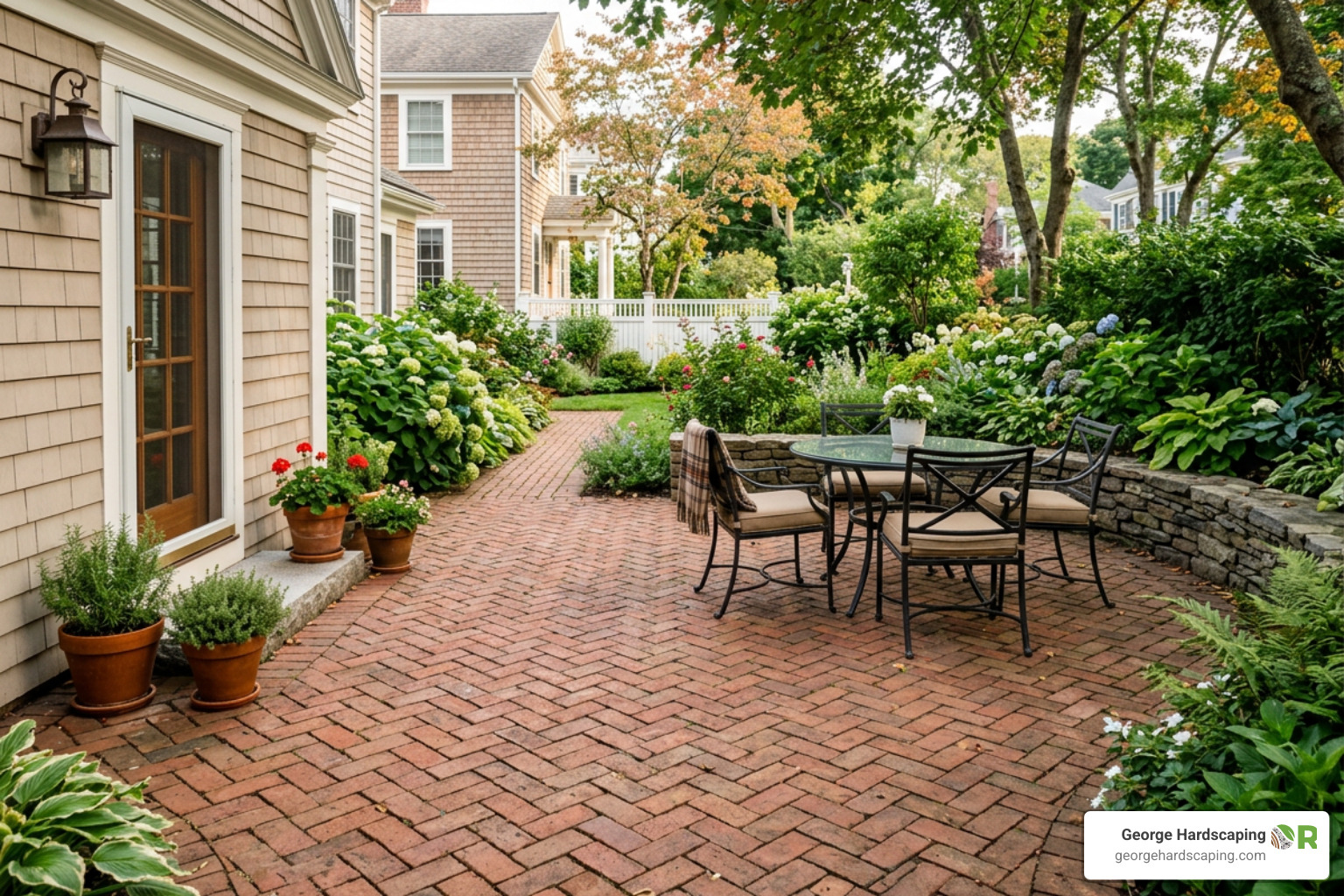
The Advantages
- Incredible Longevity: A properly installed dry-laid clay brick patio can easily outlast the house itself. The firing process makes the bricks resistant to heavy loads, freeze-thaw cycles, and environmental wear.
- Easy Repairability: Unlike poured concrete, which cracks and requires expensive patching or complete replacement, brick pavers are individual units. If a single brick chips, stains, or sinks, you can simply pop it out and replace it in minutes without disrupting the rest of the patio.
- Natural Slip Resistance: The gritty, textured surface of fired clay provides excellent traction underfoot, even when wet. This makes it highly safe for families, elderly relatives, and ideal around pool decks or wet garden paths.
- Flexible System: Because they are laid on a flexible bed of sand and gravel, brick pavers can shift slightly with the ground during winter frost heaves without cracking. Once the ground thaws, they settle back into place.
The Drawbacks
- Initial Cost: Clay brick is more expensive upfront than poured concrete or basic concrete pavers due to the manufacturing process and the labor required for installation.
- Weed Growth: If the joints are not properly filled and maintained, weeds and moss can find a foothold between the bricks. However, this can be mitigated by using high-quality polymeric sand during installation.
- Labor-Intensive Installation: Achieving a perfectly flat, durable surface requires extensive excavation, base preparation, and precise leveling. It is not a project to be rushed.
In historic cities like Beverly, MA, where colonial architecture is prominent, clay bricks blend seamlessly with local heritage. If you are looking to install a new patio in this area, you can explore professional brick patio contractors or check out local Brick Pavers Installation Services in Beverly, MA to see how these classic features are brought to life.
Designing Your Patio: Popular Layouts and Patterns
The pattern in which you lay your brick pavers does more than just dictate the final look of your patio—it also impacts the structural integrity of the surface and the complexity of the installation process.
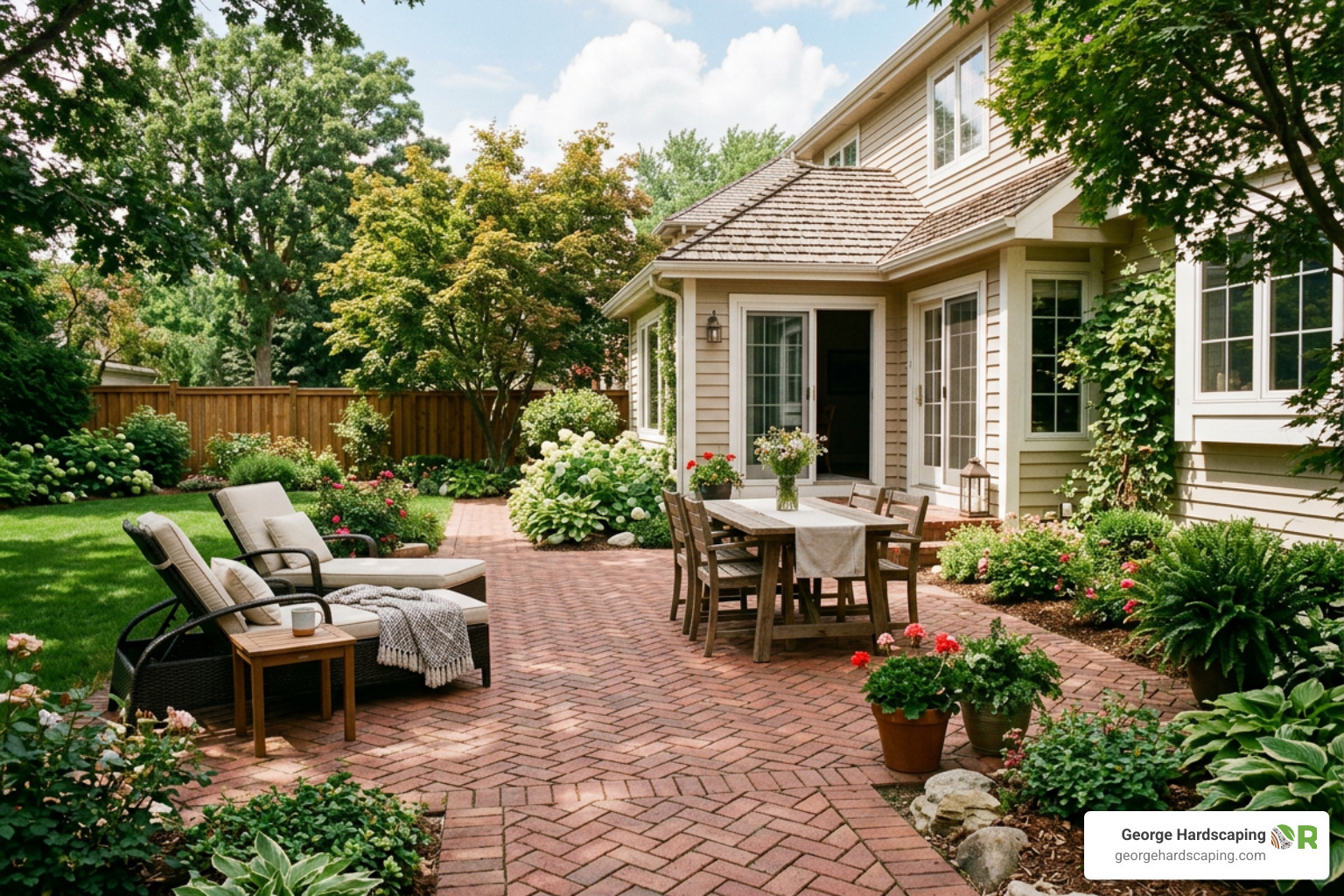
Whether you are designing a cozy retreat in Ipswich, MA, or a grand entertainment space, choosing the right laying pattern is a crucial design step.
Designing a Herringbone Brick Paver Patio
The herringbone pattern is created by laying rectangular bricks at 45-degree or 90-degree angles to one another, forming a continuous “V” shape.
- Interlocking Strength: This is structurally the strongest laying pattern. Because the bricks interlock on multiple planes, they distribute weight incredibly evenly. This prevents the pavers from shifting or sliding under heavy foot traffic, heavy patio furniture, or even vehicular traffic if used on a driveway.
- Aesthetic Appeal: It offers a dynamic, high-end look that draws the eye across the space, making smaller yards feel larger and adding a sense of movement to the design.
- Installation Notes: Herringbone requires a high degree of precision. It involves making numerous cuts along the outer borders of the patio, which increases material waste. For a flawless finish, homeowners typically rely on professional custom patio designs to handle the complex layout and cutting.
Basket Weave and Running Bond Brick Paver Patio Layouts
If you are looking for a more traditional or straightforward design, basket weave and running bond are excellent choices.
- Basket Weave: This classic pattern pairs bricks together horizontally and vertically in alternating blocks. It creates a warm, woven texture reminiscent of historic New England courtyards. One of the biggest benefits of basket weave is that it requires very few, if any, cuts along straight borders, saving time and materials during the installation process.
- Running Bond: In this pattern, bricks are laid end-to-end in parallel rows, with the joints offset by half a brick in each consecutive row (similar to a standard brick wall). It offers clean, linear lines that can make a patio feel longer or wider depending on the orientation. It is also highly effective for curved pathways.
For more design inspiration and detailed pattern layouts, you can read This Old House brick patio layout tips.
Professional Installation vs. High-Level DIY Considerations
Many homeowners look at a brick paver patio and think, “I can handle that over a weekend!” While a small, simple landing pad might be manageable for an advanced DIYer, building a full-sized patio that remains flat, stable, and drains properly in Massachusetts is a massive undertaking.
Here is a high-level look at what a proper installation requires:
- Excavation and Grading: You must excavate roughly 8 to 10 inches deep, depending on soil conditions. To prevent water from pooling against your home’s foundation, the soil must be graded to slope away from the house at a rate of 1/4 inch per foot. Improper grading can lead to basement flooding and foundation damage.
- Base Preparation: This is the most critical step. You must spread 3/4-inch crushed gravel in 2-inch “lifts,” compacting each layer with a heavy-duty mechanical plate compactor to create a solid 4-to-6-inch base. Skimping on this base is the #1 reason DIY patios fail, leading to uneven settling and shifting within a single winter.
- The Sand Bed: A 1-inch layer of coarse concrete sand is screeded perfectly flat over the compacted gravel base. This sand acts as the final leveling medium and must not be walked on or compacted before laying the pavers.
- Laying and Edging: Pavers are laid tightly together in the chosen pattern, followed by the installation of professional-grade edge restraints. These restraints are secured with heavy steel spikes to keep the bricks from spreading outward over time.
- Joint Sand: Polymeric sand is swept into the joints, compacted with a plate compactor to settle the sand deep into the cracks, and lightly misted with water to activate the binding polymers.
If you are planning a project in Woburn, MA, or Burlington, MA, you must also consider local zoning bylaws, property setbacks, and utility lines. Always call 811 before digging to have underground utilities marked.
While some intermediate DIYers attempt this using guides like the Family Handyman stone and brick patio tutorial, the physical labor and precision required lead most homeowners to hire professional paver patio contractors to guarantee a flawless, long-lasting result.
Long-Term Maintenance and Care for Paver Patios
One of the greatest benefits of a brick paver patio is how simple it is to maintain, especially when compared to wood decks that require constant staining, sealing, and board replacements. However, simple doesn’t mean zero maintenance. To keep your patio looking pristine through the harsh Massachusetts freeze-thaw cycles, follow these best practices:
- Regular Cleaning: Sweep your patio weekly to remove leaves, dirt, and organic debris that can stain the pavers or encourage weed growth. For deep cleans, use a mild dish soap solution and a stiff-bristled broom to scrub away stubborn grime.
- Polymeric Sand Maintenance: Polymeric sand is your best defense against weeds and ants. Over several years, this sand can slowly erode due to heavy rain and pressure washing. Inspect your joints annually and top them off with fresh polymeric sand as needed, misting it to lock it in place.
- Sealing: Applying a high-quality, breathable masonry sealer every 2 to 3 years protects clay and concrete from oil spills, UV fading, and water penetration. Sealing also enhances the natural colors of the brick, giving it a rich, clean look.
- Winter Care: When clearing snow off your patio in Gloucester, MA, or Salem, MA, never use a metal shovel, which can scratch and chip the brick surfaces. Stick to plastic shovels. Additionally, avoid using rock salt (sodium chloride), which can chemically damage concrete pavers and degrade mortar. Instead, use calcium chloride or simple sand for traction.
For comprehensive care and professional upkeep, regular patio and walkway installation and maintenance services can keep your outdoor investments looking brand new.
Frequently Asked Questions about Patio Materials
What is the average cost of a brick paver patio in Massachusetts?
Patio installation costs can vary widely depending on site prep, accessibility, and material choices. Based on general online data and industry averages, professional patio installations in Massachusetts typically range from $40 per square foot on the lower end (for basic concrete pavers) to upwards of $125 or more per square foot for premium clay brick or custom natural stone designs.
Please note: these are average costs sourced from publicly available internet data and do not represent the actual pricing of George Hardscaping. Every project is unique and requires an on-site evaluation.
Do I need a permit to install a paver patio in Essex County?
In most North Shore towns like Ipswich, MA, and Beverly, MA, a standard ground-level paver patio does not require a structural building permit. However, you must always verify local zoning bylaws. Many towns have strict limits on “impervious surface coverage” (the percentage of your property that cannot absorb rainwater). If your proposed patio is very large or close to property lines, wetlands, or conservation zones, you may need approval from the local building department or Conservation Commission.
How long do clay brick pavers last compared to concrete?
Clay brick pavers are significantly more durable than concrete. Clay pavers can easily last 100 to 150 years because they are fired at high temperatures, making them highly resistant to wear and completely immune to fading. Concrete pavers, while strong, have an average lifespan of 30 to 50 years. In a freeze-thaw climate like Woburn, MA, concrete pavers can eventually show surface wear and aggregate exposure due to winter salt use and weathering, whereas high-quality clay bricks hold up exceptionally well.
Can I lay brick pavers over an existing concrete patio?
Yes, it is possible to lay brick pavers over an existing concrete slab, but it requires careful planning. The concrete base must be in stable condition without major cracks or settling. A thin layer of sand or specialized adhesive is used, and proper drainage must be established so water does not pool between the concrete and the pavers. Additionally, you must consider how the added height will affect door thresholds and steps.
Conclusion
A beautifully crafted brick paver patio is more than just a place to set up a grill—it’s an extension of your home, a boost to your property value, and a gathering space for family and friends. Investing in high-quality materials and professional installation ensures that your outdoor living area remains a source of pride and enjoyment for decades to come.
At George Hardscaping, we bring professional craftsmanship and deep local expertise to every outdoor project we build across the North Shore, from Gloucester, MA, to Peabody, MA. We handle every step of the process, from precise excavation and drainage design to the final layout of your chosen pavers, ensuring your patio remains flat, beautiful, and durable for decades to come.
Ready to transform your backyard into an outdoor oasis? Click below to request your free, personalized estimate.
Explore our local services:
