
Brick Patio Contractors: 10 Must-Ask Questions to Avoid Regret
Why Choosing the Right Brick Patio Contractor is Critical
If you’re looking for brick patio contractors, here’s what you need to know right away:
- Credentials to verify: Valid license, proper insurance, ICPI/NCMA certifications
- Average cost range: $1,200-$12,000 depending on size, materials, and complexity
- Timeline: Professional installation typically takes 3-7 days
- Key questions: Ask about base preparation, drainage plans, and warranties
- Red flags: Vague contracts, no references, significantly lower bids than competitors
A well-installed brick patio can last over 50 years, while a poor installation may need repairs within just a few seasons. The right contractor makes all the difference.
In Essex County and the North Shore, where freeze-thaw cycles put extra stress on masonry work, professional installation becomes even more critical.
“The right contractor can deliver a patio that lasts over 50 years, while the wrong choice leads to costly repairs within just a few seasons,” notes one industry expert.
Brick patio contractors terms to learn:
– hardscape design services
– hardscape maintenance service
– structural landscaping
Why This Guide Matters
A professionally installed brick patio doesn’t just improve your outdoor living space—it significantly boosts your home’s value. According to real estate experts, well-designed outdoor living spaces can recoup 60-80% of their cost when you sell your home.
Spotting a Pro: Credentials & Reputation
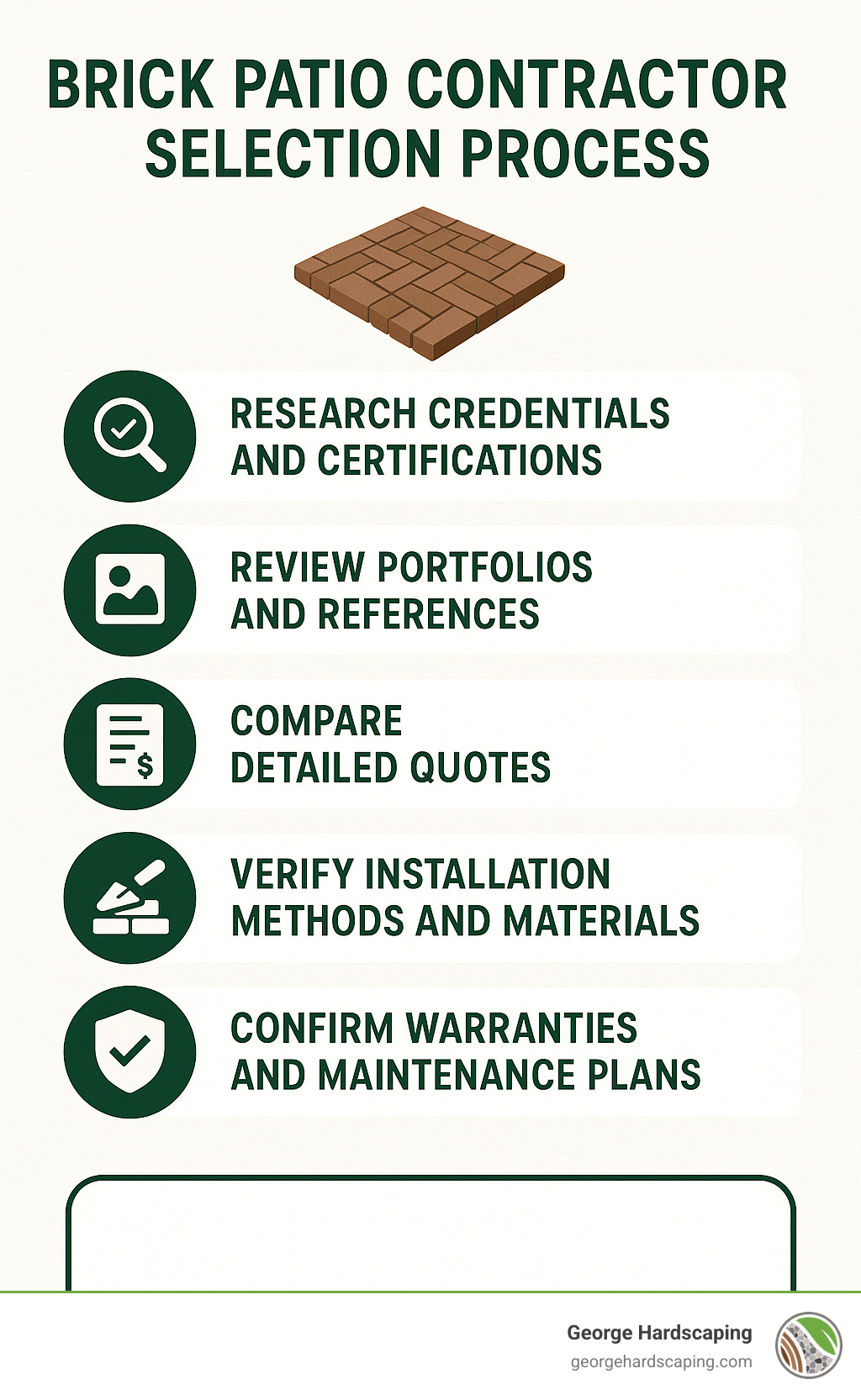
When searching for brick patio contractors, knowing how to separate the professionals from the pretenders makes all the difference in your project’s outcome.
Start by confirming proper licensing—any reputable contractor in Massachusetts should hold a valid Home Improvement Contractor (HIC) registration at minimum. Next, verify their insurance coverage—professionals carry substantial liability insurance (at least $1 million) and workers’ compensation.
Industry certifications speak volumes about a contractor’s commitment to quality. Contractors certified by the Interlocking Concrete Pavement Institute (ICPI) or National Concrete Masonry Association (NCMA) have invested in specialized training that translates to superior installation techniques.
“The difference between certified and non-certified installers becomes obvious after a few freeze-thaw cycles,” notes our lead installer at George Hardscaping.
Premium manufacturer partnerships also signal quality. When contractors partner with respected names like Unilock, Belgard, or Techo-Bloc, they must consistently meet stringent installation standards.
More info about Patio Contractors Near Me
Red Flags to Avoid
Beware of contractors who operate without written contracts. Professional brick patio contractors always provide detailed agreements specifying scope, materials, timeline, and payment terms.
Be equally cautious of vague work descriptions. Quality contractors specify exactly what they’ll deliver—from excavation depth to base materials and drainage solutions.
When a contractor focuses solely on offering the lowest price, your alarm bells should ring. Quality installation requires proper materials and adequate preparation time, neither of which comes cheap.
Payment structure matters too. Be wary of anyone requesting full payment before breaking ground. The industry standard is a reasonable deposit (typically 25-33%) followed by progress payments as work advances.
Verifying Brick Patio Contractors
Thorough verification requires some legwork, but it’s worth every minute spent. Start by personally contacting previous clients. Ask specific questions: Did the contractor finish on time? How did they handle unexpected challenges? Would they hire this team again?
When possible, request to see installations that have weathered multiple seasons. New patios almost always look good—it’s the three-year-old installation that reveals true craftsmanship.
Workmanship warranties provide another quality indicator. Professional brick patio contractors typically offer 1-5 year guarantees on their work (separate from material warranties).
Budget Breakdown & Cost Influencers
When planning your brick patio project, understanding the costs involved helps you set realistic expectations. Most homeowners across the country spend around $3,274 for a professionally installed brick paver patio, with typical projects ranging from $1,200 to $4,600.
Here in Essex County and the North Shore, our unique climate demands more robust installations, and homeowners typically invest between $3,000 and $15,000 for comprehensive patio projects.
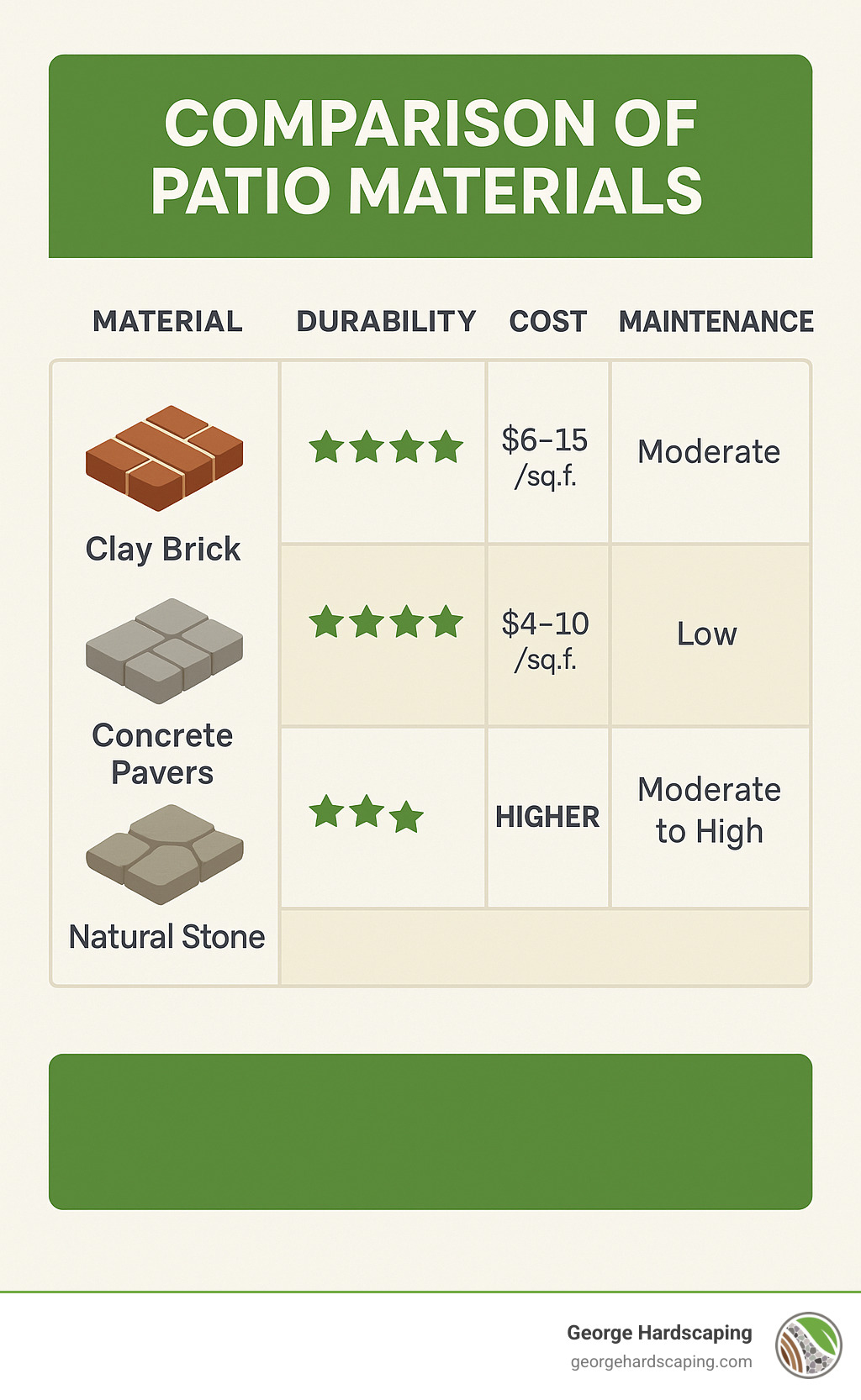
What drives these costs? Material selection plays a significant role. Clay bricks typically run between $0.50 and $15 per square foot, while concrete pavers range from $0.50 to $10. Natural stone costs about 20% more than manufactured pavers.
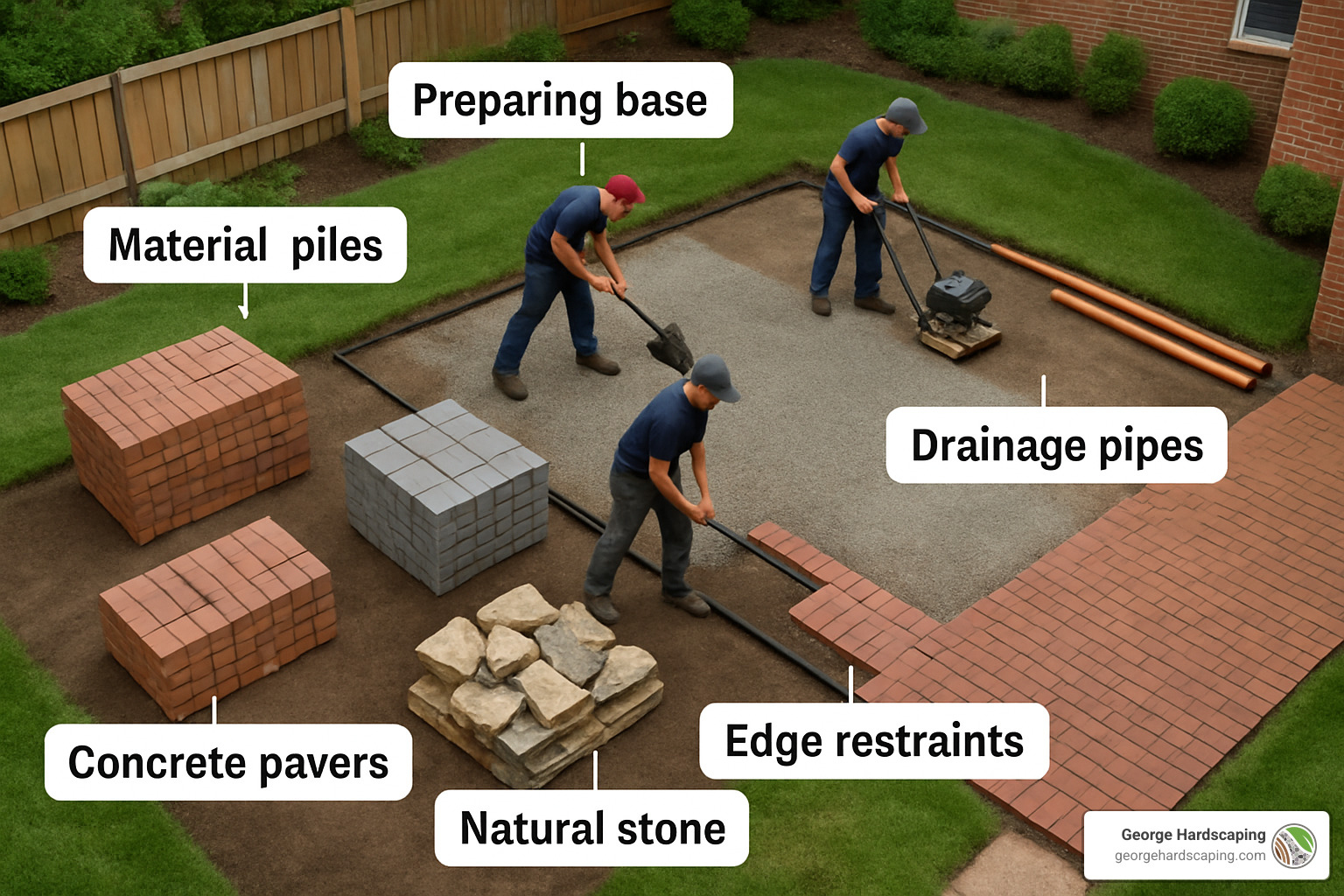
Professional labor typically accounts for 40-60% of your total investment. Proper site preparation is absolutely crucial for longevity. In our climate, brick patio contractors need to excavate 8-12 inches deep and install proper base materials.
The size and complexity of your design naturally affect pricing too. Intricate patterns, multiple levels, or curved edges require more materials and labor. Similarly, improvement features like built-in fire pits, seating walls, or integrated lighting will increase your investment.
Many Essex County towns require permits for hardscaping projects, adding $100-$500 to your budget. We always recommend setting aside an additional 10-15% as a contingency buffer.
Please note that these are average costs based on internet data and not actual costs for George Hardscaping. When budgeting for your project, always request a detailed quote for your specific needs.
Scientific research on patio durability
Getting Apples-to-Apples Quotes
When comparing estimates from different brick patio contractors, details matter. A truly professional quote should break down costs per square foot, separating materials from labor. Look for specifics about excavation depth, base material thickness, drainage provisions, and edge restraints.
Quality quotes will identify exact paver types, manufacturers, colors, and patterns, along with projected start and completion dates. Pay close attention to the payment schedule too; reputable contractors typically request reasonable installments tied to project milestones.
Be wary of estimates that seem suspiciously low. When one bid comes in significantly under others, it usually means corners are being cut.
More info about How Much Does a Paver Walkway Cost?
DIY vs. Hiring Brick Patio Contractors
The temptation to save money with a DIY patio installation is understandable, but consider what you’re really signing up for. Equipment rentals alone can cost $200-$600. What professionals complete in 3-7 days often stretches into multiple weekends for homeowners.
The knowledge gap presents an even bigger challenge. Proper base preparation and drainage require technical expertise that takes years to develop. When mistakes happen, they typically require complete reinstallation rather than simple fixes.
Perhaps most importantly, DIY projects come with zero workmanship warranty. If problems develop, you’re entirely on your own.
Materials Matter: Brick vs. Concrete Pavers vs. Natural Stone
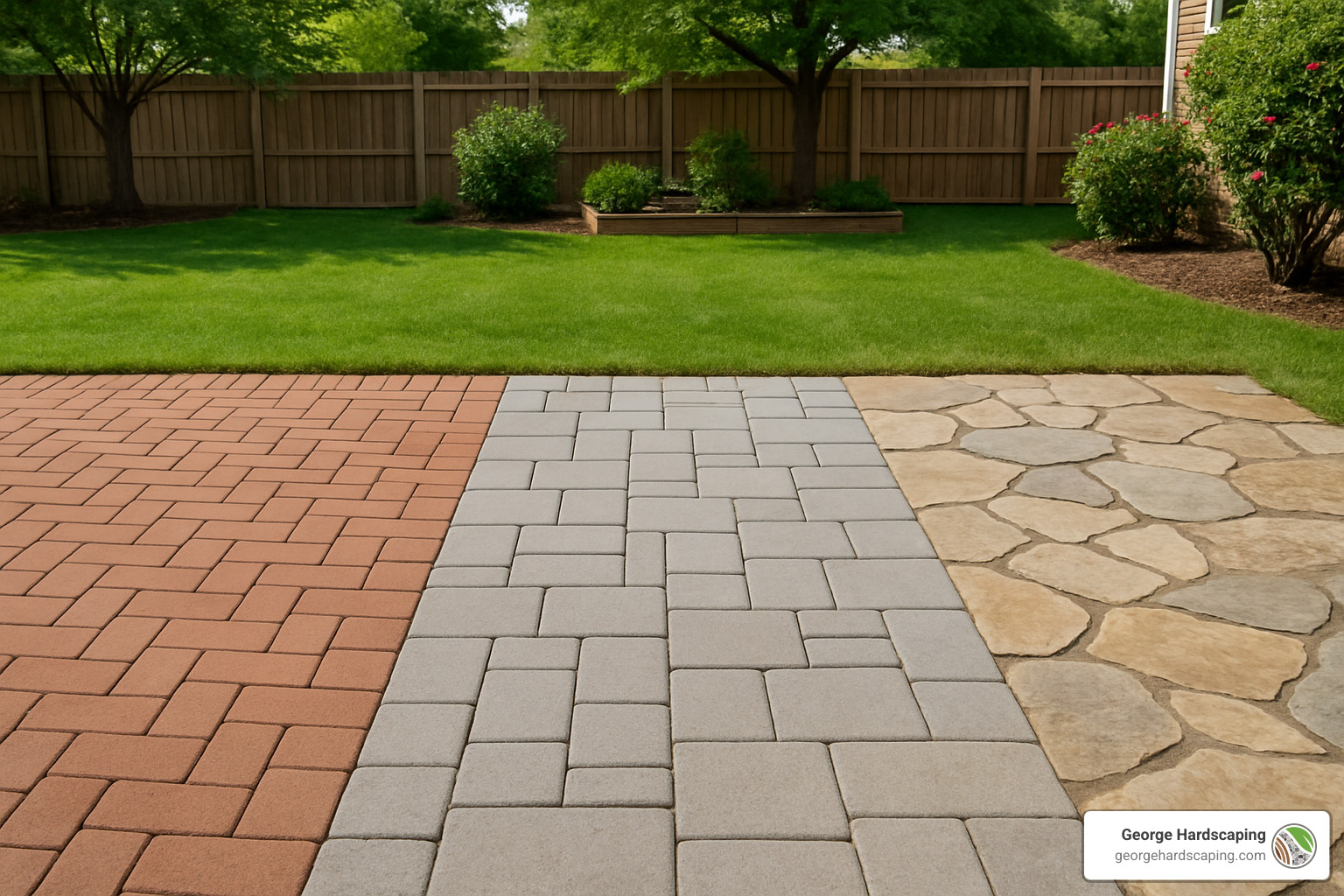
Choosing the right material for your patio isn’t just about looks—it’s about finding the perfect balance between beauty, durability, and budget.
Clay Brick Pavers bring timeless New England charm. Priced between $0.50-$15 per square foot, these natural beauties weather gracefully over time, developing a rich patina. With proper installation, they’ll easily last 50+ years. The only downsides? Limited color options and they need expert installation to prevent frost damage.
Concrete Pavers offer incredible versatility at a budget-friendly price point of $0.50-$10 per square foot. If you’re dreaming of specific colors or intricate patterns, concrete pavers might be your best friend. They’re manufactured to precise dimensions, making installation more straightforward for complex designs. Colors can fade somewhat over time, especially in sunny summer months.
Natural Stone creates that jaw-dropping, luxury look that’s impossible to replicate. It typically costs about 20% more than manufactured pavers, but for many homeowners, that unique character is worth every penny. The irregular sizing does make installation more complex (and thus more expensive), but the results speak for themselves.
Sustainability & Local Climate
Living in New England means we need to think carefully about how our patios will handle those brutal freeze-thaw cycles.
Frost resistance is non-negotiable in our climate. We typically recommend clay brick or concrete pavers installed over a properly prepared base—that deep foundation is your patio’s best defense against frost heave.
Permeable paving has become increasingly popular in many Essex County communities. These systems allow water to filter through rather than run off, reducing puddles on your patio and easing the burden on local stormwater systems.
For homeowners with historic properties, we often source reclaimed brick that offers authentic period character while being environmentally responsible.
Choosing the Right Look
The pattern you select for your patio is like choosing the perfect fabric for a custom suit—it completely transforms the final look.
Running bond creates that traditional, clean look with each brick offset by half its length. It’s simple, neat, and never goes out of style.
Herringbone patterns add dynamic visual interest with bricks laid at 45° or 90° angles. Beyond looking fantastic, this pattern creates excellent structural integrity because the bricks interlock so well.
Basketweave designs feature pairs of bricks laid perpendicular to each other, creating a woven appearance that suits traditional homes beautifully.
A soldier course border (where bricks stand on end around the perimeter) frames your patio like perfect molding frames a beautiful painting.
10 Must-Ask Questions for Brick Patio Contractors
When you’re investing thousands in your outdoor space, asking the right questions can mean the difference between decades of enjoyment and years of headaches.
Before signing any contract, sit down with your potential contractor and work through these essential questions:
- “How many years have you been installing brick patios specifically?”
- “Can you provide references from similar projects in my area?”
- “Are you properly licensed and insured for this type of work?”
- “What professional certifications do you and your crew hold?”
- “How will you prepare the base for my brick patio?”
- “What drainage plan do you recommend for my property?”
- “What warranties do you offer on materials and workmanship?”
- “What is your process if settling or other issues develop?”
- “How will you protect my existing landscape during installation?”
- “What is your typical payment schedule?”
At George Hardscaping, we welcome these questions with open arms. We believe informed homeowners make the best partners in creating outdoor spaces that truly last.
More info about Patio Design & Installation
Question #1: “How will you prepare the base for my brick patio?”
This seemingly simple question is actually the most revealing one you can ask. The foundation beneath your patio is like the foundation beneath your house—invisible but absolutely critical.
In Essex County’s challenging freeze-thaw climate, proper base preparation is non-negotiable. Listen for these key elements in their answer:
Excavation depth should be 8-12 inches deep depending on your soil conditions. Anything less is a red flag. Geotextile fabric should be mentioned as the first layer to prevent your base materials from mixing with the soil below.
A quality contractor will describe using crushed stone base at least 4-6 inches thick, properly compacted in layers using a plate compactor. They should finish with a precise 1-inch bedding layer of concrete sand or stone dust.
Question #2: “What workmanship warranty do you provide?”
A contractor confident in their work will back it with a solid warranty. Professional brick patio contractors should offer a written warranty ranging from 1-5 years on their workmanship, separate from any manufacturer warranties on materials.
Ask them to clearly explain what’s covered and what isn’t. Will they fix settling? Edge restraint failures? Joint sand issues? Also inquire whether the warranty can transfer to new owners if you sell your home.
Question #3: “Are you specialized brick patio contractors or general landscapers?”
This distinction matters more than you might think. Many landscaping companies offer patio installation as a side service, but there’s a world of difference between someone who installs a few patios each year and a specialist who focuses on hardscaping daily.
Specialized brick patio contractors bring focused expertise that comes from repetition and continuous improvement. They invest in professional-grade equipment specifically designed for paver installation rather than making do with general landscaping tools.
Installation Timeline & Process Demystified
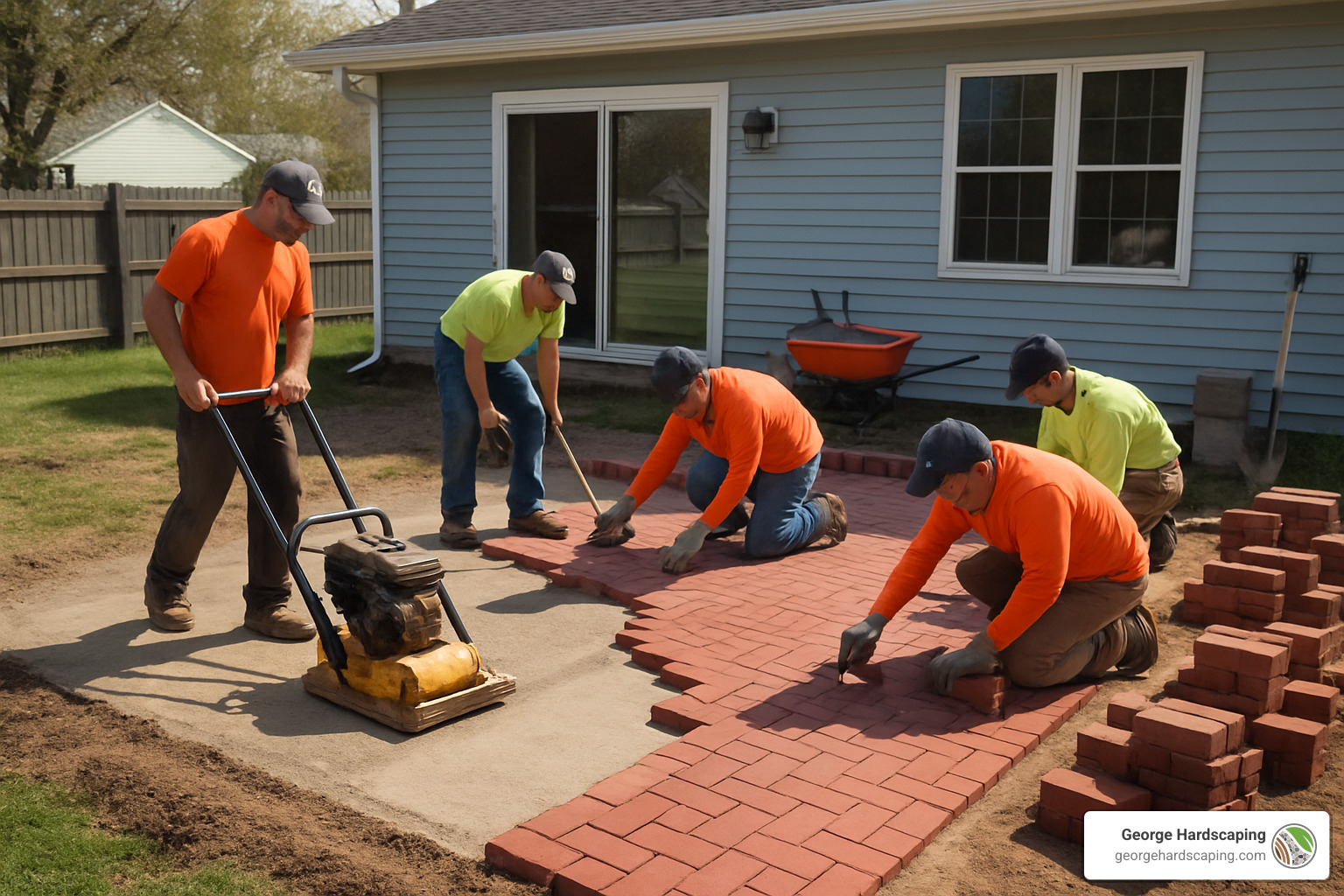
Wondering what actually happens when brick patio contractors transform your yard? Let’s pull back the curtain on the installation process.
Most homeowners are surprised to learn that the actual brick-laying is just one small part of a proper installation. The magic really happens in the preparation stages.
A typical brick patio installation follows a carefully orchestrated sequence that usually spans 3-7 working days, though this can vary based on your project’s size and complexity, weather conditions, and material availability.
The journey begins with a thorough site survey and design phase (1-2 days), where we measure your space, test soil conditions, and finalize design details. Once you’ve approved the design, we order materials, which typically takes 1-2 weeks to arrive.
When installation day arrives, we start with excavation – digging down 8-12 inches to create a clean slate. This critical first step usually takes a full day.
The next 1-2 days focus on base installation, where we lay geotextile fabric and add crushed stone in carefully compacted layers – a step that separates professional brick patio contractors from amateurs.
After the base comes the screed sand layer, providing that perfectly level bed for your pavers. Then the most visible change occurs as we begin laying the pavers in your chosen pattern, a process that typically takes 1-3 days depending on complexity.
We follow this with edge restraint installation, joint sand application, and a final compaction to set everything firmly in place.
“The part most homeowners don’t see – the base preparation – is actually 80% of what makes a patio last for decades,” explains our lead installer.
Brick Patio Contractors & Project Management
Behind every beautiful patio is a lot of invisible project management. Professional brick patio contractors handle numerous logistics that you’ll never have to worry about.
We take care of all permit acquisition, navigating Essex County’s various building departments and securing necessary approvals before breaking ground. We coordinate all material deliveries, ensuring the right quantities arrive at the right times.
Our crew management ensures that appropriately sized teams with the right expertise are assigned to each phase of your project. Throughout the installation, we maintain rigorous quality control with ongoing inspections at every stage.
Perhaps most importantly, we believe in transparent communication. At George Hardscaping, we provide regular updates on your project’s progress and address any challenges immediately.
Signs of Quality Craftsmanship
As your patio takes shape, there are several telltale signs that separate professional work from mediocre installations.
A properly installed patio will have a consistently level surface with just enough slope for drainage (typically about ¼ inch per foot away from your home). You’ll notice tight, uniform joints between pavers – no wide, irregular gaps or misalignments.
Look for clean, precise cuts around edges and obstacles. This detail work often separates great brick patio contractors from merely good ones. Professional cuts look almost seamless, with no jagged edges or obvious filler pieces.
The patio’s perimeter should have secure edge restraints that prevent spreading and shifting over time. Where your new patio meets existing structures, you should see smooth transitions without awkward gaps or height differences.
Design, Upgrades & Long-Term Care
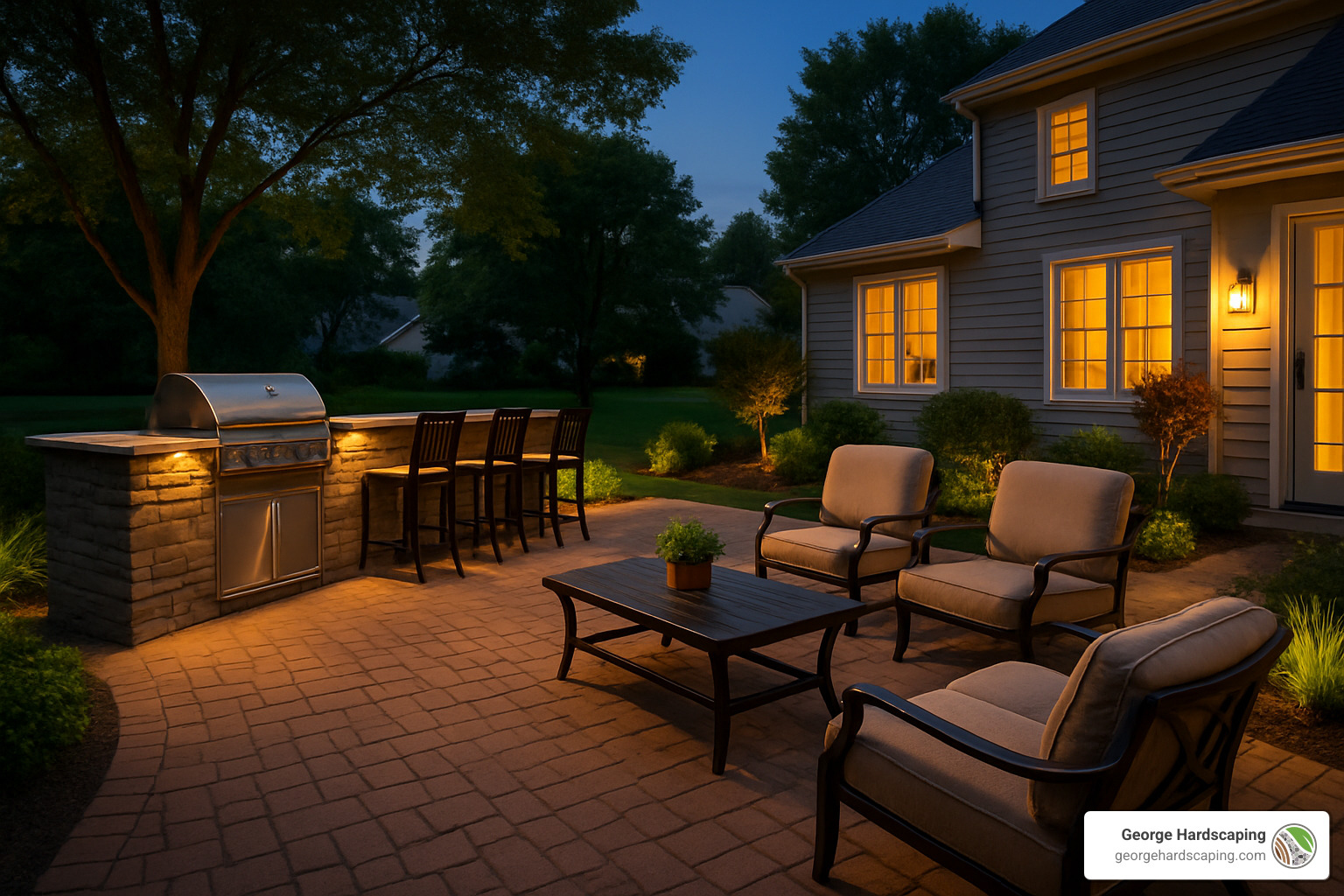
Your brick patio doesn’t have to be just a flat surface for furniture. With thoughtful design and strategic upgrades, it can transform into an outdoor oasis.
Fire features create natural gathering spots and extend your patio season well into the cooler months. Whether you choose a simple fire pit or a neat brick fireplace, these additions provide both warmth and ambiance.
Built-in seating walls offer a clever two-for-one solution – they define the edges of your space while providing permanent, maintenance-free seating that never blows away in coastal winds.
Thinking ahead pays dividends with lighting conduits. By installing empty conduit beneath your patio during construction, you’ll have pathways for future lighting without ever needing to disturb your beautiful brick surface.
For those who dread winter shoveling, snow-melt systems installed beneath your paving offer the ultimate luxury. These systems eliminate the need for salt (which can damage brick) and keep your outdoor space accessible year-round.
The ultimate patio upgrade might be a complete outdoor kitchen. From simple grilling stations to comprehensive cooking areas with refrigeration and sinks, these additions make outdoor entertaining seamless.
Maintenance Checklist
Even the best-installed brick patio requires some care to maintain its beauty for decades. Fortunately, the maintenance is straightforward and minimal compared to wooden decks or lawn areas.
Regular sweeping prevents debris accumulation that can lead to staining and organic buildup. A quick weekly sweep takes just minutes but makes a significant difference in your patio’s appearance.
Polymeric sand between your pavers may need refreshing every 2-3 years. This specialized sand hardens when wet and helps prevent weed growth while keeping pavers firmly in place.
Address minor settling promptly if you notice any low spots developing. Small areas can often be lifted and releveled without disturbing the entire patio.
Sealing your brick patio every 3-5 years improves color vibrancy and provides protection against stains. The right sealer also makes cleaning easier and can help prevent frost damage in our harsh New England winters.
During winter, avoid using rock salt, which can damage brick surfaces. Instead, opt for calcium chloride ice melt products specifically designed for use on pavers and brick.
Boosting Value & Curb Appeal
A well-designed brick patio delivers benefits far beyond just having a place to put your grill and patio furniture.
Creating outdoor rooms effectively expands your home’s living space without the cost of a traditional addition. Many of our clients report that their patio becomes their most-used “room” during the warmer months.
From a financial perspective, outdoor living spaces offer excellent return on investment. Real estate professionals consistently report that well-designed patios and outdoor living areas can recoup 60-80% of their cost at resale.
The curb appeal factor cannot be overstated. A beautifully crafted brick patio creates an immediate positive impression that lifts your entire property’s appearance.
More info about Hardscaping Services
Frequently Asked Questions about Brick Patio Contractors
How much does a brick patio really cost?
When homeowners ask about costs, I always emphasize that every project is unique. Nationally, most people spend between $1,200 and $4,600 on their brick patios, with the average around $3,274. Here in Essex County, our climate demands more substantial base preparation, so typical projects range from $3,000 to $15,000 depending on several factors.
Your final price tag will largely depend on:
Size matters – The average patio is about 288 square feet, but yours might be cozier or more expansive.
Material choices – Clay brick offers timeless charm, concrete pavers provide endless design options, and natural stone delivers elegance—each with its own price point.
Your property’s personality – Sloped yards, clay soils, or limited access can all require additional work.
Design complexity – Simple patterns cost less than intricate designs with borders, multiple levels, or custom inlays.
Please note that these are average costs based on internet data and not actual costs for George Hardscaping.
How long will installation take from contract to cocktails?
From the moment you sign your contract to hosting your first gathering, here’s the timeline you can expect:
Planning phase: 1-3 weeks for finalizing your design, selecting materials, and getting everything ordered.
Installation phase: The actual construction typically takes 3-7 days of good weather.
Setting period: We recommend waiting 24-48 hours after completion before placing furniture or hosting guests.
All told, most projects go from paper to patio in about 3-5 weeks. During our busy season (spring and summer), wait times might be longer.
What mistakes should I avoid when choosing brick patio contractors?
After years in this business, I’ve seen homeowners make several common mistakes when selecting brick patio contractors:
Chasing the lowest bid often leads to disappointment. Quality contractors invest in proper materials, skilled labor, and thorough preparation—all of which cost money.
Skipping the reference check is like buying a car without a test drive. Always speak with previous clients and, if possible, visit completed projects.
Accepting vague proposals creates misunderstandings. Your contract should clearly specify materials, excavation depth, base preparation methods, drainage plans, and warranty terms.
Overlooking drainage considerations is a recipe for future problems. Water is the enemy of hardscaping, and proper planning for where rain and snowmelt will go is essential.
Rushing your decision due to excitement or pressure rarely ends well. Take time to meet with multiple qualified contractors and compare their approaches.
Conclusion
After reading this guide, you now understand why choosing the right brick patio contractors isn’t just about finding someone with a truck and some tools. It’s about selecting professionals who will create an outdoor space that becomes part of your family’s story for decades to come.
At George Hardscaping, we don’t just install patios—we create outdoor sanctuaries that Essex County homeowners can enjoy through all of New England’s seasons. From the initial consultation to the final inspection, our team approaches each project with the same care and attention to detail we would give our own homes.
Your brick patio should be more than just attractive—it should be built on a foundation of quality that stands up to our harsh winters and hot summers. With proper installation techniques and premium materials, your patio will continue to look beautiful and function perfectly long after the installation crew has packed up their tools.
The true value of professional installation becomes evident over time. While DIY projects might save money initially, professionally installed patios deliver greater longevity, fewer maintenance headaches, and ultimately better value.
When you’re ready to transform your backyard into the outdoor living space you’ve always wanted, we’re here to help. Our team combines traditional craftsmanship with modern techniques to create patios that improve both your lifestyle and your property value. We understand the unique challenges of building in New England’s climate and have developed installation methods specifically suited to our region’s conditions.
Take the next step toward your dream outdoor space by reaching out for a consultation. We’ll listen carefully to your vision, provide honest guidance about options and costs, and develop a plan that brings your ideas to life beautifully and durably.
Your perfect patio awaits—let’s build it together.
More info about Hardscaping Services
