
Concrete Retaining Wall: 50+ Yr Durable Solution
Why Concrete Retaining Walls Are Essential for Sloped Properties
A concrete retaining wall is a structural barrier meticulously engineered to hold back soil, transforming sloped, uneven, or unstable terrain into level, functional, and beautiful space. If your property is defined by a challenging slope, persistent soil erosion, or outdoor areas you can’t safely use, a concrete retaining wall offers a powerful and permanent solution. It’s a fusion of robust structural support and significant aesthetic improvement, turning landscape liabilities into valuable assets.
What a Concrete Retaining Wall Truly Accomplishes:
- Holds Back Soil and Prevents Erosion: A wall acts as a dam against the immense lateral pressure of earth. It stops the slow, relentless creep of soil downhill, preventing dangerous landslides and controlling erosion that can wash away valuable topsoil, undermine foundations, and create unsightly gullies in your yard.
- Creates Flat, Usable Living Areas: This is where the magic happens. A steep, difficult-to-mow slope can be converted into a series of terraced garden beds, a perfectly level patio for outdoor dining, a safe play area for children, or a cozy fire pit gathering spot. It reclaims unusable land and integrates it into your lifestyle.
- Manages Water and Protects Your Property: Water is the biggest enemy of any landscape structure. A properly designed wall incorporates a sophisticated drainage system to manage hydrostatic pressure—the force of water-saturated soil. This prevents the wall from bowing or failing and protects your home’s foundation from water damage.
- Adds Significant, Measurable Property Value: By solving structural problems, improving safety, and adding functional square footage to your outdoor living space, a well-built retaining wall boosts curb appeal and makes your property more attractive to potential buyers. It’s an investment that pays dividends in both enjoyment and equity.
- Offers Unmatched Longevity: With a typical lifespan of 50 to 100 years or more when properly installed and maintained, concrete is a generational solution. It withstands the elements without rotting, warping, or succumbing to pests.
Common Types of Concrete Retaining Walls:
- Gravity Walls: Rely on their immense weight and mass to resist soil pressure.
- Cantilever Walls: Use an L-shaped or T-shaped footing and steel reinforcement for leverage and strength.
- Segmental Block Walls (SRWs): Employ interlocking modular concrete units for versatility and efficiency.
- Poured Concrete Walls: Are solid, custom-formed structures offering maximum strength and a modern aesthetic.
Homeowners in Essex County and across the North Shore contend with the unique challenges of New England’s rocky soil, dramatic freeze-thaw cycles, and heavy precipitation. A professionally designed concrete retaining wall doesn’t just stop erosion—it unlocks the full potential of your property, creating valuable outdoor living space where steep slopes once rendered your yard unusable.
The cost of a concrete retaining wall typically ranges from $20 to $50 per square foot, according to broad internet averages. However, these figures are highly variable. The final cost depends heavily on factors like wall height, soil conditions, site accessibility, drainage requirements, and material choices. Note: These are average costs based on internet data and not actual costs for George Hardscaping.
Whether you dream of building a terraced garden oasis, installing a level patio for entertaining, or simply securing a hillside to protect your home, understanding your options is the crucial first step. This comprehensive guide covers everything you need to know about choosing, planning, and installing a concrete retaining wall that will serve your property for decades to come.
Why Choose a Concrete Retaining Wall? Functions and Benefits
Imagine a beautifully landscaped hillside, its slope gracefully managed by elegant terraced gardens, or a perfectly flat, inviting patio carved into a once-unusable incline. These transformative landscape features are almost always made possible by a well-built concrete retaining wall. These structures are the unsung heroes of landscape architecture, working tirelessly behind the scenes to make challenging terrain both safe and spectacular.
Primary Functions: More Than Just a Wall
A retaining wall’s main purpose is to manage elevation changes, but it accomplishes this through several critical, interconnected functions that protect, enhance, and redefine your property.
- Soil Retention and Erosion Control: Gravity is a constant force, relentlessly pulling soil, rocks, and landscaping downhill. A concrete retaining wall acts as a formidable barrier, holding back tons of earth to prevent gradual soil creep and catastrophic slides. This is especially critical in Essex County, where our region’s rocky soil can become highly unstable after heavy rains or during the destructive freeze-thaw cycles of a New England winter. By locking the soil in place, the wall also prevents stormwater from carving away valuable topsoil and creating deep gullies—a common form of erosion damage on the North Shore that can undermine plant health and even threaten structures.
- Slope Management and Creating Usable Land: This is the most rewarding function of a retaining wall. Instead of a steep, dangerous, and useless hillside, a retaining wall system allows you to completely reimagine the space. By cutting into the slope and holding back the earth, you can create a series of level terraces for planting or a single, expansive flat area. This is the payoff that makes the investment worthwhile. That wasted slope can become home to vibrant terraced gardens, a spacious level patio for outdoor furniture and grilling, a safe play structure for kids, or an elegant outdoor kitchen. Retaining walls transform neglected space into functional, high-value outdoor rooms where you can fully enjoy your property.
Key Benefits: A Long-Term Investment
Beyond solving the immediate problems of slope and erosion, concrete retaining walls deliver a host of lasting advantages that make them one of the wisest investments you can make in your property’s infrastructure and appeal.
- Exceptional Durability and Longevity: Concrete’s compressive strength is legendary, allowing it to withstand the enormous, unceasing pressure exerted by soil and water without failing. This inherent toughness means a properly installed concrete retaining wall has a projected lifespan of 50 to 100 years, and often much more. Unlike timber walls that rot and attract insects or railroad ties that degrade and leach chemicals, a concrete wall is a permanent solution you can trust to perform for generations. For a deeper look at how these structures enhance outdoor living, see our guide on landscape retaining walls.
- Minimal Maintenance Requirements: In a world where many home features require constant upkeep, concrete walls are a welcome exception. Unlike wood that needs frequent staining, sealing, and eventual replacement, or some types of mortared stone that may require repointing, concrete walls are incredibly low-maintenance. An occasional cleaning with a pressure washer to remove dirt and mildew, and an annual check to ensure drainage outlets are clear of debris, is typically all that’s needed. No annual treatments, no worries about rot, and no constant upkeep.
- Outstanding Design Versatility: The word “concrete” might conjure images of plain, gray slabs, but modern concrete retaining walls are anything but monolithic. Concrete can be poured and formed for a sleek, smooth, modern look, or it can be built with modular blocks that offer a staggering variety of textures, colors, and patterns. Finishes can mimic the appearance of natural quarried stone, weathered cobblestone, or classic brick. Whether your home’s architecture is contemporary, colonial, or traditional, there is a concrete solution to match your aesthetic perfectly. You can explore a wide range of retaining wall block options to see the incredible possibilities.
- Increased Property Value and Curb Appeal: A well-engineered retaining wall is a major selling point. It solves real problems that concern potential buyers, such as erosion, drainage issues, and unusable yard space. It adds functional, desirable outdoor living area, significantly boosts curb appeal, and serves as a clear indicator that the property has been professionally maintained and upgraded. These structures add real, measurable value to your home, making it a sound financial investment as well as a lifestyle improvement.
Types of Concrete Retaining Walls and Systems
When you’re ready to conquer a sloped yard, understanding the different options for a concrete retaining wall is crucial. Not all walls are created equal; they differ significantly in their structural design, material format, and final appearance. Choosing the right system depends on your site’s specific needs, your budget, and your aesthetic goals. Let’s break down the main types to help you make an informed decision.
Structural Designs: How They Hold Back the Earth
The engineering behind a retaining wall dictates how it resists the immense, constant pressure of the soil it holds back. This is the most critical aspect of the wall’s design.
- Gravity Walls: This is the oldest and most straightforward design. A gravity wall relies on its sheer mass and weight to resist the lateral force of the soil. Typically built from large, heavy concrete blocks, poured concrete, or even stone, their substantial weight and a wide base are what counteract the pressure. The general principle is that the wall must be heavy enough that the soil cannot push it over or slide it forward. While simple in concept, they require a large footprint and a significant amount of material, making them best suited for shorter walls. The National Concrete Masonry Association provides excellent technical details on gravity walls. For more on their practical application, learn about gravity retaining wall construction.
- Cantilever Walls: This more sophisticated design uses the principles of leverage to work smarter, not harder. A cantilever wall consists of a vertical stem and a footing that extends from the base, forming an L-shape or an inverted T-shape. The weight of the soil on the back of the footing (the “heel”) acts as a stabilizing force, helping to anchor the wall and prevent it from tipping. These walls are made from reinforced poured concrete, with steel rebar providing the necessary tensile strength to handle the bending forces. This design allows for a more slender wall profile compared to a gravity wall of the same height, making it highly efficient for walls of moderate height (up to 20-25 feet). We often use cantilever retaining wall construction for its superior strength-to-material ratio.
- Anchored Walls: For very tall walls, poor soil conditions, or tight spaces where a large footing isn’t feasible, anchored systems provide essential additional support. These walls are braced by anchors driven deep into the earth behind them. Common methods include “tiebacks”—cables or rods that are mechanically anchored into the soil or rock—or the use of geogrid. Geogrid is a strong, flexible synthetic mesh laid in horizontal layers within the backfill soil. This mesh reinforces the soil, effectively creating a larger, composite gravity structure and integrating the soil itself into the wall’s support system.
Material Formats: Poured Concrete vs. Concrete Blocks
Your next choice is the format of the concrete itself. This decision impacts the installation process, overall cost, and final appearance.
- Poured-in-Place Concrete: With this method, we build custom wooden or metal forms on-site and pour liquid concrete, often reinforced with steel rebar, into them. The concrete then cures to create a solid, seamless, and incredibly strong monolithic wall. This method offers maximum strength and can be formed into any shape, including complex curves, making it ideal for large, structurally critical walls or modern designs. However, it is labor-intensive, requires extensive formwork and longer curing times, and typically has a higher cost.
- Interlocking Concrete Blocks (SRWs): Segmental Retaining Walls (SRWs) are the most popular choice for residential and many commercial projects. These systems use high-density, pre-cast concrete units that are designed to stack and interlock, often with a built-in setback. They are faster and more cost-effective to install than poured concrete, often reducing installation time by up to 50%. Their modular nature allows for some flexibility to accommodate curves and corners. While they may seem DIY-friendly for very low, non-critical garden walls (under 4 feet), professional block retaining wall construction is essential for ensuring structural integrity, proper drainage, and long-term performance.
Aesthetic Choices for Your Concrete Retaining Wall
A concrete retaining wall doesn’t have to be a plain gray barrier. Modern manufacturing offers incredible versatility to complement any landscape design.
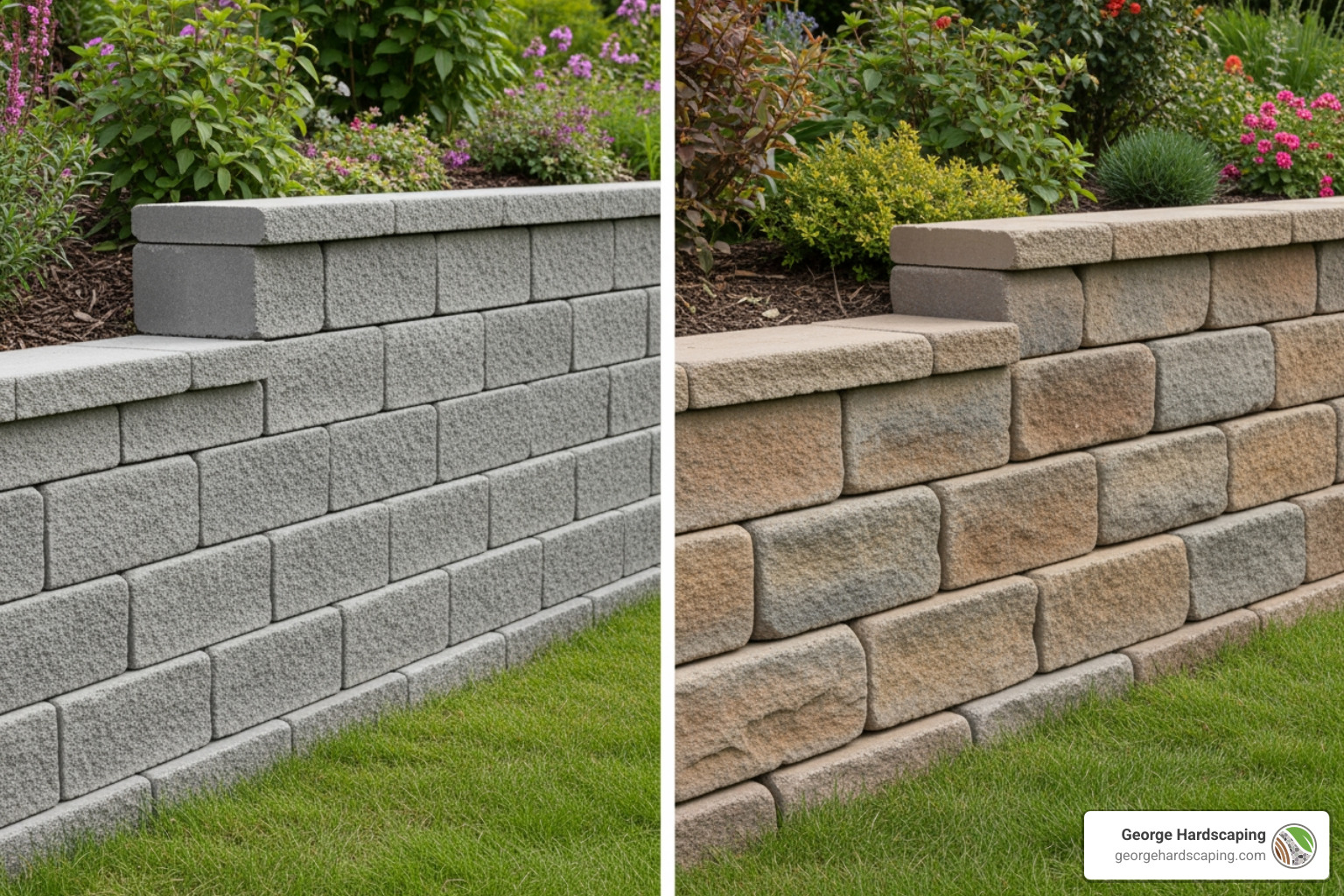
- Standard vs. Decorative Blocks: Standard blocks are utilitarian and cost-effective. Decorative blocks, however, are designed to mimic the look of more expensive materials like natural stone or classic brick at a fraction of the cost. A split-face texture offers a rough, quarried look that is very popular. A tumbled finish gives the blocks a weathered, softer, more rustic appearance. For poured concrete, stamped patterns can be used to replicate materials like flagstone or slate, and board-formed finishes can create a modern, wood-grain texture.
- Colors and Finishes: Concrete blocks are available in a wide spectrum of colors, from natural grays and tans to rich earth tones like browns and charcoals. Many manufacturers offer blended colors within each block or across a pallet, creating a more natural, variegated look that avoids a uniform, artificial appearance. The right color choice can seamlessly integrate the wall into your existing landscape and complement your home’s architectural style. To see the full range of possibilities, check out our detailed guide on retaining wall block options.
Planning Your Project: Key Factors for a Successful Retaining Wall
Building a concrete retaining wall is a significant construction project that demands meticulous planning and a deep understanding of the forces at play. A successful wall is one that is safe, functional, durable, and aesthetically pleasing. Before a single shovel breaks ground, we must carefully assess several key factors to ensure your project is engineered for success and stays within budget.
Assessing Your Site and Specific Needs
Every property in Essex County is unique, with its own soil composition, slope, and water flow. A thorough site assessment is the foundation of a successful project, as a one-size-fits-all approach is a recipe for failure.
- Wall Height and Surcharges: Height is the single most critical factor determining a wall’s design. The pressure exerted by soil increases exponentially with height. Walls under 4 feet can often be built with standard segmental block systems following manufacturer guidelines. However, any wall exceeding 4 feet in retained height (measured from the top of the footing to the top of the wall) almost always requires professional engineering, special permits, and more robust construction methods. We must also account for “surcharges”—any additional weight on the soil behind the wall, such as a driveway, patio, or even a steep slope rising above the wall. These surcharges add significant load and must be factored into the engineering.
- Soil Type and Slope Grade: The type of soil on your property dictates the wall’s design and drainage needs. A geotechnical assessment can identify the soil’s properties. Expansive clay soils, for example, swell when wet and shrink when dry, exerting immense, fluctuating pressure. Sandy or gravelly soils drain well but may have less cohesive strength. The grade of the slope also matters; a steeper slope exerts more lateral pressure on the wall, requiring a stronger design, a deeper embedment, or reinforcement like geogrid.
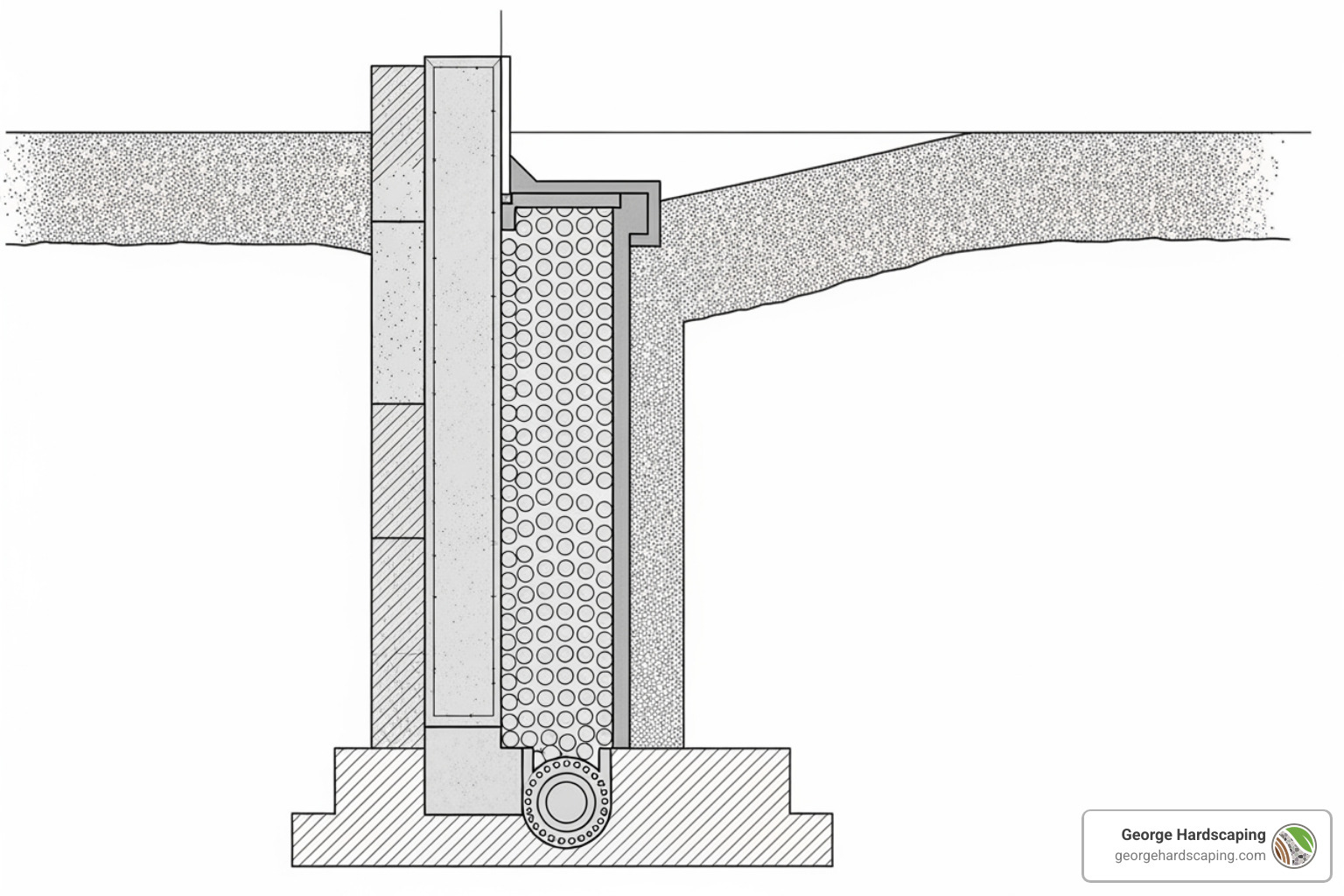
- Water Drainage: The Most Critical Factor: Water is the number one enemy of retaining walls. If not properly managed, water saturates the soil behind the wall, dramatically increasing its weight and creating immense hydrostatic pressure. This pressure is the leading cause of retaining wall failure, leading to bulging, cracking, or catastrophic collapse. A professionally designed retaining wall drainage system is non-negotiable. This system must include a perforated drain pipe at the base, a column of clean, crushed gravel backfill, and filter fabric to prevent clogging. For a technical overview of this force, the U.S. Department of Agriculture offers resources on understanding soil and water pressure.
- Retaining Wall vs. Freestanding Wall: It’s vital to distinguish between these two structures. A retaining wall is a structural element designed to hold back soil and bear a significant lateral load. A freestanding wall (or garden wall) is primarily decorative, used to define spaces, create raised planters on flat ground, or act as a seating wall. It is not built to withstand the immense pressure of retained earth.
Budgeting for Your Concrete Retaining Wall
Understanding the potential costs is crucial for planning. While online calculators often suggest a broad range of $20 to $50 per square foot, this is a generic estimate that can be misleading. Note: These are average costs based on internet data and not actual costs for George Hardscaping.
- Key Cost Factors: The final price is a composite of several variables. Material costs can vary widely, with decorative, multi-colored blocks being more expensive than standard gray units. Labor is often the largest component, influenced by site accessibility (can we get machinery in?), project complexity (curves vs. straight lines), and the amount of excavation required. Other costs include engineering fees for tall walls, municipal permit fees, and the cost of hauling away excavated soil.
To give you a clearer picture, here’s a hypothetical cost comparison for a 100-square-foot wall (e.g., 25′ long x 4′ high):
| Item | DIY (Small, Simple Wall) | Professional Installation (Engineered Wall) |
|---|---|---|
| Materials | $2,000 – $5,000 | $2,000 – $5,000 |
| Tools/Equipment | $300 – $600 (rental) | Included in labor |
| Labor | Your time (significant) | $3,000 – $9,000 |
| Permits/Engineering | $100 – $400 | $800 – $2,500+ |
| Total Estimated Cost | $2,400 – $6,000 | $5,900 – $16,500+ |
Note: These are average costs based on internet data and not actual costs for George Hardscaping. For a detailed breakdown, explore our guides on retaining wall construction cost and how much for a retaining wall installed.
DIY vs. Hiring a Professional
This decision should be based on the project’s scale, complexity, and the risks involved.
- When is DIY Suitable? A DIY approach should only be considered for very small, short (under 3 feet), non-structural decorative walls. Even then, it requires careful planning, the right tools (like a plate compactor and masonry saw), and a significant amount of strenuous physical labor. Mistakes in the base preparation or drainage can lead to premature failure, wasting your time and money.
- Why Hire a Professional? For any wall over 4 feet, on a complex slope, supporting a critical load (like a driveway), or in poor soil conditions, hiring a professional is essential for safety and longevity. A certified masonry contractor understands soil mechanics, proper drainage engineering, and local building codes. An expert ensures the job is done safely and correctly the first time, providing a warranty and preventing the catastrophic and costly failures that can result from improper construction. Safety is another major factor, as retaining wall construction involves heavy lifting, deep excavation, and the risk of trench collapse.
Feeling overwhelmed by the planning process? Let our experts simplify it for you. If you’re looking for a reliable partner to guide you, we invite you to find a professional retaining wall installer with our experienced team.
The Installation Process: A Step-by-Step Professional Overview
Building a durable and beautiful concrete retaining wall is a precise construction process where every step builds upon the last. There are no shortcuts to a successful outcome. From meticulous site preparation to placing the final capstone, a methodical, professional approach is what ensures a structure that will stand strong for generations. Here’s a detailed overview of how a professional installation unfolds.
1. Site Preparation and Excavation
Proper prep work is 90% of the battle. A flawless foundation is impossible without it. We begin by marking the layout of the wall with stakes and string lines, creating a precise visual guide for excavation. The next, and most critical, step is to call 811 (Dig Safe). This is a mandatory safety measure to have all underground utility lines (gas, electric, water, communications) located and marked by the respective companies. Striking a utility line is extremely dangerous, can cause widespread outages, and results in significant liability and repair costs.
Once the area is confirmed to be clear and safe, we begin to excavate the trench for the wall’s footing and drainage system. The trench must be dug to a specific depth and width based on the wall’s height, block size, and local frost line requirements. A portion of the first course of blocks (at least 10% of the wall’s total height) must be buried below grade to anchor the wall and prevent it from sliding forward under pressure.
2. Building a Rock-Solid Foundation
A retaining wall is only as strong and stable as the base it sits on. A weak foundation will lead to settling, shifting, and eventual failure. We start by laying and compacting a 4- to 8-inch layer of crushed gravel base (typically 3/4-inch angular stone). Using a heavy-duty plate compactor, we pack this material in 2- to 3-inch lifts until it is rock-solid and completely level. This compacted base creates a stable platform that resists settling and, just as importantly, promotes drainage beneath the wall. On top of this compacted base, we place a thin, 1-inch layer of leveling sand or fine gravel, which allows for precise positioning and leveling of the first course of blocks.
3. Laying the Courses with Precision
This is where the wall begins to take visible shape. The first course is the most critical part of the entire installation, as its accuracy dictates the alignment and stability of the whole wall. Each block is carefully set on the leveling pad and checked with a torpedo level and a long 4-foot level to ensure it is perfectly aligned side-to-side and front-to-back. Any imperfections here will be magnified as the wall gets taller.
As we build subsequent courses, we stagger the vertical joints in a running bond pattern, similar to a brick wall. This distributes the load and enhances structural integrity. Most segmental block systems have a built-in lip or pin system that creates a consistent, engineered setback. This setback creates a slight backward lean into the hillside, which uses gravity to help the wall resist soil pressure more effectively. Each block is set, leveled, and aligned before moving to the next.
4. Incorporating Drainage and Backfill
As we’ve stressed, managing water is the key to a wall’s longevity. The drainage system is built simultaneously with the wall courses. Behind the first course, we install a 4-inch perforated drain pipe (with holes facing down) to collect water and carry it away to a safe discharge point. This pipe is encased in and covered by clean, crushed gravel. This gravel serves as the backfill for at least 12 inches behind the wall, creating a highly permeable drainage column. This column allows water to flow freely down to the pipe instead of building up and pressing against the wall. For most walls, we use geotextile filter fabric to separate the gravel drainage zone from the native soil, preventing fine soil particles from migrating into the gravel and clogging the system over time.
5. Finishing the Wall with Capstones and Final Grading
The final touches protect the wall and provide a polished look. We cut blocks as needed for corners, curves, or ends using professional masonry saws for clean, precise fits. The top of the wall is finished with capstones, which are secured with a high-strength, flexible construction adhesive. Caps are essential as they protect the hollow cores of the blocks from water infiltration from above and provide a clean, finished surface.
Finally, we complete the backfilling, perform the final grading of the soil around the wall, and prepare the area for landscaping. The result is a fully integrated concrete retaining wall engineered for maximum durability and aesthetic appeal. To see these steps in more detail, you can learn how to install a retaining wall or review our concrete retaining wall construction process.
Frequently Asked Questions about Concrete Retaining Walls
Investing in a concrete retaining wall is a significant decision for your property, and it’s natural to have questions. We believe an informed client is a happy client. Here are detailed answers to some of the most common inquiries we receive from homeowners in Essex County and on the North Shore.
How long do concrete retaining walls last and what maintenance is required?
When designed and installed by qualified professionals, a concrete retaining wall can easily last for 50 to 100 years, and often even longer. This incredible longevity is a direct result of a proper installation that includes a deeply compacted foundation, a robust and correctly installed drainage system, and the use of high-quality materials. This durability makes them a permanent, long-term investment in your property’s safety and value, unlike timber walls which may need replacement in as little as 15-20 years.
Maintenance is refreshingly minimal. We recommend a periodic cleaning with a pressure washer on a low setting or a simple scrub brush and soapy water to remove any surface dirt, pollen, or mildew. The most important maintenance task is to annually inspect your drainage outlets (the ends of the drain pipes) to ensure they are clear of leaves, grass clippings, and other debris so water can flow freely away from the wall. It’s also wise to visually inspect the wall once or twice a year for any signs of trouble, such as significant new cracks or movement. While small, non-structural hairline cracks are often cosmetic, larger or expanding cracks should be assessed by a professional. For more information on potential issues, consult our retaining wall repair complete guide.
Do I need a permit to build a concrete retaining wall?
Most likely, yes, especially if the wall is retaining a significant amount of soil. Permit requirements vary by town and city in Essex County, but a universal rule of thumb is that any retaining wall over 3 to 4 feet in height (measured from the bottom of the footing to the top of the wall) will require a building permit. In many of these cases, the municipality will also require stamped engineering plans from a licensed structural engineer.
Local building departments mandate permits for taller walls to ensure public safety. The regulations are there to verify the wall’s design properly accounts for soil conditions, drainage, surcharges, and the immense pressure it will hold back. Building without a required permit can lead to stop-work orders, hefty fines, legal orders to tear down the completed wall, and major complications when you try to sell your home. We always advise clients to check with their local building department before beginning any project, and we can help guide you through this critical process. General information on the purpose of building codes can be found at resources like the International Code Council (ICC).
What are the most common causes of retaining wall failure?
Understanding why walls fail is the key to building one that succeeds. The vast majority of failures can be attributed to one of three issues:
- Improper Drainage: This is the number one cause. Without a clear path for water to escape, hydrostatic pressure builds up behind the wall, pushing it outward until it bulges, cracks, and collapses.
- Inadequate Foundation: A wall built on uncompacted or unstable soil will settle, shift, and lean. The base must be wide enough, deep enough (below the frost line), and built on a compacted gravel footing to provide a stable platform.
- Under-Engineered Design: The wall was simply not built to be strong enough for the load it has to bear. This happens when the height, soil type, or surcharges (like a nearby driveway) are not properly accounted for in the design.
Can a failing concrete retaining wall be repaired?
This depends entirely on the type and severity of the failure. Cosmetic issues like efflorescence (a white, powdery salt deposit) can be cleaned, and very small, non-structural cracks can sometimes be patched. If a few blocks on a segmental wall have shifted or cracked, they can occasionally be replaced. However, if the wall is showing signs of structural failure—such as significant leaning, bulging, or widespread cracking—a simple repair is usually not an option. These are symptoms of a systemic problem in the drainage or foundation. In these cases, the only safe and permanent solution is to completely dismantle the wall and rebuild it correctly from the foundation up. This is why professional installation is so critical from the start.
Are concrete retaining walls environmentally friendly?
This is a great question with a nuanced answer. While the production of cement (a key ingredient in concrete) is energy-intensive, the overall environmental profile of a concrete retaining wall is quite strong, particularly when viewed over its entire lifecycle.
The primary environmental benefit is its exceptional longevity. A wall that lasts 100+ years doesn’t need to be replaced, which saves enormous resources and reduces landfill waste over the long term compared to less durable materials like wood. Concrete also utilizes locally sourced aggregates like sand and stone, reducing transportation-related emissions.
Furthermore, modern segmental block systems, when installed with open-graded gravel backfill, are inherently permeable. They allow rainwater to filter back into the ground, which helps manage stormwater runoff and recharge local groundwater tables. By stabilizing slopes, these walls also prevent soil erosion and create new opportunities for gardens and green spaces. If you’re interested in sustainable practices, we can help you explore eco-friendly retaining wall options.
Conclusion: Transform Your Landscape with a Lasting Investment
A concrete retaining wall is far more than just a functional barrier against soil and gravity; it’s a transformative investment in the beauty, safety, and usability of your property. Throughout this guide, we’ve explored how these robust structures expertly tame difficult slopes, put a definitive stop to damaging erosion, and create stunning, functional outdoor living spaces from previously unusable land. Their superior durability, impressive longevity of 50-100+ years, and minimal maintenance requirements make them the ideal, long-term solution for homeowners throughout Essex County and the North Shore.
From understanding the core engineering principles of gravity and cantilever designs to exploring the vast aesthetic possibilities of decorative blocks and finishes, making an informed choice is the first step toward a successful project. We’ve seen that critical factors like wall height, soil type, and especially water drainage, are non-negotiable elements of a safe and durable design. While a small, decorative garden wall might seem like a manageable DIY project, the complexities of soil mechanics, hydrostatic pressure, and local building codes make professional expertise absolutely essential for any structural wall.
For homeowners in Beverly, Danvers, Ipswich, or anywhere on the North Shore, our highest priority is ensuring your project is built with precision, beauty, and the structural integrity to last a lifetime. We are committed to a standard of craftsmanship that stands the test of time, protecting your property and enhancing your lifestyle for decades.
Don’t let a challenging slope limit your property’s potential. Take the first step towards a safer, more beautiful, and more usable landscape. Contact George Hardscaping today for a comprehensive consultation on our expert masonry services and to receive a free, detailed estimate for your project. Let us help you build a concrete retaining wall that will be a cornerstone of your landscape for generations to come.
